
Our readers keep the lights on and the weekend projects moving. As an Amazon Associate, I earn from qualifying purchases.
Getting arborio rice right is the difference between a velvety risotto that spreads in a wave and a gluey, one-dimensional starch puddle. The grain’s high amylopectin content and superfino grading define whether each spoonful holds a firm core or collapses into paste under the broth.
I’m Rikta — the co-founder and writer behind FitlyFast. My work focuses on analyzing the harvest regions, aging processes, and starch profiles that separate premium Italian imports from mass-market fillers so you buy rice that actually delivers on texture.
This guide evaluates seven contenders side by side to identify the top performer for creamy risotto, arancini, and rice pudding. Whether you prioritize organic certification or a traditional aged grain from the Vercelli Province, you’ll find the best arborio rice for your kitchen and budget here.
How To Choose The Best Arborio Rice
Arborio rice is defined by its short, plump grain and high starch content, but not every bag labeled “arborio” behaves the same in the pot. The key variables are origin, grading classification, aging duration, and packaging method — each of these directly affects how the grain releases starch, absorbs liquid, and holds its shape under stirring.
Superfino Grading and Grain Size
Italian law classifies risotto rice into grades — comune, semifino, fino, and superfino. Superfino grains, like true arborio and carnaroli, are the largest and most consistent in size. This uniformity means even starch release and a reliable al dente bite during the 18-to-20 minute cooking window. Bags without a superfino label often contain broken grains or mixed sizes that cook unevenly.
Aging and Starch Profile
Aged rice — typically rested three to twelve months after harvest — undergoes enzymatic changes that strengthen the outer layer of each grain. This prevents the kernel from splitting open too early, so the interior stays firm while the surface releases creamy starch into the broth. Freshly milled arborio may turn mushy faster because the grain structure hasn’t stabilized. The two Acquerello products in this lineup are notable for an extended aging process that improves both texture and flavor.
Origin and Packaging Integrity
True Italian arborio comes from the Po Valley regions of Piemonte, Lombardia, and Veneto. Domestic arborio grown in the United States or elsewhere can taste similar but often lacks the same starch-to-protein balance that defines the Italian classification. Vacuum-sealed tins, jars, or multi-layer bags protect the grains from humidity and oxidation far better than simple plastic pouches, which is critical for anyone who buys in bulk and stores rice for months at a time.
Quick Comparison
On smaller screens, swipe sideways to see the full table.
| Model | Category | Best For | Key Spec | Amazon |
|---|---|---|---|---|
| Acquerello Carnaroli (Tin) | Premium | Restaurant-grade risotto | Aged 12+ months in tin | Amazon |
| Riso Scotti Arborio | Mid-Range | Daily risotto in bulk | 5-pack vacuum bags | Amazon |
| Cucina & Amore Arborio | Mid-Range | Versatile meals | 8-pack vacuum sealed | Amazon |
| Roland Superfino Arborio | Mid-Range | Large-batch risotto | Superfino, 11 lb bag | Amazon |
| RiceSelect Organic Arborio | Premium | Organic risotto | USDA Organic, 4 jars | Amazon |
| Acquerello Carnaroli (Bag) | Premium | Special-occasion cooking | Aged, 5.5 lb bag | Amazon |
| Nozomi Super Premium | Budget | Sushi and short-grain | 15 lb, GMO free | Amazon |
In‑Depth Reviews
1. Acquerello Italian Carnaroli Aged Risotto Rice (Tin Can)
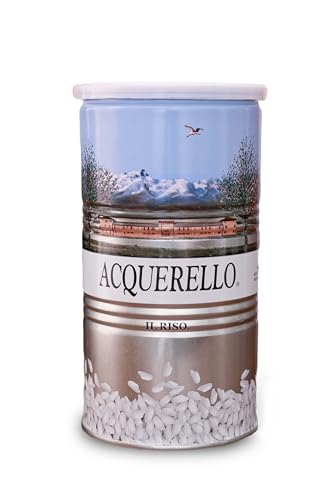
This is the rice you see in Michelin-starred kitchens across Italy. Acquerello’s carnaroli grains undergo a proprietary aging process — typically twelve months or more — in a climate-controlled facility in the Vercelli Province. The result is a grain with exceptional structural integrity that absorbs stock at a steady rate and holds its shape even after twenty minutes of stirring. Cooks who have tried arborio, vialone nano, baldo, and bomba consistently rank this tin as the superior choice for the all’onda, or “wavy,” risotto that spreads smoothly across the plate without turning soupy.
Reheating performance is another standout trait. Leftover risotto made with Acquerello retains a creamy consistency the next day, whereas cheaper grains often stiffen into a solid block. The vacuum-sealed tin protects the rice from humidity and pests far better than a paper bag, making it ideal for infrequent risotto cooks who want a reliable stash in the pantry. The two-pound tin yields roughly eight large servings, which puts the per-plate cost well below most premium ingredients you’d add to the dish.
A few users noted they wished the tin came in a larger format for heavy weekly use. The fixed 2.2-pound size is deliberate — once opened, the tin cannot be resealed, so the volume suits a home kitchen that cooks risotto every week or two. For anyone making arancini, the day-old leftover grains form perfectly bound balls without extra egg or binder, a practical bonus that professional caterers exploit regularly.
Why it’s great
- Aged grains deliver superior bite and creaminess over standard arborio
- Compact tin packaging preserves freshness for months on the shelf
- Consistent results across risotto, arancini, and reheated leftovers
Good to know
- Smaller 2.2-pound tin runs out fast for frequent risotto cooks
- Premium price per pound compared to bulk bags
2. Riso Scotti Arborio Rice for Risotto (5-Pack)
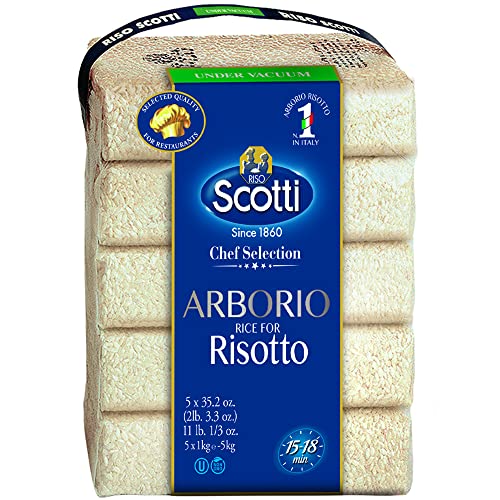
Riso Scotti has been in the rice business since 1860, and this five-pack of individually vacuum-sealed one-kilogram bags reflects the consistency you expect from a century-old producer. The grains are noticeably larger than the average arborio found in grocery store bulk bins, and the vacuum seal locks in a moisture level that prevents the cracks and splits common in loosely packaged rice. In the pot, the grains release starch steadily and reach a creamy finish in about 25 minutes without turning to paste.
Instant Pot risotto is where this rice particularly shines. Multiple users reported that a five-minute pressure cook with a 1:2 rice-to-stock ratio yields a texture that rivals stovetop methods requiring constant stirring. The individual bags make it easy to portion out exactly one kilogram without breaking a larger seal, which helps if you cook risotto sporadically and want to avoid exposing the entire supply to air each time. The packaging is also compact enough to fit in a freezer bin for extra-long-term storage.
The only consistent complaint involves tariff-related price increases that have pushed the cost higher than some competing Italian brands. If you catch it at a stable price, the per-pound value is strong. A handful of users also mentioned that the printed cooking instructions are minimal — you will want to rely on your own risotto technique rather than the box directions for best results.
Why it’s great
- Five individually sealed bags preserve freshness per use
- Large, consistent grains ideal for Instant Pot risotto
- Long-established Italian producer with reliable quality
Good to know
- Price has risen due to import tariffs on Italian goods
- Minimal cooking guidance on the package
3. Cucina & Amore Superfino Italian Arborio Rice (8-Pack)

Cucina & Amore targets the home cook who wants authentic Italian arborio without hunting through restaurant supply stores. Each 17.6-ounce bag is vacuum-sealed, so the rice stays at peak freshness from the warehouse to your pantry. The superfino classification means these are large, intact grains — no broken pieces that would release starch too early and turn the risotto gluey. Cooks who switched to this brand from grocery store house brands reported a noticeable improvement in the chew, with grains staying al dente rather than disintegrating.
The eight-bag format is a practical sweet spot for families. One bag yields roughly four to five servings of risotto, so you can open exactly what you need and keep the rest sealed. Beyond risotto, users have used this rice successfully for arancini, rice pudding, and even paella, where the grain’s ability to absorb seasoned broth without losing structure makes a difference. The non-GMO and kosher certifications add peace of mind for households with specific dietary standards.
The only drawback is that the bags do not have a reclosable zipper. Once opened, you will need to transfer unused rice to an airtight container or clip the bag shut. A few users also noted that the outer cardboard box can arrive damaged during shipping, though the sealed inner bags remain intact.
Why it’s great
- Eight individually vacuum-sealed bags for long-term bulk storage
- Superfino grading ensures uniform grain size and consistent cooking
- Non-GMO Project Verified and kosher certified
Good to know
- Bags lack a resealable closure once opened
- Outer box may get crushed during delivery
4. Roland Foods Superfino Arborio Rice (11 Pound)

Roland’s superfino arborio is a straight-to-the-point bulk option for anyone who cooks risotto at least once a week or runs a small food business. The eleven-pound bag comes with a resealable zipper that actually holds tight between uses — a small detail that makes a real difference when you are storing that much rice. The grains are reliably sized and finish cooking about a minute faster than some premium carnaroli varieties, which is convenient when you need to get dinner on the table quickly.
Texture is the headline here. Users consistently describe the cooked grains as creamy yet distinct, with a slight chew that signals proper superfino arborio. A notable number of reviews mention using this rice for Instant Pot risotto at a 1:2 ratio with a five-minute pressure cook, which yields a finished dish that would pass in an Italian trattoria. Several customers also repurposed the rice for rice pudding, praising how the grains maintain their shape even after simmering in milk and sugar for extended periods.
One potential issue with a bag this size is that once you open it, the clock starts ticking on freshness even with the resealable strip. If you cook risotto only a few times a year, the eleven-pound volume may lose its optimal texture before you finish it. A couple of users also noted that the bag can rip along the side seam during shipping if the outer box is under-sized, so inspect the packaging on arrival.
Why it’s great
- Resealable large bag offers strong per-pound value for frequent risotto cooks
- Superfino grade guarantees uniform starch release and al dente bite
- Works well in pressure cookers, rice puddings, and arancini
Good to know
- Large volume may lose freshness before infrequent users finish the bag
- Bag seam is vulnerable to tearing during rough transit
5. RiceSelect Organic Arborio Rice (4 Jars)
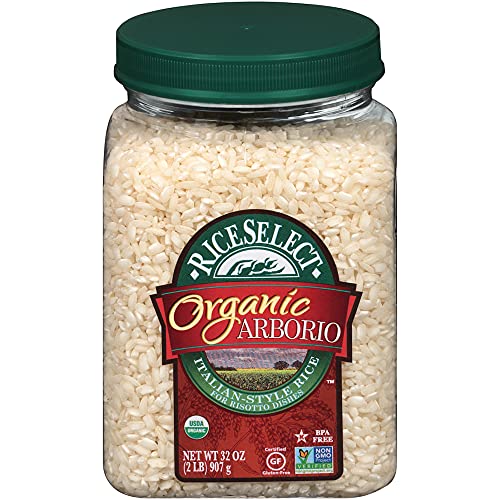
RiceSelect offers the only certified organic arborio in this lineup, and the packaging alone makes it a standout for sustainability-minded buyers. Each of the four 32-ounce jars is made from BPA-free, 100% recyclable materials, and the wide-mouth opening allows you to scoop directly from the jar without creating a mess. The medium-grain rice cooks in about 15 minutes, which is noticeably faster than the 20-to-25-minute typical for traditional Italian arborio — useful for weeknight risotto when time is tight.
The USDA Organic and Non-GMO Project Verified certifications are backed by consistent user reports of fresh-tasting rice with no stale or musty notes. The grains produce a creamy, silky texture when stirred with broth, and the short cook time reduces the likelihood of scorching the bottom of the pan. Beyond risotto, users have cooked this rice for paella and arancini with good results, noting that the grains hold their shape and absorb surrounding flavors effectively.
The main trade-off is that the quicker cooking window means you have less margin for error. If you walk away for two minutes past the 15-minute mark, the rice can tip from creamy to starchy. Additionally, the four-jar set takes up more pantry shelf space than a single bag, which is worth considering if your kitchen storage is limited.
Why it’s great
- USDA Organic certification with Non-GMO and kosher seals
- BPA-free glass jars keep rice fresh and are fully reusable or recyclable
- Fast 15-minute cook time suits quick weeknight risotto
Good to know
- Short cook window requires close attention to avoid overcooking
- Four jars take up significant pantry shelf space
6. Acquerello Aged Carnaroli Risotto Rice (5.5 Lb Bag)

This is the same Acquerello carnaroli rice found in the tin version but in a larger 5.5-pound bag format. The grains benefit from the same extended aging that enhances starch structure and deepens flavor, making it the most forgiving rice for a novice risotto cook — it is very difficult to overcook into mush. The bag packaging reduces the cost per pound compared to the tin, which matters if you go through rice quickly and want the performance of aged carnaroli without the premium tin markup.
In the pan, the rice produces a thick, flavorful “broth” as it releases starch, though a minority of users noted that the final sauce does not thicken quite as readily as standard arborio. This is a characteristic of carnaroli — it prioritizes individual grain integrity over extreme creaminess — so cooks accustomed to the very sticky texture of superfino arborio may need an extra minute of stirring or a final knob of butter to achieve the same mouthfeel. For mushroom or seafood risotto where you want the primary ingredients to shine, this slightly looser texture is actually preferable.
The biggest consideration here is price. Even in bag form, this is the most expensive rice on the list on a per-pound basis. Users who compared it to grocery store arborio unanimously agreed the quality gap justifies the expense for special meals, but it may not make sense as a daily risotto staple unless you are a dedicated enthusiast. The bag itself uses eco-friendly materials, though it lacks a resealable zipper, so you will need a clip or container after opening.
Why it’s great
- Aged carnaroli provides unmatched grain integrity and forgiving cook time
- Larger bag format offers better value than the tin version
- Eco-friendly packaging aligns with sustainable kitchen practices
Good to know
- Premium per-pound cost places it firmly in occasional-use territory
- No resealable closure on the bag after opening
7. Nozomi Super Premium Short Grain Rice (15 Pound)
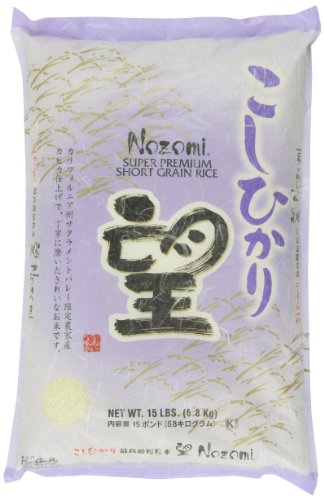
Nozomi’s super premium short grain rice is not arborio — it is a Japanese-style sushi rice grown in the United States. It belongs on this list only because some shoppers searching for arborio may encounter it as a budget-friendly alternative for risotto. The grains are short, plump, and high in starch, which gives them the ability to create a creamy texture similar to arborio when stirred vigorously. Users have successfully used it for risotto, rice pudding, and fried rice with decent results, though the final dish lacks the same al dente bite that superfino arborio delivers.
For sushi, this rice outperforms many mid-tier brands like Nishiki and Kokuho Rose. It does not foam in the rice cooker, spreads evenly on nori, and maintains a perfect stickiness that holds a roll together. Multiple reviewers described it as having a “slight sweetness” when eaten plain, and several lifelong sushi eaters ranked it as the best Japanese-style rice they had found in years. If your primary use case is sushi with occasional risotto experiments, this is a versatile bulk option at an appealing per-pound cost.
The trade-off is straightforward: it is not arborio. The starch profile is different — less amylopectin, more overall stickiness — so the risotto will be denser and less fluid than what you get from superfino Italian rice. A few users called the texture “unremarkable” for risotto specifically. If you are strict about authentic risotto results, stick with one of the Italian options earlier in this guide. The fifteen-pound bag is also enormous, so only buy this volume if you eat rice multiple times per week.
Why it’s great
- Excellent value for a massive 15-pound bag of quality short-grain rice
- Outstanding for sushi with superior stickiness and no foaming
- Versatile enough for passable risotto and fried rice in a pinch
Good to know
- Not true arborio — risotto texture differs from Italian superfino
- Large bag requires dedicated storage space and frequent use
FAQ
Can I use carnaroli rice instead of arborio for risotto?
Does the vacuum-sealed packaging actually improve the rice quality?
Why does some arborio rice cook in 15 minutes while others need 25 minutes?
Final Thoughts: The Verdict
For most users, the best arborio rice winner is the Cucina & Amore Superfino Italian Arborio Rice because it balances superfino grain quality with a practical eight-bag format that keeps each portion fresh until you need it. If you want aged carnaroli with restaurant-level performance, grab the Acquerello Carnaroli Tin. And for certified organic rice in reusable BPA-free jars, nothing beats the RiceSelect Organic Arborio.