
Our readers keep the lights on and the weekend projects moving. As an Amazon Associate, I earn from qualifying purchases.
Watching an arborvitae hedge go from deep green to patchy brown is a gut punch for any landscaper. These evergreens are tougher than they look, but their feeder roots run shallow and wide, meaning the wrong fertilizer — or the wrong delivery method — can either scorch those sensitive roots or leave the tree hungry and yellow. The difference between a lush privacy screen and a sparse, sickly row often comes down to one decision: what you put in the ground.
I’m Rikta — the founder and writer behind FitlyFast. I’ve spent years analyzing the chemical composition, soil interaction, and release mechanisms of dozens of tree and shrub fertilizers, and this guide breaks down exactly which formulations actually match the unique needs of arborvitae root systems.
After cross-referencing nitrogen sources, sulfur content for pH management, and real-world results from sandy soil to heavy clay, I’ve narrowed the field to the seven most reliable products to find the best arborvitae fertilizer for every planting situation.
How To Choose The Best Arborvitae Fertilizer
Arborvitae are heavy feeders that crave nitrogen for dense, green foliage, but they are also notorious for burning if hit with a synthetic blast during dry weather. The trick is matching the NPK ratio, release speed, and soil pH to the tree’s stage of life and your local soil texture.
Nitrogen Ratio and Sulfur Content
Look for a formula where the first number (nitrogen) is significantly higher than the second (phosphorus) and third (potassium). Ratios like 19-8-10 or 17-6-6 are ideal for foliage growth. Additionally, arborvitae prefer slightly acidic soil (pH 6.0–7.0). A fertilizer with a sulfur component — often listed on the label — helps maintain that acidity, which in turn keeps iron soluble and prevents yellowing.
Liquid, Granular, or Spike Delivery
Liquid concentrates like the TPS Arborvitae formula penetrate fast and work well for stressed trees needing a rescue feed. Granular options like ferti-lome release gradually through moisture and are safer for routine feeding. Spikes from Jobe’s or Old Farmer’s Almanac offer the ultimate in mess-free, controlled release, but they require damp soil to dissolve and can be tough to install in compacted clay. Your choice should align with how much time you want to spend and whether your soil is sandy (which drains fast and benefits from slow-release), or heavy (which holds nutrients longer).
Quick Comparison
On smaller screens, swipe sideways to see the full table.
| Model | Category | Best For | Key Spec | Amazon |
|---|---|---|---|---|
| Arborvitae Tree Fertilizer (TPS) | Liquid | Quick green-up & root rescue | 32 oz, 2 tbsp/gal | Amazon |
| Espoma Evergreen-Tone | Organic Granular | Long-term organic feeding | 4-3-4 + Bio-tone | Amazon |
| Ferti-lome Tree & Shrub Food | Granular | Penetrating root zone feed | 19-8-10, 4 lbs | Amazon |
| Jack’s Classic Acid Special | Water-Soluble Powder | Acidic soil & blueberry-adjacent | 17-6-6 + Sulfur | Amazon |
| Jobe’s Tree Spikes | Spike | Mess-free continuous release | 16-4-4, 30 spikes | Amazon |
| Old Farmer’s Almanac Spikes | Spike | Large property multiple trees | 13-3-3, 24 spikes | Amazon |
| Carl Pool BR-61 | Bloom Booster Powder | Flowering shrubs under arborvitae | 9-58-8, 3 lbs | Amazon |
In‑Depth Reviews
1. Arborvitae Tree Fertilizer – TPS Nutrients
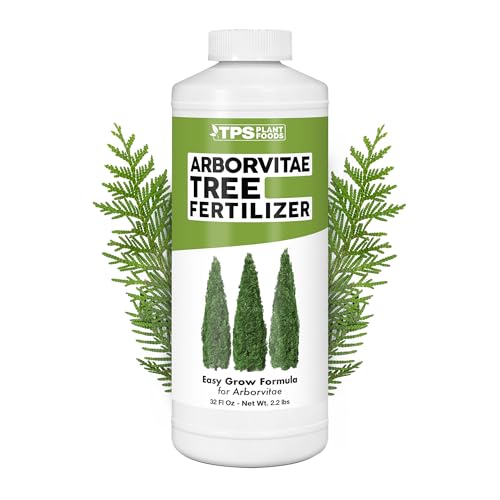
This is the only product in this lineup specifically formulated for arborvitae and evergreen hedges, and it shows in the results. The liquid delivers a balanced nutrient profile that arborvitae roots can uptake within hours rather than weeks, making it the go-to for trees that are browning from stress or transplant shock. Real users report that evergreen trees in sandy soil — where granular fertilizer tends to wash right through — were revived after a consistent every-two-week schedule. The mixing ratio of two tablespoons per gallon is forgiving enough that even beginners rarely burn their plants.
Beyond the short-term rescue, the formula supports dense foliage growth and deeper root development, which is exactly what you want if you’re trying to fill in gaps in a privacy hedge. The liquid form also means you can spot-treat a single struggling tree without applying a full bag’s worth of product to the rest of the row. The manufacturer is a US-based nutrient specialty company, and the absence of any slow-release coating means you control exactly when and how much the tree receives.
One of the most telling reviews came from a user who kept newly planted arborvitae alive through a Chicago winter while their neighbor’s untreated trees all died — that speaks directly to the root-strengthening claim. The only real limitation is that liquid requires more frequent application than a single annual granular dose, so it’s not the most convenient option for someone with twenty trees in a row.
Why it’s great
- Formulated specifically for arborvitae, not a generic tree mix
- Works rapidly to restore green color in stressed or winter-damaged evergreens
- Flexible application via sprayer or watering can for targeted feeding
Good to know
- Requires mixing and bi-weekly schedule during growing season
- 32 oz bottle covers less total ground than a bulk granular bag
2. Espoma Organic Evergreen-Tone 4-3-4

Espoma has been in the organic soil amendment business since 1929, and their Evergreen-Tone is the gold standard for gardeners who want to avoid synthetic salts and chemical burn risk. With a gentle 4-3-4 NPK enhanced by their exclusive Bio-tone beneficial microbes, this granule feeds the soil biology first and the tree second. That’s a crucial distinction for arborvitae planted in compacted suburban fill dirt, where microbial activity is often dead. The 5% sulfur content also helps maintain the slightly acidic pH arborvitae prefer.
The 18-pound bag provides generous coverage for a hedge row, and you apply it twice a year — early spring and late fall — which fits neatly into a twice-annual garden maintenance routine. Users consistently report bright green color within two to three weeks of application, even on trees that looked dull. The chicken manure base does produce a farmyard smell for a day or two after application, so keep that in mind if you have a small yard and entertain frequently. It’s approved for organic gardening, which also means it’s safe around pets and children once watered in.
Real-world feedback highlights how well this product performs on Japanese maples and arborvitae alike, confirming its versatility across broadleaf and needle evergreens. The trade-off is that the 4-3-4 ratio is leaner on nitrogen than synthetic options, so if you’re trying to push maximum vertical growth as fast as possible, a higher-N synthetic might be faster. But for steady, sustainable health and soil improvement, this is the pick.
Why it’s great
- Organic Bio-tone formula feeds soil microbes for long-term root health
- Contains 5% sulfur to maintain acidic soil pH ideal for arborvitae
- Large bag covers extensive hedge rows with only two applications per year
Good to know
- Lower nitrogen ratio means slower visible green-up compared to synthetic blends
- Chicken manure ingredient creates temporary barnyard odor after application
3. Ferti-lome Tree & Shrub Food 19-8-10

Ferti-lome’s 19-8-10 mix is a high-nitrogen powerhouse formulated with a “penetrating action” that moves fertilizer directly to the feeder roots without requiring you to dig holes or trench around the tree. For arborvitae, whose roots spread horizontally just under the soil surface, this is a massive practical advantage — you simply scatter the granules around the drip line and water in. The 19% nitrogen drives rapid foliage greening and new growth, which users confirm works even on trees that were “on the verge of dying.”
This is the product I recommend if you have an established arborvitae that has been underperforming for years and you want visible results this season, not next. The 4-pound bag is compact and easy to handle, and it fits into handheld broadcast spreaders for uniform coverage. Multiple long-term users report using it twice a year for over three years straight with no signs of soil degradation or salt buildup. The formulation also includes secondary micronutrients that support overall tree vigor.
The slight downsides are that the bag size is relatively small (4 pounds), so if you have a long hedge of mature trees you may need multiple bags. Also, some customers note that the bag weight has been reduced over the years while the price has stayed the same — a common complaint in the commodity fertilizer space. But for performance per pound, this granular still outperforms most general-purpose tree foods.
Why it’s great
- Penetrating action eliminates need to dig holes for deep root feeding
- High 19% nitrogen for rapid foliage greening and new growth
- Proven long-term effectiveness with users reporting 3+ years of success
Good to know
- Small bag size requires multiple units for large hedge rows
- Some reports of bag weight reduction over time
4. Jack’s Classic 17-6-6 Acid Special

Jack’s Classic Acid Special is the best tool in your arsenal if your arborvitae are planted near a concrete foundation or in alkaline soil, which locks up iron and causes chlorosis (yellowing). The 17-6-6 ratio is strong on nitrogen for foliage growth, but the real star here is the added sulfur and chelated iron — specifically designed for acid-loving plants. One teaspoon per gallon of water makes up to 15 gallons of liquid fertilizer, which goes much further than a pre-mixed bottle.
Users report spectacular results on blueberries with this formula, but its mechanism is identical for arborvitae: elevated sulfur levels lower the pH around the root zone, freeing up micronutrients. The powder form also gives you the flexibility to use it as a foliar spray, which is a smart option if you notice needle tip burn and want to deliver iron directly through the leaves. For gardeners who also grow hydrangeas or rhododendrons near their hedge, this one product handles both jobs cleanly.
The lower phosphorus (6%) compared to the high potassium (6%) matches what arborvitae actually need — they are foliage plants, not bloomers. The included measuring spoon takes the guesswork out of mixing. That said, the 1.5-pound bag is small, and if you are treating a long hedge every two weeks, you will reorder frequently. It is also a synthetic salt-based formula, so it can burn roots if you overapply in dry conditions.
Why it’s great
- High sulfur and iron content corrects chlorosis in alkaline soils
- Can be used as foliar spray for rapid micronutrient absorption
- Extremely economical — one teaspoon makes a gallon of ready-to-use feed
Good to know
- Small bag size requires multiple purchases for large hedges
- Synthetic formula can cause root burn if applied to dry, stressed trees
5. Jobe’s Tree Fertilizer Spikes 16-4-4

Jobe’s Spikes remove every excuse for skipping a feeding — no mixing, no measuring, no bags, no dust. Each spike is pre-dosed with a 16-4-4 time-release formula that feeds the root zone for an entire season. For arborvitae, which hate being disturbed at the roots, the spike format is ideal because you hammer them into the soil along the drip line and they dissolve slowly, delivering nutrients without any surface runoff. The strong nitrogen (16%) pushes dense foliage growth, and the slow-release mechanism prevents the burn that liquid synthetics can cause during dry spells.
The 30-count package covers up to 15 small to medium-sized trees (two spikes per tree), making it a practical choice for a short hedge or a row of specimens. Real users confirm that even trees under drought stress recovered visibly after the first year of spike feeding. The spikes also eliminate the argument about whether you “watered enough” — because the fertilizer is below the surface, it doesn’t rely on rainfall to activate, unlike granular surface applications. This is also a great option for rental properties or for gardeners who want a set-it-and-forget-it approach.
The biggest practical issue is installation. In clay soil or rocky ground, you will either need to pre-drill a hole with a metal rod or really lean into the hammer. The spikes themselves are tough enough to survive a mallet, but compacted ground can make insertion a workout. Also, because the spikes are concentrated, you must place them at the correct distance from the trunk to avoid burning young root tips — follow the 6-inch spacing guidance on the label.
Why it’s great
- Zero mixing or measuring — just hammer in and forget for the season
- Slow-release prevents root burn even during hot, dry weather
- Places fertilizer directly at root zone, eliminating runoff waste
Good to know
- Difficult to install in hard clay or rocky soil without pre-driving a hole
- Fixed dosage per spike limits flexibility for adjusting feed to individual tree size
6. The Old Farmer’s Almanac Tree & Shrub Spikes 13-3-3
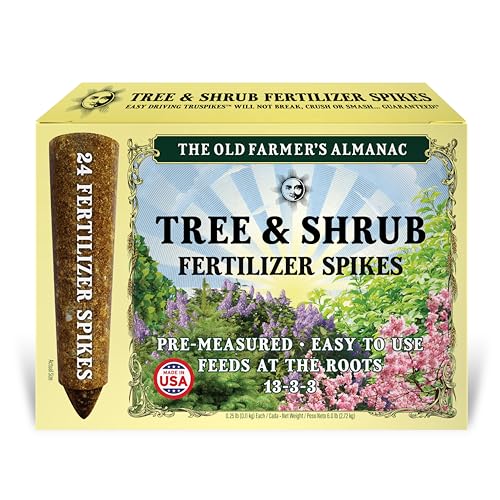
The Old Farmer’s Almanac spikes set themselves apart with a “TruSpike” design that genuinely doesn’t break, crush, or shatter when you hammer them into tough ground. The 13-3-3 ratio delivers a solid nitrogen punch while keeping phosphorus low, which again matches the foliage-focused needs of arborvitae. The inclusion of molasses in the formulation is a nice organic touch — it feeds soil microbes and helps the nutrient breakdown, making this one of the better spike options for soil health.
The 24-count box covers roughly 12 mature trees or a longer hedge row at half the tree count. Users specifically praise the spike’s structural integrity, noting that even in hard clay, the spikes drive in cleanly without splitting — a real upgrade over cheaper stakes that crumble. The twice-per-season application (spring and fall) aligns perfectly with the two major growth spurts of arborvitae. One reviewer after hurricane damage saw rapid green-up using these, which validates the nutrient availability speed.
The main thing to note is that at 13-3-3, the potassium (3%) is lower than some competitors — fine for general health, but if your soil test shows a potassium deficiency, you may need to supplement. Additionally, the nitrogen is derived from synthetic sources (urea smell is noticeable), so organic purists may prefer the Espoma granular. But for pure convenience and durability during installation, these are the best spikes in this list.
Why it’s great
- Unbreakable spikes drive into hard clay without splitting or shattering
- Molasses content feeds beneficial soil microorganisms for better nutrient cycling
- Easy two-per-season schedule with reliable results even after storm damage
Good to know
- Lower potassium content may require supplementation in potassium-deficient soil
- Synthetic nitrogen source may not appeal to strict organic gardeners
7. Carl Pool BR-61 9-58-8 Plant Food
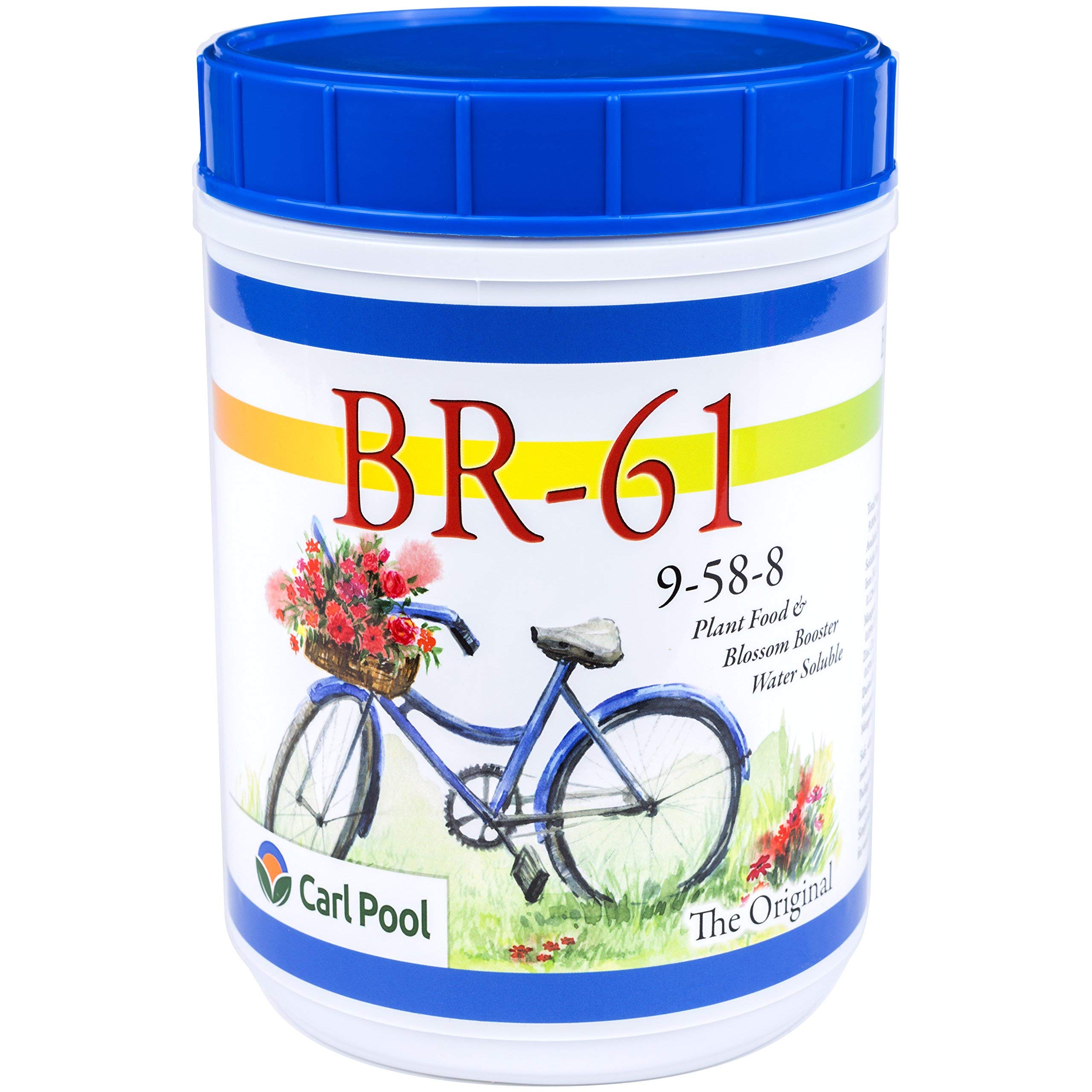
Before you raise an eyebrow at a 9-58-8 bloom booster in an arborvitae guide, hear me out. This product is not your primary hedge feed — but it is an invaluable companion if you have flowering shrubs (like lilacs or hydrangeas) planted in front of your arborvitae hedge. The extreme phosphorus ratio (58%) triggers explosive flower development, and I include it here because savvy landscapers often need a second product for the understory plants without buying a separate bag for each species. It’s also a fantastic root starter for newly planted trees — phosphorus drives root growth, and the water-soluble powder mixes easily.
The users who love this most are plumeria and pepper growers, but the core mechanism works the same for any plant that needs a bloom-stage push. If your arborvitae hedge has struggled and you are replacing dead trees, using BR-61 at transplant time can speed root establishment. The one-tablespoon-per-gallon ratio makes a 3-pound bag stretch for dozens of plants, and the reviews show consistent year-over-year repeat buyers.
However, you absolutely should not use this as a regular arborvitae feed — the excess phosphorus can build up in soil and block micronutrient uptake. This is a specialist tool for specific moments: transplanting, flowering companion plants, or correcting a diagnosed phosphorus deficiency. For everyday arborvitae feeding, stick to one of the higher-nitrogen options above. The powder itself is synthetic and dissolves instantly, leaving no residue.
Why it’s great
- Extremely high phosphorus (58%) ideal for transplant root development
- Mixes easily as water-soluble powder with long-lasting supply per 3 lb bag
- Works as a companion product for flowering shrubs in the same planting bed
Good to know
- Too much phosphorus for regular arborvitae feeding — use sparingly
- Synthetic powder can burn roots if mixed too strong on dry soil
FAQ
What NPK ratio is best for arborvitae?
Can I use a general all-purpose fertilizer on arborvitae?
How often should I fertilize arborvitae?
Will arborvitae fertilizer burn my trees?
Should I use spikes or granules for a young arborvitae hedge?
Final Thoughts: The Verdict
For most users, the best arborvitae fertilizer winner is the TPS Arborvitae Tree Fertilizer because it is the only product formulated specifically for arborvitae, delivering rapid green-up in a flexible liquid format that works on both struggling and healthy trees. If you want an organic, set-it-and-forget-it option that builds soil health over time, grab the Espoma Evergreen-Tone. And for a mess-free, time-release solution on established trees, nothing beats the convenience of Jobe’s Tree Spikes.