
Our readers keep the lights on and the weekend projects moving. As an Amazon Associate, I earn from qualifying purchases.
The connection between your arch and a bunion isn’t obvious until the bunion itself is the last symptom standing. When your arch collapses under your body’s weight, the foot rolls inward—pronation—and that constant torque shoves the big toe sideways into the toe box. The result is a bony lump, inflammation, and a sharp pain that walks with you every step. Most people address the bunion at the toe, but the source of the instability lives back at the midfoot, where the arch should be holding its structure. Fixing the arch support stops the pronation that’s causing the bunion to form or worsen in the first place.
I’m Rikta — the co-founder and writer behind FitlyFast. My research into foot mechanics has focused on the interplay between structural support and chronic foot deformities, specifically how rigid arch support can offload pressure on the bunion joint during daily movement.
The right orthotic must lift the navicular bone back into a neutral position, easing tension along the plantar fascia and reducing the lateral drift of the big toe. This guide identifies the best arch support for bunions by focusing on rigid midfoot control, deep heel cups that lock pronation, and materials dense enough to survive heavy body weights without collapsing.
How To Choose The Best Arch Support For Bunions
Choosing an insole for bunion relief starts with accepting that the bunion isn’t the issue—it’s the downstream effect of a pronated foot. You need an orthotic that locks the subtalar joint into neutral and holds the arch from collapsing with every step. Below are the three non-negotiable specs to evaluate in every product.
Rigid Arch Support vs Soft Cushion
Soft foam insoles feel good in the store but will not stop the mechanical rotation that causes bunion progression. Look for a rigid skeleton—usually thermoplastic polyurethane (TPU) or a carbon fiber shell—that resists bending under load. The arch support must maintain its shape even after a full shift on concrete. If you can easily bend the insole in half with two fingers, it lacks the stiffness required to control overpronation.
Deep Heel Cup and Pronation Control
The heel cup wraps around the calcaneus and controls where the foot lands. A shallow cup allows the heel to splay on impact, which transfers rotational force forward into the big toe. For bunion correction, you want a cup that rises at least 12-15 mm on the medial side to create a wall that keeps the rearfoot aligned. This combined with a rigid arch prevents the chain of collapse from heel to toe.
Material Density and Weight Rating
Body weight determines how much force the arch support must resist. Many budget-friendly insoles are designed for average loads under 180 lbs. If you carry more than 200 lbs, you need a dual-layer construction—typically a dense polyurethane base with a PORON heel pad for shock absorption. Pay attention to the stated upper weight limit in the product specs; materials too soft will bottom out and stop supporting the arch within weeks.
Quick Comparison
On smaller screens, swipe sideways to see the full table.
| Model | Category | Best For | Key Spec | Amazon |
|---|---|---|---|---|
| Orthoflexx Insoles | Premium | Firm arch support, bunion & pronation | Rigid TPU shell, 0.98″ thick | Amazon |
| PowerStep Pinnacle | Premium | Podiatrist-recommended, moderate pronation | Dual-layer cushion, semi-rigid arch | Amazon |
| Fit Geno Heavy Duty | Mid-Range | Over 220 lbs, long shifts | PORON foam, removable TPU plate | Amazon |
| KSGAERR Heavy Duty | Mid-Range | Over 230 lbs, high arches | PORON cushion, Golden Triangle support | Amazon |
| DynWalker Bunion Pads | Mid-Range | Correcting flat feet & bunions | 35mm arch height, deep U-cup heel | Amazon |
| Welnove High Arch | Budget | High arches & standing all day | TPU heel wrap, memory PU foam | Amazon |
| VALSOLE Heavy Duty | Budget | Over 220 lbs, warehouse & construction | Firm arch shell, shock-absorbing base | Amazon |
In‑Depth Reviews
1. Orthoflexx Insoles
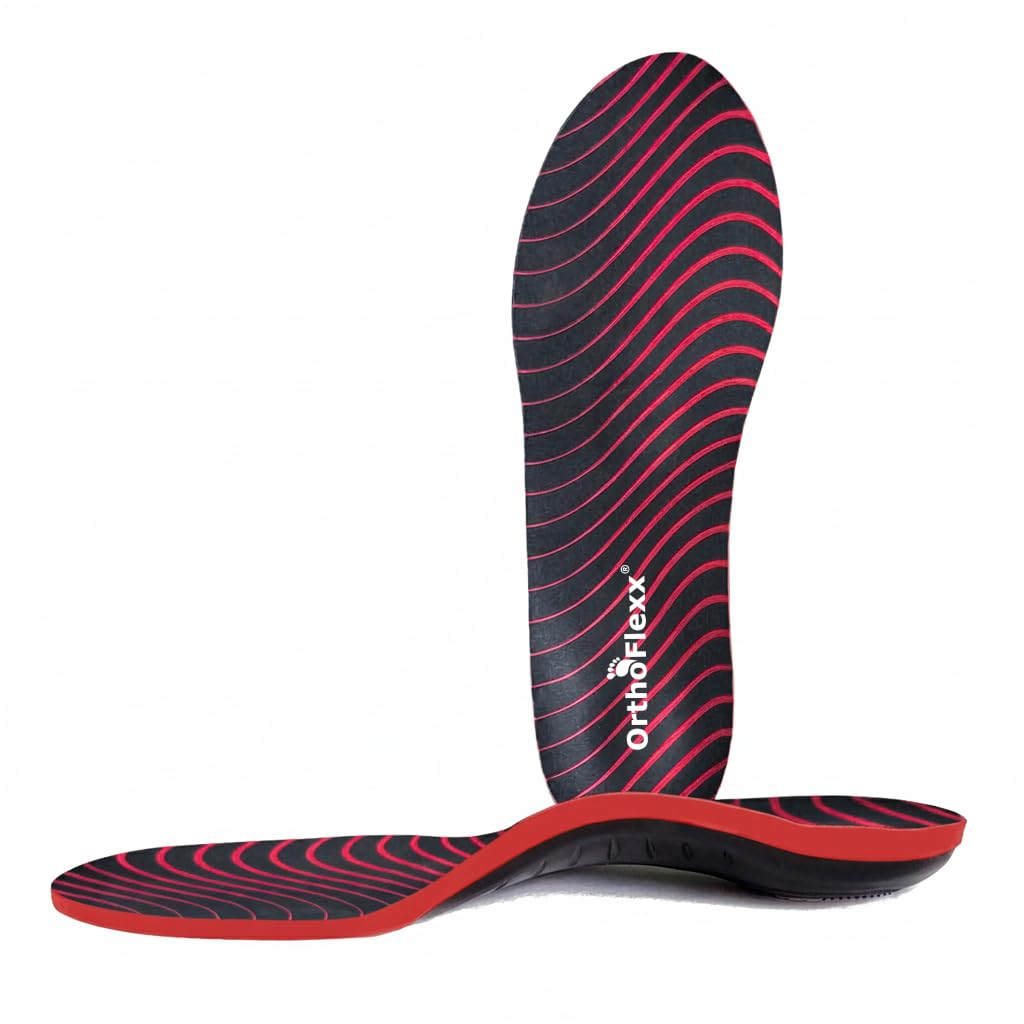
The Orthoflexx insole delivers the stiffest arch support in this comparison—a rigid TPU shell that resists collapse under heavy daily loads. Unlike soft gel or memory foam options that compress and lose shape after a few weeks, the Orthoflexx maintains a consistent lift that keeps the navicular bone in a neutral position. This is critical for bunion relief because a collapsed arch forces the big toe to drift medially with every push-off phase of the gait cycle. The firmness prevents that rotation at its mechanical source.
Users with flat feet and overpronation have reported noticeable correction within the first week, and the deep heel cup locks the calcaneus in place so the entire kinetic chain stays aligned. The insole is thicker than average at nearly one inch, which improves total shock absorption but may require removing the factory insole from your footwear. The top fabric layer is breathable and resists odor through long shifts.
A minority of users with extremely rigid high arches found the support too aggressive for casual walking. Transition periods of three to five days are necessary to allow the soft tissue to adapt. If your goal is to stop bunion progression by addressing the root cause of pronation, this is the most structurally sound option available.
Why it’s great
- Rigid TPU arch plate does not collapse under load
- Corrects pronation by locking heel and midfoot
- Thick construction provides excellent shock absorption
Good to know
- Requires an adaptation period of a few days
- May not fit well in low-volume or tight shoes
2. PowerStep Pinnacle

The PowerStep Pinnacle is the only product on this list that carries the #1 podiatrist-recommended claim, and its design justifies the endorsement. The arch support is semi-rigid—less aggressive than the Orthoflexx but still firm enough to control moderate overpronation without overwhelming feet that are not accustomed to orthotics. The dual-layer cushioning uses a top layer of memory foam for immediate comfort over a denser EVA base that maintains structural integrity over months of daily wear.
For bunion sufferers with moderate pronation, the Pinnacle strikes a rare balance between comfort and correction. The heel cup is deep enough to stabilize the rearfoot, and the arch contour rises gradually rather than in a sharp peak, making it tolerable for users whose arches are sensitive to pressure. The insole comes in exact shoe sizes with no trimming required, which eliminates guesswork and ensures the arch sits exactly where it should under the midfoot.
Some heavy users reported that the arch support felt insufficient for severe flat feet or body weights above 230 lbs. The material is durable but lacks the rigid TPU skeleton that heavier users need for full pronation lock. If you fall into moderate weight range and want a proven inshoe orthotic that works out of the box without modification, the PowerStep Pinnacle delivers reliable, clinic-tested performance.
Why it’s great
- Podiatrist-recommended for moderate pronation
- No trimming needed, exact size fit
- Comfortable dual-layer cushioning for daily wear
Good to know
- Arch may be too low for severe flat feet
- Semi-rigid design may lack stiffness for heavy loads
3. Fit Geno Heavy Duty Insoles
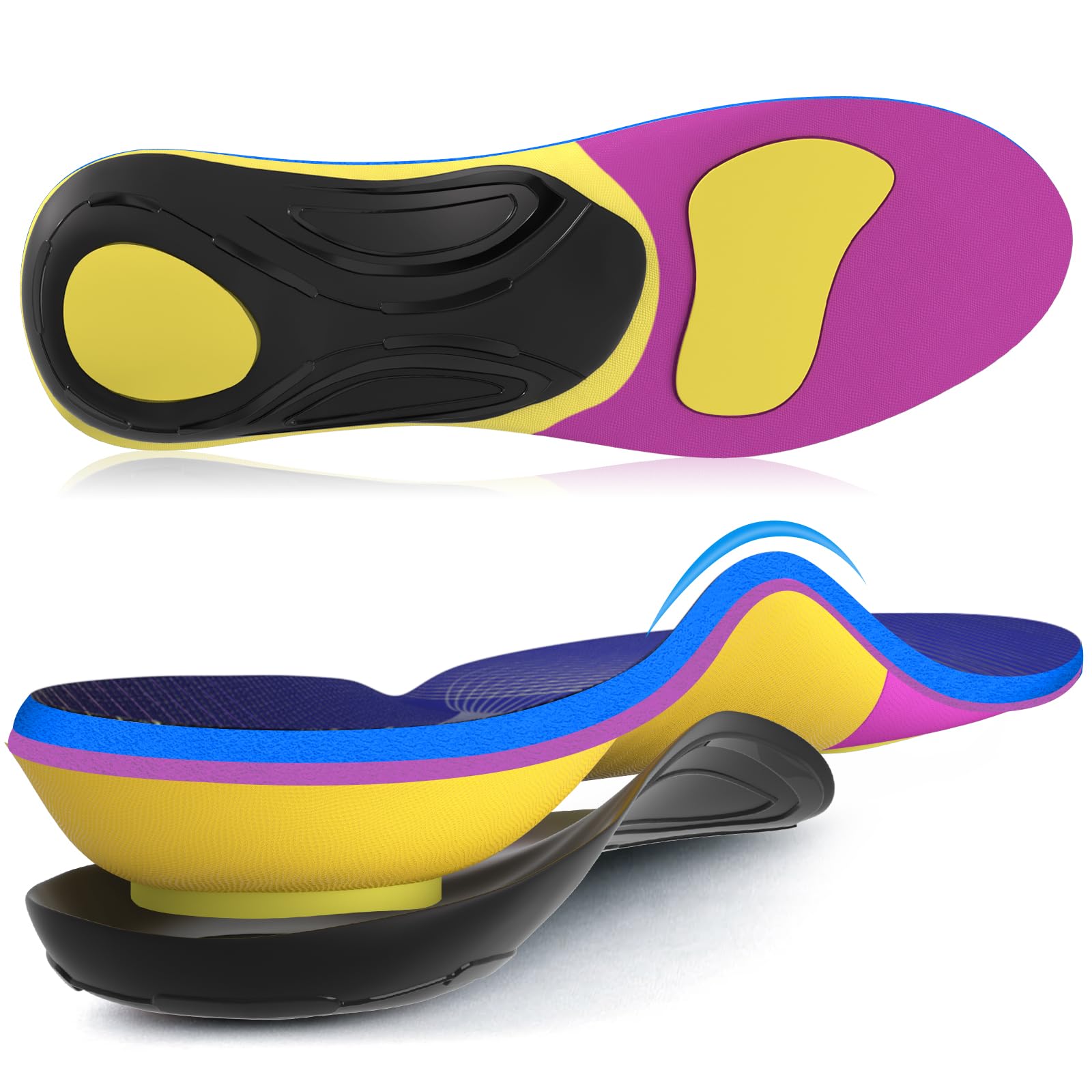
The Fit Geno Heavy Duty insole targets the 220 lbs+ demographic with a build that uses PORON heel pads—the same shock-absorbing foam found in premium running shoes—combined with a rigid TPU arch plate that locks the midfoot. What sets this insole apart is the removable arch plate: you can start with the plate for maximum pronation control and later remove it for a softer ride once your gait has adapted. This flexibility is helpful for bunion sufferers whose pain intensity changes throughout the day.
The deep heel cup and high arch contour reduce the torque that transfers to the big toe during the push-off phase. Users working long shifts on concrete floors have reported that knee and hip pain subsided because the insole reduced the rotational load traveling up the kinetic chain. The breathable fabric surface reduces moisture buildup, which matters when you are clocking ten-hour days in work boots.
A small number of users found the arch too high for their foot volume, causing discomfort at the instep. The PORON cushioning is effective but not plush—this is a firm insole designed for structural support, not pillow-like softness. If you have heavy arches and need removable support depending on your daily activity, the Fit Geno offers a versatile two-in-one solution.
Why it’s great
- Removable TPU arch plate for customizable support
- PORON heel pad absorbs high-impact shock
- Designed for body weights over 220 lbs
Good to know
- Arch height may feel excessive for low-volume feet
- Firm feel rather than plush cushioning
4. KSGAERR Heavy Duty Insoles
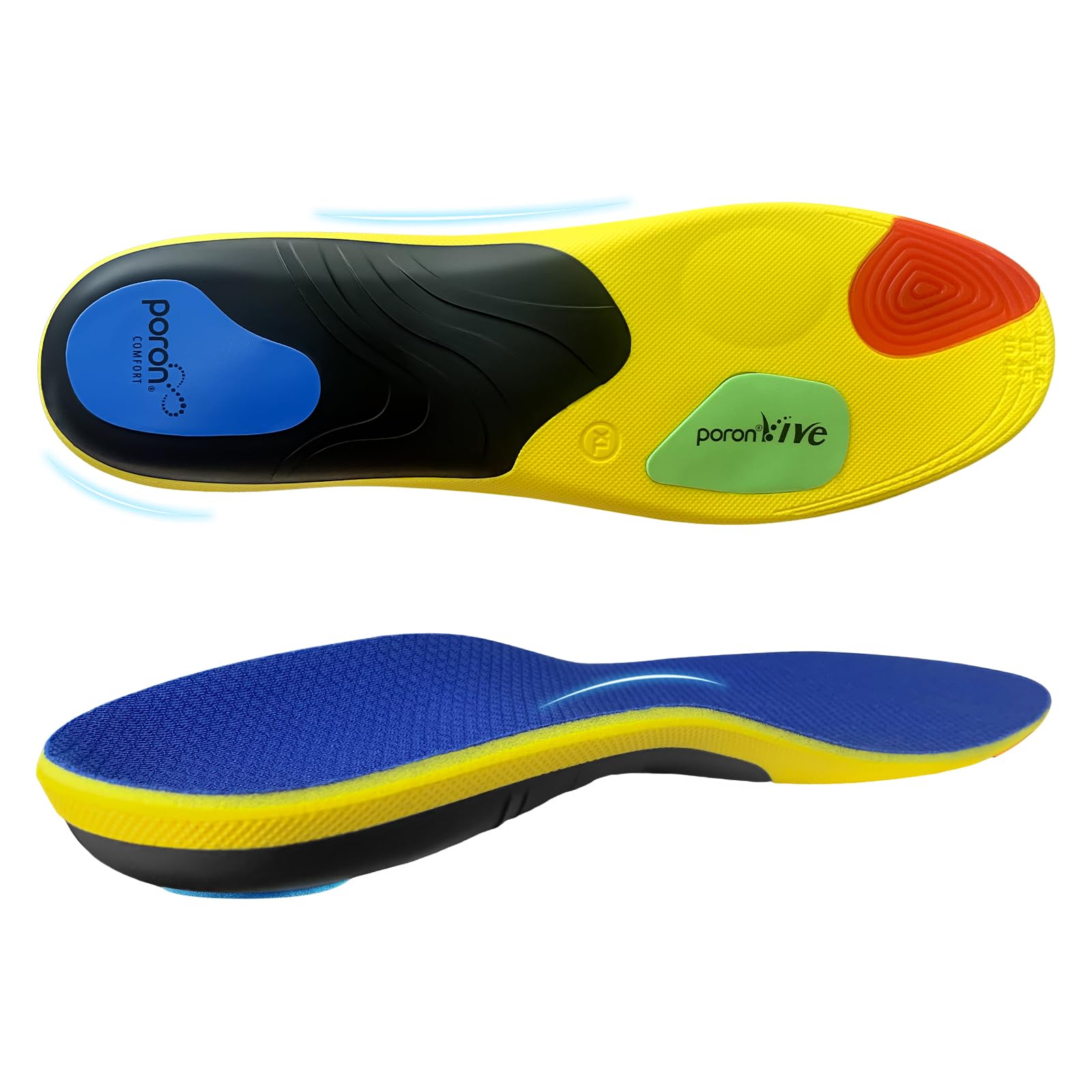
The KSGAERR Heavy Duty insole is engineered for individuals over 230 lbs, using a Golden Triangle design that distributes pressure across the forefoot, arch, and heel in three isolated zones. The dual-layer PORON cushioning in the heel pad provides 30% more shock absorption than standard PU foam, which directly reduces the jarring force that travels up the leg when the foot strikes the ground. For bunion sufferers, this offloading prevents the big toe joint from absorbing excess impact during heel strike.
The rigid black TPU material surrounding the heel and midfoot creates a stable platform that controls pronation without adding bulk. Users with high arches reported that the insole molded to their foot shape within days, and the deep heel cup eliminated lateral slipping during movement. The trim-to-fit design allows this insole to slide into work boots, hiking boots, and high-volume athletic shoes without bunching at the toe.
A few reviews noted that the arch support is unpleasantly firm for low-arched or neutral feet. If you already have good arch height, this level of rigidity may feel like a rock pressing upward. The KSGAERR is best reserved for diagnosed flat feet, severe overpronation, or bunions where the pronation is causing visible toe drift.
Why it’s great
- Tri-zone weight distribution reduces pressure on bunion joint
- Dual-layer PORON heel pad absorbs high-impact shock
- Designed specifically for users over 230 lbs
Good to know
- Arch may be too firm for low-arched or normal feet
- Requires slow break-in period of a few days
5. DynWalker Bunion Pads

The DynWalker insole is built around a 35mm arch height—the tallest in this group—designed to push flat feet back toward a neutral position. The height creates aggressive lift that can feel extreme for first-time orthotic users but provides immediate offloading for the bunion joint by reducing the pronation moment arm. The deep U-shaped heel cup wraps around the calcaneus and prevents the heel from splaying on impact, which is the first movement in the pronation chain.
Gel inserts in the forefoot and rearfoot add 30% more shock absorption compared to foam-only designs, making this insole suitable for prolonged standing and high-impact activities. The polished TPU support shell prevents insole slippage within the shoe, and the five anti-slip points keep the orthotic locked in place during push-off. For users with flat feet and bunions, the combination of high arch and non-slip design addresses both the structural collapse and the slipping that often causes rubbing inside the toe box.
Some users found the arch position too far back for their foot anatomy, causing discomfort under the midfoot when walking. The firmness is also a problem for those with very high arches. The DynWalker works best for flat-arched individuals who need aggressive correction. If your foot has any natural arch remaining, this insole may overpower it.
Why it’s great
- 35mm arch height provides aggressive pronation correction
- Gel heel and forefoot pads improve shock absorption by 30%
- Anti-slip design keeps insole stationary in shoe
Good to know
- Aggressive arch may feel uncomfortable for neutral feet
- Some users report chemical odor out of the box
6. Welnove High Arch Insoles

The Welnove High Arch insole offers a solid entry point for users who want reliable arch support without the premium price. The bottom rigid TPU material wraps around the heel and arch, providing a stable scaffold that resists bending under loads up to the 200 lb range. The memory PU foam base molds to the foot over the first week, creating a custom-fit support surface that distributes weight evenly across the foot bed.
For bunion relief, the TPU heel wrap helps control the initial pronation at heel strike, reducing the rotational force that transfers to the big toe. Users working ten-hour days on cement floors in steel-toe boots reported complete elimination of arch and heel pain after the one-month break-in period. The gel metatarsal pads under the ball of the foot also offload pressure from the forefoot, which can ease discomfort when the bunion rubs against the shoe sidewall.
Several users noted that the insole lost some of its structural integrity after two months of heavy daily use, especially for individuals above 200 lbs. The memory PU foam compresses over time more quickly than PORON or solid TPU alternatives. If you are a heavier user looking for longer durability, consider stepping up to the Fit Geno or KSGAERR. For lighter users on a budget, the Welnove delivers effective support.
Why it’s great
- Rigid TPU heel wrap controls pronation at impact
- Memory PU foam molds to foot shape over time
- Affordable entry point for high arch support
Good to know
- Foam may compress and lose support after extended use
- Some users reported pain returning after a few months
7. VALSOLE Heavy Duty Insoles

The VALSOLE Heavy Duty insole is designed for the heavy-set user who needs robust arch support without paying premium orthotic prices. The firm arch shell uses a full-length rigid structure that resists bending, providing dependable pronation control for body weights above 220 lbs. The shock-absorbing base layer cushions the heel and forefoot, reducing the jarring impact that often aggravates bunion pain during walking or standing.
Users who spend eight-plus hours on concrete floors in warehouse or construction settings reported that the VALSOLE eliminated foot and leg fatigue within the first week. The even pressure distribution reduces the load on the bunion joint by preventing the foot from rolling inward. The insole fits well in work boots and high-volume sneakers, and the easy trim design allows quick customization for narrower shoe sizes.
Some users found that the cushioning is merely adequate rather than plush, meaning this insole trades comfort for structural rigidity. For those who want a softer step, the higher-end options with PORON foam may feel more forgiving. The VALSOLE is a straightforward, no-frills orthotic that prioritizes flat-foot support over luxury feel.
Why it’s great
- Firm full-length arch shell resists pronation
- Affordable option for heavy-duty support
- Effective for long standing hours on hard floors
Good to know
- Cushioning is basic, not premium-grade
- May feel too firm for users seeking a soft step
FAQ
Will arch support actually fix my bunion or just reduce the pain?
Can I wear these insoles if I already have custom orthotics from my podiatrist?
How long should I expect to break in a rigid arch support insole?
Final Thoughts: The Verdict
For most users, the arch support for bunions winner is the Orthoflexx Insoles because it provides the rigid structural support needed to stop pronation at its root, combined with sufficient shock absorption for all-day wear. If you want proven clinical design and exact size fit without trimming, grab the PowerStep Pinnacle. And for heavy-duty use on concrete floors or long shifts, nothing beats the Fit Geno Heavy Duty with its removable TPU arch plate that adapts to your needs throughout the day.