
Our readers keep the lights on and the weekend projects moving. As an Amazon Associate, I earn from qualifying purchases.
If your boots feel stiff after a few hours on concrete or the trail, the culprit is almost never the boot itself—it’s the flat foam footbed it shipped with. Sliding in a dedicated insole with proper arch support is the single most effective upgrade you can make to turn punishing footwear into all-day comfort.
I’m Rikta — the co-founder and writer behind FitlyFast. For this guide, I pored over biomechanical design specs, real user feedback from heavy-duty work sites and long-distance hikes, and compared the arch profiles, cushioning foams, and heel cup depths across seven top contenders to find the insoles that actually hold up in boots.
Whether you’re standing on a job site for twelve hours or pushing through a rocky summit push, the right insole transforms how your feet feel. This is your complete guide to the arch support insoles for boots that deliver real, measurable relief.
How To Choose The Best Arch Support Insoles For Boots
Boots naturally have more volume and a stiffer sole than running shoes, so the insoles you pick must fill that space without compromising the fit. Focus on four factors: arch height match, heel cup stability, cushion density, and whether the insole can be trimmed to the exact shape of your boot’s interior.
Match Arch Height to Your Foot
Using an insole with the wrong arch profile is worse than using none. If you have flat feet and choose a high-arch insole, you’ll feel pressure under the midfoot. If you have high arches and pick a flat support, your arches will collapse and cause heel pain. Most boot insoles come in low, medium, or high profiles—check your wet-foot test or consult a podiatrist’s notes before buying.
Prioritize a Deep Heel Cup
A deep heel cup locks the calcaneus in place and prevents the heel from sliding sideways when you’re walking on uneven ground. This is especially critical for work boots and hiking boots where lateral stability matters. Look for insoles that cup the heel firmly—if you can easily wobble the insole in your hand, it won’t hold your foot steady on a slope.
Check Cushion Type and Density
EVA foam is lightweight and offers moderate shock absorption, while polyurethane or gel layers provide denser, longer-lasting cushioning. For heavy loads or long hours, denser foams prevent bottoming out. If you’re sensitive to firmness, layer a softer top sheet over a rigid base—the PowerStep and Superfeet options use this hybrid approach effectively.
Quick Comparison
On smaller screens, swipe sideways to see the full table.
| Model | Category | Best For | Key Spec | Amazon |
|---|---|---|---|---|
| BestHalo Heavy Duty | High Arch | Heavy users & plantar fasciitis | 220+ lbs rated, 10.86 oz | Amazon |
| Timberland PRO Insite | Work Boot | Construction & long shifts | Plastic arch support | Amazon |
| Dr. Scholl’s Heavy Duty | Big & Tall | 200+ lbs, wide feet | Extra heel cushioning | Amazon |
| Orthofeet Men’s Orthotic | Medical-Grade | Chronic foot pain relief | Adjustable arch booster | Amazon |
| Superfeet Hike Cushion | Hiking Pro | Long trails & rucking | Adaptive Comfort Tech | Amazon |
| PowerStep Pinnacle Hiker | Flat Feet | Pronation control | Semi-rigid arch support | Amazon |
| CURREX HikePro | Custom Fit | Technical terrain | 3 profile arch options | Amazon |
In‑Depth Reviews
1. BestHalo Heavy Duty Plantar Fasciitis Insoles
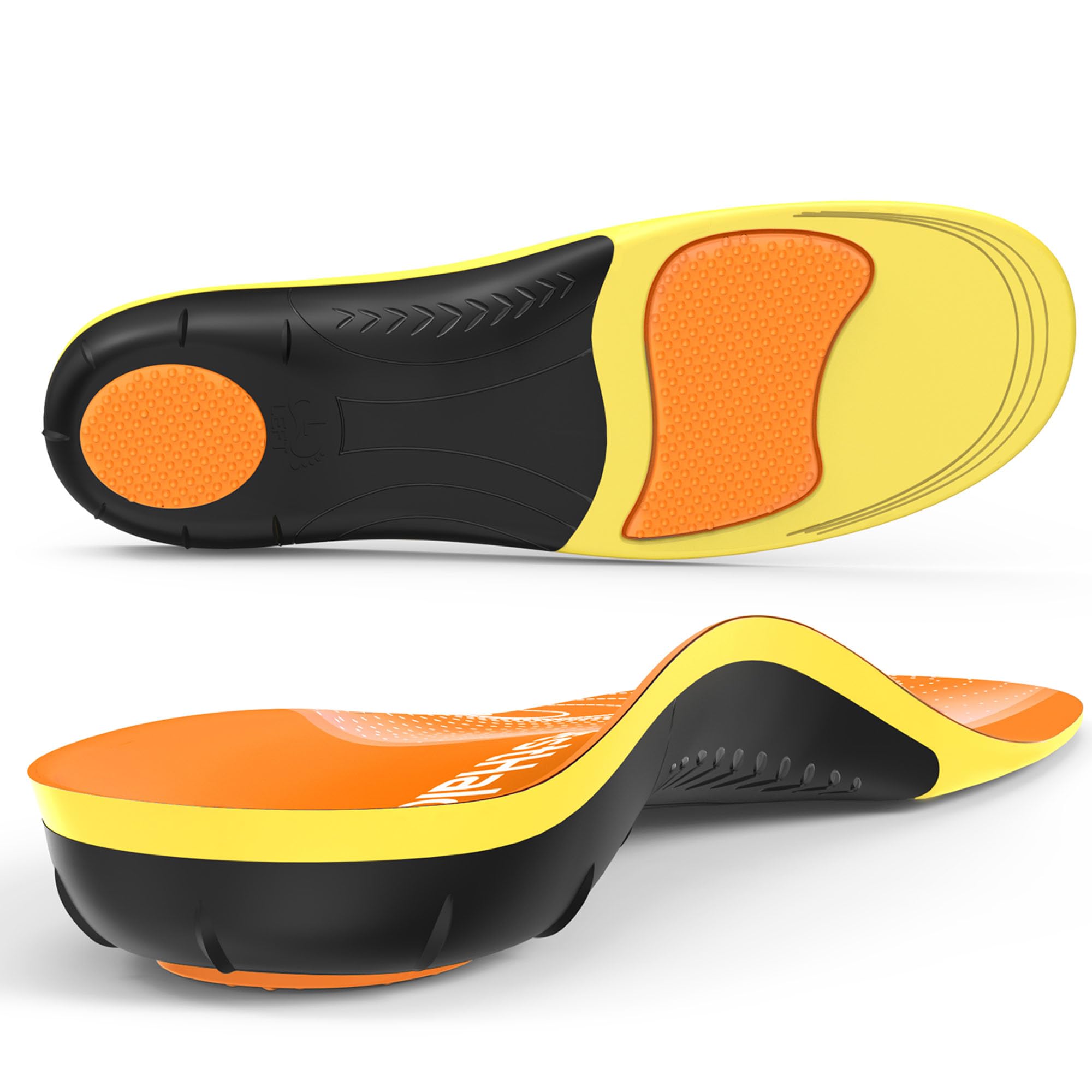
The BestHalo Heavy Duty insole is engineered for users who carry extra weight—it’s explicitly rated for 220+ pounds and features a high, structured arch that aggressive support seekers will appreciate. The biomechanical design encourages healthier walking patterns, which is why multiple verified buyers reported elimination of heel and leg pain after a short adaptation period.
What sets it apart is the combination of premium EVA foam with gel cushioning under the heel and ball of the foot. This dual-layer approach delivers enough shock absorption to protect knees and hips on concrete floors, while the deep heel cup stabilizes the calcaneus to reduce overpronation. Users noted a noticeable reduction in foot fatigue during 10+ hour shifts.
There’s a real adaptation curve—the high arch can feel aggressive for the first 3–7 days. Several reviewers who switched from softer insoles experienced temporary discomfort before their feet adjusted. Once adapted, however, the support is consistently praised as superior to pricier competitors. The trim-to-fit design worked well inside work boots and casual footwear alike.
Why it’s great
- Excellent high arch support for heavy individuals
- Gel + EVA cushioning absorbs impact well
- Deep heel cup prevents heel slippage in boots
Good to know
- Requires a 3–7 day adaptation period
- May feel too firm for those with low arches
2. Timberland PRO Insite Technology AFT Footbed

The Timberland PRO Insite footbed is deliberately designed to drop directly into work boots without modification. Its defining feature is a rigid plastic arch support shell that doesn’t collapse under heavy loads—a critical detail for construction workers who spend entire days on ladders or uneven subfloors. The firmer structure distributes pressure across the whole foot arch rather than concentrating it in one spot.
Buyers consistently report that these insoles make their work boots feel like walking on air after 12-hour shifts. The anti-fatigue technology uses a responsive foam layer that rebounds quickly, reducing the cumulative strain of standing on concrete. One reviewer who walks 6,000+ steps daily noted that foot fatigue essentially disappeared after swapping in these footbeds.
There’s no noticeable adaptation period because the arch height is moderate—it works equally well for medium and slightly high arches. The main trade-off is that the plastic support adds weight, so these feel denser than all-foam insoles. Some users received the wrong size due to Amazon fulfillment errors, but the product itself earned near-universal praise for durability and comfort in boots.
Why it’s great
- Rigid plastic arch won’t collapse under weight
- Made specifically for work boot dimensions
- Minimal adaptation period
Good to know
- Heavier than all-foam alternatives
- Size fulfillment inconsistency reported
3. Dr. Scholl’s Heavy Duty Support Insole
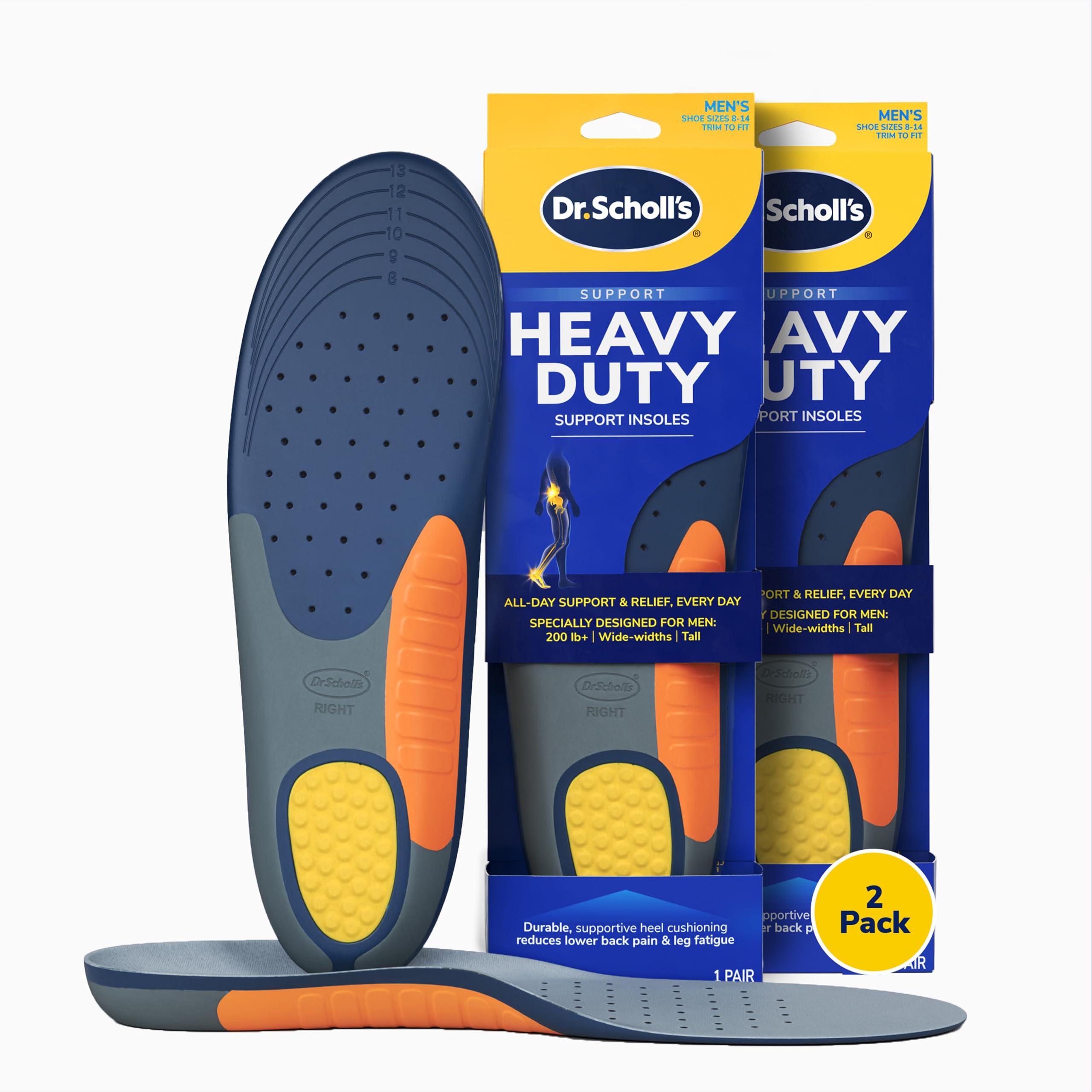
Dr. Scholl’s Heavy Duty Support Insoles are designed specifically for men over 200 pounds, with wide feet, or those who need extra shock absorption for the lower back. The insole features extra supportive heel cushioning that targets lower back pain—a common complaint among heavy-insole users—and distributes foot pressure evenly across the entire sole.
The foam is thicker than most standard insoles, providing a cloud-like feel that impressed buyers who typically bottom out softer inserts. Several verified purchasers reported that this insole cut foot and back pain in half immediately and eliminated it entirely within two weeks. The firm arch support is noticeable but not aggressive, making it suitable for flat feet transitioning to a more supportive profile.
Because the foam is dense, trimming is necessary for a snug fit inside boots with narrower toe boxes. One user who weighs 300 pounds confirmed the insoles held up without collapsing—a testament to the durability of the shock-absorbing foam. The main downside is that the heel gel layer can feel hard underfoot if you’re accustomed to plush cushioning, but for heavy users, firmness translates to longevity.
Why it’s great
- Excellent shock absorption for heavy users
- Thick foam distributes pressure evenly
- Clinically designed for lower back pain relief
Good to know
- Trimming needed for narrow boot interiors
- Heel cushion may feel firm initially
4. Orthofeet Men’s Orthotic Insoles

Orthofeet’s orthotic insoles use multiple layers of shock-absorbent foam that feel firm yet comfortable, with an adjustable arch booster that lets you dial in extra support if needed. This makes them uniquely adaptable—users with changing foot conditions can add or remove the booster without buying a new insole. The fabric top layer actively fights odor and moisture, a welcome feature for boots worn daily.
Buyers who have tried many different inserts consistently call Orthofeet the only brand that truly helps their chronic foot problems. The insoles fit seamlessly into snow boots and work boots, and their durability holds up to washing without degrading. The moderate arch height works well for medium to high arches, and the multilayer construction prevents premature flattening even after months of use.
The biggest complaint is the price point—at roughly double the cost of budget options, these are an investment. However, users who bought them found they outlasted cheaper insoles by a wide margin, making the cost-per-wear acceptable. One reviewer with multiple foot issues noted that these were the only insoles that didn’t cause new pain, though they wished the price were lower.
Why it’s great
- Adjustable arch booster for custom support
- Moisture-wicking fabric fights odor
- Multilayer construction lasts longer than basic insoles
Good to know
- Higher price point than alternatives
- Not ideal for very low arches without the booster
5. Superfeet Hike Cushion Insoles

The Superfeet Hike Cushion insole uses Adaptive Comfort Technology, a patented foam that flexes with your foot during the gait cycle rather than fighting it. This creates efficient heel-to-toe turnover, which reduces the energy cost of each step—a real advantage on long hikes or rucking sessions. The arch profile is medium-to-high, so it suits most foot types without feeling overly aggressive.
Verified buyers who ruck with 30–60 pounds over 3–10 miles reported that these insoles eliminated knee pain within five days. The moisture-wicking top cover reduces odor, and the trim-to-fit design allowed users to size up and cut down for an exact match in over-the-ankle boots. One landscaper used them daily for six months in wet and dry conditions without significant breakdown.
The cushioning is noticeably thick—roughly a quarter inch—which can cause heel rubbing in low-cut shoes. These are best paired with lace-up boots that have enough volume to accommodate the added height. A minor build issue: the orange center pad can detach over time, though most users fixed it with a dab of glue. Overall, the comfort and durability justify the premium price.
Why it’s great
- Adaptive foam works with your natural gait
- Excellent shock absorption for heavy loads
- Moisture-wicking cover reduces odor
Good to know
- Very thick—may not fit low-volume boots
- Center pad can detach over time
6. PowerStep Pinnacle Hiker Orthotic Insoles

The PowerStep Pinnacle Hiker is a podiatrist-recommended insole with a semi-rigid arch support shell that controls mild overpronation—a common issue for flat-footed hikers. Unlike foam-only insoles, the rigid base maintains its shape under heavy loads, providing consistent arch support mile after mile. The maximum cushion layer on top softens the feel without sacrificing stability.
Buyers who hiked 16 miles in Solomon speed cross boots reported zero foot pain after swapping out the thin stock footbeds. The arch support is firm but not painful, and the deep heel cup locks the foot in place to prevent blisters on descents. Users with high arches also praised it for being the most supportive hiking insole they had tried—it doesn’t collapse like foam-only alternatives.
The semi-rigid shell adds thickness, which can compress toes in snug boots. These insoles work best in true-to-size boots that leave a little extra vertical space. A few users noted that the support doesn’t mold to the foot over time—because it’s rigid, what you feel on day one is what you get forever. For those who want consistent, predictable support, this is a strength.
Why it’s great
- Semi-rigid shell controls overpronation effectively
- Excellent for flat feet transitioning to support
- Consistent support over long distances
Good to know
- Thicker design may crowd toe box
- Does not mold or soften over time
7. CURREX HikePro Insoles

The CURREX HikePro is the most customizable insole on this list, offering three distinct arch profiles (low, medium, high) and a SuperGrip anti-slip heel surface that prevents the insole from shifting inside the boot. The deep decoupled heel cup wraps and locks the heel in place, providing stability on uneven terrain and downhill descents where lateral movement is most dangerous.
Verified buyers who used these on multi-day treks with 30-pound packs confirmed that the shock-absorbing cushioning reduced foot fatigue significantly. The breathable materials and recycled EVA base with air vent technology keep feet dry even during long, sweaty hikes. One reviewer who had arch pressure issues from stock insoles found that the low-arch profile solved the problem entirely.
The main concern is long-term durability relative to the high price point—the foam may compress faster than thicker, denser alternatives. However, for hikers who need a specific arch profile and want anti-slip stability, the HikePro delivers a custom feel that off-the-shelf insoles rarely match. The trim-to-fit design is straightforward, and most users got a perfect fit without trimming at all in size-appropriate boots.
Why it’s great
- Three arch profiles for a personalized fit
- Anti-slip heel surface prevents shifting
- Breathable materials reduce moisture and blisters
Good to know
- Premium price may not match long-term durability
- Foam may compress faster than denser insoles
FAQ
How long does it take to adapt to high-arch support insoles in boots?
Can I trim boot insoles to fit any boot?
Do thick insoles make boots feel too tight?
Final Thoughts: The Verdict
For most users, the arch support insoles for boots winner is the BestHalo Heavy Duty because it delivers firm, high-arch support with a deep heel cup and robust shock absorption at a mid-range price point that outperforms many premium competitors. If you want a rigid plastic support built specifically for construction work, grab the Timberland PRO Insite. And for the most customizable fit with anti-slip heel stability on technical terrain, nothing beats the CURREX HikePro.