
Plantar fasciitis pain and collapsing arches don’t care about your schedule. The gap between a flimsy drugstore insole and a true supportive orthotic can mean the difference between a day spent limping and a day spent moving freely. The right insole stabilizes the foot’s natural tripod—heel, ball, and arch—to redistribute pressure and reduce strain on the plantar fascia and surrounding soft tissue.
I’m Rikta — the co-founder and writer behind FitlyFast. I’ve spent years analyzing footbed geometry, foam densities, and support structures to break down exactly which arch support insoles deliver real biomechanical correction versus which ones just feel soft for a week.
Whether you stand on concrete for ten-hour shifts or log daily mileage on pavement, selecting the right best arch support insoles depends on matching arch height, body weight, and activity to the insole’s material composition and structural rigidity.
How To Choose The Best Arch Support Insoles
Not all arch support is created equal. A fluffy gel insert marketed as “supportive” will collapse under daily pressure, while a rigid orthotic with a deep heel cup can correct alignment and prevent recurring injury. The key is understanding the three variables that determine whether an insole will work for your specific feet.
Arch Height and Foot Type
Insoles are designed for specific arch profiles—low (flat feet), medium (neutral), or high. A high-arch insole on a flat foot will cause midfoot pain by over-lifting the foot. Conversely, a low-profile insole on a high arch won’t provide enough lift to take tension off the plantar fascia. Look for the stated arch type in the product description and match it to your wet-foot test or a podiatrist’s assessment.
Weight Capacity and Material Rigidity
Heavier individuals (over 220 lbs) produce more ground reaction force per step. A soft EVA foam insole will bottom out within weeks under this load. Insoles with a polypropylene shell, TPU plate, or dense Poron foam maintain their shape and provide lasting structural correction. Reviews from users in your weight class are the best indicator of real-world durability.
Heel Cup Depth and Foot Stability
A deep U-shaped heel cup cradles the calcaneus (heel bone) and prevents excessive side-to-side movement. This is critical for controlling overpronation—where the foot rolls inward—and supination, where it rolls outward. Shallow heel cups let the foot slide, reducing the insole’s effectiveness and potentially causing new discomfort in the ankle or knee.
Quick Comparison
On smaller screens, swipe sideways to see the full table.
| Model | Category | Best For | Key Spec | Amazon |
|---|---|---|---|---|
| Fit Geno Heavy Duty | Premium | Heavy frames & long shifts | Rigid high arch + Poron foam | Amazon |
| PowerStep Pinnacle | Premium | Podiatrist-recommended support | Moderate pronation control | Amazon |
| PowerStep Bridge | Mid-Range | Flexible comfort + alignment | Memory foam + adaptable arch | Amazon |
| BestHalo Heavy Duty | Mid-Range | High arches & postural correction | Deep heel cup + gel cushion | Amazon |
| Psveb Professional | Mid-Range | Medium arches & all-day wear | Golden Triangle 3-point support | Amazon |
| Sof Sole High Arch | Budget | Athletic & casual high arches | Gel heel drop + deep heel cup | Amazon |
| Archepaid Orthopedic | Budget | Flat feet & plantar fasciitis | 3.5 cm arch + TPU stability | Amazon |
In‑Depth Reviews
1. Fit Geno Heavy Duty Arch Support
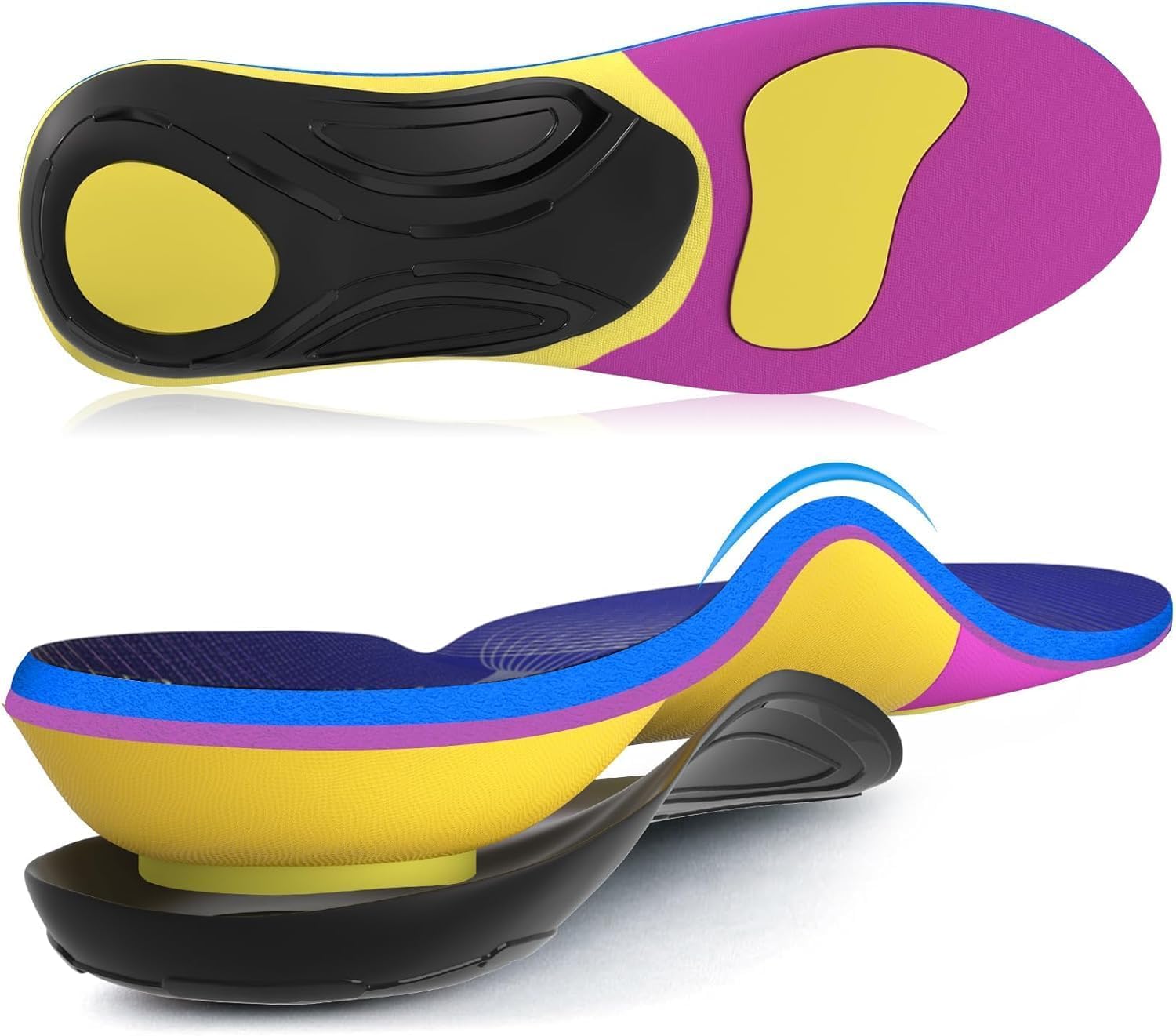
Fit Geno designed this insole specifically for users over 220 lbs who spend entire shifts on their feet. The dense high arch and rigid TPU shock guard actively offload stress from the plantar fascia, knees, and lower back. Poron foam pads the heel and ball of foot with premium impact protection, while the removable arch plate lets you adjust rigidity based on your shoe’s volume.
Real-world reviews confirm the insole maintains its structure through months of daily wear, with users reporting immediate relief from plantar fasciitis pain after the first day. The deep heel cup holds the calcaneus firmly, preventing the ankle rolls and supination issues common with softer alternatives. It fits work boots and sneakers equally well after a quick trim.
One experienced runner noted that the layered design provided a stable, comfortable fit in size 10.5 sneakers without trimming. The breathable fabric layer resists odor through full workdays, and the whole construction feels noticeably heavier and denser than anything in the budget tier.
Why it’s great
- Designed for heavy frames with real structural rigidity
- Removable TPU arch plate for customizable support
- Poron foam offers long-lasting shock absorption without flattening
Good to know
- May feel too rigid for Hoka or heavily cushioned shoes
- Adjustment period of a few days required for flat feet
2. PowerStep Pinnacle Insoles

The Pinnacle is the #1 podiatrist-recommended arch support insole in the US, and for good reason: it combines a firm, supportive arch with dual-layer cushioning that reduces fatigue without sacrificing structure. The moderate pronation control stabilizes the foot’s natural roll, making it effective for both plantar fasciitis relief and general daily alignment.
Users with severe heel pain report a 65% reduction in symptoms after consistent wear, with many noting that it replaced expensive custom orthotics. The insole is ordered by shoe size rather than trimmed, which preserves the integrity of the molded arch and heel cup. It fits into athletic shoes, work boots, and casual footwear that allows removal of the factory insole.
One long-time runner who replaced custom orthotics with the Pinnacle confirmed that it provided better arch support and reduced lower back pain. The polyester top layer wicks moisture effectively. Downsides include a firm heel posting that some active users find too rigid for 15,000-step days, though most adapt within a week.
Why it’s great
- Podiatrist-recommended with proven clinical effectiveness
- No trimming needed—just order your shoe size
- Dual-layer cushioning with firm arch support
Good to know
- Firm heel posting may feel stiff during high-mileage days
- Requires shoe with removable factory insole
3. PowerStep Bridge Insoles
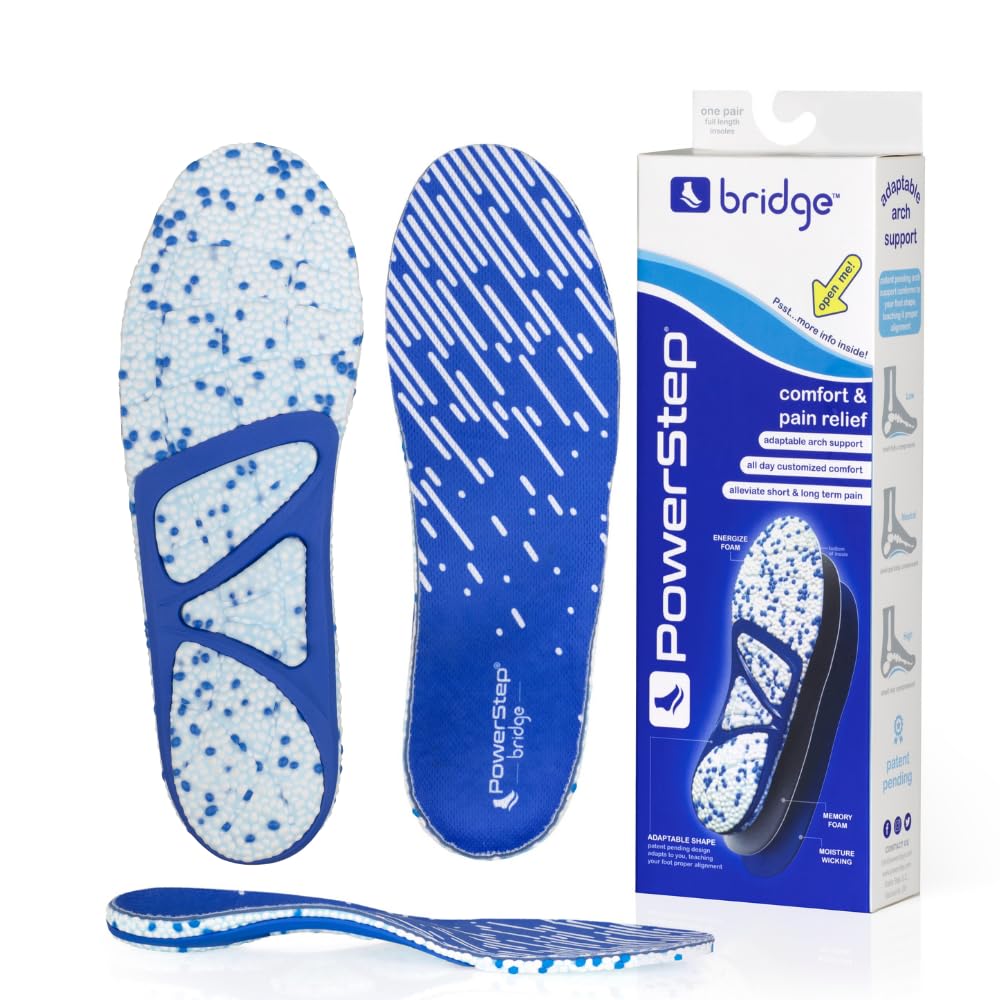
The Bridge insole bridges the gap between a rigid orthotic and a cushioned comfort insert. It uses two layers of energizing memory foam with a flexible, supportive frame that adapts to your foot’s natural shape and stride. This design makes it an excellent choice for active users who need both arch support and natural foot mobility during running or walking.
Experienced runners with 40 years in the sport report that these insoles combine structure with natural flex better than any alternative they’ve tried. The moisture-wicking fabric and special underside channels create a custom-like fit by allowing the foam to distribute weight evenly. The deep heel cup maintains alignment without the rigid boundary of a full orthotic.
Users with broken foot history or chronic tendonitis find these insoles comfortable enough for daily wear while still correcting alignment. Durability feedback is mixed—the top cloth liner may peel after a month of heavy use, though the structural foam continues to perform. For those who prioritize flex and cushion over rigid correction, this is a top pick.
Why it’s great
- Flexible design adapts to natural foot movement
- Dual-layer memory foam for responsive cushioning
- Moisture-wicking fabric keeps feet dry
Good to know
- Top fabric liner may peel with heavy daily use
- Less rigid correction than the Pinnacle line
4. BestHalo Heavy Duty Insoles
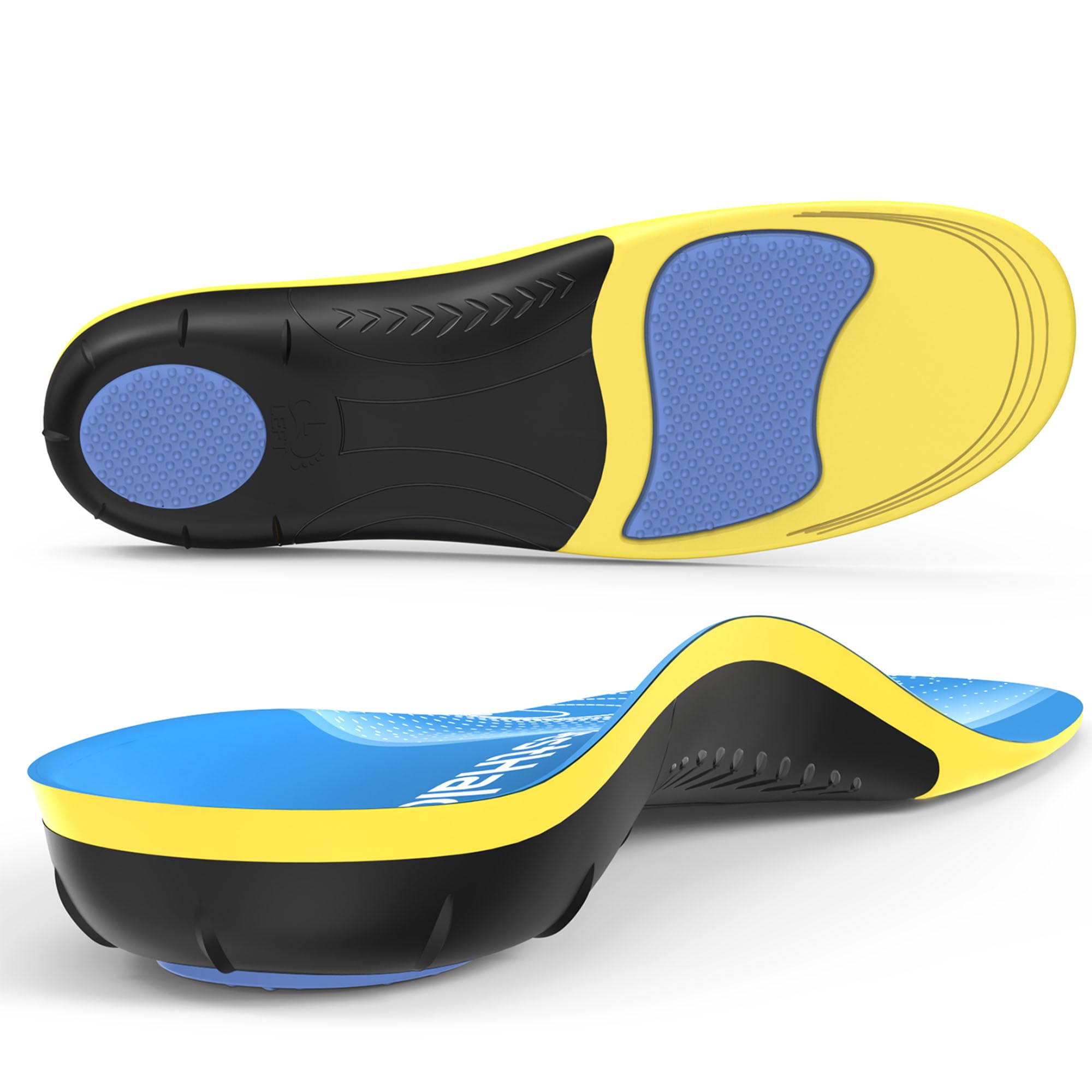
BestHalo developed these insoles based on biomechanical research to specifically address high arches and postural misalignment. The structured arch support system promotes natural alignment and healthier gait patterns, while the deep heel cup controls both overpronation and supination. Premium EVA foam and gel cushioning provide superior shock absorption during running or standing.
Users recovering from post-surgery foot pain report that these insoles eliminated pain traveling from the feet up to the hips. The firm arch provides immediate lift without feeling overly bulky, and the insole fits daily shoes without requiring a full size up. Several reviewers noted that the arch initially feels intense but becomes comfortable after a 3-to-7-day adjustment period.
The trim-to-fit design works well in athletic shoes and work boots. One user with a heavy frame confirmed that these insoles helped improve foot and leg alignment without moving or slipping inside the shoe. A smaller subset of users with wider feet or very high arches found the heel cup too soft, causing new midfoot aching after two weeks.
Why it’s great
- Biomechanically designed for high-arch correction
- Premium EVA and gel provide excellent shock absorption
- Firm arch eliminates postural pain from feet to hips
Good to know
- Requires a gradual adjustment period of 3–7 days
- Heel cup may feel too soft for some wide-foot users
5. Psveb Professional Heavy Duty Insoles
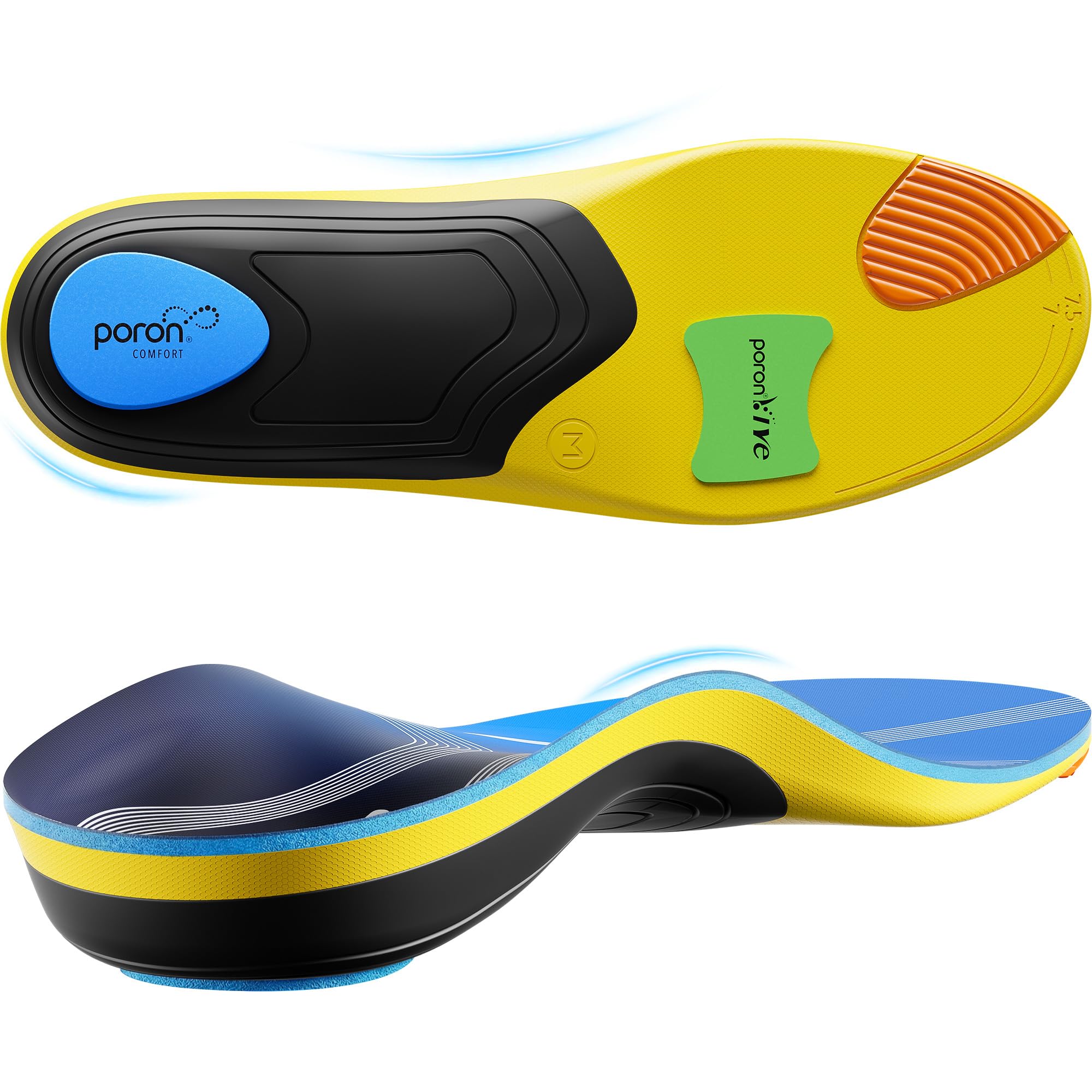
Psveb’s Golden Triangle design provides three-point support at the forefoot, arch, and heel, using double PORON cushioning for advanced shock absorption and dual elasticity. This configuration effectively distributes pressure across the foot’s load-bearing zones, making it a solid choice for users with medium arches who stand or walk on hard floors for 9–10 hours daily.
Reviews from warehouse and retail workers confirm that after one day, heel pain subsides noticeably. The deep U-shaped heel cup prevents side-to-side slippage, and the PU layer with a full-length top sheet adds both softness and durability. The insole holds up after three weeks of continuous use without flattening, outperforming many gel-based alternatives at a similar price point.
One detail worth noting: the thick construction requires looser laces in gym shoes or low-profile sneakers. In steel-toe boots, the fit is secure and stable. A small number of users with very high arches wanted more lift, but for medium-arch, medium-weight users, this insole delivers reliable daily support.
Why it’s great
- Three-point pressure distribution for balanced support
- Double PORON cushion resists flattening over weeks
- Deep heel cup prevents heel slip in work boots
Good to know
- May require looser laces in low-profile athletic shoes
- Not ideal for very high arches or narrow feet
6. Sof Sole High Arch Performance Insole

Sof Sole’s insole focuses on the intersection of athletic performance and arch support. The enhanced arch height is paired with a targeted gel drop in the heel for extra cushioning during impact activities like running, hiking, and cross-training. The deep heel cup prevents slip during dynamic lateral movements, keeping the foot locked in place.
Backpackers and hikers report that these insoles saved their feet during multi-day trips, absorbing abuse that would otherwise travel up the kinetic chain. The low-profile design fits into hiking boots and athletic shoes without adding excessive volume. Women with developed arch issues from years of wearing unsupportive footwear find these more comfortable than generic insoles.
Critically, some users with true high arches and chronic plantar fasciitis found the arch support insufficient for their needs, describing it as “supportive, yet soft.” This insole works best for the moderate-high arch user who values cushioning and heel stability over rigid orthopedic correction. It is a budget-friendly option that outperforms basic foam in recreational hiking and daily walking.
Why it’s great
- Gel heel drop absorbs impact during running and hiking
- Deep heel cup locks foot in place during lateral movement
- Low-profile design fits athletic and hiking footwear
Good to know
- Arch support may feel too mild for severe plantar fasciitis
- Not as durable as rigid orthotics under heavy loads
7. Archepaid Orthopedic Arch Support Insoles
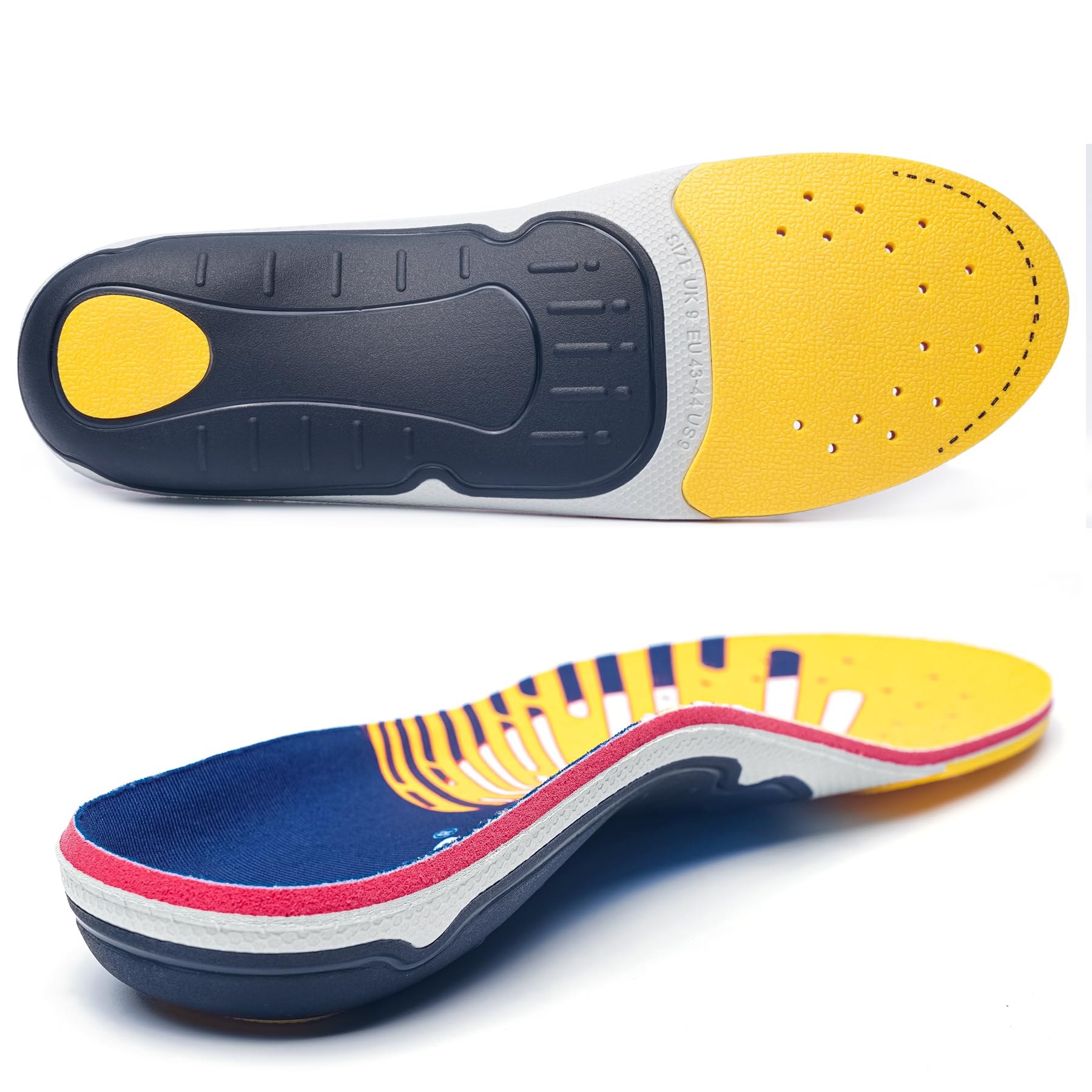
The Archepaid insole targets flat feet and plantar fasciitis with a 3.5 cm arch profile that lifts the foot’s natural curve. A deep U-shaped heel cup and TPU pads on the bottom add stability and control for overpronation, helping to align the entire body and distribute load evenly to the spine and joints. The heel pad is made from comfortable EVA for durable shock absorption.
Users with chronic flat feet and lower back pain report that pain disappeared within two days of use. One customer noted that after seven months of daily use, the insole initially felt hard but molded to the foot’s shape, maintaining support without collapsing. A podiatrist approved these insoles for a patient, calling them effective for maintaining arch support.
The trim-to-fit design allows easy adjustment for most athletic and casual shoes, though the insole is thick enough that some users need to remove the factory insole for proper fit. The TPU bottom pad adds noticeable stability without being overly rigid. For the price, this insole offers surprisingly good arch lift for flat-footed users who don’t require heavy-duty structural correction.
Why it’s great
- 3.5 cm arch provides significant lift for flat feet
- Deep U-shaped heel cup controls overpronation
- TPU stability pads improve gait and balance
Good to know
- Thick design may crowd toe box in some shoes
- EVA foam may wear faster than Poron or TPU
FAQ
How long does it take to adjust to firm arch support insoles?
Can I put arch support insoles in shoes that already have a built-in arch?
Final Thoughts: The Verdict
For most users, the best arch support insoles winner is the Fit Geno Heavy Duty because it combines a rigid TPU plate with Poron foam for real structural correction under heavy loads. If you want a podiatrist-recommended option with proven clinical results, grab the PowerStep Pinnacle. And for flexible comfort that adapts to active movement, nothing beats the PowerStep Bridge.