
Our readers keep the lights on and the weekend projects moving. As an Amazon Associate, I earn from qualifying purchases.
Living with flat feet often means a daily battle against arch fatigue, heel pain, and shin splints — the relentless ache that turns every step into a reminder of your feet’s collapsed structure. The right orthotic insert can restore that missing arch, realign your entire kinetic chain, and let you move without that familiar stab of discomfort.
I’m Rikta — the co-founder and writer behind FitlyFast. I’ve spent years analyzing biomechanical research, comparing hundreds of footbed materials, and tracking how specific arch heights and foam densities perform under real-world standing and walking loads.
This guide breaks down the specific materials, arch profiles, and durability markers that actually matter when choosing the right pair of arch supports for flat feet.
How To Choose The Best Arch Supports For Flat Feet
Picking the wrong insole can worsen arch strain or create new pressure points. For flat feet, you need a device that lifts the medial arch, controls pronation, and distributes weight evenly from heel to forefoot. Here are the key factors to lock in before you buy.
Arch Height and Profile
Flat feet lack a natural arch, so you need an insert with a pronounced, supportive arch — typically medium to high. Low-profile arches won’t provide enough lift. Look for insoles that mention “high arch support” or “firm arch cradle.” A few manufacturers offer multiple arch height options so you can pick the exact rise that fills your collapsed arch without overcorrecting.
Heel Cup Depth and Pronation Control
A deep, U-shaped heel cup cups the calcaneus, limiting side-to-side wobble and reducing overpronation — the most common complication of flat feet. Shallow cups fail to stabilize the heel, allowing the foot to roll inward with every stride. Rigid heel cups made from bio-plastic or reinforced polypropylene offer the best control for moderate to severe flat feet.
Material Density and Weight Capacity
Soft, squishy foams feel good in the store but collapse quickly under heavy loads. For flat feet, you want dual-density construction: a firm base for structural support (often PORON, high-density EVA, or closed-cell foam) and a softer top layer for comfort. Products that explicitly state a weight capacity — for example, “supports 220+ lbs” — are engineered to resist flattening in the arch zone over time.
Quick Comparison
On smaller screens, swipe sideways to see the full table.
| Model | Category | Best For | Key Spec | Amazon |
|---|---|---|---|---|
| PowerStep Pinnacle | Premium Full-Length | Moderate pronation & daily wear | Dual-layer cushioning, moderate arch | Amazon |
| Superfeet All-Purpose High Arch (Green) | Premium Trim-to-Fit | High arches & active lifestyle | Closed-cell foam, deep heel cup | Amazon |
| Kelaide Metatarsalgia Insoles | Premium Full-Length | Ball-of-foot pain & neuroma | Built-in metatarsal pad | Amazon |
| BestHalo Heavy Duty | Mid-Range Full-Length | High arches & heavy loads | EVA foam + gel cushioning | Amazon |
| OUOKK Low Arch Support Inserts | Mid-Range 3/4-Length | Tight shoes & long standing | 24mm arch, 2+ year life | Amazon |
| VALSOLE Heavy Duty Support | Budget Full-Length | Heavy-duty work & warehouse | High arch, firm build | Amazon |
| Psveb Professional Heavy Duty Support | Budget Full-Length | Hard floors & plantar fasciitis | Dual PORON + PU cushioning | Amazon |
In‑Depth Reviews
1. PowerStep Pinnacle Insoles

The PowerStep Pinnacle is the #1 podiatrist-recommended over-the-counter orthotic for a reason: its dual-layer cushioning strikes a rare balance between structural rigidity and walking comfort. The flexible-yet-supportive arch shell controls moderate pronation without forcing your foot into an unnatural position, making it ideal for the flat-footed who need correction they can wear all day.
Unlike soft foam insoles that compress after a few weeks, the Pinnacle’s polyester base retains its shape under repeated load. Users with long-standing flat feet and lower back pain report significant relief after a short break-in period. No trimming is required — you order by shoe size — and the full-length design works in athletic, walking, and casual shoes.
While the moderate arch may feel low for those with severely collapsed feet, it is precisely the right height for the millions of flat-footed adults who simply need consistent, mild-to-moderate correction without the aggressive lift of a rigid prescription device. The 30-day guarantee gives you a risk-free trial period.
Why it’s great
- Dual-layer cushioning with firm arch control
- Order by shoe size, no trimming required
- Clinically proven over-the-counter orthotic
Good to know
- Moderate arch may not satisfy severe flat feet
- Requires gradual break-in for full adaptation
2. Superfeet All-Purpose Support High Arch Insoles (Green)
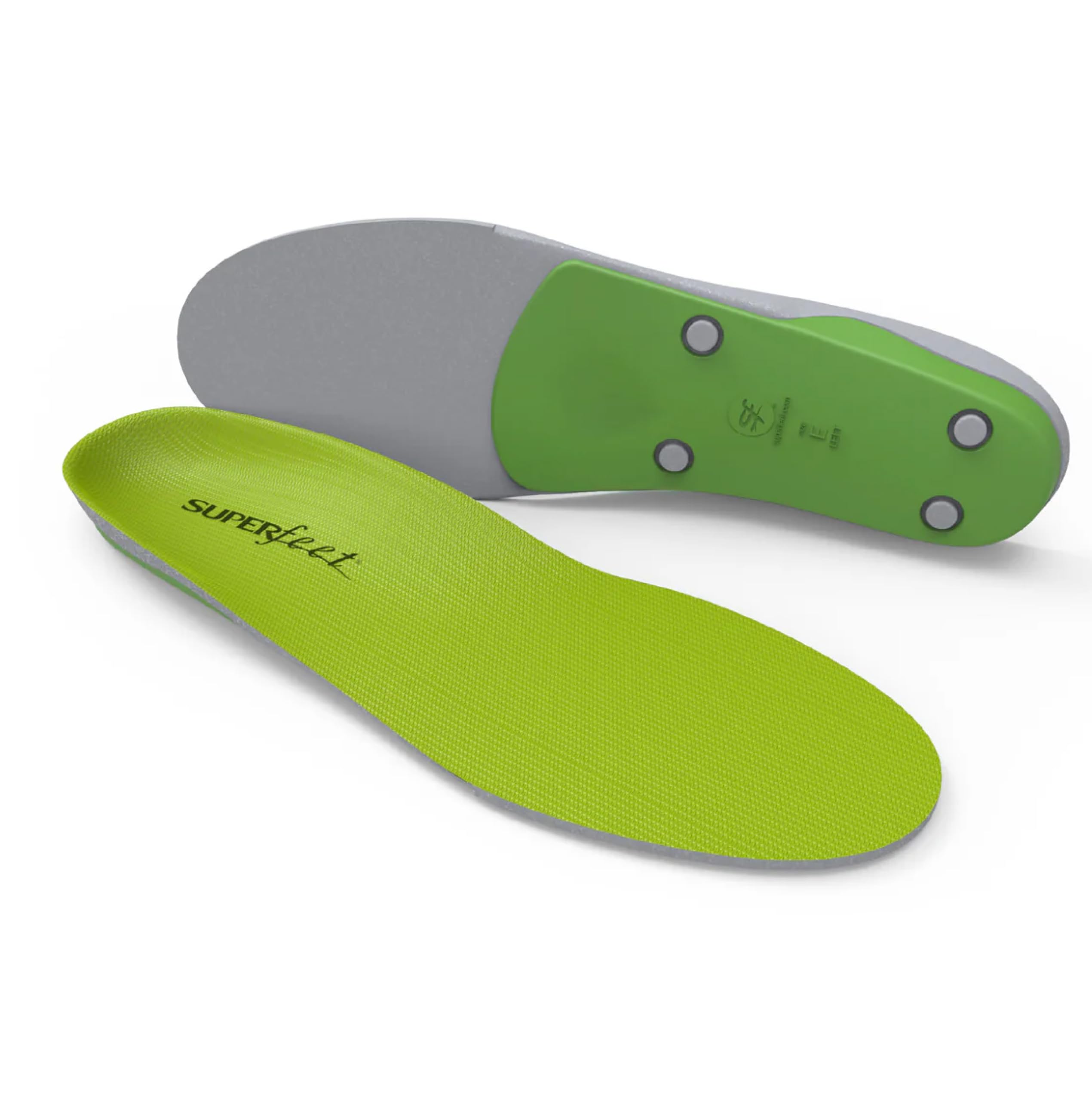
The Superfeet Green (now called All-Purpose Support High Arch) is a legendary choice for flat-footed wearers who need aggressive, unyielding arch support. The firm closed-cell foam base and sculpted deep heel cup create a rigid cradle that prevents the foot from rolling inward — a critical feature for overpronators. Despite being marketed for high arches, many flat-footed users find the pronounced lift effectively fills their collapsed arch space.
The moisture-wicking top cover controls odor, and the high-density foam resists compression even after years of daily wear. The trim-to-fit design requires careful cutting, but it allows the insole to slide into boots, hiking shoes, and roomier sneakers. A 7- to 10-day break-in period is normal — the support is stiff enough to feel foreign initially.
The raised heel can slightly reduce the “springy” feel in performance running shoes, and users with asymmetrical arch heights may prefer PowerStep’s more forgiving metatarsal pad. However, for flat-footed users who need the strongest over-the-counter correction available, the Superfeet Green remains a gold standard.
Why it’s great
- Rigid, high-arch support for severe overpronation
- Durable closed-cell foam resists flattening
- Deep heel cup stabilizes the calcaneus
Good to know
- Stiff feel requires a gradual break-in
- Trim-to-fit; cutting mistakes are not reversible
3. Kelaide Metatarsalgia Insoles

Flat feet often lead to ball-of-foot pain as the plantar fascia pulls the metatarsal heads downward. The Kelaide Metatarsalgia Insole directly addresses this with a built-in metatarsal pad that offloads pressure from the forefoot while still providing neutral arch support. It is a rare two-in-one solution for flat-footed users who also suffer from Morton’s neuroma or general metatarsalgia.
The full-length design uses a soft premium foam top layer for immediate comfort and a more rigid bottom shell that stabilizes the midfoot. The heel cup is wrapped but not excessively high, allowing it to fit comfortably in athletic, walking, and some casual shoes. Breathable fabric reduces heat buildup during prolonged standing.
Users with very low arches may find the neutral arch slightly underwhelming compared to dedicated high-arch orthotics. The metatarsal pad also requires a short adaptation period, as the raised dome beneath the forefoot feels unfamiliar at first. It is best for those whose flat-foot pain radiates to the ball of the foot.
Why it’s great
- Integrated metatarsal pad relieves forefoot pain
- Breathable foam reduces heat and friction
- Versatile fit across multiple shoe styles
Good to know
- Neutral arch may not correct severe flat feet
- Metatarsal pad requires a break-in period
4. BestHalo Heavy Duty Plantar Fasciitis Insoles
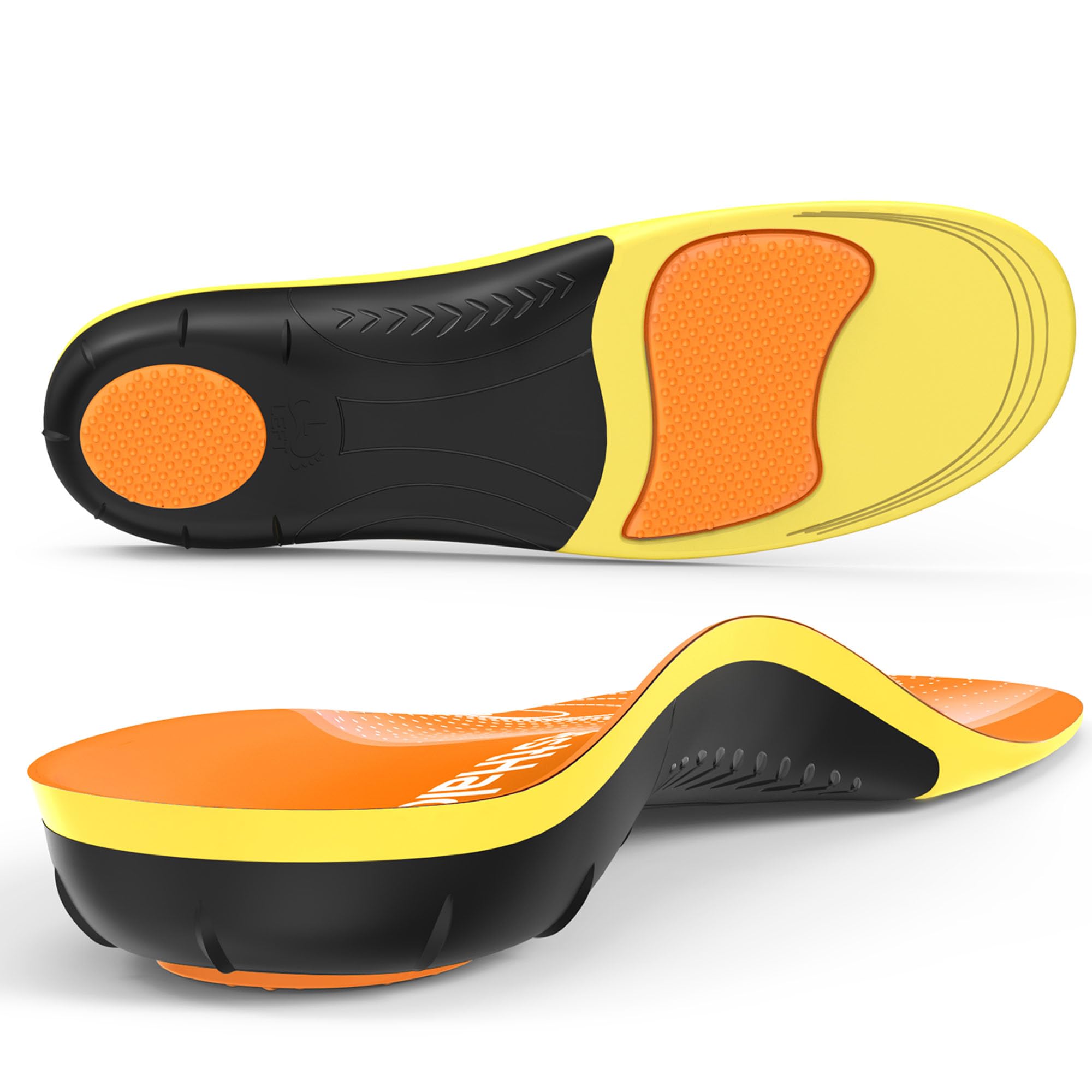
The BestHalo Heavy Duty insole was designed around biomechanical principles, featuring a structured high arch system that encourages natural gait alignment. The premium EVA foam base is paired with gel cushioning in the heel and forefoot to absorb shock while maintaining a firm arch cradle — a combination that works well for heavier individuals and those who spend long shifts on concrete floors.
The deep heel cup stabilizes the calcaneus, limiting overpronation during walking or light jogging. The trim-to-fit design accommodates work boots, athletic shoes, and casual sneakers. A dedicated 3–7 day break-in period is expected, and the manufacturer recommends starting with 2–3 hours per day to let the arch adjust.
Some users with very low arches or sensitive arches report initial lower back discomfort as the foot adapts to the lift. This is common with high-arch orthotics. The BestHalo is best suited for flat-footed users who want aggressive arch support and can tolerate a structured, firm footbed.
Why it’s great
- Biomechanical design with structured high arch
- Gel cushioning in heel and forefoot for shock absorption
- Fits boots, sneakers, and casual shoes
Good to know
- Requires a noticeable break-in period
- May cause initial lower back discomfort
5. OUOKK Low Arch Support Inserts
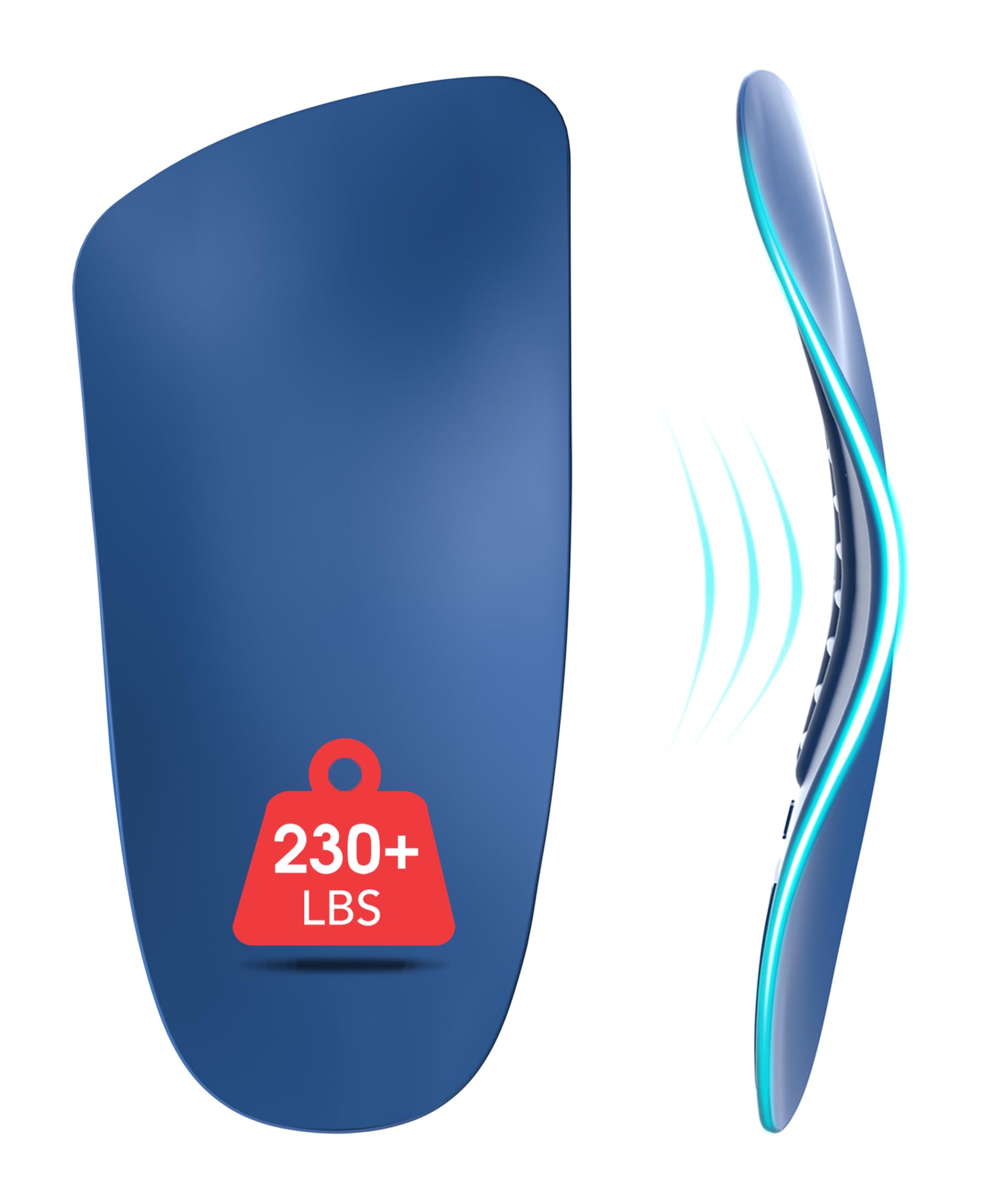
The OUOKK inserts offer a unique solution for flat-footed users who cannot tolerate full-length orthotics in tight shoes. At 24mm of arch height, the 3/4-length design slides under the arch and heel without crowding the toe box, making them ideal for high heels, loafers, and slim-profile footwear. The premium bio-plastic shell delivers lasting support for up to two years without significant deformation.
The foot massage area onto the arch disperses plantar fascia pressure, and the thin edges conform to the shoe without adding bulk. No cutting is required — the 3/4 length naturally fits most medium to wide shoes. The manufacturer claims compatibility with shoes where a full-length insole would be too thick.
Because they do not extend under the toes, these inserts may shift slightly inside shoes without a secure heel pocket. Sticky backing helps, but active runners or hikers may prefer a full-length model. They are best for daily standing, work boots, and casual wear where space is tight.
Why it’s great
- Thin 3/4-length fits tight shoes
- 24mm bio-plastic arch lasts 2+ years
- Foot massage area reduces fascia pressure
Good to know
- May shift in shoes without sticky backing
- No forefoot cushioning for toe-off support
6. VALSOLE Heavy Duty Support Orthotics

The VALSOLE Heavy Duty Support orthotic is a firm, high-arch insole built for industrial-grade wear. Warehouse workers, construction pros, and anyone logging 8–12 hours on cement floors report dramatic reductions in lower back and hip pain after switching to these. The deep heel cup locks the heel in place, preventing the sliding motion that aggravates plantar fasciitis and overpronation.
Despite the firm base, the top layer provides enough give for all-day comfort. The orthotic does not need to be trimmed for most standard shoe sizes, and it slides easily into work boots and sneakers. Users with heavy body weight (220+ lbs) find the arch support does not collapse over time, a common failure point in cheaper foam insoles.
The primary trade-off is thickness. The substantial build can make the shoe feel tighter, especially in low-profile footwear. Lace loosening may be necessary. It is an exceptional budget-to-mid-range option for flat-footed workers who need durable, high-arch relief without a premium price.
Why it’s great
- Firm high arch support for heavy body weight
- Deep heel cup locks heel and controls pronation
- No compression or flattening after long shifts
Good to know
- Thick build may require looser laces
- Not suitable for low-cut or tight dress shoes
7. Psveb Professional Heavy Duty Support Orthotics

The Psveb Professional Heavy Duty Support insole uses a dual-layer PORON cushioning system — the same high-rebound foam found in premium running shoes — to absorb shock while maintaining a rigid arch support. The “Golden Triangle” design distributes pressure across the forefoot, arch, and heel, making it a well-structured budget option for flat-footed users with plantar fasciitis.
The deep U-shaped heel cup prevents side slippage inside the shoe, and the full PU layer adds durability and sweat resistance. Users on their feet 9–10 hours daily on hard floors report no flattening after several weeks. The trim-to-fit sizing allows it to slide into work boots, sneakers, and gym shoes.
The medium arch may feel too low for those who need aggressive correction, and the thick build can reduce volume inside the shoe, requiring lace adjustment. For the price, the PORON cushioning and stable arch control represent strong value — especially for those experimenting with orthotics for the first time.
Why it’s great
- Dual PORON cushioning with excellent shock absorption
- “Golden Triangle” design distributes pressure evenly
- Durable PU layer resists odor and sweat
Good to know
- Medium arch may be insufficient for severe flat feet
- Thick build requires roomier shoes
FAQ
Will arch supports for flat feet cure my overpronation?
How long does it take to break in firm arch supports?
Can I use flat foot arch supports in dress shoes or high heels?
Final Thoughts: The Verdict
For most users, the arch supports for flat feet winner is the PowerStep Pinnacle because it combines podiatrist-recommended moderate arch support with durable dual-layer cushioning that works for all-day wear without an intense break-in. If you want aggressive correction for severe overpronation, grab the Superfeet Green. And for a budget-friendly option that handles heavy loads and hard floors, nothing beats the Psveb Professional Heavy Duty Support.