
Our readers keep the lights on and the weekend projects moving. As an Amazon Associate, I earn from qualifying purchases.
Each step can feel like a knife stabbing your heel when the plantar fascia band is inflamed. That morning jolt and persistent arch ache make even short walks a test of will. The right arch support can offload tension from the fascia and restore normal foot mechanics, turning painful strides back into simple movement.
I’m Rikta — the co-founder and writer behind FitlyFast. I’ve spent countless hours analyzing foot biomechanics, reviewing material science, and cross-referencing user feedback over hundreds of hours to find which arch supports actually deliver measurable plantar fasciitis relief.
This guide breaks down the top contenders based on arch height, heel cup depth, material firmness, and real-world durability. You’ll leave knowing exactly which arch supports for plantar fasciitis match your foot type and daily demands.
How To Choose The Best Arch Supports For Plantar Fasciitis
Not all arch supports are created equal. The wrong one can aggravate your pain, while the right fit can erase morning heel pain within days. Here are the key factors to consider before buying.
Arch Height Matching
Plantar fasciitis often stems from an arch that is either too low (flat feet) or too high. Low arches need a firm post to prevent overpronation, while high arches need deeper cupping to cradle the foot and reduce strain on the fascia’s insertion point at the heel. Ignoring this will send the wrong mechanical force through your foot.
Heel Cup Depth and Stability
A deep heel cup locks the calcaneus in place, preventing excessive side-to-side motion that tugs on the plantar fascia. Look for cups at least 12mm deep. Shallow cups allow the fat pad to shift, reducing the support’s effectiveness and leaving the heel unprotected.
Material Firmness vs. Cushioning
Plantar fasciitis demands rigidity under the arch to resist collapse, plus enough cushion at the heel to absorb shock. All-foam insoles often lack the structural integrity needed. Look for a semi-rigid base (like a plastic or carbon-fiber shank) combined with a soft top layer for comfort. You want support that doesn’t squish flat after a month.
Trim-to-Fit vs. Pre-Cut Sizing
Trim-to-fit insoles offer more shoe-type flexibility and are ideal for work boots or athletic shoes with removable insoles. Pre-cut models eliminate trimming errors but must match your exact shoe size. Always remove the original insole before inserting an arch support to avoid crowding your toes.
Quick Comparison
On smaller screens, swipe sideways to see the full table.
| Model | Category | Best For | Key Spec | Amazon |
|---|---|---|---|---|
| PowerStep Pinnacle | Podiatrist Rec | Moderate pronation & all-day wear | No trim needed; dual-layer cushioning | Amazon |
| Superfeet All-Purpose (Green) | High Arch | High arches & firm support needs | Deep heel cup; closed-cell foam | Amazon |
| Custom Fit Orthotics CF 440 | 3/4 Length | Multi-pain relief (foot, knee, back) | Plastic arch shank; tri-density foam | Amazon |
| BestHalo Heavy Duty | High Arch | Heavy users & work boots | EVA + gel cushioning; deep heel cup | Amazon |
| VALSOLE Heavy Duty | Mid-Range | Warehouse workers & long shifts | High arch; shock-absorbing foam | Amazon |
| Professional Heavy Duty Support | Mid-Range | Heavy individuals >230 lbs | Double PORON cushion; U-shaped heel | Amazon |
| Dr. Scholl’s Plantar Fasciitis | Entry-Level | Budget-friendly & casual use | Sized to fit; 8-12 hr comfort | Amazon |
In‑Depth Reviews
1. PowerStep Pinnacle Insoles

The PowerStep Pinnacle uses a semi-rigid polypropylene shell covered with dual-layer foam that provides both structural support and impact absorption. This combination directly addresses the two-fold requirement of plantar fasciitis: holding the arch rigid while cushioning the heel strike. The shell resists flattening even under heavy daily use, and the deep heel cup stabilizes the calcaneus to prevent overpronation.
Reviewers consistently report dramatic relief from morning heel pain and lower back fatigue within the first week. The no-trim sizing eliminates guesswork, and the insoles fit athletic shoes, work boots, and casual footwear with removable insoles. Users with flat feet and moderate pronation see the most consistent benefit.
Some users with extremely high arches find the arch profile too moderate, and the heel posting feels firm for those taking over 15,000 steps per day. A short adaptation period is normal as your foot adjusts to the rigid support, but the long-term relief justifies the mid-range investment.
Why it’s great
- Podiatrist recommended with proven results for plantar fasciitis
- No trimming required, perfect fit out of the box
- Semi-rigid shell ensures long-term durability
Good to know
- Arch profile is moderate, not ideal for very high arches
- Heel posting may feel firm for ultra-high-mileage use
2. Superfeet All-Purpose Support High Arch (Green)
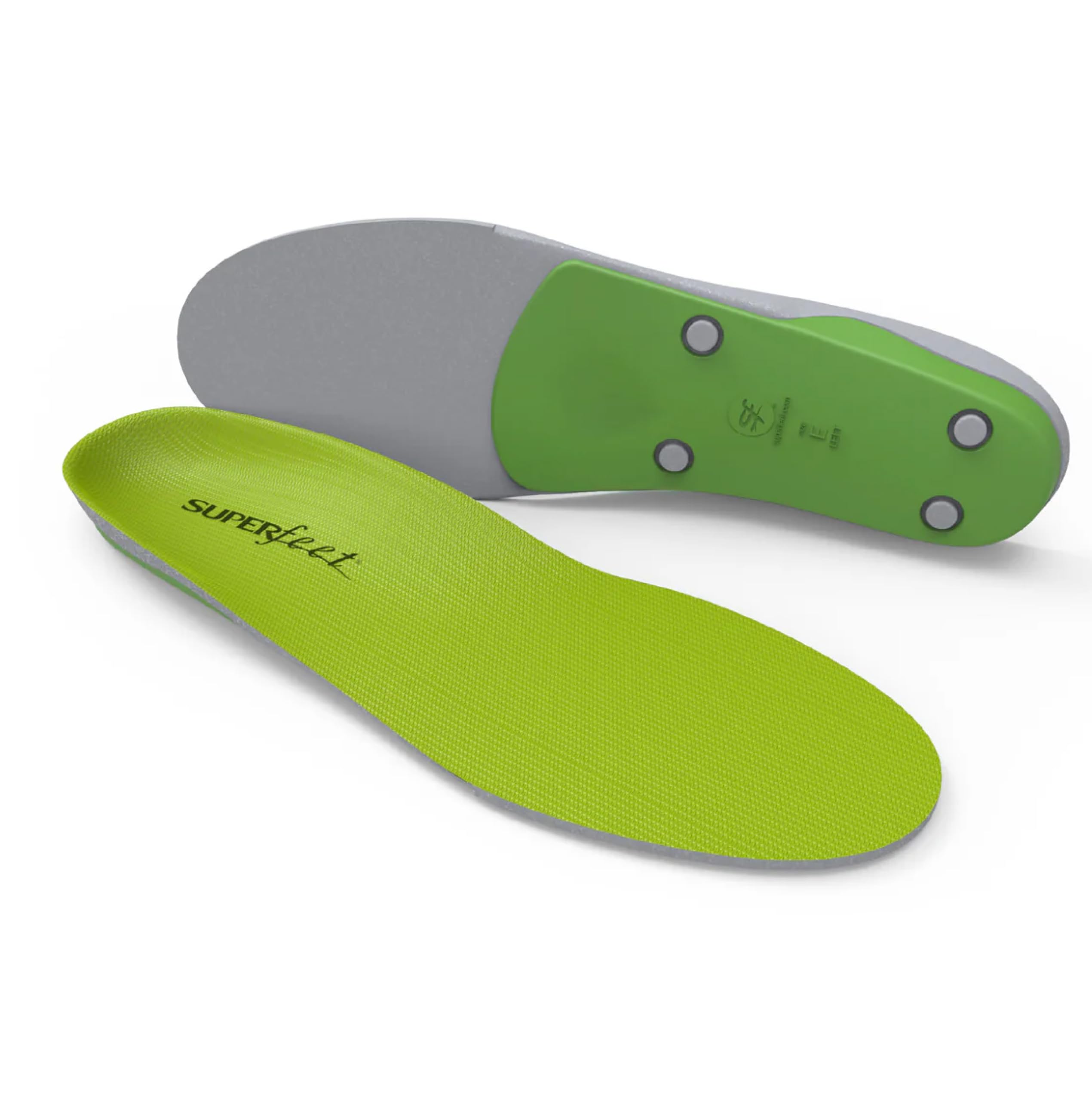
The Superfeet Green features a high-density closed-cell foam base paired with a sculpted heel cup that cradles the calcaneus and maintains natural shock absorption. This is the firmest insole in the Superfeet lineup, making it ideal for individuals with high arches who need aggressive support to offload the plantar fascia. The moisture-wicking top cover also helps control odor during long wear.
Users with flat feet and high arches alike report that despite being marketed for high arches, the Superfeet Green effectively stabilizes low arches due to the rigid post. The deep heel cup prevents heel slippage and reduces the tugging force on the fascia. Many reviewers note that this insole outlasts cheaper alternatives, with a typical lifespan of 12 months of daily use.
The trim-to-fit design requires careful cutting to avoid mistakes, and the firm foam can feel uncomfortable for the first 3–5 days during the break-in period. It also adds noticeable height to the heel, which may require loosening laces. Not ideal for low-profile shoes or casual loafers.
Why it’s great
- Extremely durable closed-cell foam lasts 12+ months
- Deep heel cup dramatically stabilizes the heel
- Effective for both flat feet and high arches
Good to know
- Requires 3–5 day break-in period
- Adds heel height; not suitable for low-profile shoes
3. Custom Fit Orthotics 3/4 Length Inserts CF 440
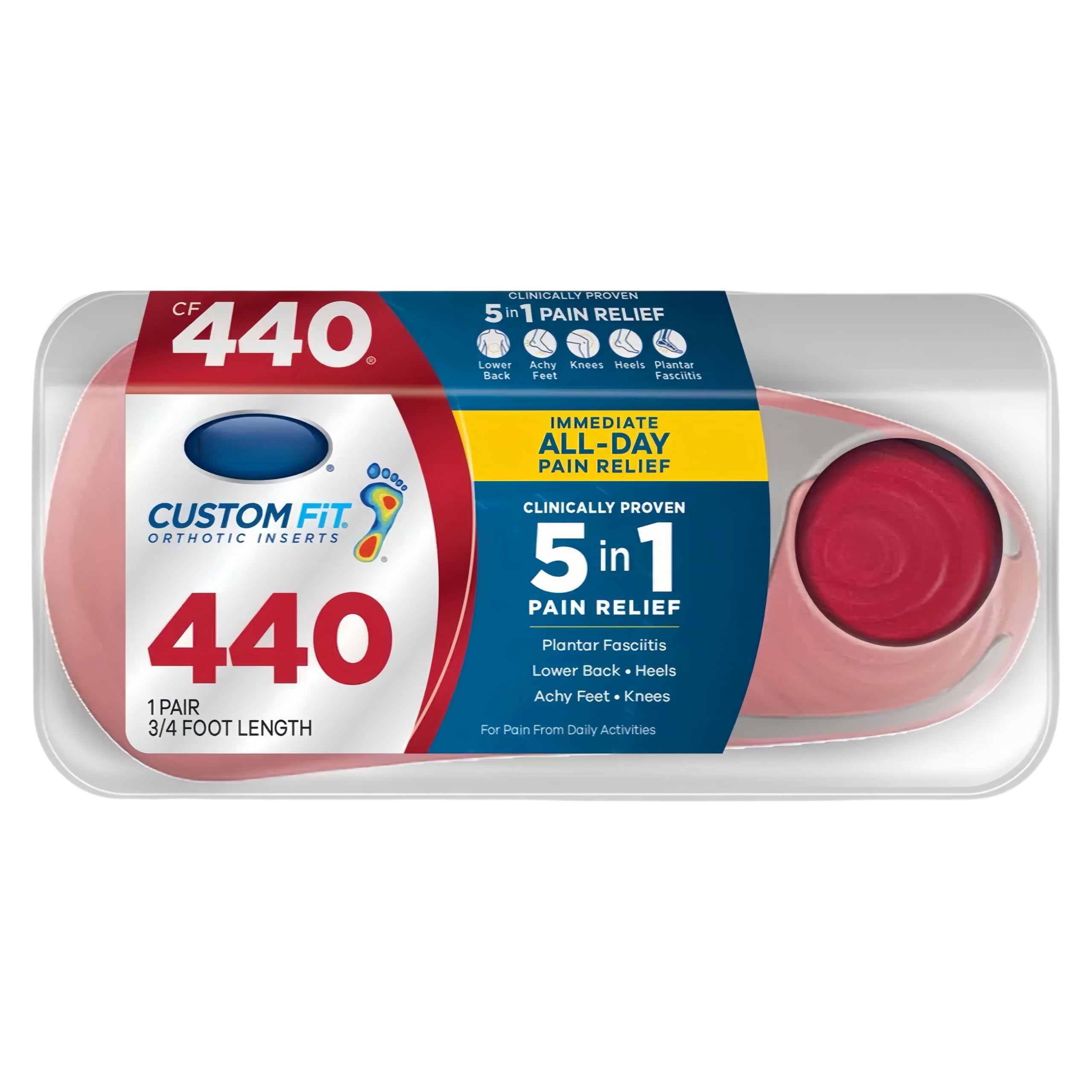
The CF 440 is a 3/4-length orthotic that uses a rigid plastic arch shank embedded in tri-density foam, providing firm support without the bulk of a full-length insole. The 3/4 design makes it compatible with more shoe types, including dress shoes and boots with limited toe space. The plastic shank prevents the arch from collapsing under heavy loads, a key requirement for plantar fasciitis relief.
Long-term users report the CF 440 outlasts many full-length alternatives, with some pairs lasting over a decade. The arch support is aggressive enough to address severe foot pain, and the foam layers add comfort without compromising structure. It’s particularly effective for users with high arches who need a non-bulky solution.
Sizing accuracy is critical, and some users struggle to get the correct fit without in-person measurement. The 3/4 length may not provide enough cushioning for users who also need metatarsal pad support. Not recommended for shoes with thin, fixed insoles.
Why it’s great
- Extremely long-lasting, some pairs last 10+ years
- Firm plastic shank provides excellent arch support
- 3/4 length fits more shoe types
Good to know
- Sizing can be tricky without in-person fitting
- 3/4 length may lack metatarsal pad for some users
4. BestHalo Heavy Duty Plantar Fasciitis Insoles
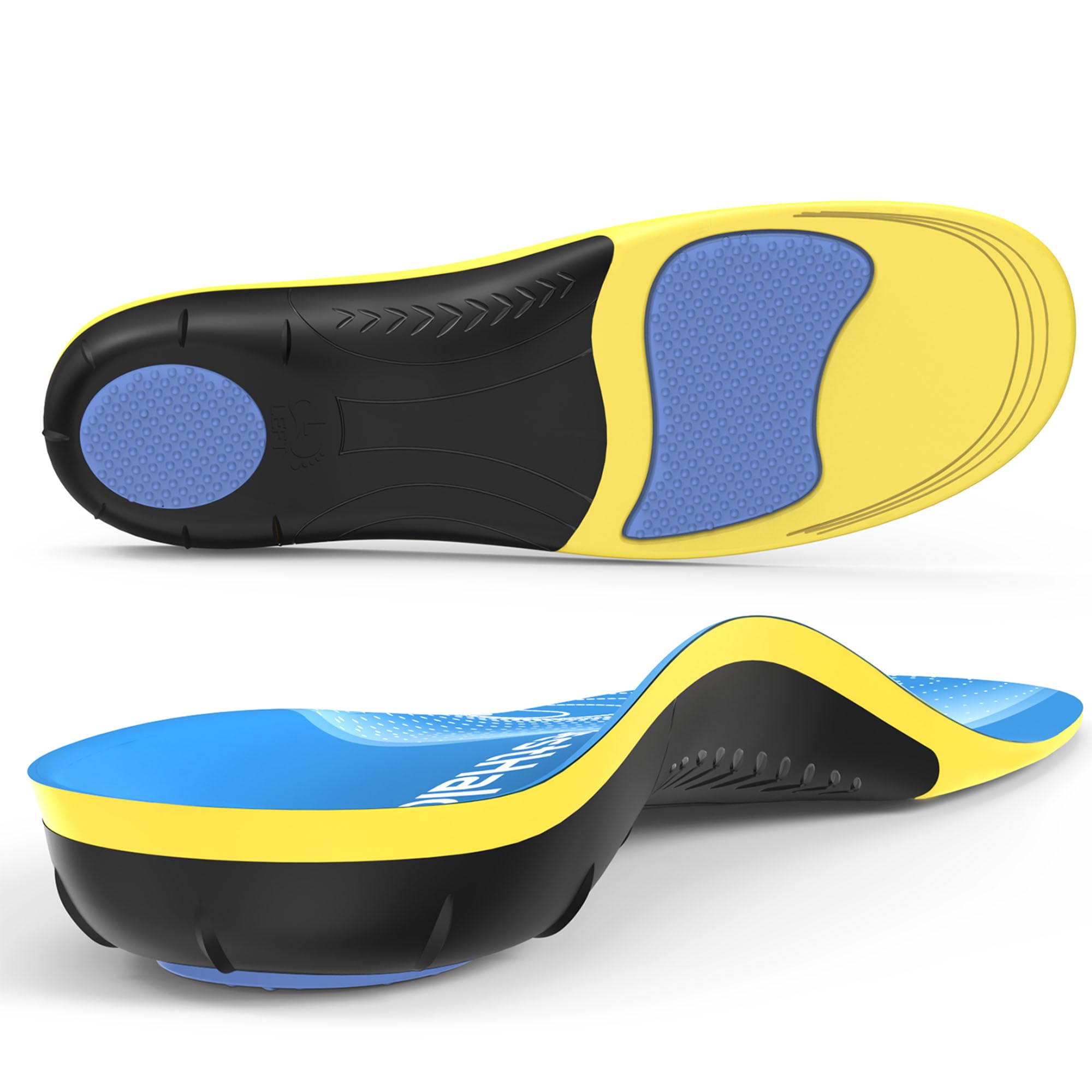
The BestHalo Heavy Duty insoles combine a high-arch biomechanical design with premium EVA foam and gel cushioning to absorb shock while maintaining support. The deep heel cup is engineered to stabilize the heel and control overpronation, reducing the pulling stress on the plantar fascia. The trim-to-fit design allows customization for work boots, sneakers, and athletic shoes.
Users weighing 220-plus pounds report significant post-surgery pain relief and elimination of heel and sole pain during long shifts. The gel layer adds a plush step that many heavy users find superior to all-foam designs. Reviewers mention that the firm arch support takes about 3–7 days to adapt to, but after that, the insoles provide lasting relief.
For users with low arches or flat feet, the high arch profile may feel too aggressive and can cause new foot or lower back pain. The gel layer can also feel slick initially, though this subsides after a few weeks of wear. Not ideal for users with neutral or low arches.
Why it’s great
- Gel + EVA hybrid provides excellent shock absorption
- Deep heel cup effectively controls overpronation
- Designed for heavy users 220+ lbs
Good to know
- High arch may be too aggressive for flat feet
- Initial slickness resolves after break-in period
5. VALSOLE Heavy Duty Support Pain Relief Orthotics

VALSOLE orthotic insoles use a high-density foam base with a pronounced arch profile and a deep heel cup designed to absorb shock with every step. The arch support is firm enough to resist collapse under heavy loads, making them a go-to for warehouse workers and those who stand on concrete for 8-plus hours. The shock-absorbing layer reduces impact force that travels up to the knees and lower back.
Users who struggle with chronic foot pain report that VALSOLE turned uncomfortable sneakers into their most comfortable pair. Warehouse workers and heavy individuals (6’5”, 235 lbs) note dramatic reductions in back pain and knee pain after just one shift. The insoles are easy to trim and fit snugly in work boots and running shoes.
The cushioning is more functional than plush, so users accustomed to thick, soft insoles may find the comfort level “alright to good” rather than premium. Some users mention that spending incrementally more could provide a cushier feel, but the support-to-price ratio is excellent.
Why it’s great
- Excellent shock absorption for concrete-floor work
- Firm arch support that resists flattening
- Excellent value for heavy-duty use
Good to know
- Cushioning is functional, not plush
- Not as deep-welled as premium foam alternatives
6. Professional Heavy Duty Support Pain Relief Orthotics

This orthotic uses double PORON (a high-performance urethane foam) cushioning combined with a Golden Triangle ergonomic design that supports the forefoot, arch, and heel. The deep U-shaped heel cup provides a secure fit that prevents side-to-side slippage during movement. The full PU layer on the bottom adds softness and durability for long-term use.
Users over 230 pounds report noticeable improvement in heel pain after just one day in work boots. The firm arch support stays true even after 9–10 hour shifts on hard floors. The trim-to-fit design is easy to cut without bunching inside the shoe, and the foam holds up without flattening after several weeks of daily wear.
For users with very high arches, the medium support level may feel inadequate. Some users also noted initial foot sliding that resolved after a break-in period. The thickness may require loosening laces in low-back shoes or gym footwear.
Why it’s great
- Double PORON provides advanced shock absorption
- U-shaped heel cup prevents side slippage
- Excellent for users over 230 lbs
Good to know
- Medium arch may not suit very high arches
- Thick enough to require loosened laces in some shoes
7. Dr. Scholl’s Plantar Fasciitis Sized to Fit Insoles

The Dr. Scholl’s Plantar Fasciitis insoles feature a targeted arch support and heel cushion system in a sized-to-fit design that does not require trimming. The insoles are thicker than standard insoles, providing robust shock absorption for heel striking. They are designed to be replaced every 2–3 months, making them more of a disposable but effective option for managing pain.
Users working 8–12 hour shifts report that these insoles out-perform expensive custom orthotics in reducing foot pain. The arch support is firm without being painful, and the heel stabilization helps with confident walking. Many reviewers find them comfortable enough to wear in all shoe types, from sneakers to work boots.
The thickness can cause pressure on the top of the foot until laces are loosened. They are not intended for long-term heavy-duty use, as the foam degrades faster than semi-rigid alternatives. Not ideal for users who need ultra-high arch support or deep heel cupping.
Why it’s great
- Immediate pain relief, often outperforms custom orthotics
- No trimming required; ready to use out of the box
- Very affordable entry point for new users
Good to know
- Needs replacement every 2-3 months
- Thickness may cause top-of-foot pressure in tight shoes
FAQ
How long does it take for arch supports to relieve plantar fasciitis pain?
Should I buy high arch or low arch insoles for plantar fasciitis?
Can I wear arch supports in any shoe type?
How often should I replace my plantar fasciitis insoles?
Final Thoughts: The Verdict
For most users, the arch supports for plantar fasciitis winner is the PowerStep Pinnacle because it provides the ideal balance of semi-rigid arch support, dual-layer cushioning, and podiatrist-approved design for moderate pronation. If you need aggressive high-arch support and deep heel stabilization, grab the Superfeet All-Purpose (Green). And for a slim-profile, long-lasting orthotic that fits in more shoe types, nothing beats the Custom Fit Orthotics CF 440.