
Our readers keep the lights on and the weekend projects moving. As an Amazon Associate, I earn from qualifying purchases.
Wrist-based optical sensors on smartwatches have a dirty secret: they lose lock during high-intensity intervals, sweat breaks the seal, and cadence-locked arm swing introduces ground noise that corrupts your heart rate graph. An armband heart rate monitor solves this by placing the optical sensor against a more stable, better-perfused part of your arm, delivering consistent, beat-by-beat data without the constriction of a chest strap.
I’m Rikta — the co-founder and writer behind FitlyFast. I’ve spent years analyzing optical sensor performance, comparing ANT+ vs. Bluetooth multipoint architectures, and stress-testing battery endurance claims across dozens of armband models to find the ones that actually hold up during real training sessions.
If you rely on accurate heart rate metrics to guide training zones, recovery decisions, or calorie tracking, investing in a dedicated best armband heart rate monitor removes the guesswork from wrist-based sensors and the discomfort of chest straps.
How To Choose The Best Armband Heart Rate Monitor
Selecting the right optical armband requires understanding a few non-negotiable specs that separate a reliable training tool from a gadget that drops signal mid-workout. Focus on connectivity protocols, sensor accuracy, battery endurance, and the physical band design.
Connectivity: Bluetooth 5.0, ANT+, and Multi-Device Pairing
Bluetooth 5.0 offers improved range and battery efficiency over older versions. ANT+ remains essential for connecting to Garmin watches, cycling computers, and gym equipment that don’t support Bluetooth. Dual-band models let you connect to a watch and a phone simultaneously — useful for streaming heart rate to Zwift while logging data on your watch.
Optical Sensor Generation and HRV Support
Newer optical sensors use multiple wavelengths and advanced algorithms to filter motion artifacts. Armbands that support heart rate variability (HRV) and RR interval data enable deeper recovery analysis through apps like HRV4Training, Elite HRV, or Morpheus. If you follow training stress scores, this feature is non-negotiable.
Battery Life and Charging Port
Most armbands offer 24 to 65 hours of continuous operation. Models with a proprietary magnetic puck charger require you to carry a dedicated cable, which is a common point of failure for long-term use. Units with a USB-C or Type-C magnetic port are significantly more convenient for travel and less likely to become obsolete.
Band Material and Adjustment Range
The strap construction determines whether the armband stays put during sweaty intervals or slides down your arm. Medical-grade silicone resists slipping better than basic nylon. Look for models that include multiple strap sizes or offer a wide adjustment range (9.4 to 16.9 inches for larger arms) to ensure a secure fit regardless of arm circumference.
Quick Comparison
On smaller screens, swipe sideways to see the full table.
| Model | Category | Best For | Key Spec | Amazon |
|---|---|---|---|---|
| Polar Verity Sense | Premium | Multi-sport & swim versatility | Dual Bluetooth + ANT+, goggles clip | Amazon |
| Wahoo TICKR FIT | Premium | Dual-band reliability for cycling | Dual Bluetooth + ANT+, 35h battery | Amazon |
| COROS Heart Rate Monitor | Premium | COROS ecosystem & multi-device sync | Bluetooth only, 3 devices at once, 38h | Amazon |
| COOSPO HW9 | Mid-Range | Zone training with LED indicators | Bluetooth 5.0 + ANT+, 35h, HRV support | Amazon |
| iGPSPORT HR70 | Mid-Range | Extended endurance runs & rides | Bluetooth 5.0 + ANT+, 65h battery | Amazon |
| Scosche Rhythm+ 2.0 | Mid-Range | HRV & RR interval recovery analysis | Bluetooth + ANT+, IP68, 24h battery | Amazon |
| Powr Labs Armband | Budget-Friendly | Auto-wear detection for casual training | Dual Bluetooth + ANT+, 3 device pairing | Amazon |
In‑Depth Reviews
1. Polar Verity Sense
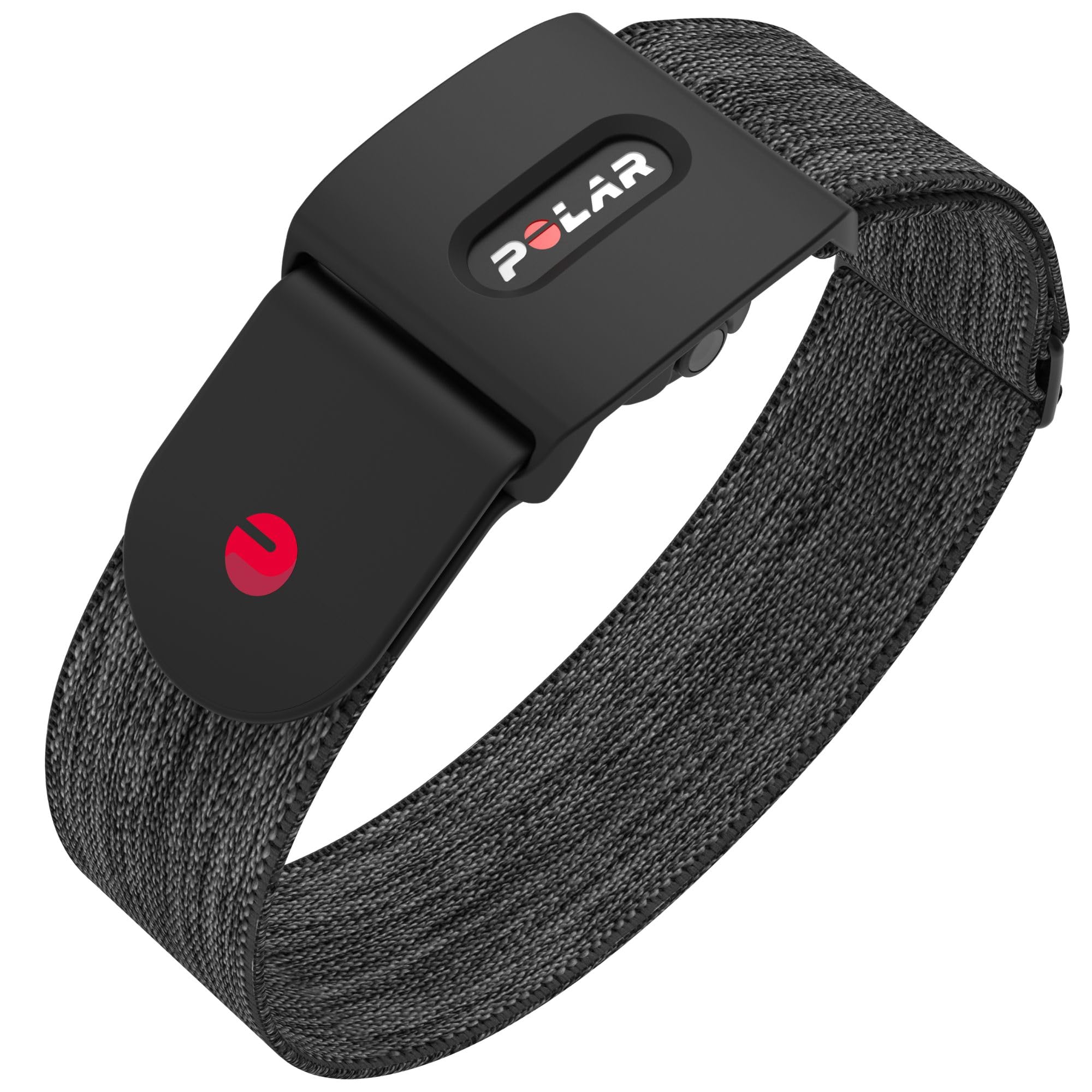
The Polar Verity Sense is the most adaptable optical armband on the market, supporting wear on the upper arm, forearm, or even clipped to swim goggles for pool-based heart rate tracking. Its dual Bluetooth channels plus ANT+ ensure compatibility with almost any device or app, and the single-button operation minimizes fumbling during transitions.
Accuracy is strong against chest strap references — reviewers note consistent readings within a few beats during running and cycling sessions. The ability to record a session onboard and transfer data after the workout adds a layer of convenience for swim training where real-time transmission isn’t practical. Band material (71% polyester, 29% spandex) provides a secure, breathable fit across multiple placements.
Battery life is rated at 30 hours, and the proprietary magnetic charger is small enough to lose — a common pain point in user reports. The Polar Beat and Flow apps receive consistent criticism for disconnection issues and limited daily tracking functionality, though third-party app integration (Strava, Wahoo, Echelon) works reliably.
Why it’s great
- Multi-position wear (arm, forearm, goggles) for swim, run, and gym versatility
- Dual Bluetooth + ANT+ with onboard recording for disconnected sessions
- Lightweight yet durable build with comfortable fabric band
Good to know
- Proprietary magnetic charger is easy to misplace
- Polar branded apps have known connectivity and UI issues
- Occasional slight accuracy lag vs. chest strap under rapid HR changes
2. Wahoo TICKR FIT

The Wahoo TICKR FIT has been a staple in the armband HRM category for years, and for good reason. Its dual-band Bluetooth and ANT+ connectivity delivers reliable signal to smartphones, GPS watches, and bike computers without frequent dropouts. The dual strap size inclusion (small and large) helps accommodate different arm sections effectively.
Multiple long-term users report four to five years of consistent daily performance before any degradation, which is exceptional for a rechargeable optical device. The magnetic charging system is widely praised for ease of use, and the battery life of 35 hours holds up well under frequent weekly sessions. Accurate readings are typical when the sensor is placed one to two inches below the elbow on the outer forearm.
The main caveats revolve around finding the correct placement — too loose or tight leads to momentary signal loss, and applying lotion or sunscreen can interfere with optical readings. The single LED indicator simplifies connection status but offers no zone-based visual feedback, so you’ll need a paired device to see real-time heart rate data.
Why it’s great
- Proven multi-year reliability across daily training cycles
- Dual-band connectivity ensures broad device and app support
- Included small and large strap accommodates different arm sizes
Good to know
- No on-screen HR display or zone LED feedback on the unit itself
- Placement sensitivity requires experimentation for consistent accuracy
- Sunscreen or lotion can interfere with optical sensor contact
3. COROS Heart Rate Monitor
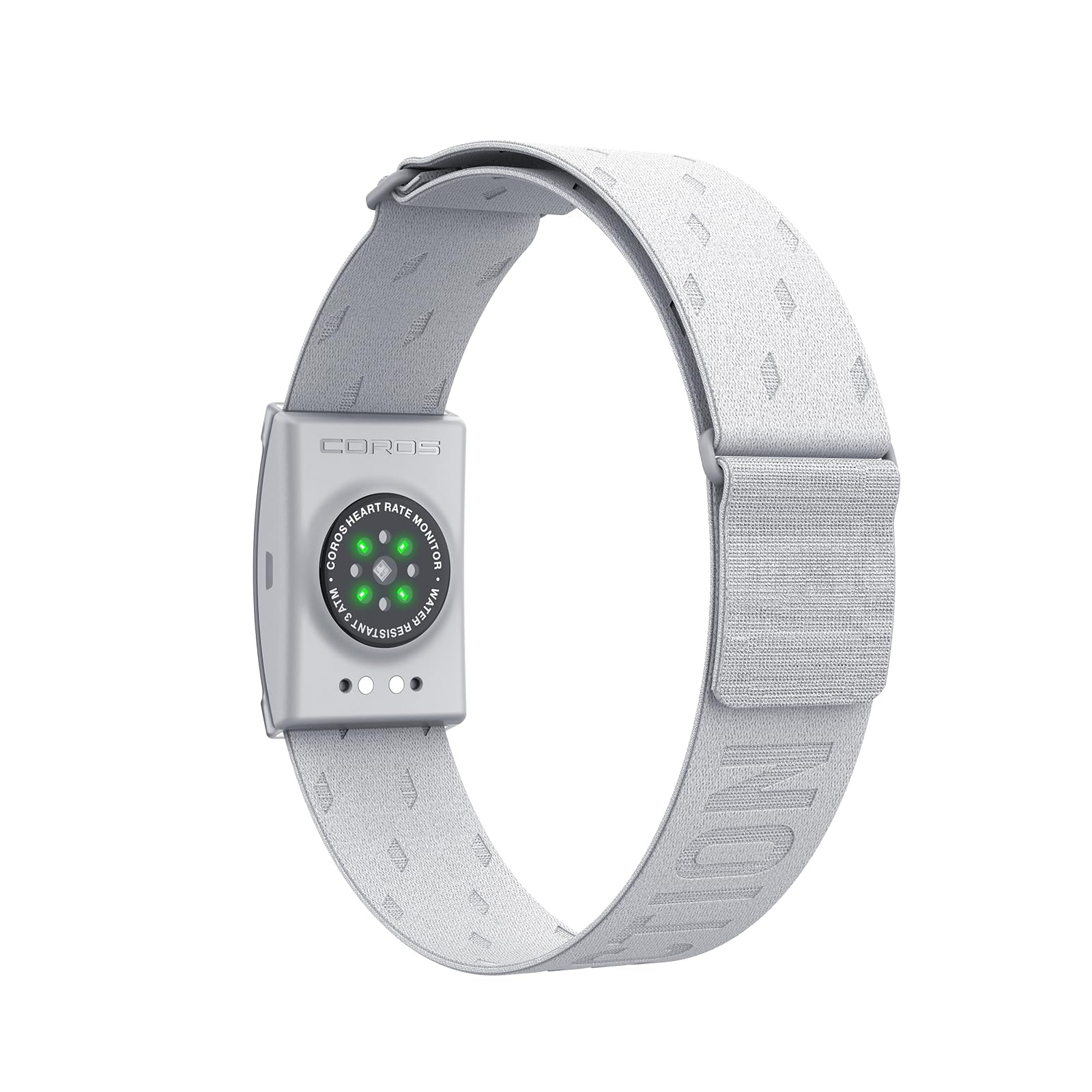
If you own a COROS watch, this armband is the obvious pairing. It uses Bluetooth only (no ANT+), but compensates by allowing simultaneous connection to up to three devices — your watch, a bike computer, and a phone app. The fabric band is soft, breathable, and lays flat against the arm with a sliding buckle for precise tension adjustment.
Built-in wear detection auto-powers the sensor on and off, eliminating any need for a physical button press. Battery life sits at 38 hours of active use or 80 days of standby, with a full recharge taking about two hours via the included magnetic cable. User reviews consistently highlight the comfort improvement over chest straps and the minimal dropout rate during dynamic movement.
The primary restrictions are Bluetooth-only connectivity — ANT+ users with Garmin or Wahoo devices will need to verify compatibility before purchase. The band material is prone to odor accumulation over time, though it cleans easily with mild soap and water. A small percentage of users report a 30-second delay in initial heart rate reading at the start of a workout.
Why it’s great
- Seamless integration with COROS watch ecosystem and app
- Auto-connection and wear detection for zero-touch setup
- Comfortable, breathable fabric band with fine tension adjustment
Good to know
- Bluetooth only — no ANT+ support for some third-party devices
- Band can develop odor and may stain over extended use
- Occasional brief HR read delay at session start
4. COOSPO HW9

The COOSPO HW9 delivers a compelling mix of features at a mid-range price point, including a five-color LED indicator that shows your current heart rate zone at a glance without needing to glance at a watch. The optical sensor claims ±1 BPM accuracy and supports HRV function for deeper recovery data analysis via apps like Elite HRV or the Coosporide app.
Bluetooth 5.0 and ANT+ dual-band connectivity ensure compatibility with bike computers, gym equipment, and smartphones. The sensor is housed in an ABS and nylon body, and the package includes two arm straps for different fit preferences. Battery life is rated at 35 hours, and the magnetic charging system is convenient if you remember the cable.
User experiences are largely positive on accuracy and comfort, though a small number of units have failed after several weeks with falsely low readings. The included strap can stretch over time, reducing snugness during high-movement workouts. There is no auto shut-off feature after the session ends, so you must remember to power down manually to conserve battery.
Why it’s great
- 5-color LED zone indicator offers instant visual HR feedback
- Supports HRV and RR interval data for recovery analysis
- Includes two arm straps for optimal fit adjustment
Good to know
- No auto shut-off — requires manual power off to save battery
- Strap material may stretch and lose grip over several months
- Occasional early sensor failure reported in isolated units
5. iGPSPORT HR70
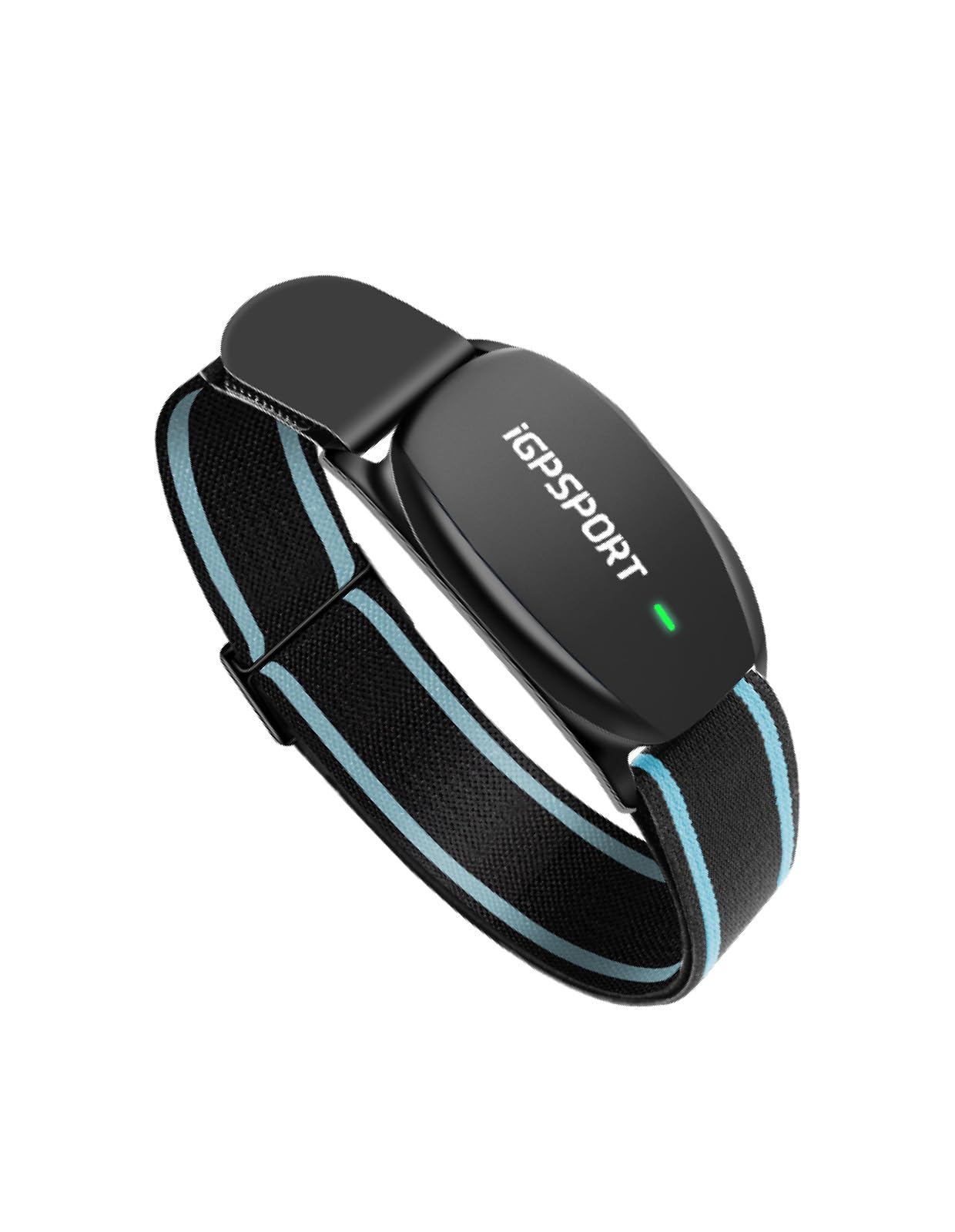
The iGPSPORT HR70 stands out for its class-leading 65-hour battery life — more than double most competitors in the same price bracket. This makes it an ideal choice for ultra-distance athletes, multi-day stage racers, or anyone who dislikes frequent charging. The optical sensor performs at a ±1 BPM accuracy rating with Bluetooth 5.0 and ANT+ connectivity for broad device support.
Heart rate zone monitoring is handled through multicolor LED indicators and haptic vibration alerts, which can be customized through the companion app to warn you when you exceed a preset threshold. The band is soft polyester, adjustable, and breathable, though some users note it leaves temporary pressure marks after longer sessions.
The magnetic charging port is proprietary — a Type-C magnetic puck that aligns only one way. If the charging contacts become corroded or the cable fails, replacement is not trivial. A small number of users report the unit turning off prematurely mid-session, though firmware updates have resolved this in many cases. The 13.3-gram weight is among the lightest in this roundup.
Why it’s great
- 65-hour battery life outperforms nearly all armband competitors
- Customizable zone alerts with LED and haptic vibration feedback
- Extremely lightweight design (13.3g) minimizes arm fatigue
Good to know
- Proprietary magnetic Type-C cable can fail and is not USB-C standard
- Band may leave temporary pressure marks on longer sessions
- Some units experienced premature auto shut-off before firmware fix
6. Scosche Rhythm+ 2.0

The Scosche Rhythm+ 2.0 is a strong contender for athletes who prioritize HRV and RR interval data for recovery monitoring. It streams precise RRi data to HRV4Training, Morpheus, and Welltory, allowing you to track stress, sleep quality, and training readiness beyond basic heart rate zones. The IP68 rating makes it fully submersible for use in rain or sweaty sessions without concern.
Battery life is rated at 24 hours — less than some competitors but sufficient for a week of daily training if you remember to charge. The adjustable polyester strap fits forearm, bicep, or tricep and is lighter and more breathable than medical-grade silicone options. Connectivity via Bluetooth and ANT+ is stable with most devices, including Coros, Garmin, and Apple Watch via third-party apps.
Some users report occasional dropouts and random HR spikes during steady-state efforts like rowing, which suggests the optical algorithm struggles with certain motion artifacts. The proprietary charger is a minor inconvenience, and the strap’s tightness cannot be fine-tuned during wear — you must remove the strap to adjust it. Despite these quirks, it remains a top choice for data-focused athletes.
Why it’s great
- Streams HRV and RR interval data to advanced recovery analysis apps
- IP68 waterproof rating withstands rain, sweat, and submersion
- Flexible fore/upper arm placement accommodates multiple fit preferences
Good to know
- Shorter battery life (24h) vs. mid-range peers
- Occasional random HR spikes and dropouts in certain motion profiles
- Strap adjustment requires removal — no fine-tuning while worn
7. Powr Labs Rechargeable Heart Rate Armband
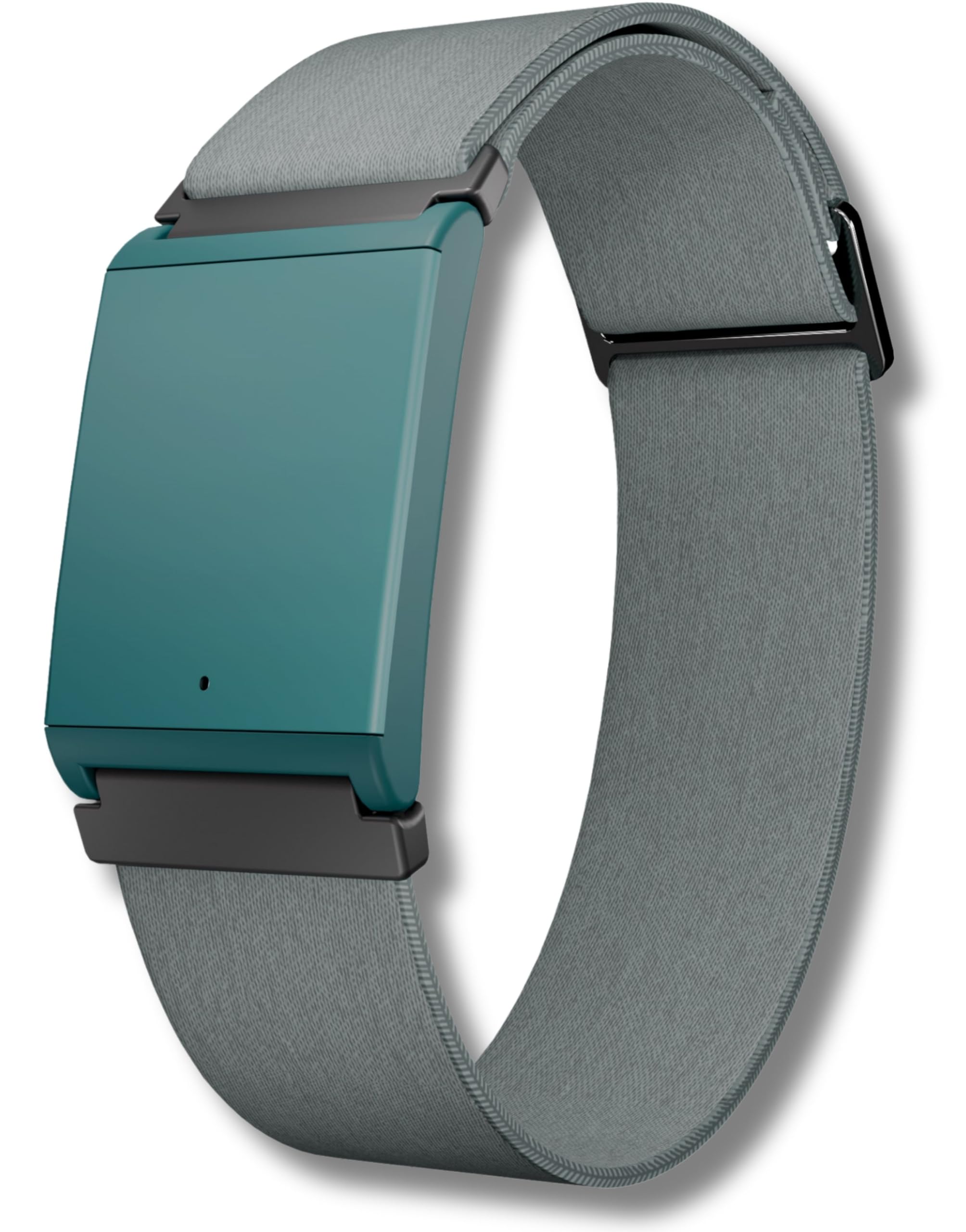
The Powr Labs armband punches well above its price point with features typically found in more expensive units, including dual-band Bluetooth and ANT+ connectivity, automatic wear detection that powers the sensor on when placed against skin, and simultaneous connection to up to three devices. The optical sensor is built into a PA66+GF reinforced body that feels durable despite the low weight (20g).
The medical-grade silicone strap sits flush against the arm without bouncing during high-intensity intervals. Users note that the auto on/off function works reliably, eliminating forgotten battery drain. Integration with Peloton, Zwift, Wahoo, and Strava is straightforward, with most users reporting accurate HR tracking comparable to chest straps after proper placement.
The most consistent criticism is the proprietary charging cable — a USB-A to pogo-pin connector that is easy to lose and lacks the convenience of magnetic attachment. A few users experienced Bluetooth pairing difficulties with non-standard apps, and the absence of a physical power button means you rely entirely on the wear detection sensor, which can be fooled if the unit is stored in contact with conductive material.
Why it’s great
- Auto-wear detection eliminates power button management
- Dual-band ANT+ and Bluetooth connect to three devices simultaneously
- Comfortable, non-slip silicone strap stays secure during movement
Good to know
- Proprietary USB-A pogo-pin charger is easy to misplace
- No physical power button — relies entirely on auto wear detection
- Occasional Bluetooth pairing issues with non-standard fitness apps
FAQ
Can an armband heart rate monitor replace a chest strap for accurate training data?
Where exactly should I place the armband for the most accurate readings?
How long do rechargeable armbands typically last before the battery degrades?
Final Thoughts: The Verdict
For most users, the best armband heart rate monitor winner is the Polar Verity Sense because it delivers unmatched placement versatility, dual-band connectivity, and swim-capable functionality at a premium but justifiable price point. If you want reliable zone training feedback without looking at a screen, grab the COOSPO HW9 for its five-color LED indicators. And for ultra-endurance athletes who need multi-day battery life, nothing beats the iGPSPORT HR70 with its 65-hour runtime.