
Our readers keep the lights on and the weekend projects moving. As an Amazon Associate, I earn from qualifying purchases.
The around-ear form factor demands a deliberate trade-off between isolating yourself from the world and letting the acoustic signature of your music breathe. A closed-back design blocks noise but can compress the soundstage; an open-back delivers airy imaging but leaks audio and lets ambient sound in. Your choice dictates not just what you hear, but how your ears feel after three hours of continuous playback.
I’m Rikta — the founder and writer behind FitlyFast. I’ve spent years analyzing the driver materials, frequency response curves, and ANC algorithms across the entire retail landscape to separate the genuinely engineered from the simply marketed.
Whether you commute through a city that never quiets or sit down for a critical listening session at your desk, the right pair of around ear earbuds must balance seal pressure, weight distribution, and driver performance to match your actual daily scenario.
How To Choose The Best Around Ear Earbuds
Every around-ear headphone is a system of compromises between acoustic isolation, driver capability, weight distribution, and battery endurance. Understanding these four pillars will keep you from overpaying for a spec sheet that doesn’t match your listening habits.
Closed-Back vs. Open-Back Architecture
A closed-back earcup houses the driver in a sealed chamber that reflects sound waves internally, boosting bass impact and preventing sound from leaking out or in. This design is mandatory for commuting, office use, or any environment where you need both noise rejection and privacy. The trade-off is a narrower, less airy soundstage. Open-back headphones use a vented or mesh grille that lets air pass through the driver from both sides, creating a spacious, natural soundstage with superior instrument separation. The penalty is near-zero noise isolation and significant sound leakage — these are strictly for quiet rooms where no one else will hear your playlist.
Active Noise Cancellation Quality and Modes
Hybrid ANC systems use both feedforward (outside the earcup) and feedback (inside the earcup) microphones to cancel a wider frequency range. Look for models that offer adjustable transparency or ambient modes so you can hear announcements without removing the headphones. The best implementations let you toggle between full isolation, voice passthrough, and a wind-resistant setting without digging through an app.
Driver Materials and Frequency Response
The driver diaphragm material — silk, PET, biocellulose, or aluminum-coated — directly affects how quickly the driver stops and starts moving (transient response). Silk diaphragms, like those in the Soundcore Q30, reproduce high-frequency detail up to 40 kHz but can sound soft on bass transients. Larger 42mm dynamic drivers, like those in the Sennheiser HD 660S2, move more air for deeper sub-bass extension but require more power to drive. Pay attention to the impedance rating: high-impedance headphones (150–300 ohms) need a dedicated amplifier or DAC, while low-impedance models (16–32 ohms) run efficiently from a phone or laptop.
Weight, Clamping Force, and Long-Session Comfort
The headband’s clamping force distributes the total weight across your skull. A lightweight design like the 192g Sony WH-CH720N reduces pressure over hours, but some users report that lighter builds feel less secure during movement. Memory foam ear pads wrapped in protein leather or breathable fabric affect both passive noise isolation and heat buildup. If you wear glasses, look for thicker, softer pads that won’t press the temple arms into your skull after 45 minutes.
Quick Comparison
On smaller screens, swipe sideways to see the full table.
| Model | Category | Best For | Key Spec | Amazon |
|---|---|---|---|---|
| Sony WH-1000XM6 | Premium Wireless | Best overall ANC and call quality | HD QN3 processor / 30 hrs battery | Amazon |
| Bose QuietComfort | Premium Wireless | Superior long-session comfort | 24 hrs battery / multipoint BT 5.1 | Amazon |
| Sennheiser HD 660S2 | Audiophile Wired | Critical listening / mixing | 42mm driver / 150 ohms impedance | Amazon |
| Beats Studio Pro | Premium Wireless | Apple ecosystem + lossless USB-C | 40 hrs battery / Class 1 Bluetooth | Amazon |
| JBL Tune 770NC | Mid-Range Wireless | Adaptive ANC + battery endurance | 70 hrs battery / BT 5.3 LE | Amazon |
| Sony WH-CH720N | Value Wireless | Lightweight all-day wear | 192g / 35 hrs battery / BT 5.2 | Amazon |
| Soundcore Q30 | Budget Wireless | Best entry-level ANC + features | 40mm silk driver / 40 hrs ANC | Amazon |
In‑Depth Reviews
1. Sony WH-1000XM6
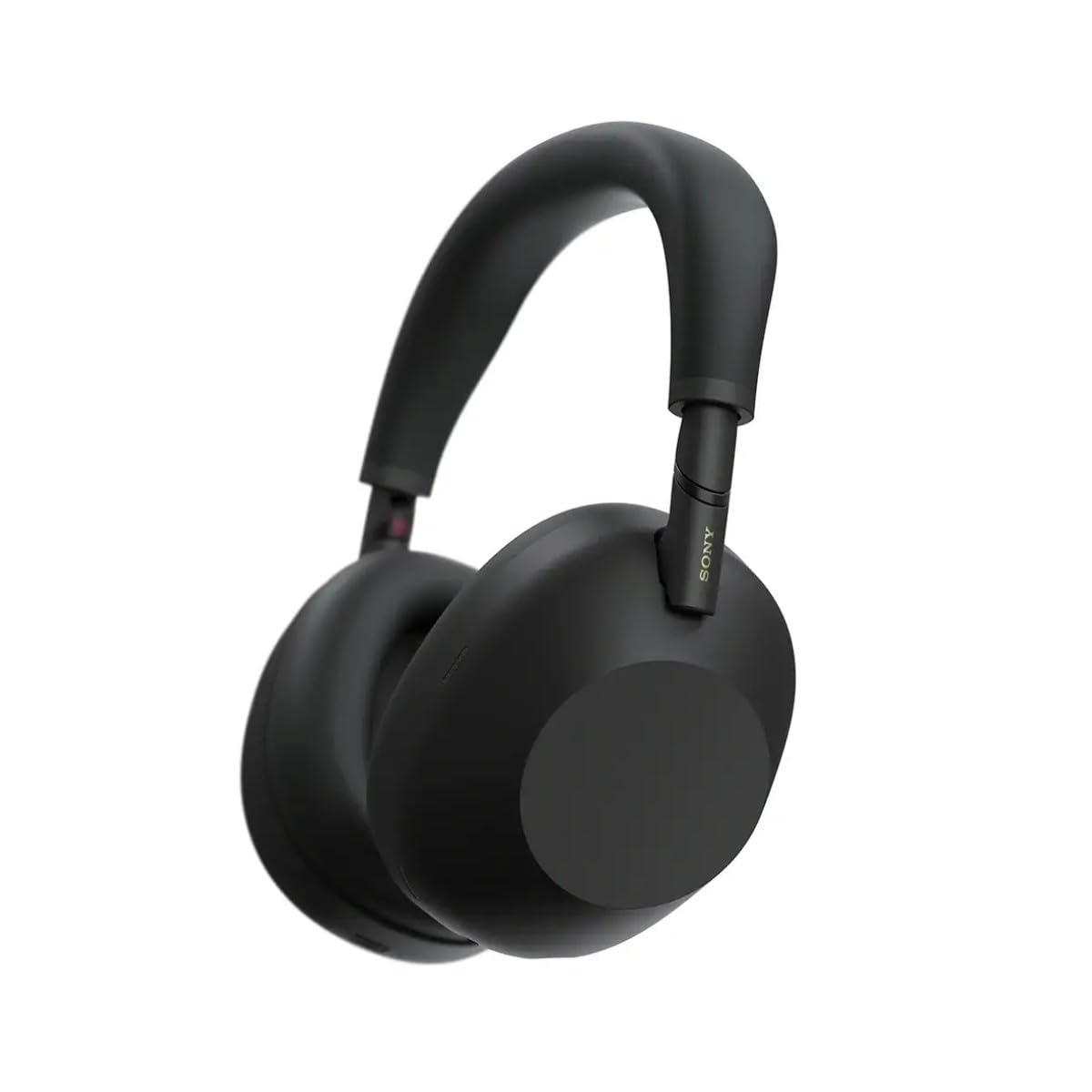
The WH-1000XM6 brings back the foldable hinge that the XM5 abandoned, pairing it with Sony’s new HD Noise Cancelling Processor QN3 for the most aggressive ANC in this roundup. The 30mm driver, co-developed with Grammy-winning mastering engineers, delivers a signature that balances detail retrieval with a warm, non-fatiguing low end. The 10-band EQ via the Sony Headphones Connect app lets you tweak the treble shelf and sub-bass lift independently.
Call quality sees a major leap thanks to six AI-powered beamforming microphones that isolate your voice from wind and crowd chatter. Multipoint connection works reliably across iPhone and Android, and the 30-hour battery (ANC on) with a 3-minute quick charge yielding three hours of playback keeps you out of the charging cycle. The auto-optimizer adjusts the ANC curve to your ear shape and atmospheric pressure, a feature that genuinely helps on flights.
Some users report strong initial clamping force that softens after a couple days of wear. The touch controls on the right earcup can be overly sensitive during adjustments, and the carrying case, while protective, is bulkier than the slim pouches from competitors. If you want the best ANC currently available in a foldable over-ear, this is the benchmark.
Why it’s great
- Best-in-class ANC with adaptive optimization
- Foldable metal hinge for portable durability
- Six-mic AI call processing is a clear upgrade
Good to know
- Touch controls can trigger accidentally
- Initial clamp force is tight for the first few wears
- Battery life drops to ~30 hrs with ANC; no wired lossless option
2. Bose QuietComfort

The Bose QuietComfort line has always been about zero-distraction comfort, and this generation delivers exactly that with a redesigned padded headband and memory foam earcups covered in synthetic leather that remains supple after years of use. The Quiet and Aware modes are toggled via a dedicated physical button, letting you switch from full ANC to complete transparency without touching a screen. The ANC itself is excellent, blocking office chatter and HVAC hum without the pressure sensation some adaptive systems create.
Sound quality is high-fidelity with a neutral baseline and adjustable EQ via the Bose app — the default tuning leans slightly warm, but you can bump the treble by a few dB for more sparkle. Battery life is rated at 24 hours with ANC, and a 15-minute USB-C charge delivers 2.5 hours, which is adequate but not class-leading. Multipoint Bluetooth 5.1 handles switching between a laptop and phone seamlessly, and the included 3.5mm audio cable works even when the battery is dead.
The biggest caveat is that the ANC is so effective it can block important environmental cues — boiling water, a child calling, or a doorbell. There is no low-level passthrough mode like Sony’s adaptive control, so you have to manually switch to Aware mode. Also, the battery life, while sufficient for a full workday, is noticeably shorter than the 35–70 hours offered by mid-range competitors. For pure, uninterrupted listening comfort over eight-hour stretches, this remains the gold standard.
Why it’s great
- Exceptional long-wear comfort with plush padding
- Physical button for instant ANC/transparency toggle
- Works wired with passive playback when battery is dead
Good to know
- ANC can block essential environmental sounds
- Battery life is modest at 24 hours
- No fold-flat hinge for ultra-compact storage
3. Sennheiser HD 660S2
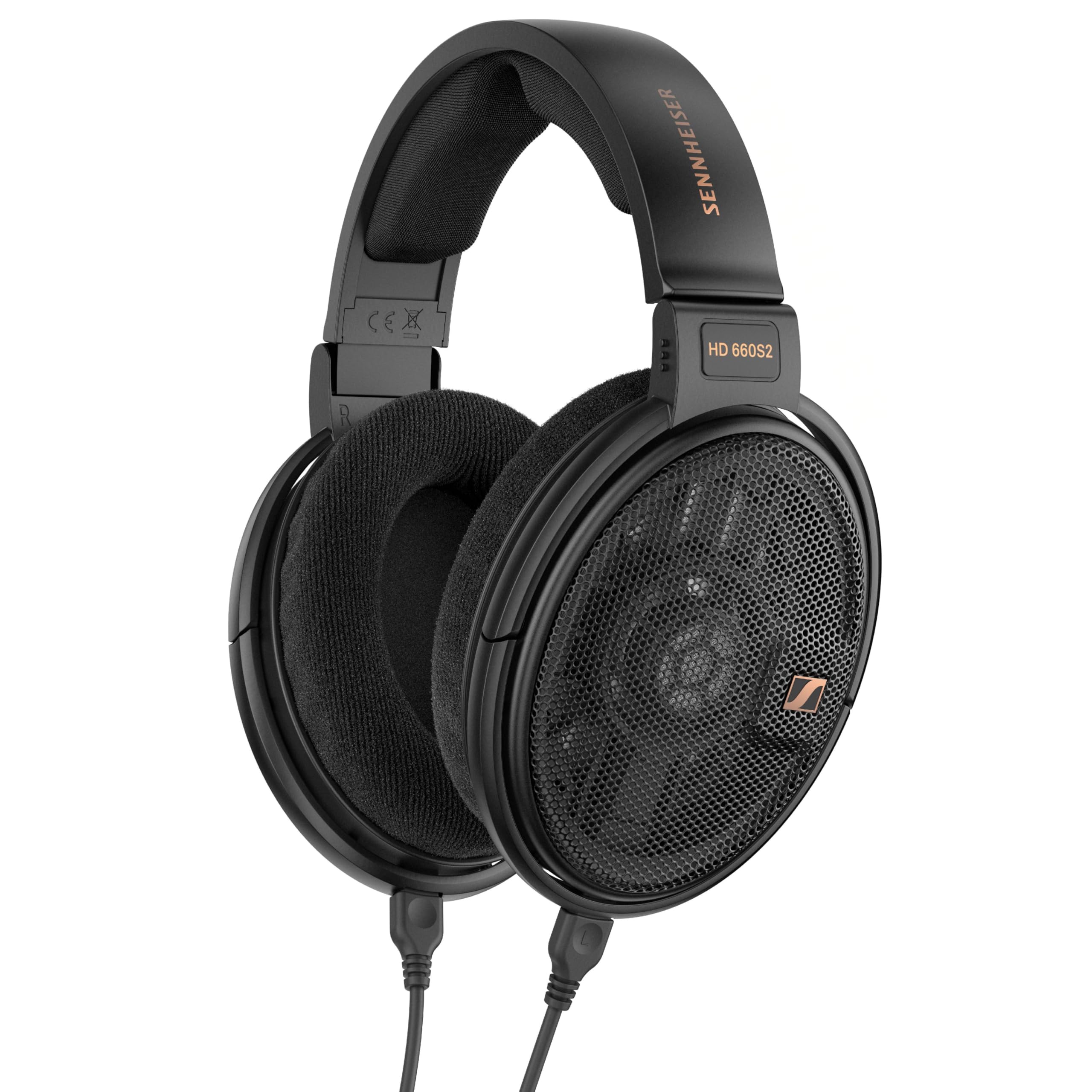
This is not a wireless headphone. The HD 660S2 is a wired, open-back reference tool for anyone who needs to hear the space between instruments. The 42mm dynamic driver uses an ultra-light aluminum voice coil to achieve a transient response that snaps on percussive attacks and decays naturally on piano sustains. The sub-bass extension reaches down to 27.5 Hz without bloating the midrange, a feat that requires precise damping in the rear chamber.
Comfort is outstanding for marathon listening sessions — the velour-like ear pads are breathable, and the headband distributes 260 grams evenly across the crown. The open-back grille means zero isolation: you will hear your room’s AC, your neighbor’s conversation, and everything else. That is by design. The soundstage is wide and layered, with precise imaging that lets you pinpoint the second violinist in a orchestral recording. It comes with a 6.3mm cable, a 4.4mm balanced cable, and a 6.3mm-to-3.5mm adapter.
At 150 ohms impedance, you will need a dedicated amplifier or DAC to drive these properly — a phone or laptop headphone jack will leave them sounding thin and quiet. The balanced 4.4mm cable unlocks the full dynamic range, especially the lower register. If you primarily listen to lossless audio at home and value instrument separation above wireless convenience, this is the most musically honest around-ear option available.
Why it’s great
- Excellent transient response and sub-bass extension
- Wide, layered soundstage with precise imaging
- Breathable pads for all-day critical listening
Good to know
- Requires a dedicated DAC/amp for proper performance
- Open-back design offers no noise isolation
- Wired only — no Bluetooth or ANC
4. Beats Studio Pro

The Beats Studio Pro are the first over-ear Beats to offer USB-C lossless audio — plug them into a Mac or iPhone 15 and you get a wired digital signal path that bypasses Bluetooth compression entirely. The custom acoustic platform delivers a neutral-leaning sound signature with a controlled bass shelf and extended, non-fatiguing treble. Previous Beats were criticized for an exaggerated low end; this generation is significantly more balanced and reveals detail in the upper mids that earlier models masked.
Active Noise Cancellation is powerful, and the Transparency mode sounds natural with minimal occlusion effect. The UltraPlush earcups are deeper than the previous Studio3, accommodating wider ears without contact pressure. The 40-hour battery life is consistent across ANC-on and ANC-off use, and Fast Fuel gives you 4 hours from a 10-minute charge. Class 1 Bluetooth extends the stable range beyond the typical 10 meters, useful for walking around a house while streaming from a central laptop.
The included woven carrying case is protective but semi-rigid, lacking the hard shell of the XM6 case. Some users note that the headband’s padding is thinner than the Bose QC, which may become noticeable after three hours. The USB-C cable is short for desktop use, and the 3.5mm cable lacks an inline remote. If you are embedded in the Apple ecosystem and want a single-cable lossless workflow, this is the most transparent-sounding Beats yet.
Why it’s great
- USB-C lossless audio with Apple/Android devices
- Neutral, balanced sound signature
- Class 1 Bluetooth for extended wireless range
Good to know
- Headband padding is thinner than Bose QC
- Semi-rigid case, not a hard shell
- Volume is notably lower than previous-gen Beats
5. JBL Tune 770NC

The JBL Tune 770NC stands out for its 70-hour battery life with ANC off — that is more than double the typical premium offering — and a full 44 hours with ANC active. The Adaptive Noise Cancelling uses earcup microphones to sense your environment and adjust the cancellation curve, and you can toggle Ambient Aware and TalkThru modes from the JBL Headphones app or the onboard button. The 32mm dynamic driver delivers JBL’s signature Pure Bass tuning, which lifts the low end without muddying the vocal range.
Bluetooth 5.3 with LE Audio support means lower latency and better power efficiency during video streaming. The Audio Mode and Video Mode switch in the app lets you prioritize sound quality or lip-sync accuracy depending on what you are watching. Multipoint connection allows simultaneous pairing with a phone and laptop, and the ear-cup buttons are large and tactile — no touch panels to accidentally trigger.
The ear cups are slightly shallow; users with larger ears report the padding pressing against the pinna after an hour. The headband has a noticeable initial tightness that can be gently stretched, but the plastic yoke feels less premium than the metal hinges on the Sony or Bose. The app’s customization is functional but not as polished as Sony’s or Bose’s. For anyone who prioritizes raw battery longevity above all else, the 770NC is the clear mid-range workhorse.
Why it’s great
- 70-hour battery life (ANC off) is category-leading
- Adaptive ANC with ambient and TalkThru modes
- Bluetooth 5.3 with LE Audio for low latency
Good to know
- Ear cups are shallow for larger ears
- Plastic headband feels less durable than metal hinges
- App interface is less polished than competitors
6. Sony WH-CH720N

At just 192 grams, the WH-CH720N is Sony’s lightest wireless noise-canceling headphone, and that weight reduction is immediately noticeable during extended wear. There is no headband pressure point even after three hours, and the earcup rotation allows a flat storage profile. The Dual Noise Sensor technology uses the Integrated Processor V1 to analyze ambient sound and generate cancellation that adapts to your environment, though it does not reach the same suppression depth as the 1000X series.
Sound quality is clear and balanced thanks to the V1 processor and DSEE upscaling. The 30mm driver can reproduce details in compressed streaming audio, and the adjustable Ambient Sound mode lets you bring in external noise without removing the headphones. Battery life is rated at 35 hours with ANC on, and quick charging gives you 1 hour of playback from a 3-minute charge. Multipoint Bluetooth 5.2 allows seamless switching between devices, and the app provides a 5-band EQ.
The noise cancellation is decent but not superb — it dulls traffic and office hum but struggles with sudden loud sounds like a slamming door. The microphone array for calls is less reliable than the XM6, with some users reporting only 75% success in noisy environments. There is no carrying case included; you get a soft pouch. For someone with migraine sensitivity or a thin neck who needs ANC without the weight penalty, this is a unique and comfortable option.
Why it’s great
- Ultra-lightweight 192g for zero head pressure
- 35-hour battery life with quick charge
- Multipoint Bluetooth 5.2 with stable connection
Good to know
- ANC is middling — struggles with abrupt noises
- Call microphone performance is inconsistent
- No hard carrying case included
7. Soundcore Q30 by Anker
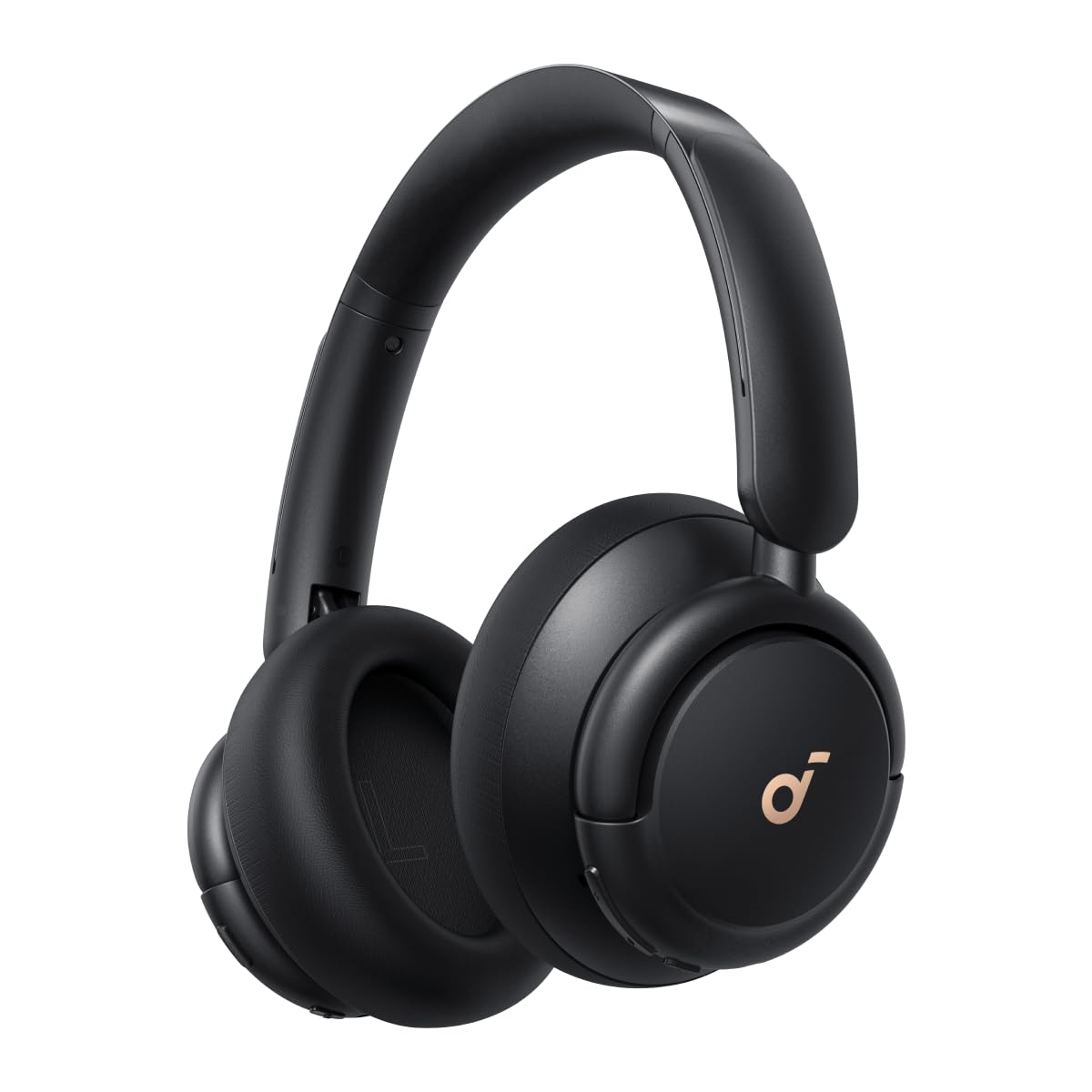
The Soundcore Q30 delivers hybrid ANC, Hi-Res Audio certification, and a 40mm silk-diaphragm driver for roughly the cost of a premium headphone cable. The three ANC modes — Transport (low-frequency rumble), Outdoor (traffic and wind), and Indoor (office chatter) — give you situational control without needing the app, though the app adds an 8-band EQ and white-noise presets. The silk diaphragm reproduces treble extension up to 40 kHz, which translates to crisp high-hats and cymbal shimmer, though the bass response is more polite than the JBL Pure Bass profile.
Battery life is exceptional: 40 hours with ANC on and 60 hours without. A 5-minute quick charge yields 4 hours of playback. The memory foam earcups are wrapped in protein leather and the headband is well-padded, so the 260g weight feels evenly distributed. Bluetooth 5.0 with multipoint lets you maintain a constant connection to your phone and laptop, and the connection stability holds up at about 10 meters through one wall.
The ANC reduces low-frequency hum by about 85% but lets through mid-frequency voices and sudden noises — it is not a competitor to the Bose or Sony flagship systems. The included accessory is a soft pouch, not a hard case. Some units develop a popping sound in the left driver after a year; customers report that Soundcore’s warranty service is responsive and replaces units within 24 hours. For budget-conscious buyers who want ANC, long battery life, and app-based EQ, this is the most feature-dense entry point available.
Why it’s great
- Excellent battery life (40h ANC / 60h standard)
- Hi-Res Audio with 8-band EQ via app
- Three ANC modes for specific environments
Good to know
- ANC is effective for low hum but not sudden noises
- Driver popping reported after ~1 year on some units
- Soft pouch only — no hard case
FAQ
Can I use wired around-ear headphones with my phone if they don’t have a built-in DAC?
Why does open-back sound more spacious than closed-back even at the same driver size?
How much does ANC battery life differ between adaptive and non-adaptive systems?
What is the practical difference between Bluetooth 5.0 and 5.3 for around-ear headphones?
Final Thoughts: The Verdict
For most users, the around ear earbuds winner is the Sony WH-1000XM6 because it offers the deepest ANC, best call quality, and a welcome return to a foldable design in a premium wireless package. If you want all-day zero-fatigue comfort with effective cancellation and a physical button for mode toggling, grab the Bose QuietComfort. And for pure critical listening at home where isolation is irrelevant, nothing beats the Sennheiser HD 660S2 with its spacious open-back soundstage and precise imaging.