
Our readers keep the lights on and the weekend projects moving. As an Amazon Associate, I earn from qualifying purchases.
A rigid inspection camera forces you to bend your wrist, not the cable. That blind spot behind a cylinder wall or inside an HVAC duct stays invisible, turning a ten-minute check into an hour of disassembly. An articulating inspection camera changes the equation by letting you steer the probe tip through a controlled arc, so you see what static scopes miss.
I’m Rikta — the co-founder and writer behind FitlyFast. I have spent hundreds of hours analyzing mechanical inspection hardware, comparing articulation mechanisms, cable stiffness, screen resolution, and LED brightness across dozens of models to isolate the units that actually deliver on their bend-and-lock promise.
Whether you are a professional mechanic, a maintenance technician, or a dedicated DIYer, this guide cuts through the marketing and pinpoints the best articulating inspection camera for your specific workflow and budget.
How To Choose The Best Articulating Inspection Camera
Not every bendable borescope is built alike. The quality of the articulation mechanism, the stiffness retention of the gooseneck, the brightness of the LEDs, and the realism of the screen color all separate a useful diagnostic tool from a frustrating toy. Focus on the specs that directly affect your ability to see and reach hidden defects.
Articulation Range and Control Precision
A 210° two-way articulation is the industry baseline for a reason: it covers both left and right bends without needing to twist the entire handle. Models offering 220° give you a small but meaningful extra sweep in tight engine bays. More important than the number is the control feel. A thumb-wheel that moves smoothly without stuttering and holds position when released keeps your inspection steady.
Probe Diameter and Cable Stiffness
The probe must slip through a spark plug hole (typically 14mm or 18mm) to inspect a cylinder. An ultra-slim 0.24-inch probe clears the tightest gaps, while a 0.33-inch probe may block entry. The cable should be a semi-rigid gooseneck that bends under force but locks its shape when released. A floppy cable makes articulation useless because the tip droops the moment you let go.
Display Quality and LED Illumination
A 4.3-inch or 5-inch IPS screen with 1080P resolution gives you the confidence to spot hairline cracks and carbon deposits. Anything smaller strains the eye during extended use. Adjustable LEDs are non-negotiable — fixed brightness either washes out a close object or leaves a far wall in shadow. Look for at least three brightness levels and a lamp at the rear of the handle for lighting the work area around the tool.
Quick Comparison
On smaller screens, swipe sideways to see the full table.
| Model | Category | Best For | Key Spec | Amazon |
|---|---|---|---|---|
| Teslong TD500 | Professional | Dual-lens inspections | 5″ IPS 1080P, 0.25″ probe | Amazon |
| FOXWELL Y400 | Professional | 220° articulation | 220° two-way, 0.24″ probe | Amazon |
| DXZtoz AGC500L | Professional | Largest screen | 5″ IPS 1080P, 10X zoom | Amazon |
| Teslong TD450S | Professional | Compact dual-lens | 4.5″ IPS, dual front/side cam | Amazon |
| KAIWEETS KBA02PRO | Mid-Range | Dual-lens flexibility | 4.3″ IPS, 210° dual articulation | Amazon |
| DEPSTECH DS660 | Mid-Range | All-around value | 5″ IPS 1080P, 210° articulation | Amazon |
| DEPSTECH 3-Lens | Mid-Range | Multi-angle views | 5″ IPS, triple-lens design | Amazon |
| Acoath Dual-Lens | Budget | Entry-level dual-lens | 4.3″ IPS 1080P, 32GB card | Amazon |
| KAIWEETS 210° | Budget | First articulating scope | 4.3″ IPS 1080P, 5-hr battery | Amazon |
In‑Depth Reviews
1. Teslong TD500 Articulating Borescope
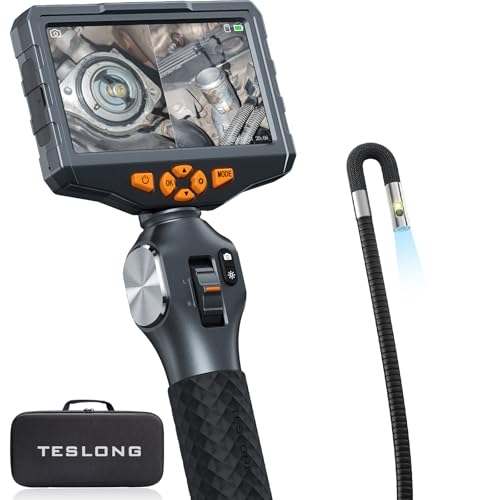
The Teslong TD500 lands at the premium end for good reason: a 5-inch IPS screen, a dual-lens probe that switches between forward and side views without repositioning, and a 0.25-inch articulated tip that slides into tight spark plug holes with room to spare. The manual exposure control gives you the ability to dial in the perfect brightness for oily or reflective surfaces — something fixed-auto scopes struggle with.
Beyond the core specs, the cable is a semi-rigid gooseneck that holds its shape reliably, and the 6+1 LED array (six at the tip plus a handle-mounted flashlight) ensures you never work in a shadow. The 32GB included card and USB-C charging make field use straightforward. Audio recording and a built-in mic let you narrate findings on the spot.
Professionals who require consistent image fidelity and a robust articulation mechanism will find the TD500 worth the higher investment. The only notable drawback is manual-only exposure, which takes a moment to learn but pays off in challenging lighting conditions. If you want a single tool that covers automotive, HVAC, and aviation inspections without compromise, this is the pick.
Why it’s great
- Large 5-inch 1080P display with true-to-life color
- Dual forward/side cameras speed up multi-angle inspections
- Articulating tip provides excellent maneuverability in tight spaces
Good to know
- Manual exposure requires a short learning curve
- Premium pricing puts it beyond casual DIY budgets
2. FOXWELL Y400 Articulating Borescope
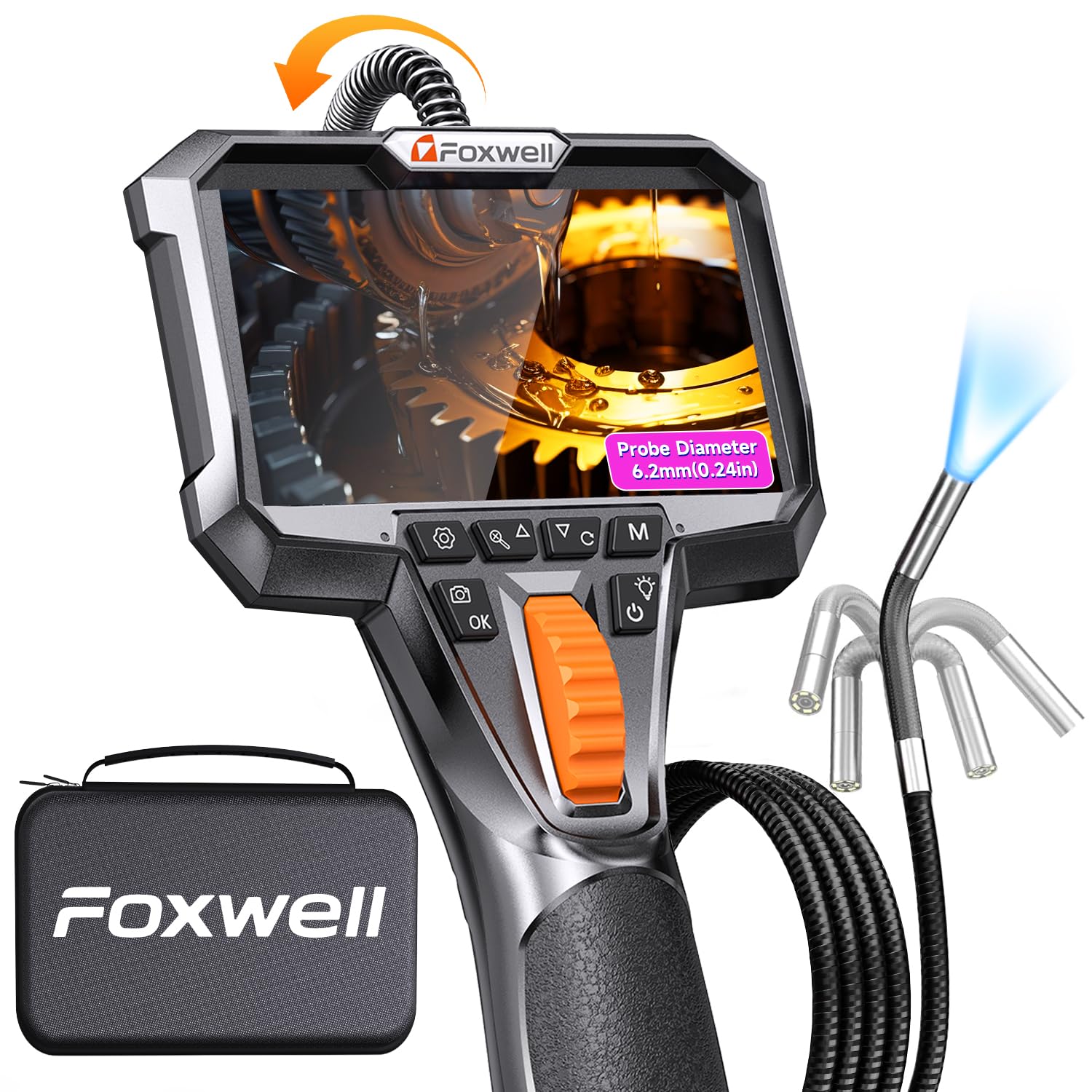
That extra sweep makes a tangible difference when you need to look around a valve stem or into a tight plumbing elbow without fighting the cable. The probe diameter measures just 0.24 inches, which is thin enough to drop into a 14mm spark plug bore for top-dead-center cylinder wall inspection.
The HD IPS screen delivers crisp images, and the 4X digital zoom lets you examine microscopic cracks without moving the probe tip. Six adjustable LEDs with three brightness levels handle dark cavities well, and the rear auxiliary flashlight helps you see the tool controls in a dim engine bay. Battery life is rated at 5 to 7 hours, which comfortably covers a full shift of intermittent use.
A few users have reported occasional image freezing, which seems to be a firmware-related hiccup rather than a hardware defect. The ergonomic grip with textured rubber is comfortable for gloved hands, and the included carrying case keeps everything organized. For mid-range money, this is a very capable professional-grade unit.
Why it’s great
- 220° articulation provides the widest steering arc in its class
- 0.24-inch ultra-slim probe fits the tightest engine ports
- Long 5–7 hour battery life for all-day field work
Good to know
- Occasional image freezing reported by some users
- Overheat protection shuts down at 158°F if used continuously
3. DXZtoz AGC500L Articulating Borescope
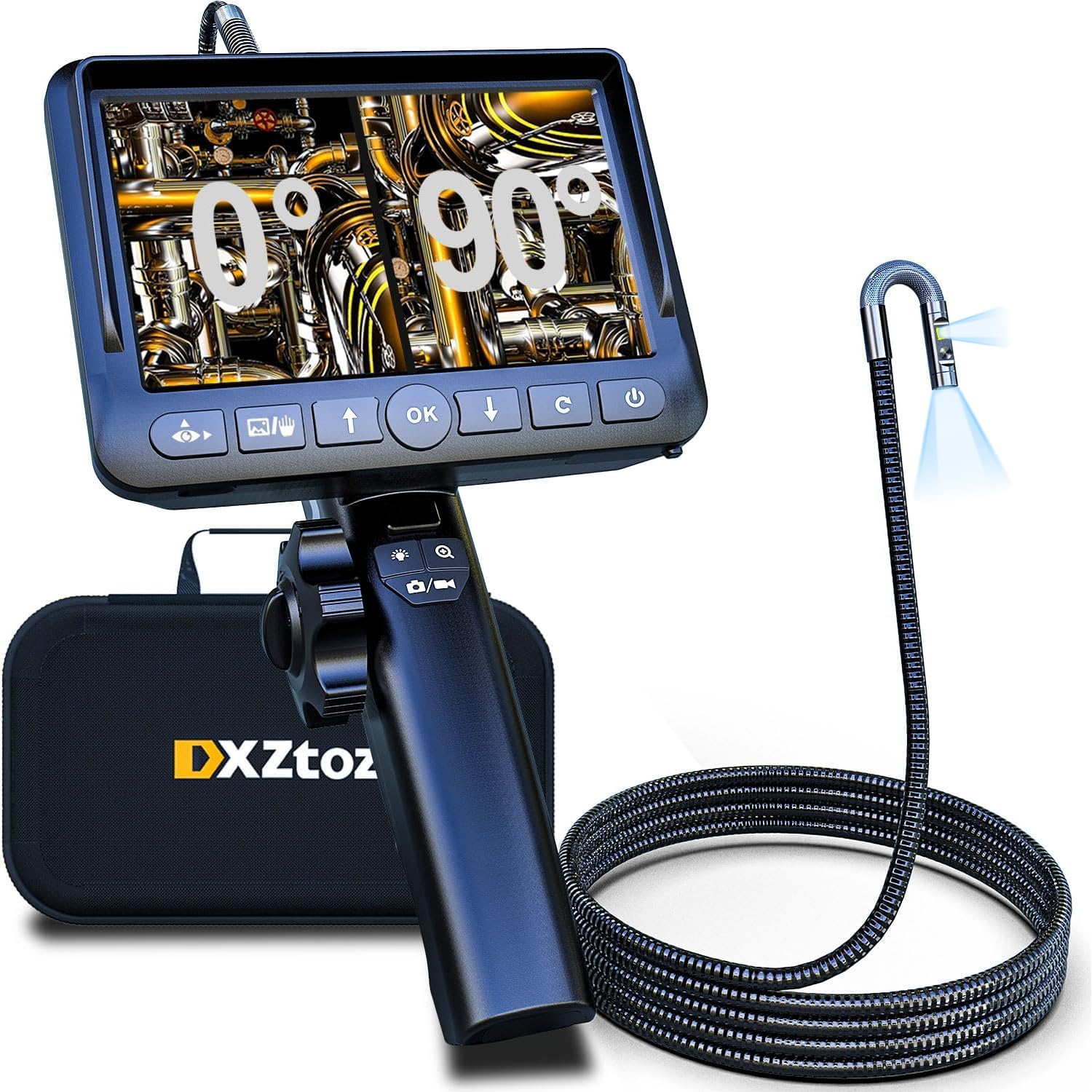
The DXZtoz AGC500L packs a 5-inch IPS screen that is 30% larger than the typical 4.3-inch panel found on mid-range borescopes. That extra real estate reduces eye strain during long inspections and makes it easier to spot fine details like pitting on a cylinder wall or corrosion inside a pipe. The dual-lens design includes a forward camera and a 90-degree side camera that you can switch to with one button — no need to rotate the entire probe.
The 10X digital zoom is the most aggressive in this guide, though it does enlarge pixels rather than resolve new detail. Still, for checking gasket wear or carbon deposits at moderate distances, the zoom is a practical asset. The cable exits from the front of the ergonomic handle, which keeps the cable path clean and prevents the awkward bottom-cable snag reported on some other models.
Battery life is a solid 4 to 5 hours, and the kit includes a 32GB card, hook, magnet, and a comprehensive lens cleaning set. A small number of users have noted that the camera resolution feels closer to 1MP than the advertised 2MP, so expectations for fine aircraft engine work should be calibrated accordingly. For automotive and home use, the image quality is more than sufficient.
Why it’s great
- 30% larger 5-inch screen for reduced eye fatigue
- Instant forward/side camera switching covers dead zones
- Front cable exit prevents handle snags during use
Good to know
- Digital zoom enlarges pixels instead of optical detail
- Effective resolution may feel closer to 1MP for critical work
4. Teslong TD450S Dual Lens Articulating Borescope

The Teslong TD450S proves that a professional-grade articulating inspection camera does not need a massive body. The 4.5-inch IPS screen is bright and sharp, and the dual front and side cameras eliminate the need to rotate the probe when inspecting the far side of a pipe or the back of a cylinder wall. The manual exposure control — found on higher-end Teslong models — gives you direct control over brightness in tricky lighting conditions.
The two-way articulating tip is responsive and holds its angle without creep, and the 0.25-inch probe diameter fits standard spark plug openings without modification. The LED brightness is adjustable, and the included 32GB card and carrying case round out a well-thought kit. Users with 20 years in the automotive industry have called this the best borescope they have ever used — a strong endorsement from experienced hands.
The only trade-off is the screen size: 4.5 inches is good but not as roomy as the 5-inch panels on the TD500 or AGC500L. If you prioritize portability and probe responsiveness over maximum screen real estate, the TD450S is a top-tier choice at a more accessible price point than the TD500.
Why it’s great
- Dual-lens design covers forward and side views in one pass
- Manual exposure control for precise lighting adjustment
- Compact body with professional-grade build quality
Good to know
- 4.5-inch screen is smaller than top-tier 5-inch models
- Manual exposure may not suit users who prefer full auto
5. KAIWEETS KBA02PRO Dual Lens Articulating Borescope

The KAIWEETS KBA02PRO brings dual-lens capability — forward and side cameras with split-screen viewing — to a mid-range package without sacrificing articulation quality. The 210° two-way steering is smooth and responsive, and the 0.25-inch probe slides into confined spaces that block standard 8mm borescopes. The 4.3-inch IPS screen delivers 1080P clarity that captures rust, carbon buildup, and cracks with good color accuracy.
Battery life is rated at 5 hours, which is competitive for the price tier, and the included accessory kit (magnet, hook, side mirror, lens protector) adds versatility for retrieving dropped parts or inspecting behind panels. The rear-mounted flashlight is a nice touch for illuminating the work area around the handle — a feature usually reserved for more expensive units.
The thin rubber sheathing on the cable has been noted as a vulnerability if the cable rubs against sharp edges repeatedly. Users who work around metal engine components should take care to avoid sharp corners. For home mechanics and light professional use, this is an excellent dual-lens option that punches above its price bracket.
Why it’s great
- Dual front/side cameras with split-screen viewing mode
- 210° articulation with smooth thumb-wheel control
- 5-hour battery covers a full work session
Good to know
- Cable rubber sheathing can be damaged by sharp edges
- 4.3-inch screen is smaller than premium 5-inch models
6. DEPSTECH DS660 Articulating Borescope
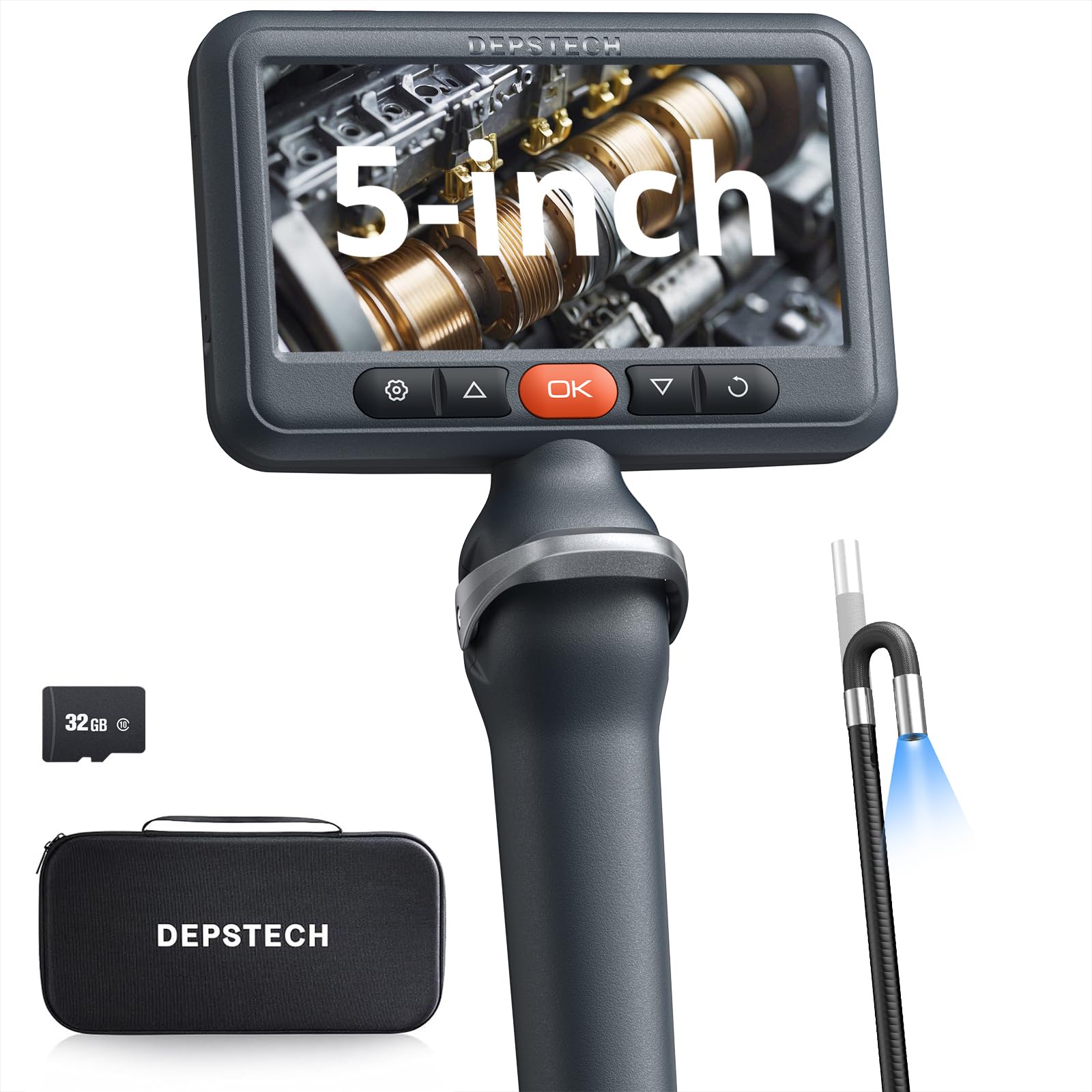
The DEPSTECH DS660 is the best balance of screen size, articulation quality, and value in the mid-range bracket. The 5-inch 1080P IPS display is as large as the premium Teslong TD500, but at a significantly lower entry point. The 210° two-way articulation is controlled by an ergonomically centered joystick that works smoothly with one hand, and the 0.24-inch probe is slim enough for standard spark plug inspections.
Image quality is bright and clear thanks to the 2MP sensor and three-level adjustable LEDs. The IP67 waterproof probe handles wet environments reliably, and the 4-hour battery is adequate for most diagnostic sessions. The kit includes a 32GB card, a rugged carrying case, and a USB-C cable — everything you need out of the box.
The cable exits from the bottom of the handle, which a few users found awkward when the unit was placed on a workbench. Lacks optical zoom, so you rely on probe positioning to get close-up views. For a first articulating borescope or a daily driver for automotive and home inspections, the DS660 is hard to beat.
Why it’s great
- Large 5-inch IPS display at a mid-range price point
- Smooth one-handed joystick articulation control
- 0.24-inch slim probe fits tight engine ports
Good to know
- Bottom cable exit can feel awkward on a workbench
- No optical zoom — relies on probe proximity for close-ups
7. DEPSTECH 3-Lens Articulating Borescope

This DEPSTECH model differentiates itself with a triple-lens camera system that includes a forward lens, a side lens, and a split-screen mode that displays both views simultaneously. The 5-inch IPS screen renders 1080P images with excellent color accuracy, and the articulation mechanism uses a thumb-wheel that can lock the probe at any angle for sustained inspection of a specific spot without holding the wheel.
The metal gooseneck cable is an updated design that holds its shape well, and the 0.24-inch probe navigates tight spots unobtrusively. Audio recording with a built-in microphone lets you capture voice notes on the fly. The 3350mAh battery provides roughly 3.5 hours of continuous use, which is a bit shorter than some competitors but still enough for a focused diagnostic session.
A small number of units have shipped with a stiff articulation wheel that requires significant force to turn, though DEPSTECH’s 2-year warranty covers replacements. Users who have compared this scope to Snap-On units costing three times as much have reported equal or better image quality — a strong testament to the value here.
Why it’s great
- Triple-lens system with split-screen forward/side view
- Metal gooseneck cable holds shape without droop
- Image quality rivals premium brands at a fraction of the cost
Good to know
- 3.5-hour battery is shorter than the category average
- Some units may have a stiff articulation wheel out of the box
8. Acoath Dual-Lens Articulating Borescope
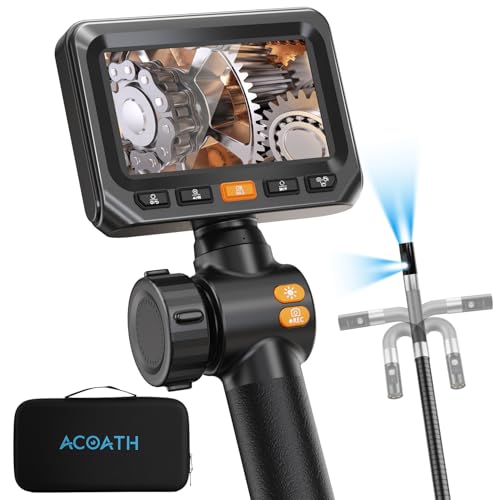
The Acoath dual-lens borescope is the most affordable entry point for users who want both a forward and side camera without paying a premium. The 210° articulation range is paired with a 420° total field of view when you combine both cameras, giving you comprehensive coverage of hard-to-reach areas. The 4.3-inch IPS screen is clear and bright, and the 8 adjustable LEDs with four brightness levels handle dark cavities effectively.
The probe measures 0.33 inches in diameter — thicker than the 0.24-inch slim probes on the DEPSTECH and FOXWELL models — so it may not fit the narrowest spark plug holes or oil passages. The semi-rigid cable holds its shape, and the included accessories (magnet, hook, mirror, protective cap) add utility. The built-in 32GB card and USB-C charging are welcome conveniences at this price point.
There is no battery charge indicator, which makes it hard to know when the unit is fully topped up without turning it on to check. For users on a tight budget who still want dual-lens capability and articulation, the Acoath delivers solid performance without breaking the bank.
Why it’s great
- Dual-lens system at the lowest price point in the guide
- 420° combined field of view from front and side cameras
- Four-level adjustable LEDs for varied lighting conditions
Good to know
- 0.33-inch probe is thicker than slim 0.24-inch alternatives
- No battery charge indicator — requires manual power-on to check
9. KAIWEETS 210° Articulating Borescope
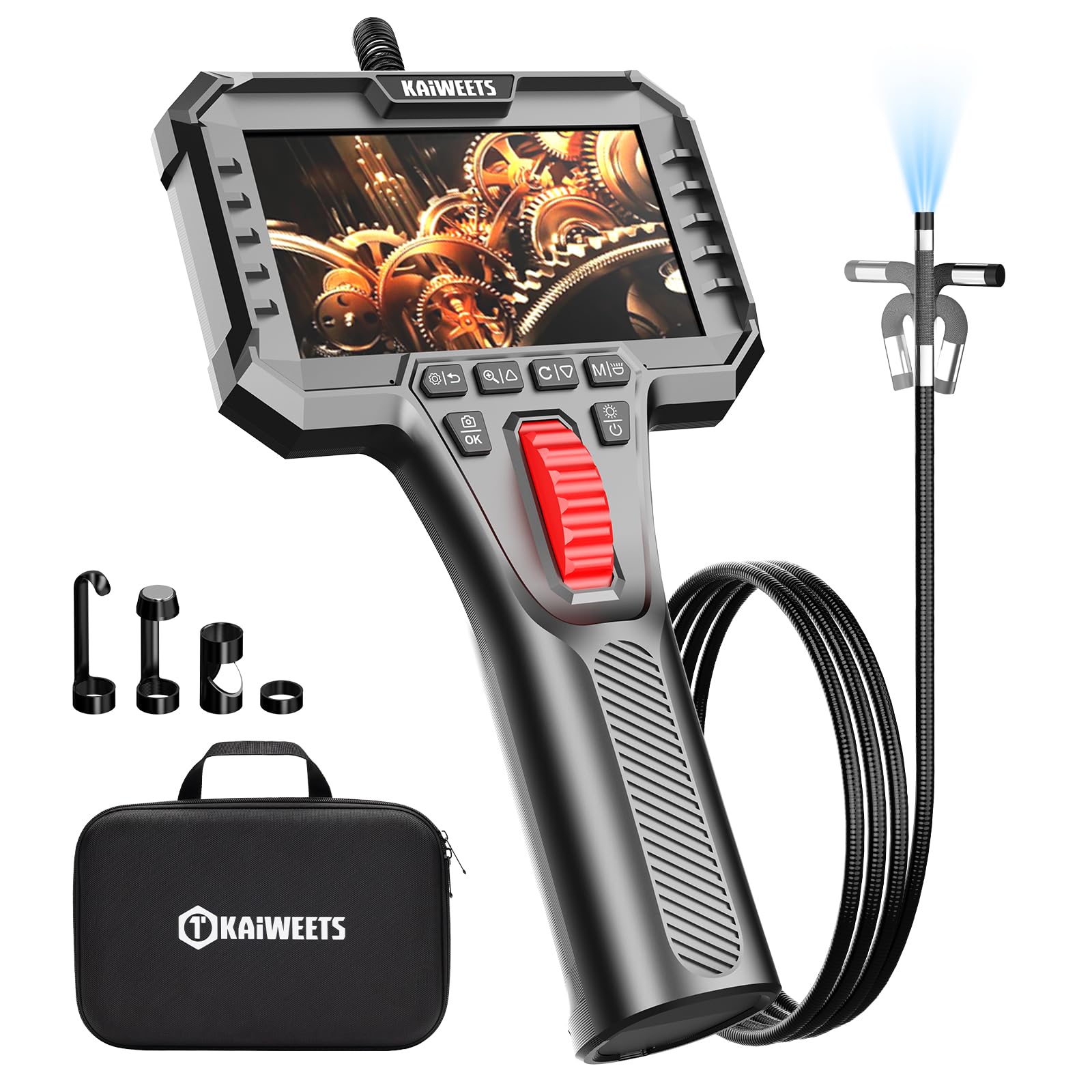
The KAIWEETS single-lens articulating borescope is the most wallet-friendly option for getting into two-way inspection without compromising on articulation range. The 210° bi-directional bending is controlled by a precision thumb-wheel that articulates smoothly, and the 0.25-inch probe is slim enough for most tight-access jobs. The 4.3-inch IPS monitor delivers 1080P images that reveal rust, cracks, and obstructions clearly.
Battery life is a standout feature at 5 hours, outpacing many mid-range competitors. The 3000mAh rechargeable battery, combined with the included hard carrying case, magnet, hook, and side mirror, makes this a well-rounded starter kit. This model does not have a side camera or dual-lens capability, so inspections requiring simultaneous forward and side views will need a second pass with the probe rotated.
The thin rubber cable sheathing has been flagged as a potential failure point if the cable is dragged across sharp edges repeatedly. For occasional home use and light automotive diagnostics, this is a reliable entry-level articulating inspection camera that gets the job done without features you will not use.
Why it’s great
- Most affordable two-way articulation option in the guide
- 5-hour battery life outlasts many higher-priced competitors
- 0.25-inch slim probe fits standard tight access points
Good to know
- Single-lens — no side camera for multi-angle inspections
- Thin cable sheathing is vulnerable to sharp-edge damage
FAQ
Can I use an articulating inspection camera for engine cylinder inspections?
What does IP67 waterproof rating mean for a borescope?
How long should an articulating borescope battery last for a full day of work?
Is a dual-lens articulating borescope worth the extra cost over a single-lens model?
Final Thoughts: The Verdict
For most users, the best articulating inspection camera winner is the Teslong TD500 because it combines the largest 5-inch 1080P screen, a reliable dual-lens system, and a robust articulation mechanism that professionals can depend on daily. If you want the widest 220° articulation without paying premium money, grab the FOXWELL Y400. And for the best value in an articulating borescope with a large screen, nothing beats the DEPSTECH DS660.