
Our readers keep the lights on and the weekend projects moving. As an Amazon Associate, I earn from qualifying purchases.
After cataract surgery, your eye’s natural tear film is disrupted, making every blink feel like sandpaper on a fresh incision. The wrong drop stings, introduces preservatives to a healing surface, or wears off before your next dose. You need a formula that soothes without burning and lasts through the night.
I’m Rikta — the co-founder and writer behind FitlyFast. I’ve spent thousands of hours analyzing ocular lubricant chemistry, preservative-free packaging designs, and patient recovery protocols to separate the post-op safe drops from the everyday dry-eye generics.
Whether your surgeon recommended multi-dose bottles or single-use vials, this guide breaks down the most effective artificial tears after cataract surgery based on viscosity, preservative status, and hydration duration.
How To Choose The Best Artificial Tears After Cataract Surgery
Picking the wrong lubricant post-surgery can delay epithelial healing or introduce infection risk. Focus on three factors: preservative type, viscosity, and application format.
Preservative-Free is Non-Negotiable Post-Op
During the first month after cataract surgery, your corneal surface is vulnerable. Preservatives like benzalkonium chloride (BAK) disrupt cell membranes and can cause punctate keratitis. Every drop on this list that we label as a top choice uses a preservative-free system — either multi-dose bottles with a sterile valve or single-use vials.
Viscosity: Tear vs. Gel for Day and Night
Thin, water-based drops (like Systane Complete) spread quickly and cause minimal blurring, making them ideal for daytime use. Thicker gels (like Refresh Liquigel) provide longer adhesion to the ocular surface and are better suited for bedtime, but they blur vision temporarily after instillation. Many post-op patients keep one of each on hand.
Single-Use Vials vs. Multi-Dose Bottles
Single-use vials guarantee sterility for each application and are the safest choice in the first two weeks post-surgery. Multi-dose preservative-free bottles are more economical and environmentally friendly but require you to keep the tip clean and never touch your eye. GenTeal and TheraTears both excel in the vial format for hygiene-conscious users.
Quick Comparison
On smaller screens, swipe sideways to see the full table.
| Model | Category | Best For | Key Spec | Amazon |
|---|---|---|---|---|
| Systane Hydration PF | Preservative-Free | Advanced hydration post-surgery | 0.34 fl oz, Twin Pack | Amazon |
| Refresh Liquigel | Gel | Overnight corneal protection | 0.5 fl oz, Pack of 2 | Amazon |
| GenTeal Tears | Single-Use Vials | Sterile on-the-go dosing | 36 ct, Pack of 3 | Amazon |
| Systane Complete | Multi-Dose | Fast, all-day relief | 0.34 fl oz, Twin Pack | Amazon |
| TheraTears Dry & Tired | Single-Use Vials | Screen fatigue & post-op recovery | 30 Single-Use Vials | Amazon |
| Refresh Tears | Multi-Dose | Budget-friendly daily lubrication | 0.5 fl oz, Twin Pack | Amazon |
| Blink Triple Care | Multi-Dose | Moisture seal for moderate dryness | 0.34 fl oz | Amazon |
In‑Depth Reviews
1. Systane Hydration Multi-Dose Preservative-Free Eye Drops

Systane Hydration PF is the standout choice for post-cataract patients because it combines hyaluronate — a molecule naturally found in ocular tissue — with a preservative-free multi-dose delivery system. The nano-droplet technology spreads a thin, stable film over the healing cornea without the sting that preserved drops often cause. Users consistently report that four drops per day provide relief lasting hours, significantly reducing the scratchy sensation that plagues the first weeks after surgery.
The bottle design uses a flat, dark-blue dropper tip that minimizes wasted drops and prevents contamination, though some users find the mechanism requires a firmer squeeze than traditional pointed tips. This packaging is ideal for patients who want the sterility of single-use vials without the plastic waste. The formula works well with all contact lenses, which is useful for patients who will return to lens wear after their post-op period ends.
Multiple reviewers specifically mention using this product after LASIK and cataract surgery with excellent results. The twin-pack provides a full month of relief for most users, making it a cost-effective premium option. For post-surgical dry eye that demands both safety and staying power, this is the drop to beat.
Why it’s great
- Hyaluronate boosts natural tear hydration
- Preservative-free multi-dose bottle reduces waste
- Doctor-recommended for post-surgical dry eye
Good to know
- Dropper tip requires a firm squeeze
- Thicker formula may cause brief blurring
2. Refresh Liquigel Lubricant Eye Gel

Refresh Liquigel occupies a unique position in the post-op routine: it is a gel, not a drop. Its carbomer-based formulation creates a thick, clingy layer that stays on the ocular surface far longer than standard tear substitutes. Ophthalmologists frequently recommend this product for nighttime use because it prevents the morning dryness and sticking sensation that occurs when the eye does not fully close during sleep after surgery.
The trade-off is temporary blurred vision after instillation — this is deliberate. The gel must remain on the eye to provide its protective barrier. Users should apply it right before bed, not before driving or reading. The twin-pack offers excellent value compared to single-use gel vials, and the bottle lasts weeks even with nightly use.
Long-term dry eye patients and post-cataract patients alike report that this gel reduces the need for daytime drops when used consistently at night. If your surgeon has recommended a thicker lubricant for overnight corneal protection, Liquigel is the most accessible and affordable option that meets that brief without preservatives.
Why it’s great
- Long-lasting gel adheres overnight
- Reduces morning dryness and irritation
- Doctor-recommended for chronic dry eye
Good to know
- Blurs vision for several minutes after use
- Not ideal for daytime application
3. GenTeal Tears Liquid Drops, Single-Use Vials

GenTeal Tears in single-use vials is the gold standard for patients who prioritize absolute sterility in the early post-operative phase. Each vial contains a pre-measured, preservative-free dose of hypromellose and dextran — a combination that closely mimics the natural tear film without the viscosity of a gel. Users with 35-year histories of dry eye report that GenTeal produces the least crusty residue of any artificial tear they have tried, a critical detail for healing incisions.
The 36-count pack of three provides 108 individual vials, enough for multiple daily applications over several weeks. The vials are small enough to carry in a pocket or purse, which matters when dry spells hit unpredictably during the recovery period. The formula is moderately lubricating — not as thin as plain saline but not as thick as a gel — making it suitable for both day and night use.
Physician assistants and optometrists frequently recommend this brand for post-operative dry eye because the sterile, single-use format eliminates any risk of bacterial contamination from multi-dose bottles. If your surgeon has specifically advised single-use vials, this is the most reliable bulk option available.
Why it’s great
- Individual sterile vials prevent infection
- Minimal residue compared to other brands
- Bulk pack provides weeks of supply
Good to know
- Plastic waste from each vial
- Moderate lubrication, not for severe dryness
4. Systane Complete Lubricant Eye Drops
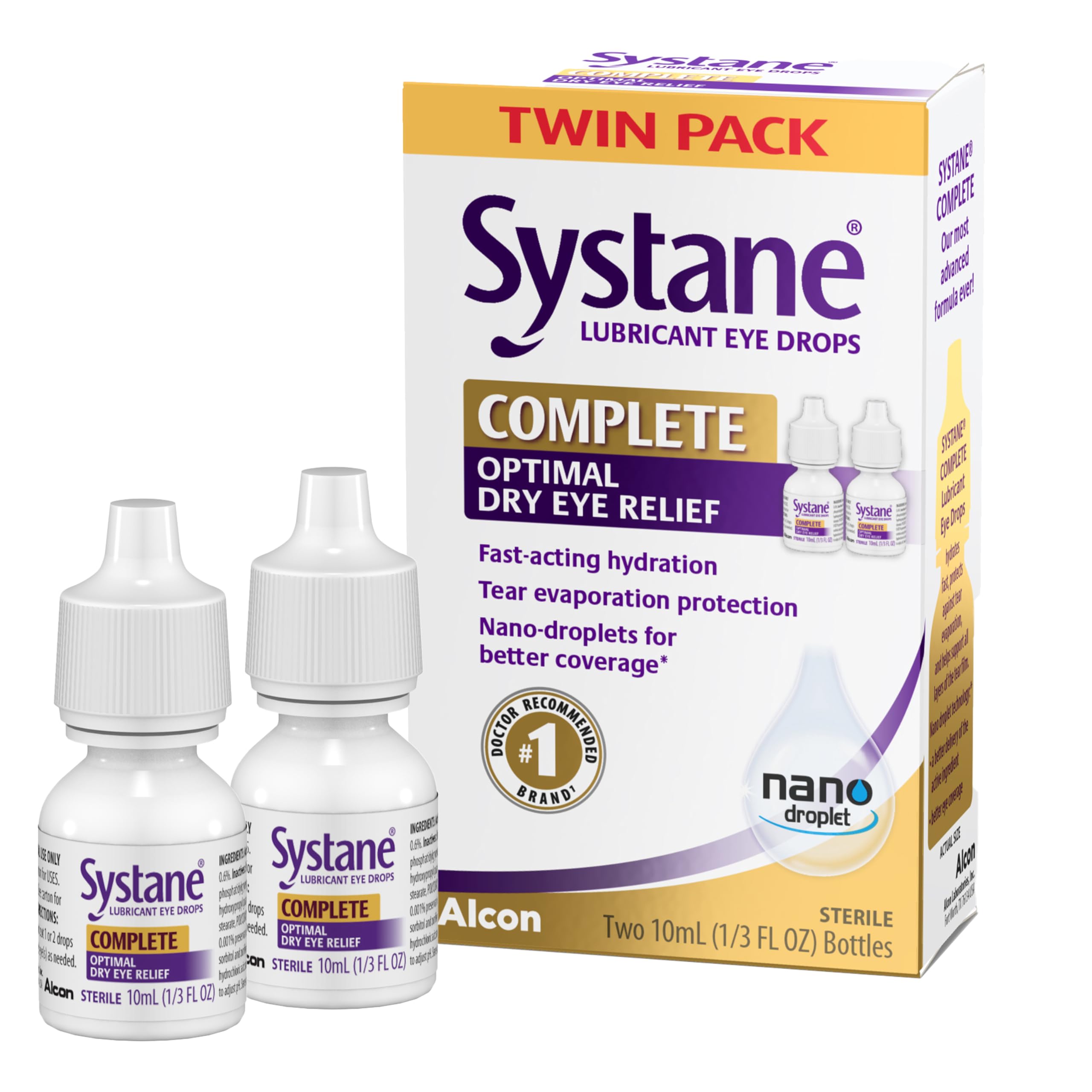
Systane Complete uses nano-droplet technology to spread a thin, even layer across the cornea, making it one of the fastest-acting artificial tears for daytime use after cataract surgery. The active ingredient is propylene glycol, which draws moisture to the ocular surface without the stinging sensation that preserved drops can cause. Multiple optometrists recommend this specific formulation for post-surgical patients because it hydrates quickly and lasts for hours without requiring constant reapplication.
The twin-pack delivers two full-sized bottles that fit easily into a bathroom cabinet or work bag. Users report that these drops are non-greasy, do not leave a sticky residue, and do not cause blurred vision — critical for patients returning to reading, screen work, or driving during recovery. One reviewer noted that their eye doctor specifically recommended Systane Complete after cataract surgery, and the drops effectively prevented dry-eye irritation throughout the day.
The main drawback is the presence of a preservative (PURITE) that breaks down into natural components in the eye. While PURITE is gentler than BAK, some highly sensitive post-op patients may still experience mild irritation. If your surgeon insists on completely preservative-free drops, the Systane Hydration PF sibling product is a safer choice.
Why it’s great
- Nano-droplet technology for rapid coverage
- Non-greasy and non-blurring
- Doctor-recommended for post-surgery dry eye
Good to know
- Contains PURITE preservative
- Not suited for severe dry eye
5. TheraTears Dry & Tired Preservative-Free Eye Drops
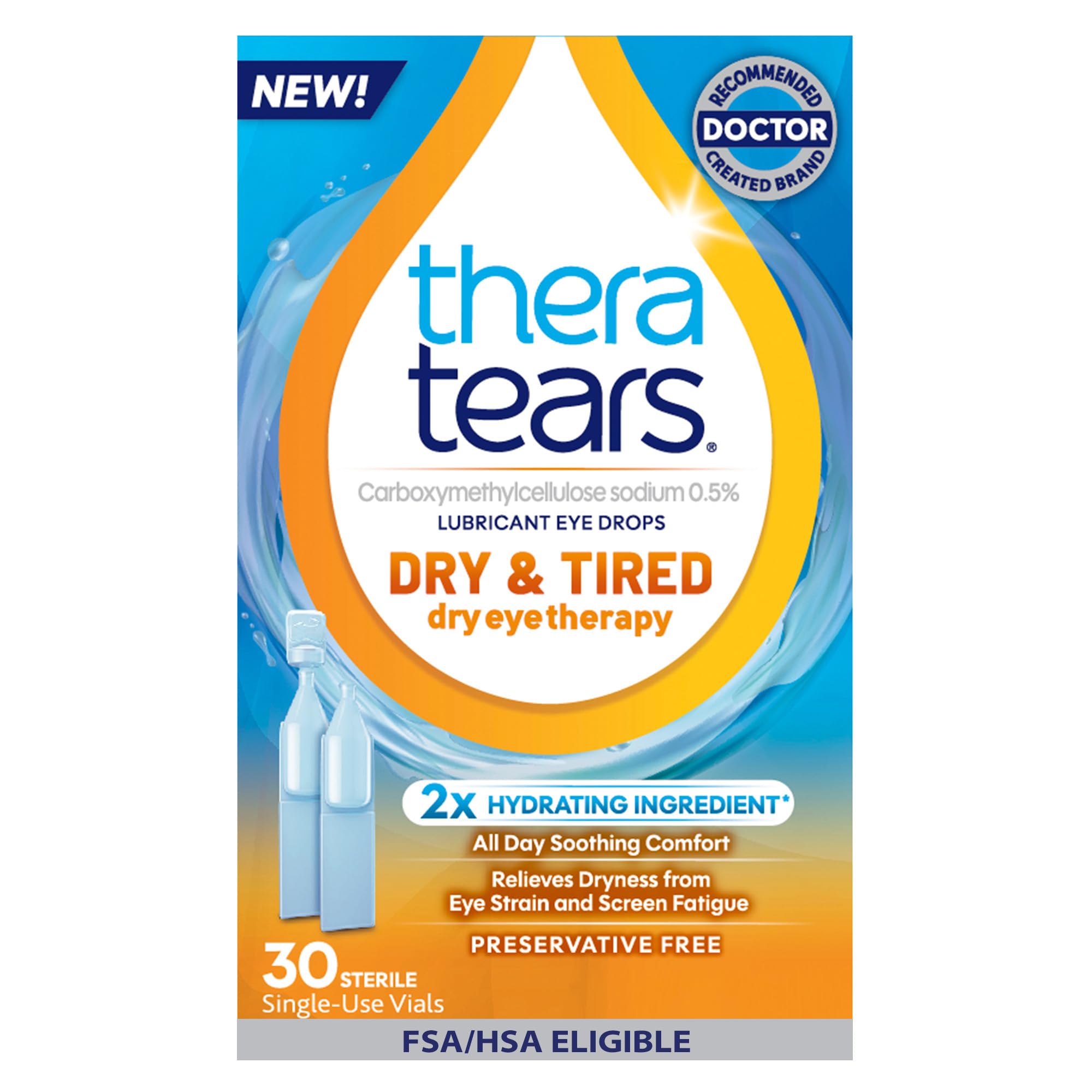
TheraTears Dry & Tired contains twice the hydrating ingredient of the original TheraTears formula, making it specifically engineered for the eye strain and screen fatigue that often compound post-surgical dryness. The preservative-free single-use vials maintain sterility, which users recovering from cataract surgery list as a key advantage. One reviewer explicitly notes that these drops were “great for recovering from cataract surgery” and produce less blurring than the standard TheraTears formula.
The individual applicators are slightly larger than some competing vials, making them easier to grip and squeeze for patients with reduced hand dexterity. The carboxymethylcellulose-based solution is thinner than a gel but thicker than plain saline, striking a balance that works for daytime relief without causing significant visual disturbance. Users with Sjögren’s disease and other chronic dry-eye conditions also report that this formula fits well into a broader management regimen.
The main limitation is availability — some users note that this specific variant is not yet in local pharmacy stores and must be ordered online. However, the 30-count box provides a solid month of twice-daily use, and the price point is competitive with other single-use vial products.
Why it’s great
- Extra hydration for tired post-op eyes
- Preservative-free single-use vials
- Low blurring compared to thicker drops
Good to know
- Harder to find in local stores
- Not intended for overnight use
6. Refresh Tears Lubricant Eye Drops
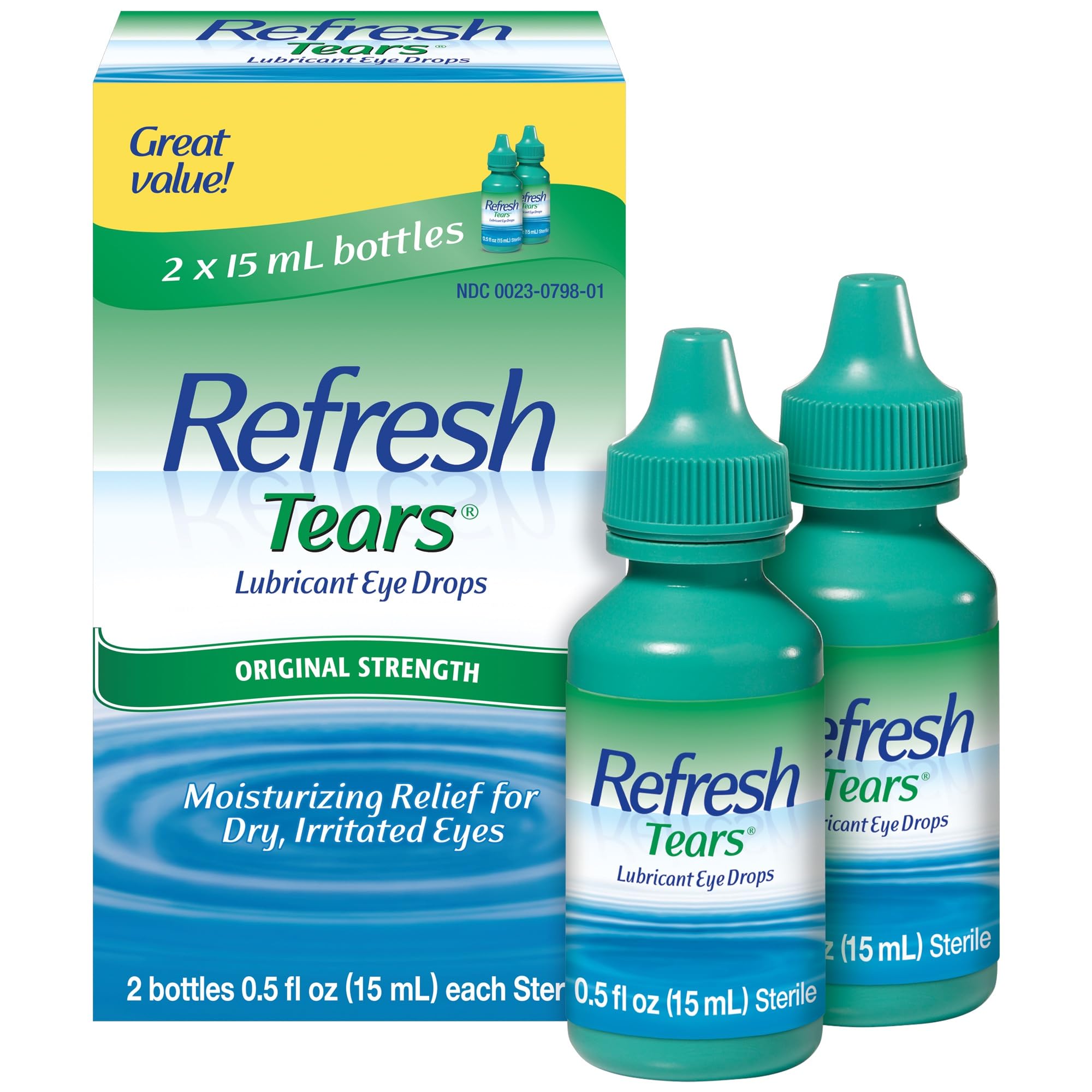
Refresh Tears is the long-standing, budget-friendly workhorse of the artificial tear category. Its carboxymethylcellulose formulation is designed to mimic natural tear chemistry, providing gentle lubrication for mild to moderate dry eye without the sting that can accompany preserved drops. The twin-pack at a low entry price makes this an attractive option for patients who need frequent drops throughout the day after cataract surgery.
The formula uses PURITE, a preservative that breaks down into oxygen and water on the ocular surface, which is gentler than BAK but still present. For patients in the later stages of recovery (after the first month), this is generally well tolerated. Users report that the drops are lightweight, non-sticky, and do not cause blurred vision — ideal for daytime use while working or driving. The two-count pack ensures you always have a backup bottle.
However, this is not the best choice for the immediate post-operative period. The preservative, though mild, can still irritate a fresh surgical wound. If you are in the first two weeks post-surgery, opt for a completely preservative-free option like Systane Hydration PF or GenTeal vials instead.
Why it’s great
- Lowest cost per ounce in the list
- Lightweight, non-blurring formula
- Mimics natural tear chemistry
Good to know
- Contains PURITE preservative
- Not ideal for first month post-surgery
7. Blink Triple Care Eye Drops
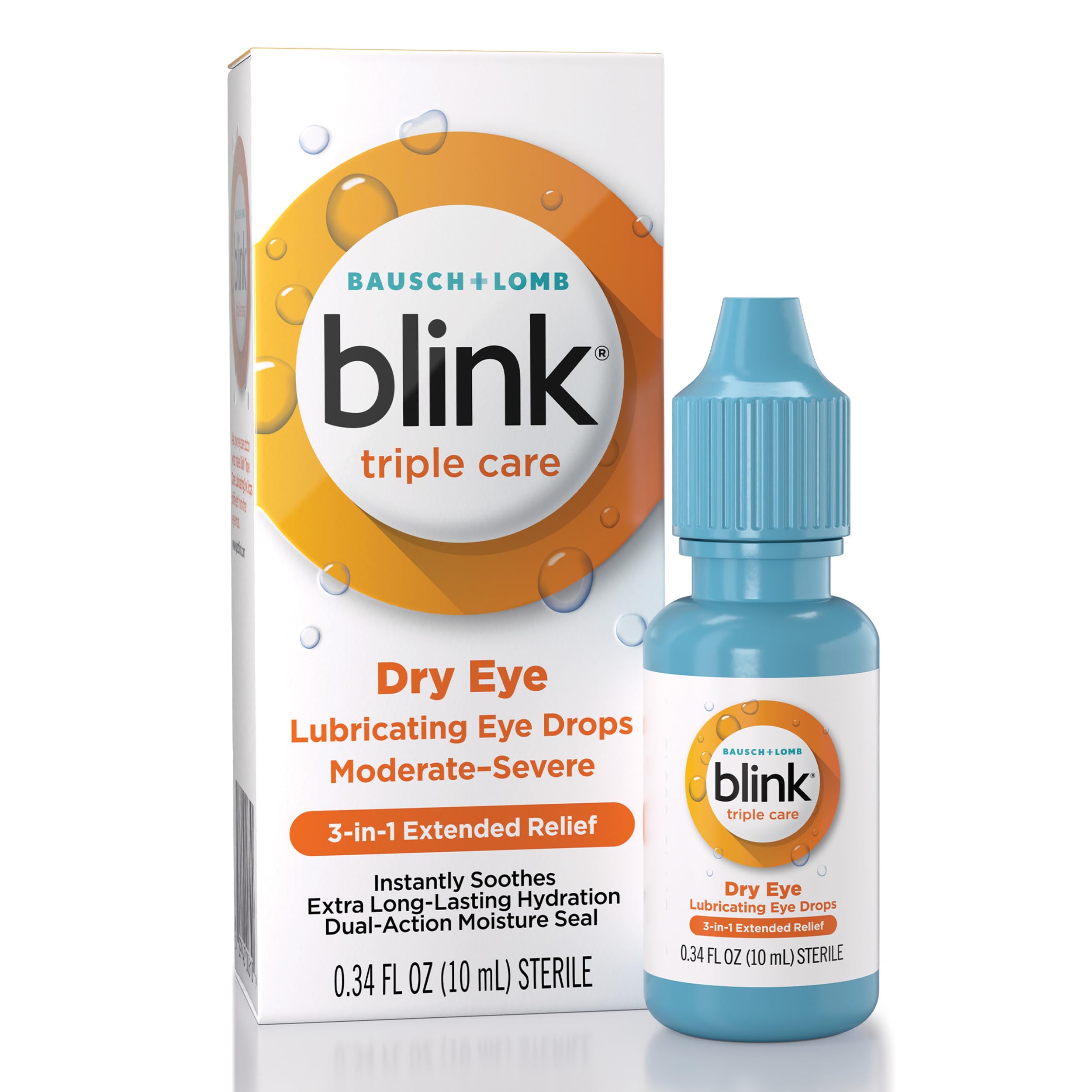
Blink Triple Care takes a three-pronged approach: it soothes immediately, hydrates with hyaluronate, and seals moisture using a dual-action water-based formula enhanced with natural oil. This oil component helps slow tear evaporation, which is particularly beneficial for cataract patients who develop evaporative dry eye from meibomian gland dysfunction post-surgery. A reviewer noted that their eye surgeon specifically recommended these drops, citing their dual-action moisture seal.
The formula is water-based rather than gel-based, so it does not blur vision significantly after instillation. This makes it a viable daytime option for patients who need frequent lubrication while recovering. The bottle is compact and easy to handle, though it contains a preservative that may not be suitable for the most sensitive early-stage recovery windows.
Where Blink Triple Care falls short for post-cataract use is the lack of a preservative-free variant in this specific product line. Patients in the first two weeks should consult their surgeon before using this drop. For later-stage recovery or moderate dry eye not tied to fresh incisions, the moisture-seal technology offers genuine advantages over simpler formulas.
Why it’s great
- Oil-based seal prevents tear evaporation
- Hyaluronate for deep hydration
- Doctor-recommended for dry eye
Good to know
- Contains preservative
- Not preservative-free for fresh post-op use
FAQ
How soon after cataract surgery can I use artificial tears?
Are multi-dose preservative-free bottles safe after cataract surgery?
Can I use gel tears during the day after cataract surgery?
How many times a day should I use artificial tears after cataract surgery?
Why does my eye still feel scratchy even after using drops post-surgery?
Final Thoughts: The Verdict
For most users, the artificial tears after cataract surgery winner is the Systane Hydration Multi-Dose PF because it marries preservative-free safety with hyaluronate-powered hydration in a convenient bottle format. If you want overnight corneal protection without waking up to dry, stuck eyelids, grab the Refresh Liquigel. And for absolute sterility in the first week post-op, nothing beats the GenTeal Tears single-use vials.