
Our readers keep the lights on and the weekend projects moving. As an Amazon Associate, I earn from qualifying purchases.
A cracked, faded driveway isn’t just an eyesore — it’s an open invitation for water to seep in, freeze, expand, and turn small fissures into costly structural damage. The right asphalt sealer does more than darken the surface; it forms a flexible, waterproof barrier that resists UV rays, chemical spills, and the relentless cycle of freeze-thaw that destroys untreated blacktop every winter.
I’m Rikta — the co-founder and writer behind FitlyFast. I’ve spent hundreds of hours analyzing customer durability reports, real-world coverage rates, and chemical formulations to identify which asphalt sealers actually deliver on their protection promises.
This guide breaks down the top performers across different project types — from budget-friendly driveway refreshers to heavy-duty, professional-grade coatings — so you can choose with confidence. Finding the best asphalt sealer for your specific surface and climate means comparing polymer content, solid percentages, and reapplication intervals, not just reading a label.
How To Choose The Best Asphalt Sealer
Not all asphalt sealers are built the same. A product that works beautifully on a new, smooth driveway may flake off within months on an older, porous surface exposed to harsh winters. Your decision should hinge on three core factors: the sealer’s chemical base, its solid content, and the specific surface condition you’re working with.
Chemical Base: Acrylic vs. Silane-Siloxane vs. Asphalt Emulsion
Acrylic sealers deliver a glossy, almost wet-look finish that dramatically enhances color but can require more frequent reapplication and may yellow under direct sunlight. Silane-siloxane formulations penetrate deep into the pores, creating an invisible, breathable barrier that repels water without changing the surface appearance — ideal for those who want protection without a glossy sheen. Straight asphalt emulsions, like those used for roof coatings, provide thick, waterproof layers but often remain tacky and can attract dirt if not formulated with polymers.
Solid Content and Coverage Rate
The percentage of solids in the sealer determines how much protective film remains after the water or solvent evaporates. A high-solid formula (40% or more) creates a thicker, more durable film that lasts multiple seasons, but it may cover fewer square feet per gallon. Budget-friendly options with lower solids may cover more area initially but often require yearly reapplication to maintain protection.
Surface Preparation and Compatibility
Even the best asphalt sealer will fail on a dirty, oily, or damp surface. Most manufacturers insist on a clean, dry substrate — some recommend a mild acid etch or power washing to remove old sealant layers. Some products are explicitly incompatible with concrete or masonry, so verify your surface type before purchasing. A rubber squeegee or low-pressure garden sprayer typically provides the most even application.
Quick Comparison
On smaller screens, swipe sideways to see the full table.
| Model | Category | Best For | Key Spec | Amazon |
|---|---|---|---|---|
| Jetcoat Driveway Sealer | Polymer-Emulsion | Driveway resurfacing & crack filling | 5-Year Protection; Sand-Fortified | Amazon |
| MasonryDefender Concrete Sealer | Silane-Siloxane | Invisible water repellency for concrete/paver | Breathable Penetrating Formula | Amazon |
| Armor AR500 High Gloss | Solvent-Based Acrylic | High-gloss wet-look finish on pavers | 700 VOC Professional Grade | Amazon |
| Black Jack Liquid Asphalt Coating | Asphalt Emulsion | Roof & foundation waterproofing | 5-Gallon Pail; Odorless | Amazon |
| Henry Driveway Asphalt Resurfacer | Asphalt Resurfacer | Large-area driveway renewal | 5 Gallon; Waterproof | Amazon |
| Jetcoat Cool King Roof Coating | Elastomeric Acrylic | RV & metal roof cooling/sealing | 10-Year Protection; Reflective White | Amazon |
| Ames Blue Max Liquid Rubber | Elastomeric Rubber | Below-grade foundation waterproofing | 1200% Elongation; Non-Toxic | Amazon |
In‑Depth Reviews
1. Jetcoat Premium Driveway Sealer
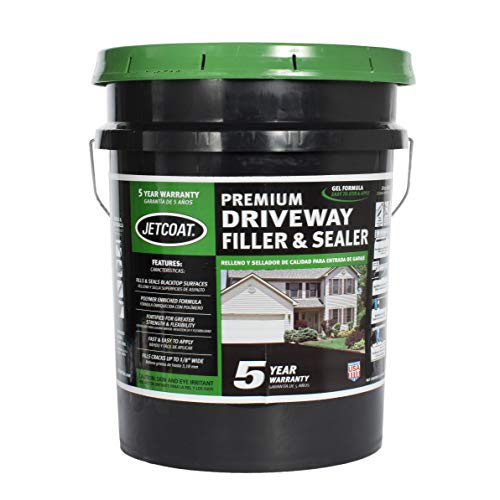
Jetcoat positions itself as the do-everything driveway solution, and the formulation backs up the claim. The polymer-modified emulsion is fortified with sand, which provides slip resistance and helps bridge small cracks and surface imperfections that plain sealers leave exposed. Coverage is rated at 250–350 square feet per pail — a solid range that reflects its thicker consistency.
Customer reports consistently highlight the smooth, uniform finish after two coats. The five-year protection window is realistic for mild climates, though users in freeze-thaw zones typically see three to four seasons before needing a refresh. The sealer is ready to use out of the pail, but thorough stirring is essential to keep the sand suspended evenly throughout application.
One potential drawback: at this thickness, a rubber squeegee is almost mandatory — spraying with a standard pump sprayer can lead to inconsistent coverage. For a mid-range price that balances durability, ease of use, and crack-filling capability, this is the strongest all-around pick for most homeowners.
Why it’s great
- Sand-fortified formula fills hairline cracks and adds traction
- Two coats yield a professional, uniform black finish
- Five-year protection claim backed by positive long-term user feedback
Good to know
- Thick consistency requires a squeegee or heavy-nap roller
- Coverage can drop below 250 sq. ft. on highly porous surfaces
2. MasonryDefender Concrete Sealer
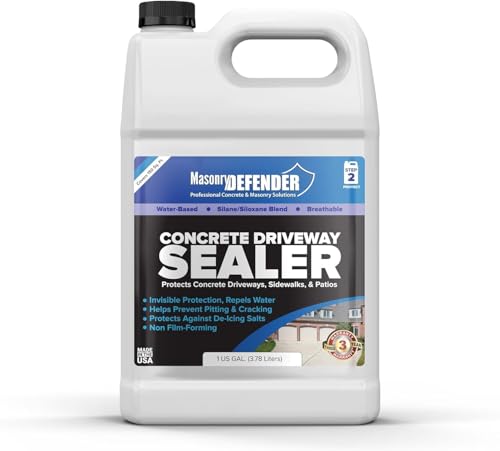
If you want invisible protection — no gloss, no color change, just water beading on the surface — MasonryDefender’s silane-siloxane formula is your best bet. It penetrates deep into concrete and paver pores rather than sitting on top, which means it won’t peel or flake even under heavy foot or tire traffic. Users in the Pacific Northwest report excellent performance against constant rain.
The one-gallon unit covers 90–150 square feet, which is on the lower end, but the trade-off is a bond that lasts multiple seasons. Reviewers note that after three years, treated squares still repel dirt and resist mold growth better than untreated areas. Application is straightforward with a low-pressure garden sprayer — just ensure the surface is bone-dry and clean before starting.
On the downside, this product is specifically for concrete and dense paver surfaces, not traditional asphalt blacktop. And because it dries clear, you won’t get the dramatic black refresh that some driveway owners want. For pure water repellency without altering appearance, it’s unbeatable at this price point.
Why it’s great
- Deep-penetrating silane-siloxane bonds below the surface
- Invisible finish preserves natural concrete color and texture
- Excellent long-term resistance to mold, salt, and freeze-thaw
Good to know
- Not formulated for standard asphalt driveways
- Low per-gallon coverage may require multiple units for large areas
3. Armor AR500 High Gloss Wet Look Concrete Sealer

For homeowners and contractors who want that showroom-quality, glossy-when-wet look on stamped concrete or pavers, the Armor AR500 is the professional standard. The solvent-based acrylic resin darkens the surface dramatically and produces a high-gloss finish that lasts for years when applied correctly. Users consistently report that a single coat can revive faded, 15-year-old surfaces to near-original vibrance.
The VOC compliance is broken into three formulations (700, 350, and 50 VOC), so it’s legal in all 50 states — just select the variant that matches your local regulations. Coverage is advertised at 175–225 square feet per gallon, though higher-porosity surfaces may absorb more. The product is self-priming, so you can apply a fresh coat directly over a clean, dry surface without sanding.
A few caveats: the solvent fumes are strong, so a respirator and good ventilation are non-negotiable. The high-gloss finish can become slippery when wet unless you mix in an anti-skid additive. And if you spill any on surrounding plants or pool water, act fast — the cured film is tough to remove. The premium price reflects professional-grade chemistry and results.
Why it’s great
- Produces a deep, high-gloss wet-look that dramatically enhances color
- Self-priming; easy to refresh with a single coat
- UV-resistant formulation resists yellowing in direct sunlight
Good to know
- Strong solvent fumes require a respirator and good airflow
- Glossy surface is slippery without an anti-skid additive
4. Black Jack 6190 Roof and Foundation Liquid Asphalt Coating

Black Jack 6190 is a no-frills, water-based asphalt emulsion designed for serious waterproofing, not cosmetics. It’s marketed for roofs and foundations, but many users have successfully applied it to underground fence posts, metal surfaces, and even garage roofs. The key feature here is the solvent-free, odorless formula — a huge plus for enclosed or low-ventilation spaces where fume inhalation is a concern.
The coating dries to a deep black finish, but it remains slightly tacky even after curing, which can cause boards or debris to stick under pressure. That tackiness is precisely what makes it so waterproof — it forms a continuous, flexible membrane that seals leaks effectively. One user in North Dakota reported no leaks after a single coat on a flat garage roof through a harsh winter.
Keep in mind that this is not a driveway sealer. It lacks the UV stabilizers and abrasion resistance needed for vehicle traffic. The five-gallon pail is heavy (45 pounds) and the coverage is generous, but you’ll want to use it within a reasonable timeframe after opening — the emulsion can separate and thicken over prolonged storage.
Why it’s great
- Odorless, solvent-free formula ideal for enclosed areas
- Creates a thick, flexible waterproof membrane that seals even active leaks
- Excellent adhesion to wood, metal, and existing asphalt surfaces
Good to know
- Remains slightly tacky; can attract dirt and debris
- Not suitable for driveways or high-traffic surfaces
5. Henry HE532410 5 Gallon Driveway Asphalt Resurfacer
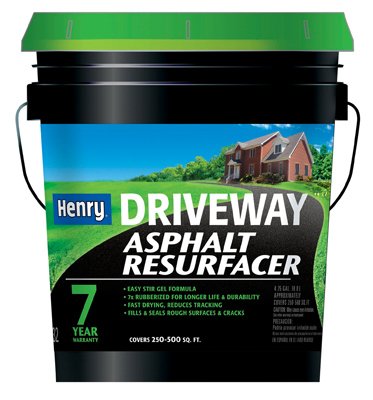
Henry is a household name in roofing and driveway products, and this five-gallon resurfacer is designed for large-area driveway renewal. The thick, black emulsion is meant to be squeegeed across the surface to fill shallow cracks and restore a uniform appearance. Several users confirm it delivers good coverage and a nice black finish that improves curb appeal significantly.
The value proposition is strong: a five-gallon pail costs less per gallon than many premium brands, making it an economical choice for resurfacing a full driveway. That said, the feedback is mixed — one reviewer reported flaking within six months and difficulty getting the warranty honored. This suggests that surface preparation is absolutely critical, and the product may not hold up as well in freeze-thaw climates.
If you have a newer, well-maintained driveway and want a fast, inexpensive refresh, Henry performs adequately. For older, damaged asphalt with deeper cracks, you would be better served by a polymer-fortified sealer. The seven-year warranty is advertised but notoriously difficult to claim, especially if purchased through third-party sellers.
Why it’s great
- Low cost per gallon for large-area coverage
- Easy squeegee application for a fresh black appearance
- Trusted brand with wide availability
Good to know
- Multiple reports of flaking within 6–12 months
- Warranty claims are difficult to process for Amazon purchases
6. Jetcoat Cool King Reflective Acrylic Roof Coating

Jetcoat’s Cool King is a specialty product with a very specific job: reflect sunlight, reduce interior temperatures, and seal roofs. The white elastomeric acrylic formulation can be applied to EPDM rubber, modified bitumen, metal, concrete, and even RV roofs. Users on campers and mobile homes report interior temperature drops of up to 10–15 degrees after application — a tangible difference for summer living.
The 10-year protection claim is aggressive, but the chemistry supports it. The thick, rubber-like film stretches with surface movement (preventing cracks) and reflects a significant portion of solar radiation. Coverage is 50–70 square feet per gallon per coat, and two coats are recommended. The drying time is fast — 2 to 3 hours to the touch — so you can complete a two-coat job in a single day if temperatures stay above 60 degrees Fahrenheit.
On the downside, this coating is not intended for flat, dead-level roofs or shingled surfaces. It also dries white, which is ideal for cooling but may be visually jarring on a black asphalt driveway. It’s a top-tier choice for its intended use case — roof restoration — but not a general-purpose asphalt sealer.
Why it’s great
- Reflective white finish significantly lowers surface and interior temperatures
- Elastomeric film stretches up to prevent cracks
- 10-year protection claim with positive real-world feedback on RV roofs
Good to know
- Not suitable for flat, dead-level roofs or asphalt driveways
- Requires consistent temperatures above 60°F during application
7. Ames Blue Max Liquid Rubber Waterproofer

Ames Blue Max is not an asphalt sealer in the traditional sense — it’s a liquid rubber membrane engineered for below-grade waterproofing. With an elongation rate of 1200%, this material stretches like a rubber band without cracking, making it the go-to choice for foundations, basement walls, insulated concrete forms, and shower window sills. The non-toxic, VOC-compliant formula is safe to use in occupied spaces.
User applications vary widely: one reviewer used it to seal pet-stained subflooring before new flooring installation, while another applied it to RV metal roofs and shower pans. The blue color serves as a visual indicator of coverage — any missed spots are immediately obvious. It bonds aggressively to concrete, wood, and metal, and cleans up easily with soap and water before it cures.
One important limitation: Blue Max requires a UV-resistant top coat if used in direct sunlight. The elastomeric rubber degrades under prolonged UV exposure, so outdoor ground-level applications need additional protection. It’s also priced at a premium compared to driveway sealers, reflecting its specialized, heavy-duty chemical composition.
Why it’s great
- 1200% elongation prevents cracking on shifting surfaces
- Non-toxic and VOC-compliant in all 50 states
- Versatile on concrete, wood, metal, and subflooring
Good to know
- Must be top-coated for UV exposure outdoors
- Premium price for a specialized waterproofing solution
FAQ
Can I apply an asphalt sealer over old paint or existing sealant?
How long should I wait before driving on a freshly sealed driveway?
What is the best way to apply an asphalt sealer for even coverage?
Final Thoughts: The Verdict
For most users, the best asphalt sealer winner is the Jetcoat Premium Driveway Sealer because the polymer-and-sand blend delivers excellent crack-filling ability, a smooth black finish, and five-year durability that outperforms budget alternatives in real-world conditions. If you want invisible water repellency without changing surface appearance, the MasonryDefender Concrete Sealer is the clear choice for concrete and paver projects. And for a showroom-quality gloss on stamped concrete or pavers, nothing beats the Armor AR500 High Gloss Sealer — just prepare for the strong fumes and invest in proper ventilation.