
Our readers keep the lights on and the weekend projects moving. As an Amazon Associate, I earn from qualifying purchases.
Pulling a sharp nebula from faint light pollution is the difference between a keeper and a frustrating blur. The sensor’s quantum efficiency and read noise determine how much detail your camera can extract before the background sky drowns it out.
I’m Rikta — the co-founder and writer behind FitlyFast. My approach to astrophotography hardware involves cross-referencing sensor quantum efficiency data against read-noise floor and cooling performance to find the cameras that deliver the cleanest deep-sky frames without requiring an astronomical budget.
This guide compares dedicated astronomy cameras, smart telescopes, and full-frame mirrorless bodies so you can confidently pick the right tool for capturing space from your backyard. Here is the complete breakdown of the best astrophotography camera.
How To Choose The Best Astrophotography Camera
Astrophotography cameras are defined by three core traits: sensor sensitivity to faint hydrogen-alpha wavelengths, thermal noise management through active cooling, and the ability to capture uncompressed RAW or FITS frames without destructive in-camera processing. A camera that excels at daytime portraits will fail when you need fifteen-minute sub-exposures of the Orion Nebula.
Sensor Type and Cooling
Back-illuminated sensors (BSI) place the photodiodes closer to the surface, boosting quantum efficiency above 80 percent. Active thermoelectric cooling is non-negotiable for long exposures: dropping the sensor temperature thirty degrees below ambient reduces dark current noise by roughly a factor of ten. Smart telescopes like the Dwarf 3 or Seestar S30 Pro lack active cooling and rely on short stacked subs, while dedicated cameras like the SVBONY SV405CC let you shoot five-minute frames at -10°C cleanly.
Read Noise and Full Well Capacity
Read noise under 3 electrons is essential for capturing faint reflection nebulae without grainy backgrounds. High conversion gain modes, found on the SV405CC, cut read noise further when you push the gain above unity. Full well capacity above 50,000 electrons gives you headroom to capture bright stars without clipping — critical for maintaining star color in the final stack.
Compatibility and Software Integration
Dedicated astronomy cameras connect via USB 3.0 and work with N.I.N.A., SharpCap, and Astroberry. Mirrorless bodies like the Canon EOS R8 or Sony A7 IV depend on intervalometers and lack hardware dark-frame subtraction during capture. Smart telescopes handle stacking and processing on-board, trading raw flexibility for instant results. Choose the workflow that matches your tolerance for post-processing hours.
Quick Comparison
On smaller screens, swipe sideways to see the full table.
| Model | Category | Best For | Key Spec | Amazon |
|---|---|---|---|---|
| SVBONY SV405CC | Cooled Dedicated | Deep-sky detail on a budget | 11.7 MP, 4.63µm pixels | Amazon |
| DWARFLAB Dwarf 3 | Smart Telescope | Portable grab-and-go imaging | 3 lb, 4K auto-tracking | Amazon |
| ZWO Seestar S30 Pro | Smart Telescope | One-tap deep-sky for beginners | IMX585 sensor, 4.6° FOV | Amazon |
| OM System E-M10 IV | Mirrorless Kit | Versatile daytime + night imaging | 20 MP, 5-axis IBIS | Amazon |
| Canon EOS RP Kit | Full-Frame Mirrorless | Entry-level full-frame widefield | 26.2 MP, 24-105mm lens | Amazon |
| Canon EOS R8 | Full-Frame Mirrorless | High-speed deep-space tracking | 24.2 MP, uncropped 4K60 | Amazon |
| Sony A7 III Kit | Full-Frame Mirrorless | Low-noise widefield astro | 24.2 MP, 15-stop DR | Amazon |
| Sony A7 IV | Full-Frame Mirrorless | High-res astro + video hybrid | 33 MP, 4K60 10-bit | Amazon |
| Unistellar Odyssey | Smart Telescope | Citizen science & instant imaging | 85mm aperture, 5h battery | Amazon |
| Fujifilm X-H2 Kit | APS-C Mirrorless | Ultra-high-res lunar & planetary | 40 MP, 7-stop IBIS | Amazon |
| Vaonis Vespera Pro | Smart Telescope | Premium automated deep-sky | IMX676 Starvis 2, 225GB | Amazon |
In‑Depth Reviews
1. SVBONY SV405CC Cooled Telescope Camera

The SV405CC uses the back-illuminated IMX294 sensor with 4.63-micron pixels and a two-stage TEC cooler that pulls the sensor thirty degrees below ambient. This directly reduces dark current noise, letting you shoot five-minute sub-exposures at unity gain with minimal amp glow artifacts that flat frames can remove in post-processing.
Users report clean results at -10°C in Bortle 7 skies, with image quality that competes with the ASI294MC Pro at roughly two-thirds the price. The 256 MB DDRIII buffer eliminates dropped frames during high-speed readout, and the HCG mode activates automatically above gain 120 to cut read noise below 2 electrons without sacrificing dynamic range.
Setup with N.I.N.A. is straightforward, though some users experienced buffer conflicts that caused plate-solving errors with the SV405cc specifically — SVBONY had not released a firmware fix as of mid-2023. The included T-ring and nose piece fit most 1.25-inch focusers, but the USB cable length and power connector require careful routing on the mount.
Why it’s great
- Two-stage TEC cooling reaches -30°C delta for low-noise deep-sky subs
- HCG mode drops read noise below 2e- while preserving full well capacity
- Works with SharpCap, N.I.N.A., and Astroberry on multiple operating systems
Good to know
- Reported buffer conflict with N.I.N.A. plate solving on some firmware versions
- USB and power connectors are sensitive; mount cable management is essential
- Sensor cooling requires 10-15 minutes to stabilize before imaging
2. DWARFLAB Dwarf 3 Smart Telescope
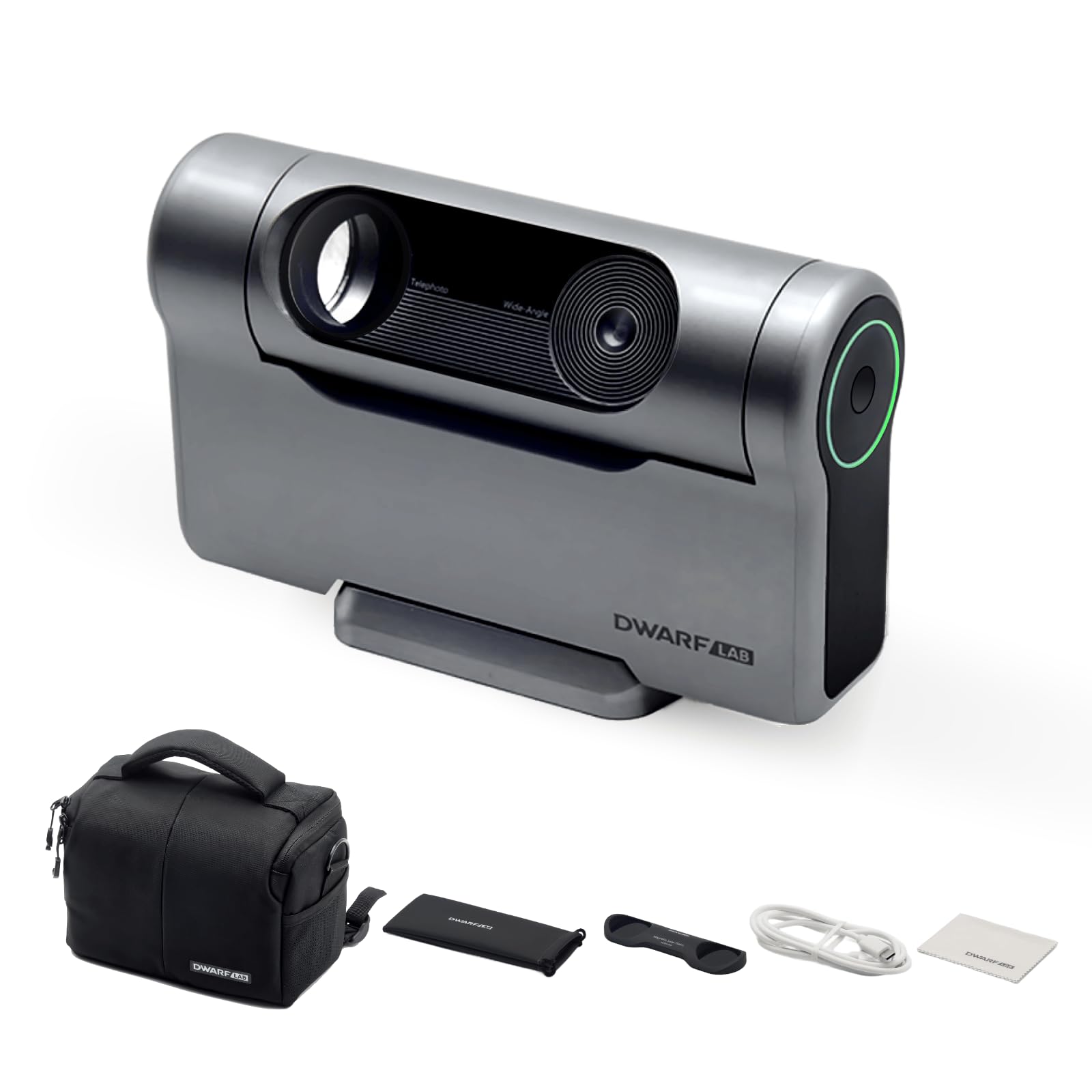
Weighing just three pounds, this smart telescope fits in a standard backpack and sets up in under two minutes. The dual-lens system pairs a telephoto for deep-sky objects with a wide-angle for Milky Way panoramas, and the built-in EQ mode lets it track across the sky without a separate equatorial wedge.
The in-app stacking and denoising engine produces impressive results even under heavy light pollution — one user captured Markarian’s Chain from San Jose, California, using the autonomous scheduled tracking feature while they slept. The 4K auto-tracking holds onto celestial targets steadily enough for five- to ten-second subs before field rotation becomes visible.
Solar imaging works out of the box with the included magnetic filter, and the carrying bag protects everything for travel. The app occasionally loses connection after power loss, requiring a restart, and the lack of a physical remote means you depend entirely on Wi-Fi range from the phone or tablet.
Why it’s great
- Ultra-light three-pound body fits backpack for spontaneous stargazing trips
- Dual imaging lenses cover deep-sky and wide-field astrophotography in one package
- App-based stacking and AI denoising produce shareable images with no PC required
Good to know
- App can glitch after power interruption; reconnection sometimes needed
- No active cooling limits sub-exposure length to around ten seconds
- Wi-Fi range limits control distance from the telescope
3. ZWO Seestar S30 Pro Smart Telescope
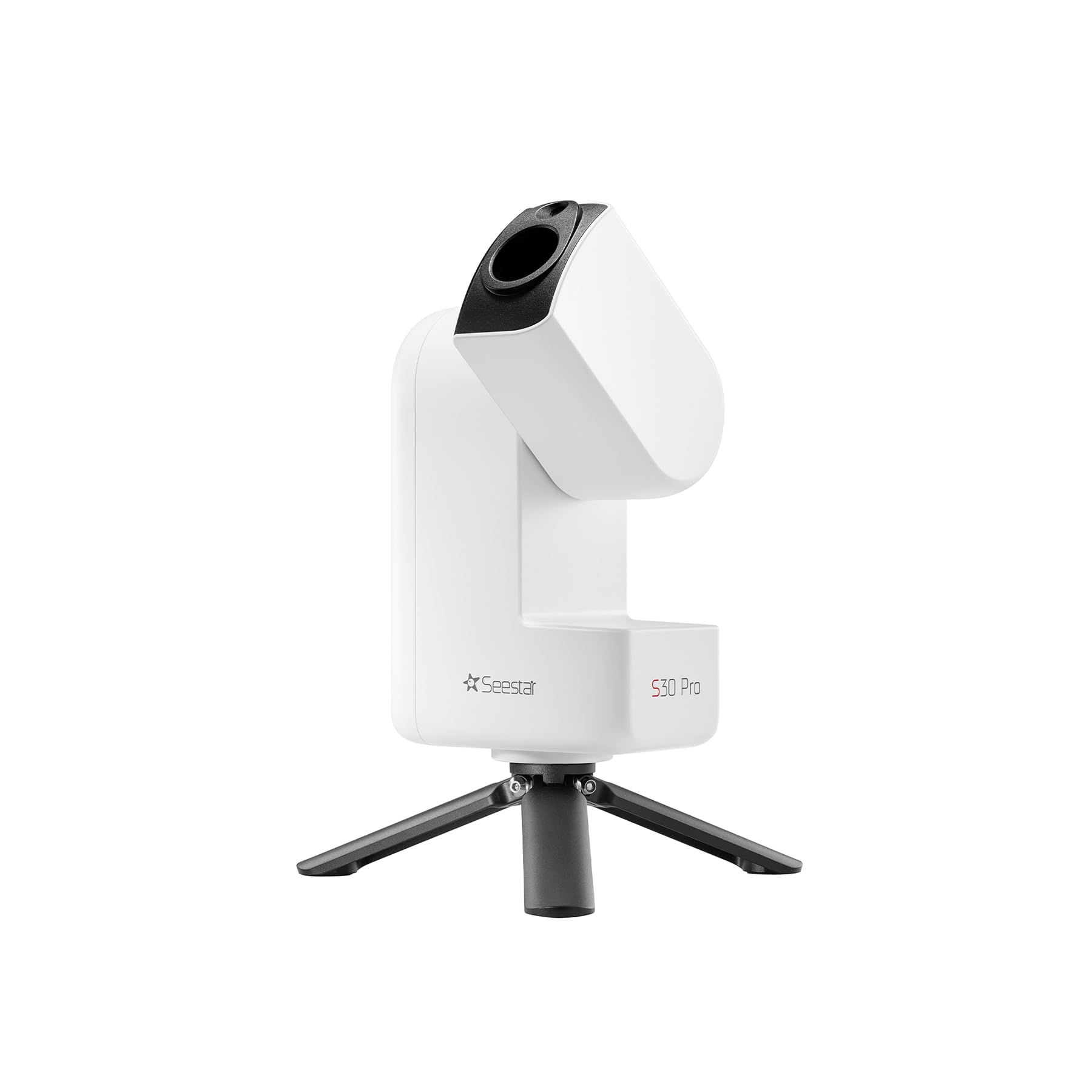
The IMX585 sensor at the heart of the S30 Pro delivers excellent quantum efficiency in the hydrogen-alpha band, making emission nebulae pop even from suburban backyards. The four-element apochromatic lens suppresses chromatic aberration around bright stars, and the built-in light-pollution filter cuts sodium-vapor streetlamp glow without blocking the OIII bandwidth.
One-tap Milky Way mode stitches multiple frames into an 8K mosaic automatically, and the AI scene recognition separates foreground terrain from the night sky to reduce ghosting. Users consistently report capturing good galaxy detail within thirty minutes of unboxing — the GOTO and auto-tracking handle alignment so beginners never need to polar-align manually.
The EQ mode in the latest firmware improves tracking accuracy for objects near the meridian, and the anti-dew heater keeps the corrector plate clear during humid nights. Scenery mode outputs mediocre daytime images, and the internal 128 GB storage fills quickly if you shoot RAW+FITS pairs for every target, so deleting unwanted sequences becomes routine.
Why it’s great
- IMX585 sensor offers high H-alpha sensitivity for bright nebula captures
- Automated 8K mosaic stitching creates ultra-wide-field astro images with one tap
- Built-in light-pollution filter improves contrast without external accessories
Good to know
- Scenery and birdwatching modes produce mediocre quality
- No active cooling; relies on short stacked subs for noise control
- 128 GB internal storage fills quickly with RAW files
4. OM System Olympus E-M10 Mark IV Kit

Micro Four Thirds bodies are rarely the first choice for dedicated astrophotography, but the E-M10 Mark IV’s five-axis in-body stabilization makes it usable for untracked wide-field shots at 200mm equivalent and below. The 20 MP Live MOS sensor produces clean images at ISO 1600, and the compact kit lens folds into a jacket pocket when not shooting.
The flip-down monitor doubles as a selfie screen, which also helps frame the Milky Way from awkward ground-level tripod angles. The in-camera panorama stitch captures the arch of the galaxy in one sweep, saving you from stitching twenty frames manually. Battery life is decent for a mirrorless body, but an external USB power bank keeps it running through a full night of timelapses.
No active cooling and no dedicated astro software integration mean you rely on an intervalometer app and manual dark-frame subtraction. The 14-42mm kit lens at f/3.5 on the wide end is slow for faint nebulae — a fast prime like the Laowa 7.5mm f/2 changes the camera’s astro capability entirely.
Why it’s great
- Five-axis IBIS allows sharp handheld shots at night in stable positions
- Compact body and pancake kit lens fit in a jacket for travel
- In-camera panorama stitch handles wide-field Milky Way sweeps well
Good to know
- No USB-C charging; relies on older micro-USB standard
- Kit lens aperture is slow for faint deep-sky targets without a tracker
- Wi-Fi image transfer app is slower than modern alternatives
5. Canon EOS RP Kit with RF 24-105mm f/4-7.1

Full-frame sensors capture over two stops more light than APS-C at the same aperture, and the EOS RP’s 26.2 MP sensor delivers clean low-light files that respond well to stretching in post-processing. The 24-105mm f/4-7.1 kit lens covers the most useful focal range for wide-field constellation shots and untracked star fields.
Pairing the RP with a star tracker like the Sky-Watcher Star Adventurer transforms it into a capable deep-sky rig — the 14-bit RAW files retain enough dynamic range to pull out the California Nebula’s faint hydrogen-alpha signal. The flip-out screen makes framing from a low tripod comfortable, and the silent electronic shutter eliminates vibration during bulb exposures.
The kit lens is soft at the edges until stopped down to f/8, and the f/7.1 long-end aperture limits light gathering for fainter objects. No built-in intervalometer means you need an external shutter release or the Canon Camera Connect app, which drains the battery faster than a dedicated intervelometer.
Why it’s great
- Full-frame sensor provides excellent low-light performance for wide-field astro
- Lightweight body works well on budget star trackers
- Flipy vari-angle screen useful for ground-level night-time framing
Good to know
- Kit lens edges soft until stopped down to f/8
- No in-camera intervalometer; needs external shutter release or app
- Manual lens aperture control requires menu diving — no AF/MF switch on kit lens
6. Canon EOS R8 Body

Sharing the R6 Mark II’s 24.2 MP sensor and DIGIC X processor, the R8 delivers the same deep-sky RAW performance at a significantly lower body price. The Dual Pixel CMOS AF II tracks moving subjects across the full frame, which helps when the star tracker drift requires quick recomposition or focus confirmation on test stars.
The uncropped 4K60 footage oversampled from 6K captures meteor showers and aurora with excellent detail, and the Canon Log 3 profile preserves highlight rolloff for post-production grading. Users upgrading from the EOS RP report a massive jump in autofocus speed and ISO performance, with usable images up to ISO 6400 for untracked Milky Way panels.
Battery life is the weakest point — expect roughly 350 shots on a single LP-E17, requiring two or three spares for a full night. The lack of in-body stabilization means any telephoto lens beyond 200mm demands a solid tracking mount to avoid star trailing, and the single SD card slot offers no backup confidence during long capture sequences.
Why it’s great
- R6 Mark II sensor and processor at a lower price point for full-frame astro
- Uncropped 4K60 oversampled from 6K captures detailed meteor and aurora footage
- Excellent high-ISO performance clean up to ISO 6400 with minimal luminance noise
Good to know
- Battery life around 350 shots; multiple spares essential for all-night sessions
- No in-body image stabilization requires stable mount for long focal lengths
- Single SD card slot offers no backup during critical captures
7. Sony A7 III Kit with 28-70mm f/3.5-5.6

The A7 III’s back-illuminated Exmor R sensor set the standard for affordable full-frame low-light performance when it launched, and it still competes with newer bodies for wide-field astrophotography. The 15-stop dynamic range means you can expose for the faint outer arms of the Andromeda Galaxy without blowing out the bright core, recovering both highlights and shadows in post-processing.
The 693 phase-detection AF points cover 93 percent of the frame, making focus-on-a-star with manual lenses straightforward using focus peaking and magnification. The battery performance is class-leading — users regularly report over 700 shots per charge, enough for a full night of tracking without swapping. The 28-70mm kit lens is decent stopped down, but a fast prime like the Sony 20mm f/1.8 G unlocks the camera’s true astro potential.
The menu system remains Sony’s most criticized feature — it takes time to learn where the long-exposure noise reduction and intervalometer settings live. The small body paired with heavy telephoto lenses feels front-heavy on a star tracker; a battery grip helps balance the setup but adds weight and cost.
Why it’s great
- 15-stop dynamic range recovers faint nebula detail without clipping bright stars
- Exceptional battery life enables all-night untracked or tracked sessions
- 693-point phase-detection AF with focus peaking aids manual star focusing
Good to know
- Menu system requires significant learning time for astro-specific settings
- Small body feels front-heavy with large telephoto lenses on a tracker
- Kit lens aperture slow at long end; a fast prime vastly improves results
8. Sony Alpha 7 IV Body

The 33 MP Exmor R sensor resolves finer detail in the Lagoon Nebula’s gas structures than the 24 MP A7 III, while the BIONZ XR processor reduces banding in clipped highlights — a common issue when stretching astrophotos. The 10-bit 4K60 recording with full pixel readout includes S-Cinetone color science, which gives timelapses of the Milky Way a filmic look straight from the camera.
Real-time Eye AF for animals works on deer and rabbits during twilight wildlife shoots, and the improved menu system is more intuitive than the A7 III for finding the intervalometer and noise reduction settings. Weather sealing gives confidence during damp night sessions, and the dual card slots (SD + CFexpress Type A) let you back up RAW files in real time.
The 33 MP sensor demands faster lenses to maintain shutter speed before star trailing becomes visible, and the crop factor in super-35 mode drops resolution to around 14 MP for video. Battery life is solid but not class-leading — expect around 580 shots per charge in cold conditions, requiring one spare for an eight-hour session.
Why it’s great
- 33 MP sensor resolves fine nebula structure that 24 MP bodies miss
- 10-bit 4K60 S-Cinetone captures Milky Way timelapses with minimal editing
- Improved menu system simplifies accessing astro-settings like interval timer
Good to know
- Higher resolution demands faster lenses or shorter shutter speeds to avoid trailing
- Crop factor for super-35 video limits resolution in hybrid projects
- Battery life drops in cold night conditions; a spare is necessary
9. Unistellar Odyssey Smart Telescope

The Odyssey is built around an 85 mm f/3.9 optical tube with a limiting magnitude of 17.2, which resolves globular clusters and planetary nebulae that smaller smart telescopes cannot touch. The motorized Alt-Az mount includes one-button GOTO with a 37-million-star database, and the integrated digital camera outputs RAW and FITS files for advanced processing in PixInsight or AstroPixelProcessor.
Citizen science campaigns through Unistellar’s partnership with the SETI Institute let you contribute to asteroid occultation timings and exoplanet transit observations directly from the app. The five-hour internal battery runs a full imaging session without external power, and the included tripod is sturdy enough for the 6.5 kg total weight.
The Wi-Fi connection is the most common frustration — some users report inconsistent pairing that prevents the telescope from responding until a full restart. The app lacks manual pointing controls and a live sky map, which limits exploration compared to software like SkySafari or Stellarium. No eyepiece means all viewing happens through the phone or tablet screen, which works for sharing but removes the direct visual experience.
Why it’s great
- 85 mm aperture resolves globular clusters and planetary nebulae in fine detail
- RAW/FITS export enables professional-level post-processing in PixInsight
- Citizen science campaigns contribute directly to NASA and SETI research
Good to know
- Wi-Fi connection issues require occasional restart to re-establish communication
- App lacks manual pointing controls and integrated sky map
- No eyepiece; all viewing is screen-only through mobile device
10. Fujifilm X-H2 Kit with XF 16-80mm f/4

The world’s first 40 MP APS-C sensor, the X-Trans CMOS 5 HR, delivers pixel-level detail on lunar craters and sunspots that exceeds most full-frame sensors in resolving power per millimeter of focal length. The Pixel Shift Multi-Shot mode captures 20 frames shifted by 0.5 pixels, combining them into a 160 MP DNG RAW file ideal for archiving lunar mosaics and planetary captures with zero false color artifacts.
The X-Processor 5 enables blackout-free 15 fps bursts with the mechanical shutter, which captures the International Space Station transits with enough frames to stack for a crisp composite. The seven-stop IBIS stabilizes the 16-80mm lens at 80mm for sharp untracked single-frame shots of the Orion Nebula up to ISO 3200, and the film simulation modes provide a usable JPEG out of the camera for quick sharing on social media without post-processing.
The 40 MP files require fast CFexpress Type B cards for burst shooting, and the crop sensor still trails full-frame in noise performance beyond ISO 6400. The price of the body alone lands in premium full-frame territory, and the investment only makes sense if you value the resolution advantage for lunar, planetary, and solar work.
Why it’s great
- 40 MP APS-C sensor resolves extreme detail on lunar craters and planetary surfaces
- Pixel Shift Multi-Shot creates 160 MP DNG for archival-quality lunar mosaics
- Seven-stop IBIS enables sharp untracked deep-sky frames at moderate focal lengths
Good to know
- Noise performance beyond ISO 6400 trails full-frame sensors in faint nebula imaging
- Large file sizes require CFexpress Type B cards for sustained burst shooting
- Body price competes with full-frame options; value depends on specific high-res needs
11. Vaonis Vespera Pro Observation Station
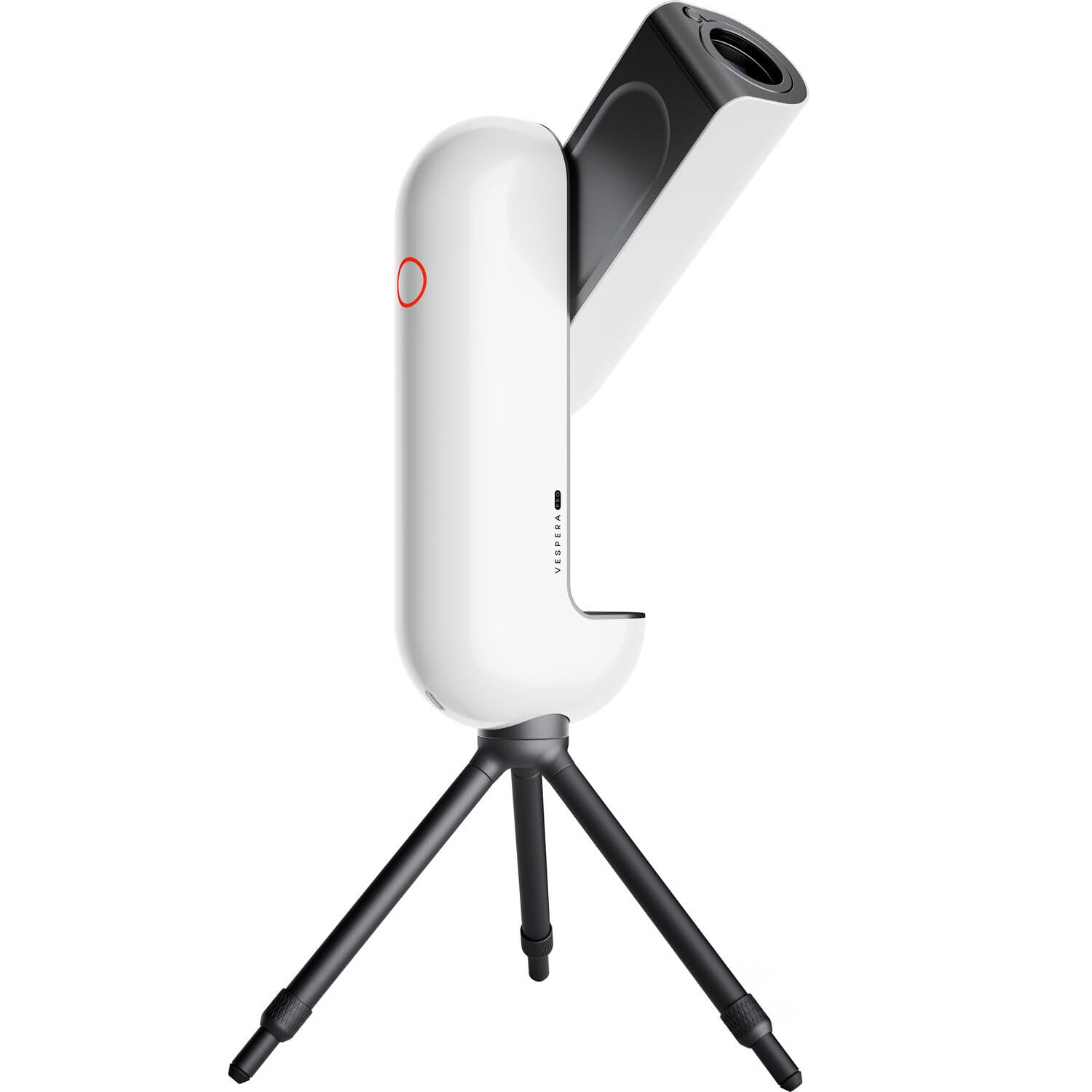
Vespera Pro integrates the Sony IMX676 Starvis 2 sensor with Vaonis’s CovalENS technology, which enables live panorama capture by stitching overlapping fields in real time. The automatic dark calibration subtracts calibration frames on the fly, cutting out the most tedious step of deep-sky processing — you see a clean stacked image on the app within minutes of the first sub.
The mosaic mode combines multi-night observations into a single high-resolution frame, useful for large targets like the Veil Nebula complex that span several degrees. The internal 225 GB storage holds weeks of RAW and FITS files before needing a transfer, and the battery lasts nine to ten hours — enough for two full winter nights without recharging. Users report the tracking reliability and automatic dew heater keep the session running unattended until dawn.
The telescope creates its own Wi-Fi network and cannot join your home router, meaning you lose internet access on your device during use. File transfer requires FTP over that same Wi-Fi, which is slow for large FITS sequences, and there is no USB-C direct transfer option. The Singularity app lacks a sky map and sometimes hides past observations from the library view, adding friction when reviewing previous sessions.
Why it’s great
- IMX676 Starvis 2 sensor delivers outstanding sensitivity for emission nebulae
- Automatic dark calibration removes the need for manual calibration frame capture
- Multi-night mosaic mode combines data from different sessions into one image
Good to know
- Proprietary Wi-Fi disconnects device from home internet during use
- No USB-C direct file transfer; slow FTP is the only option for data export
- Singularity app lacks sky map and can hide past observations from library
FAQ
How do I choose between a dedicated astronomy camera and a mirrorless body for deep-sky imaging?
What minimum sensor cooling temperature do I need for clean five-minute subs?
Can I use a smart telescope like the ZWO Seestar S30 Pro for scientific research?
Why is back-illuminated sensor technology important for astrophotography?
Does higher megapixel count always mean better astro images?
Final Thoughts: The Verdict
For most users, the astrophotography camera winner is the ZWO Seestar S30 Pro because it packages an IMX585 sensor, automated GOTO tracking, and one-tap deep-sky processing in a system that produces shareable results thirty minutes out of the box without a laptop or polar alignment. If you want maximum low-light dynamic range and upgrade flexibility for tracked wide-field imaging, grab the Sony A7 III. And for the deepest astronomical detail with professional-level cooling and control, nothing beats the SVBONY SV405CC.