
Our readers keep the lights on and the weekend projects moving. As an Amazon Associate, I earn from qualifying purchases.
Specs are compiled from manufacturer listings and verified buyer reviews and can change over time — please confirm the key details on the product page before buying.
Dark spots persist despite serums; an at-home chemical peel delivers controlled exfoliation directly to pigmented areas.. An at-home chemical peel cuts through the guesswork by delivering a controlled dose of exfoliating acid right where the melanin (the pigment that causes dark spots) sits. The right formula and strength for your skin type deliver brightening without irritation.. This guide compares four top-rated peels by active ingredients, user feedback, and routine fit..
I’m Rikta — the founder and writer behind FitlyFast. This guide is built by comparing the manufacturers’ published specifications and the patterns across verified customer reviews, so you get each pick’s real strengths and trade-offs instead of marketing spin.
Whether you are dealing with sun spots, post-blemish marks, or melasma (a type of patchy darkening often from hormones), finding the right at home chemical peel for hyperpigmentation means matching your skin’s tolerance to the right concentration of actives — from gentle lactic acid to more potent mandelic or glycolic blends.
Quick Picks
- Dermalogica PowerBright Dark Spot Face Peel — Premium Pick
- Glo Skin Beauty Hydra-Bright AHA Glow Peel Pro-Level — Best Value
- Lancer Skincare Caviar Lime Acid & Retinol Peel — Compact Powerhouse
- Mandelic Acid 30% AHA Alpha Hydroxy Peel (Dermalure) — Rosacea Ready
How To Choose The Best At Home Chemical Peel For Hyperpigmentation
Not all dark spots are the same, and neither are the acids that fade them. A peel that zaps sun damage might do nothing for melasma, and a high-concentration formula that glows on oily skin can wreck a dry complexion. Here are the three factors that actually decide whether a peel helps or hurts.
Active Acid Type and Strength Percentage
The acid you choose should match the depth of your pigmentation. Glycolic acid (a small-molecule AHA, meaning it penetrates deep and fast) works quickly on surface sun spots but can sting. Lactic acid (a larger AHA molecule) is gentler and hydrating, better for dry or sensitive skin. Mandelic acid (the largest AHA, an acid with the biggest molecule size) is ideal for darker skin tones because it exfoliates without triggering rebound hyperpigmentation (darkening caused by irritation). The percentage on the bottle tells you the concentration — higher numbers (20%-30%) are for experienced users, lower numbers (under 10%) are safer for beginners.
Exfoliation Texture: Single-Liquid vs. Multi-Step Kit
A single-bottle peel is simple: swipe on, wait, rinse off. It works for maintenance. A multi-step kit usually includes a pre-cleaner, the acid solution, and a neutralizing post-treatment, offering a total peel that feels closer to a spa session. The trade-off is more packaging and a higher price per use. If your pigmentation is stubborn and widespread, the multi-step approach often delivers faster visible turnover.
Aftercare and Frequency Instructions
Hyperpigmentation peels work by accelerating cell turnover (the rate your skin sheds old cells), which means your skin will be more vulnerable to UV damage immediately after use. A clear post-peel routine — avoid direct sun, skip other actives like retinol for 24-48 hours, use a high-SPF mineral sunscreen — is non-negotiable. The best peels include explicit timing and frequency guidelines (once a week, twice a week, etc.) so you do not overdo it and cause the very inflammation that worsens dark spots.
Quick Comparison
| Model | Best For | Active Acid Type | Concentration | Net Size | Amazon |
|---|---|---|---|---|---|
| Dermalogica PowerBright Dark Spot Face Peel | Daily-use spot fading | 12% AHA + PHA | 12% | 3.04 oz | Amazon |
| Glo Skin Beauty Hydra-Bright AHA Glow Peel Kit | Spa-like multi-step treatment | Lactic + Ferulic Acid | Not listed | 11.2 oz | Amazon |
| Lancer Skincare Caviar Lime Acid & Retinol Peel | Gentle weekly glow | 10% Glycolic + Retinol | 10% | 0.5 fl oz | Amazon |
| Mandelic Acid 30% AHA Alpha Hydroxy Peel (Dermalure) | Acne scars & rosacea | Mandelic Acid | 30% | 1.0 fl oz | Amazon |
In‑Depth Reviews
1. Dermalogica PowerBright Dark Spot Face Peel
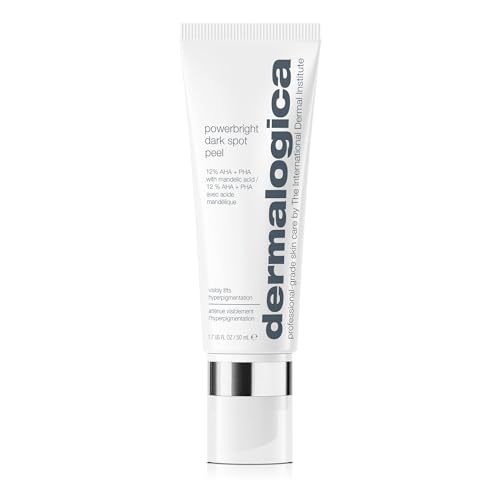
The serious, daily-grind peel that treats hyperpigmentation like a long-term project, not a quick fix.
You get a 12% AHA plus PHA (a mild exfoliant that also hydrates) formula that targets UV dark spots, post-blemish marks, and melasma. The real power here is the inclusion of Tranexamic Acid and Niacinamide (Vitamin B3), two ingredients dermatologists reach for to interrupt melanin (skin pigment) production. You put it on clean skin for 15 to 20 minutes — up to 30 if you want an extra boost — and for the first 4 to 5 days you use it daily, then drop to 2 to 3 times a week for maintenance. Buyers report that after a week dark spots have noticeably lightened, and one reviewer summed it up: “Used it for a week and dark spots have noticeably lightened.” The formula includes nourishing coconut oil, jojoba oil, and bisabolol (a calming chamomile-derived compound), so the skin barrier gets some love. A separate Omega-3 Blend and Turmeric Butter Blend are designed to soothe the inflammation that triggers post-inflammatory hyperpigmentation (PIH — dark marks from irritation). The trade-off is the wait time — you need to carve out 20 minutes and keep it on, not just swipe and go.
The fade factor: This is the only peel in the roundup that pairs a 12% acid blend with anti-inflammatory oil-rich ingredients, making it a solid daily-driver for stubborn pigmentation on normal to combination skin.
The inconvenience: The 15-20 minute wait plus the early every-day frequency means consistency is required — not ideal if you want a quick weekly peel.
Reach for it if: You have persistent sun spots or melasma and want a science-backed formula you can start using daily (every day for 4-5 days) to see results fast.
Look elsewhere if: You prefer a once-a-week peel with zero wait time or if your skin is very sensitive and reactive to niacinamide (Vitamin B3, which can cause flushing in some people).
2. Glo Skin Beauty Hydra-Bright AHA Glow Peel Pro-Level At-Home Kit
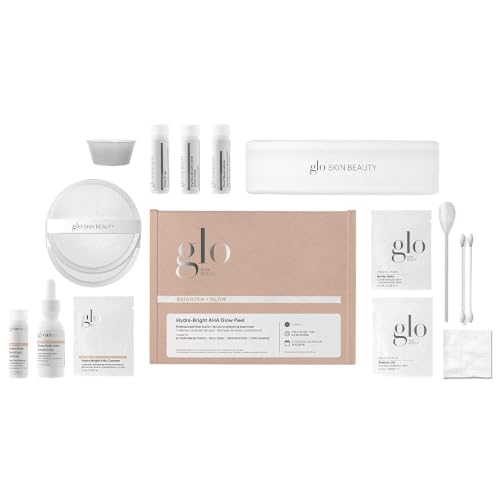
The spa-in-a-box that does not burn or tingle but still leaves your skin looking brighter after one use.
Unlike the Dermalogica peel (which uses a 12% AHA PHA blend), this kit relies on a multi-step process with vegan lactic acid and ferulic acid (an antioxidant that boosts other ingredients’ effects) — two gentler brighteners that hydrate while they exfoliate. Owners mention it as “gentle, no burning/tingling/redness” — a direct contrast to the tingling some feel with higher-concentration glycolic peels. The formula also packs reparative antioxidants that protect against pollution-linked pigmentation. One reviewer in her early 40s with dry skin said it improved firmness, brightness, and smoothness, and made a visible difference in before-and-after photos. The honest catch: multiple reviewers mention there is enough product for only about two full peels, and the acid concentration is not listed, so you are trusting the brand’s formulation rather than a specific percentage.
Why you’ll love it
- Multi-step format feels like a professional spa peel at home
- No burning, tingling, or redness reported by users
- Significant size advantage — 11.2 oz vs 0.5 oz on the Lancer
The honest downsides
- Acid concentration is unknown, making it hard to compare potency
- Instructions lack detail on post-peel care like sunscreen or serum use
- Some users found only enough for two uses despite the large package
Best for: A beginner or anyone with dry, sensitive skin who wants a gentle, non-irritating introduction to at-home peels with a spa-like experience.
skip it if: You want a predictable acid percentage for consistent exfoliation or need multiple treatments without buying another kit.
3. Lancer Skincare Caviar Lime Acid & Retinol Peel
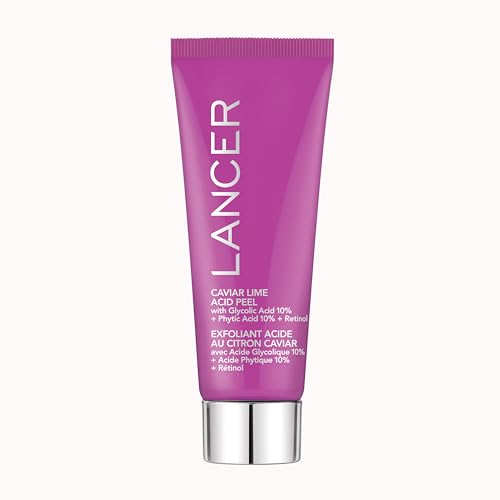
A travel-friendly 0.5-ounce peel that brings Beverly Hills dermatology to your weekly routine.
Developed by Dr. Harold Lancer, this peel combines 10% Glycolic Acid (an AHA that removes dead surface cells) with Stabilized Retinol (a vitamin-A derivative that speeds skin renewal) and Caviar Lime Extract (a fruit enzyme that boosts brightness). It also includes Papaya and Pineapple Enzymes to smooth the skin’s surface without harsh abrasion. This is a weekly treatment — you apply it to clean dry skin for 10 to 15 minutes and rinse, no more than twice a week. One reviewer called it a “Top 3 product” and noted “visible results after 1 use,” comparing it directly to spa-level outcomes. The Lancer delivers “visible results after 1 use” but costs more per ounce than the Glo Skin Beauty kit — a trade-off of speed versus value. At 0.5 ounces and dimensions of just 1 x 1 x 3.8 inches, this is a mini that fits in a travel bag — a much smaller size than the Glo Skin Beauty kit (which measures 6.13 x 8.13 x 3 inches). Customers note it works well on acne-prone and dull skin, but you must rinse it off completely; it is not a leave-on formula. Users love that it leaves skin glowing, but several mentioned the small bottle means you get a limited number of weekly treatments before you need a replacement.
The glow factor: This was the only peel in the roundup where multiple reviewers said “visible results after 1 use,” which is unusually fast for a pigment-targeting product.
The size catch: At 0.5 fl oz versus the Glo Skin Beauty kit’s 11.2 oz, you will repurchase sooner than you expect.
Perfect for: Anyone who wants a quick weekly peel with retinol benefits that shows results fast and fits in a toiletry bag for travel.
Not for: You if you have very dry or sensitive skin — the glycolic + retinol combo may be too active for daily use without irritation.
4. Mandelic Acid 30% AHA Alpha Hydroxy Peel (Dermalure)
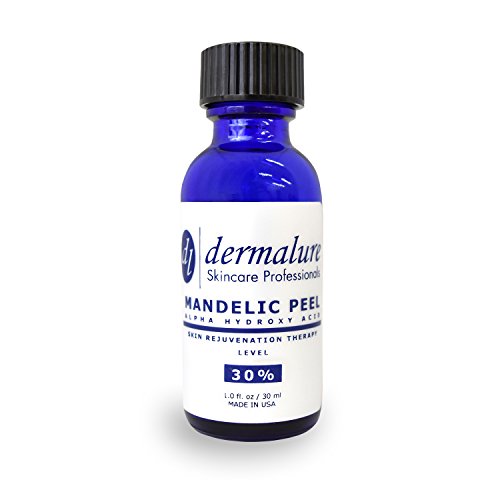
The high-strength mandelic peel that tamed rosacea and forehead bumps for users in a single session.
This is the strongest concentration in the lineup at 30% Mandelic Acid, and it is a completely different animal from the lower-concentration lactic or glycolic peels. Mandelic acid has the largest molecular size of all AHAs, which means it penetrates slowly and is far less likely to cause the sharp sting or rebound darkening that can happen on darker skin tones with glycolic acid. The brand Dermalure markets it for rosacea, cystic acne, blackheads, hyperpigmentation, melasma, age spots, and sun spots. One reviewer noted a “70% reduction in forehead bumps and facial redness after one peel; rosacea cleared overnight.” Other users with acne vulgaris and hyperpigmentation noted smoother, brighter, more even-toned skin with consistent use. Because of the high 30% concentration, this is not a beginner peel — you need to know your skin’s tolerance. The flip side is that a few reviewers said they had not yet seen results, suggesting individual response varies. Unlike the Glo Skin Beauty kit for beginners, this peel requires prior acid experience.
The power play
- 30% mandelic acid is a serious concentration for stubborn hyperpigmentation and acne scars
- Large molecule size means less irritation on darker skin tones compared to glycolic acid
- Multiple reviewers reported improvement in rosacea and facial redness
Proceed with caution
- High percentage requires careful patch testing before full-face use
- Some users reported no visible results even after several applications
- Not suitable for those new to chemical peels or with active broken skin
Choose this if: You have rosacea, cystic acne, or deep post-inflammatory marks and your skin is already tolerant to high-percentage AHAs.
Pass if: You have never used a chemical peel before or you have sensitive skin — start with the Glo Skin Beauty kit instead.
Understanding the Specs
AHA Concentration Percentage
This is the number that tells you the actual strength of the peeling acid — 10%, 12%, 30%, etc. A higher percentage means stronger exfoliation and faster results, but also a higher risk of irritation, redness, and peeling. For hyperpigmentation on darker skin tones, lower percentages (under 15%) are usually safer because high-concentration peels can cause rebound darkening (worsening of dark spots from inflammation). The 30% mandelic peel in this guide is a notable exception because mandelic acid’s large molecular size makes it much gentler than a 30% glycolic peel would be.
Acid Type: Lactic, Glycolic, Mandelic, or PHA
The chemical structure of the acid determines how deep it penetrates and how much water it holds. Glycolic is the smallest molecule — it goes deep fast and works on surface sun spots but can burn. Lactic is larger, gentler, and hydrating. Mandelic is the largest AHA, perfect for sensitive and darker skin tones. PHA (poly hydroxy acid) is even milder than lactic and pulls double duty as a humectant (it holds water in the skin). Choosing the wrong acid type for your skin tone and sensitivity level is the most common mistake new users make.
FAQ
How long does it take for a chemical peel to fade hyperpigmentation?
Can I use a chemical peel if I have melasma?
What is the difference between an AHA and a PHA in a chemical peel?
Will a chemical peel make my skin darker if I have a darker skin tone?
How often should I use an at-home chemical peel for hyperpigmentation?
Do I need to wear sunscreen after using a chemical peel?
Can I use retinol and a chemical peel together?
How do I know which acid percentage is right for my skin?
Will an at-home chemical peel work on deep wrinkles or just pigmentation?
What should I do if a chemical peel burns or stings too much?
Final Thoughts: The Verdict
For most people, the best at home chemical peel for hyperpigmentation is the Dermalogica PowerBright Dark Spot Face Peel because its 12% AHA PHA blend with Tranexamic Acid treats all forms of pigmentation while its nourishing oils keep the skin barrier intact. If you want a gentle, spa-like multi-step experience with zero burning sensation, grab the Glo Skin Beauty Hydra-Bright AHA Glow Peel Kit. And for a travel-friendly weekly peel that earned “visible results after 1 use” reviews, the Lancer Skincare Caviar Lime Acid & Retinol Peel delivers in a tiny package.
How We Picked
We do not accept paid placement. Every pick is matched to a real buyer and a real use-case; we do not hands-on test units.
Sources & Methodology
Specifications: manufacturer listings and product documentation. Review insights: verified customer reviews, as of July 2026. Pricing: not shown on this page (it changes often); check the current price via the retailer link.
As an Amazon Associate, FitlyFast earns from qualifying purchases. This does not affect which products we feature.