
Our readers keep the lights on and the weekend projects moving. As an Amazon Associate, I earn from qualifying purchases.
Wrist-based optical sensors on smartwatches are convenient, but during interval training or steady-state runs, they can lag or spike, leaving you guessing about your true effort. A dedicated strap or armband solves that by giving you beat-by-beat data you can actually trust for zone training, recovery tracking, and performance analysis.
I’m Rikta — the co-founder and writer behind FitlyFast. This guide comes from many hours spent poring over customer feedback, comparing optical vs. ECG sensor specs, and analyzing the real-world accuracy claims of the most talked-about models on the market, so you can confidently pick a monitor that won’t let you down mid-workout.
Whether you prioritize chest-strap ECG precision or the comfort of an optical armband, this guide breaks down the key specs and trade-offs to help you find the right at home heart rate monitor for your training style.
How To Choose The Best At Home Heart Rate Monitor
Selecting the right monitor depends on your primary activity, tolerance for wearing a strap, and need for advanced metrics like HRV or running dynamics. The main fork in the road is choosing between chest-strap ECG sensors and optical armbands, each with different strengths for specific use cases.
Chest Strap vs. Optical Armband
Chest straps measure the heart’s electrical signal via ECG, making them the gold standard for accuracy in activities where the body moves a lot, like rowing, cycling, and HIIT. Optical armbands use LEDs to detect blood flow; they are more comfortable for all-day wear and avoid the tightness of a chest strap, but can be less responsive during rapid heart rate changes unless positioned correctly on the forearm or bicep.
Connectivity and App Compatibility
Bluetooth Smart is the universal standard for pairing with smartphones and tablets. ANT+ is critical if you plan to broadcast data to a bike computer, smart trainer, or high-end watch like a Garmin or Coros. Dual-band models that support both protocols give you the most flexibility to switch between devices and training platforms.
Battery Life and Power Source
Replaceable coin-cell batteries (CR2025) in chest straps can last hundreds of hours but require periodic swaps. Rechargeable lithium-ion cells in armbands and newer chest straps offer the convenience of USB charging, but make sure the battery life aligns with your weekly training volume — optical armbands typically last between 24 and 72 hours per charge, while high-end chest straps can exceed 200 hours.
Quick Comparison
On smaller screens, swipe sideways to see the full table.
| Model | Category | Best For | Key Spec | Amazon |
|---|---|---|---|---|
| Polar H10 | Chest Strap | ECG-grade accuracy | 400h battery life | Amazon |
| Garmin HRM-Fit | Clip-on Strap | Women’s sports bras | Running dynamics | Amazon |
| Wahoo TRACKR | Chest Strap | Rechargeable convenience | 200h rechargeable | Amazon |
| COROS HR Monitor | Armband | Multi-device pairing | 38h battery | Amazon |
| Scosche Rhythm+ 2.0 | Armband | HRV & RRI data | IP68 waterproof | Amazon |
| Wahoo TICKR FIT | Armband | Outdoor cycling | 35h battery | Amazon |
| HandPlus | Finger/Optical | Swim & triathlon | 72h offline storage | Amazon |
In‑Depth Reviews
1. Polar H10 Heart Rate Monitor Chest Strap
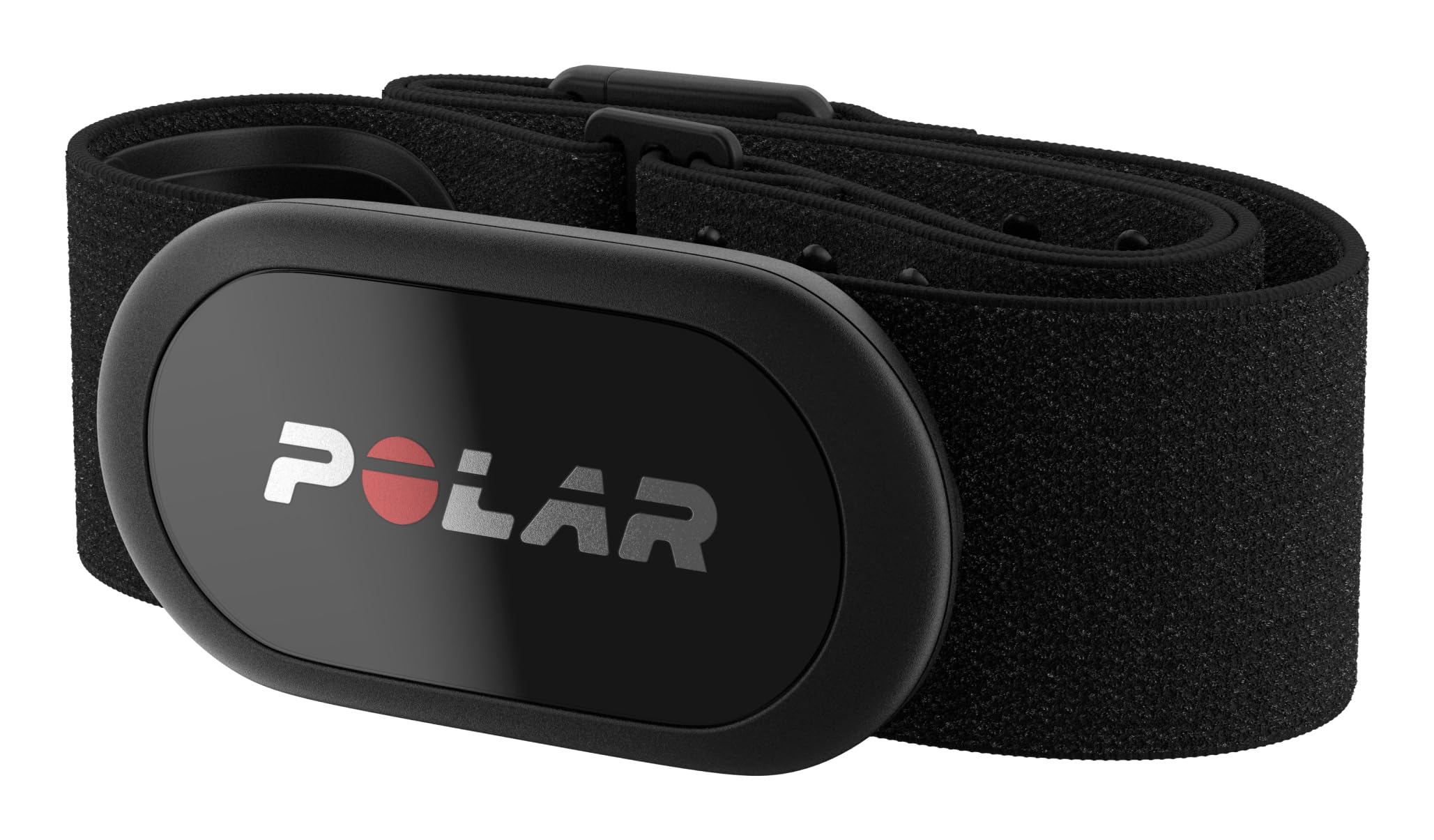
The Polar H10 is the most widely referenced ECG chest strap for good reason — its clinical-grade electrical heart rate sensor delivers accuracy that optical monitors can’t match, especially during high-intensity interval training and strength work where movement can confuse optical LEDs. Customer reports show impressive zone accuracy: 92.9% during running and 99.3% during cycling, with the ability to stream HRV and RR-interval data to third-party apps like HRV4Training for deep recovery analysis.
Comfort is a step above the Garmin HRM-Dual, with a firmer strap that doesn’t roll up during rowing or burpees, and the sensor works immediately without needing to wet the electrodes first. The dual Bluetooth and ANT+ connectivity means you can broadcast to a watch, a smart trainer, and a phone simultaneously — a huge plus for athletes who use multiple data displays during a session. The internal memory also stores one full workout if you leave your phone behind.
On the downside, the CR2025 coin cell battery, while lasting up to 400 hours, needs periodic replacement and the connector on the strap can degrade after months of heavy use. A few users report that the pod sometimes requires a quick reset to re-establish connectivity after long periods of inactivity. Overall, this is the gold standard for those who want the most reliable data possible, provided you are comfortable with the chest-strap form factor.
Why it’s great
- Unmatched ECG accuracy for running and cycling
- Dual Bluetooth & ANT+ for multi-device streaming
- Supports HRV and RR-interval data output
Good to know
- Coin-cell battery needs periodic replacement
- Strap can degrade after extended use; replacements are simple
2. Garmin HRM-Fit Heart Rate Monitor Purpose Built for Women

The Garmin HRM-Fit solves the problem of the chest strap for women by clipping directly onto the front or side of a medium- to high-support sports bra, eliminating the need for an elastic band around the ribcage. The dual-button attachment is surprisingly secure during running and HIIT, and the sensor itself is lightweight at just 1.9 ounces, so you barely notice it during floor exercises. ECG-level accuracy is a clear step above wrist-based optical sensors, giving you reliable zone data for heart rate zone 2 training and threshold intervals.
Beyond heart rate, the HRM-Fit captures running dynamics like vertical oscillation, ground contact time, and stride length when paired with a compatible Garmin watch — data that helps you analyze and improve your running form over time. It also computes pace and distance for treadmill or indoor track workouts when your watch loses GPS lock. The coin-cell battery lasts up to a full year, so you won’t have to worry about charging mid-season.
The main limitation is that it only works well with tighter, well-fitting sports bras; longline or light-support styles don’t provide enough tension for a stable clip. Some users also note that the sensor module creates a visible bump under thin athletic tops, and the premium cost puts it in a niche category. If you’re a woman who hates chest straps and already uses a Garmin watch, this is the most elegant solution available.
Why it’s great
- No chest strap — clips securely to sports bras
- Captures running dynamics for form analysis
- EGC-level accuracy for zone training
Good to know
- Requires tight, high-support sports bras for stability
- Visible bump under thin clothing
3. Wahoo TRACKR Heart Rate Monitor

The Wahoo TRACKR is a modern chest strap that replaces the disposable coin-cell battery with a USB-C rechargeable cell rated for up to 200 hours of active use — about six to eight weeks of daily training between charges. The slim, soft strap uses silicone grippers to stay put during sweaty sessions, and the pod itself is smaller and lighter than the previous TICKR model, reducing the clunky feel that some chest strap wearers complain about. Dual Bluetooth and ANT+ connectivity means it broadcasts to phones, bike computers, and smart trainers without any pairing headache.
Connection reliability is one of its strongest points: users report fewer dropouts and faster reconnection compared to older TICKR models, and the LED indicator on the pod gives clear visual feedback that your heart rate is being detected. It works out of the box with Zwift, Peloton, and Wahoo’s own app, making it a friction-free choice for indoor cyclists and triathletes. The strap is also detachable and machine-washable, which helps avoid the odor buildup that plagues some fabric straps.
On the downside, the included strap may not fit larger chest circumferences comfortably — some users have needed to buy a longer third-party strap. The proprietary charging cable is a minor inconvenience if you travel without it, but the long battery life largely offsets that. For athletes who want the accuracy of a chest strap without the chore of changing coin cells, the TRACKR is the best mid-range option available.
Why it’s great
- USB-C rechargeable — no coin-cell swaps
- 200-hour battery life for weeks of training
- Reliable Bluetooth & ANT+ connectivity
Good to know
- Strap may be too small for larger users
- Proprietary charger requires a dedicated cable
4. COROS Heart Rate Monitor Armband
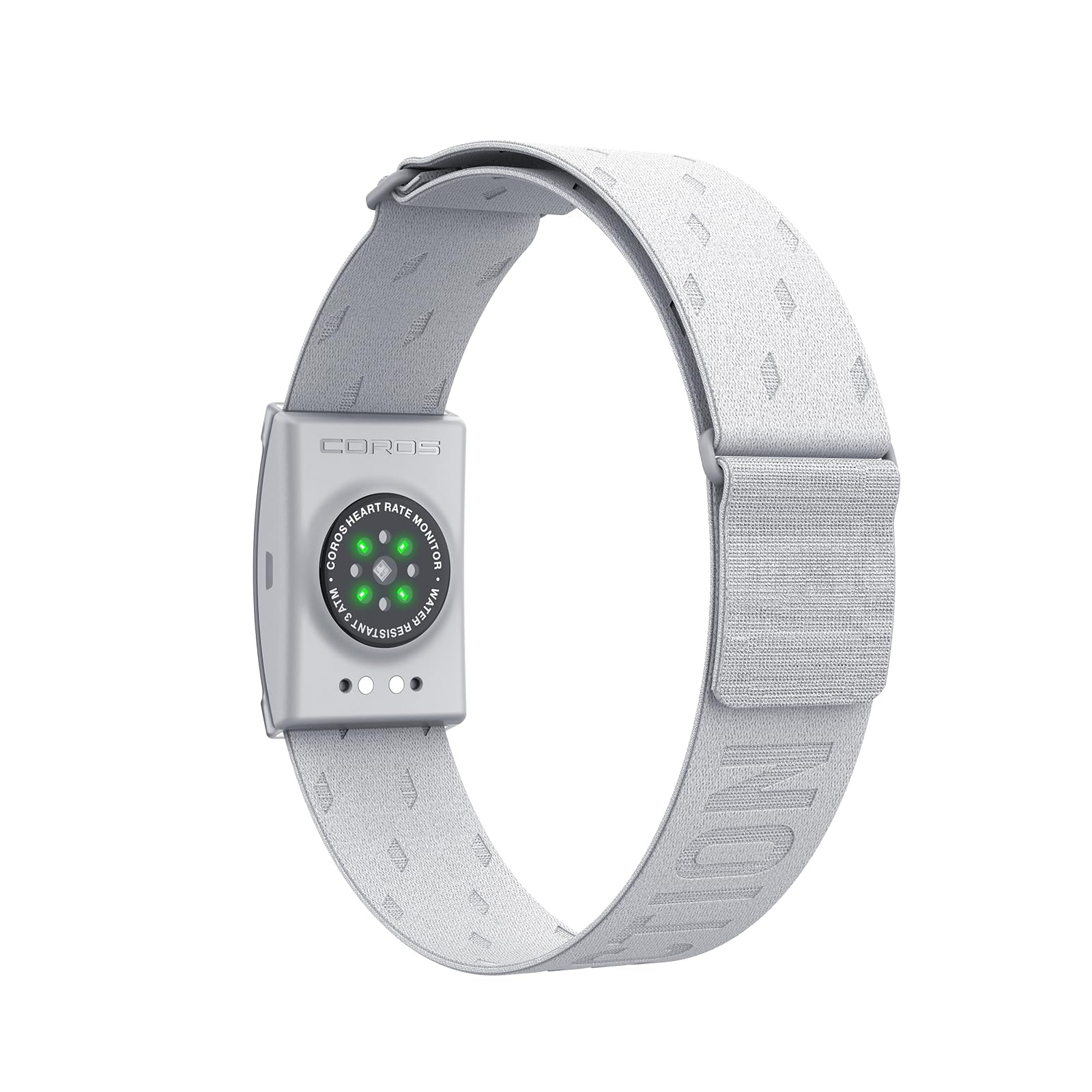
The COROS Heart Rate Monitor armband is a refined optical sensor that prioritizes comfort and simplicity — there are no buttons, no pairing menus, and no chest strap to adjust. The soft nylon fabric band wraps around your bicep or forearm and is held in place by a textured silicone interior that grips the skin even during high-sweat workouts. When you put it on, the auto-wear detection powers the sensor on and connects it to your paired devices within seconds; take it off, and it shuts down to save battery, lasting up to 38 hours of continuous use or 80 days on standby.
Accuracy is competitive with other optical armbands, with few reported dropouts or wild spikes thanks to the advanced optical sensor and tight coupling with COROS watches. The band can simultaneously pair with up to three devices — such as a COROS watch, a bike computer, and a phone — via Bluetooth, though it does not support ANT+, so Wahoo or older Garmin ecosystem users may need to check compatibility. The magnetic charger snaps on easily and fully recharges the unit in about two hours.
One common frustration is that the COROS app only displays live heart rate data without saving historical records unless you start a workout — you’ll need a third-party app like ZonePoints or Strava to log sessions, which can feel clunky if you’re deep in the COROS ecosystem. Also, the fabric band can absorb sweat and develop a smell over time, requiring regular hand-washing. Still, for athletes who hate chest straps and want a no-fuss armband with great battery life, this is a top contender.
Why it’s great
- Auto on/off wear detection is seamless
- Pairs with up to 3 devices simultaneously
- Lightweight and comfortable for long sessions
Good to know
- Bluetooth-only — no ANT+ support
- Fabric band can develop odor with heavy use
5. Scosche Rhythm+ 2.0 Heart Rate Monitor Armband

The Scosche Rhythm+ 2.0 is an optical armband that stands out for its HRV and RR-interval data capabilities, which are usually reserved for chest-strap ECG sensors. This makes it a unique tool for athletes who want to monitor recovery status and daily stress via apps like HRV4Training, Morpheus, and Welltory without strapping a band around their ribs. The IP68 waterproof rating means it can handle rain, sweat, and even swimming, and the 24-hour battery life is sufficient for most long-distance training days.
The breathable polyester strap is adjustable for forearm, bicep, or tricep placement, and the optical sensor is generally accurate during steady-state running and cycling once you find the right fit — tight enough to block ambient light but not so tight that it cuts circulation. Dual Bluetooth and ANT+ connectivity ensures it pairs with almost any modern watch, bike computer, or tablet, including older equipment that lacks the latest Bluetooth profiles.
That said, a subset of users report occasional dropouts or wild heart rate spikes during high-intensity intervals, especially if the band shifts position during burpees or kettlebell swings. The proprietary charger is also a minor hassle compared to USB-C. For most runners and cyclists who want HRV insights and waterproof durability, the Rhythm+ 2.0 is a strong optical option that rivals the Polar Verity Sense in its feature set.
Why it’s great
- Captures HRV and RRI data for recovery tracking
- IP68 fully waterproof for swimming and rain
- Dual Bluetooth & ANT+ for broad compatibility
Good to know
- Occasional dropouts during high-intensity intervals
- Proprietary charger is easy to misplace
6. Wahoo TICKR FIT Heart Rate Armband

The Wahoo TICKR FIT has been a reliable non-chest-strap option for years, and for good reason — the optical sensor delivers accurate heart rate data when placed on the outer forearm or triceps, with a fast update rate that tracks heart rate changes within one to three beats of a chest strap. The dual LED status lights give you a clear visual confirmation that the band is connected and reading correctly, which is helpful when you’re in the middle of a ride or run and don’t want to glance at a screen.
The strap material is durable and the magnetic USB charging cable makes it easy to top off the 35-hour battery between workouts. Customer longevity reports are impressive — many users report five or more years of consistent use before the battery degrades. The TICKR FIT also handles sweat and rain well, making it a solid companion for outdoor cyclists who don’t want the fuss of a chest strap.
Placement is critical: it performs poorly when worn on the wrist and initially requires some trial and error to find the sweet spot on your forearm or bicep. The calorie tracking feature is known to overestimate burn during HIIT or tennis sessions, so ignore that metric if you’re tracking macros. For athletes who want a durable, comfortable optical armband that just works with their bike computer, this is still a top pick.
Why it’s great
- Proven durability — many units last 4+ years
- Fast heart rate response during intervals
- Magnetic charging with good battery life
Good to know
- Placement is finicky; avoid the wrist
- Calorie count is inflated for HIIT training
7. HandPlus Heart Rate Monitor
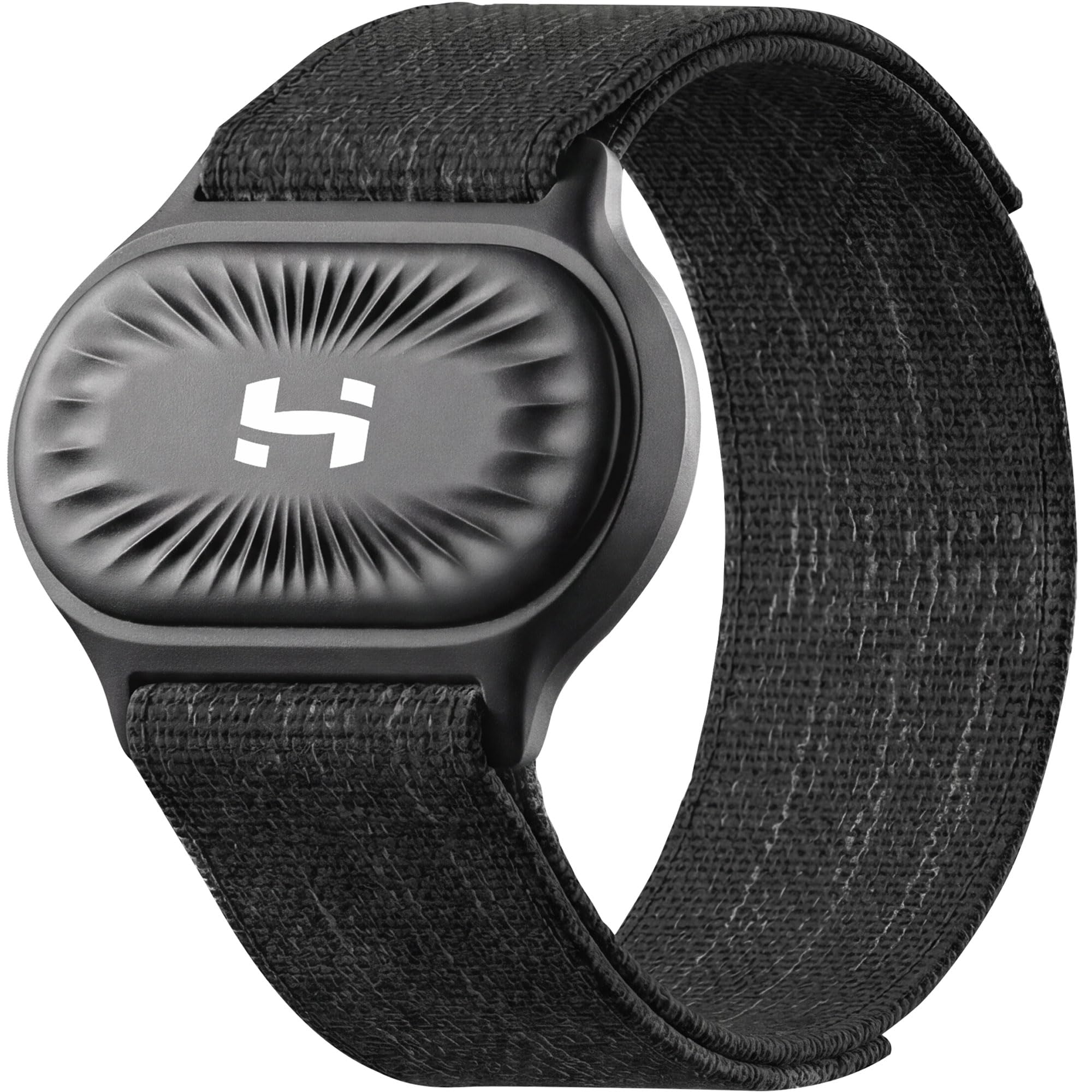
The HandPlus is a clever optical heart rate monitor that clips onto your finger or the back of your hand, designed primarily for swimmers and triathletes who need a monitor that works underwater without a chest strap. The sensor delivers zone accuracy within 0.2% of a chest strap, per the manufacturer, and stores up to 72 hours of data offline — meaning you can leave your phone on the pool deck and sync later. The shake-to-activate feature means you never have to fumble with buttons mid-workout; just shake it to start recording.
It also tracks SpO₂ and body temperature, giving you more recovery data than most optical monitors in this tier. Dual Bluetooth and ANT+ connectivity ensures it pairs with your smartwatch, phone, or bike computer, and it’s compatible with the Holoswim AR goggles for real-time heads-up data. The sleek plastic housing is lightweight and low profile, making it easy to forget you’re wearing it during a long run or swim session.
The main downsides are the learning curve for pairing — especially with third-party goggles — and the fact that for non-swimmers, a dedicated armband or chest strap will likely offer more consistent accuracy during high-impact activities. The small surface area of the optical sensor also means it can shift slightly during intense gym work. For triathletes and swimmers who need a compact, offline-capable monitor, the HandPlus is a niche but well-executed solution.
Why it’s great
- 72-hour offline storage for swim workouts
- Shake to activate — no buttons required
- Monitors SpO₂ and body temperature
Good to know
- Pairing with third-party goggles can be tricky
- Less accurate than armbands for high-impact gym work
FAQ
How does HRV data from a heart rate monitor help with recovery?
Can I use an optical armband for swimming?
Why does my chest strap give different readings than my smartwatch?
Final Thoughts: The Verdict
For most users, the best at home heart rate monitor winner is the Polar H10 because it offers unmatched ECG accuracy, dual-protocol connectivity, and HRV data output in a proven, widely compatible package. If you want a comfortable optical armband that captures HRV metrics and works in any weather, grab the Scosche Rhythm+ 2.0. And for a purpose-built solution that clips to your sports bra and delivers running dynamics, nothing beats the Garmin HRM-Fit.