
Our readers keep the lights on and the weekend projects moving. As an Amazon Associate, I earn from qualifying purchases.
The ambiguity of male fertility is one of the last great sources of silent anxiety for couples trying to conceive. Instead of waiting weeks for a lab slot or dealing with the awkwardness of a clinic sample, you now have the option to get clear, private answers in under an hour from your own bathroom. The key is picking a kit that actually measures what matters—motile sperm concentration, not just a raw count—and performs with lab-validated consistency.
I’m Rikta — the co-founder and writer behind FitlyFast. For this guide, I’ve analyzed seven of the most widely-purchased at-home tests, cross-referencing their claimed accuracy rates with customer consistency reports, FDA clearances, and the specific biomarker each test tracks.
After weeks of sifting through clinical data, user reports, and real-world failure modes, I’ve identified the essential questions to ask before you buy any at home male fertility test. This breakdown cuts through the marketing to give you a practical, spec-driven path to choosing the right kit for your specific situation.
How To Choose The Best At Home Male Fertility Test
Not all kits are created equal. A test that only flags a “normal” or “low” sperm count might miss the single most important predictor of conception: how many sperm are actually swimming forward. Here are the core factors that separate a useful screening tool from a box of frustration.
Motility vs. Count — What Actually Predicts Conception
A raw sperm count tells you quantity. Motility — specifically progressive motility — tells you quality. The World Health Organization (WHO) defines a normal sample as having at least 32% progressively motile sperm. Many budget tests only check count, leaving you with a false sense of security. The better kits in this category measure motile sperm concentration (MSC) or use a lab-grade video to assess forward movement.
FDA Clearance and Clinical Validation
FDA clearance means the manufacturer submitted clinical data proving the test meets a specific accuracy threshold. For this category, that often means sensitivity (correctly identifying a low result) and specificity (correctly identifying a normal result) at or above 95%. Tests without FDA clearance may still work, but you are relying on the company’s own internal validation rather than a third-party audit. The two most recognized cleared systems in this roundup are the YO Home Sperm Test and SpermCheck.
Ease of Use and Readability
The most accurate test in the world is useless if the instructions are ambiguous or the timing is overly strict. Some tests require you to wait exactly 3 minutes between drops, hold the cassette at a specific angle, or rely on a phone app that may disconnect mid-countdown. Look for kits that offer a clear binary readout (two lines = normal, one line = low) or a guided digital interface that automates the timing and scoring.
Refill Availability and Long-Term Monitoring
Sperm parameters fluctuate with illness, stress, diet, and sleep. A single snapshot is rarely definitive. The best systems offer refill packs so you can test serially over weeks or months. This is especially valuable if you are tracking the impact of a lifestyle change, medication, or supplement regimen. The YO system leads here with dedicated refill kits, while most single-use kits require you to repurchase the entire bundle.
Quick Comparison
On smaller screens, swipe sideways to see the full table.
| Model | Category | Best For | Key Spec | Amazon |
|---|---|---|---|---|
| YO Home Sperm Test (3 Tests) | Premium / Digital | Full fertility analysis with video | 97% accuracy, live video, 5 parameters | Amazon |
| YO Refill Kit (3 Tests) | Premium / Refill | Long-term fertility tracking | Track MSC over weeks | Amazon |
| SpermCheck Fertility | Trusted / Strip | Reliable count-only check | 98%+ accuracy, 1M+ tests sold | Amazon |
| SwimCount Motility Test | Mid-Range / Motility | Progressive motility screening | 95.8% sensitivity, 90.7% specificity | Amazon |
| Vasectomy Home Test Kit (2 Tests) | Premium / Post-Op | Post-vasectomy confirmation | 2-pack, lateral flow immunoassay | Amazon |
| Male Fertility Test (2 Pack) | Budget / 2-Pack | Private count check for the price | Results in 15 minutes, 2 tests | Amazon |
| Sperm Microscope (2-in-1) | Budget / Microscope | DIY visual assessment | Phone-based microscope viewer | Amazon |
In‑Depth Reviews
1. YO Home Sperm Test (3 Tests)

This is the only test on this list that records a live video of your sperm sample and uses FDA-cleared computer vision to measure motile sperm concentration, progressive motility, and total motility against WHO 6th Edition standards. The 97% accuracy figure comes from clinical trials, and the app-guided process eliminates the guesswork of manual timing—the device handles the incubation countdown and scores the video automatically.
Users consistently report that the real-time video provides a level of reassurance no strip test can match: you literally watch the sperm swimming (or not swimming), which makes a “low” result feel grounded in evidence rather than anxiety. The kit includes three tests, and the companion app stores a PDF report you can share directly with a urologist or reproductive endocrinologist.
The main catch is that the YO Starter Kit is priced at a premium, and you must own the initial device to use the cheaper refills. A small number of users experienced connectivity drops between the phone and the device during the 10-minute analysis window, which can invalidate a sample. Android users in particular should read the app guidance carefully to avoid a wasted test.
Why it’s great
- Measures 5 key sperm parameters including progressive motility
- FDA-cleared with 97% accuracy vs. lab semen analysis
- Generates a shareable PDF report for your doctor
- Refill packs available for cost-effective serial testing
Good to know
- Requires smartphone with dedicated app for operation
- Starter kit is the most expensive entry point in this roundup
- Not recommended for post-vasectomy confirmation
2. YO Refill Kit (3 Tests)
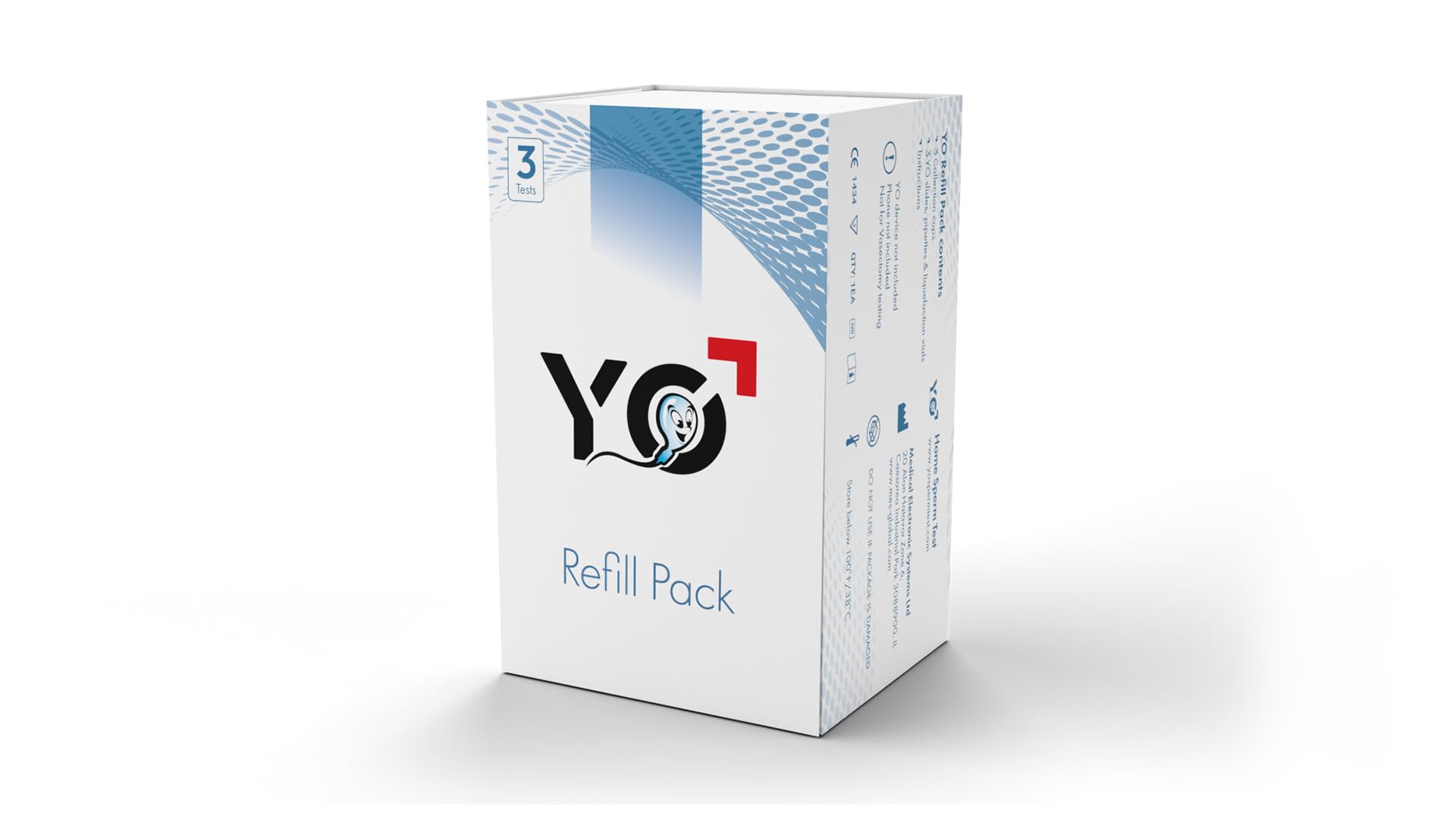
If you already own the YO Home Sperm Test device, this three-pack refill is the most economical way to run serial checks. Sperm quality can fluctuate significantly week-to-week based on illness, sleep, and dietary changes, so having a multi-pack on hand lets you establish a baseline rather than guessing from a single data point. Each refill contains three test cassettes that operate identically to the ones in the starter kit, producing the same live video and multi-parameter report.
Customers using this for fertility monitoring after a lifestyle change—quitting smoking, starting a supplement, adjusting diet—report that the before-and-after comparisons from the stored app data provide tangible motivation. The cost per test drops substantially compared to buying the full starter kit again, making this the smart play for anyone committed to tracking their reproductive health over several months.
The obvious limitation is that you cannot use this without the YO device, so it is not a standalone purchase. A handful of Android users noted that the app’s Wi-Fi connection guidance is slightly finicky; the key workaround is to manually reconnect to the device’s network after the 10-minute countdown ends to avoid a video recording failure. Once you know the flow, it becomes routine.
Why it’s great
- Reduces per-test cost significantly vs. buying full kits
- Same clinical accuracy as the starter kit cassettes
- Enables meaningful week-over-week fertility tracking
Good to know
- Requires YO Starter Device (not included)
- Android app connection may need manual intervention
- No paper instruction booklet included
3. SpermCheck Fertility
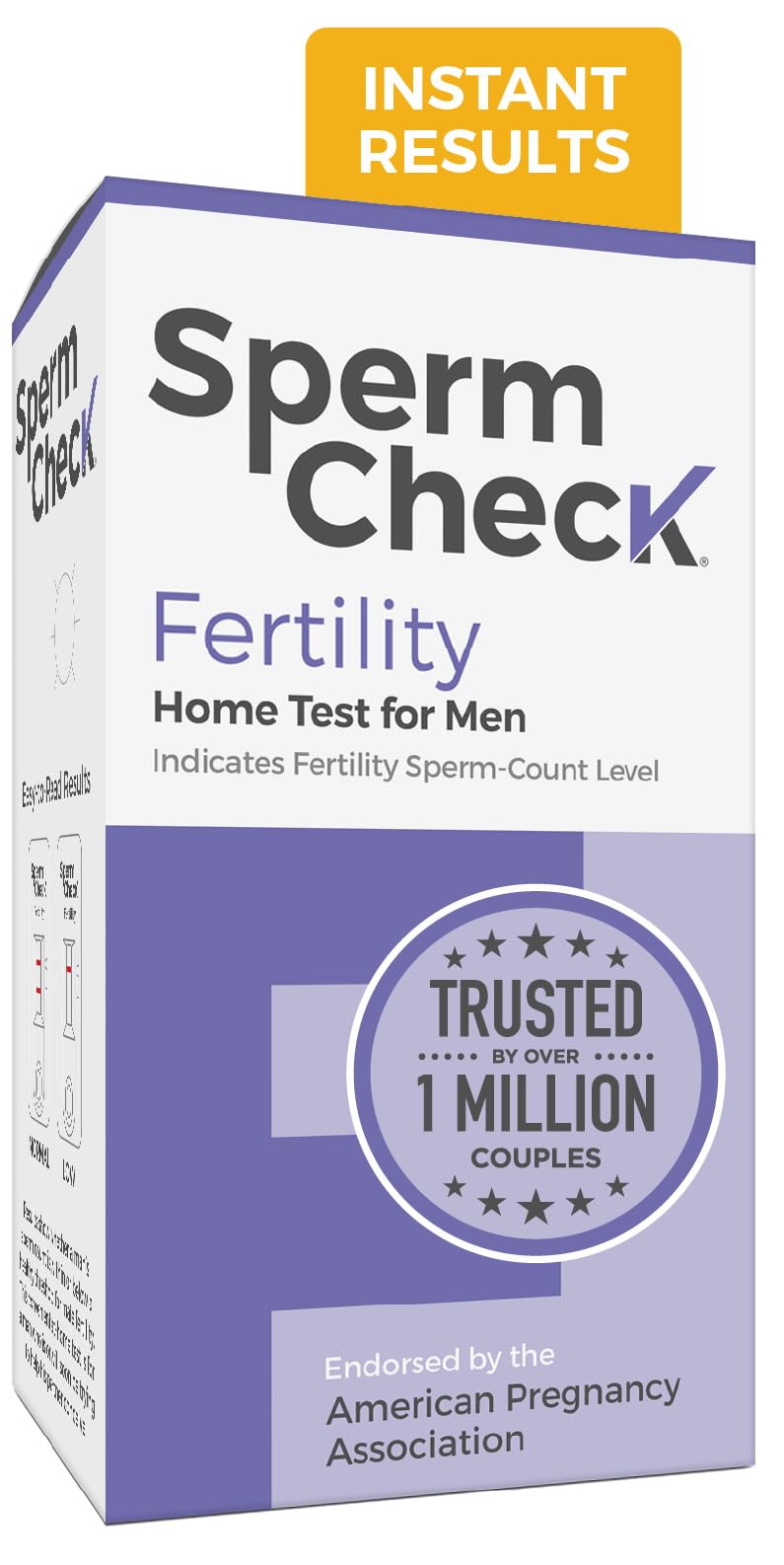
SpermCheck has been on the market since 2010 and is arguably the most clinically validated lateral-flow fertility test available. It uses the same immunoassay technology as a pregnancy test but targets a sperm-specific antigen, giving you a simple two-line readout: one line means low sperm count, two lines means normal. In clinical trials, it demonstrated over 98% accuracy compared to traditional lab microscopy, and it holds FDA clearance for general fertility screening.
The simplicity is its superpower—no phone, no app, no batteries, no waiting longer than 30 minutes. Thousands of reviews confirm that as long as you follow the step-by-step illustrated instructions and respect the 3-minute wait between adding the buffer and reading the result, the test delivers a clear, unambiguous answer. It has also been the default choice for many post-vasectomy patients who need a quick check before sending a sample to the lab, though the manufacturer does recommend the SpermCheck Vasectomy kit for that specific use.
Because it measures total sperm count rather than motile concentration, you won’t get information about sperm movement or forward progression. A normal count result does not necessarily mean your sperm are swimming properly. It is also a single-use device per test, so if you want to confirm a borderline result, you need to buy another kit. Still, for sheer reliability and clarity, it remains the gold standard of strip-based tests.
Why it’s great
- Over a decade of market presence with 1M+ tests sold
- FDA-cleared with >98% accuracy in clinical trials
- No app, no phone, no batteries—just a clear strip result
Good to know
- Does not measure sperm motility or progressive movement
- Single test per purchase (no refill pack option)
- Timing must be followed exactly to avoid false reads
4. SwimCount At-Home Male Fertility Test
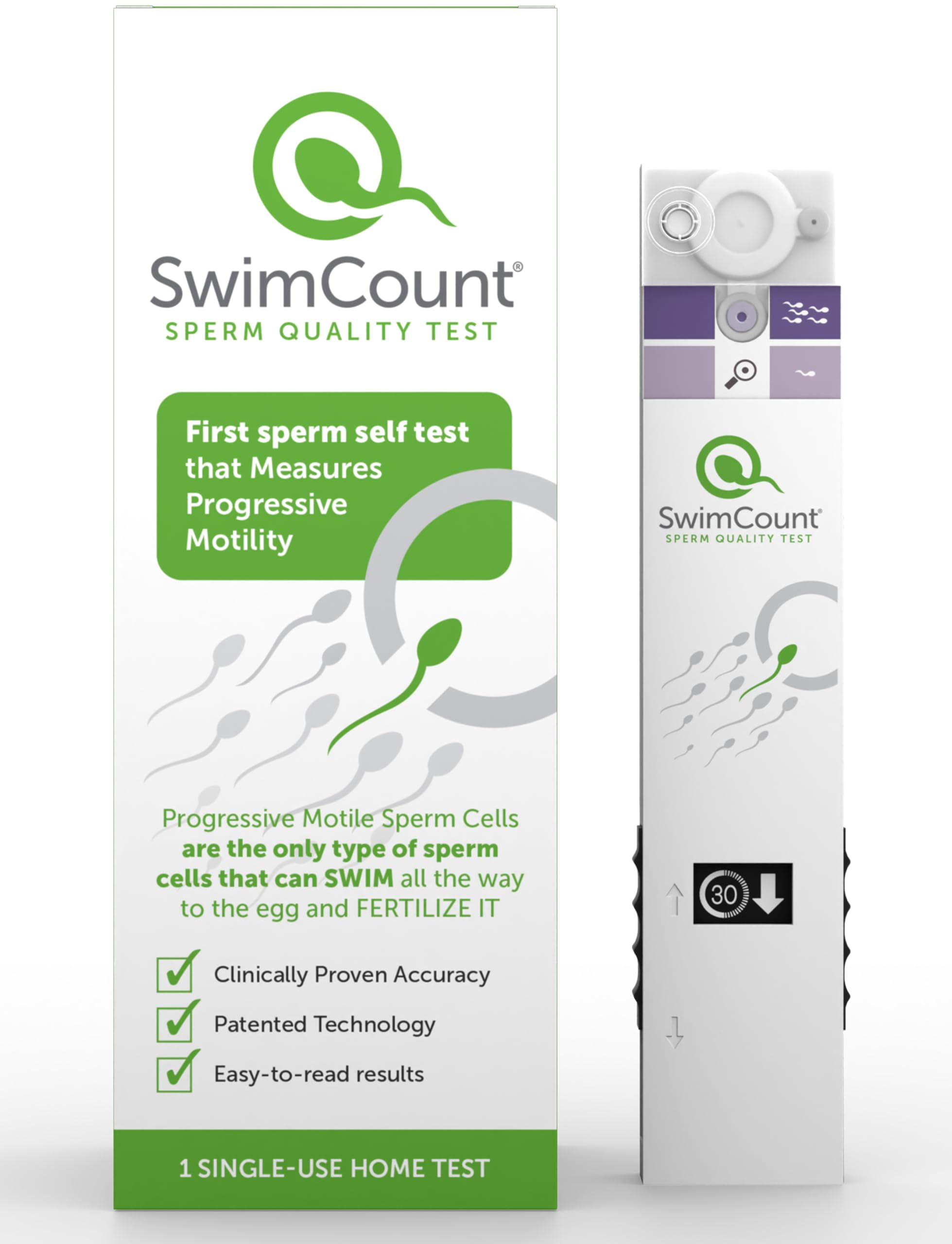
SwimCount takes a different approach than the count-only strips: it measures progressive sperm motility, the forward-moving sperm most likely to reach the egg. The test uses a color-changing window that you compare against a built-in reference chart after a 30-minute incubation. No phone, no microscope, no app—just a visual readout that tells you whether your progressive motility falls above or below the clinically relevant threshold.
In clinical validation against WHO standard semen analysis, SwimCount posted 95.8% sensitivity and 90.7% specificity, which is strong for a non-digital test. Several users confirmed that their results matched what their doctor later reported from a lab sample, giving the kit credibility as a screening tool for couples who want a motility-specific check before scheduling a formal appointment. The device is FSA/HSA eligible and the single-test format keeps the upfront cost manageable.
The primary complaint from customers is that the timing window is very tight—you need to collect the sample, start the device, and read the color at exactly the right moment, or the test can fail to produce a clear result. A handful of users reported no color change at all despite following the instructions precisely, which was frustrating and expensive given the per-test cost. If you are comfortable with strict procedural steps, this is a unique and useful motility check; if you prefer a more forgiving process, look at the strip-based options.
Why it’s great
- Specifically measures progressive motility, not just count
- Lab-validated with strong sensitivity and specificity
- Requires no phone, app, or internet connection
Good to know
- Very strict timing required for accurate results
- Single use only, with no refill pack option
- Some users experienced test failure with no color development
5. Vasectomy Home Test Kit (2 Tests)

This kit from Exposome BioSciences is purpose-built for the post-vasectomy user. It uses a two-site lateral flow immunoassay designed to detect very low sperm counts, providing a binary readout: two lines suggests high count (procedure may not have worked), one line indicates low count (successful vasectomy). The two-pack format allows you to confirm the result by testing a second time, which is the standard protocol doctors typically recommend before declaring the procedure successful.
Customers who used this before their official lab retest consistently report that the results aligned with what the clinic later confirmed. For the cost of a single unplanned pregnancy or a lab visit copay, this kit offers significant peace of mind during the waiting period. The instructions are straightforward, and the kit includes two complete test setups with collection cups and transfer syringes.
It is important to understand that this test indicates high or low count—it cannot confirm absolute sterility or zero sperm. If you see one line (low count), you still need a lab semen analysis to confirm azoospermia (zero sperm) before discontinuing other birth control. A few users noted a typo in the instructions that says “two (3) drops,” which causes momentary confusion, but the general feedback is that the product works as advertised for its specific application. It is not designed for general fertility screening.
Why it’s great
- Purpose-built for post-vasectomy screening with appropriate sensitivity
- Two-pack allows for confirmation and reduces anxiety
- Results aligned with subsequent lab tests for most users
Good to know
- Does not confirm absolute sterility; lab test still needed
- Not suitable for general fertility screening
- Minor instruction typo reported by some users
6. Male Fertility Test for Men (2 Pack)
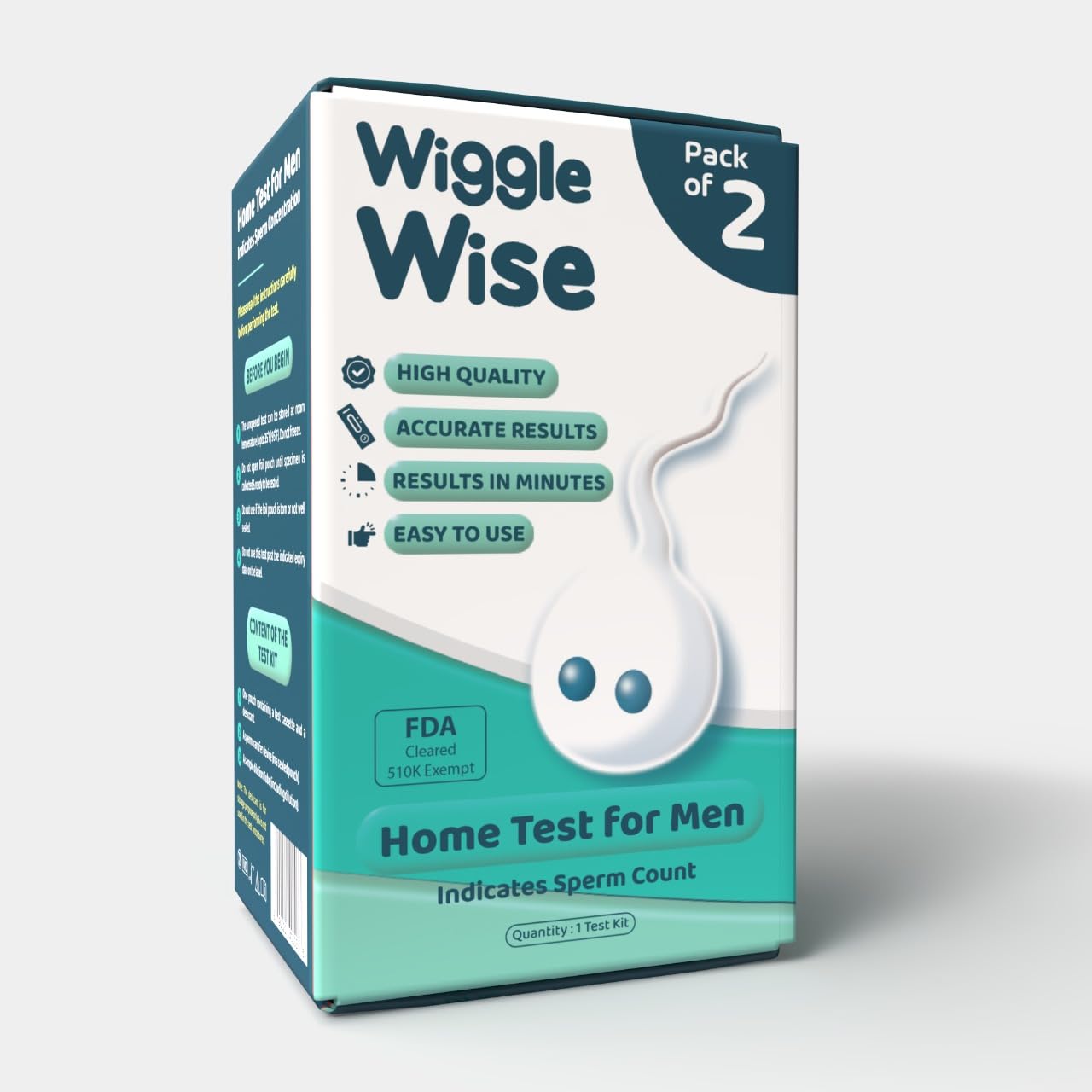
This two-pack from World Near Me is the most straightforward budget entry in the roundup. It uses a lateral-flow cassette identical in form to a pregnancy test: you collect the sample, mix it with the provided dilution buffer, and read the result lines after 10–15 minutes. Two lines indicate normal sperm concentration; one line suggests low concentration. The kit includes two independent test cassettes, two sample cups, transfer devices, and dilution tubes. Sperm count can fluctuate with stress or illness, so having a second test to confirm an initial result is genuinely useful at this price point.
Customers report that the instructions are easy to follow and that the 15-minute wait time is significantly faster than competing kits that require 30 minutes. For a quick, private check—especially for couples who just want a rough baseline before scheduling a more expensive lab visit—this kit delivers acceptable speed and convenience. Several users confirmed that a normal result on this test corresponded with a subsequent successful pregnancy.
The quality control issues are the main concern here. There are verified reports of empty dilution tubes where the liquid had leaked during shipping, and cassettes that did not register even the control line. When the kit works, it works well. When it does not, you are left with a wasted test and frustration. For the very low price, you accept some manufacturing inconsistency. If you are willing to test twice and absorb the occasional dud, this remains the cheapest way to get a count-based answer at home.
Why it’s great
- Fastest result time at 15 minutes
- Two-test pack provides confirmation and better value
- Simple pregnancy-test style readout
Good to know
- QC issues with leaking tubes and failed control lines
- Measures concentration only, not motility
- Newer brand with limited long-term customer track record
7. Sperm Microscope & At-Home Semen Analysis Test
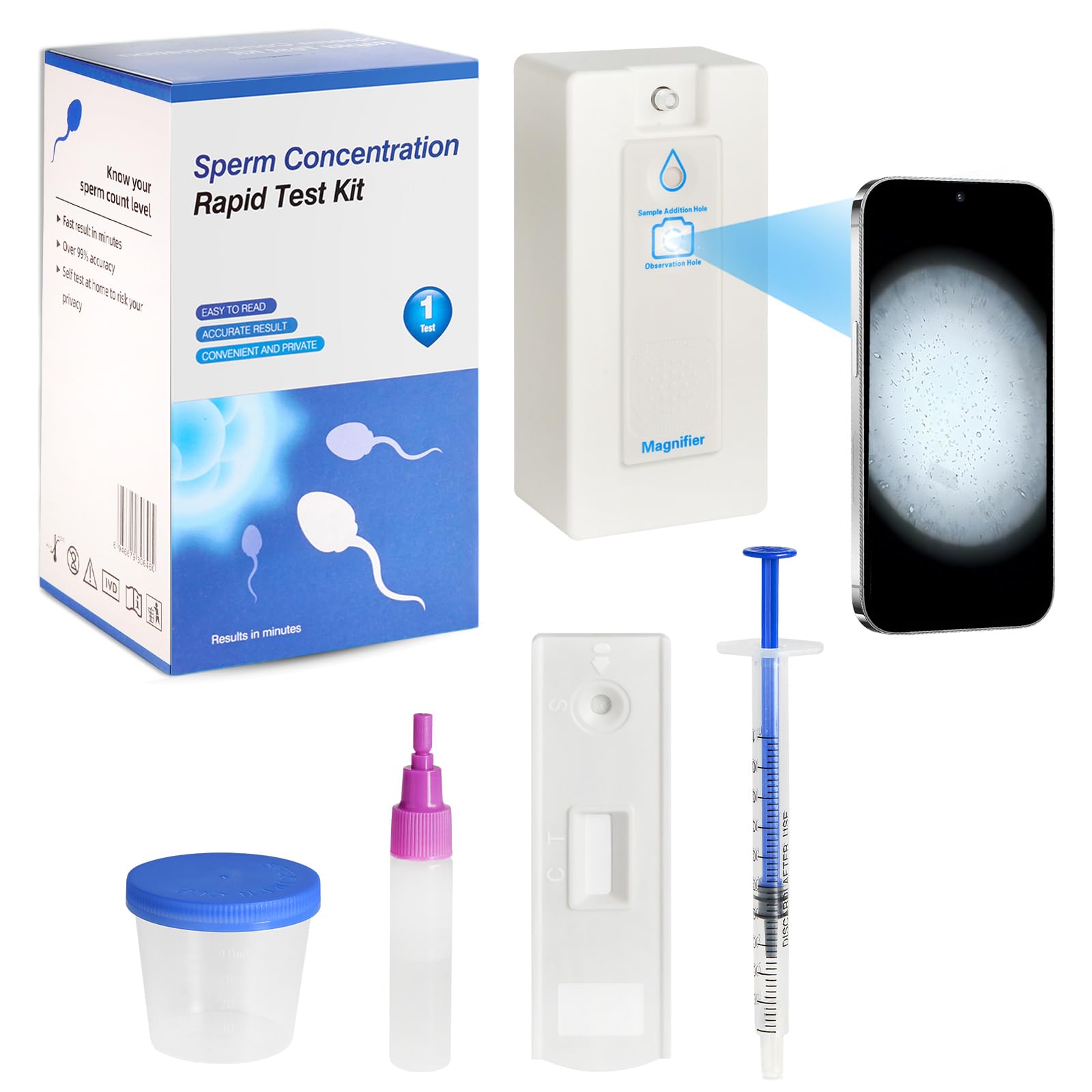
This is the most unconventional product in the lineup—it attempts to turn your smartphone camera into a makeshift sperm microscope. The kit includes a plastic clip that holds the sample slide over your phone’s lens, theoretically letting you see and assess sperm concentration yourself. The manufacturer claims it can measure progressive motile sperm cells per mL and determine if the concentration is above or below 15 million/mL. In practice, the concept is interesting, but the execution has been inconsistent.
Customers who had a positive experience described it as a fun, educational tool that gave them a basic visual confirmation of sperm presence and movement. The price is entry-level, and the idea of seeing your own sperm swimming on a phone screen appeals to the DIY mindset. Several reviews noted that when the test worked, the process was simple and the packaged components were well-organized.
The negative experiences, however, are significant. Multiple verified purchasers reported that the QR code link to the app or web viewer leads to a dead page, making the “phone camera test” aspect completely non-functional. Others described the device as “just plastic with a flashlight” that showed nothing visible in the viewfinder. If the digital analysis component fails, you are left with a low-magnification plastic viewer that is less useful than a standard medical microscope. This product is best understood as a curiosity rather than a reliable screening tool. If your goal is accurate data, skip this and buy SpermCheck or YO.
Why it’s great
- Lowest entry price point in the roundup
- Can provide a visual look at sperm presence if it works
- Compact and easy to carry
Good to know
- Digital analysis component is unreliable and often non-functional
- QR code/app support is inconsistent
- Not a substitute for a validated fertility test
FAQ
Can an at-home test replace a lab semen analysis?
What is the difference between sperm count and sperm motility?
How long should I wait between tests to check for changes?
Can I use a general fertility test for post-vasectomy confirmation?
Final Thoughts: The Verdict
For most users, the at home male fertility test winner is the YO Home Sperm Test because it measures motile sperm concentration via FDA-cleared video analysis, giving you the closest available approximation of a lab report from your bathroom. If you want a simple, high-accuracy count check without any phone or app, grab the SpermCheck Fertility. And for a targeted post-vasectomy screening, nothing beats the dedicated Vasectomy Home Test Kit.