
Our readers keep the lights on and the weekend projects moving. As an Amazon Associate, I earn from qualifying purchases.
Teachers run through reams of lesson plans, handouts, and parent letters every week, but a classroom or home office budget rarely stretches to cover expensive ink cartridges. The real challenge is finding a printer that delivers crisp black text for worksheets without forcing you to buy a new set of cartridges every month. You need a machine that balances upfront affordability with long-term running costs, wireless convenience for printing from a tablet or laptop, and enough speed to handle a stack of papers before the bell rings.
I’m Rikta — the co-founder and writer behind FitlyFast. I’ve analyzed hundreds of printer specifications, real user feedback, and total cost of ownership data to identify the models that genuinely serve a teacher’s workload without draining their wallet.
For educators who want dependable performance without constant ink refills, this guide to the at home printer for teachers focuses on machines built for high-volume black-and-white output and low maintenance.
How To Choose The Best At Home Printer For Teachers
Most teachers don’t need glossy photo prints or fancy color graphs on a daily basis — they need fast, sharp black text for handouts, quizzes, and parent communications. The wrong printer can cost hundreds in replacement cartridges over a school year. Here are the three factors that matter most.
Print Technology: Laser vs. Inkjet for Volume
A monochrome laser printer uses toner powder instead of liquid ink, which means a single cartridge can easily handle 1,500 to 3,000 pages. Inkjet printers, even the ones with high-yield cartridges, generally deliver fewer pages per refill and are more prone to drying out if left unused over winter break. For a teacher printing several hundred pages per month, laser technology usually provides a much lower cost per page and fewer interruptions.
Wireless Connectivity and Mobile Support
Teachers often work from a school-issued laptop, a personal tablet, or a smartphone. A printer that supports dual-band Wi-Fi (2.4GHz and 5GHz), Apple AirPrint, and the Brother Mobile Connect or Canon PRINT app makes it easy to send a document from anywhere in the home without plugging in a USB cable. Machines that lack wireless — like the HP LaserJet M209d — are reliable but require the device to be physically connected, which can be inconvenient when moving between rooms.
Paper Handling and Automatic Duplexing
Automatic two-sided printing cuts paper usage in half, which matters both for the school budget and the environment. A 250-sheet input tray reduces the frequency of refills during a busy grading session. A flatbed scanner with an automatic document feeder also helps when digitizing multiple worksheets at once. These features turn a basic printer into a real classroom workhorse.
Quick Comparison
On smaller screens, swipe sideways to see the full table.
| Model | Category | Best For | Key Spec | Amazon |
|---|---|---|---|---|
| Brother HL-L2480DW | Monochrome Laser | Best Overall for Teachers | 36 ppm print speed | Amazon |
| Brother MFC-L2820DW | Monochrome Laser | All-in-One with ADF | 50-sheet ADF | Amazon |
| HP LaserJet Pro MFP 3101sdw | Monochrome Laser | Fast Office Performance | 40 ppm print speed | Amazon |
| HP LaserJet M209d | Monochrome Laser | Wired Simplicity | 30 ppm print speed | Amazon |
| Canon PIXMA TR7120 | Color Inkjet | Budget Color Printing | ADF included | Amazon |
| Epson Workforce Pro WF-3823 | Color Inkjet | Mid-Range Workgroup | 250-sheet tray | Amazon |
| Canon PIXMA TS7720 | Color Inkjet | Entry-Level Home Use | 2.7″ touchscreen | Amazon |
In‑Depth Reviews
1. Brother HL-L2480DW

The Brother HL-L2480DW is the top contender for teachers because it delivers a fast 36 ppm black‑and‑white print speed, automatic duplexing, and a 250‑sheet paper tray — all in a compact footprint. The 2.7‑inch touchscreen makes it easy to navigate settings, scan to cloud services like Google Drive, and monitor toner levels without opening a laptop. Teachers who print dozens of handouts per week will appreciate the low cost per page that comes with Brother’s TN830 series toner.
Wireless connectivity via dual‑band Wi-Fi (2.4 GHz and 5 GHz) gives you the flexibility to print from a school-issued Chromebook, a personal iPad, or an Android phone using the Brother Mobile Connect app. The flatbed scanner and copier add versatility for digitizing worksheets or making quick copies of permission slips. Brother’s Refresh EZ Print subscription option can also cut toner costs by up to 50%, which is a real advantage when classroom budgets are tight.
Several verified buyers mention that setup is straightforward with Apple devices and that the printer has remained reliable after months of daily use. The only limitation is that this is a monochrome machine — if you need color printing for posters or art projects, you’ll need a second device or a different model. For the vast majority of text-heavy teaching tasks, this unit offers the best balance of speed, features, and long‑term value.
Why it’s great
- Very fast 36 ppm black‑and‑white output
- Large 250‑sheet input tray reduces refills
- Intuitive 2.7″ touchscreen with cloud app support
Good to know
- No color printing capability
- Toner subscription may not suit all users
2. Brother MFC-L2820DW

The Brother MFC-L2820DW builds on the same platform as the HL-L2480DW but adds a 50‑page automatic document feeder and fax functionality — features that matter when you need to scan a stack of graded papers or send documents to the district office. Print speeds remain competitive at 34 ppm, and the same 2.7‑inch touchscreen offers easy navigation and cloud connectivity. The compact chassis fits neatly on a desk without dominating the workspace.
Teachers who juggle multiple tasks will appreciate the ADF for batch scanning and copying. The duplexer works quickly, and the flatbed scanner delivers crisp black‑and‑white reproductions. Dual‑band wireless and Ethernet ensure a stable connection whether you’re printing from a laptop in the living room or a desktop in the study. Brother’s toner yield is generous, and the Refresh subscription option further reduces the per‑page cost.
User feedback highlights the machine’s reliability — several reviewers noted that their previous Brother laser printers lasted over a decade. Setup can be slightly confusing if you follow the paper guide, but manual Wi‑Fi configuration resolves the issue quickly. If you need fax capability or regularly scan multi‑page documents, this unit justifies the step up from the HL‑L2480DW.
Why it’s great
- 50-sheet ADF for efficient batch scanning
- Fast 34 ppm print speed with duplex
- Robust build quality with long lifespan
Good to know
- Setup instructions can be sparse
- Monochrome only — no color output
3. HP LaserJet Pro MFP 3101sdw
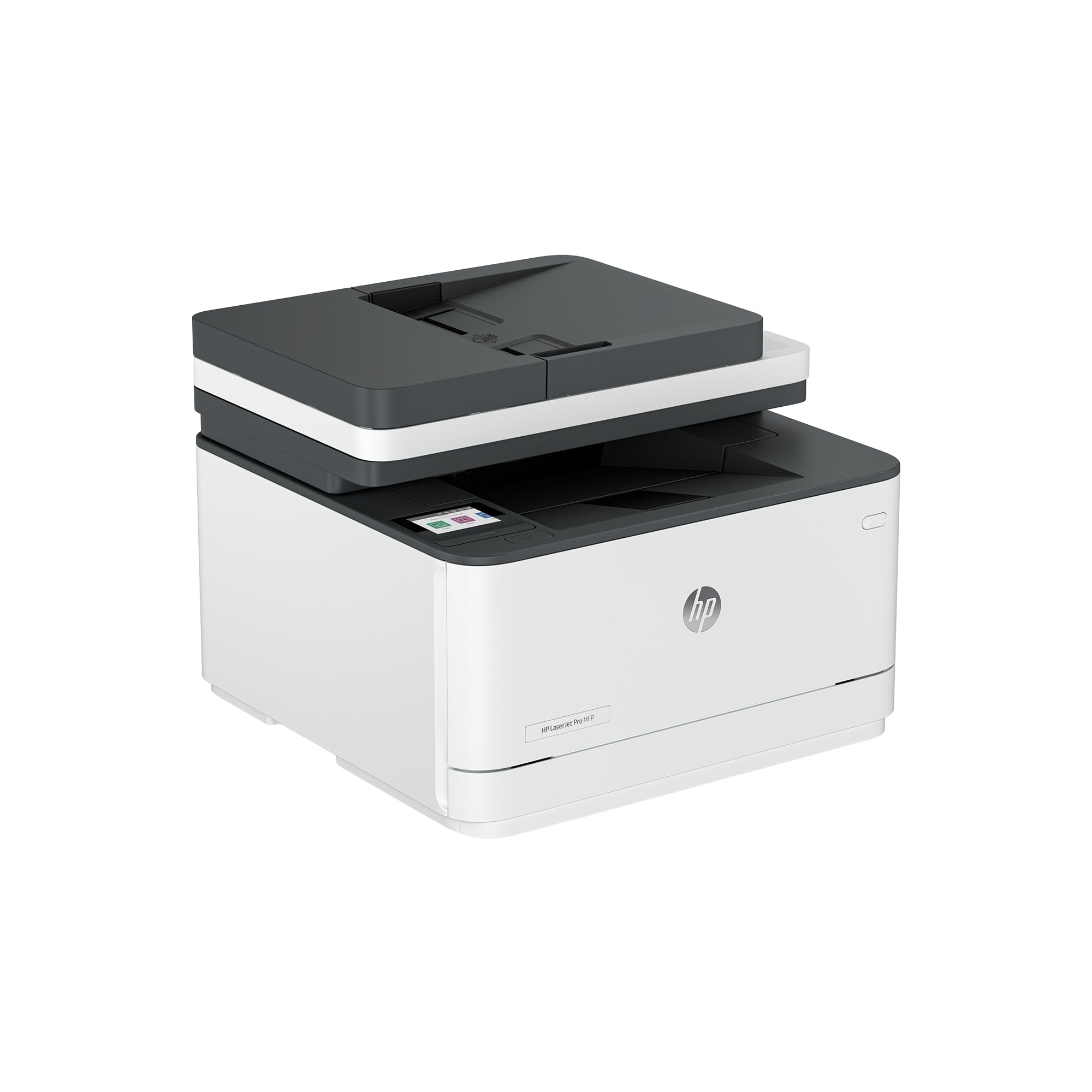
The HP LaserJet Pro MFP 3101sdw is the speed champion in this lineup, churning out black‑and‑white pages at up to 40 ppm with a crisp, professional finish. The 250‑sheet input tray and 50‑sheet automatic document feeder make it easy to handle a stack of lesson plans or a batch of permission forms without constant reloading. HP’s Smart app provides a clean interface for scanning, copying, and printing from a mobile device, and the wireless connection uses dual-band Wi‑Fi for reliable performance.
For teachers in a busy home office, this printer’s fast first page out time — around 7 seconds — means you’re not waiting when a worksheet needs to go out the door immediately. The automatic duplex function works smoothly, and the scanner resolution is sharp enough to capture fine text on handouts. HP includes an introductory toner cartridge that yields roughly 1,000 pages, giving you a good start before needing a replacement.
Reviewers consistently praise the print quality and reliability, though some note that HP blocks generic toner cartridges via firmware updates — you’re locked into HP-brand supplies. The auto document feeder can occasionally jam with more than 25 sheets, so stick to smaller stacks for best results. If speed and professional output are your top priorities, this model delivers in spades.
Why it’s great
- Blazing 40 ppm print speed
- Sharp, professional text quality
- Reliable Wi‑Fi with dual-band support
Good to know
- Firmware blocks third-party toner
- ADF can jam with thick stacks
4. HP LaserJet M209d
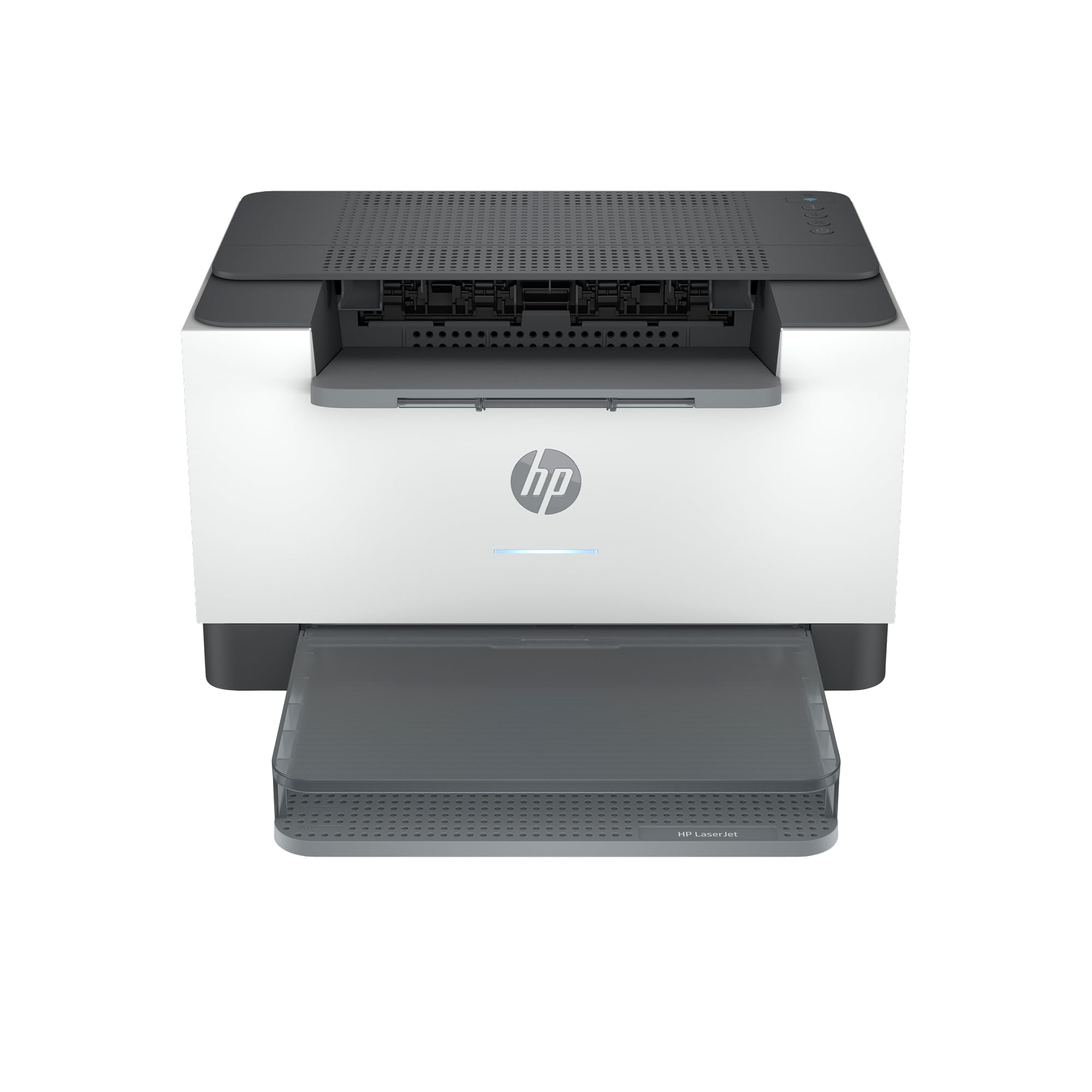
The HP LaserJet M209d strips away wireless to deliver a simple, wired USB connection that never drops offline — a common headache with budget Wi‑Fi printers. It prints at 30 ppm with automatic duplexing, and the compact footprint (roughly 14 inches deep) fits on a small desk or shelf. Users who keep their laptop on the desk and don’t need network printing will appreciate the plug‑and‑play reliability.
This model is essentially a print‑only device — there’s no scanner, no copier, and no ADF. For teachers who already have a separate scanner or who primarily print pre‑designed worksheets, that’s acceptable. The starter toner cartridge delivers impressive volume, and the cost per page remains very low with high‑yield replacements. HP’s firmware policy applies here too, so be prepared to use HP-brand cartridges.
Buyer feedback is overwhelmingly positive about its speed and dependability, though Mac users running macOS 12 or later have reported driver compatibility issues — check HP’s support page before purchasing. The lack of wireless is a strict limitation, but if your goal is a no‑nonsense black‑and‑white printer that just works, this is a great value pick.
Why it’s great
- Reliable USB connection, no Wi‑Fi dropouts
- Fast 30 ppm output with duplex
- Compact and easy to set up
Good to know
- No wireless or network connectivity
- Incompatible with some Mac OS versions
5. Canon PIXMA TR7120

The Canon PIXMA TR7120 is a rare budget‑friendly inkjet that includes an automatic document feeder — a feature usually found on more expensive models. It prints at 14 ppm black and 9 ppm color, supports automatic duplexing, and connects via dual‑band Wi‑Fi for stable mobile printing. The 1.42‑inch monochrome OLED display provides quick access to ink levels and settings, though it’s smaller than the touchscreens found on the Brother units.
For teachers who occasionally need color for bulletin board materials or student certificates, the TR7120’s two‑cartridge hybrid system delivers decent vibrancy on plain paper. The ADF handles multi‑page scanning and copying efficiently, saving time when digitizing a stack of homework. Setup is straightforward via the Canon PRINT app, and compatibility with Apple AirPrint and Mopria means most mobile devices connect without hassle.
The main drawback is ink cost — the starter cartridges run out quickly, and replacement color ink is relatively expensive for the page yield. Several reviewers note that the paper tray holds only 50 to 100 sheets, so you’ll refill it more often than with the Brother or HP laser models. This printer works best for light‑to‑moderate use where color is a genuine need, not just a nice‑to‑have.
Why it’s great
- ADF for multi-page scanning on a budget
- Dual‑band Wi‑Fi for reliable mobile printing
- Compact footprint with duplex support
Good to know
- Starter ink empties fast; replacement expensive
- Small paper tray requires frequent refills
6. Epson Workforce Pro WF-3823

The Epson Workforce Pro WF-3823 is a color inkjet all‑in‑one designed for higher‑volume environments, featuring a 250‑sheet paper tray, automatic duplexing, and a 35‑page ADF. PrecisionCore Heat‑Free Technology delivers 21 ppm black and 11 ppm color, with DURABrite Ultra instant‑dry pigment inks that resist smudging on standard copy paper. The 2.7‑inch color touchscreen and Epson Smart Panel app make navigation and mobile printing intuitive.
Teachers who handle a mix of black‑and‑white worksheets and occasional color handouts will appreciate the generous paper capacity and fast first page out. The ADF works well for scanning multi‑page documents, though some users report it occasionally pulls multiple sheets. Epson’s heat‑free technology reduces power consumption and downtime, which is a plus for a printer that sees daily use.
The primary concern is ink cost — Epson genuine cartridges are pricey, and the printer is designed to block non‑genuine alternatives. Some reviewers experienced paper jams with the cassette after extended use. For a teacher who prints heavily in color or needs absolute reliability with third‑party ink, this may not be the best fit. It serves well as a mid‑range workgroup machine where speed and tray capacity are the priority.
Why it’s great
- Large 250‑sheet tray and 35‑page ADF
- Fast 21 ppm black print speed
- Instant‑dry pigment inks resist smudging
Good to know
- Ink cartridges are expensive to replace
- Some units develop paper jams over time
7. Canon PIXMA TS7720

The Canon PIXMA TS7720 is an affordable entry‑level color inkjet that prints up to 15 ppm black and 10 ppm color, with an automatic duplexer and a 2.7‑inch LCD touchscreen. Its compact white design fits easily on a small desk, and setup is relatively quick through the Canon PRINT app. The two‑cartridge system (one black, one color) simplifies ink replacement, making it less intimidating for users who don’t print often.
For a teacher on a tight budget who only needs color occasionally — say for a few classroom posters or holiday cards — the TS7720 gets the job done without a large upfront investment. The touchscreen is responsive and provides clear menus for scan, copy, and print tasks. Wireless connectivity works well once you manually connect to the router, though the default power‑saving setting can cause the printer to go offline after four hours of idle time.
The major trade‑offs are ink economy and print quality. The starter cartridges are quickly depleted, and replacement costs can eat into any initial savings. Color output is less vivid than Canon’s five‑ink models, and the lack of an ADF means you must place each page individually on the flatbed for scanning.
Why it’s great
- Very low upfront cost
- Compact design with duplex support
- Easy two‑cartridge ink system
Good to know
- High per‑page ink cost over time
- No ADF; slow manual scanning
FAQ
Should teachers choose a laser or inkjet printer for home use?
What print speed is sufficient for a teacher’s home workload?
Is a printer with an automatic document feeder necessary for teachers?
How does auto duplex printing save paper for teachers?
Why do some printers block third‑party ink cartridges?
Final Thoughts: The Verdict
For most users, the at home printer for teachers winner is the Brother HL-L2480DW because it combines a fast 36 ppm print speed, automatic duplexing, a 250‑sheet paper tray, and a low cost per page that won’t eat into a classroom budget. If you need a full all‑in‑one with a document feeder and fax capability, grab the Brother MFC-L2820DW. And for the fastest black‑and‑white output with professional quality, nothing beats the HP LaserJet Pro MFP 3101sdw.