
Our readers keep the lights on and the weekend projects moving. As an Amazon Associate, I earn from qualifying purchases.
Recording at home introduces a specific enemy: uncontrolled room sound. That hollow echo, the hum of a refrigerator, the distant street noise—these imperfections bury a vocal take under layers of sonic clutter. The right microphone doesn’t just capture your voice; it isolates it, cutting through the acoustic chaos of an untreated space to deliver broadcast-ready clarity without requiring a soundproofed booth.
I’m Rikta — the co-founder and writer behind FitlyFast. My market analysis focuses on polar pattern performance, capsule type, and connectivity flexibility, ensuring every recommendation here solves the real-world challenge of recording clean audio in a live, noisy environment.
The central hardware decision for any creator building a home setup comes down to selecting the right best at home recording microphone that matches your specific environment, voice, and production demands.
How To Choose The Best At Home Recording Microphone
Selecting a home recording microphone involves matching the capsule and polar pattern to your specific room conditions. A condenser mic with high sensitivity sounds incredible in a treated studio, but in a reflective bedroom it will pick up every click, hum, and echo, ruining the take. Dynamic mics, conversely, are naturally less sensitive to ambient noise, making them the safer choice for untreated home spaces.
Polar Pattern — The Room Rejection Tool
Cardioid polar patterns capture sound from the front while rejecting noise from the sides and rear. This is the single most important spec for home recording because it allows you to point the microphone away from your computer fan, traffic, or HVAC vent. An omnidirectional pattern, while natural-sounding, picks up everything in the room and should be avoided for vocal isolation in a typical home environment.
Dynamic vs. Condenser Capsule
Dynamic microphones, like the Shure SM7B, use a moving coil design that resists distortion from high SPL sources (loud vocals or guitar amps) and inherently rejects room sound. Condenser microphones, like the Sennheiser Profile, use a charged diaphragm that captures nuance and detail but also amplifies subtle room reflections. For spoken word and podcasting in untreated rooms, dynamic designs are generally more forgiving. For music vocals with careful room treatment, condensers excel.
Connectivity — USB Simplicity vs. XLR Expandability
USB microphones offer plug-and-play convenience directly into a computer or phone, requiring no audio interface. XLR microphones require an interface or mixer to connect but provide higher headroom, lower noise, and the ability to upgrade components individually later. Hybrid USB/XLR mics offer the best of both worlds for home users who may eventually want to move to a professional signal chain.
Quick Comparison
On smaller screens, swipe sideways to see the full table.
| Model | Category | Best For | Key Spec | Amazon |
|---|---|---|---|---|
| Shure SM7B | Dynamic XLR | Professional vocal clarity | 40Hz–15kHz frequency response | Amazon |
| Shure MV7+ | Dynamic USB/XLR | Smart auto-leveling | Auto Level Mode + DSP | Amazon |
| Sennheiser Profile | Condenser USB | Plug-and-play convenience | 125dB max SPL | Amazon |
| Focusrite Scarlett 2i2 Studio | Interface Bundle | Complete recording bundle | 120dB dynamic range | Amazon |
| MAONO PD200W | Dynamic Wireless/USB/XLR | Wireless duo recording | 60hr battery, 60m range | Amazon |
| FIFINE AmpliGame KS5 | Dynamic Bundle | Entry-level gamer setup | XLR mic + audio mixer | Amazon |
| FDUCE SL40+ | Dynamic USB/XLR | Budget podcast starter | 96kHz/24-bit audio | Amazon |
In‑Depth Reviews
1. Shure SM7B

The Shure SM7B remains the benchmark dynamic microphone for vocal recording in difficult acoustic environments. Its cardioid polar pattern, combined with air suspension shock isolation, rejects room reflections, fan noise, and handling vibrations with ruthless efficiency, producing a warm, balanced vocal that is smooth on the high end and full in the mids. The built-in pop filtering and detachable windscreen effectively eliminate plosives without requiring an external filter, making it a turnkey solution for podcast, streaming, and voiceover work.
The wide frequency response (40Hz–15kHz) is deliberately sculpted to sound natural on the human voice, avoiding the brittle top end that plagues cheaper microphones. The XLR-only connectivity means you will need an audio interface or mixer to use it, and the relatively low output level often demands a clean preamp or an inline booster like a Cloudlifter for optimal gain staging. Users consistently report that the SM7B delivers a “radio host” presence that transforms ordinary recordings without requiring post-processing.
The all-metal body, locking yoke mount, and electromagnetic shielding ensure this microphone survives years of daily use and resists hum from nearby electronics. For serious home creators who want professional broadcast sound and are willing to invest in the necessary supporting gear, the SM7B offers a proven path to achieving that goal.
Why it’s great
- Industry-standard vocal warmth with exceptional room rejection
- Built-in pop filter and shock mount reduce accessory costs
- Indestructible build with electromagnetic interference shielding
Good to know
- Requires XLR interface and often a inline gain booster
- Not a plug-and-play solution for absolute beginners
2. Shure MV7+

The Shure MV7+ builds on the SM7B legacy by adding digital convenience without sacrificing the dynamic capsule’s natural noise isolation. Its Auto Level Mode continuously adjusts gain based on your distance from the mic and vocal volume, eliminating the need for manual gain riding during long sessions. The built-in DSP features a real-time denoiser that filters out ambient sound like AC hum or computer fans, and a digital pop filter that suppresses plosives virtually.
The dual USB-C and XLR outputs allow you to use the MV7+ as a plug-and-play USB mic for quick podcast episodes or connect it to a professional audio interface via XLR for higher headroom and future upgrade paths. The multi-color LED touch panel provides visual feedback on mute status and audio levels, and the MOTIV Mix app (compatible with PC and Mac) gives you access to EQ, reverb, and customizable sound profiles. The included adjustable desktop stand and foam windscreen cover the essentials out of the box.
Customer feedback confirms that the MV7+ delivers “broadcast-quality” audio immediately upon connection, with many users noting that coworkers and viewers commented on the improved clarity within the first use. The trade-off is a premium price point that reflects Shure’s engineering and brand trust.
Why it’s great
- Auto Level Mode simplifies gain management for single-person setups
- Hybrid USB/XLR connectivity adapts to any workflow
- Real-time DSP denoiser handles untreated rooms effectively
Good to know
- Premium investment compared to entry-level USB mics
- App control adds a layer of complexity some users may skip
3. Sennheiser Profile

The Sennheiser Profile is a cardioid condenser microphone designed for users who demand premium audio without software dependencies. It connects via USB-C and requires no drivers on Windows, macOS, or Linux, delivering a natural, warm vocal sound that accentuates body and presence. The metal housing and German-engineered capsule provide durability and consistency that exceed most competitors in the plug-and-play space.
Physical controls include a mute button, a headphone jack with zero-latency monitoring, and dedicated gain, mix, and volume dials. This tactile approach means you can adjust your levels during a live stream or recording without tabbing into an app. The cardioid pattern does a commendable job rejecting off-axis noise, though being a condenser, it remains more sensitive to room reflections than dynamic mics.
The table stand is compact and stable, but the low height may be better suited for a desk surface than a traditional mic stand setup. Users report excellent out-of-box performance for gaming, meetings, and introductory voiceover, with many noting the sound quality is a clear step above typical USB webcam mics. The Profile is a strong mid-range pick for those who value straightforward operation and trusted audio engineering.
Why it’s great
- True plug-and-play with no software or driver installs needed
- Physical controls for gain, mix, and volume are intuitive and fast
- Sennheiser’s capsule delivers a natural, warm vocal character
Good to know
- Condenser design picks up more room noise than dynamic alternatives
- Included stand is short; a boom arm is a common first upgrade
4. Focusrite Scarlett 2i2 Studio 4th Gen
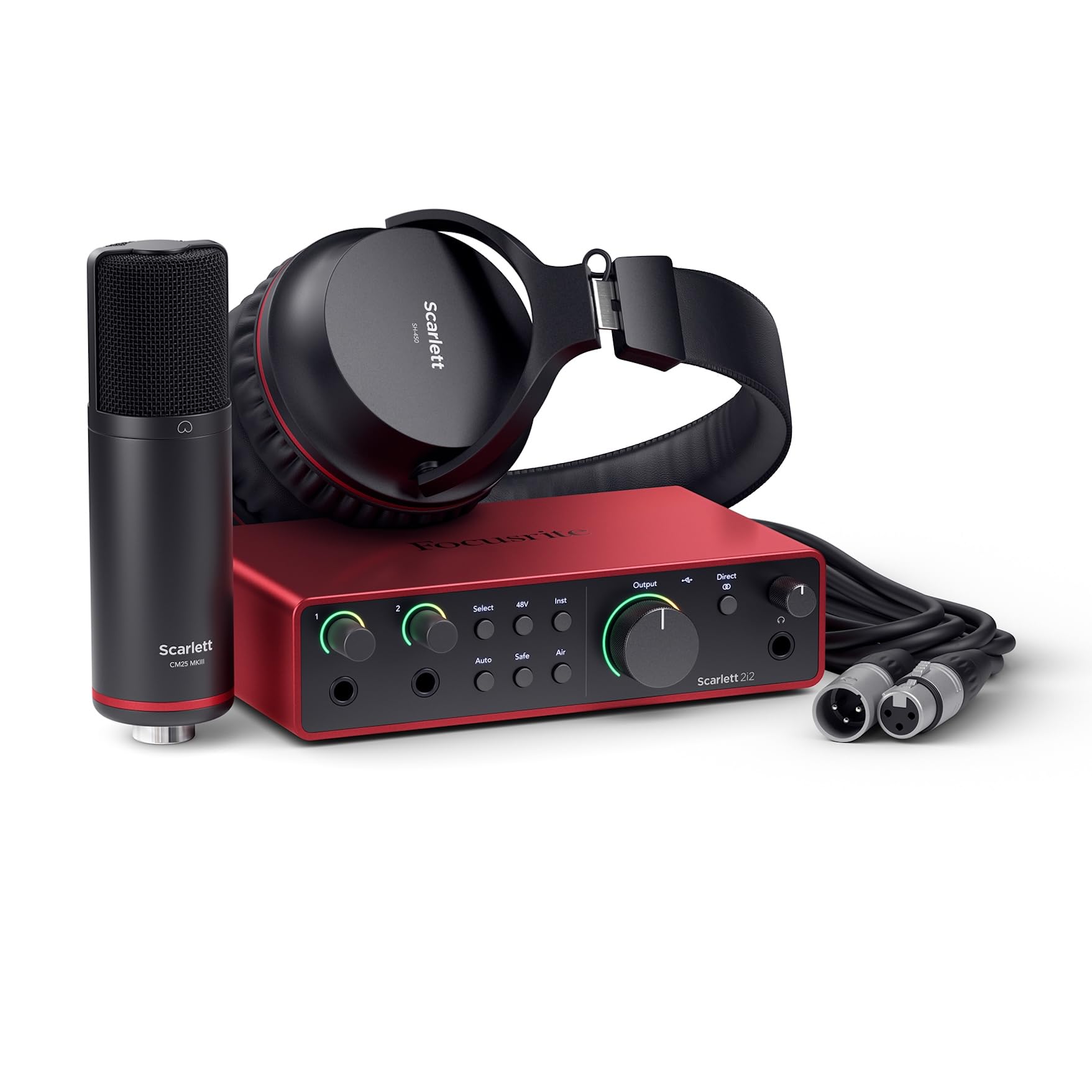
The Focusrite Scarlett 2i2 Studio 4th Gen bundle redefines the entry-point for home recording by packaging a professional-grade audio interface with a matched CM25 MkIII condenser microphone and SH-450 headphones. The interface features a 120dB dynamic range, Auto Gain and Clip Safe technology that automatically set optimal input levels and prevent digital clipping, ensuring your raw takes are clean without manual adjustment.
The Air mode engages an analog EQ boost that lifts vocals and acoustic guitars forward in the mix, adding presence and clarity without sounding artificial. The bundle includes a full software suite with Pro Tools Intro+, Ableton Live Lite, Cubase LE, and the Hitmaker Expansion collection of effects, instruments, and mastering tools, making it a genuine all-in-one studio starter kit. The two inputs allow for simultaneous recording of a vocal mic and an instrument, so songwriters can capture both at full 192kHz resolution.
Users consistently cite the value of getting a known-quality interface alongside a dedicated mic set. The Scarlett 2i2 is lightweight, USB-powered, and compatible with most DAWs. The CM25 MkIII mic is a solid condenser that performs well in treated spaces, though it will pick up room noise in untreated environments—something to consider for spoken word without acoustic panels.
Why it’s great
- Auto Gain and Clip Safe eliminate level-setting guesswork
- Comprehensive software bundle for immediate music production
- 120dB dynamic range matches flagship studio converters
Good to know
- Condenser mic in bundle requires some room treatment for best results
- No XLR-to-USB direct mic option — relies on the interface
5. MAONO PD200W
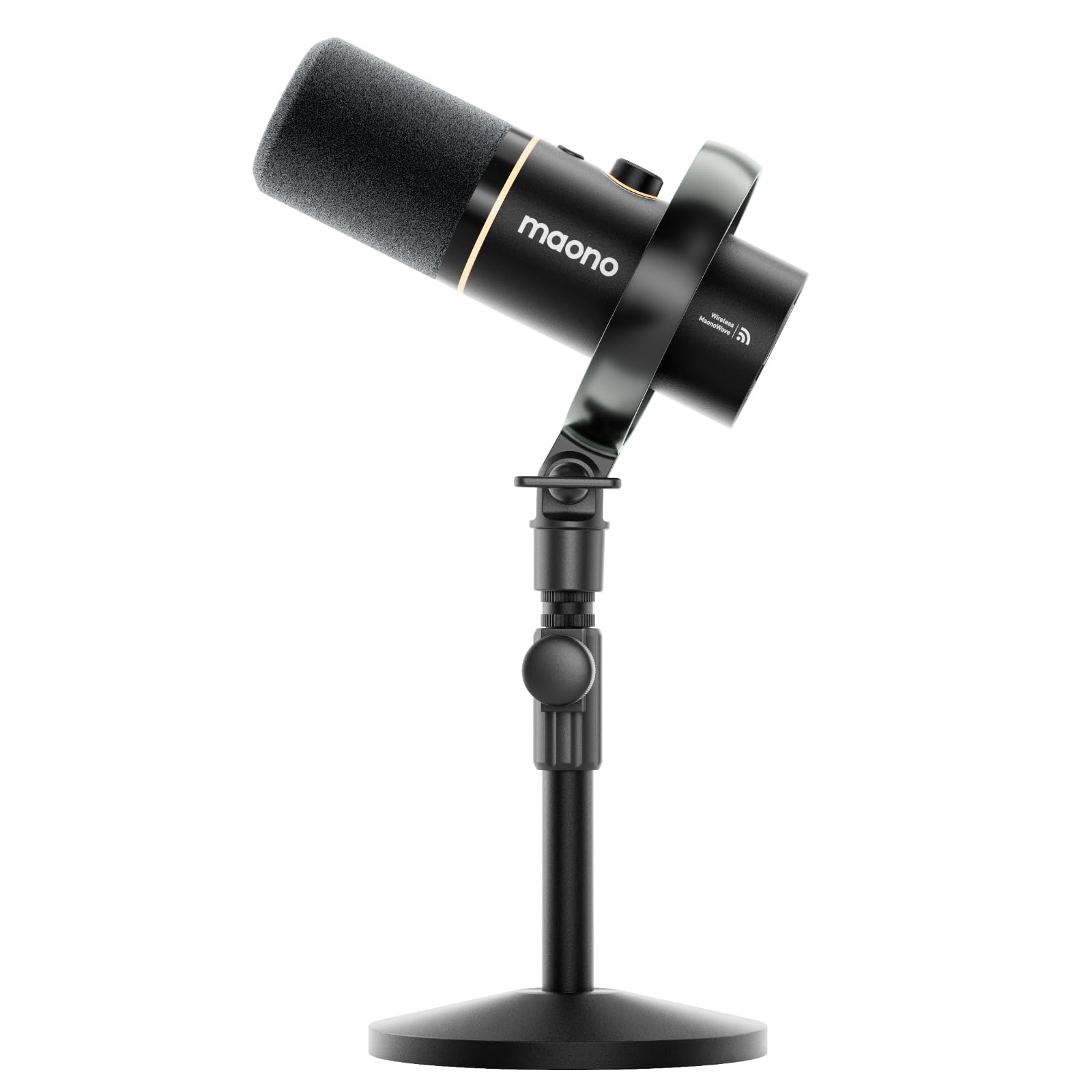
The MAONO PD200W introduces a genuine innovation for home recorders: a hybrid wireless/USB/XLR dynamic microphone. Using a Type-C receiver, it transmits 24-bit/48kHz audio wirelessly at up to 60 meters, freeing you from desk clutter for live streaming or camera-mounted recording. The dynamic capsule and cardioid pattern maintain strong off-axis rejection, and the advanced, three-stage noise cancellation helps mitigate room echo even in untreated spaces.
One standout feature is the ability to connect two PD200W mics to a single receiver for duo podcast or interview recording, with each mic tracked to its own channel for post-production editing. The MaonoLink app (available on PC and smartphone) provides four preset EQ modes plus manual control over reverb, EQ bands, and noise gate parameters, giving users deep control over their vocal profile without extra hardware. The PD200W also supports direct recording to cameras via an optional adapter, keeping audio synchronised with video automatically.
With around 60 hours of battery life (RGB off) and a solid build weight that suggests quality components, this mic is aimed at creators who move between setups and want a single tool for multiple workflows. Note that some users report needing to recharge every few days with moderate use, and the wireless connection requires line-of-sight or near proximity for best stability.
Why it’s great
- True wireless operation removes desk cables for mobile creators
- Supports two-mic dual-track recording from one receiver
- MaonoLink app offers deep EQ and reverb customization
Good to know
- Battery life requires periodic recharging every few days
- Wireless range can be affected by obstacles in the room
6. FIFINE AmpliGame KS5

The FIFINE AmpliGame KS5 bundle packages a dynamic XLR microphone with a dedicated streaming audio mixer, creating a complete audio control center for gaming and streaming. The mixer features individual mute buttons, a volume fader, and headphones monitoring, plus multiple entertainment modes that include voice effects (elder, baby, robot) for interactive gameplay. The RGB lighting on both the mic and the mixer adds visual sync with gaming setups.
The dynamic microphone uses a cardioid pattern to reduce background keyboard clatter and room noise, and the XLR connection to the mixer provides stable, low-noise audio transmission. The mixer also accepts a second audio source channel, allowing you to blend game sound and mic feed independently. The KS5 is USB-connected to your PC, so power and data come through a single cable, keeping the desk relatively tidy. Note that the function keys (RGB, mute, monitoring) are only active in USB mode, not when using the XLR channel directly with an interface.
Community feedback highlights the KS5 as a budget-friendly entry point that noticeably improves audio quality over headset mics. The mixer’s voice changers are a fun addition for streamers, though the build is plastic rather than metal, and a small number of users experienced occasional mixer reboot issues. For streamers wanting tactile audio control without a large investment, this bundle delivers strong value.
Why it’s great
- Complete XLR mic + mixer bundle for immediate desktop control
- Voice effects and RGB lighting add stream-friendly interactivity
- Cardioid dynamic mic rejects ambient gaming noise effectively
Good to know
- Mixer function keys only work in USB mode, not XLR mode
- Plastic build may feel less premium than all-metal alternatives
7. FDUCE SL40+

The FDUCE SL40+ is a dynamic microphone that brings 96kHz/24-bit audio resolution to the budget tier, far exceeding the typical entry-level spec. Its cardioid pickup pattern does an effective job rejecting ambient noise for podcasting, streaming, and vocal recording, and the all-metal construction ensures the mic holds up to daily articulation and adjustments. The included boom arm and table mount clamp mean you can position the mic close to your mouth immediately—a major convenience for beginners who lack separate stand hardware.
The dual USB-C and XLR outputs mirror the connectivity of premium mics, giving you a path to upgrade to an interface later without buying a new microphone. The one-key mute function and long-press volume control (which toggles between mic gain and headphone volume) are minimal but functional. The digital audio processing handles basic equalization and noise gating internally, which helps clean up the signal before it hits your computer.
User reports consistently praise the SL40+ for its surprising clarity at this price point, with multiple customers noting that coworkers and gaming friends commented on the audio upgrade right away. A few users noted that the swivel adjustment can loosen when turning the mic, requiring occasional retightening. Overall, the SL40+ is the most accessible way to get a dynamic mic with dual connectivity onto a desk.
Why it’s great
- 96kHz/24-bit resolution for detailed audio capture
- USB and XLR outputs accommodate current and future setups
- Full metal construction with included boom arm delivers immediate value
Good to know
- Swivel mechanism may loosen with repeated adjustments
- Digital processing is basic compared to software-based EQ tools
FAQ
Does a dynamic microphone work better than a condenser for untreated home rooms?
Can I use a USB mic without an audio interface for professional-quality results?
What is Auto Level Mode and do I need it for podcasting?
Final Thoughts: The Verdict
For most users, the at home recording microphone winner is the Shure MV7+ because it combines Shure’s legendary dynamic-mic vocal warmth with modern digital conveniences like Auto Level Mode, real-time denoising, and hybrid USB/XLR connectivity. If you want the absolute peak of professional broadcast tone without compromise, grab the Shure SM7B. And for a complete songwriting studio that pairs a premium interface with a condenser mic and software library, nothing beats the Focusrite Scarlett 2i2 Studio 4th Gen bundle.