
Our readers keep the lights on and the weekend projects moving. As an Amazon Associate, I earn from qualifying purchases.
The taste of tap water—chlorine, heavy minerals, or that faint metallic edge—is a daily compromise millions of people make. An at-home reverse osmosis system solves that problem by stripping away contaminants like lead, arsenic, fluoride, and total dissolved solids (TDS) down to near-zero levels, delivering crisp, bottled-quality water from your own tap. The question isn’t whether you need one; it’s which stage count, flow rate, and filter certification matches your home’s specific water chemistry and your family’s daily consumption.
I’m Rikta — the co-founder and writer behind FitlyFast. I have spent countless hours analyzing the technical specifications, certification data, and real-world testing metrics of dozens of reverse osmosis systems to build this category-specific buying guide you can actually rely on for a smart decision.
This deep-dive guide breaks down the nine most compelling models on the market, from budget-friendly entry-level units to premium tankless powerhouses, so you can confidently identify the best at home reverse osmosis system for your kitchen, water quality, and budget.
How To Choose The Best At Home Reverse Osmosis System
Selecting the right reverse osmosis system for your home involves balancing three variables: your incoming water’s total dissolved solids (TDS) level, the physical space available under your kitchen sink, and the daily volume your household consumes. A 50-gallon-per-day (GPD) tank system is plenty for a couple, while a 500 GPD tankless model suits a family of four who fills multiple bottles and cooking pots daily. Pay close attention to NSF/ANSI certifications, particularly Standard 58 for TDS reduction and Standard 372 for lead-free materials, as these are your only guarantee that the system performs as advertised. Finally, decide if you want alkaline remineralization—some people prefer the slightly higher pH and trace minerals for taste, while others want the purest H₂O possible.
Flow Rate & Production Capacity (GPD)
The gallons-per-day rating tells you how much purified water the system can produce under ideal pressure (typically 60 PSI). Traditional tank systems like the 50 GPD APEC ROES-50X fill a small storage tank slowly overnight, then dispense water at a trickle. Tankless systems like the 500 GPD Waterdrop G5P500A or iSpring RO500AK-BN produce water on demand at a much faster flow rate (filling an 8-ounce cup in under 10 seconds). If you frequently fill large pots for cooking or have a refrigerator ice maker, prioritize a higher GPD rating.
Stage Count & Filtration Precision
A standard 5-stage system includes sediment, carbon, RO membrane, and two post-filters. Moving to 7 or 9 stages typically adds alkaline remineralization cartridges (to reintroduce calcium, magnesium, and potassium) or UV sterilization for microbiological safety. The 0.0001-micron pore size of the RO membrane is the primary barrier against heavy metals, fluoride, and PFAS—extra stages beyond this are primarily for taste adjustment and membrane protection. Do not confuse higher stage counts with better contaminant removal; the membrane itself is the star.
NSF/ANSI Certifications
Not all RO systems are certified to the same standard. NSF/ANSI Standard 58 verifies that the system actually reduces TDS, heavy metals, and other listed contaminants to the claimed levels—this is the gold standard for RO filtration. Standard 372 confirms that any component that comes into contact with water contains less than 0.25% lead by weighted average. Some budget systems skip these certifications entirely, meaning there is no third-party verification of their performance claims. Always look for the NSF seal on the system or the replacement filters.
Pure-to-Drain Ratio & Water Waste
Traditional RO systems waste 3 to 4 gallons of water for every 1 gallon of purified water. Newer tankless designs with efficient pumps achieve a 2:1 or even 1.5:1 pure-to-drain ratio, drastically reducing wastewater. The iSpring RO500AK-BN and Waterdrop G5P500A both advertise a 2:1 ratio. If you live in a drought-prone area or pay high water bills, this specification can save you hundreds of gallons per month. A permeate pump can also be added to some tank-based systems to improve efficiency without replacing the entire unit.
Quick Comparison
On smaller screens, swipe sideways to see the full table.
| Model | Category | Best For | Key Spec | Amazon |
|---|---|---|---|---|
| Waterdrop G5P500A | Tankless RO | Fast flow & mineral taste | 500 GPD, 2:1 ratio | Amazon |
| Home Master TMHP | Tank-Based | UV sterilization & remineralization | 9 stages, 1:1 ratio | Amazon |
| iSpring RO500AK-BN | Tankless RO | High capacity & low waste | 500 GPD, NSF 58 | Amazon |
| APEC ROES-100 | Tank-Based | Proven reliability & value | 100 GPD, 1:1 ratio | Amazon |
| SimPure T1-400UV | Tankless RO | UV protection & near-zero TDS | 400 GPD, UV light | Amazon |
| Waterdrop T3-T | Tank-Based | Easy install & quick refill | 220 GPD, 2:1 ratio | Amazon |
| NU Aqua 6-Stage | Tank-Based | Alkaline minerals & 120-day trial | 100 GPD, PPM meter | Amazon |
| APEC ROES-50X | Tank-Based | Entry-level reliability | 50 GPD, NSF 372 | Amazon |
| Geekpure 6-Stage | Tank-Based | Budget alkaline solution | 75 GPD, alkaline pH+ | Amazon |
In‑Depth Reviews
1. Waterdrop G5P500A Alkaline Mineral pH+ RO System
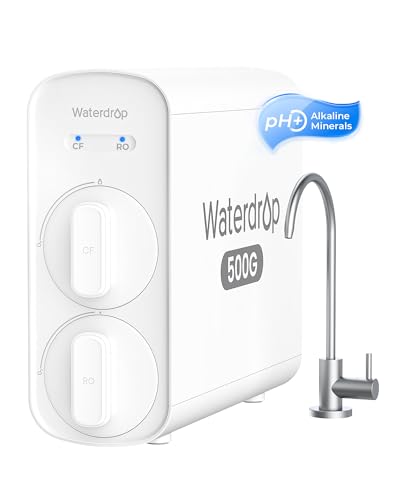
The Waterdrop G5P500A is the benchmark for modern tankless RO design. With a 500 GPD production rate and a 2:1 pure-to-drain ratio, it fills a 6-ounce cup in just 8 seconds while wasting half the water of traditional systems. The 8-stage filtration includes a 0.0001-micron RO membrane and an alkaline mineralization cartridge that adds calcium, magnesium, sodium, and potassium back into the water, raising pH for a smoother, spring-like taste.
Its compact tankless footprint frees up 70% of under-sink space compared to a standard tank unit, and the NSF/ANSI 58 and 372 certifications confirm the TDS reduction and lead-free materials. The smart faucet includes an NFC filter reminder, taking the guesswork out of maintenance. Users consistently highlight the fast flow rate, quiet operation, and the clean, mineral-balanced taste as the standout features.
The only catch is that the smart faucet’s TDS display can be inaccurate over time according to some reports, and the included tubing is slightly less flexible than standard 1/4-inch lines. However, the combination of certified contaminant removal, high flow, and remineralization makes this the most well-rounded premium system for daily family use.
Why it’s great
- 500 GPD tankless delivers fast, on-demand flow.
- Adds beneficial minerals via alkaline cartridge.
- NSF/ANSI 58 and 372 certified for safety.
Good to know
- Smart faucet TDS display may become inaccurate.
- Requires electric outlet and countertop hole for faucet.
- Larger tubing limits custom faucet swaps.
2. Home Master TMHP HydroPerfection RO System
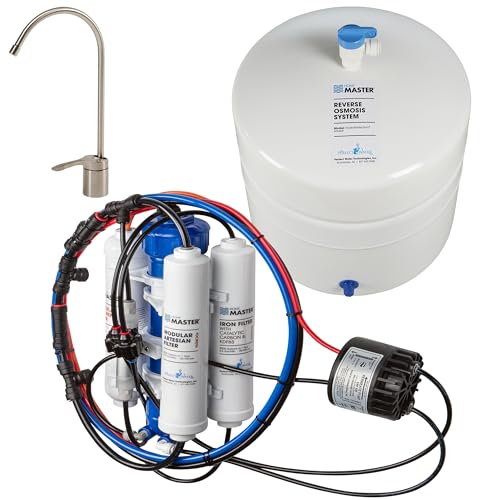
If you want the deepest contaminant removal possible from a tank-based system, the Home Master TMHP HydroPerfection is the gold standard. Its 9-stage process includes a patented 2-pass alkaline remineralization that reintroduces calcium and magnesium twice, along with an EPA-registered UV sterilizer that kills 99.9% of microorganisms. This is the only system on this list that provides UV protection as a standard integrated component, making it ideal for well water users or those concerned about bacteria and viruses.
Despite its comprehensive filtration, the system achieves a 1:1 pure-to-drain ratio thanks to an included non-electric permeate pump. The 4.5-second fill rate from a standard tank is remarkably fast for a tank-based unit, and the iron pre-filter extends membrane life in challenging water conditions. Users consistently report TDS reductions from 430 ppm down to the 20-30 ppm range with excellent taste and zero chlorine smell.
Installation is DIY-friendly with color-coded tubing and push-fit connections, and annual filter replacements are straightforward. The unit is larger than a tankless model, so verify your under-sink clearance. At a higher price point, this system is worth it for anyone who prioritizes microbiological safety and wants the most comprehensive purification short of a whole-house system.
Why it’s great
- UV sterilization integrated for microbial protection.
- Patented 2-pass remineralization for taste.
- 1:1 waste ratio saves water.
Good to know
- Larger footprint takes more under-sink space.
- Annual replacement filters cost more than basic systems.
3. iSpring RO500AK-BN Tankless RO System

iSpring is a well-established name in water filtration, and the RO500AK-BN justifies its premium price with NSF 58 certification, a 500 GPD tankless design, and a 2:1 pure-to-drain ratio that minimizes wastewater. The 3-stage filtration (composite sediment/carbon block, RO membrane, carbon alkaline filter) is simpler than multi-cartridge systems but still removes 99% of over 1,000 contaminants while adding alkalinity for improved pH balance. The brushed nickel faucet gives a high-end finish that matches modern kitchen hardware.
One of the system’s standout features is its reliability and customer support. Multiple user reviews highlight experiences with iSpring’s team (Nick, Michele, Myra) resolving issues quickly, including a free replacement unit under warranty at 21 months. The filter change indicator lights and automatic self-cleaning function for the RO membrane help prevent clogging during low-usage periods.
The main limitation is that it is powered (requires a standard outlet), and the tankless design means you cannot store water for emergency use during a power outage. At this price tier, the RO500AK-BN competes directly with the Waterdrop G5P500A and edges ahead for buyers who prioritize an established support network and a simple, well-certified filtration path over extra stage count.
Why it’s great
- NSF 58 certified for genuine TDS reduction.
- Excellent warranty support and customer service.
- 0.4 GPM fast flow fill in 10 seconds per cup.
Good to know
- Requires access to electricity.
- No tank backup during power outages.
4. APEC ROES-100 Essence Series RO System

The APEC ROES-100 is the sweet spot for homeowners who want proven performance without jumping to a tankless model. This 5-stage system delivers 100 GPD—double the capacity of its ROES-50X sibling—using large-format pre-filters that extend filter life and a 3/8-inch fast-flow output that fills a glass much faster than standard 1/4-inch tubing. APEC has been building RO systems in the USA for over 20 years, and the reliability is reflected in thousands of positive reviews.
Users frequently report TDS reductions from over 500 ppm down to the 20-30 ppm range, with water that tastes clean and free of sulfur or chlorine. The 1:1 drain ratio (achieved by an optional permeate pump or standard configuration) saves significant water compared to older 4:1 waste designs. The included JG premium tubing and lead-free designer faucet ensure safe materials from faucet to tank.
Installation is straightforward with clear instructions, though some users note the faucet adapter can be tricky to tighten under the sink. A small number of reports mention occasional valve cracking, but APEC’s lifetime support generally resolves issues promptly. For a mid-range price, the ROES-100 offers a reliable, low-maintenance path to pure water with no electricity required and a tank that provides water even during outages.
Why it’s great
- USA-designed and assembled quality.
- Large 3/8-inch output for faster dispensing.
- 1:1 waste ratio saves water.
Good to know
- Tank takes up significant under-sink space.
- Occasional reports of cracked fittings in shipping.
5. SimPure T1-400UV Tankless RO System

The SimPure T1-400UV brings UV sterilization to the tankless RO category at an accessible price point. It produces 400 GPD with a 1.5:1 pure-to-drain ratio and achieves near-zero TDS (typically 0-14 ppm from feed water of 200-500 ppm) using an 8-stage filtration train that includes a UV light as the final barrier. SGS testing confirms its NSF/ANSI 58 standards compliance, making it one of the few budget-adjacent tankless systems with verifiable third-party certification.
Users praise the quick 30-minute installation and the compact footprint that fits under even tight sinks. The UV light particularly benefits those with well water or concerns about bacterial regrowth in the system. The tankless design means fresh water on demand without a storage tank, and the replacement filters (1057-gallon capacity) are cost-effective compared to bottled water.
The primary drawback is the startup flush: the system recommends running water for 1-2 minutes before use to clear initial higher TDS water from the lines, which some find wasteful. A few users have reported damaged O-rings on the twist-in filters, requiring immediate replacement. Despite these minor issues, the combination of UV sterilization and near-zero TDS makes this a compelling choice for health-conscious families on a budget.
Why it’s great
- Integrated UV light kills microbes.
- Near-zero TDS output from most tap water.
- SGS tested to NSF/ANSI 58 standard.
Good to know
- Requires 1-2 minute flush before use.
- Some units ship with damaged O-rings.
6. Waterdrop T3-T 7-Stage RO System
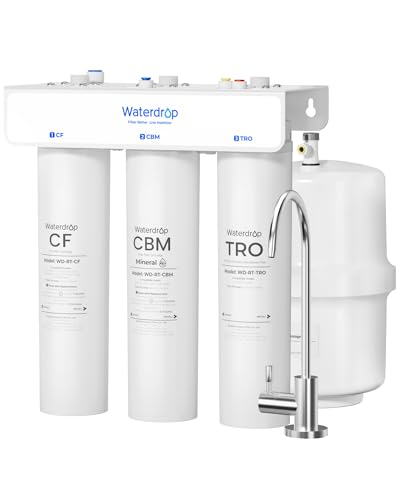
Waterdrop’s T3-T is a bridge between traditional tank systems and tankless technology, offering a 220 GPD output from a compact tank that still fits under most sinks. The 7-stage filtration includes a remineralization cartridge (potassium, calcium, sodium, magnesium) and achieves a 2:1 pure-to-drain ratio without needing electricity. Setup is fully DIY in about 30 minutes with simplified water lines—a major plus for anyone intimidated by complex plumbing.
The all-in-one twist-in filter replacement is the main convenience feature: you can swap a filter in 3 seconds without shutting off the water or draining the system. This reduces maintenance friction significantly. Users consistently note the great taste, fast recovery time (12 seconds per bottle), and the smart NFC tag for filter reminders as the biggest advantages.
The system does require drilling a hole in the countertop for the faucet, and the tank, while smaller than conventional ones, still takes up more space than a fully tankless unit. Some users on well water noted needing to flush extra to clear initial sediment. Overall, the T3-T is a solid mid-range choice for those who want better-than-traditional flow without a full tankless investment.
Why it’s great
- 220 GPD with 3-second twist-in filters.
- NFC tag for filter replacement reminders.
- 2:1 pure-to-drain ratio, no electricity needed.
Good to know
- Tank still occupies under-sink space.
- Faucet install requires countertop drilling.
7. NU Aqua 6-Stage Alkaline RO System
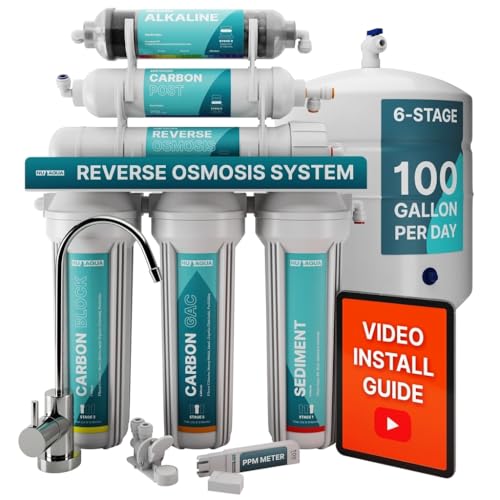
The NU Aqua 6-Stage system focuses on delivering alkaline, mineral-rich water at a 100 GPD flow rate, making it a strong contender for anyone who prioritizes pH-balanced water with trace minerals. The 6th-stage alkaline filter reintroduces calcium, iron, zinc, magnesium, copper, and selenium, and also oxygenates the water. The included PPM meter lets you verify TDS reduction in real-time—a handy tool for the first few weeks of use.
The 120-day home trial and 3-year warranty are the best risk-reduction offers in this category, signaling strong manufacturer confidence. The NSF-certified lead-free stainless steel faucet and double O-ring sealed filter housings indicate premium build quality. Users report TDS drops from 378 ppm down to 18 ppm, with noticeably better-tasting coffee and tea after switching.
Installation takes about an hour with color-coded tubing and quick-connect fittings, though some users experienced cracked fittings or leaking from poorly taped threads. The 2.8-gallon tank is standard size but may still feel bulky under a small sink. For the price, the NU Aqua offers the best warranty package and the clearest alkaline benefit among mid-range tank systems.
Why it’s great
- 120-day trial and 3-year warranty.
- PPM meter included for TDS verification.
- Alkaline filter adds multiple minerals.
Good to know
- Some components may crack in shipping.
- Tank occupies significant under-sink space.
8. APEC ROES-50X 5-Stage RO System
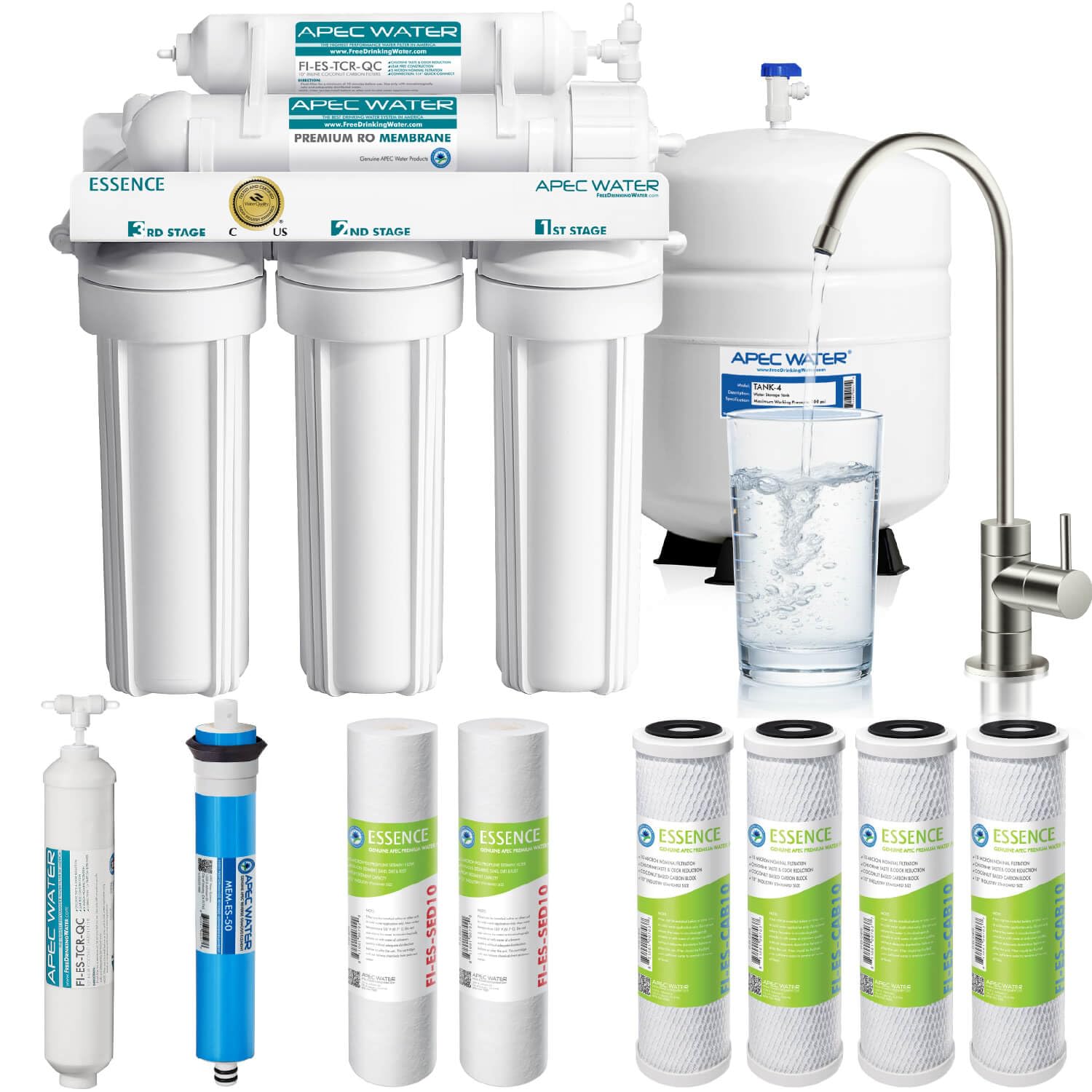
The APEC ROES-50X is an entry-level gateway into certified RO filtration. While its 50 GPD output and 0.03 GPM flow rate are slower than larger systems, it still removes up to 99.99% of impurities including arsenic, chlorine, lead, fluoride, heavy metals, PFAS, and microplastics through 5 stages. The NSF 372 certification confirms that all materials are lead-free, and the system comes with an extra high-capacity pre-filter set (Stage 1-3) to extend the life of the main filters.
Installation takes roughly 1.5 hours with clear color-coded tubing and instructions. Users are consistently impressed by how much better water tastes—no chlorine odor, no metallic notes. The tank fills in 2-3 hours and dispenses water for about 5 minutes before needing a refill, which is adequate for a couple or small family. APEC’s 20-year track record and two-year extended warranty add reliability confidence.
Downsides include the large tank footprint, which can make fitting under a cluttered sink difficult, and the need to drill a 1/2-inch hole in the countertop for the dedicated faucet. Some users experienced minor leaks at connection points and suggest testing with paper towels before leaving unattended. For the cost, this is the most affordable NSF-certified system that still delivers genuine contaminant reduction.
Why it’s great
- NSF 372 certified for lead-free materials.
- Includes extra high-capacity pre-filters.
- Removes 99.99% of 1000+ contaminants.
Good to know
- 50 GPD is slow for larger families.
- Tank takes up considerable under-sink space.
9. Geekpure 6-Stage Alkaline RO System

The Geekpure 6-Stage is the most affordable alkaline RO system on this list, making it an excellent entry point for budget-conscious buyers who still want pH-adjusted water. It adds a 6th-stage alkaline remineralization filter that raises the pH from 5-6.5 up to 7.5-8.5 and reintroduces calcium, magnesium, sodium, and potassium. The 75 GPD output is faster than most entry-level 50 GPD systems, and the 2.8-gallon tank provides adequate storage for a small household.
Users who have owned the system for years report that replacement filters are inexpensive, the RO membrane lasts 2-3 years with city water, and TDS drops from high levels down to around 5-7 ppm. The system comes with quick-connect fittings, color-coded tubing, and a tool set for DIY installation. Many note that after the initial learning curve (using Teflon paste on cartridge threads, flushing the first two tanks), the system runs reliably for years.
Installation instructions can be unclear, and some users found the YouTube video hard to follow. The tank is also smaller than standard tanks (undersized as a few reviewers noted), meaning you may wait longer between refills if you draw multiple gallons quickly. Despite these minor frustrations, the built-in alkaline cartridge and low cost of ownership make this the best budget option for anyone who wants mineral-enhanced RO water without a premium price tag.
Why it’s great
- Cost-effective alkaline RO entry point.
- Raises pH to 7.5-8.5 with minerals.
- Inexpensive replacement filters, membrane lasts 2-3 years.
Good to know
- Installation instructions are poorly translated.
- Tank is undersized; may need frequent refills.
FAQ
Does a reverse osmosis system remove beneficial minerals from my water?
How often should I replace the filters on my at home reverse osmosis system?
Can I install an under sink reverse osmosis system myself, or do I need a plumber?
Final Thoughts: The Verdict
For most users, the best at home reverse osmosis system winner is the Waterdrop G5P500A because it combines a certified 500 GPD tankless flow, alkaline remineralization, and a 2:1 waste ratio in a compact footprint that fits virtually any kitchen. If you want the deepest possible protection with UV sterilization and dual-pass remineralization, grab the Home Master TMHP HydroPerfection—it is the undisputed champion for well water and microbiological safety. And for the best value under , the APEC ROES-100 delivers proven 5-stage performance with a fast 3/8-inch output and a tank-based design that works even during power outages.