
Our readers keep the lights on and the weekend projects moving. As an Amazon Associate, I earn from qualifying purchases.
A yellowing lawn or a tomato plant that just won’t fruit is your soil telling you something. Guessing at fertilizer and pH tweaks wastes time, money, and can stress your plants further. The right at home soil test kit gives you the hard numbers you need to act with confidence.
I’m Rikta — the co-founder and writer behind FitlyFast. I’ve spent hundreds of hours analyzing the technical specs and real-world feedback on home soil test kits to separate the tools that deliver lab-grade insights from those that just look the part.
Whether you are tending a vegetable patch, a manicured lawn, or a collection of houseplants, precision soil data stops the guessing. This guide breaks down the best at home soil test kit options for every type of grower.
How To Choose The Best At Home Soil Test Kit
Not all soil test kits are built the same. A simple pH probe won’t tell you about nitrogen deficiency, and a mail-in lab kit can’t give you a reading in seconds. Matching the tool to your goal is the first step to a healthier garden.
Instant Probes vs. Mail-In Labs
Electronic probes deliver immediate pH and moisture readings — ideal for quick checks between waterings. Mail-in lab kits, on the other hand, provide a full nutrient breakdown (N, P, K, plus micronutrients) with tailored fertilizer recommendations. If you’re solving a specific mystery like yellowing leaves, a probe is fast. If you’re building a season-long feeding plan, a lab analysis is far more thorough.
What Nutrients Does Your Soil Need?
Plants depend on three primary macronutrients: Nitrogen (N) for leafy growth, Phosphorus (P) for root and flower development, and Potassium (K) for overall plant health. Many budget kits only test pH. For serious growers, a 4-in-1 or mail-in kit that covers NPK saves you from buying fertilizer you don’t need.
Ease of Use and Calibration
Digital meters require occasional calibration to stay accurate — look for kits that include buffer powders or calibration solutions. Analog meters are simpler but rely on probe contact with moist soil. Always read the instructions: some meters require a specific soil-to-water slurry for the most reliable results.
Quick Comparison
On smaller screens, swipe sideways to see the full table.
| Model | Category | Best For | Key Spec | Amazon |
|---|---|---|---|---|
| MySoil Test Kit PRO Pack | Mail-In Lab | Comprehensive lawn & garden planning | 13 plant-available nutrients + 8″ soil probe | Amazon |
| Soil Savvy Test Kit | Mail-In Lab | Detailed NPK + micro report | 14 nutrients including pH, synthetic root analysis | Amazon |
| YINMIK Digital pH Tester | Digital Probe | Real-time pH monitoring with app | Bluetooth app, stainless steel dibber, 24hr monitoring | Amazon |
| Gain Express Soil pH & Moisture Meter | Analog Probe | Deep soil penetration, no batteries | 295mm electrode, self-powered, waterproof | Amazon |
| HSLGOVE 7-in-One Soil Tester | Analog + Digital | Multi-parameter quick checks | Dual screen, measures pH/fertility/temp/humidity | Amazon |
| Premium Soil Test Kit (40 Tests) | Chemical Tablet | Budget-friendly NPK & pH testing | 40 tablet tests, 10 each for pH, N, P, K | Amazon |
| Bluelab pH Pen & Care Kit | Digital Pen | Hydroponics and precise solution pH | Waterproof, ATC, lab-grade glass probe, care kit | Amazon |
In‑Depth Reviews
1. MySoil Test Kit PRO Pack

The MySoil PRO Pack is the gold standard for serious gardeners who want a complete, actionable picture of their soil. It measures 13 plant-available nutrients including Nitrogen, phosphorus, and potassium, plus pH, then provides both organic and non-organic fertilizer recommendations tailored to your specific plants. The kit includes two single-use sample kits, an 8-inch soil probe for taking consistent samples, and prepaid mailing envelopes — you simply send your sample and get results back in 6-8 days.
User feedback consistently praises the fast turnaround and clear, chart-based reports. One user noted that the analysis revealed deficiencies in their lawn that were previously invisible, and the follow-up recommendations led to visible improvement within weeks. The inclusion of a dedicated soil probe makes collecting a representative sample far easier than scooping with a trowel.
The only common critique is that for very specific trace element deficiencies, the recommendation tool may point toward a single expensive product. However, for the vast majority of home lawn and garden needs, the level of detail and ease of use make this the most valuable investment you can make in your soil’s health.
Why it’s great
- Measures 13 nutrients plus pH — more than any at-home strip or probe
- Includes professional 8-inch soil probe for consistent sampling
- Personalized organic and non-organic fertilizer recommendations
Good to know
- Premium price point compared to single-use kits
- Requires mailing sample and waiting 6-8 days
2. Soil Savvy Test Kit
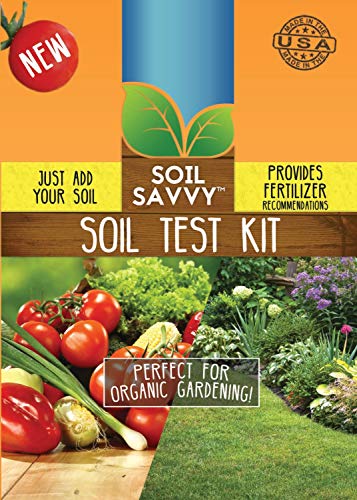
The Soil Savvy kit bridges the gap between consumer-grade strips and professional lab analysis. It uses a patented “synthetic root” resin capsule that absorbs available nutrients from your soil sample over time, mimicking how a plant root takes up nutrients. The sample is then mailed to the lab, and within about a week you receive a detailed report covering pH, all three primary macronutrients (N, P, K), and 11 other nutrients.
Experienced users appreciate the easy-to-read PDF report that shows results as bar graphs compared to optimal ranges. Many note that the fertilizer recommendations are practical and given in pounds per 1000 square feet, making application straightforward. Several long-term users have tracked their soil improvement across multiple seasons using this same kit.
The main caveat is that the report doesn’t automatically address pH adjustment—if your pH is off, you’ll need to purchase lime or sulfur separately. Also, the prepaid mailer is included, but you must pay for the analysis at the point of kit purchase. For the depth of data, it offers excellent value compared to a county extension test.
Why it’s great
- Comprehensive 14-nutrient including micronutrient analysis
- Synthetic root technology gives more accurate available nutrient reading
- Fertilizer recommendations in lbs/1000 sq ft
Good to know
- pH correction is not addressed in the recommendation report
- Requires mail-in and a week turnaround
3. YINMIK Digital pH Tester

If you prefer digital precision and the ability to track pH trends over time, the YINMIK Digital pH Tester is a standout. It features a tapered stainless steel dibber that protects the glass pH probe while allowing easy insertion into various soil types — from loose potting mix to compacted garden beds. The real differentiator is Bluetooth connectivity to a dedicated app, enabling 24-hour monitoring and automatic data logging of pH readings.
Users report accurate readings that align closely with expensive lab meters when properly calibrated. The device comes with calibration buffer powders, an LR44 battery, and a cleaning brush. The color-coded interface on the device itself is readable even in direct sunlight, which is a practical detail for outdoor use. Many beginners found the step-by-step instructions clear and the calibration process straightforward.
One reviewer experienced the unit failing after eight months — the Bluetooth connection dropped and readings became stuck. While this isn’t a universal issue, it highlights the importance of the included care instructions for probe maintenance. For daily pH checks on potted plants or a greenhouse, the YINMIK offers near-professional performance in a consumer-friendly package.
Why it’s great
- Bluetooth app for real-time pH tracking and data logging
- Stainless steel dibber protects the glass probe in all soil types
- Calibration powders included for ongoing accuracy
Good to know
- Glass probe requires careful handling and cleaning
- Some users report Bluetooth connection issues after several months
4. Gain Express Soil pH & Moisture Meter (295mm)

For growers who need to test soil at depth — think vineyards, orchards, or deep-rooted lawns — the Gain Express 295mm electrode meter is built for the task. Its slender, extra-long probe reaches 11.6 inches into the soil, which is significantly deeper than most consumer meters, allowing you to measure moisture and pH at the actual root zone rather than the surface. The meter is self-powered, requiring no batteries, and uses a waterproof metal electrode for durability in wet conditions.
Users specifically praise the rugged build and the heavy-duty probe shaft, which feels much more durable than the thin wire probes found on cheaper meters. The moisture reading is responsive, giving immediate feedback. The pH reading, however, takes a few minutes to stabilize — this is standard for analog meters and not a defect. One reviewer noted that accuracy seems best in clay-based soils where the probe makes good contact.
The trade-off is that this meter only measures pH and moisture — it provides no information on NPK or fertility. It is also an analog dial, so reading requires good lighting. For targeted root-zone analysis where deep penetration is critical, this is the most practical analog option on the list.
Why it’s great
- 295mm electrode reaches deep root zones for accurate readings
- Self-powered, no batteries to replace
- Waterproof and durable for heavy outdoor use
Good to know
- Only measures pH and moisture, not NPK nutrients
- pH readings require several minutes to stabilize
5. HSLGOVE 7-in-One Soil Tester
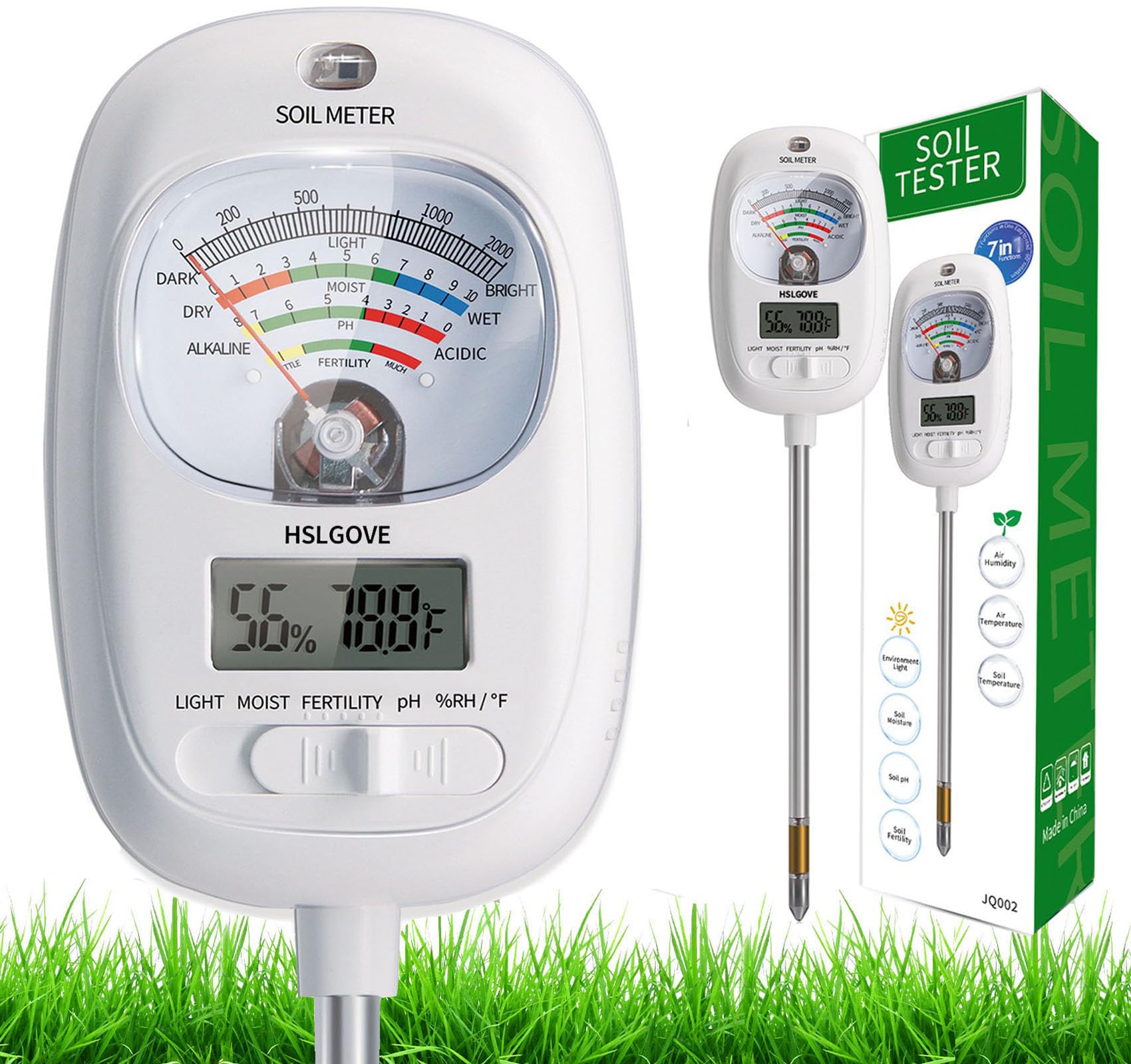
The HSLGOVE 7-in-One Tester combines an analog dial for soil moisture, pH, fertility, and light with a digital LCD screen that displays soil temperature, air temperature, and air humidity. This dual-display approach gives you a broad environmental snapshot in a single device — especially useful for indoor gardeners managing both soil conditions and ambient climate. The probe uses three metal alloys for quicker electrochemical analysis, and the single-probe design minimizes root disturbance.
Positive reviewers highlight the ease of switching between measurement modes and the clear readability of both displays. The device is marketed as beginner-friendly, and many first-time users found it intuitive. The ability to monitor air temperature and humidity alongside soil data is unique at this price point, helping you correlate plant stress with environmental changes.
One critical review from a professional agronomist noted the light sensor failed and the pH readings skewed acidic in their compost. While not universally reliable for lab-grade work, the HSLGOVE offers broad utility for casual home gardeners who want a quick multi-parameter overview. It is not designed for liquid testing, so avoid using it in standing water.
Why it’s great
- Measures 7 parameters including air temp and humidity
- Combines analog dial with clear digital LCD screen
- Single-probe design is less invasive to roots
Good to know
- pH and light sensor accuracy flagged by experienced users
- Not suitable for testing liquid or overly saturated soil
6. Premium Soil Test Kit (40 Tests)
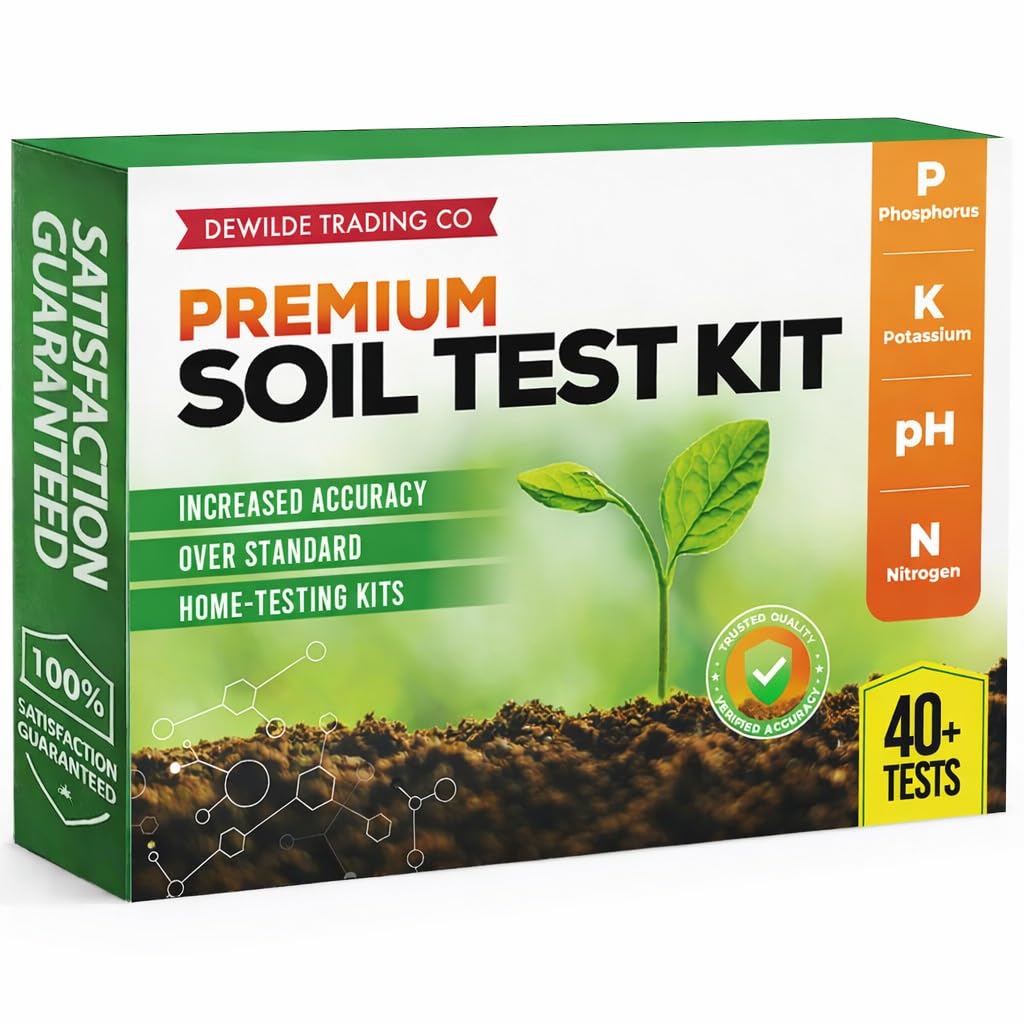
For gardeners on a budget who still want to measure the four most critical soil metrics — pH, Nitrogen, Phosphorus, and Potassium — this chemical tablet kit delivers 40 tests (10 per parameter) at a very low per-test cost. Each test uses a color-change reaction: you mix a soil sample with water, add the tablet reagent, and compare the resulting color to the included chart. The kit comes with two test tubes, a dropper, a mixing stick, and color cards for each nutrient.
User feedback is consistently positive for its simplicity. Even first-time testers found the instructions clear enough to identify low nitrogen in their lawn and adjust their fertilization accordingly. The tablet reagents have a longer shelf life than some liquid-based test kits, which is a practical advantage if you test infrequently.
The main limitation is the reliance on visual color matching, which introduces some subjectivity — lighting conditions and color perception can affect results. The tests are also single-use, so once you’ve used a tablet for a specific nutrient, it’s gone. For routine seasonal checks or for anyone just starting to understand their soil’s basic profile, this is the most accessible entry point available.
Why it’s great
- 40 tests covering pH, N, P, and K — excellent per-test value
- Tablet reagents have longer shelf life than liquid alternatives
- Simple, visual color-matching process for beginners
Good to know
- Color matching can be subjective in different lighting
- Single-use tablets, no ability to re-test without a new kit
7. Bluelab pH Pen & Care Kit
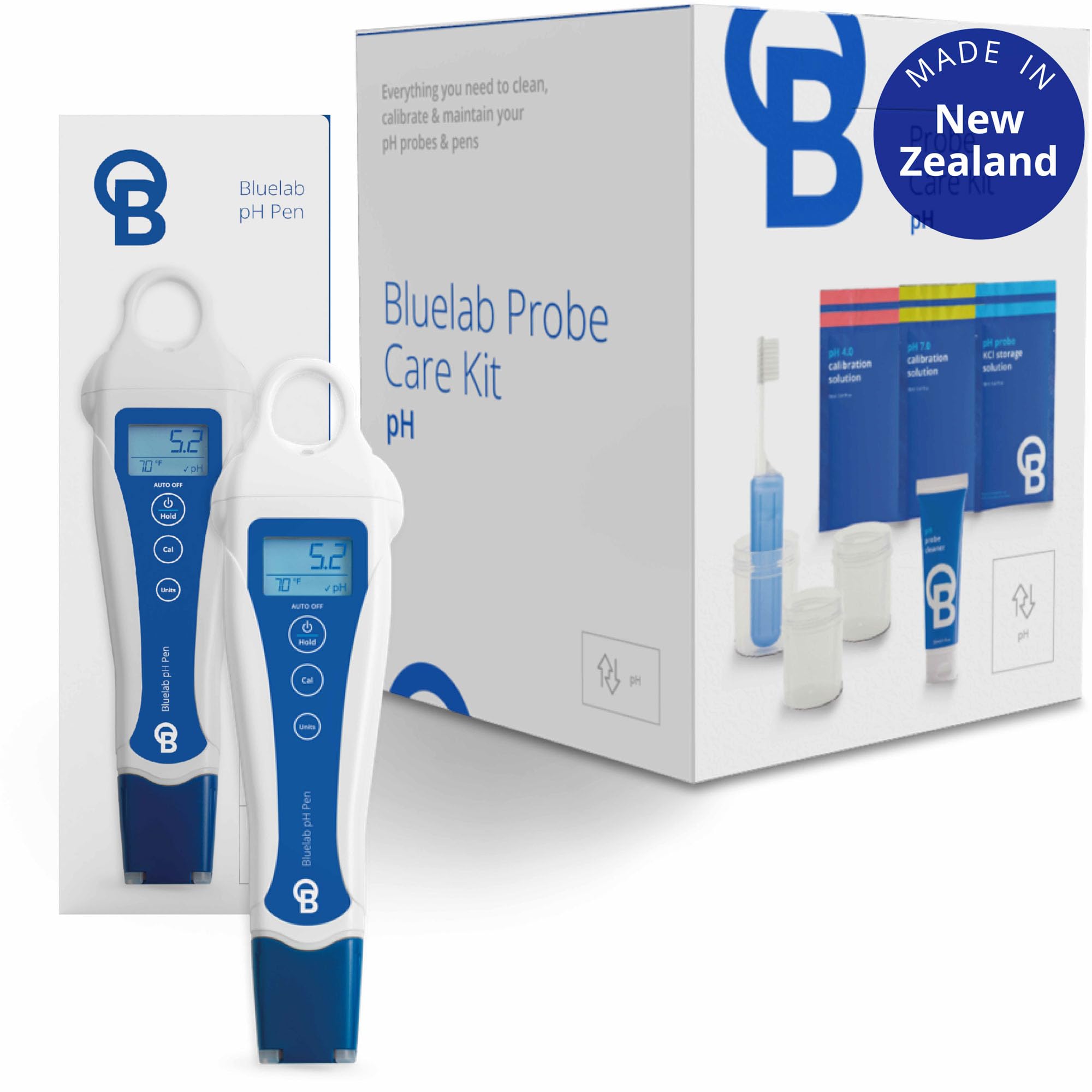
The Bluelab pH Pen is the definitive choice for hydroponic growers and anyone managing nutrient solutions. It is fully waterproof, floats if dropped, and uses a lab-quality glass probe with a double junction electrode that resists contamination and lasts longer than standard probes. The pen features automatic temperature compensation (ATC), ensuring consistent readings whether your reservoir is cool or warm, and includes a backlit LCD for easy reading in dim grow tents.
The included Care Kit extends the pen’s lifespan significantly. It provides single-use sachets of pH 7.0 and 4.0 calibration solutions, KCl storage solution, a pH probe cleaner, and a specialized brush for cleaning the delicate glass bulb. One reviewer who had an initial defect received a swift replacement from customer service.
Note that the pen is designed for solution testing — using it in tap water with low ionic content can produce drift or slow stabilization. For soil testing, a dedicated soil pH meter or kit would be more appropriate. For precise pH management in any liquid growing medium, the Bluelab is the professional standard.
Why it’s great
- Waterproof, floating design with backlit LCD for grow tents
- ATC ensures consistent readings regardless of solution temperature
- Complete care kit prolongs probe life and maintains accuracy
Good to know
- Primarily designed for nutrient solutions, not direct soil insertion
- Requires regular calibration and cleaning for reliable results
FAQ
How often should I test my soil with an at-home kit?
Can I use a hydroponic pH pen directly in garden soil?
Why do my analog soil tester readings vary between samples?
Final Thoughts: The Verdict
For most users, the at home soil test kit winner is the MySoil Test Kit PRO Pack because it delivers the most complete nutrient analysis with actionable fertilizer recommendations, removing all guesswork from your lawn and garden care. If you want instant digital pH monitoring without mailing samples, grab the YINMIK Digital pH Tester. And for budget-conscious testing of the four basic parameters (pH, N, P, K), nothing beats the value of the Premium Soil Test Kit with 40 tests.