
Our readers keep the lights on and the weekend projects moving. As an Amazon Associate, I earn from qualifying purchases.
Specs are compiled from manufacturer listings and verified buyer reviews and can change over time — please confirm the key details on the product page before buying.
You are probably sick of buffering in the middle of a movie or a video call dropping you out. The right At Home Wireless Router fixes that pain by deciding how fast your whole house runs—every phone, laptop, TV, and doorbell all fight for that same signal.
I’m Rikta — the founder and writer behind FitlyFast. This guide is built by comparing the manufacturers’ published specifications and the patterns across verified customer reviews, so you get each pick’s real strengths and trade-offs instead of marketing spin.
Whether you are working from home, streaming 4K, or gaming with friends, finding the right at home wireless router means matching your square footage and device count to the right speed and coverage—no tech degree needed.
Quick Picks
- ASUS ROG Strix GS-BE12000 WiFi 7 Tri-Band Router — Best Overall
- TP-Link Tri-Band BE9700 WiFi 7 Router (Archer BE600) — Large Home Champion
- NETGEAR Nighthawk WiFi 7 Router (BE9300) — Compact Power
- GL.iNet GL-BE9300 (Flint 3) Tri-Band WiFi 7 Router — Best for VPN
- ASUS RT-BE58U WiFi 7 Router — Balanced Pick
- TP-Link Deco 7 BE23 Dual-Band BE3600 WiFi 7 Mesh Wi-Fi — Mesh Simplicity
- NETGEAR WiFi 6 Router 4-Stream (R6700AX) — Budget Champion
How To Choose The Best At Home Wireless Router
A router is your home’s internet traffic cop. It decides whether your Netflix stream gets the lane it needs or gets stuck behind a smart bulb asking for updates. The three biggest factors to nail down are coverage, speed, and ports.
Coverage (Square Footage)
This is the single number that tells you if the signal will reach the far bedroom or the backyard. A router rated for 1,500 square feet is fine for a small apartment. For a 2,500-square-foot home, you need a model that can push that far. Walls and floors cut range, so always pick a router that covers more than your home’s actual size.
Speed (Mbps or Gbps)
The data transfer rate, measured in Megabits Per Second (Mbps) or Gigabits Per Second (Gbps), dictates how much data can move at once. A 1.8 Gbps router (1,800 Mbps) handles a family streaming and gaming fine. A 3.6 Gbps router handles more heavy use at the same time. Your internet plan is the real limit—a 500 Mbps plan won’t get faster just because you bought a 9 Gbps router.
Ports (WAN and LAN)
Wired connections are still the most stable for gaming consoles, smart TVs, and work computers. Look for how many Gigabit Ethernet LAN ports a router has—most have 4. For future-proofing, some routers now have a 2.5 Gbps port (faster than standard Gigabit), which matters if you have a multi-gig fiber plan.
Quick Comparison
| Model | Best For | Coverage | Data Transfer Rate | Ports | Amazon |
|---|---|---|---|---|---|
| ASUS ROG Strix GS-BE12000 | Gaming & Power User | 3,000 sq. ft. | 12,000 Mbps | 1×2.5G WAN + 7×2.5G LAN | Amazon |
| TP-Link Archer BE600 | Large Home Speed | 2,600 sq. ft. | 9.7 Gbps | 1x10G + 1×2.5G + 3×2.5G LAN | Amazon |
| NETGEAR Nighthawk BE9300 | Reliable Coverage | 2,500 sq. ft. | 9.3 Gbps | 1×2.5G WAN + 4x LAN | Amazon |
| GL.iNet Flint 3 (BE9300) | VPN & Custom Control | 2,000 sq. ft. | 12.5 Gbps | 5 x 2.5G | Amazon |
| ASUS RT-BE58U | Balanced Value | 2,000 sq. ft. | 3.6 Gbps | 2x 2.5G + 4x LAN | Amazon |
| TP-Link Deco 7 BE23 | Mesh System Simplicity | 2,500 sq. ft. | 3.6 Gbps | 2x 2.5G | Amazon |
| NETGEAR R6700AX (WiFi 6) | Budget Friendly | 1,500 sq. ft. | 1.8 Gbps | 4x 1G LAN | Amazon |
In‑Depth Reviews
1. ASUS ROG Strix GS-BE12000 WiFi 7 Tri-Band Router
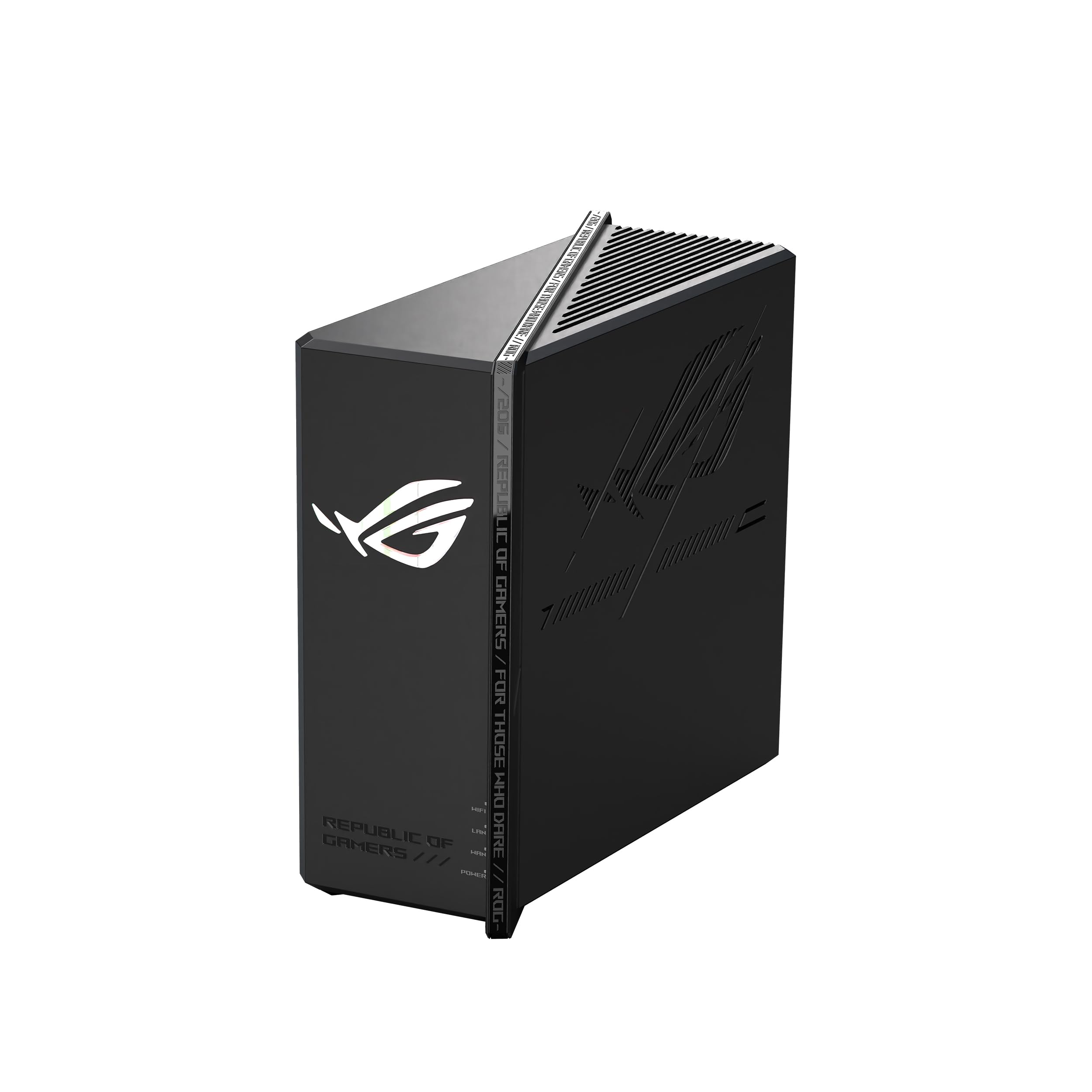
The powerhouse router that packs more ports and processing power than some older laptops.
If you need raw throughput for serious gaming and a whole house of wired devices, this is the top contender. It pushes a tri-band throughput of up to 12,000 Mbps (using the 6 GHz band’s 320 MHz channels), and the wired capacity hits a full 20G—that means you get one 2.5G WAN port plus seven 2.5G LAN ports, which is more wired connectivity than any other pick here. Buyers report it handles over 14 wired and wireless devices without breaking a sweat, and the coverage reaches up to 3,000 sq. ft., easily covering a large home.
The brains behind it are a quad-core 2.0GHz CPU with 2GB of RAM and eight internal antennas. The commercial-grade AiProtection Pro (powered by Trend Micro) scans every device for threats. Some buyers found the setup process challenging on complex home networks, reporting it took multiple factory resets to get everything talking. But once it is running, it auto-detects a T-Mobile 5G gateway and runs at just 12-25% memory usage, leaving headroom for dozens of connections.
Gaming tri-band flagship
- Massive 20G wired capacity with 7x 2.5G LAN ports for multiple high-speed devices
- Commercial-grade AiProtection Pro security across the whole network
- Excellent 3,000 sq. ft. coverage with eight internal antennas
Premium price tag
- Initial setup can be tricky, especially with existing complex networks
- Some users reported 2.4GHz network instability when using AiMesh with multiple units
Hardcore gamers: Power users and gamers who want the most wired and wireless speed for a large home, with security built in.
Budget buyers: You want a plug-and-play setup or have a small apartment where this much horsepower is overkill.
2. TP-Link Tri-Band BE9700 WiFi 7 Router (Archer BE600)

The router with a true 10G port that future-proofs your home for the fastest fiber plans.
For a large home with lots of devices, the Archer BE600 brings the big specs. It delivers a tri-band speed of up to 5,765 Mbps on the 6 GHz band, 2,882 Mbps on the 5 GHz band, and 1,032 Mbps on the 2.4 GHz band, for a total data transfer rate of 9.7 Gbps. Coverage hits up to 2,600 sq. ft. for as many as 120 devices, using six antennas and Beamforming technology to focus the signal into hard-to-reach corners. It has one 10 Gbps WAN/LAN port, plus a 2.5 Gbps WAN/LAN port and three 2.5 Gbps LAN ports—ideal for a multi-gig modem.
One reviewer migrating from a 13-year-old Netgear Nighthawk R7000 noted the router used the same SSID and password, so all devices reconnected instantly, and speeds increased by roughly 100 Mbps down with less lag. The TP-Link HomeShield provides network protection and parental controls directly from the Tether app. A few buyers mention the web interface wastes space with large icons and a persistent ad for the Tether app, which can be annoying for advanced users who prefer browser management.
High-speed value
- True 10 Gbps port for multi-gig internet plans—fastest wired port in this guide
- Covers up to 2,600 sq. ft. and supports up to 120 devices
- MLO (Multi-Link Operation) technology for stable connections even while moving
Limited range
- Web interface is cluttered with promotional banners and large icons
- One reviewer noted a Chinese-brand camera would not reconnect after migrating
Speed seekers: Large homes where you need a single router that covers every room with multi-gig wired speed.
Large homes: If you prefer an app-only experience with no ads in the web panel, look at the ASUS models.
3. NETGEAR Nighthawk WiFi 7 Router (BE9300)

A compact tri-band router that delivers a real 3x speed boost over WiFi 6 without taking over your desk.
This NETGEAR Nighthawk keeps things straightforward while still delivering WiFi 7 speeds up to 9.3 Gbps across tri-bands. It covers up to 2,500 sq. ft. and supports up to 100 devices, which is plenty for a busy family home. Its 2.5 Gig internet port connects to multi-gig cable or fiber plans (a separate modem is required—this is not a modem). The body has a sleeker, smaller footprint than previous Nighthawks, measuring 4 inches wide, 5.9 inches deep, and 9.8 inches high.
Owners mention a simple 15-minute setup through the Nighthawk app, with one reviewer noting a clean 3x speed improvement over their old router while handling 16 devices at once. The NETGEAR Armor suite (30-day free trial included) adds a layer of security against hackers and malware. A few users note that the app is too simple for advanced configuration—if you want to set up wired access points for other routers, you might need to jump through extra hoops.
Reliable performance
- WiFi 7 delivers up to 2.4x faster speeds than WiFi 6 at 9.3 Gbps total
- Compact new body that fits on any shelf
- Reliable 2.5G port for fiber plans with multi-gig speeds
No 6GHz band
- App-based setup is too simple; lacks advanced wired AP configuration options
- No built-in modem—you need a separate cable or fiber modem
Nighthawk fans: You want a compact, no-fuss WiFi 7 router that covers a large home and works right from the start.
Future-proofing: You need advanced control over wired networks or you want an all-in-one modem and router.
4. GL.iNet GL-BE9300 (Flint 3) Tri-Band WiFi 7 Router

The router that puts you in complete control with built-in AdGuard and blazing-fast VPN speeds.
If you care about privacy and want to run a VPN router without losing speed, the Flint 3 is your pick. It has a data transfer rate of up to 12.5 Gbps with tri-band WiFi 7, but what really separates it is Wireguard and OpenVPN speeds both reaching up to 680 Mbps—so your VPN protects every device without choking your connection. Coverage extends up to 2,000 square feet. It comes with 5 x 2.5G ports for wired devices, plus DDR4 1GB RAM and eMMC 8GB storage.
Buyers praise the easy OpenVPN and Wireguard setup, with one reviewer noting near 1 Gbps real-world speeds on a WiFi 6E device and another using MLO (Multi-Link Operation) successfully with a Samsung S25 Ultra. The router supports AdGuard Home (a DNS server for blocking ads and trackers) and integrates with Bark for parental controls. A few users mention the custom kernel and 2×2 MIMO on the 5GHz band as minor limitations, but the overall feedback is that it is fast and reliable.
Open-source ready
- Wireguard and OpenVPN up to 680 Mbps—keeps your VPN fast for streaming
- AdGuard Home integrated for system-wide ad blocking without extra hardware
- 5 x 2.5G ports for wired multi-gig connectivity
Basic interface
- Custom kernel and 2×2 MIMO on 5GHz may limit some advanced users
- Requires a firmware update immediately after initial setup for best performance
Tech tinkerers: The Flint 3 is built for VPN enthusiasts who want Wireguard speeds that actually keep up with their internet plan.
Plug-and-play: You are comfortable with a little initial firmware updating and want deep control over your network’s security and ad blocking.
5. ASUS RT-BE58U WiFi 7 Router

A solid dual-band WiFi 7 router that covers a 2,000 sq. ft. home without forcing you to join an account.
The ASUS RT-BE58U is a straightforward dual-band WiFi 7 router that hits speeds up to 3,600 Mbps, making it a great match for most homes. It covers up to 2,000 square feet, which is a 33% more coverage than the NETGEAR R6700AX’s 1,500 square feet. It uses MLO (Multi-Link Operation) technology to connect to multiple bands at once for stable connections. The router includes AiProtection Pro security powered by Trend Micro and allows you to establish up to three SSIDs for IoT devices, guest networks, and your main network.
One buyer reports getting 890 Mbps Wi-Fi on their 1 Gig plan, which is excellent real-world performance. The router also has a USB port ready for 4G LTE or 5G mobile tethering as a backup WAN, plus Alexa support. On the downside, some users found the parental controls broken—URL filtering fails and DNS filtering blocks entire devices instead of individual sites. A handful of buyers received a defective unit with slow speeds (3-27 Mbps on a 120 Mbps plan), but the majority report solid, reliable performance.
Affordable WiFi 7
- No account required for setup—just browser or app configuration
- AI WAN detection and USB port for 4G/5G mobile tethering backup
- AiProtection Pro commercial-grade security at no extra cost
Lower throughput
- Parental controls and URL filtering are not fully reliable according to some users
- A small number of buyers reported defective units with very slow speeds
Budget upgraders: The buyer who wants WiFi 7 at a balanced price, with solid security and no mandatory account creation.
Heavy streamers: If you need reliable, granular parental controls, you may want to look at the TP-Link models with HomeShield.
6. TP-Link Deco 7 BE23 Dual-Band BE3600 WiFi 7 Mesh Wi-Fi Router

A mesh system that pushes coverage to 2,500 sq. ft. and lets you add nodes if your home grows.
The Deco 7 BE23 is a mesh Wi-Fi system (single pack here) that extends coverage up to 2,500 square feet—that is a 67% more coverage than the NETGEAR R6700AX’s 1,500 square feet. It delivers WiFi 7 speeds up to 3.6 Gbps with 4-stream dual-band, and each unit has two 2.5 Gbps ports for wired backhaul. It supports up to 150 devices, making it ideal for a home packed with smart gadgets. The AI-Roaming technology learns your movement patterns and switches devices between nodes smoothly.
Customers note that after 24 hours of use, the signal is perfect, with the worst spot in the house improving from 150 Mbps to 500 Mbps. The app setup is smooth—one user had it running in about 10 minutes. A notable catch is that some older devices (repeaters, smart plugs) may not be compatible with the mesh network, requiring a workaround or replacement. A few users also report IP conflicts when setting it up as a WiFi router with a wired PC and Quest 3 on the same network, requiring a more complex DHCP reconfiguration.
Mesh simplicity
- Mesh system that covers 2,500 sq. ft. per node and expands with additional units
- AI-Roaming smoothly shifts connections as you move through the house
- HomeShield security provides parental controls and IoT network segregation
Dual-band only
- Older smart plugs and repeaters may not work with the mesh system
- IP conflicts can occur when using wired devices alongside the mesh network
Whole-home mesh: Anyone who wants simple whole-home coverage that can grow by adding more Deco units later.
Gaming setups: You have a lot of older smart home devices that may not play nice with a modern mesh network.
7. NETGEAR WiFi 6 Router 4-Stream (R6700AX)
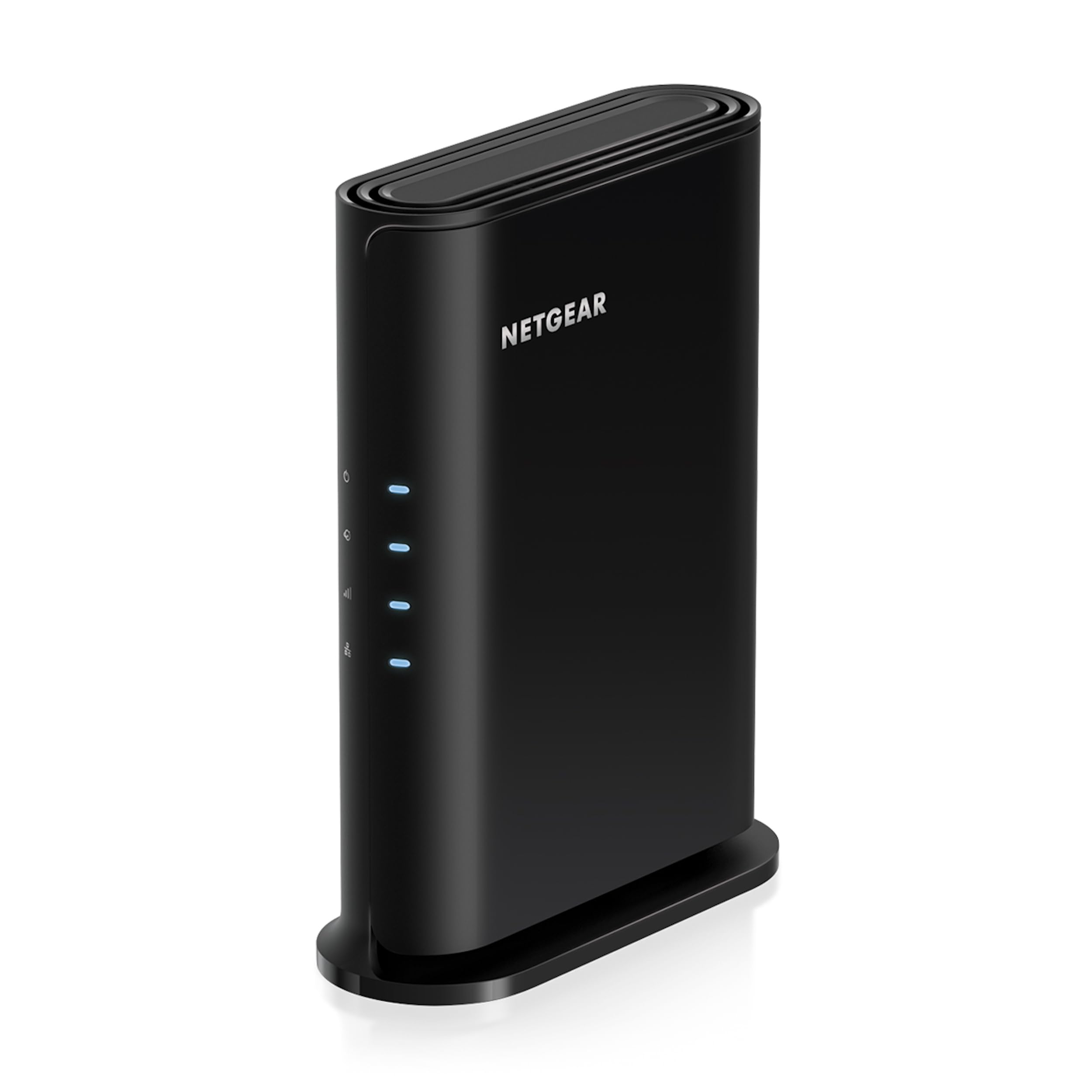
A solid WiFi 6 router that keeps your streaming and video calls smooth while staying affordable.
The NETGEAR R6700AX is a WiFi 6 router (not WiFi 7) with speeds up to 1.8 Gbps and coverage of up to 1,500 sq. ft. It is designed for small to medium homes with up to 20 connected devices. It has four Gigabit Ethernet LAN ports for wired connections to your computer, gaming console, or streaming player. Setup is done through the Nighthawk app or a web browser, and it works with cable, fiber, DSL, and satellite ISPs (a separate modem is required).
Reviewers point out real-world speeds like 113.72 Mbps down, 12.07 up, and a 15 ms ping on a Spectrum connection, which is excellent for everyday use. One reviewer using a 1 Gbps plan got 934.74 Mbps down, covering a 1,300 sq. ft. home without issues. Compared to the TP-Link Deco 7, which covers 2,500 sq. ft., the R6700AX is limited to 1,500 sq. ft., so it is best for apartments or smaller homes. A small number of shoppers say the router failing within a year and difficulty with customer support tied to a paid subscription model, so keep that in mind.
Budget WiFi 6
- Excellent real-world speeds: one buyer got 934.74 Mbps down on a 1 Gbps plan
- Simple Nighthawk app setup with intuitive troubleshooting guidance
- WPA3 encryption and automatic firmware updates included at no cost
Older standard
- Coverage capped at 1,500 sq. ft.—not suitable for larger homes without an extender
- Some buyers report routers failing within a year and paid support model
Cost-conscious: The budget-conscious buyer in a small home or apartment who needs a reliable WiFi 6 router for streaming and everyday use.
WiFi 7 needs: If your home is larger than 1,500 sq. ft. or you need WiFi 7, move up to one of the mesh or premium options in this guide.
Understanding the Specs
Data Transfer Rate (Mbps / Gbps)
The data transfer rate tells you how much information can move through the router at once. It is measured in Megabits Per Second (Mbps) or Gigabits Per Second (Gbps). A 1.8 Gbps router (1,800 Mbps) is enough for a family streaming and gaming. A 9.3 Gbps router can handle multiple 8K streams and heavy file transfers at the same time. Your internet plan’s speed is the real bottleneck—a 500 Mbps plan will not get faster with a 9 Gbps router.
Coverage (Square Feet)
This is the maximum area the router’s signal can reach in ideal, open conditions. A router rated for 1,500 sq. ft. works in a small apartment. A 2,500 sq. ft. rating is needed for a typical house. Walls, floors, and interference from appliances can cut the real range by 20-50%. Always pick a router that covers more than your home’s actual square footage, especially if it is a multi-story house.
WiFi Generation (WiFi 6 vs WiFi 7)
WiFi 6 (802.11ax) is the standard from 2019, handling up to 1.8 Gbps and good for 20+ devices. WiFi 7 (802.11be) is the latest, reaching speeds up to 9-12 Gbps with features like Multi-Link Operation (MLO) that connects devices to multiple bands at once for less lag. If you have newer laptops or phones (like the iPhone 16 Pro or Samsung Galaxy S24 Ultra), WiFi 7 makes them faster. For older devices, WiFi 6 is still a big upgrade over old WiFi 5 routers.
Ports (WAN and LAN)
Ports are the physical plug-in points on the back of the router. The WAN port connects to your modem (the box from your internet provider). LAN ports connect wired devices like gaming consoles, smart TVs, and desktop computers. Most routers have 4 Gigabit Ethernet LAN ports (1 Gbps each). Higher-end models now include 2.5 Gbps or even 10 Gbps ports for the fastest fiber internet plans. More ports = more devices you can plug in directly for the most stable connection.
FAQ
Will a WiFi 7 router make my old laptop faster?
Do I need a separate modem for any of these routers?
How do I know if a router covers my whole house?
What is the difference between dual-band and tri-band?
How many devices can a typical home router handle?
Do I need a 2.5 Gbps port on my router?
Is a mesh system better than a single router?
Will a VPN slow down my router’s speed?
What is HomeShield and AiProtection Pro?
Final Thoughts: The Verdict
If you want one dependable pick, the at home wireless router winner is the ASUS ROG Strix GS-BE12000 because it combines massive 3,000 sq. ft. coverage, stunning 12 Gbps speed, and seven 2.5G LAN ports for all your wired devices. If you want a simple mesh system for a larger house, grab the TP-Link Deco 7 BE23. And for a budget-friendly option that still delivers strong WiFi 6 performance, the standout is the NETGEAR R6700AX—just keep it to a 1,500 sq. ft. home.
How We Picked
We do not accept paid placement. Every pick is matched to a real buyer and a real use-case; we do not hands-on test units.
Sources & Methodology
Specifications: manufacturer listings and product documentation. Review insights: verified customer reviews, as of July 2026. Pricing: not shown on this page (it changes often); check the current price via the retailer link.
As an Amazon Associate, FitlyFast earns from qualifying purchases. This does not affect which products we feature.