
Our readers keep the lights on and the weekend projects moving. As an Amazon Associate, I earn from qualifying purchases.
Committing to a consistent fitness routine is tough enough without factoring in a commute to a crowded gym, waiting for equipment, and dealing with questionable hygiene. The right piece of equipment changes everything—it transforms a spare corner of your living room into a personal training zone where you control the schedule, the intensity, and the atmosphere.
I’m Rikta — the co-founder and writer behind FitlyFast. I’ve spent hundreds of hours analyzing resistance mechanisms, frame stability, pulley systems, and noise output across a wide range of machines to identify the models that deliver genuine, measurable results without dominating your living space.
Whether you are looking to build strength, improve cardiovascular health, or simply stay active without leaving the house, this guide cuts through the noise to help you find the best at home workout machine that fits your goals and your floor plan.
How To Choose The Best At Home Workout Machine
Picking the right machine begins with a clear-eyed assessment of your primary goal: are you chasing cardiovascular endurance, muscle hypertrophy, or a mix of both? Cardio-focused machines like rowers and ellipticals prioritize smooth, repetitive motion and low joint impact, while power racks and Smith machines are built for progressive overload with free weights. Your available floor space and ceiling height are equally non-negotiable—a machine that requires an 87-inch clearance is useless in a basement with 82-inch ceilings. Finally, consider the noise profile. Magnetic resistance systems generally operate below 30 dB, making them ideal for shared walls, while cable pulley systems produce mechanical sounds that may carry further.
Resistance Mechanism and Workout Experience
The type of resistance defines how the machine feels and how effectively it can challenge your muscles. Magnetic resistance uses magnets to create drag without physical contact between parts, resulting in near-silent operation and virtually zero maintenance. This is the gold standard for cardio-focused machines—rowers, ellipticals, and stationary bikes. Friction resistance relies on pads pressing against a flywheel; it is common on budget bikes but wears out over time and produces more noise. For strength training, cable pulley systems with bearing pulleys deliver smooth, linear resistance that mimics free-weight movements without the joint stress of heavy barbells. A Smith machine adds guided vertical bar paths, which can be safer for solo lifters pushing to failure but limits the stabilizer muscle engagement you get from a free-weight squat rack.
Frame Construction and Weight Capacity
A machine that wobbles or flexes under load is not just annoying—it can be dangerous. Look for frames made from 14-gauge or thicker steel (2mm wall thickness or more) for power racks and Smith machines. Cardio equipment generally uses lighter tubing but should still feel rigid during use. The stated weight capacity should exceed your body weight plus the maximum load you intend to lift. For power cages, a 1,000-pound capacity is a reasonable floor for intermediate lifters; high-end models push past 2,000 pounds. Do not confuse the machine’s own weight with its capacity—a heavier frame is often more stable, but a well-designed lighter frame with reinforcing gussets can be equally solid. Check the footprint dimensions carefully: a 62-inch depth may not fit in a narrow hallway, and a 43-inch width could feel cramped during lateral movements.
Space Requirements and Storage Flexibility
Before clicking buy, measure your actual workout area with a tape measure. Add at least 24 inches of clearance on all sides for safe movement around a power rack or Smith machine. Cardio machines like rowers and ellipticals often have folding or vertical storage options that drastically reduce their footprint when not in use. Transport wheels are a must for any machine over 50 pounds—you do not want to drag a 150-pound steel cage across laminate flooring every time you clean. Ceiling height is the most overlooked spec: a power rack listing at 82.6 inches tall will not fit under an 80-inch ceiling, and a pull-up bar at the top becomes unusable. Always subtract the height of any rubber flooring or mat you plan to place underneath the machine.
Quick Comparison
On smaller screens, swipe sideways to see the full table.
| Model | Category | Best For | Key Spec | Amazon |
|---|---|---|---|---|
| Mikolo M4 2.0 | Smith Machine | Serious strength training | 2,200 lb capacity, 34 height settings | Amazon |
| Marcy SM-7409 | Smith Machine | Commercial-feel home gym | 86H x 70W inch footprint | Amazon |
| pooboo P43 | Power Cage | Versatile cable/pulley training | 2,000 lb capacity, 20+ attachments | Amazon |
| SunHome Smith Machine | Smith Machine | Compact Smith/cable combo | Beta butterfly chest station | Amazon |
| Sportsroyals Power Rack | Power Cage | Budget power cage with pulldown | 1,200 lb capacity, 14 adjustable pillars | Amazon |
| YOSUDA 3-in-1 Elliptical | Elliptical | Low-impact cardio & climbing | 45° incline, 15.5IN stride | Amazon |
| pooboo E399 Elliptical | Elliptical | Quiet home elliptical | 20 dB noise, 16 resistance levels | Amazon |
| Merach S26 Bike | Exercise Bike | App-connected indoor cycling | 25 dB noise, 300 lb capacity | Amazon |
| Wenoker Rower | Rowing Machine | Entry-level full-body rower | 350 lb capacity, 16-level magnetic | Amazon |
In‑Depth Reviews
1. Mikolo M4 2.0 Smith Machine
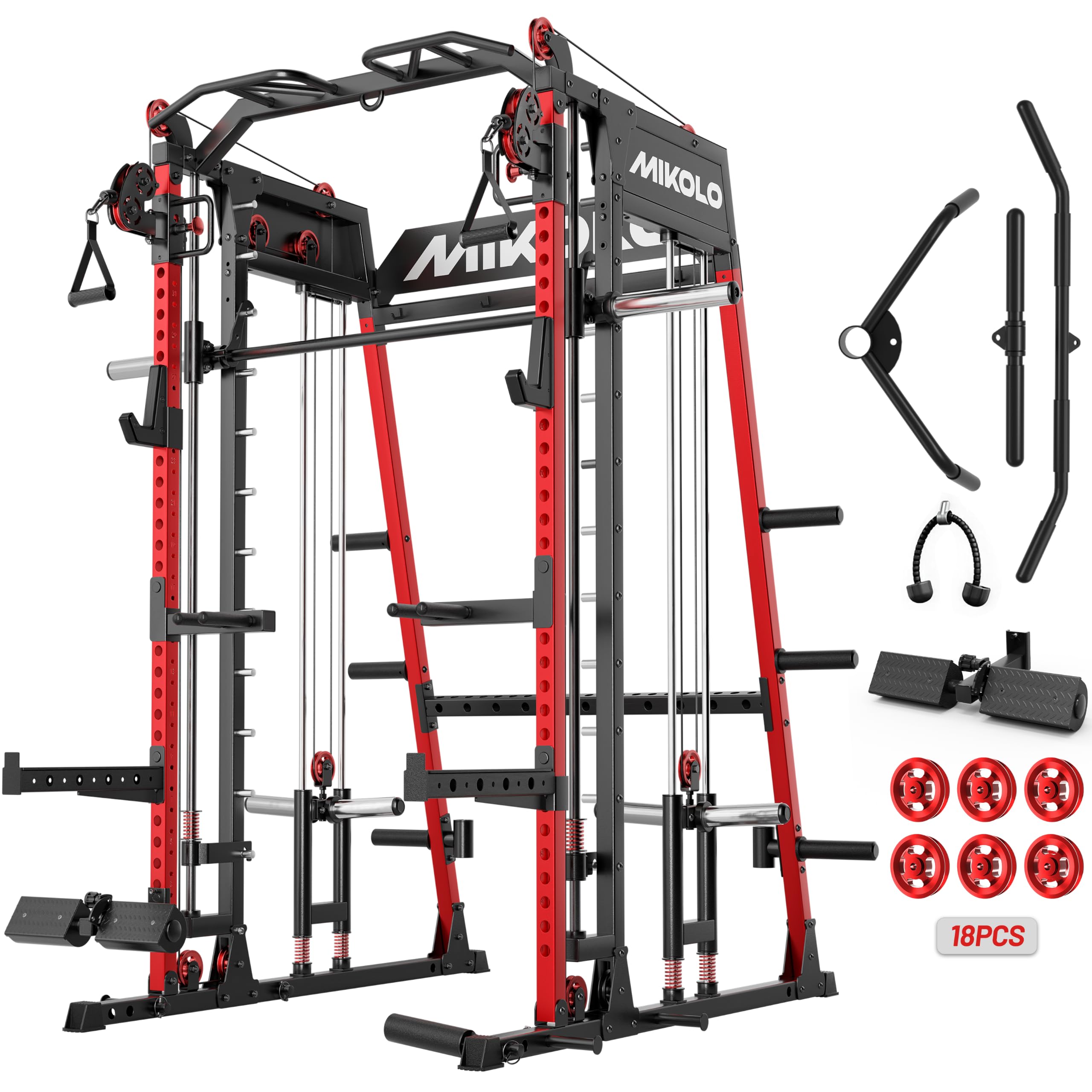
The Mikolo M4 2.0 delivers the most compelling balance of commercial-grade build and home-friendly footprint in this lineup. Its 14-gauge 2″ x 2″ steel frame and linear bearing Smith system provide friction-free motion that feels noticeably smoother than budget cages—no sticking, no wobble, just a clean vertical path for squats and presses. The 2,200-pound weight capacity is overkill for most lifters, but it guarantees the frame will never flex under even the heaviest loads.
With 34 height settings at 2-inch spacing, you can dial in the perfect starting position for bench press, overhead press, or squats without awkward compromises. The redesigned Arm-Reach Storage System fixes the common issue of weight holders interfering with exercises—everything stays within reach but out of the way. The lat pulldown and cable crossover systems use bearing pulleys that operate smoothly and quietly, and the row foot plate allows easy transitions between pulldowns and seated rows.
Assembly is a serious project—expect 8 to 10 hours of solo work—and the packaging could be better, with some units arriving with minor scratches or a damaged pulley (though customer service handles replacements promptly). The Smith bar, however, is genuinely smooth and stable with almost no lateral play, and the overall construction feels like it will outlast cheaper multi-gyms by years. For lifters who want a single machine that handles everything from heavy squats to cable flyes, this is the one.
Why it’s great
- Linear bearing Smith system delivers butter-smooth bar path
- 2,200 lb capacity offers massive headroom for progression
- Arm-Reach Storage eliminates interference during lifts
Good to know
- Assembly requires 8-10 hours and metric tools
- Packaging may cause cosmetic damage during shipping
2. Marcy Smith Machine Cage System SM-7409

The Marcy SM-7409 occupies a unique space in the home gym market—it looks and feels like a commercial fitness center machine but fits into a dedicated home space with an 86-inch height and 70-inch width. The all-steel frame, finished in a clean white powder coat, supports a guided Smith bar that uses linear bearings for a relatively smooth travel path. The integrated dual cable pulley system allows for lat pulldowns, seated rows, and cable flyes, making it a genuinely all-in-one station.
What sets this machine apart is the included butterfly chest station, which mimics the feel of a standalone pec deck. The range of motion is solid, though the arms are long enough that they can touch at peak contraction—a minor quirk that doesn’t affect chest activation. The Smith bar features auto-lock safety hooks that engage at any angle, a crucial feature for solo lifters who want to push hard without a spotter. Setup is time-intensive at 6-7 hours minimum, and the included guide rod sleeves require careful alignment to avoid issues with the ball bearings.
Cable pulley operation starts a bit rough but smooths out noticeably after 6-10 uses. The flat foot plate for rowing is functional but not ideal for heavy pulling because it lacks a heel stop. Customer service is responsive, and replacement parts ship quickly. For someone with the floor space and a budget that stretches to the premium tier, this Marcy delivers a near-commercial training experience without requiring a separate room for each movement.
Why it’s great
- Commercial-grade build quality with auto-lock Smith safety
- Butterfly chest station adds dedicated isolation work
- Cable pulley system smooths out after break-in period
Good to know
- Requires 6-7+ hours for solo assembly
- Large footprint demands significant floor space
3. pooboo P43 Power Cage
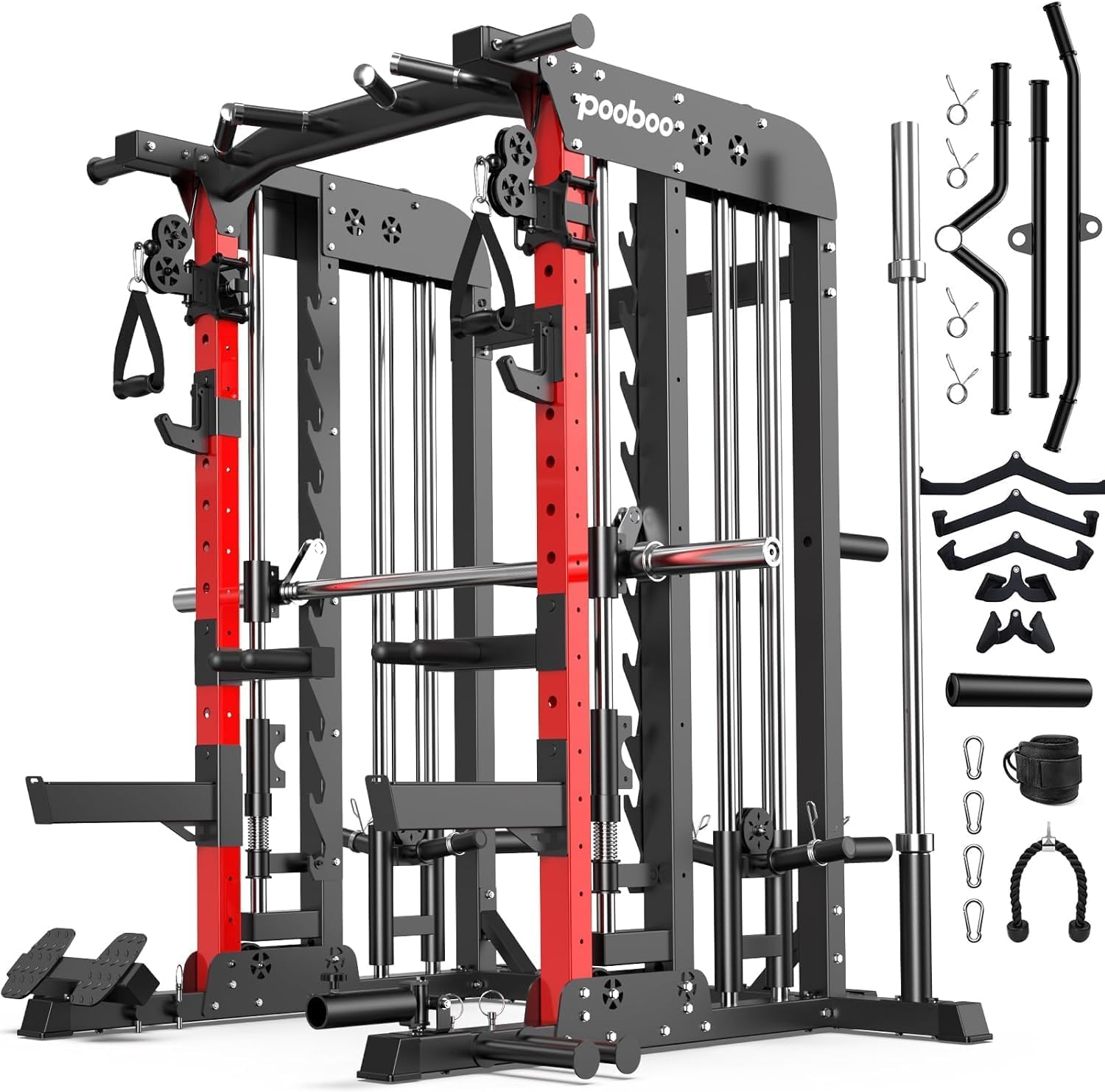
The pooboo P43 packs an extraordinary number of training options into a 62.9″ x 43.3″ footprint. The heavy-duty steel frame carries a 2,000-pound weight capacity, ensuring rock-solid stability during squats and bench presses. Where this cage truly shines is the accessory package—over 20 attachments including a lat pulldown bar, row bar, tricep rope, ankle strap, landmine, dip bars, and even a free Olympic barbell. The precision pulley system uses bearing pulleys and PU wire rope that handles up to 1,000 pounds of cable load with smooth, silent operation.
Cable flyes feel surprisingly close to a dedicated crossover machine, thanks to the dual-pulley design and polished metal components. The safety spotter arms and J-hooks include rubber cushioning to protect your barbell knurling and reduce noise during racking. Assembly is straightforward with clearly labeled bolts and an illustrated manual—plan for about 2-3 hours with two people. The packaging ships in two boxes, which reduces the risk of damage but means you may receive them on different days.
One honest limitation: the depth is tight for taller lifters performing bench press inside the cage, and the lat pulldown seat would benefit from a dedicated leg hold-down (though you can add an aftermarket one). The included barbell is a standard 20kg bar with moderate knurling—fine for beginners but serious lifters will likely upgrade. For the investment, you get a complete gym that handles heavy compound lifts, cable isolation, and bodyweight exercises without compromise.
Why it’s great
- Over 20 attachments including Olympic barbell and tricep rope
- Smooth bearing pulley system handles 1,000 lb cable load
- Easy 2-3 hour assembly with labeled hardware
Good to know
- Interior depth may feel cramped for tall lifters benching inside
- Included barbell is functional but not premium quality
4. SunHome Smith Machine

The SunHome Smith Machine carves out a smart niche by combining a guided Smith bar, lat pulldown, and cable crossover into a frame that fits under 87-inch ceilings. The 2mm thickened steel frame gives the machine a planted, immovable feel during heavy squats—the 410-pound self-weight contributes significantly to stability without bolting to the floor. The patented butterfly chest attachment is a genuine differentiator, allowing you to superset squats with flyes without moving to a separate station.
The bearing-based pulley system rolls smoothly, reducing noise and wear compared to sliding mechanisms. The auto-lock safety hooks engage automatically at any angle, which is a genuine confidence booster for solo bench press sessions. Storage is well integrated, with six weight plate posts and a dedicated barbell holder that keeps the floor clear of trip hazards. The included rowing cable setup extends functionality to seated rows, hitting the posterior chain effectively.
Assembly is the main hurdle—plan for 5 hours solo, and be prepared that parts are not numbered, requiring careful matching against the instruction manual. The machine ships in four boxes that may arrive on separate days, which can be confusing. The Smith bar’s linear bearings require lubrication out of the box for optimal smoothness. At this mid-range price point, it offers a superior combination of safety, versatility, and space efficiency that rivals machines costing significantly more.
Why it’s great
- Patented butterfly chest station for superset training
- 2mm steel frame and 410 lb self-weight for rock-solid stability
- Rolling bearing pulley system reduces noise and wear
Good to know
- Assembly parts are not numbered, complicating setup
- Ships in multiple boxes with potential for separate delivery days
5. Sportsroyals Power Rack

The Sportsroyals Power Rack proves that a versatile power cage does not have to dominate your budget. The 50x50mm commercial steel square frame with 1.5mm thickness supports up to 1,200 pounds, giving intermediate lifters plenty of room to grow. The integrated upper and lower pulley system with electroplated telescopic poles and precision bearings provides surprisingly smooth cable movement for lat pulldowns and seated rows at this price point.
With 14 adjustable height pillars, you can configure the J-hooks and safety bars for bench press, squat, overhead press, and pull-ups. The included accessories are generous: a lat pulldown bar, cable bar, two cable handles, dip bars, a 360-degree landmine, and six band pegs. The 82.6-inch height is tall enough for pull-ups with bent knees, but users over 6 feet will find it restrictive for strict, straight-leg pull-ups or push press. The weight plate storage brackets on the rear posts work well for organizing plates, but they can interfere with bench press placement inside the rack for taller lifters.
Stability is generally solid for a 150-pound frame, but kipping pull-ups introduce noticeable wobble—this rack is better suited for controlled, strict movements. The J-hooks and safety bars have rubber padding that can leave residue on your barbell over time. Assembly takes about 2.5 hours solo and the instructions are picture-based, which works well. For lifters starting or upgrading from a simple bench, this rack delivers essential functionality without the premium price tag of higher-end cages.
Why it’s great
- Excellent value for a full power cage with cable pulldown system
- 14 adjustable positions for versatile exercise setup
- Smooth bearing pulley operation at a budget-friendly price
Good to know
- 82.6-inch height limits strict pull-ups for taller users
- Weight storage posts can interfere with bench press positioning
6. YOSUDA 3-in-1 Elliptical
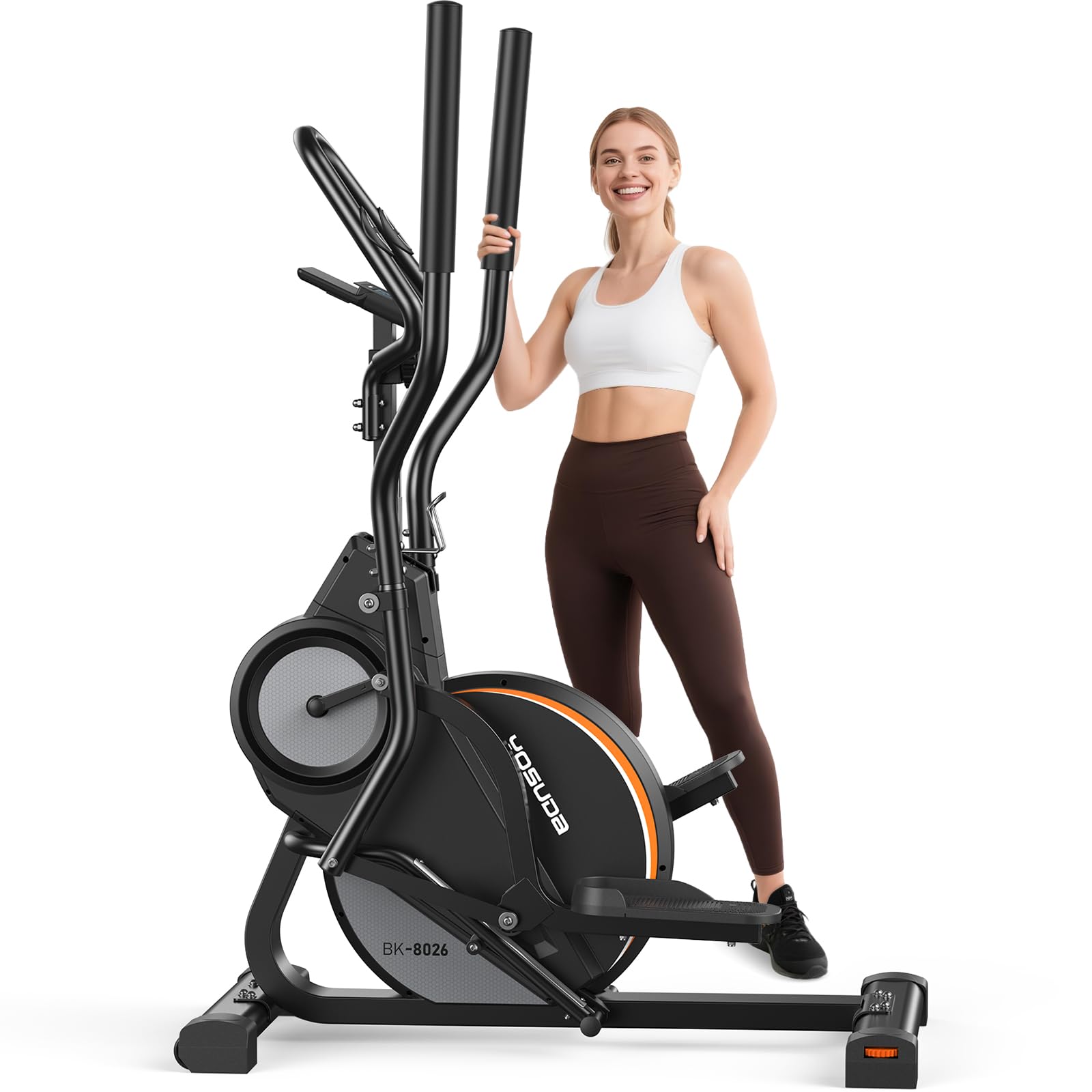
The YOSUDA 3-in-1 takes a creative approach to home cardio by combining an elliptical, stair stepper, and cardio climber into a single compact unit. The standout feature is the 45-degree climbing angle, which replicates the posture and muscle activation of hiking uphill—your glutes, hamstrings, and core engage far more deeply than on a standard elliptical. The 18-pound heavy-duty flywheel provides consistent inertia that makes each stride feel weighted and deliberate rather than flimsy.
With a footprint of just 5.38 square feet, this machine slides into tight spaces that would never accommodate a traditional elliptical. The built-in front transport wheels make it easy to roll out of a closet for a session and stow it away afterward. The 16-level magnetic resistance system is genuinely quiet, registering well below 30 dB even during aggressive climbing. The LCD monitor tracks time, speed, distance, calories, and pulse, and Bluetooth connectivity works with the Kinomap and Fed apps for guided workouts.
The assembly process is a touch heavy—the unit weighs nearly 95 pounds and the packaging is bulky. The instruction manual has some cryptic steps, and the wave washer installation can trip up first-time builders. Users over 6’2″ may find the stride length a bit short for a natural walking motion. After a break-in period, the machine runs smoothly and quietly, and multiple long-term users report consistent performance after hundreds of sessions. For anyone wanting low-impact cardio that actually fires the posterior chain, this hybrid climber is a smart choice.
Why it’s great
- 45-degree climbing angle activates glutes and hamstrings effectively
- Compact 5.38 sq ft footprint with easy-roll transport wheels
- Ultra-quiet magnetic resistance suitable for apartments
Good to know
- Assembly instructions can be confusing in spots
- Stride length may feel short for users over 6’2″
7. pooboo E399 Elliptical
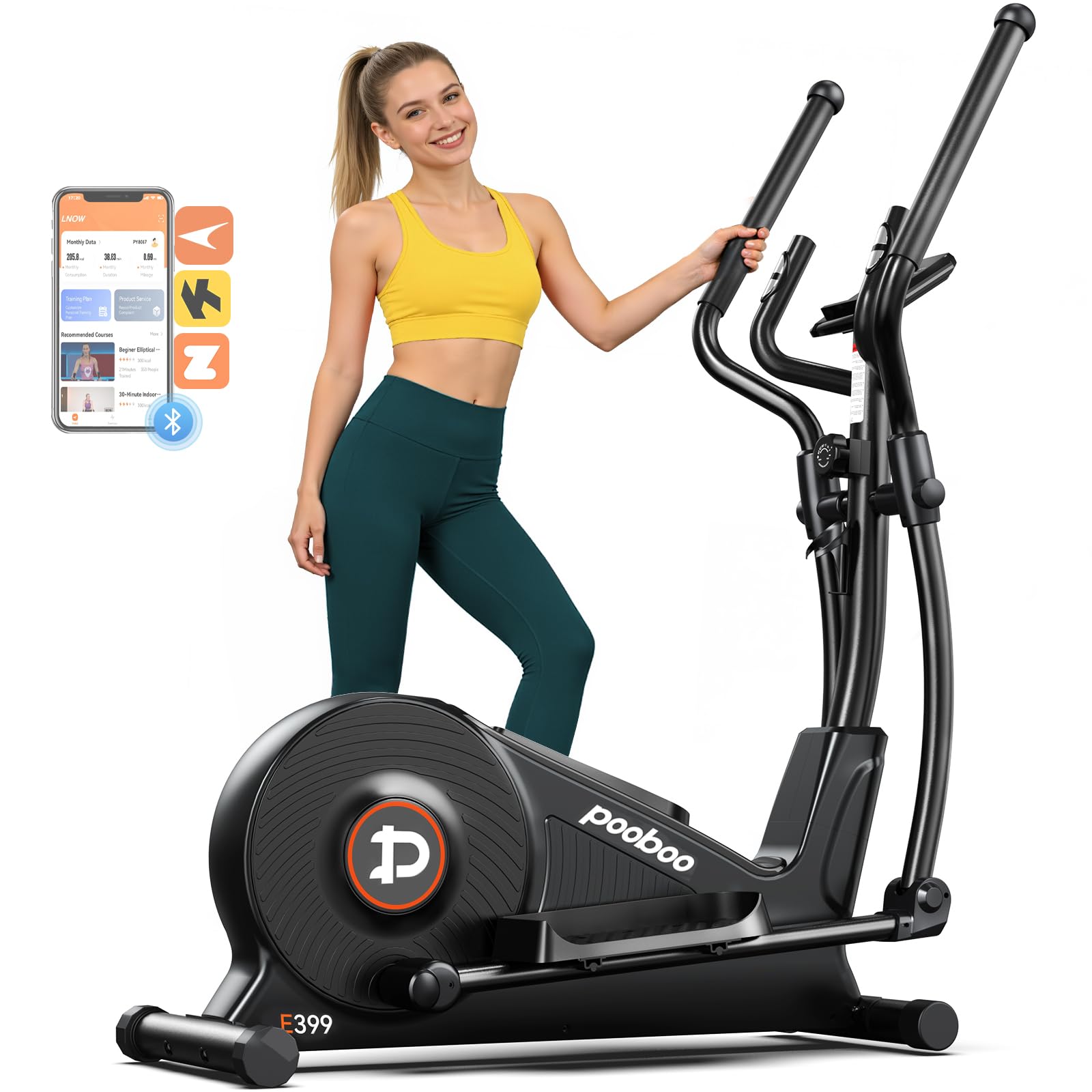
The pooboo E399 focuses on doing one thing exceptionally well: delivering a quiet, smooth elliptical stride that does not disturb household members or neighbors. The rear-drive magnetic system paired with a 16-pound flywheel produces an operational noise level of around 20 dB—quieter than a whisper, making it viable for early morning sessions in apartment buildings. The 15.5-inch stride length accommodates users up to 6’5″ comfortably, and the thickened steel pipe frame supports a generous 350-pound user capacity without flexing.
The 16-level magnetic resistance knob allows quick transitions between recovery pace and challenging incline simulation. The pedals are wide with a non-slip surface, providing a secure platform even during intense intervals. The LCD monitor shows scan, time, speed, distance, calories, and pulse, giving you all the basic data needed to track progress. Compatibility with Kinomap and ZT fitness apps adds interactive training options, though the connection is via built-in sensor rather than Bluetooth—a minor distinction that works fine for data tracking.
Some users report initial creaking or snapping noises that resolve after lubricating the joints with WD-40—the manufacturer provides support for this. The folding design reduces storage footprint significantly, and the transport wheels make it easy to move between rooms. The self-powered operation means no electrical cord is needed, so you can place it anywhere without worrying about outlet proximity. For budget-conscious buyers who prioritize ultra-quiet operation and a natural stride, the E399 is a reliable choice that punches above its price tier.
Why it’s great
- Remarkably quiet 20 dB operation ideal for shared living spaces
- 15.5-inch stride fits users up to 6’5″ comfortably
- Folding design with transport wheels for compact storage
Good to know
- Some units require joint lubrication to eliminate initial creaking
- App connectivity uses sensor rather than direct Bluetooth
8. Merach S26 Exercise Bike
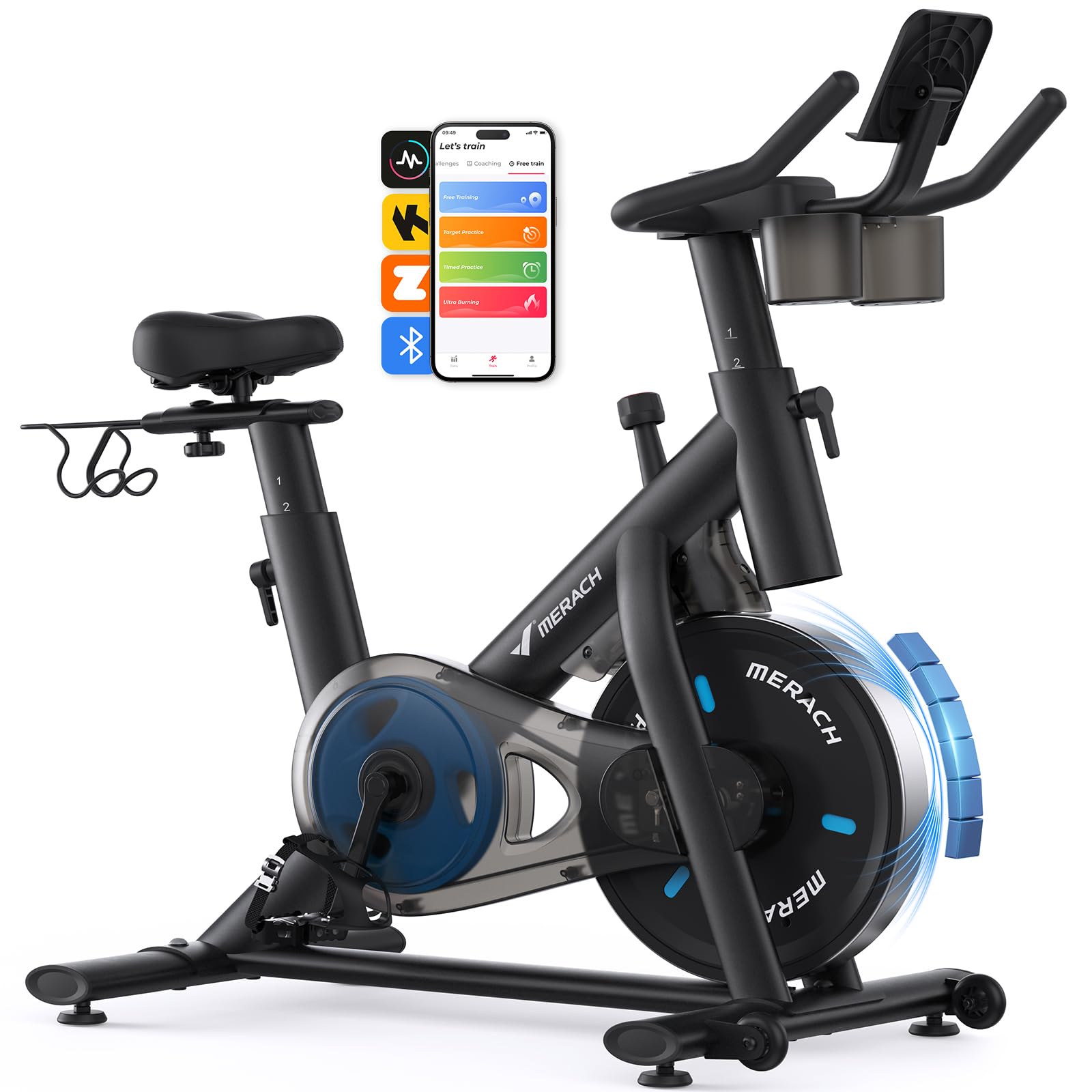
The Merach S26 bridges the gap between a spin-class experience and a compact home machine. Its magnetic resistance system operates at under 25 dB—quiet enough for apartment living—and the belt drive ensures zero friction loss compared to chain-driven alternatives. The reinforced inverted triangle frame with 2mm steel construction provides exceptional stability, supporting riders up to 300 pounds without frame flex during out-of-the-saddle sprints. The 8 resistance levels cover a broad range from gentle warm-up to intense climbing, and the micro-adjustment knob allows fine-tuning mid-ride.
The proprietary Merach app unlocks real-time metric tracking, including distance, time, and calories, and the bike pairs seamlessly with Kinomap and Zwift for structured workouts. Data syncs to Google Fit and Apple Health, keeping your training log centralized. The adjustable 2-way handles and 4-way seat accommodate riders from 4’8″ to 6’2″, while the strap-adjustable toe cages fit various foot sizes. Added touches like a dumbbell rack, iPad holder, and dual water bottle holders make this feel like a complete training station rather than a bare-bones bike.
The display is basic—it shows speed, time, calories, distance, and RPM, but it lacks a dedicated power meter, though Zwift users report the estimated power tracks within 10% of a Wahoo. The seat can be uncomfortable for longer sessions, a common issue at this price point that is easily fixed with a padded cover. Assembly takes about 2 hours and the bike arrives 80% pre-assembled. For riders wanting app integration and whisper-quiet operation without the premium price of a Peloton, the Merach S26 delivers excellent value.
Why it’s great
- Near-silent 25 dB magnetic resistance for apartment use
- Integrates with Zwift, Kinomap, Apple Health, and Google Fit
- Rock-solid 2mm steel frame with 300 lb capacity
Good to know
- Seat may require a padded cover for extended comfort
- Display lacks dedicated power meter; estimated power only
9. Wenoker Rowing Machine
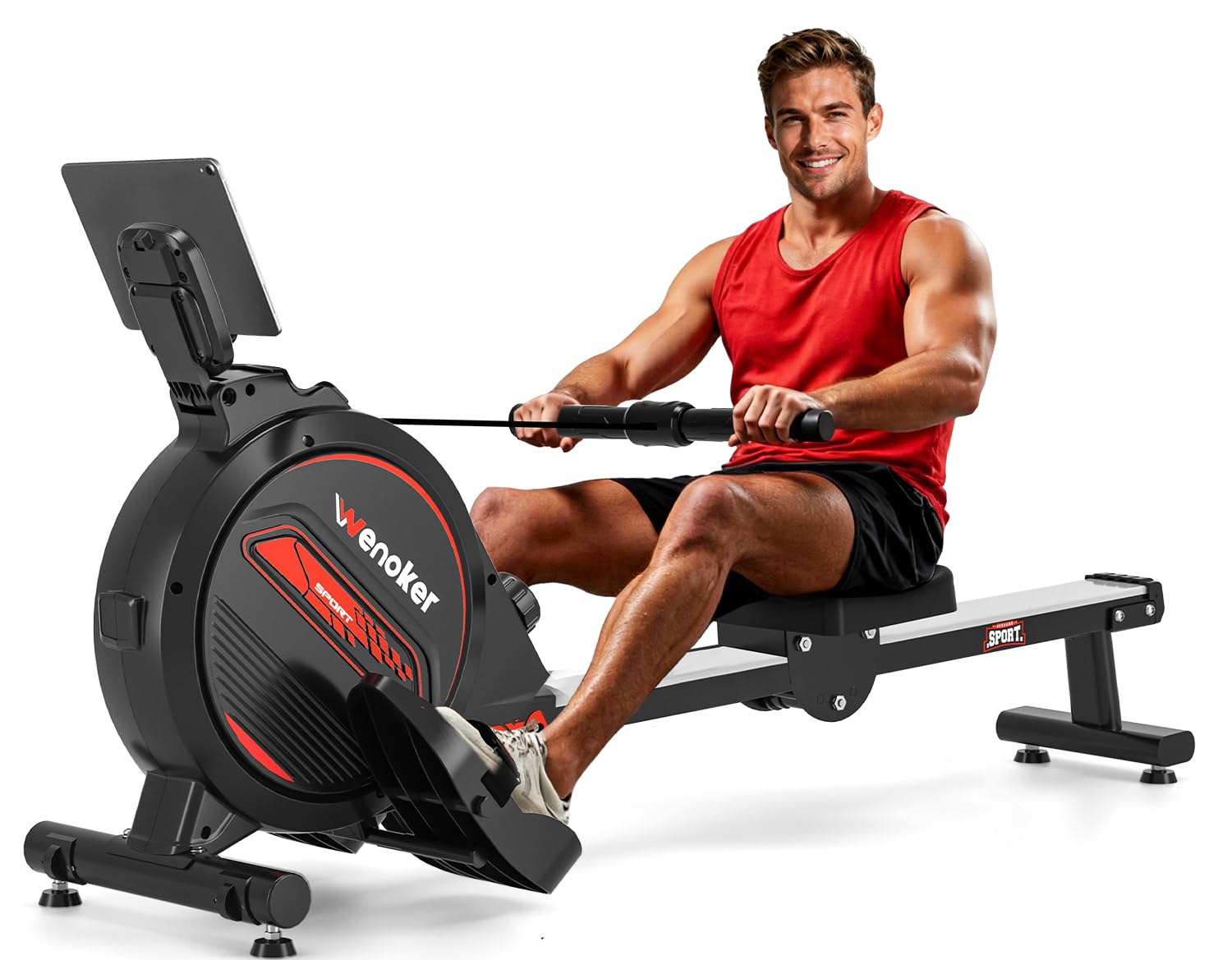
The Wenoker rower is the most accessible entry point for anyone wanting a full-body cardio and strength workout at home without a big upfront investment. The magnetic resistance system delivers smooth, consistent drag through 16 levels, and it operates below 30 dB—quiet enough to use while others sleep. The newly upgraded flywheel component ensures the pull feels stable and natural, not jerky or lightweight. With a weight capacity of 350 pounds and a reinforced steel frame, this machine accommodates a wide range of body types without wobbling.
The LCD monitor tracks time, strokes per minute (SPM), distance, calories, and count, providing the essential metrics for structured interval training. The adjustable phone holder angles perfectly for following along with rowing classes or streaming shows, which makes longer sessions more sustainable. The ergonomic padded seat provides support for extended workouts—an important detail because the seated position transfers load directly to your glutes and lower back. The textured handles stay secure even with sweaty palms, and the front-mounted transport wheels let you tilt and roll the machine into vertical storage when not in use.
Assembly is straightforward—the machine arrives partially pre-assembled and most users finish in about 20 minutes with no specialized tools. The overall build quality feels solid for the price bracket, though the monitor is basic and the rail could benefit from slightly thicker padding. The foot straps are functional but not heavy-duty, so aggressive rowers may want to upgrade them over time. For someone testing the waters of home rowing or looking for a reliable way to hit 20-minute cardio sessions that engage over 90% of their muscles, this Wenoker is a smart, low-risk investment.
Why it’s great
- Accessible price point with full magnetic resistance system
- Quick 20-minute assembly with pre-assembled parts
- Vertical storage with transport wheels saves floor space
Good to know
- Monitor is basic without Bluetooth or app connectivity
- Foot straps are functional but not built for heavy-duty use
FAQ
How much floor space do I need for a power cage or Smith machine?
Can I get an effective full-body workout with just a rowing machine?
What is the difference between an elliptical and a climber/stepper for low-impact cardio?
How quiet should a home workout machine be for apartment living?
Final Thoughts: The Verdict
For most users, the best at home workout machine winner is the Mikolo M4 2.0 Smith Machine because its linear bearing system, 2,200-pound capacity, and comprehensive cable attachments deliver commercial-grade strength training in a home-friendly footprint. If you want versatile cardio with low joint impact, grab the YOSUDA 3-in-1 Elliptical for its unique climbing angle and compact storage. And for a budget-friendly entry into full-body fitness, nothing beats the Wenoker Rowing Machine, which offers a remarkably capable workout with minimal assembly and a small footprint.