
Our readers keep the lights on and the weekend projects moving. As an Amazon Associate, I earn from qualifying purchases.
Whether you’re logging miles on concrete, jumping for rebounds on a hardwood court, or grinding through a heavy lift session, the wrong insoles can turn every step into a punishing reminder that your feet are the foundation of your entire athletic output. Stock insoles are thin afterthoughts designed to protect the shoe’s manufacturing cost, not your joints.
I’m Rikta — the co-founder and writer behind FitlyFast. My approach to this guide involved cross-referencing dozens of athlete testimonials, digging into the biomechanics of arch support curves, heel cup depth, and foam density, and ranking how each insert handles the specific impact loads that runners, basketball players, and multi-sport athletes generate every day.
After analyzing hundreds of verified reviews and technical specs, I’ve identified the inserts that deliver real relief, lasting durability, and performance-ready stability. This is the complete guide to the best athletic shoe inserts for anyone who refuses to let foot fatigue shorten their session.
How To Choose The Best Athletic Shoe Inserts
Not every athletic insert is built for the same movement pattern. A runner’s ideal insole focuses on heel-to-toe energy transfer, while a basketball player needs lateral stability and a deep heel cradle for hard landings. Before you buy, match the insert’s construction to your primary sport and foot shape.
Arch Type and Support Profile
The arch is the suspension system of your foot. Low arches (flat feet) require a firmer, more structured support that prevents over-pronation. Neutral arches need a balanced profile that encourages natural movement without forcing the foot into an unnatural position. High arches demand deeper cushioning to absorb shock that the arch cannot dampen naturally. Most premium athletic inserts offer multiple arch profiles — if yours doesn’t, you risk aggravating existing strain.
Heel Cup Depth and Stability
A deep heel cup locks the calcaneus bone in place, reducing side-to-side wobble during cutting and jumping. Shallow heel cups feel more flexible but sacrifice lateral security. For court sports like volleyball and tennis, a deep, rigid heel cup is a non-negotiable feature. For running and walking, a moderate-depth cup with a soft landing pad offers the best balance of comfort and control.
Cushioning Material and Energy Return
Foam density dictates how long an insert lasts and how much energy it returns per stride. Lightweight EVA foam (ethylene-vinyl acetate) compresses quickly under heavy loads. Higher-density polyurethane or proprietary foam blends (like those in premium models) resist compression and deliver consistent rebound for 500+ miles. Gel pads add a secondary layer of shock absorption at the heel and forefoot, but only if they’re positioned at the exact strike zone of your stride.
Quick Comparison
On smaller screens, swipe sideways to see the full table.
| Model | Category | Best For | Key Spec | Amazon |
|---|---|---|---|---|
| Move Game Day Pro | Premium | High-impact court sports | Active Heel + X-Frame torsional shell | Amazon |
| Superfeet Run Cushion | Premium | Distance running, zero-drop shoes | Adaptive Comfort medium arch foam | Amazon |
| CURREX SupportSTP | Premium | All-day walking and running | Three-profile arch + air vent top layer | Amazon |
| Move Game Day Performance | Mid-Range | Multi-sport athletic use | Composite heel + molded forefoot | Amazon |
| PowerStep Original | Mid-Range | Plantar fasciitis and pronation | Neutral arch support + deep heel cradle | Amazon |
| CRUVHEAL Sport | Mid-Range | Wide feet, high-impact running | Gel heel pads + non-slip cup | Amazon |
| Sof Sole Athlete Performance | Budget | Daily wear and light training | Trim-to-fit gel + moisture-wicking top | Amazon |
In‑Depth Reviews
1. MOVE Game Day Pro
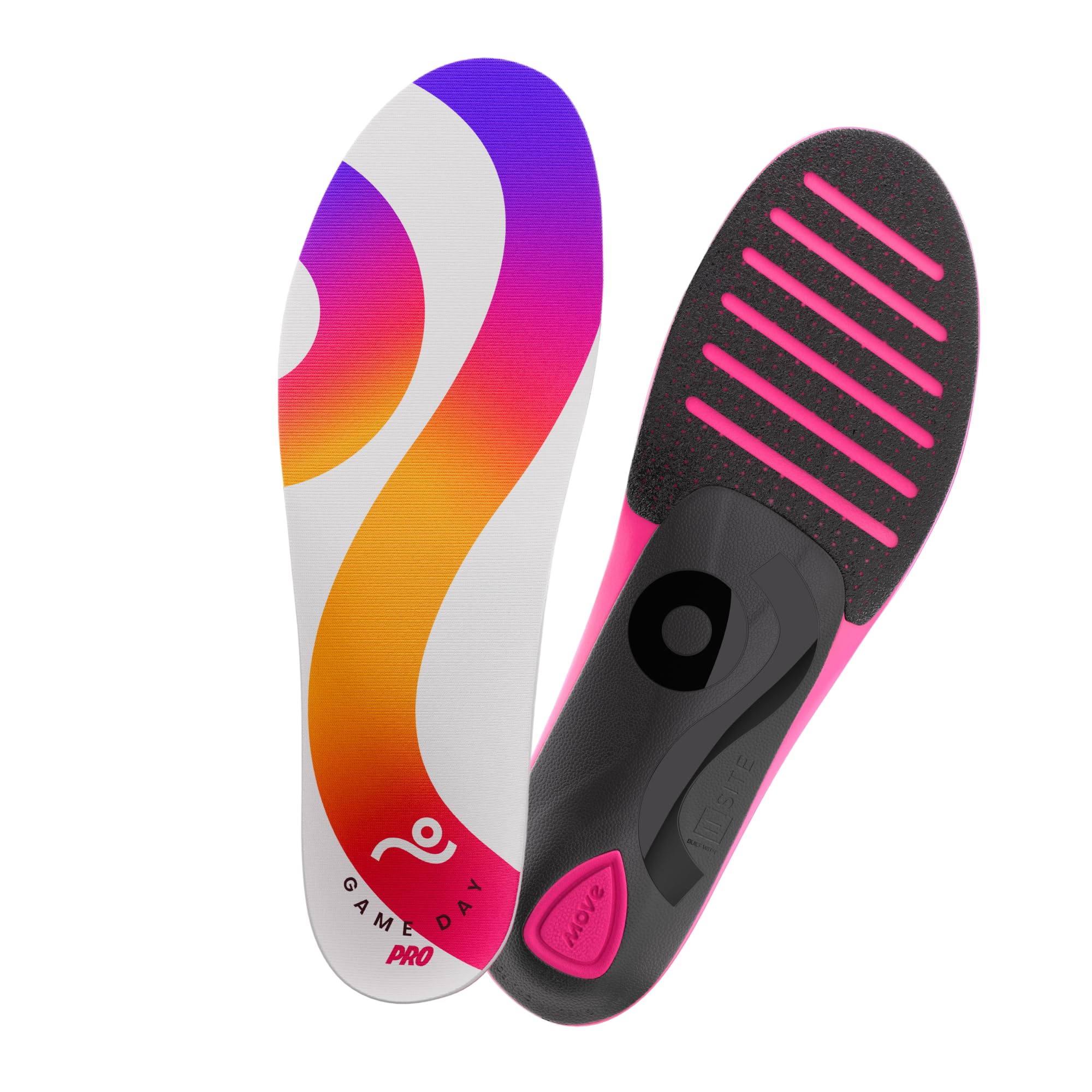
The MOVE Game Day Pro sits at the top of the performance pyramid for a reason: its X-Frame torsional support wraps the midfoot and heel in a rigid shell that prevents over-pronation during lateral cuts, yet the Active Heel Technology uses a responsive foam pocket to soften every hard landing. Athletes in high-impact sports like basketball, volleyball, and pickleball report a noticeable spring in their push-off and zero heel slip during sudden stops. The arch profile is high and structured, which means it works best for neutral to high arches — flat-footed athletes may find the support too pronounced without an adjustment period.
The build quality is exceptional — the foam resists compression even after months of intense tennis sessions and the top fabric manages moisture well enough to prevent odor buildup. Users who tried the standard Game Day Performance model found the Pro version to be noticeably stiffer under the arch, but that stiffness translates directly to better energy transfer during explosive movements. The slight forward tilt of the insole also helps with first-step quickness, a detail that competitive players notice immediately.
No trimming is required for the Pro model, which simplifies the swap between shoes. The only meaningful drawback is the price point — it’s the most expensive option on this list — but for athletes who train at high volume, the durability and injury prevention features justify the cost. Serious court-sport players will find this the most confidence-inspiring insert they’ve ever worn.
Why it’s great
- X-Frame torsional shell provides unmatched lateral stability for cuts and jumps
- Active Heel Technology delivers plush landings without sacrificing push-off stiffness
- High-quality foam resists compression and maintains bounce over months of use
Good to know
- Structured arch is aggressive for flat-footed runners without a break-in period
- Premium price point may be overkill for casual walkers or light joggers
2. Superfeet Run Cushion

Superfeet has been a staple in the running community for years, and the Run Cushion model refines everything they’ve learned about medium-arch support. The Adaptive Comfort Technology uses a flexible orthotic shell that bends with the foot during the gait cycle, promoting efficient heel-to-toe turnover without forcing the foot into a rigid position. Runners recovering from Achilles or heel injuries have reported a smoother transition and less vibration in the lower leg after switching from stock insoles to these.
What sets this insert apart is its compatibility with zero-drop running shoes — a category where most insoles feel too bulky or misaligned. The Run Cushion sits low enough to fit snugly in minimalist or moderate-cushion trainers while still providing genuine arch support. The foam blend is firmer than plush gel options, which means it won’t feel squishy on long runs, but it does require a brief adaptation period for runners used to soft insoles.
Durability is a mixed bag — the insoles hold their shape well through hundreds of miles, but some users report that the top layer wears thin before the foam itself degrades. For the asking price, that’s a minor concern given the medical-grade support it provides. If you need a precise, medium-profile arch insert that prioritizes natural foot movement over extra plushness, this is the pick.
Why it’s great
- Flexible orthotic shell works with the foot’s natural gait cycle for efficient turnover
- Fits zero-drop and low-profile running shoes without adding bulk
- Firm arch support reduces vibration and relieves Achilles/heel pain on long runs
Good to know
- Top layer may show wear before the foam core loses its integrity
- Firmer feel is less forgiving for runners who prefer maximum plushness
3. CURREX SupportSTP

CURREX understands that one arch profile cannot serve every foot, which is why the SupportSTP comes in low, medium, and high profiles. The decoupled heel cup wraps the calcaneus without forcing the foot into a single locked position, allowing some natural movement while still providing stability. Runners and walkers who spend long hours on concrete have praised the midfoot support for reducing fatigue in the plantar fascia band, and the mesh top layer actively wicks moisture to prevent the swampy feeling that plagues many foam insoles.
The heavy-duty polypropylene shell adds a structural rigidity that prevents the insole from twisting under load — a critical feature for heavier athletes or anyone who pronates aggressively. Unlike some premium insoles that feel like standing on a hard plastic plate, the CURREX uses a graduated transition between the shell and the foam, so the support ramps up smoothly rather than hitting a sharp wall. The fit is narrow enough to slide into running shoes like Brooks and Asics without bunching.
Replacements are recommended after 500 miles or 12 months, which is typical for a high-density foam product. The price is steep, but the multi-profile system means you’re paying for a tailored fit rather than a generic orthotic. Those with stubborn arch pain who haven’t found relief in single-profile inserts will appreciate the ability to dial in the exact curve their foot needs.
Why it’s great
- Three distinct arch profiles (low, medium, high) for a truly customized fit
- Decoupled heel cup wraps the foot while allowing natural dynamic movement
- Air vent mesh top layer improves breathability and reduces moisture buildup
Good to know
- Polypropylene shell adds weight and rigidity not everyone enjoys for casual walking
- Recommended replacement after 500 miles or 12 months adds ongoing cost
4. Move Game Day Performance

Co-founded by Damian Lillard, the standard Game Day Performance model brings pro-level features to a mid-range price point. The composite heel insert is tuned for responsiveness over plushness, which means basketball players and multi-sport athletes feel connected to the ground rather than sinking into a pillow. The molded forefoot design creates a snug fit that eliminates the sliding sensation inside the shoe, which is particularly valuable during quick direction changes.
What surprised testers most was how effectively these insoles eliminated chronic shin splints and knee pain — multiple reviewers reported pain-free running after years of discomfort. The arch support is firm and neutral, making it a solid middle-ground option for most foot types. While the heel cushioning is adequate for walking and moderate running, athletes over a certain weight or those with pre-existing joint issues may find the shock absorption insufficient for intense plyometric work.
The lack of a break-in period is a welcome feature — reviewers experienced immediate comfort straight out of the box. No trimming is required for most standard athletic shoes, which removes the guesswork of shaping. For the athlete who needs a reliable daily trainer insert that works across sports, this is the most well-rounded option on the list at a fair price.
Why it’s great
- Composite heel insert improves ground feel and push-off responsiveness
- Molded forefoot eliminates in-shoe sliding during lateral movements
- Immediate comfort with no break-in period required
Good to know
- Heel cushioning may feel too firm for heavier athletes or high-impact sprinting
- Arch profile is neutral and may not suit high-arched feet without additional padding
5. PowerStep Original

PowerStep has built a reputation among podiatrists and physical therapists for a reason: the Original model is one of the most effective over-the-counter orthotics for plantar fasciitis and mild over-pronation. The contoured neutral arch and deep heel cradle guide the foot into a neutral position without forcing an aggressive correction. Multiple reviewers with flat feet and heel spurs reported a complete elimination of foot pain after a 10-hour workday, which speaks to the effectiveness of the understated design.
The construction is low-profile, which means it fits into tighter athletic and casual shoes without elevating the heel too high. The firm arch support does require a brief adjustment period — some users describe the initial sensation as “feeling like a ball under the arch” — but after a few days of gradual wear, the support feels natural and stabilizing. The polyester top layer is durable and resists odor better than fabric-only competitors.
While the PowerStep Original is not the most cushioned option for high-impact sports, its true value lies in its biomechanical correction. It is HSA and FSA eligible, which makes it an accessible first-line treatment for foot pain before stepping into custom orthotics. If your primary complaint is arch fatigue or plantar heel pain, this is the most targeted solution available at a mid-range cost.
Why it’s great
- Podiatrist-approved neutral arch support effectively treats plantar fasciitis and pronation
- Low-profile design fits into a wide variety of athletic and casual shoes
- HSA and FSA eligible, making it an affordable step before custom orthotics
Good to know
- Firm arch requires a 3-5 day adjustment period for new users
- Minimal cushioning makes it less ideal for high-impact jumping sports
6. CRUVHEAL Sport Shock Absorbing

The CRUVHEAL Sport insole targets the crowd that stock insoles fail most: athletes with wider feet who need aggressive shock absorption from heel strikes. The strategically placed gel pads sit directly under the calcaneus and the ball of the foot, dissipating impact force before it travels up into the shin and knee. Soccer referees, lacrosse players, and others who stand or run on hard surfaces for hours have noted a dramatic reduction in foot and ankle pain after switching to these.
The deep heel cup is the standout feature here — it wraps the heel securely and uses a non-slip gel layer to prevent the insole from shifting inside the shoe during lateral movement. The fit is slightly bulkier than slim-profile inserts, so it may feel tight in narrow performance shoes like Hokas. Users with wider feet appreciated the generous width, though those with narrow feet may need to adjust the fit with additional trimming.
CRUVHEAL recommends a 3-7 day adaptation period, starting with 2-5 hours of wear daily. Some users reported immediate comfort with no break-in required, which suggests the foam density is forgiving enough for most foot types out of the box. The year-long protection guarantee and responsive customer support add peace of mind for first-time orthotic users. At a mid-range price, this is a strong contender for anyone who prioritizes heel protection over arch rigidity.
Why it’s great
- Gel pads at heel and forefoot provide targeted shock absorption for hard surfaces
- Non-slip heel cup prevents shifting and stabilizes the foot during lateral cuts
- Wide fit accommodates broader feet without pinching the sides
Good to know
- Bulkier build may feel tight in narrow or low-volume athletic shoes
- Some users require a shorter adaptation period while others need the full 7 days
7. Sof Sole Athlete Performance

Sof Sole has been a reliable name in the insole space for over two decades, and the Athlete Performance model continues that tradition with a formula that prioritizes softness and versatility. The full-length gel layer provides a plush step-in feel that sits somewhere between a cushioned recovery sandal and a supportive orthotic. Flat-footed runners have reported great results swapping these into Hokas, Brooks, and On-Cloud shoes, often citing the moisture-wicking top layer as a key benefit during sweaty sessions.
The trim-to-fit design is especially useful for users with odd-sized shoes or those who switch between multiple pairs. The gel cushioning is forgiving and soft, which makes these a great entry-level option for beginners who are not yet accustomed to firm arch support. However, the softer foam does compress faster than denser competitors — users who train daily at high intensity may find themselves replacing these every 4-6 months, which is typical for the category.
Long-time Sof Sole fans describe these as the best insoles they’ve used for daily wear and light sports, citing their durability and resistance to heat or crumbling. For the budget-conscious athlete or anyone who wants a noticeable upgrade from stock insoles without committing to a premium-priced orthotic, the Sof Sole delivers reliable comfort at a very accessible cost.
Why it’s great
- Soft gel layer provides immediate plush comfort without a break-in period
- Trim-to-fit design adapts to a wide range of shoe sizes and models
- Moisture-wicking top fabric keeps feet dry during extended wear
Good to know
- Softer foam compresses faster than dense alternatives, needing replacement every 4-6 months
- Less structured arch support may not satisfy users with advanced pronation needs
FAQ
How often should I replace my athletic shoe inserts?
Can I use the same athletic inserts for running and basketball?
Do I need to break in new athletic shoe inserts?
Will athletic inserts make my shoes feel tighter?
Final Thoughts: The Verdict
For most users, the best athletic shoe inserts winner is the MOVE Game Day Pro because its X-Frame torsional shell and Active Heel Technology deliver the best combination of lateral stability, impact protection, and energy return for high-intensity sports. If you want a runner-specific insert with natural gait support and zero-drop compatibility, grab the Superfeet Run Cushion. And for targeted arch pain relief from plantar fasciitis, nothing beats the podiatrist-approved fit of the PowerStep Original.