
Our readers keep the lights on and the weekend projects moving. As an Amazon Associate, I earn from qualifying purchases.
An athletic smart watch is less a watch and more a coach on your wrist—one that measures your stride, tracks your recovery, and pushes you to beat yesterday’s time. The problem is that the market is flooded with general-purpose wearables that look sporty but lack the core sensors, battery life, and field-tested durability that serious runners, triathletes, and outdoor athletes actually need.
I’m Rikta — the founder and writer behind FitlyFast. I’ve spent years dissecting wearable hardware specs, from GPS chipset accuracy and AMOLED brightness to battery draw under dual-frequency mode, so you don’t have to guess what works when the pavement turns to trail.
Whether you’re chasing a PR on the track or navigating backcountry routes, finding the right athletic smart watches requires comparing real-world battery life, GPS precision, and sport-specific metrics rather than flashy feature lists.
How To Choose The Best Athletic Smart Watches
Not every fitness tracker deserves the “athletic” label. The best athletic smart watches are built around sport-grade GPS, multi-day battery endurance, and recovery analytics that help you train smarter rather than just logging miles. Here’s what separates a running watch from a casual step counter.
GPS Accuracy: Multi-Band vs. Single-Band
For runners, cyclists, and triathletes, GPS drift is a dealbreaker. A single-band GPS chip works fine on open fields but loses accuracy under tree cover or between city skyscrapers. Multi-band (or dual-frequency) GPS picks up additional satellite signals to lock your route within a few feet. If your training route passes through parks, bridges, or dense neighborhoods, multi-band GPS is non-negotiable.
Battery Life: Smartwatch Mode vs. GPS Mode
Manufacturers often advertise battery life in “smartwatch mode”—essentially idle time with minimal use. What matters for athletes is GPS mode battery life: how many hours the watch lasts while continuously tracking location, heart rate, and motion. A premium athletic watch should deliver at least 20 hours of GPS tracking for long training runs, marathons, or ultras. For daily training, a 7–15 day smartwatch battery means charging once a week rather than every night.
Recovery & Training Metrics: HRV and Training Readiness
Athletic watches that go beyond basic heart rate tracking measure Heart Rate Variability (HRV) overnight and calculate a Training Readiness Score. HRV tells you how recovered your nervous system is—low HRV suggests you need rest, while high HRV means you’re primed for a hard session. Look for watches that combine HRV, sleep quality, and recent training load into a single readiness number so you don’t overtrain.
Quick Comparison
On smaller screens, swipe sideways to see the full table.
| Model | Category | Best For | Key Spec | Amazon |
|---|---|---|---|---|
| Garmin Forerunner 970 | Premium Running/Tri | Triathletes & serious runners | 26 hrs GPS, multi-band, AMOLED | Amazon |
| Apple Watch Ultra 3 | Premium Multi-Sport | iPhone users & adventurers | 42 hrs normal, dual-freq GPS | Amazon |
| Garmin Instinct 2X Solar | Rugged Outdoor | Military & survival athletes | Infinite solar battery, MIL-STD-810 | Amazon |
| Samsung Galaxy Watch Ultra | Premium Hybrid | Samsung ecosystem & daily athletes | 3.5-day battery, LTE, titanium | Amazon |
| COROS PACE Pro | Mid-Range Runner | Serious runners on a budget | 38 hrs GPS, offline maps, AMOLED | Amazon |
| COROS PACE 4 | Lightweight Runner | Runners wanting ultralight wear | 32g weight, 41 hrs GPS, AMOLED | Amazon |
| Amazfit Active Max | Mid-Range Multi | Trail runners & all-day wear | 25-day battery, 3000-nit AMOLED | Amazon |
| Fitbit Versa 4 | Mid-Range Fitness | General fitness & lifestyle tracking | 6-day battery, built-in GPS | Amazon |
| Fitbit Inspire 3 | Entry-Level Tracker | Basic activity & sleep tracking | 10-day battery, 50m water resist | Amazon |
In‑Depth Reviews
1. Garmin Forerunner 970

The Garmin Forerunner 970 is purpose-built for the athlete who doesn’t want to choose between a running watch and a smartwatch. With a bright AMOLED display, a lightweight titanium bezel, and a sapphire crystal lens that refuses to scratch, it’s as comfortable on a podium as it is on a muddy trail. The built-in flashlight is a small addition that makes early-morning loops noticeably safer.
From a training perspective, the 970 delivers everything a triathlete needs: multi-band GPS for precise routing, auto-transition detection between swim-bike-run, and wrist-based running power that eliminates the need for a separate pod. Battery life hits 26 hours in full GPS mode—easily enough for a full Ironman or a week of daily sessions without a charge.
The Learning Curve is real—Garmin’s menus are dense—but the daily Training Readiness score, HRV status, and running economy metrics turn raw data into actionable coaching advice. If you’re willing to spend the time setting it up, the 970 becomes the most detailed training partner on this list.
Why it’s great
- True multisport auto-transition for swim-bike-run
- Bright AMOLED with sapphire lens—scratch-proof
- Up to 26 hours of continuous GPS tracking
Good to know
- Steep learning curve for Garmin newcomers
- Requires HRM strap for advanced running dynamics
2. Apple Watch Ultra 3
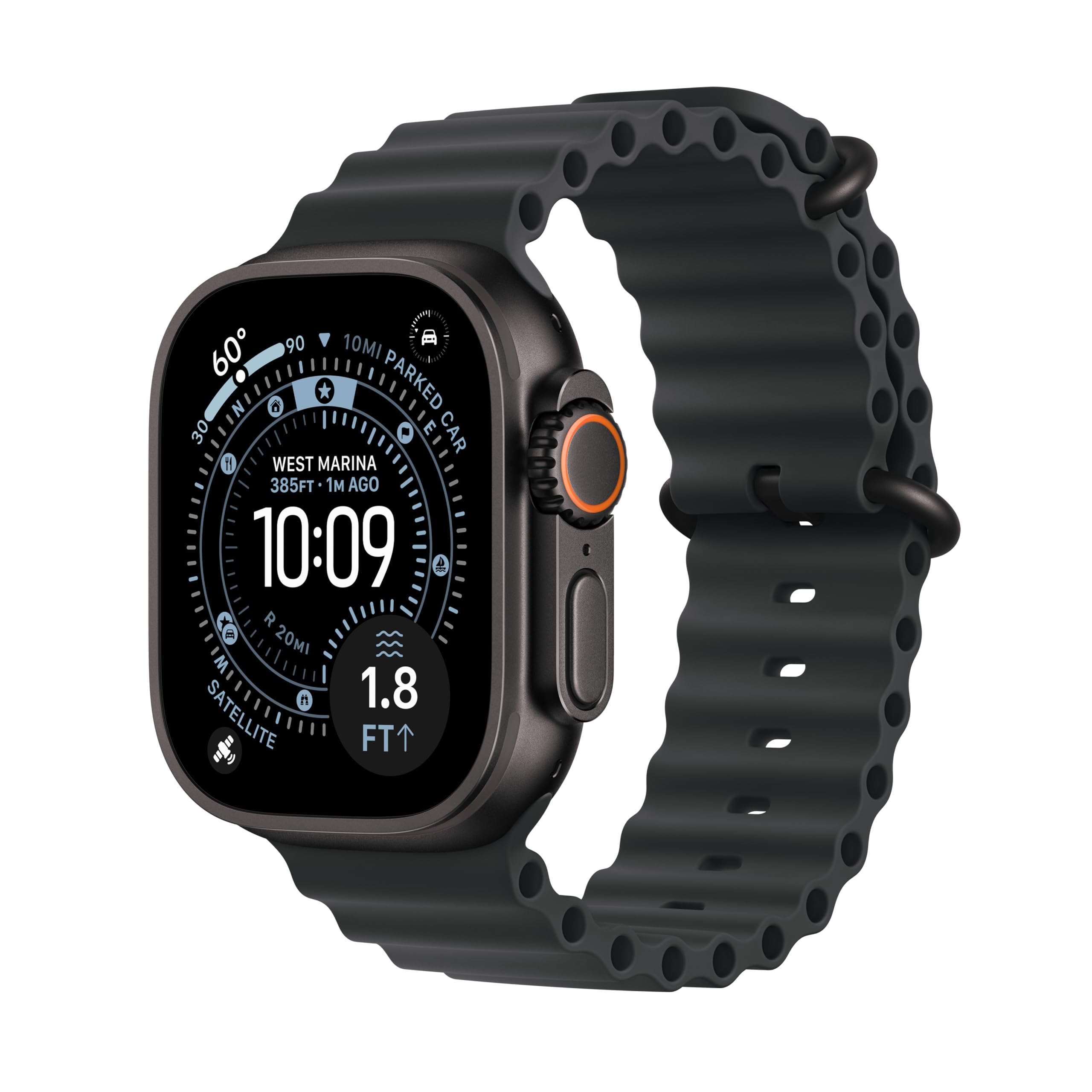
The Apple Watch Ultra 3 takes the rugged platform of its predecessor and sharpens every edge. The titanium case and sapphire crystal display feel bombproof, and the 49mm screen is large enough to read workout metrics mid-stride without squinting. Cellular connectivity means you can leave your phone behind and still take calls or stream music during a run.
For athletes, the dual-frequency GPS delivers exceptional accuracy even in tree cover or between tall buildings. The new Pacer feature and Heart Rate Zones overlay make interval training straightforward: set a target pace, and the watch vibrates when you drift. The 42-hour battery life is enough for a weekend of back-to-back adventures, though heavy GPS use with always-on display will bring that closer to 20 hours.
The ecosystem lock-in is real—this watch shines brightest when paired with an iPhone. But if you’re already in Apple’s orbit, the Ultra 3 offers the smoothest smartwatch experience combined with genuine outdoor-grade durability. The customizable Action Button is a welcome upgrade for starting workouts or marking waypoints without fumbling with the touchscreen.
Why it’s great
- Satellite SOS for off-grid emergencies
- Precision dual-frequency GPS for route accuracy
- Rugged titanium build with 100m water resistance
Good to know
- Best functionality limited to iPhone ecosystem
- Battery life drops with heavy GPS + always-on use
3. Garmin Instinct 2X Solar

The Garmin Instinct 2X Solar is not a fashion accessory—it’s a tool built for environments where charging isn’t an option. The 50mm fiber-reinforced polymer case meets MIL-STD-810 standards for thermal shock and water resistance, and the Power Glass solar lens extends battery life indefinitely in smartwatch mode with three hours of direct sun daily.
The built-in LED flashlight is a standout for tactical and outdoor use, offering white and red strobe modes plus an SOS function. Multi-band GPS brings reliable tracking even in dense cover, and the barometric altimeter keeps you oriented on steep climbs. Battery life in GPS mode is rated at 48 hours, but with solar assist that number can stretch significantly in sunny conditions.
The monochrome MIP display isn’t as vibrant as AMOLED screens, but it’s readable in direct sunlight and uses far less power. The button-only interface is deliberate—gloved hands or wet conditions won’t interfere with operation. This is a watch for the athlete whose training includes backcountry navigation, tactical drills, or multi-day expeditions.
Why it’s great
- Solar charging enables unlimited smartwatch battery life
- Military-grade durability for extreme environments
- Integrated LED flashlight with SOS strobe
Good to know
- MIP display lacks the vibrancy of AMOLED
- Setup and menu navigation require patience
4. Samsung Galaxy Watch Ultra
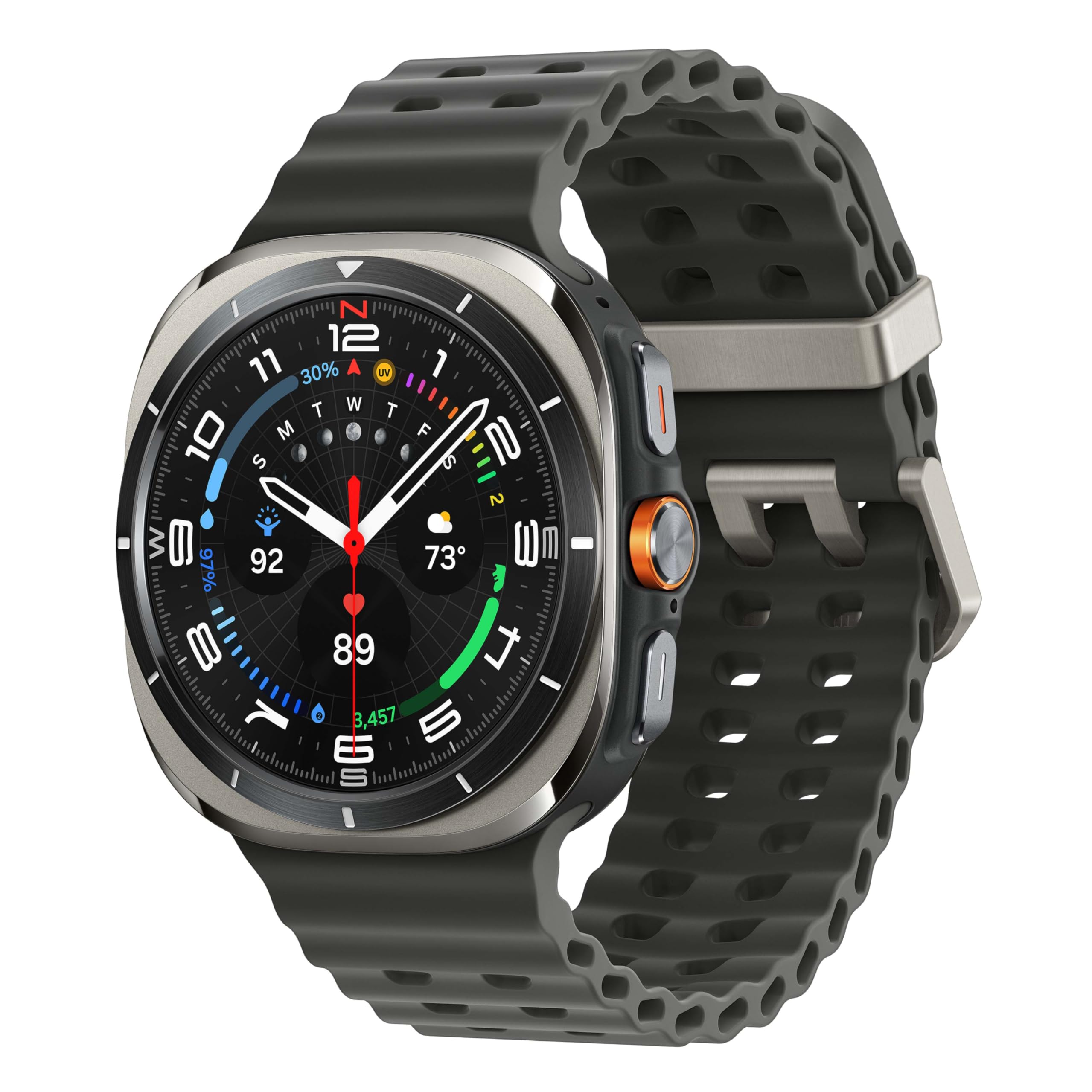
Samsung’s Galaxy Watch Ultra strikes an unusual balance: it’s the most capable smartwatch on this list for daily phone-free use, but it also packs enough health and fitness tracking to satisfy a committed runner. The titanium case and sapphire glass are genuinely durable, and the 47mm AMOLED screen is one of the brightest and sharpest available.
The Energy Score feature, powered by Galaxy AI, combines sleep, heart rate, and step data into a readiness metric that feels similar to Garmin’s Training Readiness but is presented in a simpler daily card. Heart rate tracking during workouts is precise thanks to the AI-driven filtering that removes motion noise. LTE means you can stream music, take calls, and message without carrying a phone.
Battery life is solid at 3.5 days with typical use, though heavy GPS workouts will bring it closer to 2 days. The main trade-off is that Samsung Health doesn’t offer the deep training analytics that Garmin or COROS provide—HRV is tracked but not integrated into a recovery score, and there’s no multi-sport auto-transition. For the athlete who wants a smartwatch first and a training companion second, it’s a compelling middle ground.
Why it’s great
- LTE connectivity for completely phone-free use
- Bright, durable titanium and sapphire build
- AI-powered Energy Score for daily readiness
Good to know
- Health tracking data less detailed than Garmin/COROS
- Battery drops to ~2 days with regular GPS workouts
5. COROS PACE Pro

The COROS PACE Pro delivers features typically found in watches costing much more: a 1.3-inch AMOLED display with 1500-nit brightness, full offline topographical maps, and a processor that feels snappy during menu navigation. For runners who train on unfamiliar terrain, the ability to download maps and navigate turn-by-turn without a phone is a genuine saver.
Battery performance is the COROS hallmark: 38 hours in standard GPS mode and 20 days of smartwatch use. The new USB-C charging adapter means one cable charges both your watch and your other devices. GPS accuracy benefits from the updated satellite chipset, and in city tests it held pace lines within a few meters of the true route.
The COROS app ecosystem is lean and focused—there’s no social feed or marketplace, just clean training data, recovery insights, and custom workout creation. If you’re a runner who wants pro-grade metrics without paying for brand overhead, the PACE Pro is the sweet spot.
Why it’s great
- Offline topographical maps for route navigation
- 38-hour GPS battery for ultra training
- USB-C charging simplifies travel
Good to know
- Watch face selection is limited out of the box
- Band material feels stiffer than premium silicone
6. COROS PACE 4
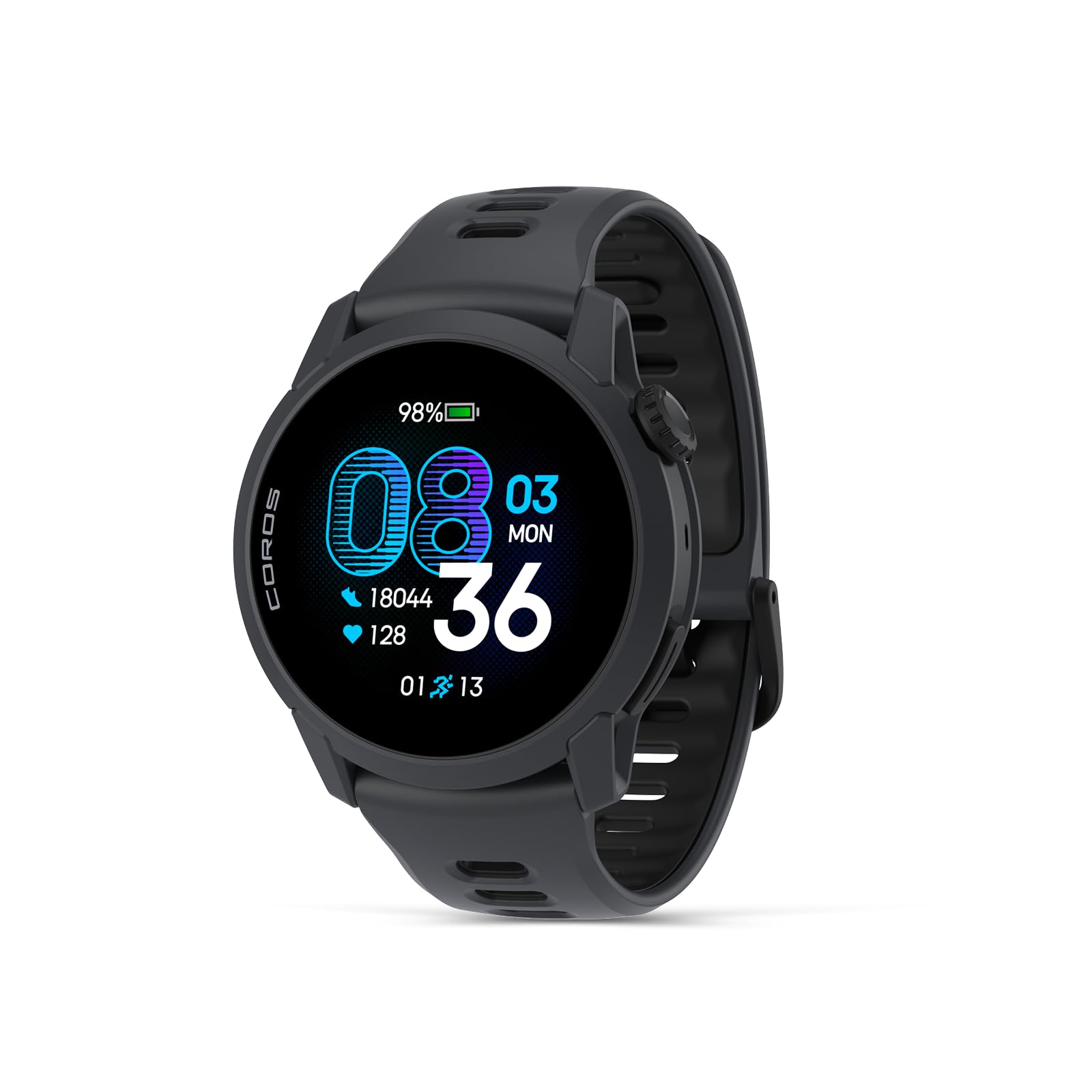
At 32 grams with the nylon band, the COROS PACE 4 is lighter than most energy gels and disappears on the wrist during a run. The 1.2-inch AMOLED touchscreen offers auto-adjusting brightness that stays readable in direct sun without washing out, and the tactile digital crown plus two buttons provide glove-friendly control at any intensity.
The battery is the headline: 41 hours of continuous GPS use and 19 days of smartwatch mode. For a marathon runner or half-Ironman athlete, that means charging once every couple of weeks. GPS accuracy is on par with Garmin’s Forerunner series, and the new voice recording tool lets you log training notes mid-run without pulling out your phone.
The COROS app tracks recovery time, sleep stages, HRV, and menstrual cycles in a clean dashboard. There’s no music storage or contactless payments, which keeps the focus squarely on training metrics. If your priority is a featherlight watch that delivers elite GPS battery life without smartwatch bloat, the PACE 4 is the clear choice.
Why it’s great
- Ultra-light 32g design for zero-distraction wear
- Industry-leading 41-hour GPS battery life
- Voice recording feature for hands-free training logs
Good to know
- No onboard music storage or NFC payments
- Small screen may feel cramped for data-heavy workouts
7. Amazfit Active Max
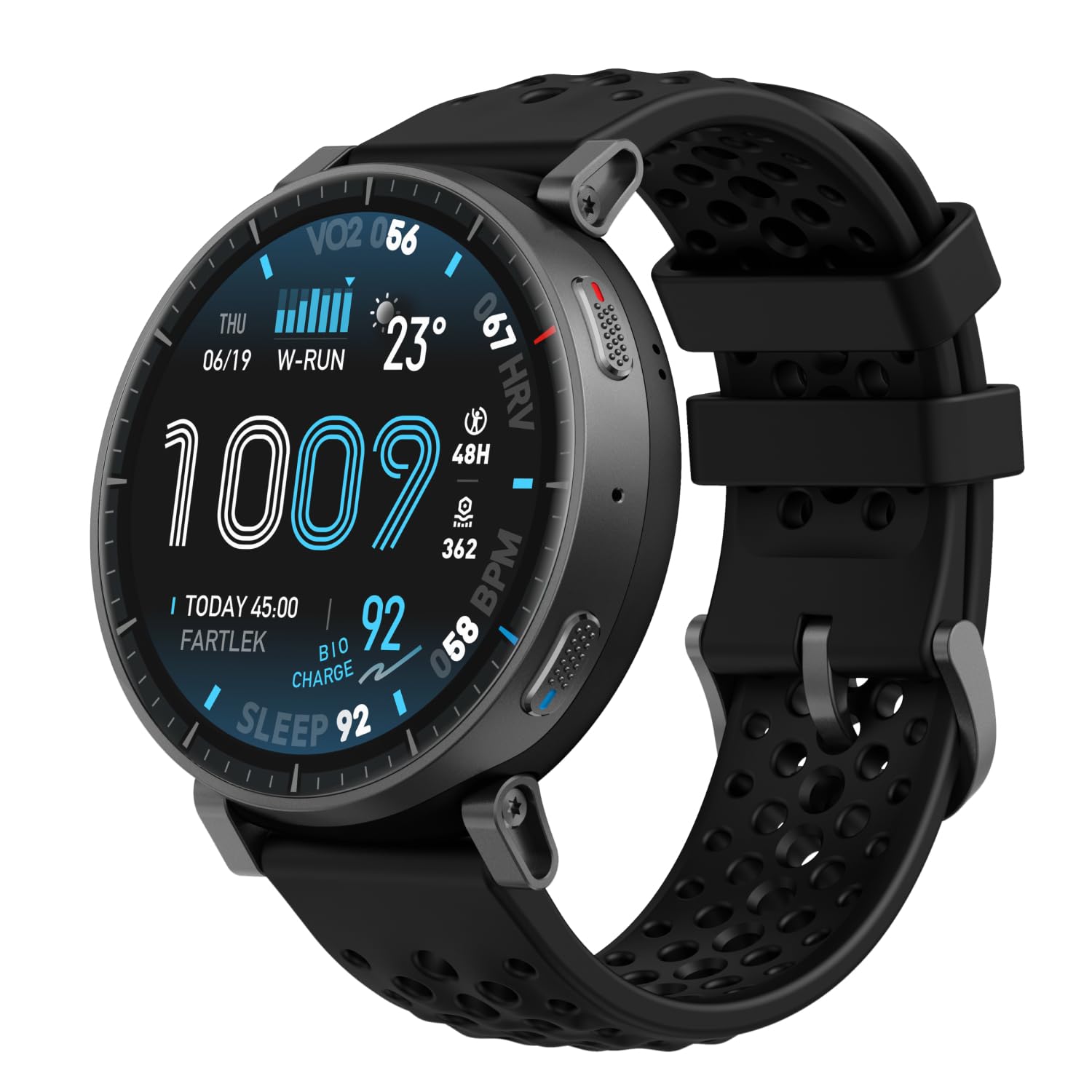
The Amazfit Active Max brings a 3000-nit AMOLED display to the mid-range—bright enough to read in full sunlight on a ski slope or desert trail. The 1.5-inch screen is the largest on this list, and with 4GB of onboard storage, you can load offline maps and music directly onto the watch. The five-satellite positioning system locks quickly and maintains accuracy in challenging terrain.
With 170+ sport modes and a 25-day smartwatch battery, the Active Max is versatile enough for swimmers, cyclists, and hikers alike. The BioCharge Energy Monitoring score adjusts based on daily strain and stress, offering a readiness metric that competes with pricier Garmin models. The Zepp Coach feature creates adaptive running plans for distances from 3K to full marathon.
Build quality feels solid for the price tier, with a silicone strap and magnetic charger that’s secure but not as robust as Garmin’s locking cable. The Zepp app is smooth but less detailed than COROS or Garmin Connect for advanced analytics. For budget-conscious athletes who want a bright screen and long battery, this is a strong mid-range contender.
Why it’s great
- 3000-nit AMOLED is the brightest display on this list
- 4GB storage for offline maps and music
- Up to 25-day smartwatch battery life
Good to know
- Zepp app lacks depth of COROS or Garmin Connect
- Magnetic charger can disconnect during vigorous movement
8. Fitbit Versa 4

The Fitbit Versa 4 is a fitness-first smartwatch that balances workout tracking with everyday wearability. The built-in GPS and 40+ exercise modes cover everything from outdoor runs to pool swimming, and the Daily Readiness Score helps you decide whether to push hard or take a recovery day. The 3-month Google Health Premium membership adds guided programs and personalized coaching.
Sleep tracking is a Fitbit strength—the Versa 4 logs sleep stages and assigns a Sleep Score each morning, then uses that data to influence your readiness recommendation. The AMOLED display is crisp and responsive, and on-wrist Bluetooth calls work well for quick check-ins during a cooldown. Battery life averages 6 days, though heavy GPS use reduces that to about 4 days.
The trade-off is that Fitbit’s ecosystem is moving toward Google integration, which has led to some feature changes and reduced third-party app support. GPS accuracy is adequate for city runs but can drift in tree-covered areas compared to multi-band watches. For the athlete who wants reliable daily tracking, guided workouts, and sleep analytics without an extreme price, the Versa 4 is a solid pick.
Why it’s great
- Daily Readiness Score integrates sleep and activity data
- Built-in GPS for phone-free outdoor tracking
- Includes 3-month Google Health Premium membership
Good to know
- GPS accuracy can drift in dense tree cover
- Battery life drops to ~4 days with frequent GPS use
9. Fitbit Inspire 3

The Fitbit Inspire 3 is the most accessible entry point for athletes building a fitness habit. It’s lightweight, comfortable for 24/7 wear, and delivers 10 days of battery life—meaning you charge it twice a month, not twice a day. The Stress Management Score, mindfulness sessions, and guided breathing exercises add a mental wellness layer that’s rare at this tier.
For active tracking, the Inspire 3 covers 40+ exercise modes and records Active Zone Minutes based on your heart rate zones. Sleep tracking is automatic and includes a daily Sleep Score along with smart wake vibration. The color touchscreen is bright enough for indoor and outdoor use, but the small form factor means less real-time data on screen during a workout.
The absence of built-in GPS is the biggest limitation for runners—you’ll need to carry your phone to track route distance and pace. Water resistance to 50 meters makes it pool-safe for lap swims, but the proprietary charging cable is easy to misplace. For a new athlete or someone graduating from a basic step counter, the Inspire 3 offers strong health tracking without overwhelming complexity.
Why it’s great
- Exceptional 10-day battery life reduces charging hassle
- Stress Management Score and guided breathing sessions
- Ultra-light design comfortable for overnight sleep tracking
Good to know
- No built-in GPS—requires phone for route tracking
- Proprietary charging cable is easy to lose
FAQ
Do I need multi-band GPS for road running or is it overkill?
How does Training Readiness differ from a simple step count?
Can I wear an athletic smart watch for pool swimming and open water triathlons?
Final Thoughts: The Verdict
For most users, the athletic smart watches winner is the Garmin Forerunner 970 because it combines professional-grade multisport analytics, bright AMOLED display, and enough battery to survive a full Ironman without compromise. If you want an ultra-light design that disappears during runs, grab the COROS PACE 4. And for rugged backcountry use where charging is not guaranteed, nothing beats the Garmin Instinct 2X Solar.