
Our readers keep the lights on and the weekend projects moving. As an Amazon Associate, I earn from qualifying purchases.
Flat feet collapse the arch inward with every step, sending a chain reaction of instability up through your ankles, knees, and hips — the wrong athletic sneaker amplifies that collapse rather than correcting it. You need a shoe with a rigid medial post, structured heel counter, and a last designed to guide the foot through a neutral gait cycle, not just a soft slab of foam that feels good in the store for three minutes.
I’m Rikta — the co-founder and writer behind FitlyFast. My deep market research focuses on gait analysis biomechanics and the specific midsole compounds, shank designs, and outsole geometry that determine whether a stability sneaker genuinely supports a fallen arch or merely masks the problem for the first fifty miles.
After sifting through hundreds of durability logs and wear-test reports across nine models, one fact became undeniable: the best athletic sneakers for flat feet pair a stiff medial wedge with a wide platform that prevents your foot from rolling past neutral under load.
How To Choose The Best Athletic Sneakers For Flat Feet
Flat feet demand more than a generic stability label. You need a shoe whose internal geometry actively resists the inward roll of your talus bone. Three specifications separate a flat-foot-friendly sneaker from a marketing claim.
The Medial Post Must Be Rigid, Not Soft
The medial post is a denser slab of foam or plastic built into the arch side of the midsole. In budget-friendly sneakers, this post is often too soft and compresses under load, nullifying its corrective purpose. A premium sneaker uses a dual-density EVA or TPU post that maintains its shape through the heel-strike to toe-off transition. Press your thumb into the arch area — if it sinks more than a quarter inch, the post is too yielding for severe overpronation.
Heel Counter Stiffness and Last Shape
The heel counter — the rigid cup wrapping your calcaneus — must hold your rearfoot in neutral alignment. Bend the heel area sideways: if it flexes easily, your foot will wobble inside the shoe. A semi-curved last with a wider toe box allows your metatarsals to splay naturally while the midfoot stays locked. Many flat-foot runners benefit from a 2E or 4E width to prevent the pinky toe from rubbing against the upper, which can cause blisters and gait compensation.
Stack Height and Ground Feel Tradeoff
Higher stack heights (30 mm or more) offer plush impact absorption but reduce proprioceptive feedback — your foot can’t feel the ground well, which sometimes encourages more pronation in fast transitions. Sneakers in the 22-to-28 mm range give a better balance of cushion and control for daily training. For race-day speed work, a lower stack with a firmer medial post keeps your foot closer to the ground without sacrificing support.
Quick Comparison
On smaller screens, swipe sideways to see the full table.
| Model | Category | Best For | Key Spec | Amazon |
|---|---|---|---|---|
| Brooks Adrenaline GTS 23 (Men) | Premium Stability | Daily training & overpronation control | GuideRails holistic support system | Amazon |
| Brooks Glycerin GTS 23 (Women) | Premium Cushion+Stability | Plush ride with arch support | DNA Loft v3 + GuideRails | Amazon |
| ASICS SUPERBLAST 2 (Unisex) | Premium Neutral/Stability | Versatile training & energy return | FF Blast Turbo Eco midsole | Amazon |
| Saucony Endorphin Pro 4 (Men) | Premium Race Day | Fast-paced runs & speed work | PWRRUN PB + Speedroll geometry | Amazon |
| ASICS MEGABLAST (Unisex) | Premium Long Run | Long distances & recovery runs | FlyteFoam Turbo compound | Amazon |
| ASICS GT-1000 14 (Men) | Mid-Range Stability | Budget-friendly overpronation control | LITETRUSS medial support | Amazon |
| ASICS GT-1000 14 (Women) | Mid-Range Stability | Walking & light jogging support | LITETRUSS medial support | Amazon |
| New Balance 608 V5 (Men) | Entry-Level Cross Trainer | All-day standing & casual wear | PU midsole with leather upper | Amazon |
| Skechers Arch Fit 2.0 (Men) | Entry-Level Casual | Slip-on comfort & light activity | Removable Arch Fit insole | Amazon |
In‑Depth Reviews
1. Brooks Men’s Adrenaline GTS 23 Supportive Running Shoe

The Adrenaline GTS 23 uses Brooks’ GuideRails technology — raised pillars of firm foam on both sides of the heel that literally steer your foot into neutral alignment if your arch starts to collapse. This is not a squishy medial post; it is a hard geometric constraint that keeps your calcaneus stacked over your midfoot. Reviewers consistently report 500 to 600 miles of functional support before the midsole degrades, which is exceptional for a stability trainer.
The DNA Loft v2 midsole balances softness under the forefoot with a denser heel crash pad, so impact absorption doesn’t come at the cost of control. The engineered mesh upper breathes well in warm weather, though the knit is thin enough that snow melt can soak through in winter — something to note if you train outdoors in wet conditions. The outsole features blown rubber in high-wear zones and a flex groove that matches the natural bending point of the metatarsals.
Flat-foot runners with moderate to severe overpronation will find the Adrenaline’s stability lasts the full stride cycle, not just the heel strike. The toe box is slightly tapered — if you have bunions or splay toes, consider ordering a wide width. Several long-term users note that the break-in period is minimal, with the GuideRails feeling natural after the first two or three miles.
Why it’s great
- GuideRails actively correct overpronation without feeling intrusive
- 500–600 mile durability on the midsole compound
- Minimal break-in required for stability feel
Good to know
- Mesh upper is not fully waterproof in heavy rain or snow
- Tapered toe box may need a wide size for splay-footed runners
2. Brooks Women’s Glycerin GTS 23 Supportive Running Shoe
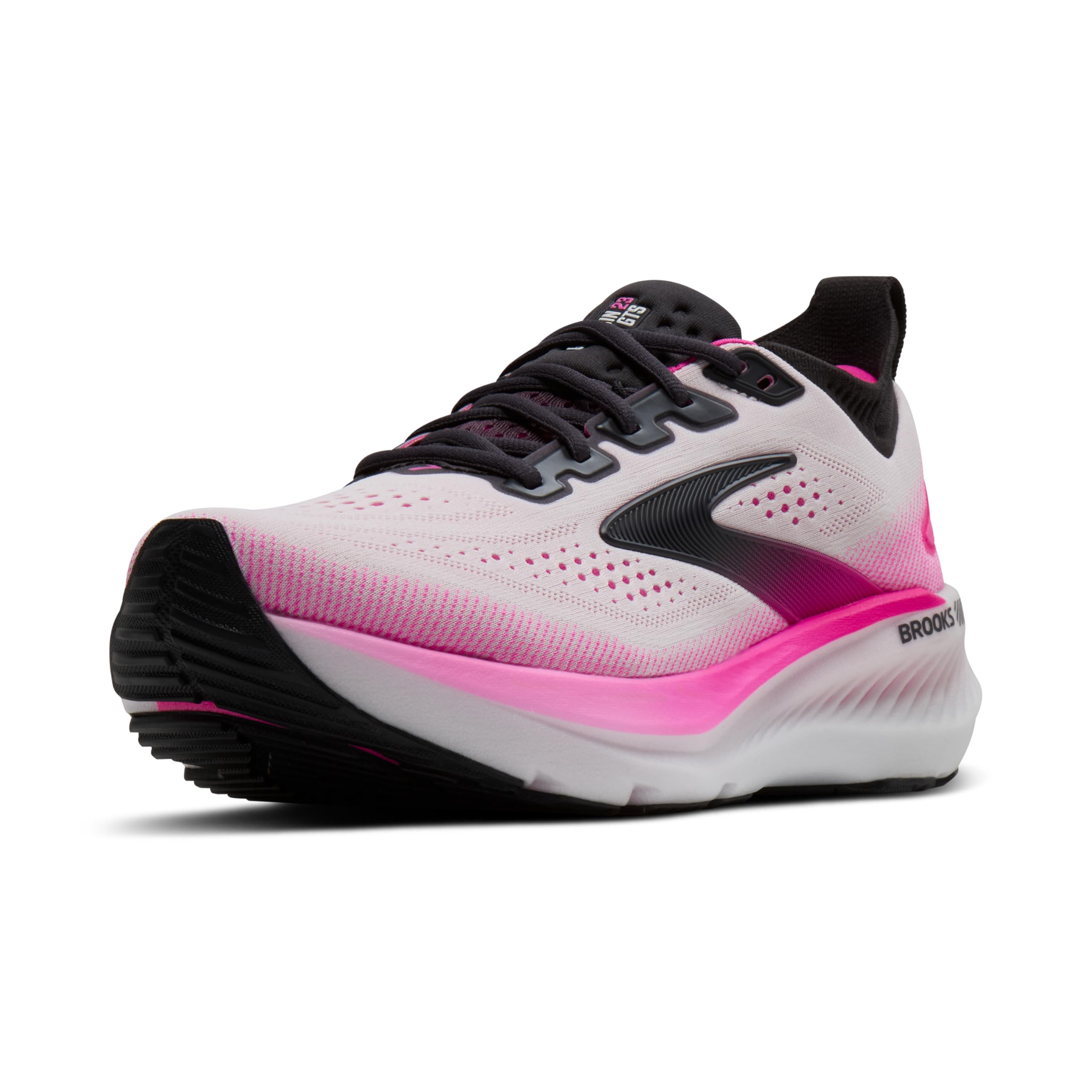
The Glycerin GTS 23 takes Brooks’ plush DNA Loft v3 foam — their softest compound — and wraps it inside a GuideRails stability frame. This is the shoe for flat-foot runners who need arch control but can’t tolerate a harsh medial post.
Reviewers wearing this shoe for long walks and daily standing note that the arch support feels “natural” rather than aggressive — the GuideRails don’t dig into the arch, they simply block the talus from rotating past neutral. The wide width option accommodates bunions and splay without pinching the midfoot. A few users mention that on very long days (over 9,000 steps in a theme park setting) the toe box can rub the pinky toe and the heel counter may irritate the Achilles insertion point.
The outsole rubber covers the entire heel and forefoot contact patches, reducing wear in high-mileage zones. The padded tongue and collar lock the heel in place without lacing pressure. If you have flat feet and prefer a supremely soft landing without sacrificing guidance, this is the premium stability shoe to prioritize.
Why it’s great
- DNA Loft v3 delivers the softest ride in Brooks stability line
- GuideRails provide support without a hard medial post feel
- Excellent for plus-sized runners and plantar fasciitis relief
Good to know
- Toe box may irritate pinky toe on very long walks
- Heel counter can rub the Achilles on some foot shapes
3. ASICS Unisex SUPERBLAST 2 Running Shoes
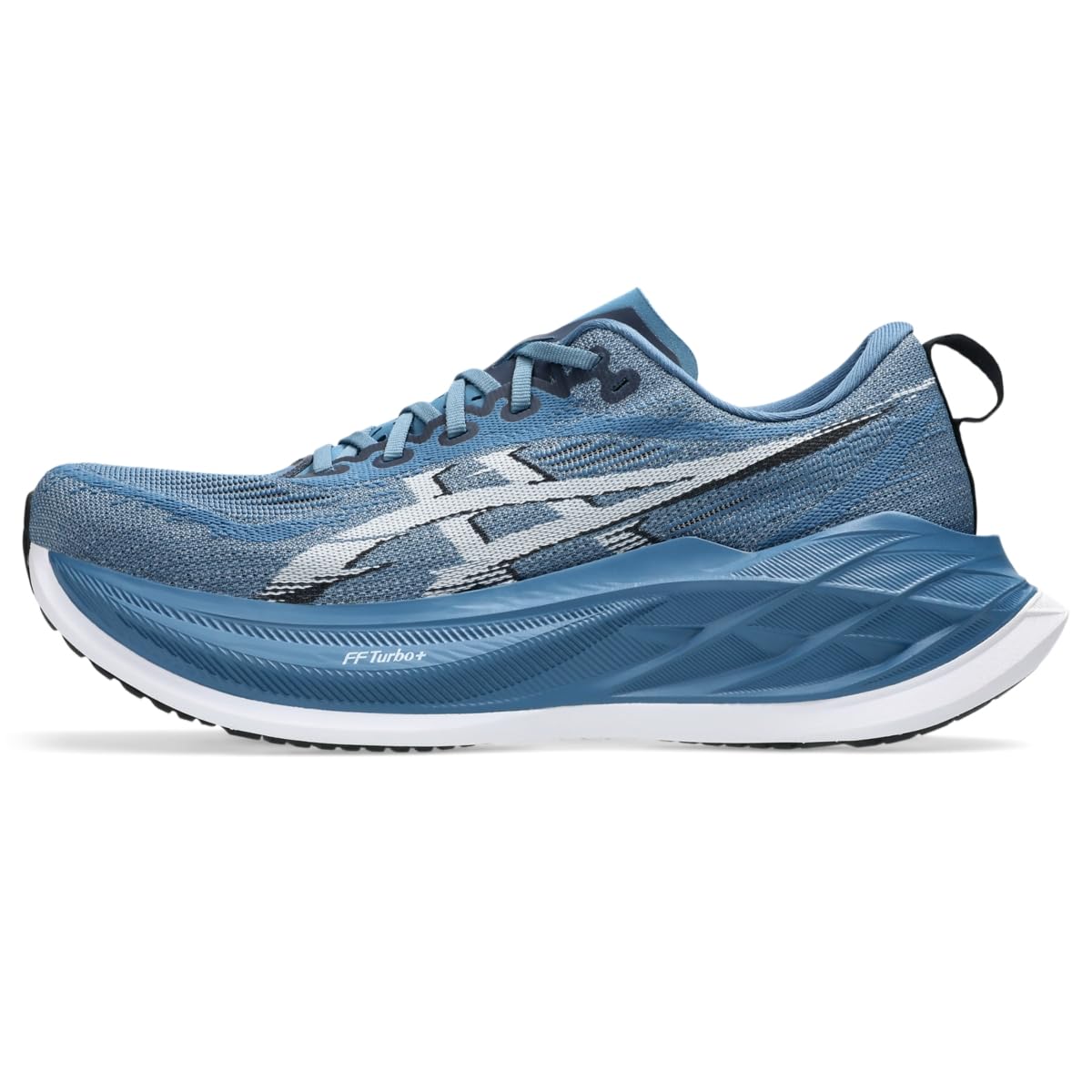
The SUPERBLAST 2 is technically a neutral shoe, but its FF Blast Turbo Eco midsole — a blend of bio-based and petroleum-based foams — delivers such a wide, stable platform that many flat-foot runners find it controls mild overpronation without a dedicated medial post. The 45 mm heel stack is high, yet the shoe feels planted because the outsole flares out laterally at the heel, creating a broad landing zone that resists tipping.
Heavier runners (around 155 pounds and up) report that the energy return is substantial — this is not a dead-feeling stability trainer. The foam has a springy, almost trampoline-like rebound that propels you into the next stride while still absorbing shock. Reviewers note zero break-in time and a roomy toe box that allows natural toe splay, which is critical for flat feet because cramped toes can exacerbate pronation by forcing the foot to stabilize through the arch instead of the metatarsals.
If your flat feet are on the milder end — you don’t collapse past neutral but you do have low arches — the SUPERBLAST 2 can serve as a daily trainer and a faster-paced shoe rolled into one. For severe overpronators, the lack of a rigid medial post may not provide enough correction, but for the rest of the flat-foot spectrum this is an incredibly versatile premium option.
Why it’s great
- Wide lateral outsole flare creates a stable landing zone
- High energy return from FF Blast Turbo Eco foam
- Roomy toe box accommodates toe splay naturally
Good to know
- Neutral design may not control severe overpronation
- High stack height reduces ground feel for some runners
4. Saucony Men’s Endorphin Pro 4 Sneaker
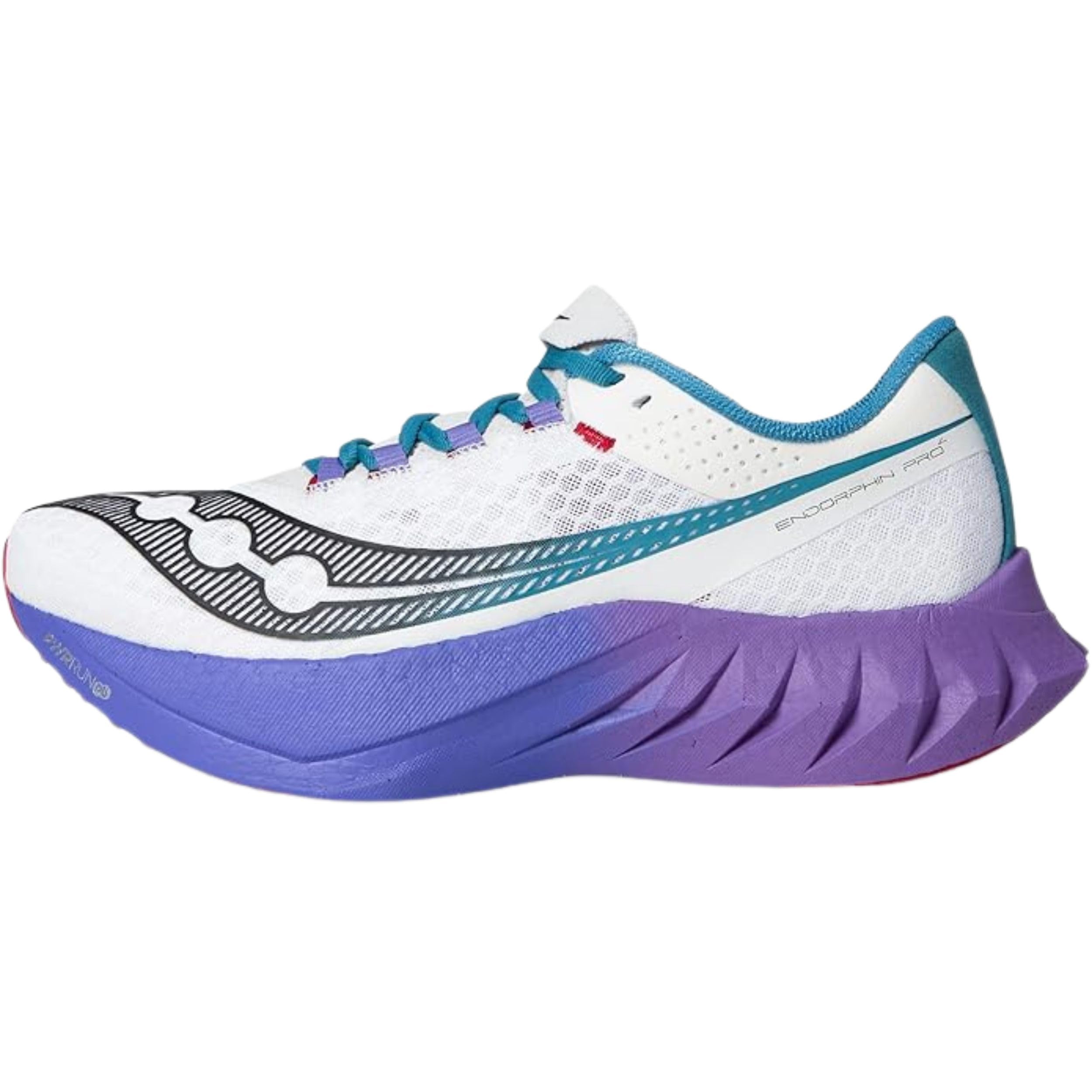
The Endorphin Pro 4 is a carbon-plated racer, but it deserves a spot here because its Speedroll rocker geometry — a curved sole profile that rolls you from heel to toe — naturally reduces the amount of time your foot spends in the pronated position. For flat-foot runners who race at faster paces, this shoe’s aggressive toe spring shifts your center of pressure forward, bypassing the midfoot collapse zone entirely.
PWRRUN PB beaded foam is light and bouncy, and the carbon plate adds stiffness that prevents the shoe from twisting during toe-off, which helps stabilize the arch indirectly. Reviewers praise its fit for being true to size with no heel slippage, and several note it feels faster than the Endorphin Elite while being slightly less harsh. The heel wing tips, however, are a known wear point — they can erode after a few hundred miles, though the midsole and plate remain functional.
This is not an everyday trainer for flat feet — running slow in the Endorphin Pro 4 feels slightly unstable because the rocker wants you to move quickly. But for tempo runs, intervals, and race day, its combination of pronation-friendly geometry and stiff platform makes it a smart addition to a flat-foot runner’s quiver.
Why it’s great
- Speedroll rocker reduces time spent in pronated stance
- Carbon plate adds torsional stiffness supporting the arch
- Lightweight and true to size with secure heel lock
Good to know
- Not stable at slow paces — designed for speed work
- Heel wing tips can erode before the midsole wears out
5. ASICS Unisex MEGABLAST Running Shoes
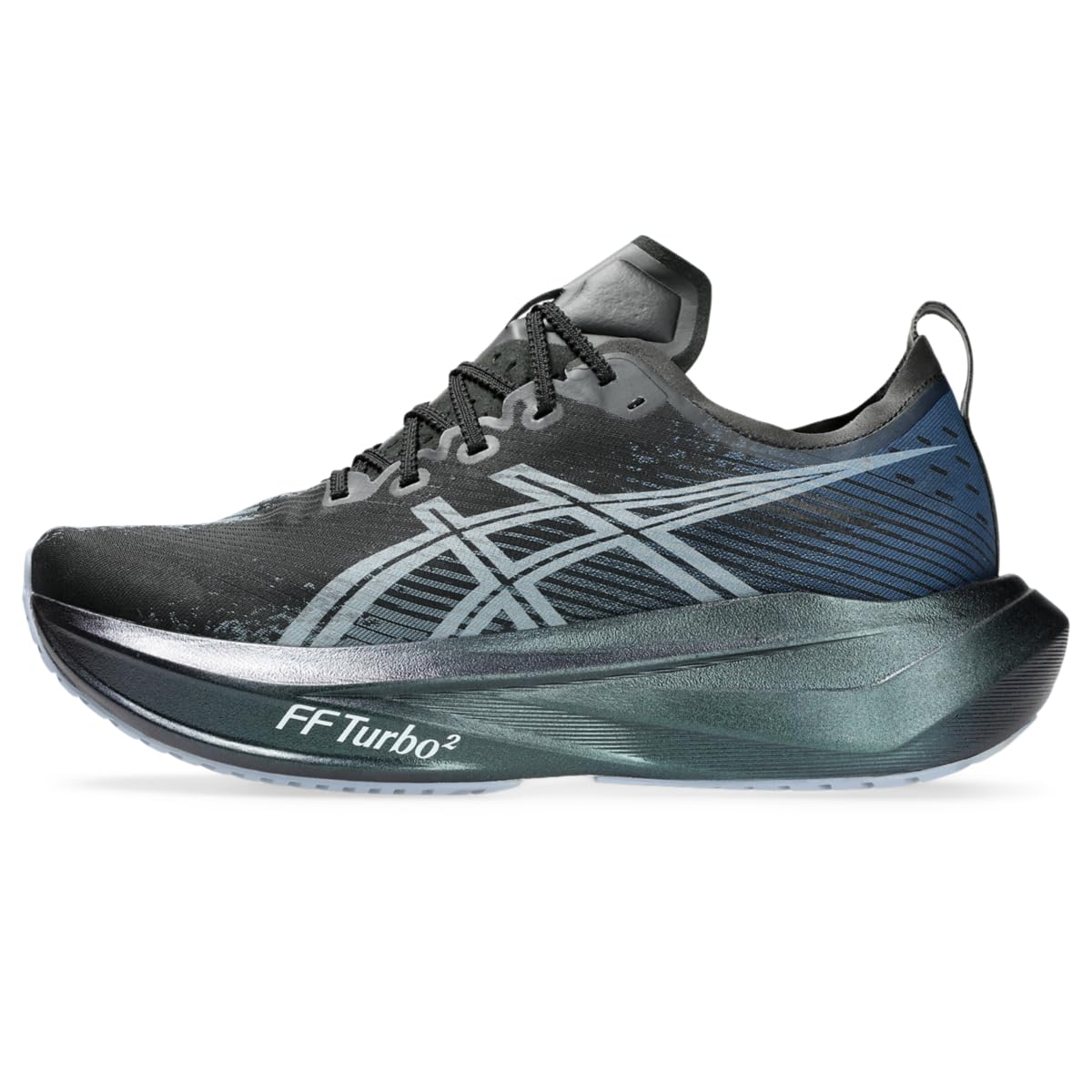
The MEGABLAST is ASICS’ super-trainer built around a massive slab of FlyteFoam Turbo — a nitrogen-infused compound that is both soft and resilient. At nearly 46 mm in the heel, the stack height is daunting for a stability shoe, but the platform width and a dense inner rim of foam create a subtle guide channel that keeps the foot tracking straight. Flat-foot runners who log 10+ mile long runs report that this shoe protects their joints without letting the arch collapse under fatigue.
The upper is a stretch-woven mesh that adapts to the foot’s shape without creating pressure points. Reviewers love the “chrome illusion” colorway that shifts in the light, and most find the fit true to size with a slightly snug toe box — those with wide flat feet may want to go up half a size. The outsole is exposed foam in the midfoot to save weight, with carbon rubber only at the heel and forefoot, so expect faster wear if you drag your landing.
This shoe shines on long, steady-state runs where the cumulative impact of each stride would normally aggravate flat-foot fatigue. The foam’s energy return keeps turnover efficient, and the broad base gives you confidence even when your form starts to degrade in the final miles. It’s expensive, but for the dedicated distance runner with flat feet, the MEGABLAST justifies the investment.
Why it’s great
- Nitrogen-infused FlyteFoam Turbo is soft and resilient for long runs
- Broad platform and inner guide channel reduce pronation under fatigue
- Stretch-woven upper adapts without pressure points
Good to know
- Toe box is snugger than other ASICS models — consider half size up for wide feet
- Exposed midsole foam in the center may wear faster on rough pavement
6. ASICS Men’s GT-1000 14 Running Shoes
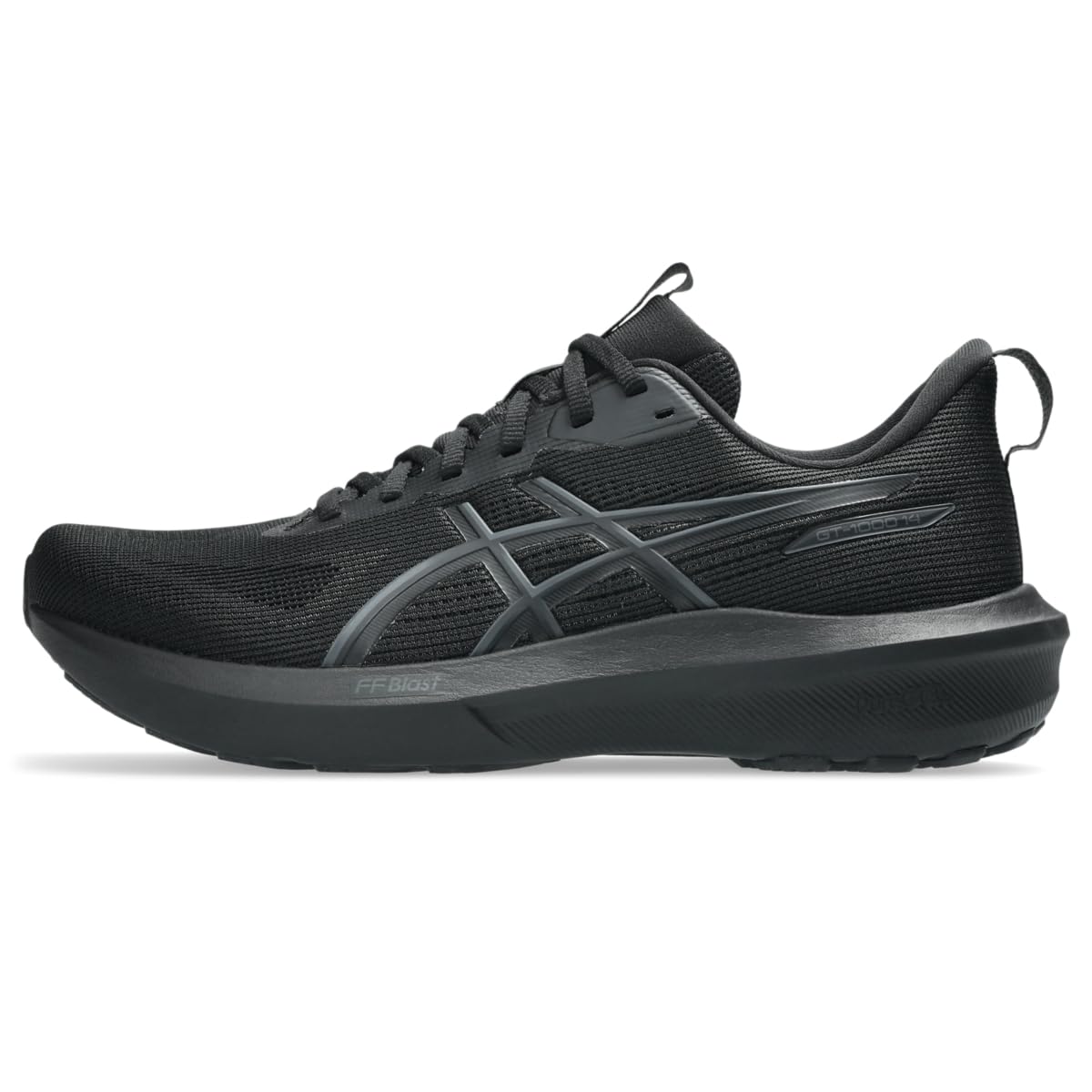
Unlike hard plastic posts, LITETRUSS is soft enough that runners with mild to moderate flat feet don’t feel a hard edge digging into their arch, yet firm enough to prevent the talus from rolling past neutral.
Reviewers consistently mention this shoe works well for overpronation and fallen arches, especially for cross-country and track use. The X-wide option is genuinely wide — no pinched toes even for runners with bunions. The Flight Foam midsole provides a cushioned but responsive ride, and the engineered mesh upper breathes well during summer training. A few users note the shoe feels “a bit flat” when walking, meaning it lacks the aggressive rocker some flat-foot runners prefer, but for those who want a traditional flat platform with support, that’s a feature not a flaw.
The outsole uses ASICS High Abrasion Rubber (AHAR) in the heel, which extends tread life well beyond what the price point would suggest. If you need a reliable daily trainer for flat feet on a tighter budget, the GT-1000 14 delivers genuine stability without cutting corners on width availability or midsole quality.
Why it’s great
- LITETRUSS provides genuine stability at an accessible price point
- X-wide option fits bunions and splay feet without pinching
- AHAR rubber outsole extends durability
Good to know
- Lacks an aggressive rocker — feels “flat” when walking
- Cushioning is adequate but not plush for very long runs
7. ASICS Women’s GT-1000 14 Running Shoes
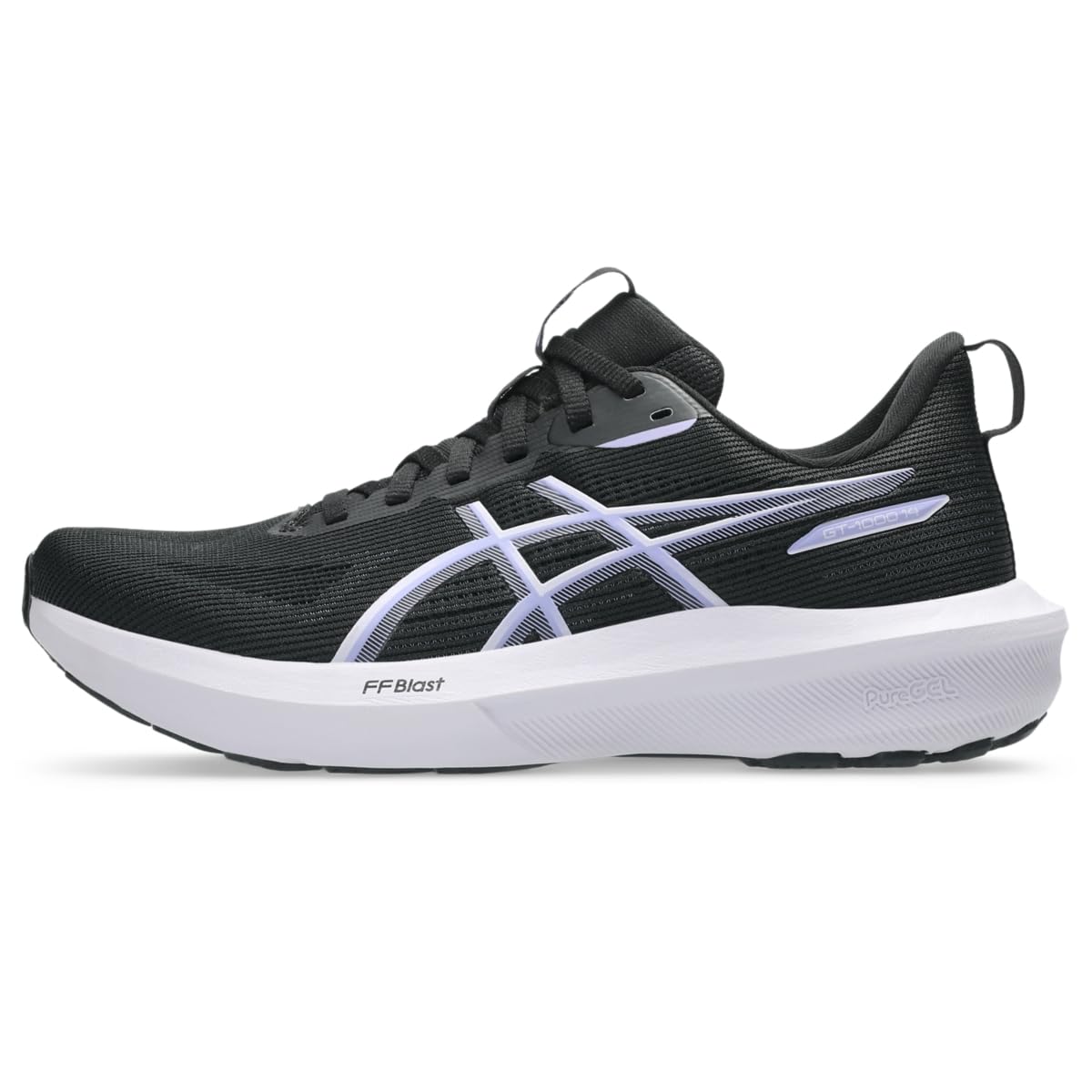
The women’s GT-1000 14 uses the same LITETRUSS medial support system as the men’s version, but with a women’s-specific last that narrows the heel and widens the forefoot slightly, accommodating the anatomical differences in female foot shape. Flat-footed women who struggle with heel slippage in unisex or men’s shoes will find the heel counter hugs the calcaneus more securely, preventing the micro-movements that can destabilize the entire gait.
Reviewers describe the cushioning as “cloud-like” and say the shoe reduced knee stress during long walks on concrete — a common complaint when flat feet cause the knee to track inward. The wide toe area allows the metatarsals to spread naturally, which improves balance during single-leg stance phases of walking and running. The color appears black indoors and navy outdoors, a minor but pleasant detail for the style-conscious.
Like its men’s counterpart, this shoe is built for neutral to mild overpronators — not severe cases — but the lightness (just over 10 ounces) and smooth heel-to-toe transition make it an excellent companion for walking, light jogging, and gym work. For women with flat feet who want an entry-level stability sneaker that doesn’t feel clunky, this is the strongest budget-friendly pick.
Why it’s great
- Women’s-specific last narrows heel and widens forefoot for better fit
- LITETRUSS controls mild overpronation without bulk
- Lightweight and smooth transition for walking and jogging
Good to know
- Not designed for severe overpronation
- Cushioning is adequate but not maximum for high-impact running
8. New Balance Men’s 608 V5 Casual Comfort Cross Trainer

The 608 V5 is not a running shoe — it is a cross trainer built for all-day standing on concrete, which makes it relevant for flat-footed workers, nurses, and retail staff who need arch support in a durable package. The full-grain leather upper holds the foot in place without stretching out, and the PU (polyurethane) midsole is significantly denser than EVA foam, meaning it resists compression over 8 to 12-hour shifts. Reviewers report that after 4 months of heavy use — 20,000 steps a day, squatting, kicking — the shoe maintained its shape and comfort.
The outsole is semi-waterproof and provides good traction on wet floors, though the tongue is not sealed, so deep puddles can soak through. The internal heel counter is stiff enough to prevent the rearfoot from sliding, and the lace-up closure lets you adjust tension across the midfoot — critical for flat feet because a loose midfoot allows the arch to splay sideways inside the shoe. Several reviewers note the “mint accents on the logo” are more visible in person than in product photos, but the overall aesthetic is classic and understated.
Where the 608 V5 falls short is arch-specific correction: it provides a stable foundation and a roomier 2E/4E fit, but there is no dedicated medial post. If your flat feet require active pronation control during high-impact activity, this is not the right shoe. But if you stand or walk on flat surfaces for most of your day and need a rugged, supportive base, the 608 V5 is a smart, budget-friendly choice.
Why it’s great
- PU midsole resists compression during long standing shifts
- Full-grain leather upper is durable and holds shape
- Stiff heel counter prevents rearfoot slide
Good to know
- No dedicated medial post for active pronation control
- Tongue is not waterproof — avoid deep puddles
9. Skechers Men’s Arch Fit 2.0 Upperhand Sneakers

The Arch Fit 2.0 skips laces entirely — it’s a slip-on design with elastic side panels that make entry effortless. The removable Arch Fit insole is the real draw here: it’s podiatrist-certified and molded to match the contour of a healthy arch, then post-processed to remove the material from the areas where a collapsed arch would press. For men with mild flat feet who don’t need a rigid frame, this insole provides enough lift to reduce heel pain (several reviewers say it eliminated their plantar fasciitis pain within 15 to 20 minutes of wear).
The upper is a canvas-like woven material that breathes well but is not waterproof and offers minimal lateral support. The midsole is lightweight EVA — too light for serious running, but adequate for walking, casual wear, and indoor slipper duty. The toe box is wide enough for natural toe splay, and the half-size availability helps dial in fit. A recurring caution from users: the light material and shallow heel cup can make the ankle feel prone to rolling if you step on uneven ground.
This shoe is not a performance stability trainer — it cannot correct moderate or severe overpronation during dynamic activity. But as a casual slip-on for standing, walking, and recovery days when your feet need gentle arch support without a heavy frame, the Arch Fit 2.0 offers remarkable comfort at a budget-friendly price point. The elastic laces are not removable, so if you prefer a custom lace pattern, look elsewhere.
Why it’s great
- Removable Arch Fit insole provides targeted arch contouring
- Slip-on design with elastic panels for easy entry
- Wide toe box allows natural splay
Good to know
- Lightweight construction offers minimal ankle support
- Not suitable for running or severe overpronation
FAQ
Can a neutral shoe work for flat feet or do I need a stability model?
How do I know if a sneaker’s toe box is wide enough for flat feet?
Do carbon-plated shoes like the Endorphin Pro 4 help or hurt flat feet?
Final Thoughts: The Verdict
For most users, the athletic sneakers for flat feet winner is the Brooks Adrenaline GTS 23 because its GuideRails system actively corrects overpronation through the entire stride without feeling harsh underfoot. If you want plush cushioning with the same stability framework, grab the Brooks Glycerin GTS 23. And for a budget-friendly daily trainer with genuine medial support, nothing beats the ASICS GT-1000 14.