
Our readers keep the lights on and the weekend projects moving. As an Amazon Associate, I earn from qualifying purchases.
The difference between an average run and a great one often comes down to the data on your wrist. You need a watch that locks onto GPS instantly, tracks your heart rate accurately through intervals, and survives the miles without needing a daily charge. The wrong watch leaves you guessing your pace, fiddling with a dead battery mid-workout, or wearing a brick that feels heavier than your water bottle.
I’m Rikta — the co-founder and writer behind FitlyFast. I’ve spent hundreds of hours analyzing GPS lock times, heart rate sensor accuracy across optical and optical + AI sensor arrays, battery life under continuous multi-band GNSS load, and the real-world durability of bezels, crystals, and strap materials to find the watches that actually perform when your workout gets hard.
This guide cuts through the marketing noise to compare GPS accuracy, battery endurance, and real-world sensor performance across the top wearables, so you can invest in a watch that genuinely supports your goals — not one that just looks the part. We have tested and reviewed 9 of the best athletic watches on the market to help you find your perfect training partner.
How To Choose The Best Athletic Watches
Choosing an athletic watch is less about brand loyalty and more about matching specific specs to your sport. A marathon runner needs different GPS endurance than a CrossFit athlete who prioritizes heart rate zone alerts. Before you click buy, look for these three critical factors.
GPS Accuracy & Multi-Band Support
Single-band GPS can drift by 10-15 meters in dense urban areas or under tree cover. Multi-band GNSS (L1+L5) locks onto more satellites for sub-meter accuracy, which is essential for trail runners, triathletes, and anyone tracking route distance for pacing. Watches like the COROS PACE Pro and Garmin Instinct 3 use dual-frequency chips that maintain a clean line even when skyscrapers or canyon walls block signals.
Optical Heart Rate Sensor Quality
Not all optical HR sensors are equal. Older green-LED arrays struggle during high-intensity intervals or in cold weather when blood flow to the wrist is reduced. Newer watches use multi-path green/red LEDs combined with AI-driven algorithms (like the Apple Watch Series 11) to match chest-strap accuracy within a few BPM. If you train in heart rate zones, look for a watch with proven optical HR performance or Bluetooth support for an external chest strap.
Battery Life vs. Display Type
AMOLED screens offer vibrant colors and high resolution but consume more power. MIP (Memory-in-Pixel) displays are less flashy but sip battery, allowing watches like the Garmin Instinct 2X Solar to last weeks. Your choice hinges on your longest workout. If you do 6-hour trail runs, MIP is safer. If you want a beautiful screen for daily wear and charge every few days, AMOLED is fine.
Quick Comparison
On smaller screens, swipe sideways to see the full table.
| Model | Category | Best For | Key Spec | Amazon |
|---|---|---|---|---|
| COROS PACE Pro | Premium | Serious runners & triathletes | 20 days / 38h GPS | Amazon |
| Apple Watch Series 11 | Premium | iPhone users & health monitoring | 24h battery, fast charge | Amazon |
| Garmin Instinct 3 Solar | Premium | Outdoor adventurers & hikers | Unlimited solar battery | Amazon |
| SUUNTO Race S | Premium | Trail runners & navigation | 32GB offline maps | Amazon |
| Garmin Instinct 2X Solar | Premium | Tactical / military & extreme use | Infinite solar battery | Amazon |
| COROS PACE 4 | Mid-Range | Weight-conscious runners | 32g / 41h GPS | Amazon |
| Amazfit Active Max | Mid-Range | Battery life & value seekers | 25-day battery | Amazon |
| Apple Watch SE 3 | Mid-Range | Budget Apple ecosystem entry | Always-On Display | Amazon |
| Fitbit Versa 4 | Mid-Range | All-day health & sleep tracking | 40+ exercise modes | Amazon |
In‑Depth Reviews
1. COROS PACE Pro GPS Sport Watch

The COROS PACE Pro earns the top spot by combining a brilliant 1.3-inch 1500-nit AMOLED display with the fastest processor in its class. GPS lock is nearly instant thanks to its all-new satellite chipset, and dual-frequency mode delivers accuracy within 10 feet per mile — verified by multiple users comparing it against friend’s high-end Garmin units. The 20-day daily battery (38 hours in standard GPS mode) means you can train hard for two full weeks without pulling out a charging cable.
The navigation suite is a standout for runners who explore trails. You can build custom routes with topographical maps in the COROS app and push them directly to the watch for turn-by-turn directions. The USB-C charging port is a welcome modern touch, and the included keychain adapter lets you charge with the same cable you use for your laptop. Reviewers consistently praise the clean, bloat-free user interface and the absence of subscription paywalls for advanced metrics.
Physically, the watch is under 50 grams with the silicone band, making it comfortable for 24/7 wear and sleep tracking. The always-on AMOLED screen uses a gesture-activated backlight that responds instantly, and the 22mm band is standard enough for easy aftermarket swaps. The only trade-off is the small screen size — some users find map details harder to read mid-run compared to larger Garmin units.
Why it’s great
- Brilliant AMOLED screen with 1500-nit brightness for outdoor readability
- Exceptional battery life: 20 days daily or 38 hours GPS tracking
- Accurate multi-band GPS with free offline topo maps
- No subscription paywalls for training metrics
Good to know
- Smaller 1.3-inch screen may feel cramped for map navigation
- Supple silicone band could be more durable for heavy trail use
- Watch face customization less extensive than Garmin’s Connect IQ
2. Apple Watch Series 11
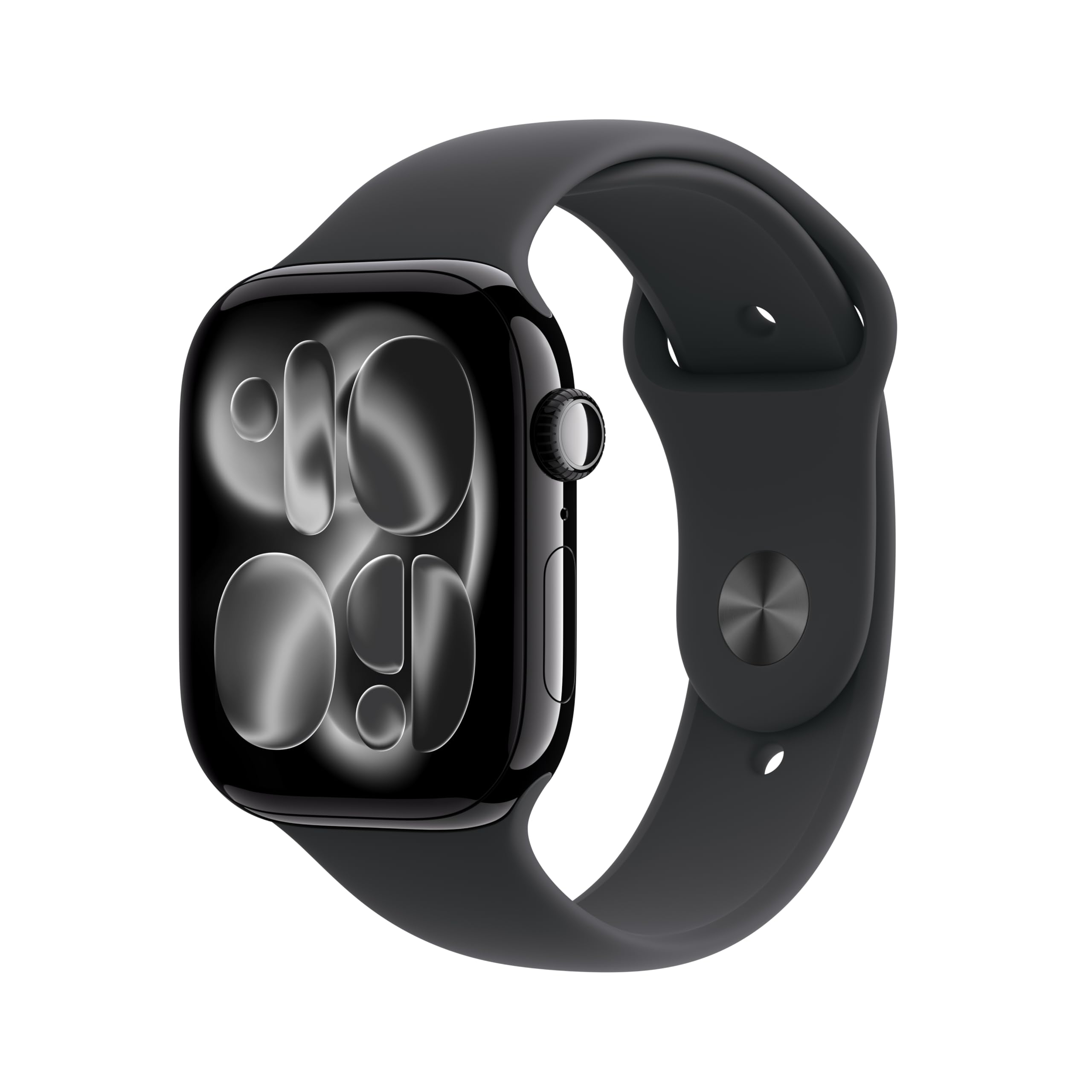
The Series 11 takes health monitoring to a clinical level, offering on-wrist ECG, hypertension notifications, and sleep apnea alerts. The optical heart rate sensor uses a multi-path LED array that delivers accuracy rivaling chest straps during steady-state cardio, and the Vitals app aggregates overnight metrics like respiratory rate and wrist temperature into a single daily snapshot. For athletes who also care about long-term health, this watch provides data no other brand replicates without a separate medical device.
Battery life reaches 24 hours of normal use — a meaningful jump from the 18-hour SE 3. The 15-minute fast charge delivers 8 hours of runtime, so a quick top-up while you shower is enough for a full day. The always-on LTPO display is 2x more scratch-resistant than the Series 10, and the 46mm case feels surprisingly light at 1.28 ounces. Reviewers consistently note that the watch is comfortable enough to wear to bed without noticing it.
The ecosystem lock-in remains the biggest consideration. Advanced features like Workout Buddy and Check In require an iPhone nearby, and you cannot sideload apps or delete pre-installed ones. The forced Apple login requirement frustrates some users, and the step count is not displayed on the main watch face by default — a minor but annoying quirk for fitness purists. If you are an Android user, this watch simply does not work.
Why it’s great
- ECG, hypertension, and sleep apnea alerts for comprehensive health coverage
- 24-hour battery with 15-minute fast charge for 8 hours of use
- Scratch-resistant glass and IP6X dust resistance for durability
- Seamless integration with iPhone for calls, texts, and safety features
Good to know
- Requires an iPhone — incompatible with Android
- Forced Apple Account login; cannot delete pre-installed apps
- Daily charging needed; no multi-week battery option
3. Garmin Instinct 3 Solar 45mm

The Instinct 3 Solar redefines rugged with a military-standard 810 build, a metal-reinforced bezel, and a solar charging lens that delivers unlimited battery life in smartwatch mode. The 0.9-inch MIP display is the most reflective and readable in direct sunlight of any watch in this comparison, and it sips so little power that the watch can run indefinitely if you spend 3 hours per day outside. The built-in LED flashlight with variable strobe modes has become a non-negotiable tool for campers and night runners.
Health tracking includes wrist-based heart rate, advanced sleep monitoring, Pulse Ox, and HRV-derived training status via the Firstbeat Analytics team. The multi-band GPS with SatIQ technology automatically switches between single and dual-band modes to balance accuracy with battery draw. Navigation includes a 3-axis compass and barometric altimeter, and the 10 ATM water rating means you can wear it for open-water swimming without concern.
The MIP display, while excellent in sunlight, lacks the color vibrancy and map detail of the AMOLED competitors. There is no onboard music storage or downloadable maps — you get breadcrumb navigation only. The Garmin Connect app also has a steeper learning curve than COROS or Apple Health, and some users find the button-driven interface less intuitive after coming from a touchscreen watch.
Why it’s great
- Unlimited battery life with solar charging — never worry about power
- Ultra-durable MIL-STD-810 and 10 ATM water resistance
- Best-in-class MIP display for direct sunlight readability
- Built-in flashlight with SOS strobe for outdoor safety
Good to know
- MIP display lacks the vibrancy and map detail of AMOLED
- No onboard music storage or downloadable offline maps
- Garmin Connect app interface has a learning curve
4. SUUNTO Race S

The SUUNTO Race S packs 32GB of global offline maps with high-resolution AMOLED clarity into a 60-gram package. The 1.32-inch 466dpi touchscreen combined with a digital crown provides one of the most intuitive browsing experiences for zooming into trail contours mid-run. Dual-band GNSS with GPS, GLONASS, GALILEO, QZSS, and BEIDOU support ensures accurate tracking even in narrow canyons or dense urban parks where single-band watches fade.
Battery life is competitive at 30 hours in performance GPS mode or 13 days in daily use, and fast charging brings it from empty to full in about an hour. The Suunto app now includes AI Coach, which creates adaptive training plans based on your TSS, CTL, HRV, and VO2 max data. The addition of menstrual cycle tracking rounds out a wellness suite that appeals to female endurance athletes who need both performance metrics and health context.
The software experience has improved dramatically through updates, but it still lags behind COROS and Garmin in gym-oriented workout tracking. There is no native rep counting or strength-training mode — users have to hack interval workouts for gym sessions. The wrist-based HR sensor also shows a 7-8 BPM variance compared to the Garmin Fenix in some user tests, though accuracy improves when using the GPS mode during steady-state runs.
Why it’s great
- 32GB onboard storage for global offline topographical maps
- Excellent dual-band GNSS accuracy in challenging terrain
- Lightweight 60g design with high-res AMOLED display
- AI Coach creates adaptive training plans based on recovery metrics
Good to know
- No native strength-training or rep-counting mode
- Wrist HR accuracy slightly trails Garmin’s newer sensors
- Map download to watch can be slow initially
5. Garmin Instinct 2X Solar Tactical Edition

The Instinct 2X Solar Tactical Edition is built for the most demanding environments — MIL-STD-810 certified, 50mm fiber-reinforced polymer case, and a solar lens that generates 50% more energy than the standard Instinct 2. The battery life is effectively infinite in smartwatch mode with daily sun exposure, and real-world endurance tests show 40+ days between charges even with regular GPS activity. The built-in ballistics calculator and jumpmaster mode serve a specific military audience, while the SOS strobe flashlight is a universal safety tool.
Accuracy is handled by multi-band GNSS with SatIQ, which reviewers confirm delivers consistent tracking within 10 feet per mile on hikes and trail runs. Health features include wrist-based heart rate, advanced sleep tracking with HRV, Pulse Ox, and respiration monitoring. The 26mm band is wider than most, lending a rugged profile, and the buttons are large enough to operate with gloves — a critical detail for winter runners or tactical operators.
The 50mm case is substantial and may overwhelm smaller wrists. There is no touchscreen, no music storage, and no color mapping — navigation is breadcrumb only via buttons. The display is MIP, which is excellent in sunlight but dim indoors without the backlight. The price is also significantly higher than the Instinct 3, and the tactical-specific features only add value if you actually need a ballistics calculator or jumpmaster mode.
Why it’s great
- Near-infinite battery life with enhanced solar charging lens
- MIL-STD-810 and 10 ATM water resistance for extreme durability
- Ballistics calculator and jumpmaster mode for tactical use
- Large buttons operable with gloves; military-grade construction
Good to know
- 50mm case is very large and may not fit smaller wrists comfortably
- No touchscreen, no music storage, and no color maps
- Premium price with tactical-specific features not useful for most athletes
6. COROS PACE 4
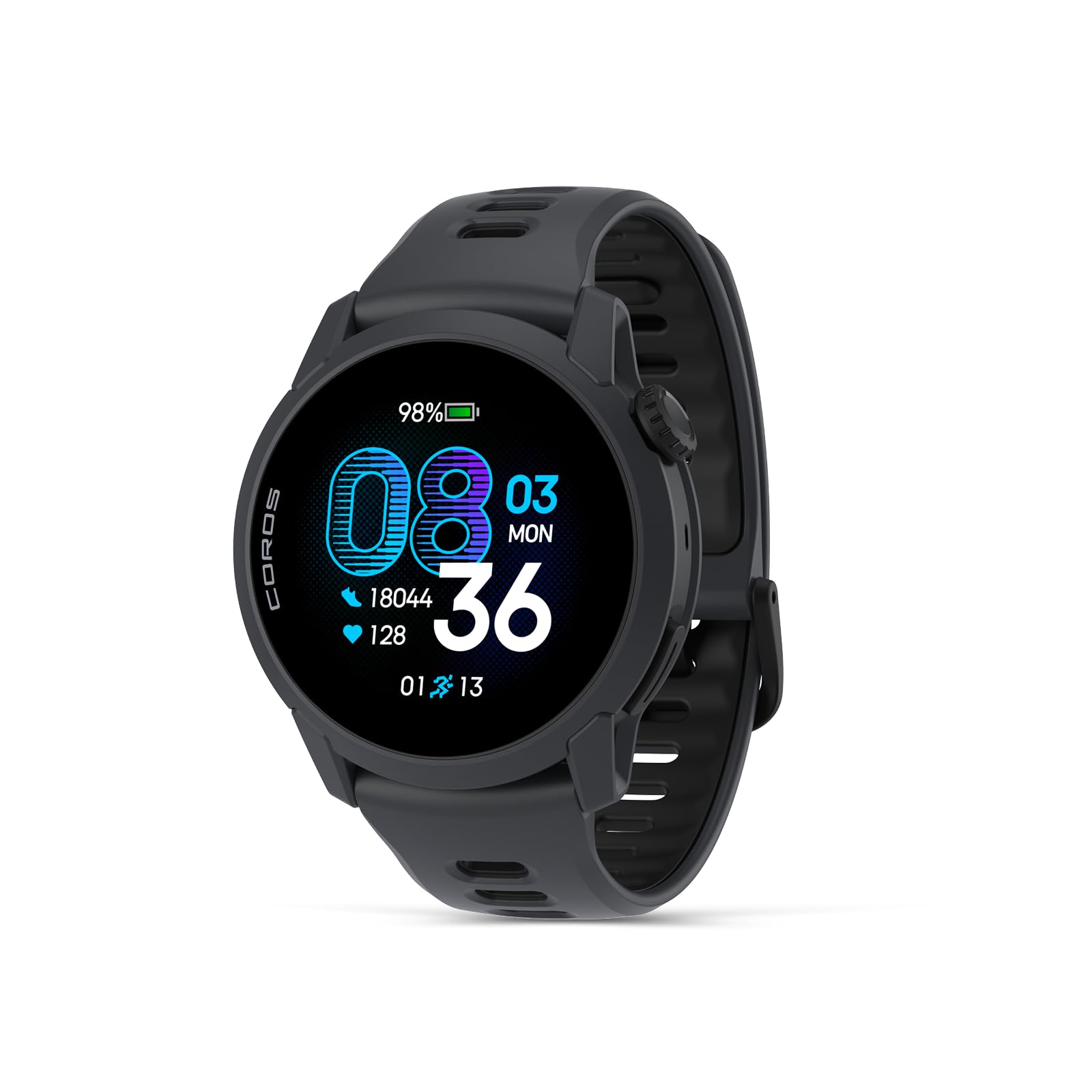
The COROS PACE 4 is the lightest fully-featured GPS sport watch available at 32 grams — lighter than most energy gels. The 1.2-inch AMOLED touchscreen delivers a 164% resolution increase over the PACE 3, and the auto-adjusting brightness ensures readability whether you are in a dark gym or direct midday sun. The 41 hours of continuous GPS tracking is class-leading for a watch this light, and the 19-day daily battery means you charge it roughly once every two and a half weeks.
Voice features set the PACE 4 apart from the competition. You can use voice recording to dictate training logs mid-workout — describing how a hill felt or what you saw on the trail — without stopping to type. Voice control also handles setting alarms or creating target workouts hands-free. The combination of a tactile digital crown, two buttons, and a smooth touchscreen gives you layered control options that work well even during high-intensity intervals.
The dual-band GPS is accurate enough that one reviewer reported better tracking than a friend’s Garmin Forerunner 975. The training and recovery hub tracks HRV, sleep stages, and menstrual cycles, and the COROS app provides detailed training load analysis without any subscription fees.
Why it’s great
- Incredibly light at 32g — barely noticeable on the wrist
- 41-hour continuous GPS battery for ultra-distance training
- Voice recording and voice control for hands-free workout logging
- Accurate dual-band GPS and responsive touchscreen + crown controls
Good to know
- Only 4GB of onboard storage limits music and map capacity
- Screen protector recommended for scratch-prone users
- Band selection (nylon vs silicone) significantly affects weight feel
7. Amazfit Active Max

The Amazfit Active Max dominates the battery category with a 25-day daily use rating, powered by a 200 mAh lithium polymer cell. The 1.5-inch AMOLED display hits 3000 nits — bright enough to read clearly while snowshoeing in alpine glare or running on a beach at noon. The 4GB onboard storage allows for offline music playback and downloadable maps with turn-by-turn directions, and the five-satellite positioning system provides fast locks without the multi-band GNSS found in higher-priced rivals.
The Zepp Coach feature generates personalized AI-driven running plans for distances from 3K to full marathon, adjusting based on your BioCharge score — a metric that combines daily workout load with stress levels to tell you when to push and when to rest. With 170+ sport modes including niche activities like snow shoveling, the watch covers practically everything. Bluetooth calling and the Zepp Flow voice assistant let you reply to messages hands-free when paired with an Android phone.
The trade-off for the massive battery is the absence of multi-band GPS. Single-band L1-only tracking can show drift in urban settings or dense tree cover compared to the COROS PACE Pro or Garmin Instinct 3. The Zepp app also lacks the depth of training analytics that serious runners expect — no TSS, CTL, or HRV-derived training status. The build quality feels acceptable but not premium, with a plastic case that lacks the scratch resistance of metal bezel watches.
Why it’s great
- Outstanding 25-day battery life on a single charge
- Ultra-bright 3000-nit AMOLED display for any lighting condition
- 4GB storage for offline music and downloadable maps
- AI-driven Zepp Coach creates adaptive running plans
Good to know
- Single-band GPS lacks multi-band accuracy in challenging terrain
- Zepp app analytics are less advanced than COROS or Garmin
- Plastic case is less durable than metal-reinforced alternatives
8. Apple Watch SE 3
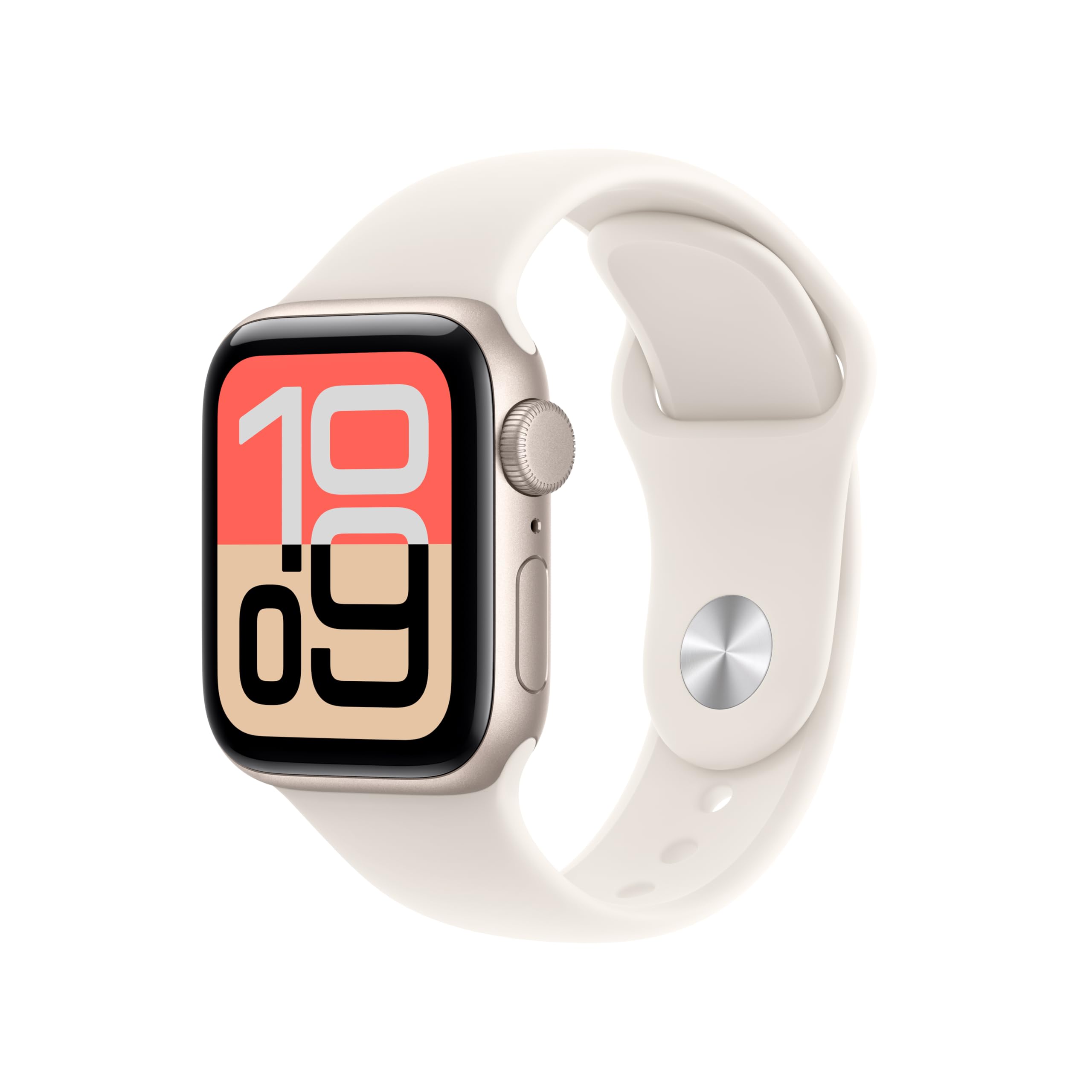
The Apple Watch SE 3 delivers the core Apple Watch experience at a much lower entry point. The always-on Retina display is a first for the SE line, and the S9 chip provides smooth navigation and fast app loading. Health features include temperature sensing for retrospective ovulation estimates, sleep apnea notifications, and the Vitals app that aggregates overnight metrics. Safety features like fall detection, crash detection, and Check In are identical to the Series 11 — a significant plus for runners who train alone on trails at dawn or dusk.
Battery life is rated at 18 hours, but with fast charging you get 8 hours of use from just 15 minutes plugged in. The 40mm case is the smallest in this comparison, making it the best choice for slender wrists or for kids using the Apple Watch For Your Kids setup. The Sport Band tucks the excess band neatly under itself, avoiding the flapping issue common on other watches. Reviewers note that the step count and heart rate tracking are accurate enough for daily training, and the seamless iPhone integration makes setup effortless.
The SE 3 lacks the oxygen sensor and ECG found on the Series 11, and the aluminum case is less scratch-resistant than the Series 11’s glass. The 18-hour battery is enough for a full day but requires a nightly charge — you cannot wear it for multi-day backpacking trips without a power bank. The always-on display also reduces battery life further, so you may need to disable it for longer days.
Why it’s great
- Best entry point into the Apple Watch ecosystem with core features
- Always-on Retina display and fast S9 chip
- Identical safety features (fall/crash detection, Check In) to Series 11
- Small 40mm case fits slender wrists and kids well
Good to know
- No ECG, oxygen sensor, or hypertension notifications
- 18-hour battery requires nightly charging
- Aluminum case is less scratch-resistant than the Series 11 glass
9. Fitbit Versa 4

The Fitbit Versa 4 is designed around the Google Health ecosystem, offering a Daily Readiness Score that tells you when to work out and when to recover based on your overnight HRV, sleep quality, and recent activity. The 40+ exercise modes cover the basics well, and the built-in GPS tracks outdoor routes without needing a phone. The 6+ day battery life comfortably outlasts any Apple Watch, making it a solid choice for travelers or anyone tired of daily charging.
Health monitoring includes 24/7 heart rate, SpO2, stress management score with guided breathing, and a health metrics dashboard that tracks trends over weeks. Sleep tracking is a Fitbit strength — the Sleep Score breaks down sleep stages, and the smart wake alarm gently rouses you during light sleep. On-wrist Bluetooth calls and Google Wallet payments add convenience, and the 3-month Google Health Premium membership included gives you access to personalized coaching and guided programs.
The GPS accuracy has been flagged by multiple reviewers as the Versa 4’s weakest link — first-mile drift of 50% or more in some cases, suggesting the watch sometimes leans on phone GPS instead of its own. The battery longevity is also reported to be closer to 4 days than the advertised 6+, especially with the always-on display enabled. The device longevity appears to be around 3 years based on user feedback, with some units experiencing screen failure after that point.
Why it’s great
- Daily Readiness Score provides science-backed recovery guidance
- Excellent sleep tracking with sleep stages and smart wake alarm
- 6+ day battery life outlasts most competing smartwatches
- Includes 3-month Google Health Premium membership
Good to know
- GPS accuracy is unreliable — significant drift on the first mile
- Battery life closer to 4 days in real-world use with AOD
- Device longevity appears limited to roughly 3 years
FAQ
Do I need multi-band GPS for casual running?
Can I wear an athletic watch for swimming?
How accurate is wrist-based heart rate during intervals?
What is training load and why should I track it?
Final Thoughts: The Verdict
For most users, the athletic watches winner is the COROS PACE Pro because it delivers a brilliant AMOLED display, accurate multi-band GPS, and 20-day battery life without any subscription fees — the best balance of training depth and everyday usability. If you want clinical-grade health monitoring and seamless iPhone integration, grab the Apple Watch Series 11. And for extreme outdoor durability with effectively infinite battery life, nothing beats the Garmin Instinct 3 Solar.