
Our readers keep the lights on and the weekend projects moving. As an Amazon Associate, I earn from qualifying purchases.
Choosing an Atmos surround sound system means committing to the idea that audio should come from all around you, including above your head. The best setups use dedicated up-firing drivers, precise processing, and proper calibration to create that overhead bubble of sound that makes rain feel real and helicopters feel threatening — and the difference between a system that convinces and one that merely hints is in the hardware choices you make today.
I’m Rikta — the co-founder and writer behind FitlyFast. I’ve spent years analyzing home theater audio hardware, focusing on the channel configurations, DSP engines, and driver designs that separate cinematic immersion from background noise.
Whether you are building from scratch or upgrading a soundbar, the right choice demands a clear understanding of channel counts, up-firing driver quality, and subwoofer integration — all distilled into this guide to finding the best atmos surround sound system for your room and your budget.
How To Choose The Best Atmos Surround Sound System
The Atmos market is split between soundbars with virtual height processing and full multi-driver systems with dedicated physical up-firing channels. Your choice depends on how much room you have, how critical precise overhead imaging is to you, and whether you can accommodate a wired subwoofer and rear speakers.
Up-Firing Drivers vs. Virtual Processing
True Atmos requires drivers that fire sound toward the ceiling, where it reflects down to the listening position. Systems that rely purely on psychoacoustic processing can widen the sound field but rarely produce the specific overhead localization that makes Atmos convincing. Look for systems with at least two dedicated up-firing drivers—four is better for a rear height channel.
Channel Count and Scalability
A 5.1.2 system offers a solid foundation with two height channels, while 7.1.4 adds rear height for a fully enveloping dome. Higher channel counts demand more processing power and more drivers, so check the DSP core specs—triple-core or dedicated multi-channel audio engines handle object-based audio with lower latency and better spatial accuracy.
Subwoofer Integration and Bass Extension
Subwoofer performance is measured by extension (how low it goes in Hz) and amplifier power. A 10-inch driver with a class-D amp can pressurize a medium room down to 30 Hz, while dual-opposing 8-inch subs deliver faster, cleaner bass with less cabinet resonance. Wireless subwoofers simplify placement but may introduce slight latency—look for dedicated 5 GHz wireless links for stable transmission.
Quick Comparison
On smaller screens, swipe sideways to see the full table.
| Model | Category | Best For | Key Spec | Amazon |
|---|---|---|---|---|
| Samsung HW-Q990D | Premium | Cinematic immersion at home | 11.1.4 channels / 4 up-firing drivers | Amazon |
| Sonos Arc Ultra | Premium | Multi-room ecosystem | 9.1.4 channels / Sound Motion driver | Amazon |
| Polk MagniFi Max AX SR | Premium | Dialogue clarity | 7.1.2 channels / 10″ wireless subwoofer | Amazon |
| Sony BRAVIA Theater System 6 | Mid-Range | TV-matched simplicity | 5.1 channels / dedicated center channel | Amazon |
| ULTIMEA Skywave X50 | Mid-Range | Value in full wireless | 5.1.4 channels / 8″ subwoofer / GaN amp | Amazon |
| Hisense AX5140Q | Mid-Range | Complete soundbar with rears | 5.1.4 channels / 6.5″ wireless subwoofer | Amazon |
| Bose Smart Dolby Atmos Soundbar | Mid-Range | Compact all-in-one | 5 transducers / TrueSpace upmixing | Amazon |
| Samsung HW-Q600F | Mid-Range | Gaming and voice control | 3.1.2 channels / wireless subwoofer | Amazon |
| Klipsch Reference Cinema 5.1.4 | Mid-Range | Traditional speaker setup | 5.1.4 channels / Tractrix horn tweeters | Amazon |
| Polk ES35 (Center Channel) | Component | Upgrading dialogue clarity | 1″ tweeter + six 3″ woofers / Power Port | Amazon |
| Nakamichi Dragon 11.4.6 | Flagship | Reference-grade cinema | 11.4.6 channels / dual-opposing 8″ subs | Amazon |
In‑Depth Reviews
1. Samsung HW-Q990D

The Q990D uses an 11.1.4 channel layout with four up-firing drivers — two in the soundbar and two in the included rear satellites — to create a fully sealed overhead bubble. The dedicated wireless subwoofer hits with authority, and the Q-Symphony feature syncs compatible Samsung TV speakers with the soundbar for a wider front soundstage.
Dialogue remains crisp even at low volumes thanks to Adaptive Sound processing that analyzes incoming audio in real time. Game Mode Pro activates automatically when a console is detected, using the up-firing drivers and acoustic beam to place directional cues above and behind the listening position.
SpaceFit Sound Pro measures the room’s acoustics and adjusts the EQ curve and channel delays automatically. Some users report occasional audio dropouts when using eARC with non-Samsung TVs, but the core performance — deep bass, clear height effects, and wide surround imaging — sets the bar for a complete packaged system.
Why it’s great
- Full 11.1.4 channel Atmos with real rear height channels
- Q-Symphony expands soundstage with compatible Samsung TVs
- Game Mode Pro delivers precise 3D positional audio
Good to know
- Occasional audio dropouts via eARC on non-Samsung TVs
- Firmware updates via USB recommended over automatic OTA
2. Sonos Arc Ultra

Sonos packed a 9.1.4 spatial audio architecture into a single bar using its proprietary Sound Motion technology, which moves more air from a smaller driver array. The result is a wide, immersive front soundstage with convincing height cues, especially when paired with the Era 300 speakers as dedicated rear surrounds.
AI-driven Speech Enhancement isolates the human voice frequency range and boosts it without raising the overall volume, making dialogue pop even during loud action sequences. The Trueplay system uses the phone’s microphone to measure room reflections and tune the EQ, delay, and channel balance for the specific space.
True wireless surround requires adding the Sonos Sub and Era 300 satellites, which pushes the total investment up significantly. The bar alone does an admirable job with Atmos content, but the full 9.1.4 effect only materializes with the complete ecosystem. The Sonos app handles setup, grouping, and multi-room audio seamlessly.
Why it’s great
- Sound Motion architecture delivers big sound from a slim bar
- AI Speech Enhancement keeps dialogue clear without artifacts
- Trueplay calibrates to the room’s specific acoustics
Good to know
- Full Atmos immersion requires adding Sub and Era 300 surrounds
- Premium pricing for the complete ecosystem
3. ULTIMEA Skywave X50
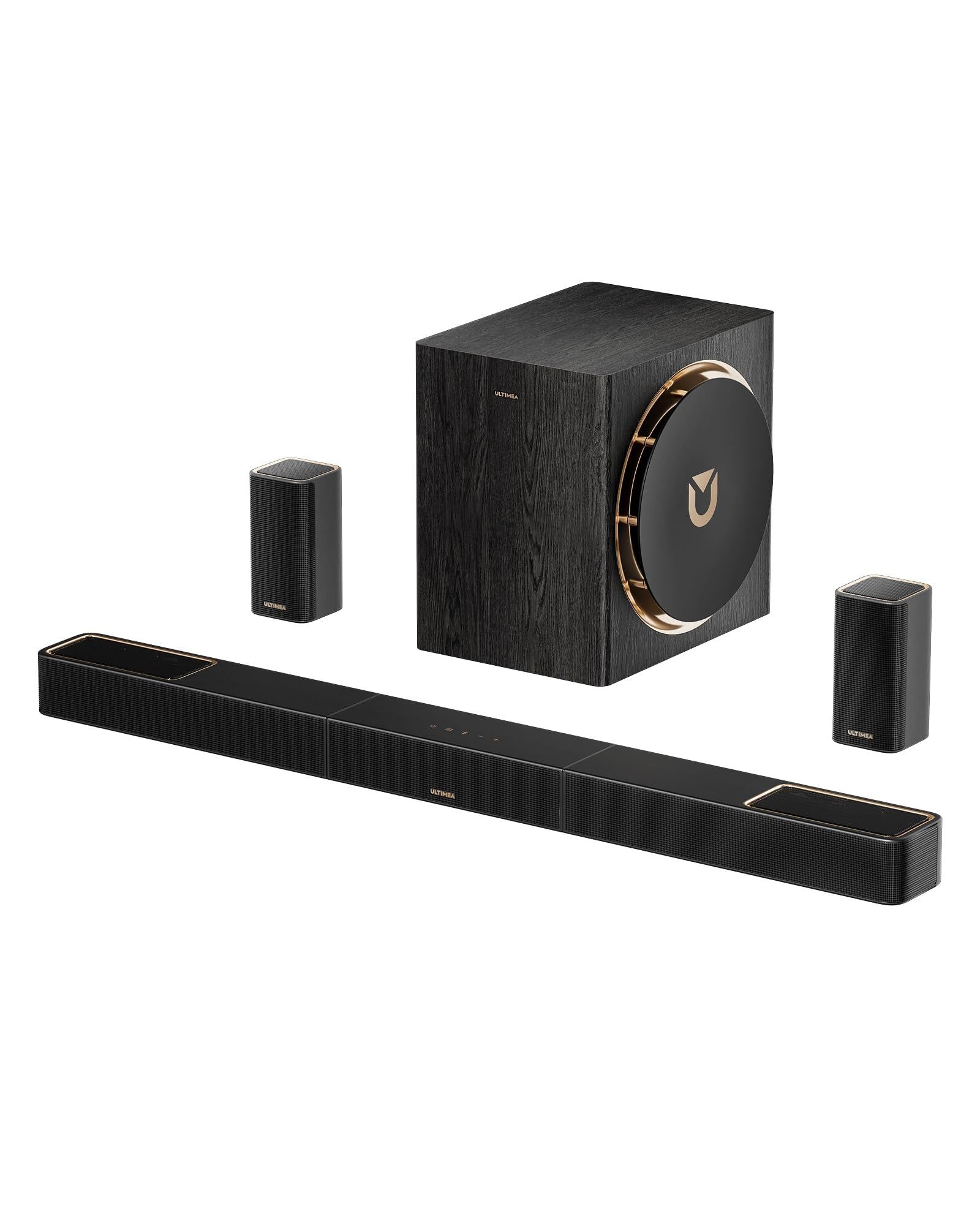
The Skywave X50 uses a 5.1.4 channel layout with a GaN amplifier that runs cooler and responds faster than traditional silicon-based amps. The dual-opposing 8-inch subwoofer delivers clean extension down to 28 Hz, and the two wireless rear speakers each contain a dedicated up-firing driver for true height channel separation.
NEURACORE, the triple-core DSP engine, processes 24-bit/192 kHz audio with measured distortion below 0.5 percent, keeping height effects crisp and dialog focused even during complex object-based audio scenes. The 5 GHz wireless link between the soundbar and the subwoofer avoids the 2.4 GHz congestion that plagues cheaper systems.
Setup is genuinely plug-and-play — the soundbar auto-paired with the sub and rears within seconds of powering on. The app allows per-channel volume adjustment and EQ preset selection. The 4K HDR passthrough via HDMI eARC preserves video quality, and the wood-crafted subwoofer cabinet adds aesthetic weight to the package.
Why it’s great
- GaN amplifier offers high efficiency and low heat
- 5 GHz wireless link ensures stable subwoofer connection
- Each rear satellite includes a dedicated up-firing driver
Good to know
- Rear speakers require AC power, not battery
- Room calibration is manual via the app
4. Polk MagniFi Max AX SR

The MagniFi Max AX SR combines a 7.1.2 channel soundbar with a 10-inch wireless subwoofer and two SR2 surround speakers. Polk’s patented SDA 3D technology uses the two up-firing drivers to create a wide sound field with noticeable overhead presence, and the included subwoofer delivers deep, effortless bass that fills a 25 by 30 foot room without strain.
VoiceAdjust is the standout feature — a dedicated center channel processor that raises or lowers dialogue volume independently of the rest of the mix. This makes it simple to keep dialogue clear during loud action scenes without the audio sounding artificial or tinny. The system also includes three HDMI inputs, so you can connect a console and streaming box directly.
The wireless rear speakers pair instantly and the app is optional — the soundbar responds to the TV remote out of the box. All Stereo mode is excellent for music listening, sending a clean two-channel signal to the soundbar while the sub handles the low frequencies. The only tradeoff is that the up-firing drivers are front-only, so rear height effects are simulated rather than discrete.
Why it’s great
- VoiceAdjust offers granular control over dialogue levels
- 10-inch subwoofer pressurizes large rooms easily
- Setup works without an app — TV remote compatible
Good to know
- Rear height effects are virtual, not discrete up-firing
- Subwoofer wireless range rated at 15 feet
5. Sony BRAVIA Theater System 6

This 5.1-channel system focuses on delivering clean, punchy sound from a compact soundbar paired with wired rear speakers and a wireless subwoofer. The dedicated center channel driver — a physical driver, not a virtual processing trick — anchors dialogue firmly to the screen, making it ideal for anyone who struggles with vocal clarity from standard TV speakers.
DSEE (Digital Sound Enhancement Engine) upmixes compressed music streams by restoring high-frequency detail lost during encoding, and the Multi Stereo mode plays the same audio from all speakers to fill the room evenly. Voice Zoom 3 is available when paired with a compatible BRAVIA TV, giving additional control over vocal prominence without affecting the rest of the mix.
The primary limitation for Atmos enthusiasts is that this is a 5.1 system with no physical up-firing drivers — height effects are simulated via DSP. The subwoofer must be placed near the TV because the connection is wired, which limits placement flexibility. For a clean, dialogue-focused 5.1 system that integrates tightly with Sony TVs, it delivers a reliable experience.
Why it’s great
- Physical center channel driver anchors dialog precisely
- DSEE restores detail from compressed audio sources
- Tight integration with Sony BRAVIA TVs and remote
Good to know
- No physical up-firing drivers for true Atmos height effects
- Subwoofer requires wired connection to the soundbar
6. Hisense AX5140Q
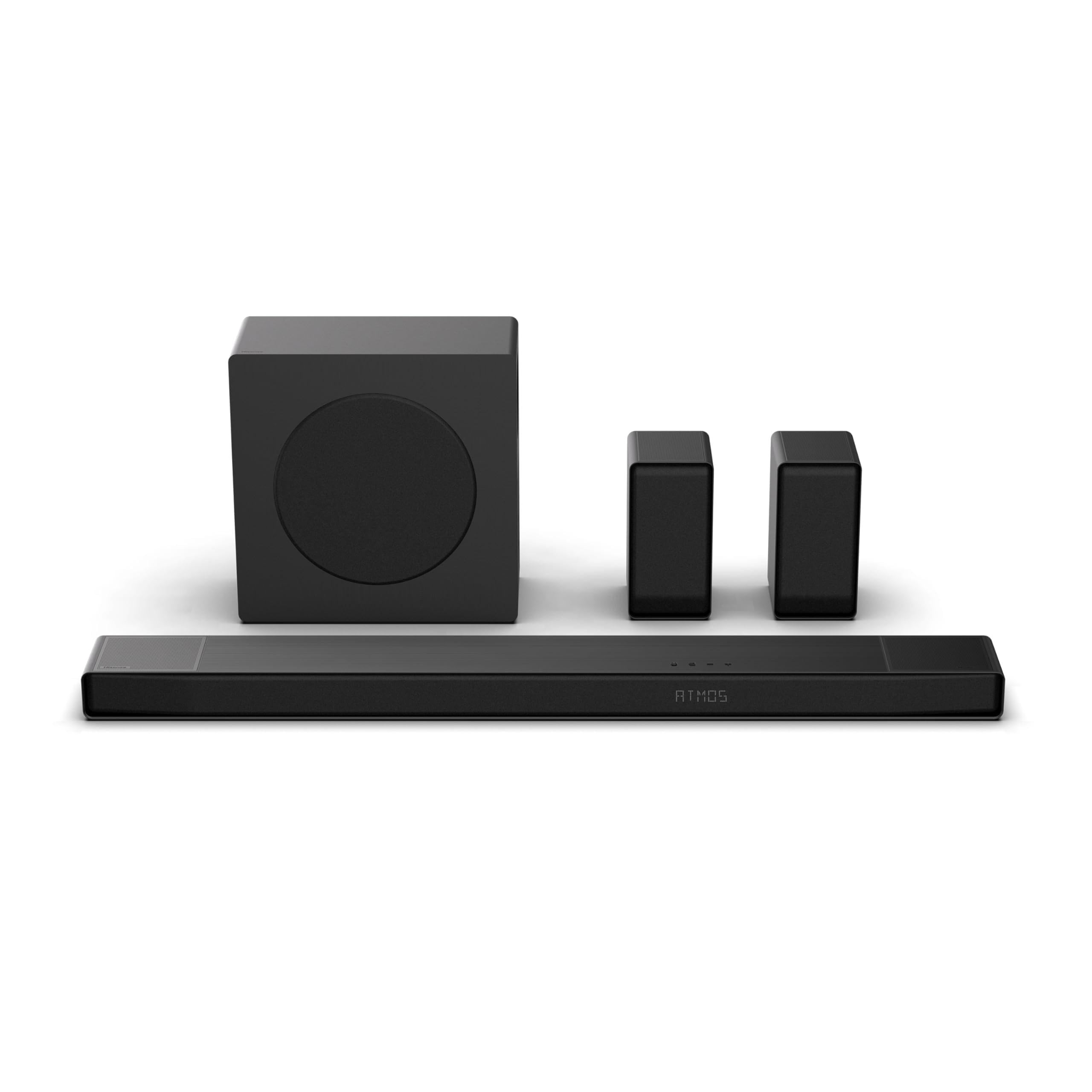
The AX5140Q offers a 5.1.4 channel configuration with two up-firing drivers in the soundbar and two more in the wireless rear satellites, giving it discrete height processing in both the front and rear hemispheres. The 6.5-inch wireless subwoofer hits down to 40 Hz, providing solid low-end support for action movies and bass-heavy music tracks.
Seven EQ presets — including dedicated modes for music, movies, and news — let you tailor the frequency response to the content type without diving into a full parametric equalizer. The Room Calibration feature uses the built-in microphone to measure speaker distances and adjust channel delays, which helps the up-firing drivers hit the ceiling reflection point more accurately.
HDMI eARC simplifies the connection to a single cable, and 4K HDR passthrough preserves video quality for consoles and streaming devices. Rear speakers are connected wirelessly but require AC power, so placement is flexible as long as there is an outlet nearby. The bass is punchy but slightly less defined than larger subwoofers, and the rear height drivers can feel underpowered in very large rooms.
Why it’s great
- Discrete up-firing drivers in both soundbar and rears
- Room Calibration adjusts delays for ceiling reflection
- 7 EQ presets for quick content-specific tuning
Good to know
- Rear height channels less impactful in larger rooms
- Subwoofer extension limited to 40 Hz
7. Bose Smart Dolby Atmos Soundbar

Bose fits five transducers — including two dedicated up-firing drivers — into a compact chassis that measures under three inches tall. TrueSpace technology analyzes any stereo or 5.1 signal and upmixes it to a multi-channel format, so non-Atmos content still benefits from a wider soundstage and a sense of height.
AI Dialogue Mode uses a neural network to identify when vocal frequencies are being masked by background effects and dynamically boosts them without raising the overall volume. The soundbar also supports Bluetooth, Apple AirPlay 2, Chromecast, and Spotify Connect, making it a flexible music hub even when the TV is off.
The bar can pair with Bose Ultra Open Earbuds to serve as rear surround channels — a creative solution for spaces where physical rear speakers are impractical. The included remote and voice control via Alexa or Google Assistant cover most functions, though the Bose app is required for initial setup and firmware updates. Without a separate subwoofer, the bass is adequate for music but lacks the tactile punch needed for serious home theater use.
Why it’s great
- TrueSpace upmixes non-Atmos content into height-aware audio
- AI Dialogue Mode clarifies vocals without raising overall volume
- Compact form factor fits under most TV stands
Good to know
- Requires separate Bose Bass Module for theater-level bass
- App is mandatory for full setup and tuning
8. Samsung HW-Q600F
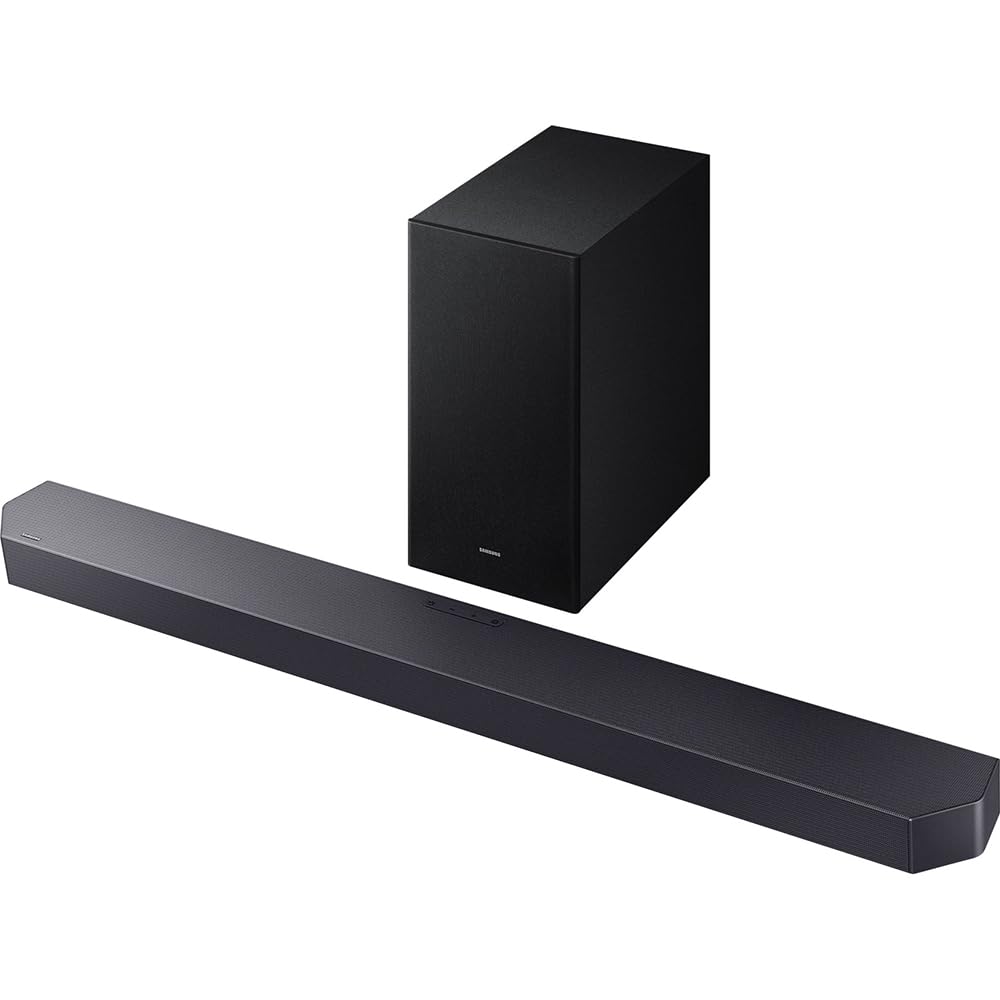
The Q600F uses a 3.1.2 channel layout with two up-firing drivers to create basic overhead effects, supported by a wireless subwoofer that uses a Harmon Kardon design for tighter, more controlled bass than typical budget subs. Game Pro Mode automatically detects a console and switches the DSP to emphasize directional cues, making footsteps and environmental audio more distinct.
Q-Symphony synchronizes the soundbar with compatible Samsung TV speakers, widening the front soundstage without introducing echo or phasing artifacts. Adaptive Sound analyzes the incoming audio stream and adjusts EQ in real time — dialogue gets a mid-range bump during quiet scenes, and effects gain treble presence during action sequences.
Setup is straightforward via HDMI eARC, and the soundbar can be controlled with the Samsung TV remote, eliminating the need for a separate controller. The 3.1.2 channel count limits the surround bubble compared to systems with dedicated rear speakers, and the subwoofer extension stops at around 40 Hz, so it won’t reproduce the deepest LFE effects in movie soundtracks. It is a strong entry point for gamers and casual viewers who want Atmos without a full five-speaker setup.
Why it’s great
- Game Pro Mode enhances directional audio for competitive play
- Q-Symphony integrates seamlessly with Samsung TVs
- Harmon Kardon subwoofer offers clean, controlled bass
Good to know
- 3.1.2 setup lacks dedicated rear surround speakers
- Subwoofer extension limited to approximately 40 Hz
9. Klipsch Reference Cinema 5.1.4

This is a passive speaker system — four satellite speakers with built-in up-firing drivers, a center channel, and a powered subwoofer — that requires a separate AV receiver with Atmos decoding. The Tractrix 90-degree horn-loaded aluminum tweeters provide the high-frequency extension and controlled dispersion that Klipsch is known for, making dialogue and effects cut through the mix with precision.
Every satellite speaker in the package includes a dedicated up-firing driver, so you get height channels from both the front and rear positions. The powered subwoofer uses an all-digital amplifier rated to deliver clean bass, though several users note that the sub lacks the punch and extension of higher-end Klipsch offerings like the R-120SW.
Because these are passive speakers with standard binding posts, you can mix and match components over time — upgrade the subwoofer, swap the satellites for larger bookshelf speakers, or add additional height channels. The speaker cabinets are made of plastic rather than MDF, which reduces weight but also lowers the overall acoustic mass compared to the brand’s higher-end Reference line.
Why it’s great
- Tractrix horn tweeters deliver high-frequency clarity and controlled dispersion
- All four satellites include a dedicated up-firing driver for full height coverage
- Standard binding posts allow easy component upgrades
Good to know
- Requires a separate AV receiver with Atmos decoding
- Subwoofer lacks the extension of larger Klipsch models
10. Polk ES35 Center Channel

The ES35 is a passive center channel speaker designed for use with an AV receiver. Its slim profile — just over three inches tall — fits under most TVs without blocking the IR sensor, and the six 3-inch woofers paired with a 1-inch Terylene tweeter create a broad, phase-coherent soundstage that anchors dialogue to the screen across a wide seating area.
Polk’s Power Port technology uses a flared rear port to reduce turbulence and extend low-frequency response, allowing the center channel to produce meaningful bass down to around 60 Hz. This is useful because the center channel carries roughly 75 percent of a movie’s soundtrack, and a center that can handle lower frequencies prevents thin, nasal-sounding dialogue during action-heavy scenes.
The ES35 lacks any internal amplification — it needs to be driven by an AV receiver’s center channel output, typically rated at 50–150 watts. The all-plastic cabinet construction keeps the weight low for wall mounting but doesn’t dampen cabinet resonance as effectively as MDF or aluminum enclosures. For anyone building or upgrading a dedicated component-based Atmos system, this center channel brings dialogue clarity that most soundbars cannot match.
Why it’s great
- Six 3-inch woofers produce wide, natural vocal dispersion
- Power Port extends low-frequency response for fuller dialogue
- Slim profile fits under TVs without blocking sensors or screens
Good to know
- Requires an external AV receiver for power and crossover
- Plastic cabinet does not dampen resonance as well as MDF
11. Nakamichi Dragon 11.4.6
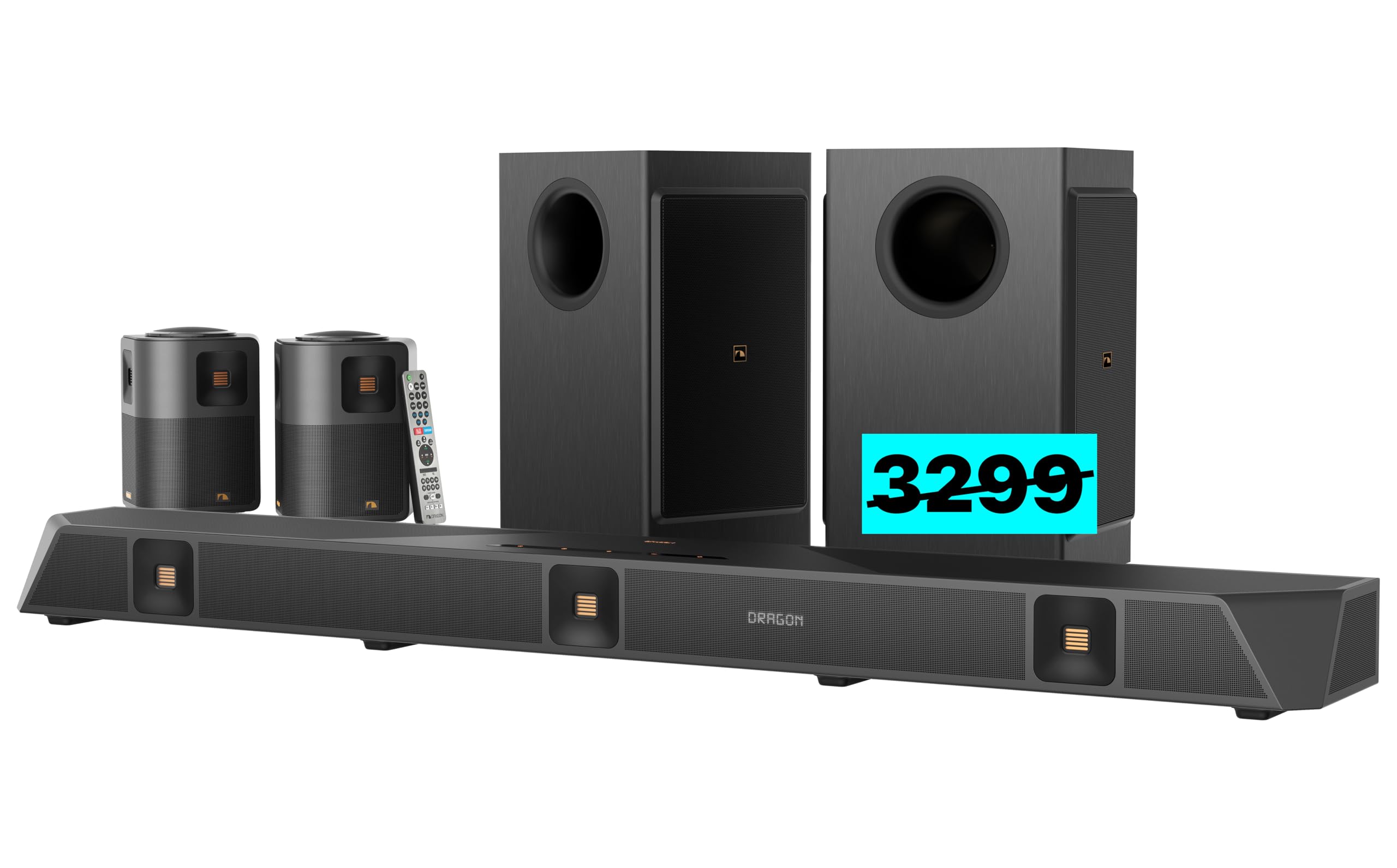
The Dragon system is a complete, pre-configured 11.4.6 channel array: a 58-inch wide main unit, two dual-opposing 8-inch subwoofers, and two Omni-Motion surround speakers that each contain a forward-firing, side-firing, and up-firing driver. The system processes Dolby Atmos (up to 24.1.10) and DTS:X Pro (up to 30.2) using a dedicated Pro-Cinema Engine that operates at true AVR-grade processing depth rather than condensed soundbar logic.
HiFi Air Motion Tweeters preserve pristine high-frequency transients, and the PerfectHeight Mechanism on the surround speakers locks the overhead effects to the listening position by adjusting the angle of the up-firing driver. The dual-opposing 8-inch subwoofers cancel out cabinet vibration, producing clean, tactile bass that pressurizes a 15-by-17-foot room easily without bloom or boominess.
Setup takes about 45 minutes and involves placing three large boxes — the main bar weighs 32 pounds, each subwoofer weighs 34 pounds, and each surround speaker weighs nearly 9 pounds. The connection is via HDMI eARC with three HDMI 2.1 inputs supporting 4K 120Hz and Dolby Vision passthrough. Some users note the subwoofer crossover works best at 120 Hz to avoid muddiness in the lower mid-range. This is a reference-level system for buyers who want soundbar simplicity with separates-grade performance.
Why it’s great
- 11.4.6 discrete channels with real height drivers in every position
- Dual-opposing subs deliver clean, distortion-free bass down to 20 Hz
- AMT tweeters provide detailed, extended high-frequency response
Good to know
- Heavy components require a dedicated AV stand or cabinet
- Optimal subwoofer crossover setting requires manual tuning
FAQ
Do I need a dedicated subwoofer for good Atmos performance?
Can I add rear speakers to a soundbar that started as a 3.1.2 setup?
What is the difference between Dolby Atmos and DTS:X when choosing a system?
Does room shape affect how well up-firing Atmos drivers work?
How important is HDMI eARC for an Atmos system?
Final Thoughts: The Verdict
For most users, the best atmos surround sound system winner is the Samsung HW-Q990D because it combines discrete 11.1.4 channel processing, true rear height drivers, and a wireless subwoofer that pressurizes medium to large rooms with authority. If you want a scalable platform that prioritizes multi-room audio and AI-driven vocal clarity, grab the Sonos Arc Ultra. And for the reference-grade, no-compromise cinema experience with separate subwoofers and adjustable height drivers, nothing beats the Nakamichi Dragon 11.4.6.