
Our readers keep the lights on and the weekend projects moving. As an Amazon Associate, I earn from qualifying purchases.
Letting your reef tank’s water level drift throws off salinity, stresses corals, and forces you to hand-fill reservoirs daily. An auto top-off system (ATO) solves this by sensing the sump level and dosing fresh RODI water back automatically — keeping your specific gravity rock-solid whether you’re at work, asleep, or on vacation.
I’m Rikta — the founder and writer behind FitlyFast. I spend my days deep in market research, analyzing optical sensor accuracy, pump head pressure ratings, and controller logic to separate reef-ready hardware from gimmicks that dump an entire bucket of fresh water into your sump.
This guide compares the best models on the market today to help you pick a reliable ato for reef tank that will hold your water level steady without constant babysitting or flood risks.
How To Choose The Best ATO For Reef Tank
Picking the wrong ATO can mean a flooded floor or a salinity crash. Focus on sensor type, pump performance, and the controller’s logic to avoid these headaches.
Sensor Technology: Optical vs. Conductivity vs. Float Valves
Mechanical float switches are cheap but prone to salt creep jamming. Optical sensors use a prism and infrared LED — no moving parts to stick. Conductivity probes (like the Red Sea and IM units) work only in salt or brackish water and need monthly cleaning to stay accurate. For a reef tank, dual optical sensors offer the best reliability with the least maintenance. The primary sensor triggers the pump, and a secondary sensor at a slightly higher level acts as a kill switch if the first fails.
Quick Comparison
On smaller screens, swipe sideways to see the full table.
| Model | Category | Best For | Key Spec | Amazon |
|---|---|---|---|---|
| Tunze Osmolator 3 | Premium | Long-term reliability | 0.5 mm sensing accuracy | Amazon |
| XP Aqua Duetto 2 | Premium | Compact dual-sensor safety | 8.2 ft max lift height | Amazon |
| Red Sea ReefATO+ | Premium | App control and leak detection | Titanium conductivity probe | Amazon |
| Kamoer ATO One 2 SE | Mid-Range | Easy install with overflow alarm | Triple optical sensor system | Amazon |
| JBJ Nano ATO | Mid-Range | Nano and small tanks | 74 gal/hr DC pump included | Amazon |
| Innovative Marine Hydro Fill Ti | Mid-Range | Budget conductivity sensor | Titanium probes for saltwater | Amazon |
| Your Choice Aquatics SATO | Budget | Gravity-fed passive system | 2-gallon acrylic reservoir | Amazon |
In‑Depth Reviews
1. Tunze Osmolator 3
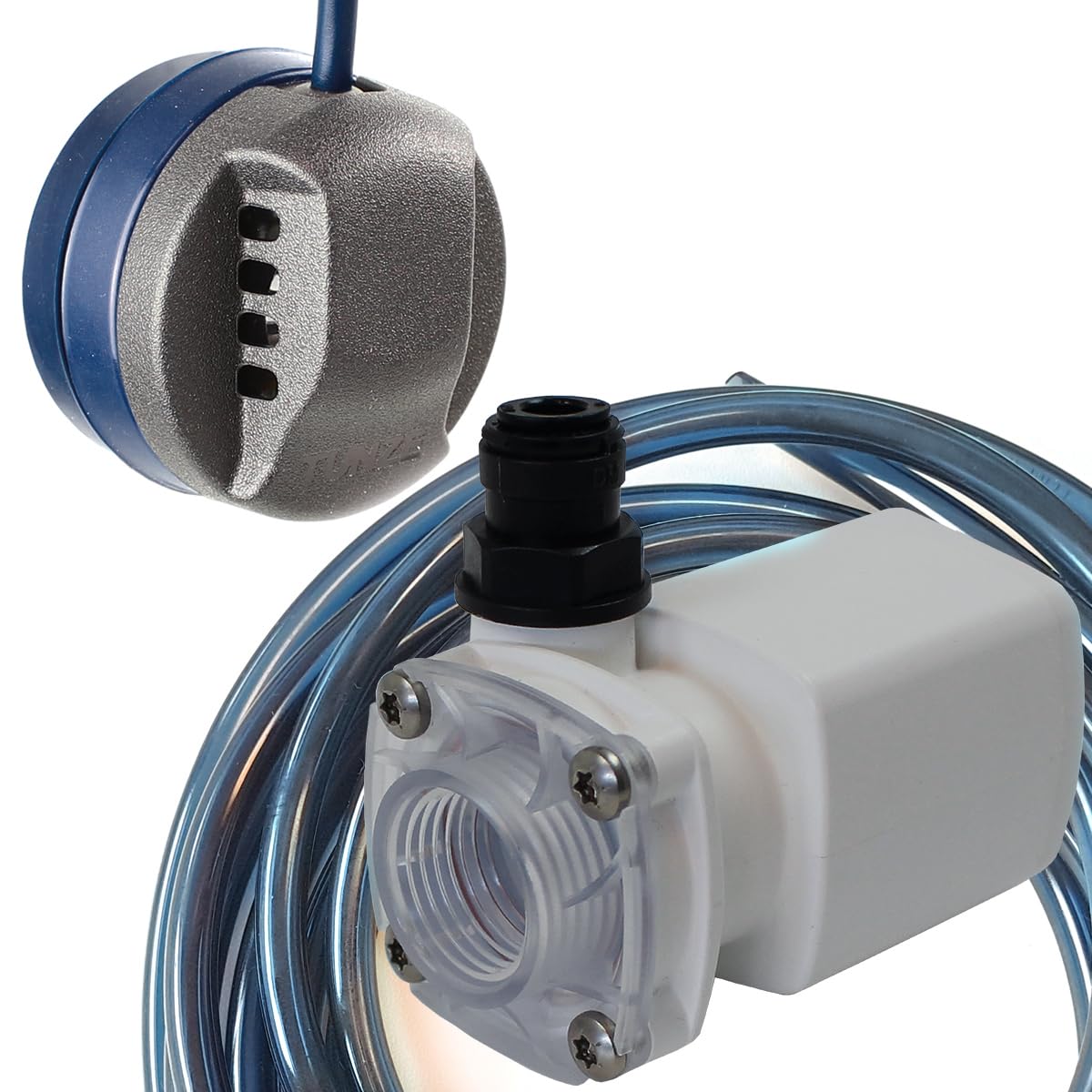
The Tunze Osmolator 3 brings decade-proven engineering into a compact integrated design. Its dual optical sensor measures water level with 0.5 mm precision — meaning your sump won’t fluctuate enough to shift salinity by even 0.1 PPT. The pump is housed in a single unit with a built-in thermal sensor that shuts the pump down if it runs dry, protecting your reservoir from accidental siphoning.
Setup is genuinely plug-and-play with no phone app or calibration menu to fight. Long-term owners report the Osmolator 3 running reliably for five-plus years with only occasional sensor lens cleaning. The included mounting bracket and screw-in pump inlet make it easy to drop into a standard 5-gallon bucket without modifying the lid.
A few users found the threaded pump inlet needed extra Teflon tape for a drip-free seal when plumbed inline, but if you simply submerge the pump in your reservoir that issue disappears entirely. The white blinking light on the power adapter can signal a fault, though Tunze’s warranty support is generally responsive.
Why it’s great
- Sub-millimeter sensor precision keeps salinity rock-steady
- Decade+ brand track record with minimal failure reports
- Overnight pump run-dry protection via thermal sensor
Good to know
- Premium cost may feel steep for small nano tanks
- Threaded inlet can require extra Teflon tape for leak-free inline plumbing
2. XP Aqua Duetto 2 Dual-Sensor ATO

The Duetto 2 from XP Aqua crams two independent optical sensors into the smallest footprint in this class — it fits in sumps where a Tunze or Red Sea probe would be too tall. The primary sensor triggers the pump, and a secondary backup sensor sits at a higher level to kill power if the first sensor fails or gets blocked by a snail. Its magnetic mount lets you reposition the sensor bracket without tools, which is handy during water changes.
The included DC pump delivers a 74 GPH flow rate at a maximum head height of 8.2 feet, meaning you can stash your reservoir in a cabinet below the tank and still get reliable refill pressure. Owners with multiple tanks appreciate that the controller can drive pumps on larger systems too, not just nano setups. The stainless steel sensor housing resists corrosion better than the plastic housings on budget models.
A small number of users reported units failing after a few days — the controller not triggering the pump at all. XP Aqua’s customer service has been responsive about replacements. One reviewer also flagged that the first-gen Duetto 1 had a design flaw where plugging the power adapter into the wrong port would fry the controller; the Duetto 2 physically prevents that misconnection.
Why it’s great
- World’s smallest dual-sensor design for tight sumps
- Magnetic bracket enables tool-free repositioning
- 8.2 ft max lift handles most under-tank reservoir placements
Good to know
- Some units have arrived DOA or failed within days
- No integrated leak detector or app connectivity
3. Red Sea ReefATO+ 3-in-1

The Red Sea ReefATO+ is a three-device system: an ATO controller, a leak detector, and a temperature probe — all integrated into the ReefBeat app. The solid-state conductivity sensor has no moving parts and uses titanium probes that resist saltwater corrosion. The pump-OFF probes are positioned 2.5 cm above the normal shutoff point, providing a built-in backup layer that prevents overflow if the primary sensor misreads.
From the app you can see real-time water level relative to the sensor, calibrate the conductivity threshold, and view a log of top-off events. The integrated temperature sensor is pre-calibrated to ±0.1°C accuracy, so you can spot a failing heater or chiller before coral stress sets in. The cylindrical pump is slim enough to fit inside standard jerry cans, and its low-noise operation won’t disturb a living room tank.
Critical caveat: this unit only works in saltwater or brackish water. Freshwater lacks the conductivity it relies on, causing false pump timeouts and potential overflow. A few reefers also found the pump slightly louder than expected, though still quieter than a typical protein skimmer. The app requires setting up an account with mandatory fields that feel excessive for a simple ATO.
Why it’s great
- App provides real-time level feedback and top-off history
- Built-in leak detector and temperature monitor add safety
- Backup pump-OFF probes 1 inch above normal shutoff point
Good to know
- Saltwater-only conductivity sensor — useless in freshwater
- App setup can feel finicky with excessive mandatory fields
4. Kamoer ATO One 2 SE

Kamoer’s ATO One 2 SE packs three optical level sensors into a single affordable package — something you’d normally find on systems costing twice as much. Sensor S1 detects the low water level in the sump and triggers the refill pump. Sensor S2 (purchased separately) monitors your reservoir level to prevent running the pump dry. Sensor S3 acts as a high-level overflow cutoff. The built-in timeout alarm sounds if the pump runs longer than expected, giving you a warning before water reaches the floor.
The upgraded anti-dry submersible pump can survive a temporary run-dry event without burning out, and the newer optical sensor prism is more responsive than the previous generation. Owners report the unit working flawlessly for nearly a year with only the occasional sensor cleaning. The blue LED indicator confirms when the pump is actively refilling, and the red alarm LED lights up during a timeout or sensor fault.
Some units have arrived with cracked tubing or defective pumps — customer reviews show a split where roughly one in five buyers experienced a failure that required a replacement. Installation is also critical: if the sensor is mounted wrong the ATO simply won’t trigger. The height difference between the reservoir and sump must not exceed 1.5 meters, and the reservoir must sit below the sump to prevent siphoning.
Why it’s great
- Triple optical sensors at a mid-range price point
- Timeout alarm prevents silent overflow
- Upgraded pump resists dry-run damage
Good to know
- Quality control issues affect roughly 1 in 5 units
- Reservoir must sit below sump level to avoid siphoning
5. JBJ Nano ATO

The JBJ Nano ATO was designed specifically for smaller reef tanks — it fits inside a Biocube 32 or a Lagoon 25 sump without crowding. The dual optical sensor module mounts to the sump wall with a flange clamp, and the included JT-160 DC pump delivers 74 GPH at a 7.2 ft head height, which is more than enough for most nano setups. The pump runs silently, which matters when the ATO is inside a bedroom or living room tank stand.
Several owners report this unit running for two years or more without any sensor drift or pump failure. The controller logic uses a 2-second delay before firing — it won’t trigger on ripples from a return pump or powerhead, so you get fewer false refill cycles. The compact 7.11 x 3.3 x 5.11 inch sensor body leaves room for other sump gear.
The included JT-160 pump has a proprietary DC plug that isn’t compatible with standard pumps, so swapping to a different model requires buying a separate controller. Some units shipped with pumps that couldn’t push water 12 inches vertically due to air-lock or a weak impeller. The manual is sparse, and there are no indicators for fill status or alarm conditions — you have to watch the water level to confirm it’s working.
Why it’s great
- Perfectly sized for nano tanks and AIO all-in-one systems
- 2-second delay prevents false triggers from sump turbulence
- Two-year-plus reliability reported by multiple owners
Good to know
- Proprietary DC pump plug prevents easy replacement
- No LED status indicators for fill or alarm modes
6. Innovative Marine Hydro Fill Ti

The Hydro Fill Ti from Innovative Marine is a conductivity-based controller that uses titanium probes — no moving parts, no optical prism to foul up. It’s designed strictly for saltwater or brackish setups; the probes measure electrical conductivity between two titanium rods, and when the water level drops below both rods, the circuit opens and the pump fires. The 1-watt standby consumption makes it one of the most energy-efficient controllers in this class.
Because you buy the pump separately, you can pair this controller with a reliable workhorse like an AquaLifter or a small diaphragm pump, keeping the total setup cost lower than an all-in-one system. The sensor dimensions are tiny — just over 3 inches long — so it fits in even the tightest sump chambers. The visual LED indicators show power (red), full level (green), low level (middle green), and filling (pulsing green), giving you immediate visual feedback without opening the stand.
The titanium probes require monthly freshwater rinsing and a quick scrub every 3-4 weeks to remove salt creep or coralline buildup. Owners who skip this maintenance often report erratic cycling or false-low triggers. Reliability varies: some units run for years without trouble, while others fail after 3-4 months with the controller refusing to detect the probes. Customer service from IM has been praised for shipping replacement probes same-day when contacted.
Why it’s great
- Buy-your-own-pump flexibility keeps upfront cost low
- Titanium probes resist corrosion better than stainless steel
- LED indicators give instant visual confirmation of state
Good to know
- Probes need monthly cleaning to avoid erratic cycling
- Saltwater-only — useless in freshwater tanks
7. Your Choice Aquatics Small ATO
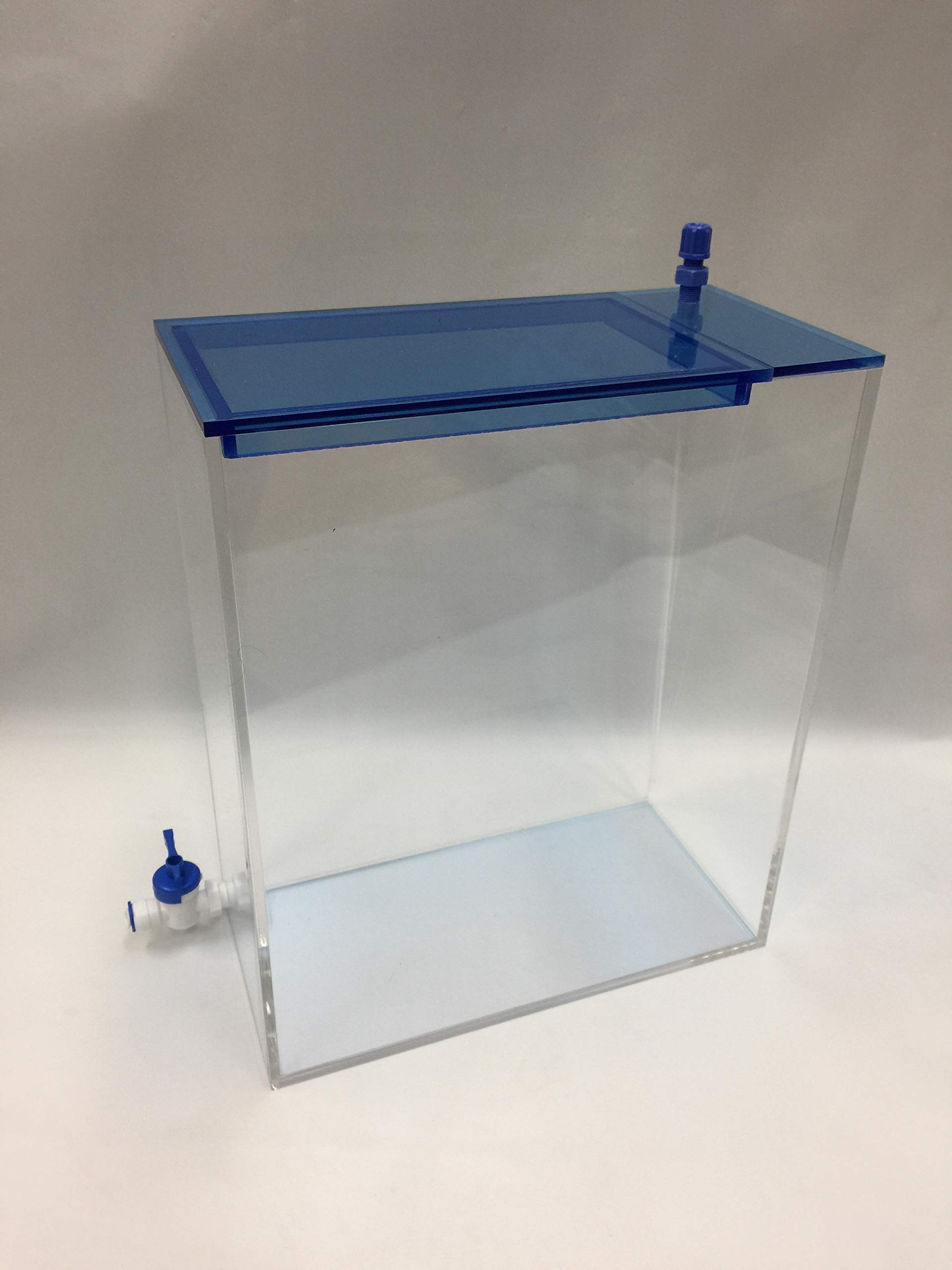
This is not an electronic ATO in the traditional sense — it’s a passive 2-gallon acrylic box with a 1/4-inch push-connect ball valve and a hose valve stem. You mount the reservoir above the tank (or sump), connect the tubing to a float valve inside the display, and gravity feeds fresh water as the level drops. No electricity, no sensors, no controller logic to program. It’s about as simple a top-off solution as you can buy.
The polished clear acrylic lets you see the water level at a glance, and the removable top lid makes refilling and cleaning straightforward. The ball valve lets you shut off flow entirely without disconnecting tubing, which is helpful when you need to stop top-off during water changes. At 10 x 5 x 12 inches, it fits on a shelf or stand next to the tank without taking up floor space.
The acrylic lid can warp over time — some owners report the center bowing after a few months, though the lid still sits in place. The actual internal volume is exactly 2 gallons, not the larger size some buyers assumed from the photos. If you have a small nano tank that evaporates less than half a gallon per day, this passive system can maintain level without any electronics to fail. For larger tanks with higher daily evaporation, you’ll need to refill the reservoir too often.
Why it’s great
- Zero electronics — no sensor cleaning or controller failure
- Transparent acrylic shows water level at a glance
- Ball valve allows quick shutoff without disconnecting hoses
Good to know
- Limited to 2 gallons — requires daily refill on larger tanks
- Acrylic lid may warp over time; no replacement included
FAQ
Can I use a conductivity ATO in a freshwater tank?
How often do optical sensor lenses need cleaning?
Will an ATO drain my reservoir backward into the sump?
Final Thoughts: The Verdict
For most users, the ato for reef tank winner is the Tunze Osmolator 3 because its 0.5 mm precision and decade-proven reliability justify the premium — you won’t wake up to a salinity crash or a flooded floor. If you want dual-sensor safety in a tight sump, grab the XP Aqua Duetto 2. And for a no-fuss gravity option on a tiny nano tank, nothing beats the Your Choice Aquatics Small ATO.