
Our readers keep the lights on and the weekend projects moving. As an Amazon Associate, I earn from qualifying purchases.
Distributing a single HDMI source—a satellite box, streaming stick, or security DVR—to every TV in a building over existing coax cabling is a specific challenge that consumer HDMI splitters and extenders cannot solve. The signal degrades over distance, you run out of ports, and running new Ethernet cable through walls is impractical. An ATSC HDMI modulator solves this by taking that HDMI signal, encoding it, and broadcasting it as a standard digital television channel any TV can tune into with a simple channel scan.
I’m Rikta — the co-founder and writer behind FitlyFast. I have spent dozens of hours researching hardware encoding chipsets, modulation standards (ATSC vs. QAM), output power in dBuV, and the real-world setup workflows for these devices to identify which units reliably deliver on their broadcast promise.
A good modulator must compress video without introducing visible artifacts, maintain stable RF output across a multi-room coax plant, and offer a configuration interface that does not require a computer science degree to navigate. My research into the best atsc hdmi modulator focuses on picture quality retention, audio sync reliability, and the practical ease of getting your channel up and running.
How To Choose The Best ATSC HDMI Modulator
Buying an ATSC HDMI modulator is different from picking a standard AV switcher. You are buying a piece of broadcast equipment that will re-encode your video and inject it into a coax network. Three factors separate a great experience from a frustrating one.
Modulation Standard: ATSC vs. QAM
ATSC (Advanced Television Systems Committee) is the over-the-air broadcast standard in North America. Most modern TVs scan for ATSC channels natively when you use an antenna input. QAM (J.83B) is the standard used by cable providers. If you are distributing video in a home, RV, or small commercial space using standard coax, ATSC is the simpler choice—TVs find the channel automatically. QAM is useful if you are injecting into an existing cable TV system with a headend. Some premium modulators output both, giving you maximum flexibility.
RF Output Power and Signal Amplification
The modulator’s RF output power, measured in dBuV, determines how far and cleanly the signal travels through your coax network. A unit with adjustable output (70–100 dBuV) allows you to dial in the right strength for your specific cable run length and number of splitters. Too weak, and distant TVs show pixelation or no signal. Too strong, and you risk overloading the front end of nearby TVs, causing a grainy picture. For most residential setups, an output around 75 dBuV provides a clean balance.
Video Encoding Quality and HDCP Handling
The modulator must re-encode the HDMI input into an MPEG-2 or H.264/H.265 stream for ATSC broadcast. Devices that use hardware encoding chips produce consistent, artifact-free 1080p video. Pay attention to whether the unit supports HDCP 1.4 pass-through—without it, copy-protected sources like a Blu-ray player or cable box may show a black screen. Not all modulators handle HDCP gracefully, and some simply reject protected content.
Quick Comparison
On smaller screens, swipe sideways to see the full table.
| Model | Category | Best For | Key Spec | Amazon |
|---|---|---|---|---|
| Thor Broadcast H-HDMI-RF-PETIT | Premium Modulator | Whole-home coax distribution | ATSC+QAM / MPEG-2 + AC3 | Amazon |
| SatLink ST-7000 | Dedicated Modulator | Converting HDMI to ATSC/QAM | Adjustable RF output 70-100dBuV | Amazon |
| Vecoax MINIMOD 2 | High-End Modulator | RV and professional AV | On-device channel display / Dolby | Amazon |
| J-Tech Digital JTECH-ENCH4 | IPTV Encoder | Streaming + ONVIF NVR | 4K HDMI input / H.265/H.264 | Amazon |
| URayCoder UHE265-1L-4K (B07D78L3SZ) | 4K Encoder | Multi-platform live streaming | 4K H.265 input / 4 simultaneous streams | Amazon |
| URayCoder UHE265-1S-4K | Compact Encoder | Space-constrained streaming | Palm-size / 4K H.265 encoding | Amazon |
| URayCoder UHE265-1L-4K (B07CP3G86L) | Full-Feature Encoder | Advanced IP streaming | 4K 30fps / 4-stream multi-protocol | Amazon |
| UNISHEEN BM1000H | Budget Encoder | Low-cost RTSP stream | 1080P60 / H.265+SRT+WebRTC | Amazon |
| URayCoder USE265-1L | SDI Encoder | Broadcast SDI integration | 3G-SDI input / H.265 encoding | Amazon |
In‑Depth Reviews
1. Thor Broadcast H-HDMI-RF-PETIT
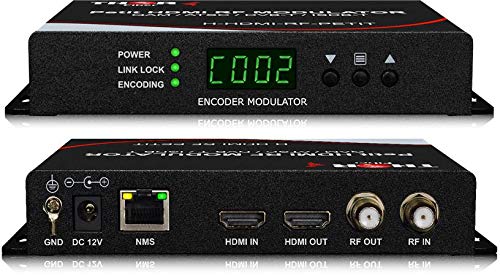
The Thor Broadcast H-HDMI-RF-PETIT is a purpose-built modulator that converts any HDMI source (camera, PC, satellite box) into an ATSC or QAM RF channel. It uses a dedicated MPEG-2 hardware encoder with AC3 Dolby audio support, ensuring the picture and sound reaching your TVs are indistinguishable from a native broadcast. The unit is physically small—just over four inches wide—making it easy to tuck behind an entertainment center or in a structured media cabinet.
Configuration is handled through the front-panel interface or a proprietary GUI via Ethernet. Users report clear 1080p video with measured latency around 600ms, which is fine for distributing DirecTV or a Blu-ray player but noticeable for live camera switching. The unit is frequency-agile, meaning you can set it to any unused channel in your area. It also includes HDCP pass-through, so copy-protected content does not cause a black screen.
The RF output is clean and stable, tested successfully through multiple splitters across a motorhome’s coax plant and a whole-house network. It is the highest-priced unit on this list, but for a pure modulator that requires zero additional hardware to get HDMI video onto every TV, it justifies the investment with straightforward setup and excellent picture quality.
Why it’s great
- True plug-and-play HDMI-to-RF conversion with no streaming server required.
- Dual ATSC/QAM output for maximum compatibility with any TV system.
- Excellent HD picture quality with AC3 Dolby audio support.
Good to know
- ~600ms latency makes it unsuitable for live camera monitoring.
- Premium price point compared to encoder-only alternatives.
2. SatLink ST-7000

The SatLink ST-7000 is a dedicated HDMI-to-RF modulator built for one job: turning a 1080p HDMI source into a clear ATSC or QAM channel over coax. Unlike encoder-modulator hybrids, the ST-7000 has no streaming server software—it outputs RF directly. Setup is handled through a browser-based IP configuration page, and the unit includes both HDMI and RCA inputs for legacy composite sources.
A standout feature is the adjustable RF output power from 70 to 100 dBuV. In practice, setting it to 75 dBuV delivers stable video across a home’s existing coax network with multiple splitters. Users note that 1080p picture quality is excellent, with sharp edges and no visible compression macroblocking. The unit does not handle overscan, so the outermost edges of the video may be cut off—a common trait among broadcast modulators that can usually be corrected with TV settings.
A few units have reported early failure, but replacement experiences are generally positive. If you need a simple, high-quality modulator for distributing a single HDMI source to every TV in a building without the complexity of a IP streaming workflow, the ST-7000 delivers at a significantly lower entry point than the Thor or Vecoax options.
Why it’s great
- Adjustable RF output power optimizes signal strength for any coax network.
- Straightforward browser-based setup with no software installation needed.
- Provides both HDMI and composite RCA input for versatile source connection.
Good to know
- Does not handle overscan; image edges may be cut off on some TVs.
- No 4K support—limited to 1080p input and output.
3. Vecoax MINIMOD 2

The Vecoax MINIMOD 2 is a high-end HDMI-to-coax modulator designed specifically for environments like RVs, churches, and hospitality facilities where reliable coax distribution is critical. Its most distinctive feature is the front-panel color display that shows the channel number and name you assign, allowing you to set up the unit without connecting a laptop. You simply connect your HDMI source, set a channel, and rescan your TVs.
The unit supports full 1080p HD with Dolby audio and includes a low-latency mode that reduces delay for live content. Users running satellite TV (DirecTV/Dish) in RVs report a major improvement over older RF modulators—picture quality is significantly sharper. The device injects the modulated signal into your existing coax network and can be combined with an over-the-air antenna feed, as long as you ensure both are connected at the same point to maintain signal balance.
Some users report that the ATSC channel detection on certain TVs requires a manual scan or an attenuator to avoid overloading the tuner. The unit is expensive, but for a purpose-built device with a dedicated user interface and proven reliability in mobile installations, it is the gold standard for the RV and commercial AV market.
Why it’s great
- Color display for on-device channel setup—no laptop required in the field.
- Low-latency mode improves responsiveness for live camera feeds.
- Delivers major picture quality improvement over legacy analog RF modulators.
Good to know
- Some TVs require an attenuator to lock onto the ATSC channel.
- Compression artifacts are visible on Blu-ray sources at close range.
4. J-Tech Digital JTECH-ENCH4
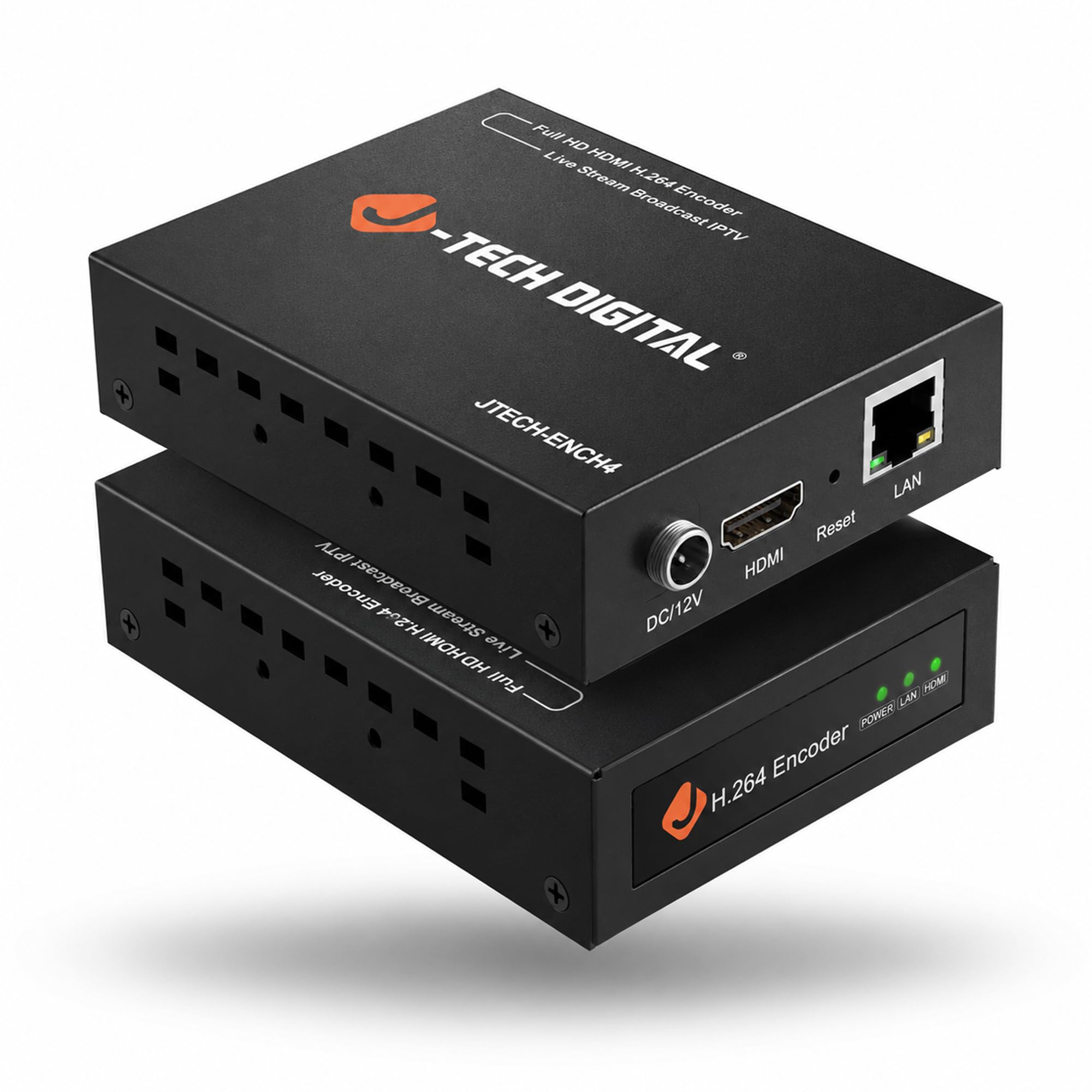
The J-Tech Digital JTECH-ENCH4 is primarily an IPTV encoder that takes an HDMI signal and converts it into H.264/H.265 network streams, but it earns a spot in this guide because it also supports ONVIF Profile S—making it a bridge between HDMI sources and security DVRs or NVRs. The unit accepts 4K@60Hz HDMI input and outputs 1080p@60Hz. It supports simultaneous main and substreams with protocols including RTSP, RTMP, UDP, SRT, and HLS.
Setup uses a web GUI accessible via the default IP address (192.168.1.168). Users integrating it with Hikvision DVRs and Ring security systems confirm that the ONVIF handshake works reliably, with clear video quality. The device also includes OSD overlay for adding text or logos, and the bitrate can be fine-tuned from 32 Kbps to 32 Mbps.
One unit failed early due to an internal power defect, but replacement under the one-year warranty was handled. For users specifically needing both IP streaming and ONVIF compatibility—for example, sending a security camera NVR’s HDMI output into a DVR system—this encoder is the only affordable option that covers both bases.
Why it’s great
- ONVIF support enables direct integration with security NVR systems.
- 4K@60Hz input ensures future-proofing for high-resolution sources.
- Free lifetime technical support based in the US.
Good to know
- Default IP requires a direct PC connection if your subnet is different.
- One user reported a power defect within the first day of use.
5. URayCoder UHE265-1L-4K (B07D78L3SZ)
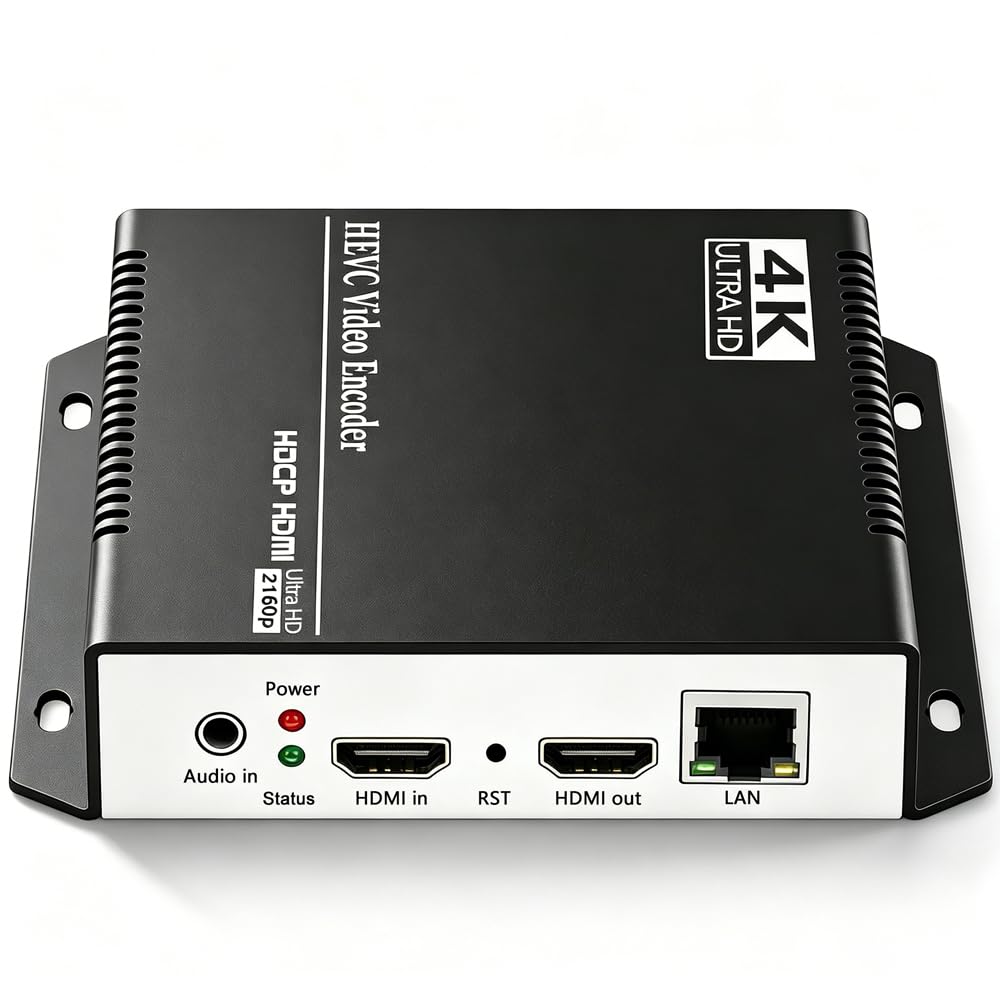
The URayCoder UHE265-1L-4K is a hardware video encoder that accepts 4K UHD (3840×2160) HDMI input and outputs up to four simultaneous IP video streams using different protocols. It supports H.265 and H.264 encoding, WebRTC, SRT, RTMP(S), HLS, and ONVIF. This makes it ideal for pushing a single HDMI source to YouTube, Twitch, and a local NVR simultaneously without additional hardware.
Users consistently praise the responsive customer support from the Chinese-based manufacturer, with reports of firmware patches and direct TeamViewer assistance to resolve configuration issues. The device handles HDCP 1.4 decryption, so copy-protected sources like a Blu-ray player or cable box are decoded without a black screen. The aluminum enclosure stays cool during extended operation.
One reviewer noted the lack of an on/off switch, preferring to let the circuit rest between uses. Another flagged that a power supply is included in the box (despite one conflicting review). For professional live streaming or enterprise IPTV distribution where multiple destinations need the same HDMI feed, this encoder offers high reliability, flexible stream management, and responsive vendor support.
Why it’s great
- Outputs 4 simultaneous streams to different platforms using different protocols.
- Responsive firmware-level support from the manufacturer.
- 4K H.265 encoding with HDCP 1.4 decryption.
Good to know
- No physical power switch; must be unplugged to power cycle.
- Initial gray output on some units requires a firmware update to resolve.
6. URayCoder UHE265-1S-4K (B07P5WT3F1)
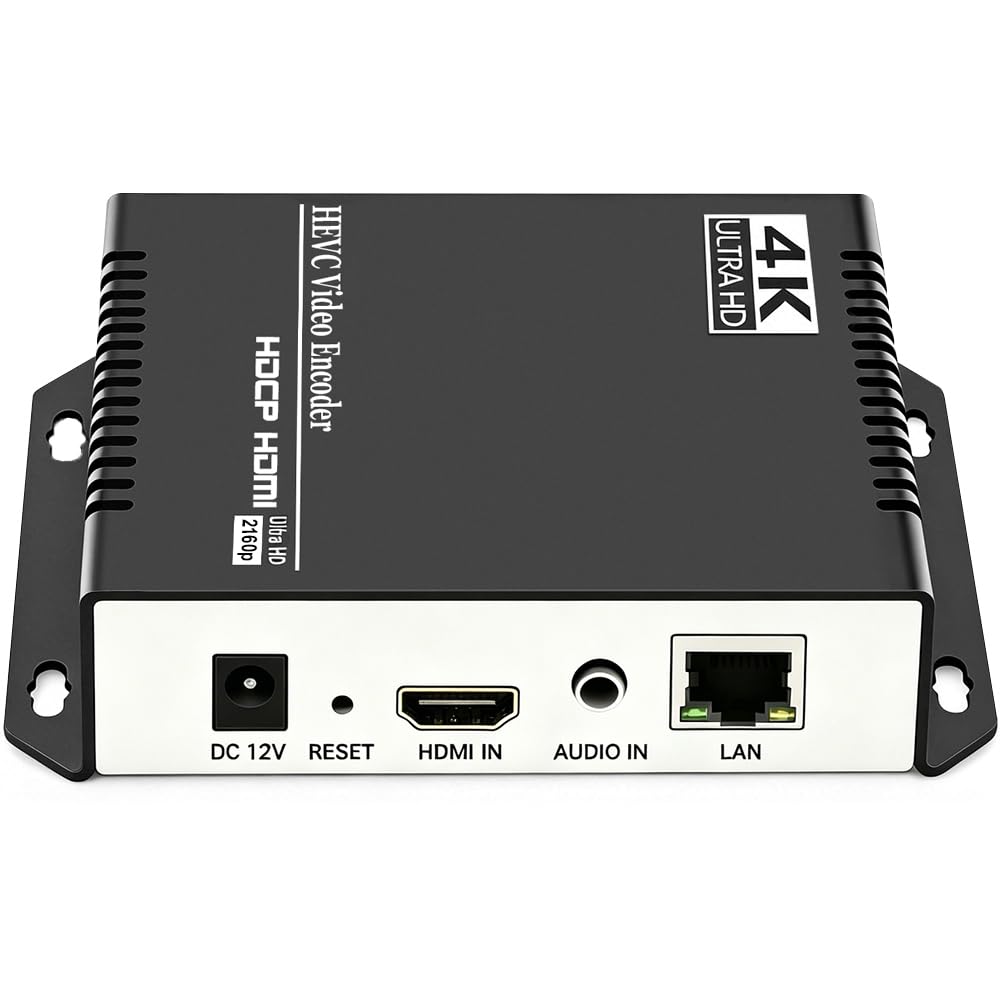
The URayCoder UHE265-1S-4K is the smaller sibling of the 1L-4K series, sharing the same H.265/H.264 dual encoding chip and 4K input capability but in a palm-sized enclosure (roughly 90×54×29mm). The compact form factor fits behind a monitor or in an equipment rack without blocking other ports. It supports SRT, WebRTC, RTMP(S), HLS, and ONVIF, giving it broad compatibility with modern streaming workflows.
Users have operated this unit reliably for months on end at 2200 Kbps H.265 with 64 Kbps AAC audio, feeding a 720p stream to a 55-inch TV with respectable clarity. The browser-based UI includes controls for video cropping, rotation, and OSD text/logo overlay. One user mentioned that the power supply was not included in their box; others confirmed it was present—so verify upon delivery.
For users who need the same encoding power as the larger 1L-4K but in a travel-friendly or space-constrained setup, the 1S-4K delivers without sacrificing protocol support. The lifetime warranty from URayCoder provides peace of mind for continuous operation in live event streaming or digital signage applications.
Why it’s great
- Palm-sized design fits in tight spaces without sacrificing encoding quality.
- Supports SRT and WebRTC for reliable low-latency streaming.
- Proven 24/7 reliability with stable firmware.
Good to know
- Some units ship without a power supply—check the box immediately.
- No IR remote; requires OSD for control in remote installations.
7. URayCoder UHE265-1L-4K (B07CP3G86L)
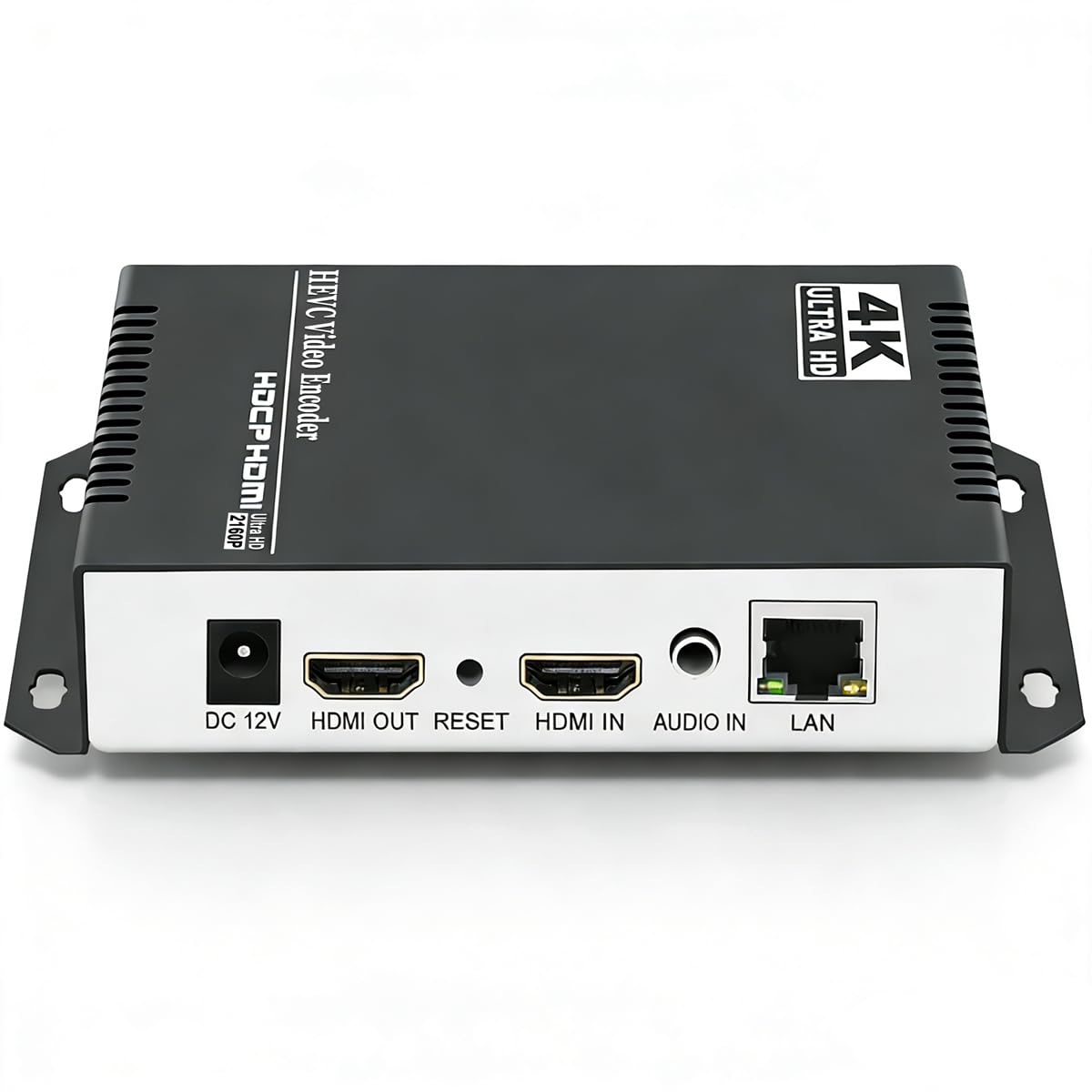
The second variant of the URayCoder 1L-4K model shares the same part number structure but appears to have slight differences in default firmware behavior. Like its counterpart, it accepts 4K HDMI input and outputs up to 4 simultaneous IP streams using H.265 or H.264. It supports every major protocol: HTTP, RTSP, RTMP(S), SRT, HLS, UDP, FLV, WebRTC, TRTC, ICECAST, and ONVIF.
Users who have run this unit 24/7 for a year report flawless operation with H.265 encoding and near-zero latency. The device has a fixed IP address of 192.168.1.168 out of the box, which requires either setting your PC to the same subnet or connecting directly to change the network settings to DHCP. Once configured, it serves crystal-clear video with minimal delay over VPN and local networks.
A common quirk: the HDMI input occasionally loses sync and requires the attached source to be power-cycled. The manufacturer’s support team is known to respond within a minute, often providing firmware customizations. For multi-platform streaming to YouTube, Facebook, and a local NVR at the same time, this encoder is a robust workhorse—just budget an hour for initial setup.
Why it’s great
- Runs 24/7 for a year without crashing or overheating.
- Near-zero latency in H.265 mode for live applications.
- Responsive technical support with firmware update capability.
Good to know
- HDMI re-sync may fail when changing inputs on some sources.
- H.265 mode introduces slightly higher latency than H.264.
8. UNISHEEN BM1000H

The UNISHEEN BM1000H is an entry-level HDMI video encoder that supports H.265 and H.264 hardware encoding at 1080P60. It covers an exceptionally wide range of streaming protocols: SRT, RTMP, RTSP, UDP, HLS, WebRTC, TRTC, Icecast, and SHOUTcast. The device uses a browser-based web UI for configuration—no software installation required. It draws under 5 watts, making it suitable for continuous operation in remote or mobile setups.
User experiences highlight that the device works reliably for streaming to HomeAssistant via RTSP with approximately 0.5 seconds of latency. The video quality is crystal clear at maximum bitrate settings, and the device handles long operating sessions without thermal issues. However, the initial configuration can be challenging: the default settings may not match your network, and the UI lacks explanatory tooltips for many advanced parameters.
Several reviewers noted that the device is smaller than expected and lacks a 1/4-20 mounting thread, requiring a 3D-printed bracket or adhesive for secure placement. For technically inclined users who understand networking (static IPs, subnet matching, firewall rules), the BM1000H delivers excellent value—but it is not a beginner-friendly plug-and-play device.
Why it’s great
- Supports SRT, WebRTC, and Icecast for flexible streaming workflows.
- Low power consumption (<5W) for reliable 24/7 operation.
- Low-latency RTSP stream (~0.5s) for real-time monitoring.
Good to know
- Confusing web UI with no help text for advanced settings.
- No 1/4-20 mounting thread or included mounting hardware.
9. URayCoder USE265-1L
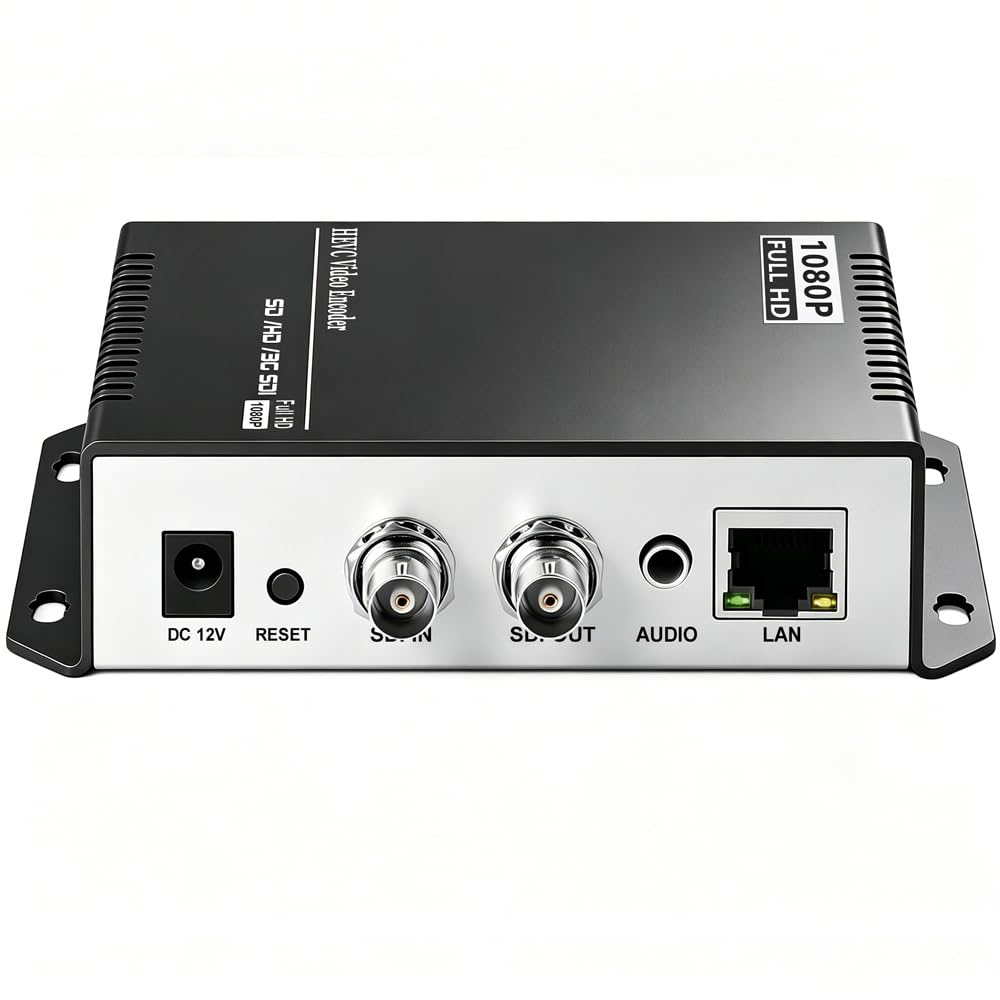
The URayCoder USE265-1L is an SDI-to-IP video encoder designed for broadcast environments where 3G-SDI is the standard connection for cameras and production switchers. It supports H.265/H.264 encoding at SD and HD resolutions, and outputs up to four simultaneous IP streams via protocols including RTMP, SRT, HLS, UDP, and ONVIF. The SDI input also features a loop-through output, allowing the signal to continue to a local monitor or production mixer.
Users in church AV, remote site monitoring, and professional live streaming environments report very simple setup—assign an IP, point your streaming software at the RTMP URL, and the encoder delivers consistent video quality. The unit runs reliably for extended periods without glitching. The web GUI is utilitarian but complete, with controls for bitrate, frame rate, cropping, and OSD overlay.
The USE265-1L is not an HDMI modulator—it does not output RF or ATSC. It is here for users whose source is an SDI camera or switcher and who need reliable IP encoding. For those who need HDMI-to-RF, look at the Thor or SatLink. But for pure broadcast-quality SDI encoding into modern IP workflows, this is the highest-performing option on the list.
Why it’s great
- 3G-SDI input with loop-through for broadcast workflow integration.
- Four simultaneous IP streams with customizable protocols per stream.
- Proven reliability in multi-unit church and surveillance installations.
Good to know
- No HDMI input—requires SDI sources only.
- No ATSC/RF output; purely an IP encoder.
FAQ
Can I use an ATSC HDMI modulator to watch a Blu-ray player on every TV in my house?
What is the real-world latency of an ATSC HDMI modulator?
How do I find the channel my modulator is broadcasting on?
Final Thoughts: The Verdict
For most users, the best atsc hdmi modulator winner is the Thor Broadcast H-HDMI-RF-PETIT because it is a pure, purpose-built modulator that delivers excellent 1080p picture quality with both ATSC and QAM output in a compact, easy-to-configure package. If you want adjustable RF output power and a more budget-friendly entry point for a dedicated modulator, grab the SatLink ST-7000. And for RV and commercial installations where on-device channel display and Dolby audio are critical, nothing beats the Vecoax MINIMOD 2.