
Our readers keep the lights on and the weekend projects moving. As an Amazon Associate, I earn from qualifying purchases.
Finding a folding staircase that fits inside a ceiling opening barely wider than a standard sheet of paper is the single most frustrating challenge in attic access. Most pull-down ladders require a 25‑inch or 30‑inch rough opening, which means homeowners with a narrow 22.5‑inch or 24‑inch cutout are stuck with unsafe step stools or expensive custom framing. The right solution lives in a specific intersection of compact folded width, high‑strength aluminum, and a hinge system that clears the header without binding.
I’m Rikta — the co-founder and writer behind FitlyFast. I’ve spent hundreds of hours cross‑referencing rough‑opening dimensions, aluminum extrusion thickness, load ratings, and hinge pivot points to find the models that genuinely work when space is tight.
After a deep look at weight capacities, step‑tread depth, ceiling‑height range, and real‑world install feedback, I believe the best attic ladder for small opening splits the difference between a compact folded footprint and the structural rigidity you need to climb safely dozens of times a season.
How To Choose The Best Attic Ladder For Small Opening
Every attic ladder is built around a rough‑opening dimension. When that dimension shrinks to 22.5 inches (the standard for narrow hallway ceilings or tight closets), you instantly lose access to most wood‑rail models and many steel‑frame units. The selection narrows to ladders with aluminum stringers and a hinge bracket that nests the steps into a compact folded pack. Before you buy, lock down three things: the exact width and length of your finished opening, the ceiling height from floor to header top, and the load behavior you expect — occasional storage runs differ from weekly gear hauling.
Measure Twice: The Rough Opening vs. Finished Opening Trap
Manufacturers list “rough opening” dimensions, which assume the ladder frame sits against bare studs. If you already installed drywall or trim, your usable opening shrinks by as much as 0.75 inches per side. A ladder that spec‑sheets at 22.5 inches wide may bind when lowered into a painted drywall channel. Always measure the narrowest width of the actual hole — not the original framed dimension — and compare it to the ladder’s overall housing width, not just the tread width.
Aluminum vs. Wood Side Rails in Tight Spaces
Wood‑rail ladders (typically pine or plywood) have thicker side members — often 1.5 to 2 inches per rail — which pushes the total folded width past 24 inches for a ladder with 22.5‑inch treads. Aluminum stringers, especially extruded T‑slot sections, can be as thin as 0.75 inches per rail, keeping the full package inside 22.5 inches. That slim profile also reduces the weight you lift when closing the hatch, a genuine advantage when you are reaching overhead from a hallway.
Weight Rating and Step Comfort for Everyday Use
A Type IAA rating (375‑pound capacity) is the sweet spot for a narrow ladder. It ensures the hinge brackets and step‑to‑stringer rivets are over‑built, which counters the natural flex that comes from a narrower stance. Look for treads at least 3 inches deep with an aggressive diamond‑plate or cross‑cut pattern — shallow steps on a compact ladder feel unstable. The step count matters too: a 10‑foot ceiling height requires at least 4 to 5 sections to keep the climbing angle below 65 degrees.
Quick Comparison
On smaller screens, swipe sideways to see the full table.
| Model | Category | Best For | Key Spec | Amazon |
|---|---|---|---|---|
| LITE AP2240MS | Premium Aluminum | Maximum durability & smooth close | 375 lb / 22.5″ opening | Amazon |
| LITE AA2211 | Premium Aluminum | Value‑priced premium build | 375 lb / 22.5″ opening | Amazon |
| Vantic 10‑ft Aluminum | Mid‑Range Aluminum | Soft‑close gas rod & pine rails | 350 lb / 22.5″ opening | Amazon |
| WTRAVEL 25×54 | Mid‑Range Aluminum | Wider 25” opening, heavy hinges | 375 lb / 25″ opening | Amazon |
| KWCWB 12‑Step Wall Mount | Wall‑Mount Heavy Duty | Vertical wall install, high capacity | 881 lb / wall‑mount | Amazon |
| Thctvous 10‑ft | Mid‑Range Steel/Aluminum | Quiet operation & ANSI compliance | 350 lb / 22.5″ opening | Amazon |
| AVGVLIJ Retractable | Budget Aluminum | Occasional access on a budget | 375 lb / 23.6″ folded | Amazon |
| Werner Easy Stow 3‑Sect. | Budget Aluminum | Compact storage, spring assist | 330 lb / 13.9″ folded | Amazon |
| WOA WOA 6‑Step Folding | Step Ladder | Narrow closet, no ceiling hatch | 300 lb / 18.7″ base | Amazon |
In‑Depth Reviews
1. LITE 10‑Foot Aluminum Attic Ladder AP2240MS

The LITE AP2240MS is the gold standard for a 22.5‑inch rough opening. Its all‑aluminum stringer design keeps the folded width tight enough to slide into a narrow framed hole without binding against drywall. The 375‑pound Type IAA rating comes from heavy‑duty hinge plates that resist lateral twist, a common problem when the ladder’s base is narrower than a full‑width model.
Owners consistently report a smooth, wobble‑free climb and an easy two‑person install. The 3.25‑inch‑deep slip‑resistant treads give your foot real purchase, even when carrying boxes. The hatch door integrates cleanly with the frame, leaving minimal gaps — important when the ladder lives in a finished hallway ceiling.
Some units arrive with damaged packaging, so inspect the box before you haul it inside. The included lag bolts are adequate, but upgrading to structural screws adds peace of mind when anchoring into ceiling joists. For a small‑opening, high‑frequency use scenario, this ladder is the clear benchmark.
Why it’s great
- Full 375‑lb capacity in a compact 22.5‑inch folded width
- Deep, slip‑resistant treads for secure footing
- Smooth operation with no lateral sway
Good to know
- Box damage possible during shipping
- Stock hardware should be upgraded for maximum holding power
- Hatch door protrudes slightly below the frame — plan trim accordingly
2. LITE 10‑Foot Aluminum Attic Ladder AA2211

The AA2211 shares the same 22.5‑inch rough‑opening footprint as its sibling but weighs just under 12 pounds — remarkable for a full‑height 10‑foot ladder. The secret is a thinner‑gauge aluminum extrusion that still hits 375‑pound capacity. This featherweight build makes overhead installation far less taxing; one person can hold the ladder in place while the other drives the lag bolts.
Assembly requires deploying the ladder before you can reach all pre‑drilled mounting holes, so plan a temporary support. Once installed, the unit locks open with a satisfying click and shows no wobble under normal use. The slip‑resistant cross‑tread steps are effective, though slightly narrower than the AP2240MS version.
The included instructions are minimal and the hatch door sits slightly proud of the frame. A small trim piece solves the gap. For anyone whose back appreciates a lighter lift, this ladder delivers genuine small‑opening performance without the usual back strain during installation.
Why it’s great
- Extremely lightweight for a full‑size attic ladder
- Precise fit for 22.5‑inch rough opening
- Good stability for the weight class
Good to know
- Minimal assembly instructions
- Hatch door not flush with frame — plan trim work
- Lag bolts included are serviceable but not premium
3. Vantic 10‑Foot Aluminum Attic Ladder
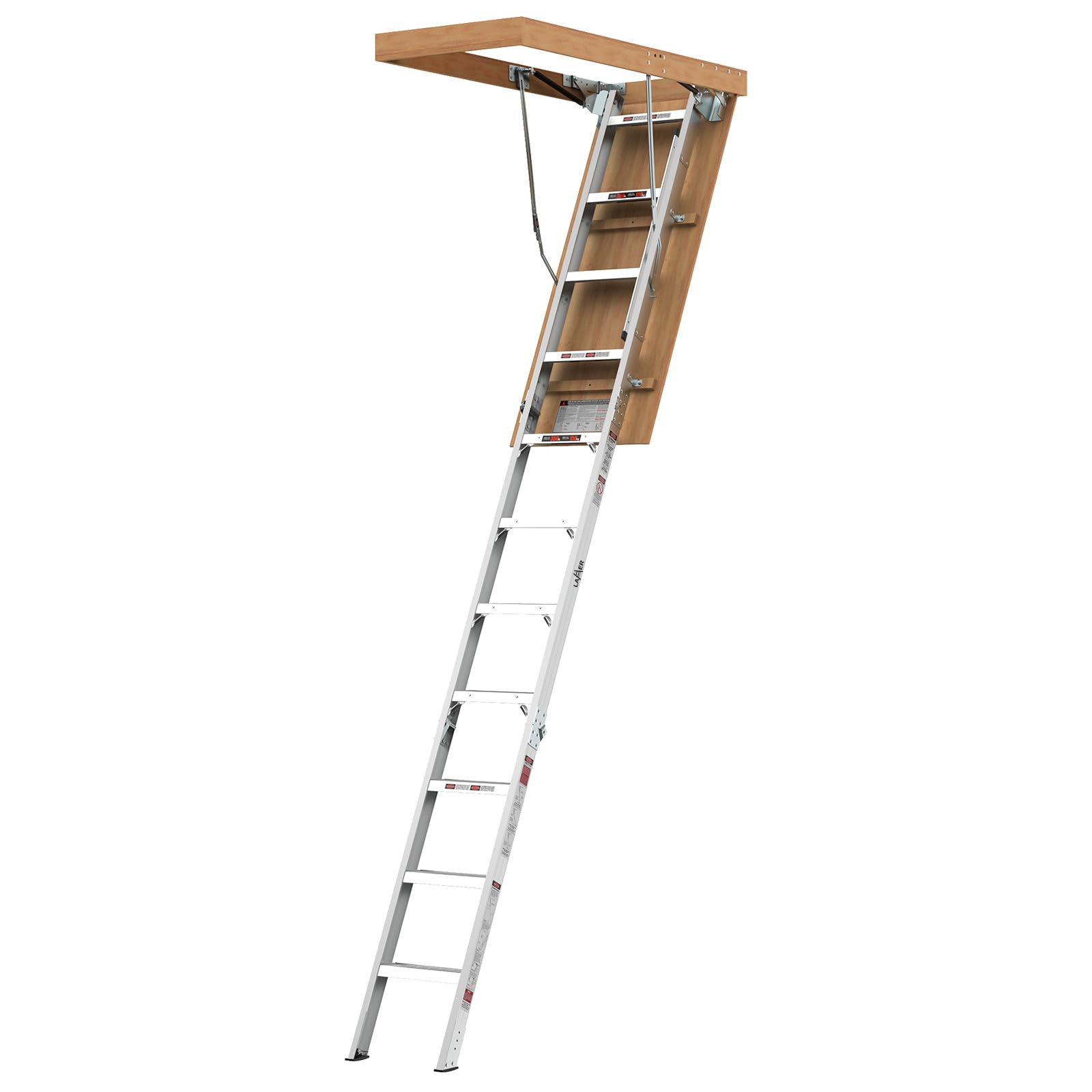
Vantic combines an aluminum frame with solid pine side rails, a hybrid that keeps the folded width at 22.1 inches while adding a warm aesthetic. The standout feature is the upgraded gas rod that eases the ladder down and pulls it up with near‑silent hydraulic resistance — no crashing spring, no sudden drop. This matters when your small opening sits directly above a living space.
The 350‑pound capacity and 3‑inch slip‑resistant treads give a confident climb. Users note the exact fit for a 22.5‑inch rough opening and praise the clear instructions that allow solo installation. The diagonal stabilizing bars lock the sections in line, minimizing the side‑to‑side flex that thin‑rail ladders sometimes exhibit.
The pine rails can swell if the attic is damp; a coat of sealant prevents binding. Also, the gas rod adds weight compared to a basic spring model — closing effort is slightly higher. For homeowners who prioritize quiet, controlled operation, this is the strongest option in the mid‑range.
Why it’s great
- Smooth, quiet gas‑rod dampening
- Hybrid pine/aluminum build adds warmth and strength
- Fits 22.5‑inch opening without modification
Good to know
- Pine rails may need sealing in humid attics
- Slightly heavier than all‑aluminum equivalents
- Gas rod adds resistance during closing
4. WTRAVEL 25‑Inch Attic Ladder

The WTRAVEL is built for the slightly larger 25‑inch rough opening, which gives it more lateral stability than any 22.5‑inch unit. The heavy‑duty steel hinges and widened aluminum steps create a very solid feel underfoot, even when carrying awkward loads. The handrail design adds confidence for users who are uneasy on pull‑down ladders.
Installation is straightforward with two people, and the ladder folds into a compact pack when stowed. The 375‑pound capacity is real — the hinge plates are thick enough to distribute force without bending. Owners consistently use phrases like “rock solid” and “no wobble.”
The trade‑off is that 25‑inch opening requirement — many narrow hallways and closets top out at 22.5 inches. If your frame can accommodate the extra 2.5 inches, this ladder feels more planted than any slim‑fit model. For those with the room, it is a top‑tier choice.
Why it’s great
- Exceptional stability from wider frame
- Heavy‑duty hinges eliminate flex
- Handrails for safer climbing
Good to know
- Requires 25‑inch rough opening minimum
- Not suitable for tight 22.5‑inch openings
- Slightly heavier than ultra‑compact models
5. KWCWB 12‑Step Wall‑Mounted Attic Ladder

When your ceiling opening is too narrow for any folding attic ladder, a wall‑mounted unit like the KWCWB becomes the best alternative. This 12‑step aluminum ladder fixes to a vertical wall and folds flat against it when not in use — no ceiling hatch required. The 881‑pound capacity is overkill for most residential uses, but it means the S‑bent skeletons and reinforcement rivets handle heavy daily traffic without fatigue.
Installation is easier than a ceiling‑mounted ladder because you avoid overhead lifting. The 10.17‑foot maximum height fits standard 9‑ and 10‑foot ceilings. The ladder does have a slight side‑to‑side sway when fully extended, but the included handrails on both sides make the climb feel secure.
The instructions are not in English, and the pre‑drilled holes may not align with 16‑inch stud spacing — you will likely need a 2×6 backer board. Despite that, owners report a stable, long‑lasting platform. For garages, basements, or mechanical rooms with tight ceiling openings, this is the smart pivot.
Why it’s great
- Massive weight capacity for heavy gear
- Wall mount bypasses ceiling opening limits
- Folds flat to save floor space
Good to know
- Non‑English instructions
- Holes may not match 16‑inch stud spacing
- Some lateral sway at full extension
6. Thctvous 10‑Foot Attic Ladder

Thctvous delivers a well‑rounded 10‑foot ladder that fits the standard 22.5‑inch rough opening with room to spare. The carbon‑steel and aluminum hybrid frame gives it a 350‑pound capacity with minimal flex. The 3‑inch non‑slip treads and integrated handrails are standard, but the standout is the smooth, quiet opening mechanism — a surprisingly refined feel for its price tier.
Installation is simple, with clear instructions and hardware that matches typical joist spacing. Owners consistently remark that it feels wider and more stable than its folded dimension suggests, likely because the step‑to‑stringer connection uses multiple rivets per step rather than single shear points.
ANSI 14.9 certification adds confidence, and the raised non‑slip foot mats grip well on finished floors. The only real compromise is the 350‑pound limit — fine for almost everyone, but a 375‑pound rating would match the premium options. For a balanced mid‑range buy in a tight opening, this works.
Why it’s great
- Quiet, smooth operation
- Fits 22.5‑inch opening exactly
- ANSI 14.9 safety certified
Good to know
- 350‑lb limit not ideal for heavier users plus cargo
- Non‑slip pads can collect dust and debris
- Carbon‑steel parts may rust in damp attics over time
7. AVGVLIJ Retractable Attic Ladder

The AVGVLIJ is the most affordable full‑size attic ladder that still claims a 375‑pound capacity. Its all‑aluminum body folds to a compact size and the manual pull‑down operation is simple — no springs or gas struts to fail. The 5‑step design covers ceiling heights from 7’8” to 10’3”, and the 23.6‑inch folded width fits most 22.5‑inch openings if you leave the drywall untrimmed.
Real‑world owners report using it over 100 times in three months without issues, and the aluminum construction resists rust. The non‑slip foot pads and widened steps provide decent grip. Installation takes about an hour with an extra pair of hands.
Shipping costs can be unexpectedly high — some buyers paid as much for freight as for the ladder. Also, the ladder shows some side‑to‑side give compared to the premium LITE models. If your attic access is occasional and your budget is tight, this is a functional entry point.
Why it’s great
- Very affordable for a 375‑lb aluminum ladder
- Simple manual operation with few failure points
- Rust‑resistant aluminum build
Good to know
- Shipping can be as much as the product itself
- Folded width may not fit ultra‑tight 22.5‑inch openings with trim
- Less lateral rigidity than premium models
8. Werner Easy Stow Loft Ladder

The Werner Easy Stow is unique in this list because it folds to just 13.9 inches wide — far narrower than any full‑height attic ladder. The 3‑section aluminum design uses a spring‑assisted “Easy Stow” system that takes most of the weight when lowering or raising. It is rated for ceiling heights up to 9 feet 10 inches, so it covers standard 8‑ and 9‑foot ceilings.
The included in‑loft handrail is a genuine safety feature that most pull‑down ladders lack. The 330‑pound capacity is slightly lower than the other entries, but adequate for a single person and light storage loads. Installation solo is possible, and the instructions are clear.
The spring guide mechanism requires a flat ceiling surface to operate smoothly — if your ceiling joists are not level, the spring may bind. Some buyers received units with missing parts, so inspect the box immediately. For very narrow openings where a 22.5‑inch ladder won’t fit, this is the only viable folding option.
Why it’s great
- Extremely compact folded width at 13.9 inches
- Spring assist reduces lifting effort
- In‑loft handrail for safer entry/exit
Good to know
- Spring mechanism needs a flat ceiling to function
- Occasional reports of missing components
- 330‑lb capacity lower than competing models
9. WOA WOA 6‑Step Folding Ladder
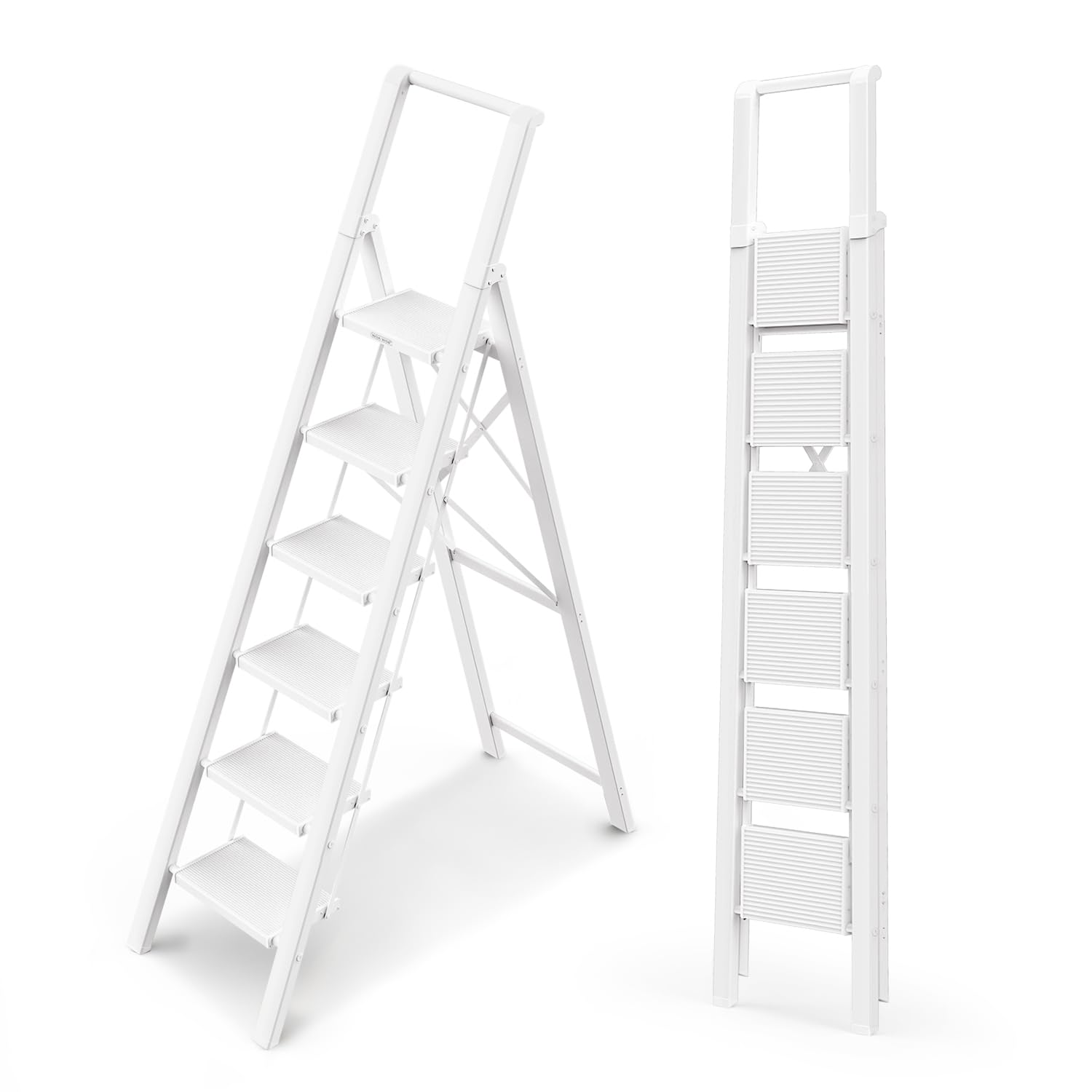
The WOA WOA is not a pull‑down attic ladder — it is an ultra‑slim 6‑step A‑frame ladder that folds to just 2.1 inches thick. It solves a different small‑opening problem: when you need attic access but cannot install a ceiling hatch. It reaches a top step height of 54.5 inches, enough for a person of average height to reach standard attic scuttles.
The aircraft‑grade aluminum frame holds 300 pounds, and the wide 7.87‑inch non‑slip pedals feel far more stable than typical step stools. The ladder comes fully assembled and opens in seconds. Users with walk‑in closets, pantries, or narrow hallways love that it stores flat against a wall or behind a door.
This ladder will not replace a proper folding attic ladder for regular access, but for the times you need a quick peek into a low attic or need to reach a high shelf, it is the most space‑efficient climbing tool available. It is a complementary solution, not a primary one.
Why it’s great
- Ultra‑slim 2.1‑inch folded profile
- Sturdy aluminum construction with wide anti‑slip steps
- No installation required
Good to know
- Not a ceiling‑mount pull‑down ladder
- Maximum top step height is 54.5 inches
- Limited to 300‑lb load capacity
FAQ
Can I fit a 22.5‑inch ladder into a 22‑inch finished opening?
Is a 350‑pound ladder safe enough for a homeowner and stored boxes?
How do I measure my attic opening correctly?
Will an aluminum attic ladder rust in my garage?
Final Thoughts: The Verdict
For most users, the best attic ladder for small opening winner is the LITE AP2240MS because it delivers a true 22.5‑inch fit with a 375‑pound Type IAA rating and deep anti‑slip treads that eliminate the wobble common in narrow ladders. If you want a lighter lift during installation, the LITE AA2211 shaves pounds without sacrificing the same compact footprint. And for a near‑silent, gas‑assisted operation, the Vantic 10‑ft Aluminum combines smooth lowering with pine rails that look better than bare metal.