
Our readers keep the lights on and the weekend projects moving. As an Amazon Associate, I earn from qualifying purchases.
You can spend hours editing out background hums, plosive pops, and levels that bounce between a whisper and a shout, or you can fix the problem at the source with an interface that delivers enough clean gain and onboard processing to handle your voice in a real room. A dedicated interface transforms a standard dynamic mic into a broadcast-ready tool, but the wrong one will leave you fighting noise floors, phantom power issues, and zero-latency routing headaches.
I’m Rikta — the co-founder and writer behind FitlyFast. Over the past several months I’ve been deep inside the specs sheets, community forums, and real-user feedback on XLR-to-USB interfaces that claim to simplify podcast setups, evaluating exactly what makes a preamp clean versus noisy for spoken word.
After sorting through dozens of models, nine audio interfaces earned their way into this comparison. The right interface for your show adds enough gain for a dynamic mic without needing a cloudlifter, keeps the noise floor low enough to leave silence clean in your edits, and offers the I/O you need for a co-host or phone-in guest. This guide to the best audio interface for podcasting will help you match your recording workflow to the hardware that makes you sound consistent every episode.
How To Choose The Best Audio Interface For Podcasting
A podcast interface is not the same as a music recording interface. Your main concern is intelligible voice capture at a consistent level without distortion or excessive noise. The features that matter most are preamp gain range, headphone output clarity, loopback routing, and physical controls like mute buttons that prevent re-takes.
Gain Range and Clean Headroom
Dynamic microphones like the Shure SM7B or Rode PodMic need 60 dB or more of gain to reach a usable level without a separate booster. Interfaces that offer 70 dB or higher allow you to keep the preamp less than fully cranked, which lowers the noise floor. For condenser mics, 48V phantom power and roughly 50 dB of gain is sufficient. If you plan to use a dynamic mic, prioritize an interface with a published gain spec of 60 dB or higher.
I/O: Who and What You Connect
A solo podcaster with one mic can get by with a single XLR input. If you host a co-host or interview guests in person, you need two XLR inputs with independent gain controls and two headphone outputs so each person can monitor their own mix. For Skype call-ins, a built-in Bluetooth connection or a dedicated TRRS phone input simplifies the guest setup. Look for at least one headphone output per active microphone input to give everyone independent monitoring.
Loopback and Onboard Sound Pads
Loopback allows you to route system audio from your computer — background music, video clips, or browser audio — into your recording stream without extra cables. Onboard sound pads or customizable buttons let you trigger jingles, intros, or sound effects during a live show without opening a separate app. For scripted solo podcasts these are optional, but for live-streamers or interview shows they save setup time.
Quick Comparison
On smaller screens, swipe sideways to see the full table.
| Model | Category | Best For | Key Spec | Amazon |
|---|---|---|---|---|
| Focusrite Vocaster Two | Mid-Range | Dual-host podcasting | 70 dB mic gain | Amazon |
| Shure MVX2U Gen 2 | Premium | Mobile podcasting | Onboard DSP per mic | Amazon |
| Universal Audio Volt 2 | Premium | Vocal warmth | Vintage preamp mode | Amazon |
| Solid State Logic SSL 2 MKII | Premium | Low-noise voice recording | Legacy 4K analog enhancement | Amazon |
| Arturia MiniFuse 4 | Premium | Musician podcasters | MIDI I/O + loopback | Amazon |
| Focusrite Scarlett Solo 3rd Gen | Mid-Range | Single-mic podcasters | Air mode on preamp | Amazon |
| MAONO MaonoCaster AME2 | Budget | Live-streaming with sound pads | 11 customizable sound pads | Amazon |
| FIFINE KS5 Gaming Bundle | Budget | Entry-level gaming podcast | 4-channel mixer + XLR mic | Amazon |
| Behringer U-PHORIA STUDIO | Budget | Smallest-ever starter bundle | Full bundle (mic, phones, interface) | Amazon |
In‑Depth Reviews
1. Focusrite Vocaster Two

The Vocaster Two was built from the ground up for spoken-word recording, not for music. It gives you two high-quality mic preamps with over 70 dB of gain, meaning you can drive a power-hungry dynamic mic like the Shure SM7B or Rode PodMic without needing an inline booster. The Auto Gain button sets your input level in seconds — great for hosts who don’t want to fiddle with knobs between takes.
The Enhance mode offers four preset voice profiles (Clean, Warm, Radio, and Bass Cut) that shape your tone before it reaches the DAW. Real-world users report that the Bluetooth phone connection works reliably for interviewing remote guests, and the dedicated mute buttons on the front panel let you cut coughs and off-mic chatter without mouse-clicking. The composite plastic chassis feels lighter than metal rivals but holds up in transport.
It runs bus-powered over USB-C, which simplifies a mobile rig. The headphone outputs are located on the front face, though some users noted that their connectors protrude slightly. The bundled software is minimal compared to music-focused interfaces, but the core tools — Auto Gain and Enhance — are the reason podcasters choose this unit over the Scarlett line.
Why it’s great
- 70 dB+ preamp gain handles any dynamic mic
- Auto Gain and Enhance presets save setup time
- Bluetooth phone input for remote guests
Good to know
- Plastic chassis feels less premium than metal alternatives
- Heaphone jack placement can obstruct nearby ports
2. Shure MVX2U Gen 2
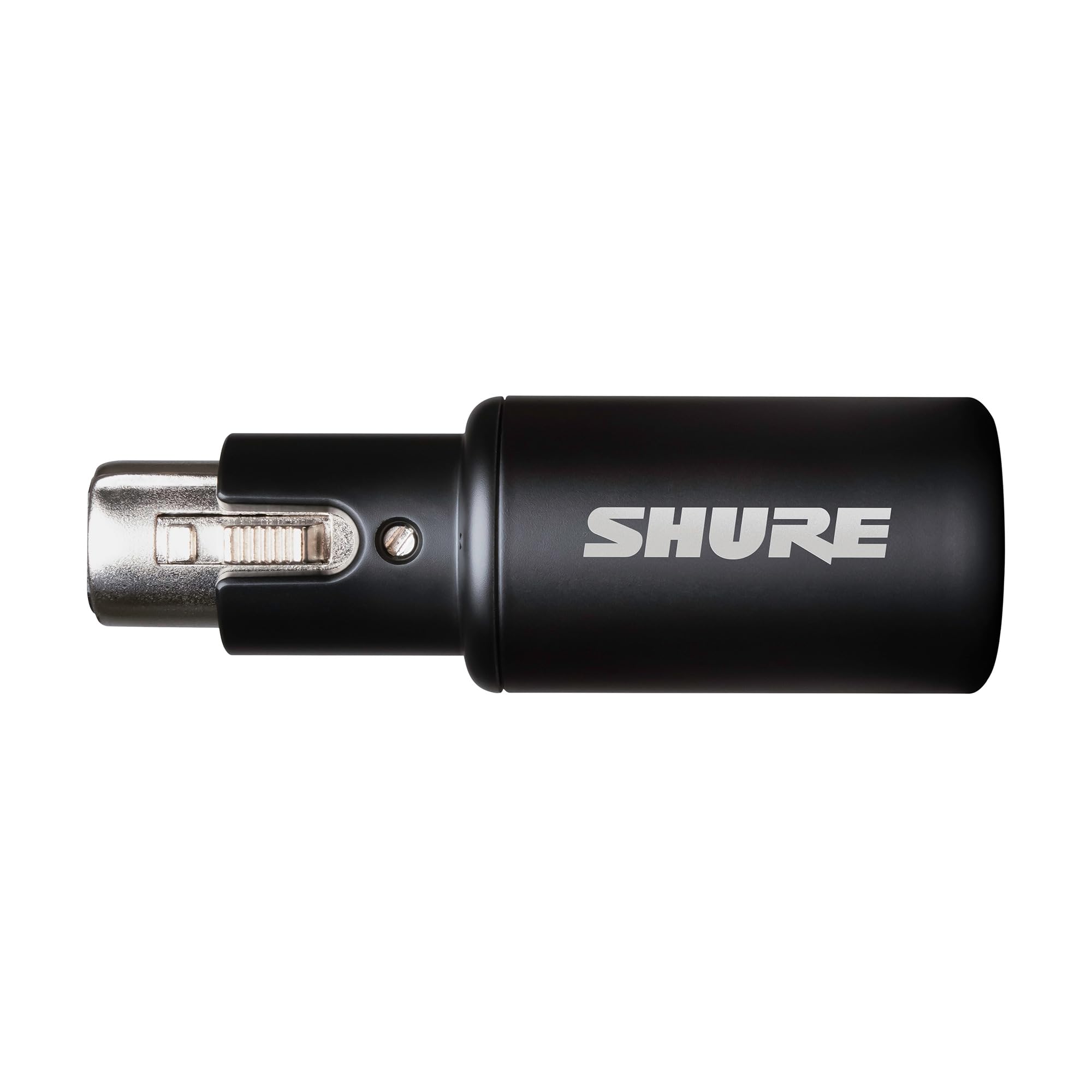
The MVX2U Gen 2 is a compact XLR-to-USB-C interface that packs Shure’s DSP directly into the signal chain. It delivers up to +60 dB clean gain and 48V phantom power in a package roughly the size of a pack of gum. Its primary value for podcasters is the zero-latency Auto Level Mode, which continuously adjusts gain to keep your voice at a consistent output level even if you lean back or move around during a show.
Users who pair it with the MOTIV app can fine-tune tone, compression, limiter, and high-pass filter right on their phone or tablet. The Real-Time Denoiser and Digital Popper Stopper reduce sibilance and pops without post-processing. This makes it an ideal companion for live-streamers or video podcasters who cannot, or will not, edit audio after recording. The unit remembers your DSP settings even when unpowered, so switching between home and mobile setups requires no re-configuration.
The single-channel design limits you to one mic, so co-host setups are a no-go unless you buy two units. Some users reported a defective unit on arrival, but the returns process eventually resolved the issue. If you run a solo show and prize simplicity over I/O count, the MVX2U is one of the most polished options available.
Why it’s great
- Onboard Auto Level and Denoiser eliminate post-processing
- Ultra-compact form factor fits in a pocket
- MOTIV app gives deep tone control on phone or tablet
Good to know
- Single XLR input only — not for dual-mic shows
- Thin USB-C cable feels less durable than the interface itself
3. Universal Audio Volt 2

The Volt 2 brings Universal Audio’s console heritage into a 2-input desktop interface. Its headline feature is the Vintage mode, which emulates the UA 610 tube preamp circuit. Engaging this button adds a subtle harmonic saturation that gives voice a round, present quality — think broadcast radio warmth without sibilant harshness. For spoken word, this makes a standard dynamic mic sound noticeably fuller without any plugin.
The preamps are clean and the converters deliver up to 24-bit / 192 kHz resolution, which is overkill for spoken-word bit rates but ensures the signal path remains completely transparent. The metal chassis feels sturdy, and physical controls include a big monitor volume knob and independent gain knobs with halo indicators. Users consistently note how easy the Volt 2 is to set up on both Mac and Windows, and the bundle includes Ableton Live Lite and the LUNA DAW if you want a full production environment.
It is bus-powered, though users connecting to iPads via Camera Adapter may need an external power supply. The loopback feature works well for including desktop audio during live streams. For podcasters who want a slight “finished” character right out of the box without relying on plugins, the Vintage mode is a genuine difference-maker.
Why it’s great
- Vintage preamp mode adds rich harmonic character to voice
- Solid metal construction with broadcast aesthetics
- Loopback feature simplifies live-stream audio routing
Good to know
- Requires external power for some iOS setups
- No dedicated mute button or auto-gain function
4. Solid State Logic SSL 2 MKII

SSL is legendary in professional recording, and the SSL 2 MKII brings the company’s filter and preamp philosophy to desktop podcasters. The two XLR inputs feature Legacy 4K analog enhancement, a button that adds high-frequency presence and a subtle harmonic distortion that gives vocal clarity without harshness. The built-in high-pass filter (at 75 Hz) is especially useful for podcasters recording in untreated rooms — it cuts low-end rumble from HVAC fans, footsteps, or table bumps before the signal hits the converter.
The preamps are exceptionally quiet, with a published noise floor that rivals interfaces at double the price. Users who upgraded from earlier budget interfaces reported cleaner silence during pauses and less hiss when boosting quieter mics. The 32-bit / 192 kHz AD/DA converters provide an ultra-wide dynamic range, though their primary benefit for spoken word is preserving headroom so you can record at a moderate level without clipping.
The MKII version adds MIDI I/O via 5-pin DIN, which is rarely needed for pure podcasting but valuable if you also trigger sound pads or external controllers. The headphone amplifier is powerful enough to drive high-impedance monitoring headphones cleanly. A minor complaint from some users is the lack of a numeric gain readout — only a multi-color LED ring indicates peak level. Still, for voice artists and single-mic podcasters chasing the lowest possible noise floor, this is a strong contender.
Why it’s great
- High-pass filter eliminates room rumble before recording
- Legacy 4K adds vocal clarity without brittle tone
- Ultra-low noise floor for clean silent pauses
Good to know
- No numeric gain scale — only multi-color LED indicator
- Larger and heavier than comparable 2-input interfaces
5. Arturia MiniFuse 4

The MiniFuse 4 is a 4-input interface that bridges the gap between pure podcasting and music production. It offers two combo XLR/Instrument inputs with 48V phantom power, plus two additional line inputs. The loopback feature routes your computer playback into the recording stream, making it a natural fit for podcasters who cue snippets, ads, or background music during a show. The front headphone jacks each have their own volume control, allowing both host and guest to adjust their monitor mix independently.
Build quality is a standout here — Arturia runs over 200 reliability tests before approving each unit, and backs it with a 5-year warranty. The metal enclosure feels dense, and the USB-C connection provides stable bus power. Included software is generous: Ableton Live Lite, Analog Lab Intro, and Auto-Tune Unlimited give you a complete production suite for editing episodes. Users consistently report excellent driver stability on both Windows and Mac, with low latency performance down to 32 samples at 48 kHz.
The MIDI I/O is an unexpected bonus for podcasters who control sound pads or a hardware mixer. An issue surfaced from some mobile users: the MiniFuse cannot power an iPad directly over USB, requiring a powered hub for a truly portable rig. But for a fixed desktop setup where you record instruments alongside your voice, this is a versatile and well-supported option.
Why it’s great
- Four inputs allow multiple mics and instrument sources
- 5-year warranty reflects exceptional build quality
- Generous software bundle for complete post-production
Good to know
- Requires powered hub for iOS mobile setups
- More I/O than a solo podcaster realistically needs
6. Focusrite Scarlett Solo 3rd Gen

The Scarlett Solo is the most popular entry-level audio interface on the market, and for many podcasters it remains a dependable choice for single-mic recording. Its single XLR combo input offers the “Air” mode, which boosts the high frequencies slightly to add clarity to softer voices. The preamp is clean and the Gain Halo LED ring makes it easy to set the right level visually — green for good, red for clipping.
The all-metal housing has proven durable across years of use; user reviews often mention the unit still working reliably after three or four years of daily recording. The Scarlett accepts instrument input on a second channel via a 1/4-inch jack, so acoustic guitar or bass can be recorded simultaneously for audio-log or singer-podcaster hybrid content. The bundle includes an extensive software suite (Pro Tools Intro, Ableton Live Lite, and various virtual instruments).
Its biggest limitation for podcasting is the single XLR input: a co-host requires an additional mixer or interface. The headphone output also lacks a separate mix control for a guest. The third-generation model now uses USB-C, but the included cable is Type-C to Type-A, so Mac users with older ports may need an adapter. It is a solid, transparent interface that does not add color, which is exactly what some podcasters want.
Why it’s great
- Proven three-year durability in heavy use
- Air mode adds clarity for softer voices
- Gain Halo indicator makes level-setting foolproof
Good to know
- Only one XLR input — no second-mic option
- No dedicated mute button or phone input
7. MAONO MaonoCaster AME2

The MaonoCaster AME2 functions as an all-in-one podcast production console. It offers two XLR inputs with phantom power, a 10-channel mixer, Bluetooth connectivity for guest calls, and a 6.35mm instrument input. The standout feature is the 11 customizable sound pads: three of them support 60-second recordings with one-key looping, while the remaining eight hold 20-second clips. This turns the AME2 into a live performance tool for streamers who want jingles and drop-ins at their fingertips.
The on-board effects include six reverb modes, a 12-step auto-tune (more useful for singing than speech), and independent EQ control for each mic channel. The loopback switch routes your PC audio into the stream. Users report excellent vocal clarity thanks to the 60 dB preamp gain, and the included DENOISE function reduces background hum for untreated rooms.
Reliability is a concern: multiple long-term user reviews mention the unit failing after 12-18 months of light use, with USB-C port issues and malfunctioning LEDs. MAONO offers responsive support, but the longevity does not match the budget-friendly price. If you need a feature-packed mixer for live streaming and treat it as a replaceable device, the AME2 delivers massive functionality per dollar.
Why it’s great
- 11 customizable sound pads for live interactivity
- Bluetooth phone input and instrument jack in one unit
- DENOISE function cleans up untreated room audio
Good to know
- Reliability issues reported after 12-18 months
- Headphone monitor audio may differ from stream output
8. FIFINE KS5 Gaming Bundle

The FIFINE KS5 is a complete gaming bundle that includes a dynamic XLR microphone, a 4-channel mixer, and all necessary cables for under . The XLR mic output is stable and natural, while the mixer features individual mute, volume fader, headphone monitoring, and multi-function knobs for quick audio adjustments during a live game stream. The dynamic microphone rejects room noise well, which helps in keyboard-clacky setups.
The RGB lighting on the mixer offers five modes, synchronized to the rest of a gaming aesthetic. Users upgrading from basic USB desk mics consistently report a significant jump in voice quality. The bundle includes both XLR and USB connectivity, so you can start with USB and upgrade to XLR later without buying a new microphone. A second USB-C port on the mixer powers the device and routes audio independently.
There are important caveats: the function keys (RGB, mute, monitoring) only work in USB mode, not the XLR connection. One user reported the mixer sporadically rebooting mid-session. The construction is primarily plastic, which is expected at this price, and the included cables are functional but short. For a gamer wanting an affordable path to XLR audio without a second purchase, this bundle represents the lowest entry point.
Why it’s great
- Complete XLR mic + mixer kit ready out of the box
- Dynamic mic rejects keyboard and room noise
- Dual USB/XLR mode for flexible upgrades
Good to know
- Mixer function keys only work in USB mode
- Some units exhibit spontaneous reboot behavior
9. Behringer U-PHORIA STUDIO Bundle

The U-PHORIA STUDIO bundle aims to solve the classic beginner problem: buying piece-by-piece leads to incompatibility. It includes the UMC22 audio interface, a condenser microphone, studio headphones, and the necessary cables in one box. The UMC22 offers one XLR combo input with 48V phantom power and a dedicated instrument input, making it equally ready for spoken word or guitar recording.
The interface supports up to 24-bit / 192 kHz conversion, and the preamp is surprisingly quiet for the price bracket. The headphones provide adequate monitoring but have been frequently described as uncomfortable for adult-sized heads, with limited adjustability in the headband.
For absolute beginners who simply want to record an episode with a single mic and are not ready to invest in separate components, this bundle removes the research barrier. The downsides are typical of budget bundles: the microphone stand is flimsy, the headphones feel cheap, and the interface lacks a physical mute button. If you already own a decent dynamic microphone, this bundle is redundant. But for someone who needs a full start-up kit, it is a complete solution.
Why it’s great
- All-in-one box includes interface, mic, and headphones
- 24-bit / 192 kHz converters at a budget entry point
- Instrument input enables dual-purpose recording
Good to know
- Supplied headphones are small and uncomfortable for many adults
- Condenser mic picks up more room sound than a dynamic alternative
FAQ
Can I use a regular music audio interface for my podcast?
Do I need phantom power for my podcast mic?
What is the minimum gain I need for a Shure SM7B?
How many XLR inputs does a solo podcaster need?
Final Thoughts: The Verdict
For most users, the best audio interface for podcasting winner is the Focusrite Vocaster Two because it was built specifically for spoken-word workflows with 70 dB gain, auto-level setting, and a dedicated phone input that eliminates the need for a separate mixer. If you want a portable, DSP-driven unit that lets you grab your mic and record anywhere without touching a plugin, grab the Shure MVX2U Gen 2. And for the all-in-one live-streamer who needs sound pads, Bluetooth calling, and instrument input in a single desktop hub, nothing beats the MAONO MaonoCaster AME2.