
Our readers keep the lights on and the weekend projects moving. As an Amazon Associate, I earn from qualifying purchases.
Recording vocals, podcasting, or streaming demands an audio interface that captures every detail without noise, distortion, or latency. The gap between a good track and a great one often comes down to the quality of your conversion and preamps—not just the microphone you plug into it.
I’m Rikta — the co-founder and writer behind FitlyFast. After analyzing the raw technical specs, real-world customer performance data, and long-term reliability reports for dozens of audio interfaces, I’ve narrowed the field to the nine contenders that truly deliver studio-grade results for the price-sensitive producer.
Whether you are tracking a singer-songwriter demo, livestreaming a podcast, or building your first home studio, this guide breaks down the best audio interface under $500 with the measurement-grade analysis serious buyers demand.
How To Choose The Best Audio Interface Under $500
Choosing the right audio interface means balancing input count, preamp quality, conversion fidelity, and connectivity against your specific recording style. A podcaster needs different I/O than a solo musician; a band recording live needs more channels than a voice-over artist.
Input and Output Count
Think about how many microphones, instruments, and line-level sources you need to capture simultaneously. Two inputs works for a single vocalist and guitar, but a dual-person podcast or a drum kit demands four or more inputs. Also count your outputs for monitor routing—more outputs allow separate headphone mixes.
Mic Preamps and Equivalent Input Noise
The preamp is the engine of your interface. Look for low EIN numbers (below -128dBV is excellent) and clean gain of at least 60dB. Preamps with too little gain force you to use external boosters like Cloudlifters for dynamic microphones. High gain and low noise mean you capture the mic, not the background hiss.
Converters and Dynamic Range
Analog-to-digital and digital-to-analog converters determine how much sonic detail you preserve. A dynamic range above 110dB on the inputs and above 120dB on the outputs is the professional standard. Higher numbers here translate directly to clearer mixes and more headroom before distortion.
Quick Comparison
On smaller screens, swipe sideways to see the full table.
| Model | Category | Best For | Key Spec | Amazon |
|---|---|---|---|---|
| RØDE RØDECaster Duo | All-in-One | Podcast & Stream Production | 76dB Gain, APHEX Processing | Amazon |
| Audient iD24 | Studio Standard | Critical Monitoring & Mixing | 126dB Dynamic Range | Amazon |
| Focusrite Scarlett 4i4 4th Gen | Workhorse | Versatile Home Studio | 120dB Dynamic Range | Amazon |
| SSL 2 MKII | Console Sound | Legacy 4K Analog Enhancement | 32-Bit / 192kHz Converters | Amazon |
| MOTU M4 | Expansion Ready | Multi-Channel Recording | 4-in/4-out, LCD Screen | Amazon |
| Universal Audio Volt 2 | Vintage Tone | Recording with Character | Vintage 610 Preamp Mode | Amazon |
| Pyle PMXU46BT | Mixer Hybrid | Live Mixing & Multi-Mic | 4-Channel with Bluetooth | Amazon |
| Focusrite Vocaster Two | Podcast Pair | Two-Person Podcasting | 70dB Gain, Auto Gain | Amazon |
| Shure MVX2U Gen 2 | Mobile Rig | Ultra-Portable XLR Solution | 60dB Gain, DSP Processing | Amazon |
In‑Depth Reviews
1. RØDE RØDECaster Duo
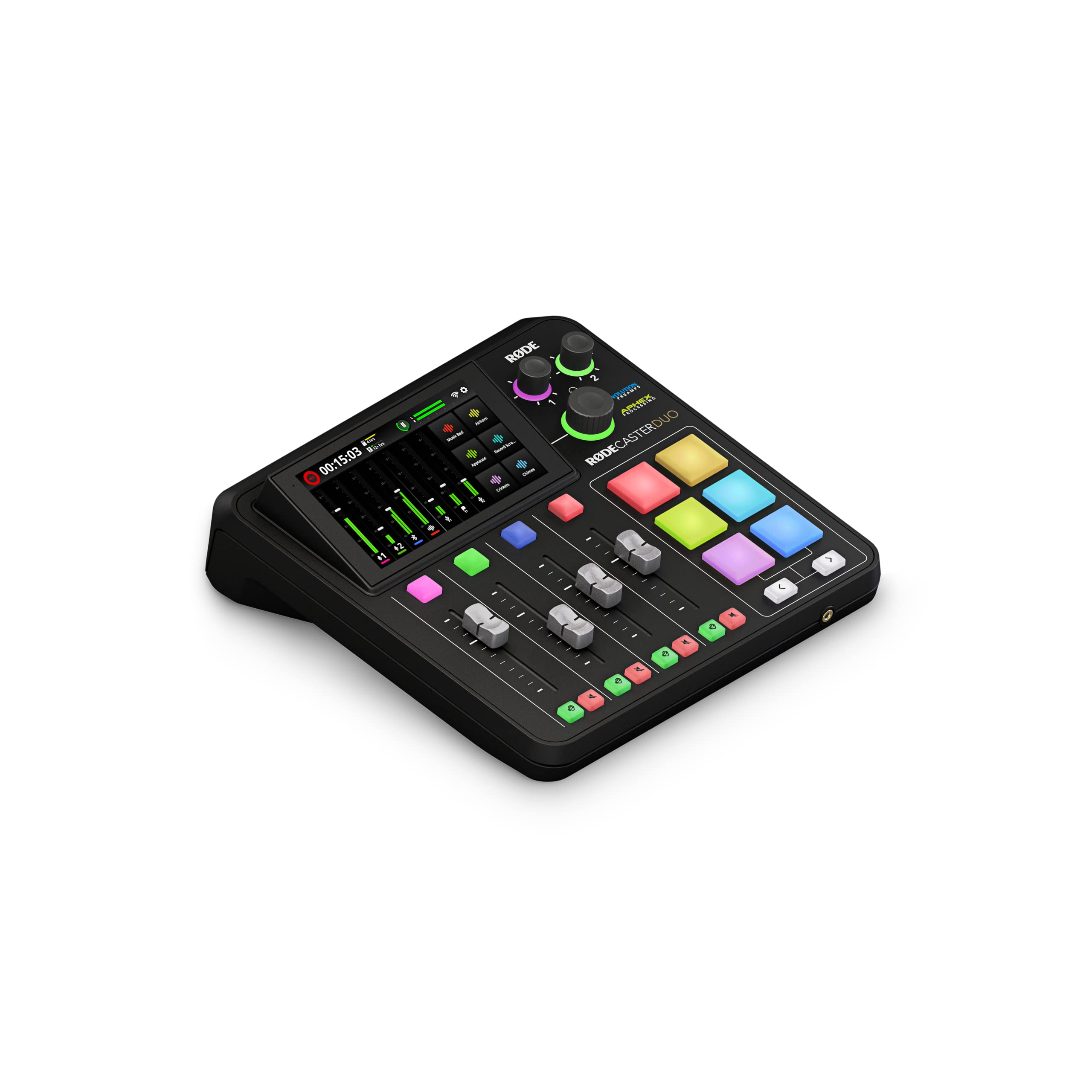
The RØDECaster Duo is the most complete all-in-one production hub in this price range, packing four broadcast-quality faders, a high-resolution touchscreen, and six programmable SMART pads into a compact chassis. Its Revolution Preamps deliver an ultra-low-noise -131.5dBV EIN with 76dB of gain, meaning even a notoriously hungry dynamic mic like the SM7B needs no external booster.
What separates this unit from standard audio interfaces is its dedicated APHEX processing suite, including the legendary Aural Exciter and Big Bottom effects, plus studio-grade compression and EQ that apply in real time. The integrated Bluetooth connectivity and 3.5mm TRRS headset input make it a true one-box solution for livestreamers who need to bring in phone callers without extra adapters.
The learning curve is real—the software routing and iPhone setup require patience—but once configured, the RØDECaster Duo replaces an entire rack of outboard gear. It runs warmer than a standard interface and demands its own power supply, but for any creator who values workflow speed and polished sound straight out of the box, this is the category leader.
Why it’s great
- Revolution Preamps eliminate need for external gain boosters
- Built-in APHEX processing delivers broadcast-ready sound without plugins
- SMART pads and faders enable tactile control during live sessions
Good to know
- Setup complexity is higher than standard audio interfaces
- Requires external power supply—no bus power option
2. Audient iD24

The Audient iD24 is a masterclass in conversion quality, featuring 126dB of dynamic range on its DAC output—the highest figure in this entire lineup. Its two Class-A Audient Console Mic Preamps are direct descendants of the ASP8024-HE recording console circuit, delivering ultra-low noise and low distortion with the subtle analog warmth that makes vocal tracks sit naturally in a mix.
Where the iD24 truly shines for advanced users is its pair of fully balanced insert points, allowing you to route external outboard gear directly into the A/D converters before they touch the internal preamps. This bypass capability is almost unheard of at this price tier and means you can integrate vintage compressors or EQ units without degrading the signal path.
The three programmable function buttons let you assign speaker select, talkback, polarity invert, or mono sum for rapid workflow changes. It does run notably warm and is more power-hungry than bus-powered rivals, so a USB 2.0 port may struggle. For the critical ear that demands absolute transparency in monitoring and mixing decisions, the iD24 sets a new benchmark.
Why it’s great
- Console-grade preamps with genuine analog warmth and ultra-low noise
- Fully balanced insert points bypass internal preamps for pristine outboard integration
- 126dB dynamic range provides exceptional clarity for critical mixing
Good to know
- Runs hot under operation; requires adequate ventilation
- Power draw may cause issues with older USB 2.0 ports
3. Focusrite Scarlett 4i4 4th Gen
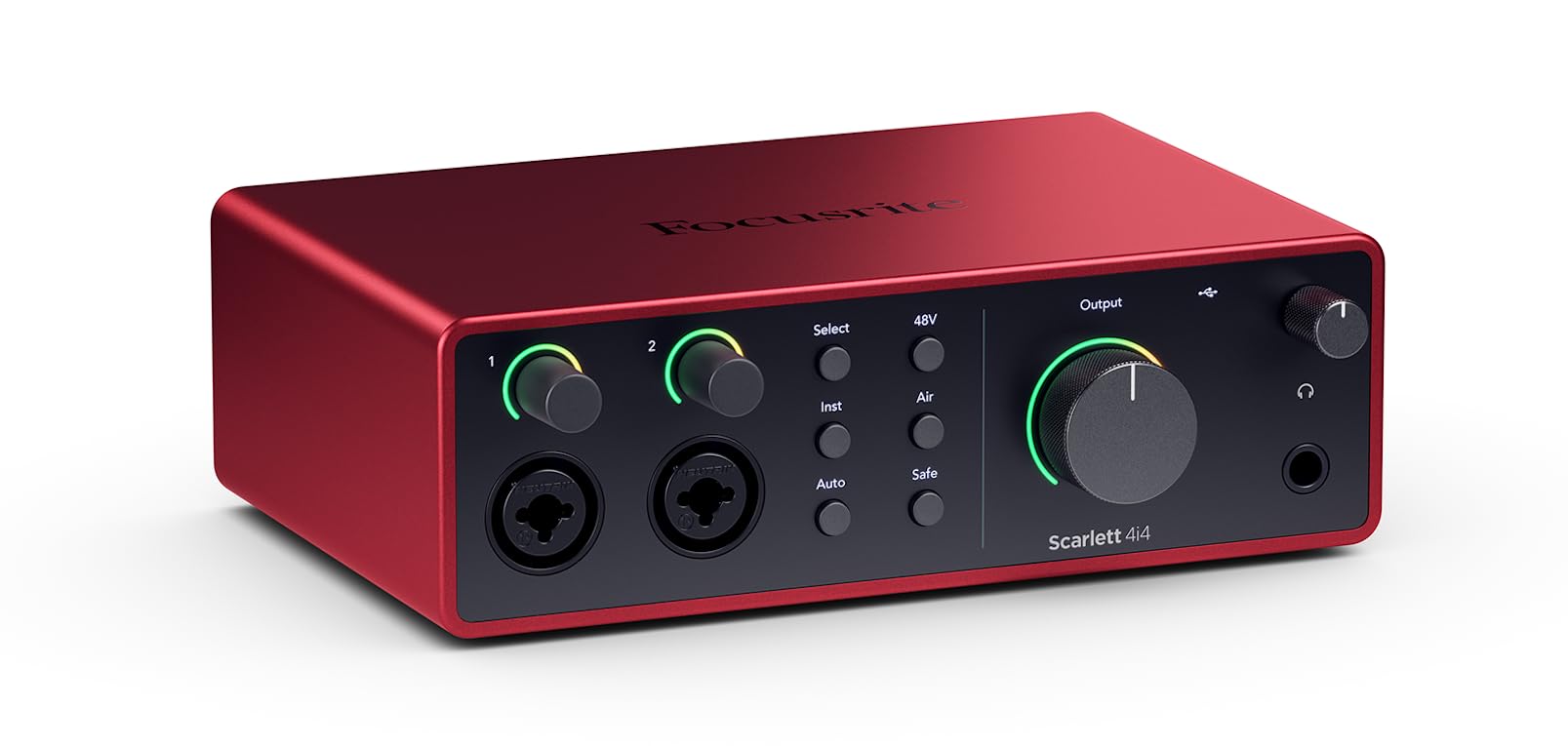
Focusrite’s Scarlett 4i4 4th Gen is the evolution of an industry standard, now offering 120dB of dynamic range with the same converters found in the company’s flagship RedNet interfaces used in major commercial studios. The two Scarlett 4th Gen mic preamps deliver clean, high-headroom gain, while the Air mode adds a presence boost that lifts vocals and acoustic guitars forward in the mix with musical harmonic drive.
The addition of Auto Gain and Clip Safe is a genuine productivity win—Auto Gain sets your input level automatically by measuring your source for a few seconds, and Clip Safe continuously monitors and adjusts to prevent digital overshoot. For solo creators who need to focus on performance rather than gain staging, these features eliminate a major source of ruined takes.
The 4i4 provides four line inputs, four line outputs, and full MIDI I/O, making it an ideal hub for synth and drum machine integration. The dedicated power supply improves reliability over bus-powered units, especially in complex USB chains with KVM switches. It is a balanced, no-compromise interface that handles recording, mixing, and live streaming with equal competence.
Why it’s great
- Pro studio-grade converters with 120dB dynamic range for transparent audio
- Auto Gain and Clip Safe protect against clipping during live takes
- Robust build with dedicated power supply for stable multi-device setups
Good to know
- Only two XLR inputs; rear 1/4-inch inputs benefit from balanced TRS cables
- Driver can occasionally conflict with certain gaming or DAW software
4. Solid State Logic SSL 2 MKII

The SSL 2 MKII brings the legendary sound of Solid State Logic’s large-format consoles to the desktop, with its hallmark Legacy 4K analog enhancement button that adds high-frequency sheen and subtle harmonic saturation to your input signal. Its 32-bit / 192kHz AD/DA converters provide headroom far beyond standard 24-bit interfaces, giving you more room to capture dynamic performances without hitting the noise floor.
The high-pass filters on each input channel are a standout feature for voice-over artists and podcasters—they cut low-frequency rumble and proximity effect instantly, cleaning up the signal before it ever hits the DAW. The headphone amplifier is notably powerful and clean, capable of driving high-impedance monitoring headphones to satisfying levels without distortion.
Build quality is excellent, with a stainless steel chassis and knobs that mimic the tactile feel of SSL’s full-size consoles. USB bus power keeps the desk clean, though the phantom power circuitry is impressively low-noise for a bus-powered design. It is not a 32-bit float recorder like the Zoom UAC-232, so you can still clip the analog stage, but the converter quality is phenomenal for its class.
Why it’s great
- Legacy 4K analog enhancement adds sought-after console character to recordings
- High-pass filters effectively eliminate rumble and room noise from vocals
- 32-bit / 192kHz converters offer exceptional dynamic headroom
Good to know
- Not a true 32-bit float recording interface—analog clipping is still possible
- Larger and heavier than comparable two-input interfaces
5. MOTU M4

The MOTU M4 is the most I/O-dense bus-powered interface in this roundup, offering four inputs and four outputs with two ultra-transparent mic preamps, dedicated hi-Z instrument inputs, and a pristine LCD level display for each channel. Its drivers are widely regarded as among the most stable in the industry, with ASIO performance that delivers genuinely low latency even on modest computers.
The built-in loopback functionality routes your computer audio back into the interface inputs, making it a seamless tool for streamers who need to capture desktop audio alongside microphone and instrument signals. The front-panel 48V phantom power switch per channel and independent monitor and headphone volume knobs give you hands-on control without diving into software.
One quirk is a rare pitch-shifting bug triggered by Windows fast startup, easily fixed by disabling that power setting. The headphone amplifier is adequate for low-impedance cans but may feel anemic with high-impedance studio headphones—an external headphone amp solves this neatly. For multi-instrument home studios and content creators who need clean, expandable routing, the M4 is a powerhouse.
Why it’s great
- Rock-solid Windows ASIO drivers with genuine low-latency performance
- Dedicated loopback output simplifies streaming and podcast audio routing
- LCD level meters provide precise visual feedback for gain staging
Good to know
- Headphone amp may lack power for high-impedance studio headphones
- Volume knobs have a slight dead zone in the first 25% of rotation
6. Universal Audio Volt 2

The Universal Audio Volt 2 brings the coveted sound of UA’s classic 610 tube preamp to a compact, bus-powered format. Engaging Vintage mode introduces a warm, saturation-rich character that adds depth and presence to vocals and acoustic instruments, setting it apart from the transparent preamps found in most competitors at this tier.
With 24-bit / 192kHz conversion, the Volt 2 captures detail accurately, and the bundled LUNA Digital Audio Workstation integrates seamlessly with UA’s UAD plug-in ecosystem, giving you access to emulations of compressors, EQs, and reverbs used on countless hit records. The build feels premium with a sturdy metal chassis and satisfyingly smooth gain knobs.
It requires an external Volt power supply when used with iOS devices, and the UA software setup can be time-consuming for first-time users. For musicians and singer-songwriters who want a single interface that imparts analog color at the tracking stage without resorting to outboard gear, the Volt 2 delivers a genuine sonic signature rather than sterile digital capture.
Why it’s great
- Vintage 610 preamp mode adds sought-after tube-style warmth and saturation
- Bundled LUNA DAW and UAD plugin ecosystem for integrated production
- Solid, premium build quality with smooth tactile controls
Good to know
- Requires external power supply for iOS mobile recording setups
- Software and driver installation can be time-intensive for new users
7. Pyle PMXU46BT

The Pyle PMXU46BT is a genuine analog mixer with a built-in USB audio interface, making it the only true mixing board in this lineup. Its four channels feature two XLR/1/4-inch combo inputs with +48V phantom power, plus stereo line inputs, independent channel EQ with high, mid, and low frequency adjustments, and a 12-segment stereo output level meter.
The integrated Bluetooth receiver allows you to stream music from a phone or tablet directly into the mix, which is invaluable for live podcast intros, karaoke backing tracks, or intermission playlists. The USB soundcard function lets you record the stereo mix to a computer, though it outputs a single stereo track rather than multi-track recording—a meaningful limitation for post-production.
Build quality is utilitarian plastic with metal jacks, and the included power adapter is necessary—no bus power. Some users report that the USB connection occasionally needs re-seating. For live sound applications where you need physical faders, EQ, and Bluetooth streaming in one package under a budget-friendly price, the Pyle fills a role no standard interface can match.
Why it’s great
- Analog mixer format with physical faders and EQ per channel for live control
- Built-in Bluetooth streaming for wireless music integration during events
- Four channels accommodate multiple mics, instruments, and line sources
Good to know
- USB interface records only a single stereo mix, not multi-track
- USB connection can be finicky and occasionally requires re-seating
8. Focusrite Vocaster Two

The Focusrite Vocaster Two is purpose-built for two-person podcasting and livestreaming, featuring two mic inputs each with over 70dB of clean gain—enough to drive low-output dynamic microphones without an external booster. The onboard Auto Gain function sets your levels in seconds by analyzing your speaking voice, and the Enhance button applies one of four podcaster-approved presets that compress, EQ, and excite your signal for broadcast-ready sound.
What makes the Vocaster Two uniquely practical is its Bluetooth phone connectivity, allowing you to bring remote guests into your podcast in studio quality without a separate mixer or hybrid device. The dedicated hardware mute button for each channel lets you cut coughs and interruptions instantly, and the camera output with a single TRS cable routes premium audio directly to your video feed.
The chassis is plastic but feels rugged, and the USB-C connection powers the unit from a laptop or iPad. The headphone jacks angle outward, causing cable protrusion that can be awkward in tight desk spaces. For podcasters who need a simple, focused interface with built-in phone call handling and broadcast processing, the Vocaster Two is a purpose-driven solution.
Why it’s great
- Dedicated hardware mute buttons for each presenter channel
- Bluetooth phone connectivity enables seamless remote guest integration
- Auto Gain and Enhance presets deliver polished vocal sound instantly
Good to know
- Plastic chassis may feel less premium than metal-bodied alternatives
- Angled headphone jacks cause cables to protrude from the front panel
9. Shure MVX2U Gen 2
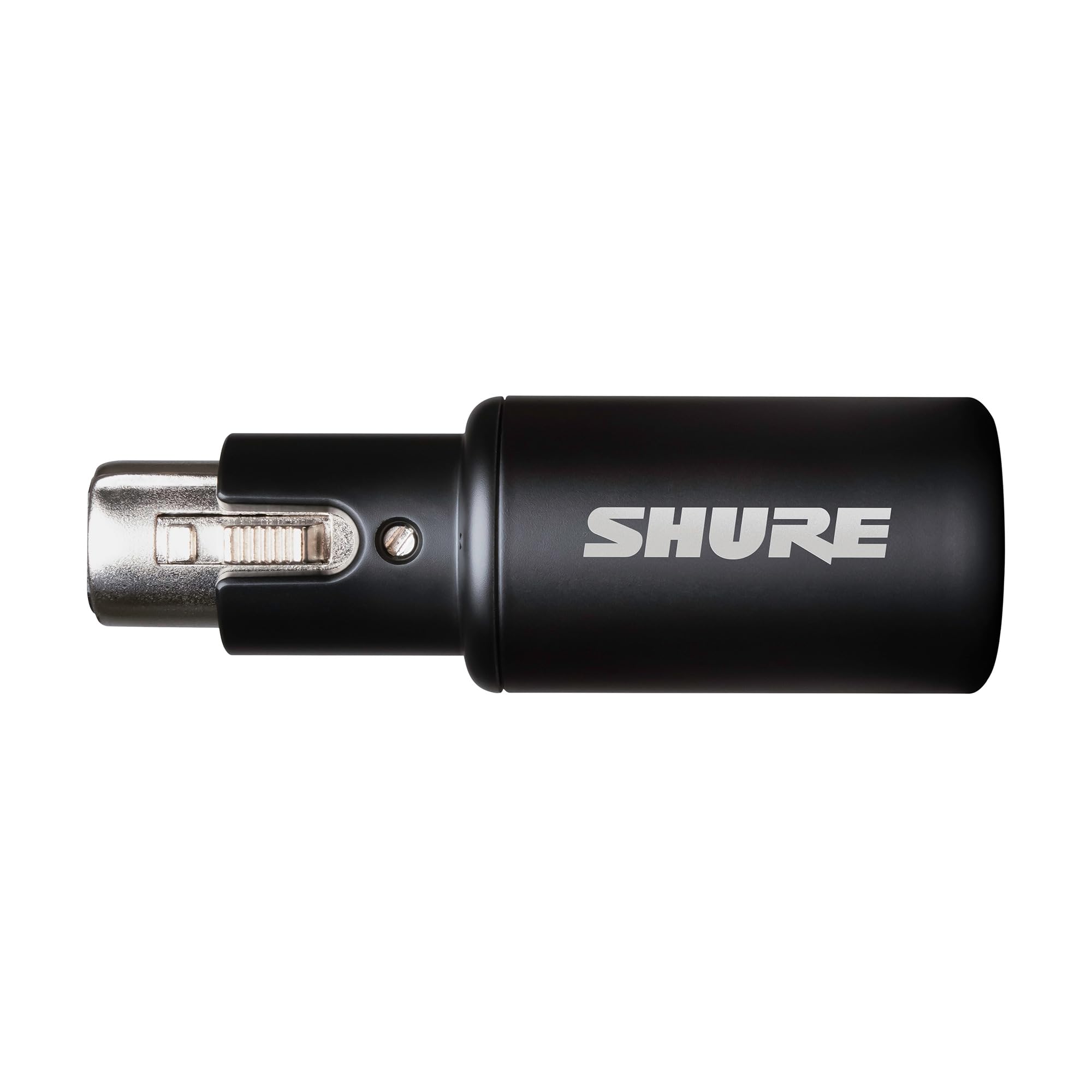
The Shure MVX2U Gen 2 is the most portable interface in this guide—a compact XLR-to-USB-C dongle that fits in a coin pocket yet delivers professional-grade audio processing via its onboard DSP. With 60dB of clean gain and 48V phantom power, it can drive any dynamic or condenser microphone, including the notoriously gain-hungry SM7B, without requiring a Cloudlifter.
Shure’s advanced digital audio processing includes Auto Level Mode, a Real-Time Denoiser, and a Digital Popper Stopper, all of which operate with zero latency at the hardware level. The MOTIV app gives you hands-on control over tone, EQ, compression, and limiter settings from your phone or tablet, and the interface remembers your settings after power-off—a critical feature for mobile rigs.
It is Apple MFi certified and works seamlessly with iPhones and iPads right out of the bag, though some Android users may encounter compatibility challenges. Build quality is exceptional, with a machined metal housing that feels indestructible. For journalists, field recordists, or creators who need studio-grade conversion from any XLR mic in a truly pocketable form factor, the MVX2U sets the mobility standard.
Why it’s great
- Ultra-compact design fits in a pocket for true on-the-go recording
- Onboard DSP with Auto Level, Denoiser, and Popper Stopper processes in real time
- Apple MFi certified with seamless iPhone and iPad plug-and-play
Good to know
- Limited to single-channel XLR input only
- Android compatibility can be inconsistent across devices
FAQ
What sample rate and bit depth should I record at with an audio interface under $500?
Do I need an external power supply or is USB bus power enough for clean recordings?
Final Thoughts: The Verdict
For most users, the audio interface under $500 winner is the RØDE RØDECaster Duo because it eliminates the need for separate compressor, EQ, and phone hybrid gear, delivering broadcast-quality audio with tactile fader control. If you want the absolute cleanest conversion for critical mixing, grab the Audient iD24. And for flexible multi-channel home studio recording with exceptionally stable drivers, nothing beats the MOTU M4.