
Our readers keep the lights on and the weekend projects moving. As an Amazon Associate, I earn from qualifying purchases.
The market is flooded with earbuds that promise rich sound but deliver hollow, lifeless audio. A good pair should reveal the texture of a bassline, the air around a vocalist, and the spatial cues that make a live recording feel real — not just reproduce a frequency chart. This guide cuts through the marketing noise to find the earbuds that actually deliver on that promise.
I’m Rikta — the co-founder and writer behind FitlyFast. I’ve spent weeks analyzing frequency response graphs, driver topologies, codec support, and real-world user measurements across dozens of models to isolate the ones that justify their place in your ears.
Whether you prioritize wired neutrality, wireless codec support, or noise isolation that doesn’t crush detail, this guide to the audio quality earbuds will help you make an informed decision based on specs that matter.
How To Choose The Best Audio Quality Earbuds
Finding earbuds that deliver true audio quality requires looking beyond brand names and marketing buzzwords. The key is understanding how driver configuration, codec support, and tuning philosophy affect what you actually hear.
Driver Configuration: Single vs. Hybrid
A single dynamic driver is the most common design, offering good bass and a cohesive sound. Hybrid setups pair a dynamic driver for lows with one or more balanced armature (BA) drivers for mids and highs. This separation often yields greater detail and clarity, but requires careful crossover tuning to sound natural. The Status Pro X uses a 12mm dynamic plus dual Knowles BA drivers, while the Sennheiser IE 200 uses a single, expertly tuned 7mm driver.
Codec Support and Wireless Fidelity
For wireless earbuds, the audio codec determines how much of the original recording reaches your ears. LDAC and LDHC transmit at higher bitrates (up to 990 kbps), preserving detail that AAC or SBC compress away. The Sony WF-1000XM6 and Status Pro X both support LDAC, while Apple’s AirPods Pro 3 use a custom AAC implementation optimized for the Apple ecosystem. If you listen to lossless files, LDAC support is a significant advantage.
Tuning Philosophy: Neutral, V-Shaped, and Harman Target
Tuning defines the earbud’s tonal balance. Neutral tuning (Sennheiser IE 200) aims for accuracy, letting the recording speak for itself. V-shaped tuning (Soundcore Liberty 5 Pro out of the box) boosts bass and treble for an exciting, energetic sound. The Harman Target is a research-derived curve that many listeners find natural — the Nothing Ear (3) and Status Pro X offer EQ presets to approximate it. Matching the tuning to your preferred genre is critical for satisfaction.
Quick Comparison
On smaller screens, swipe sideways to see the full table.
| Model | Category | Best For | Key Spec | Amazon |
|---|---|---|---|---|
| Sony WF-1000XM6 | Premium Wireless | Best all-around ANC & audio | 8.4mm driver + QN3e processor | Amazon |
| Status Pro X | Hybrid Driver | Audiophile tuning on wireless | 12mm + dual Knowles BA | Amazon |
| Apple AirPods Pro 3 | Ecosystem Flagship | Apple integration & spatial audio | Custom H4 chip + Adaptive EQ | Amazon |
| Soundcore Liberty 5 Pro | Call Quality | Crystal-clear calls anywhere | Guinness-certified G-MOS score | Amazon |
| Nothing Ear (3) | Mid-Range ANC | Balanced features & price | 12mm ceramic diaphragm driver | Amazon |
| Sennheiser IE 100 PRO | Wired Monitor | Stage monitoring & vocal clarity | 10mm dynamic broadband driver | Amazon |
| Sennheiser IE 200 | Wired Audiophile | Neutral reference sound | 7mm TrueResponse transducer | Amazon |
In‑Depth Reviews
1. Sony WF-1000XM6
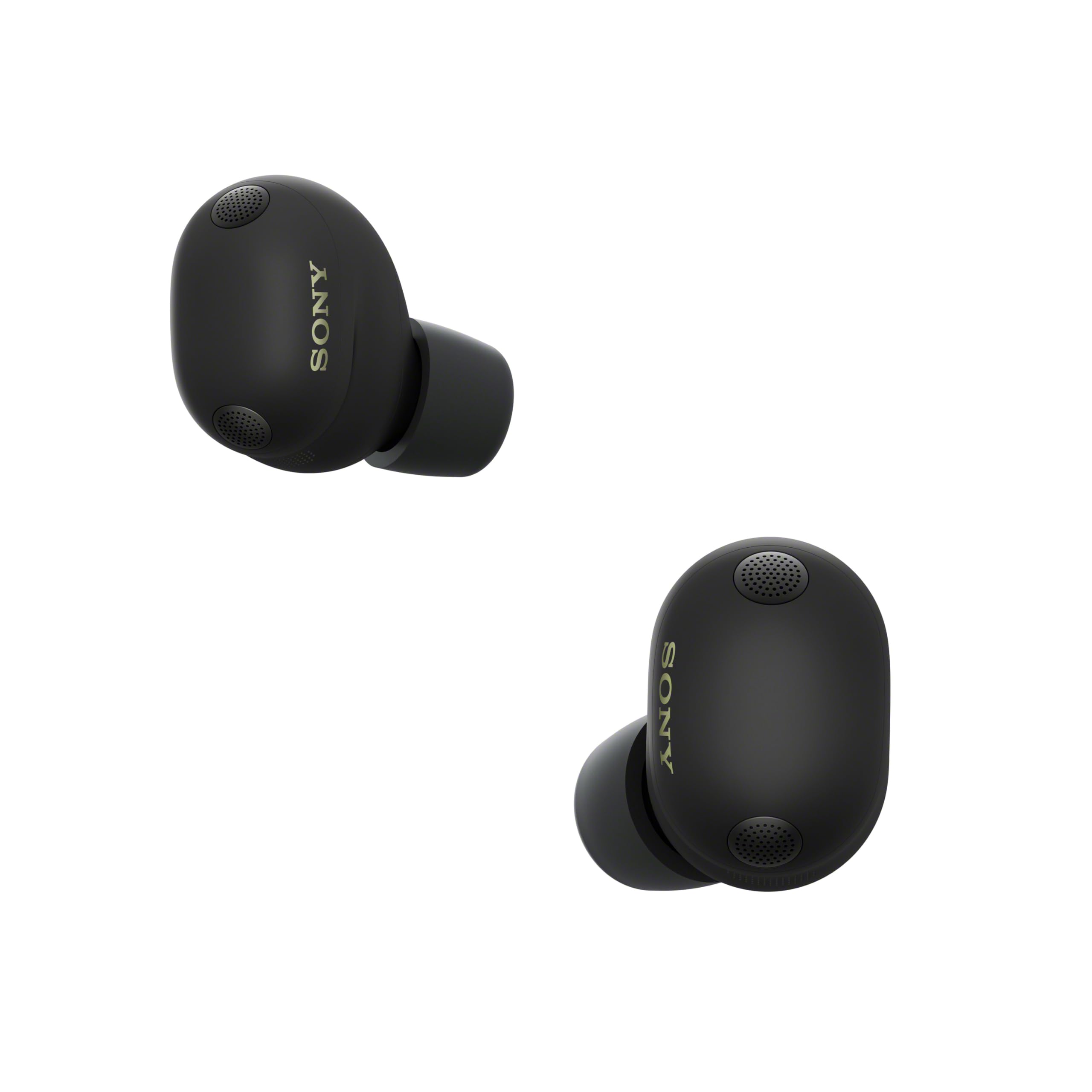
The Sony WF-1000XM6 sets the benchmark for wireless audio quality in 2026, combining an 8.4mm dynamic driver with the new QN3e processor for adaptive noise cancellation that adapts in real time. The bass is deep and controlled without bleeding into the mids, and the treble extends smoothly without harshness — a feat few wireless earbuds achieve. LDAC support ensures high-resolution files retain their detail, and the Integration Assistant in the Sony app helps you dial in the perfect seal for consistent frequency response.
The ergonomic design includes foam-like eartips that conform to the ear canal, providing both exceptional passive isolation and long-term comfort. The battery life reaches 8 hours with ANC active, backed by a quick-charge feature that delivers an hour of playback from a five-minute charge. Call quality has been significantly improved over the XM5, thanks to dual beamforming mics and a bone conduction sensor that isolates your voice in noisy environments.
Some users report that the earbuds are slightly bulkier than competitors, and the touch controls can be triggered accidentally during adjustments. But for the combination of studio-quality sound, class-leading ANC, and LDAC wireless fidelity, the WF-1000XM6 is the gold standard for serious listeners who need wireless convenience without compromising audio integrity.
Why it’s great
- Reference-grade sound with controlled bass and smooth treble
- Class-leading adaptive ANC with the QN3e processor
- LDAC support for high-resolution wireless audio
Good to know
- Slightly bulky design may cause fatigue over extended wear
- Touch controls can be overly sensitive during handling
2. Status Pro X

The Status Pro X brings a true hybrid driver system to the wireless market, pairing a 12mm dynamic driver with dual Knowles balanced armature drivers. This configuration delivers the visceral punch of a dynamic driver for bass while the BA drivers handle mids and highs with exceptional clarity and separation. The stock tuning is V-shaped, but the companion app includes Harman target and Knowles reference presets that reveal a far more neutral and detailed soundstage, rivaling wired IEMs at a fraction of the cost.
With 52dB of hybrid ANC and six beamforming microphones augmented by Voiceloom AI, the Pro X handles noisy environments with ease. The call quality is among the best in class, and the LDAC codec support ensures that streaming services like Tidal or Qobuz deliver their full potential. The IP55 rating and Qi wireless charging make it practical for daily use, and the Find My Earbuds function adds peace of mind.
The battery life falls slightly short of competitors at 5-6 hours per charge with ANC, and the ear tips are a known weak point — aftermarket upgrades are recommended for the best seal. The case also lacks a battery percentage display, which is an odd omission for a premium product. Still, for the sheer audio fidelity — especially with the Knowles BA drivers handling the upper frequencies — the Pro X is a compelling choice for those who prioritize detail retrieval above all else.
Why it’s great
- Exceptional detail from hybrid driver configuration
- Harman and Knowles reference EQ presets available
- 52dB ANC rivals over-ear headphones in isolation
Good to know
- Battery life of 5-6 hours is below class average
- Stock ear tips compromise seal; aftermarket recommended
3. Apple AirPods Pro 3

The AirPods Pro 3 represent Apple’s most serious attempt at high-fidelity audio in a wireless form factor. The new acoustic architecture delivers transformed bass that is both deeper and more articulate than the Pro 2, while the Adaptive EQ adjusts in real time to the shape of your ear, ensuring consistent frequency response across different fits. The spatial audio implementation is still the best in the business, creating a convincing head-tracking soundstage for Dolby Atmos content that feels genuinely immersive.
Beyond audio quality, the AirPods Pro 3 introduce heart rate sensing during workouts and live translation powered by Apple Intelligence — features that add utility without distracting from the core listening experience. The ANC removes up to 2x more noise than the previous generation, and the five sizes of ear tips make it easier than ever to achieve a proper seal. Battery life reaches 8 hours with ANC, and the charging case supports both USB-C and Qi.
The main limitation is the proprietary codec — while Apple’s AAC implementation is excellent, it does not support LDAC, meaning lossless audio from Apple Music is downsampled over Bluetooth. The lack of a fully customizable EQ in the stock experience is also a drawback for users who want to tweak the sound signature. But for iPhone users who value seamless ecosystem integration, spatial audio, and all-day comfort, this is the clear choice.
Why it’s great
- Best spatial audio implementation with dynamic head tracking
- Adaptive EQ fine-tunes response to your ear geometry
- Exceptional ANC and seamless Apple ecosystem integration
Good to know
- No LDAC support; lossless audio is downsampled
- Limited EQ customization compared to competitors
4. Soundcore Liberty 5 Pro
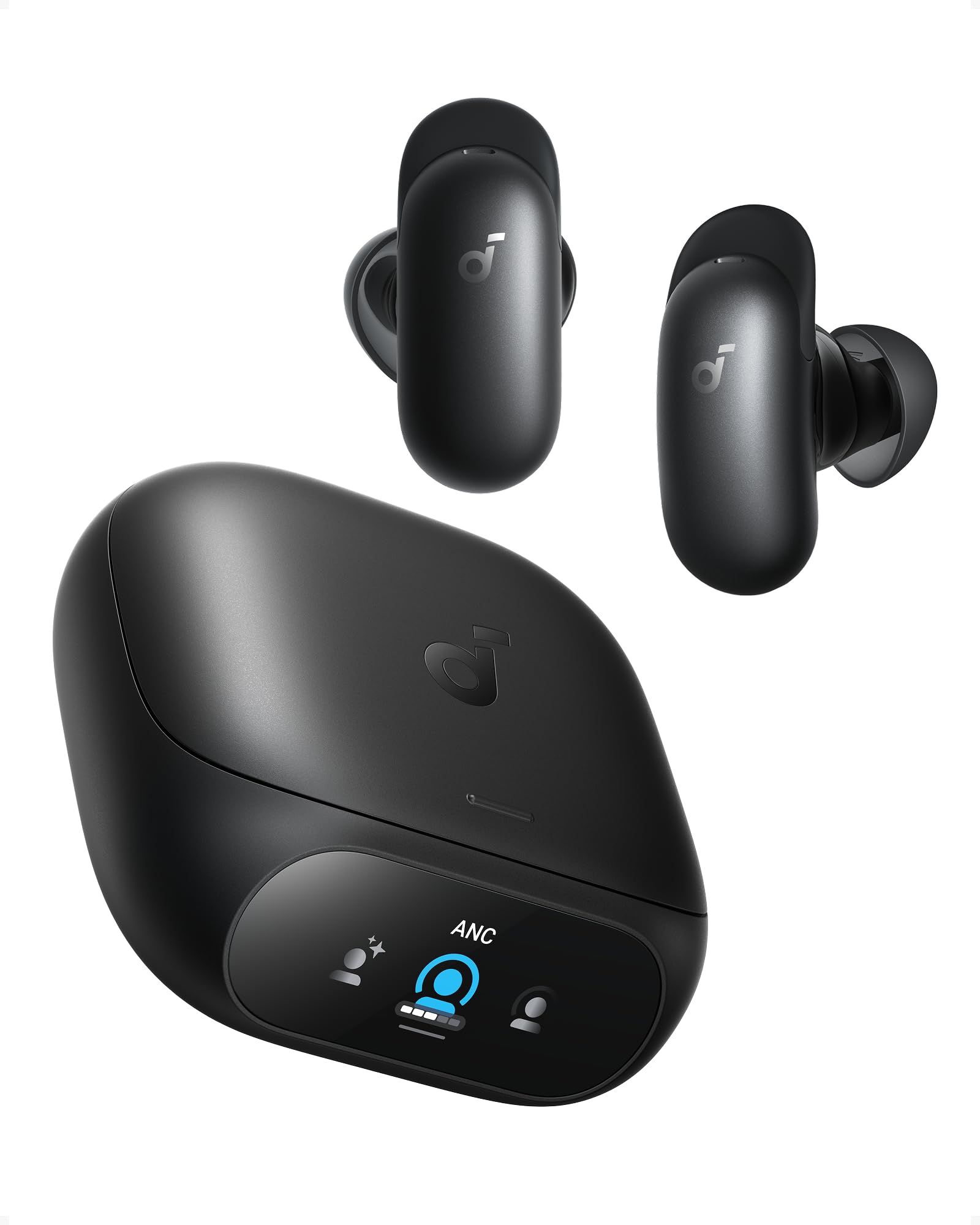
The Soundcore Liberty 5 Pro earned a Guinness World Record for call quality, and the audio performance is equally impressive for a mid-range wireless earbud. The out-of-box sound is distinctly V-shaped, with pronounced bass and treble that creates an exciting, energetic signature — but the HearID 5.0 system lets you create a personalized EQ curve based on your hearing sensitivity, which significantly improves balance and clarity. The AI Audio Enhancer adds a layer of processing that fills in detail without introducing artifacts.
The ANC is described as 100% more effective than Soundcore’s previous flagship, and real-world testing confirms it competes with the Sony and Apple offerings in blocking office and transit noise. The transparency mode is natural-sounding, and the smart case screen adds a layer of convenience for checking battery levels and switching devices. Battery life reaches 12 hours per charge, among the best in this class, and Bluetooth 6.1 ensures stable multipoint connection.
Some users find the default bass too overwhelming for critical listening, and the lean mids can make vocals sound recessed before EQ adjustment. The ear wings are optional but help secure the fit during movement. For those who spend hours on calls and want a feature-rich wireless earbud with industry-leading voice pickup, the Liberty 5 Pro is an exceptional value.
Why it’s great
- World-record certified call quality with clear voice isolation
- Personalized HearID 5.0 EQ for tailored sound
- Outstanding battery life of 12 hours per charge
Good to know
- Default V-shaped tuning may overpower vocals for some
- Ear wings are recommended for a secure fit during activity
5. Nothing Ear (3)
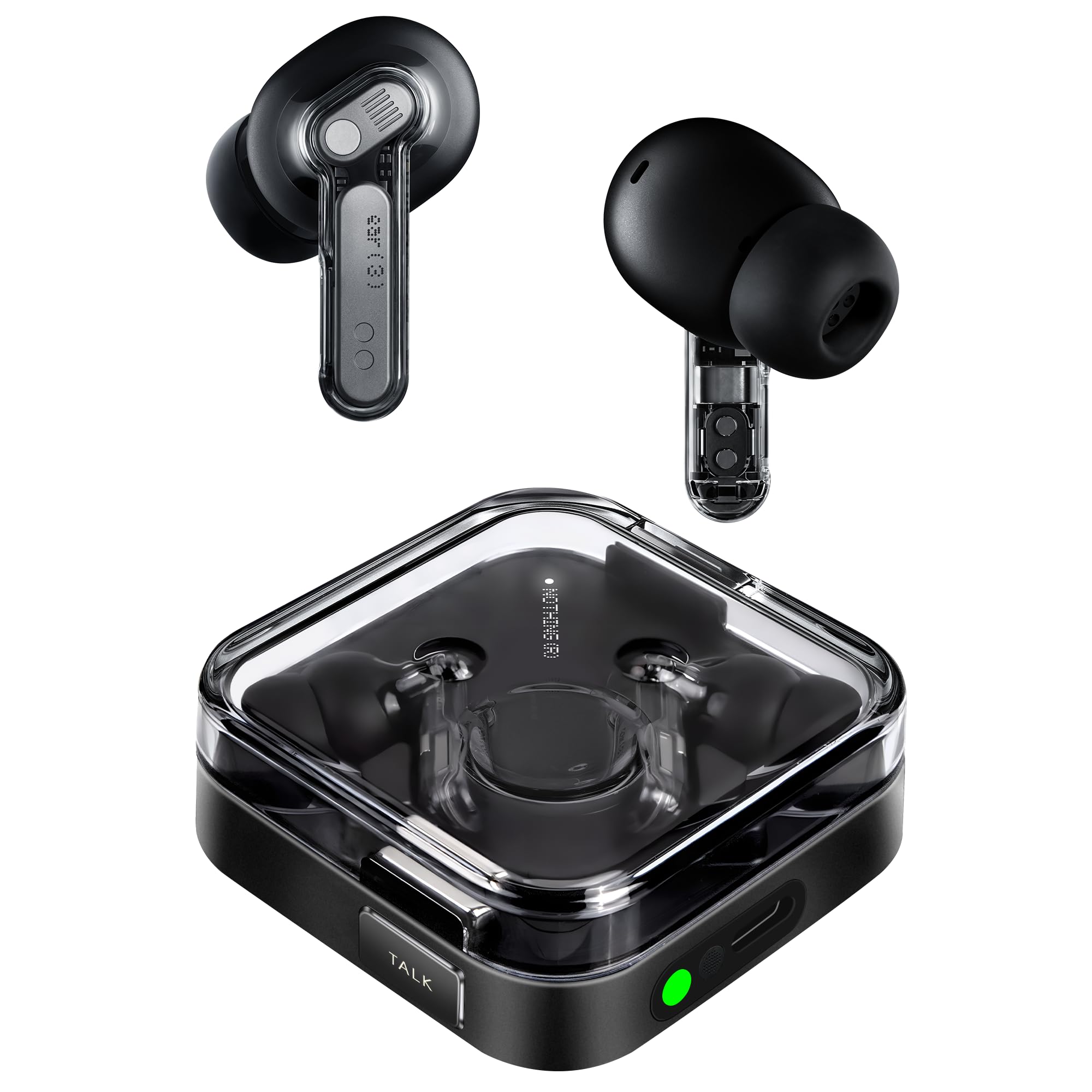
The Nothing Ear (3) uses a 12mm dynamic driver with a ceramic diaphragm that reduces distortion by improving airflow across the driver surface. The result is a cleaner, more controlled sound compared to many single-driver designs — the bass is punchy without being bloated, and the mids retain a surprising amount of texture for a wireless earbud in this price tier. The 45dB smart hybrid ANC adapts to your environment in real time, and the transparency mode is among the most natural-sounding at this level.
The standout feature is the Super Mic system integrated into the charging case — holding the ‘TALK’ button lets you use the case as a close-range microphone for calls in extremely noisy environments (up to 95 dB). The 6-mic array on the buds themselves handles regular calls well, with wind reduction that works effectively outdoors. Hi-Res Audio certification with LDAC support ensures that the wireless connection preserves detail from high-bitrate sources.
Battery life is average at around 5 hours with ANC, and the case adds about 38 hours total. The app integration is polished, offering a 10-band EQ, ultra-bass preset, and low-latency gaming mode. The touch controls are responsive but limited in customization. For users who want a well-rounded wireless earbud with strong ANC, good call features, and a sound signature that works across genres, the Nothing Ear (3) is a solid mid-range contender.
Why it’s great
- Ceramic diaphragm driver reduces distortion for cleaner audio
- Innovative case mic for calls in extreme noise
- 45dB adaptive ANC with natural transparency mode
Good to know
- Battery life per charge is around 5 hours with ANC
- Default tuning is bass-forward; EQ adjustment recommended
6. Sennheiser IE 100 PRO
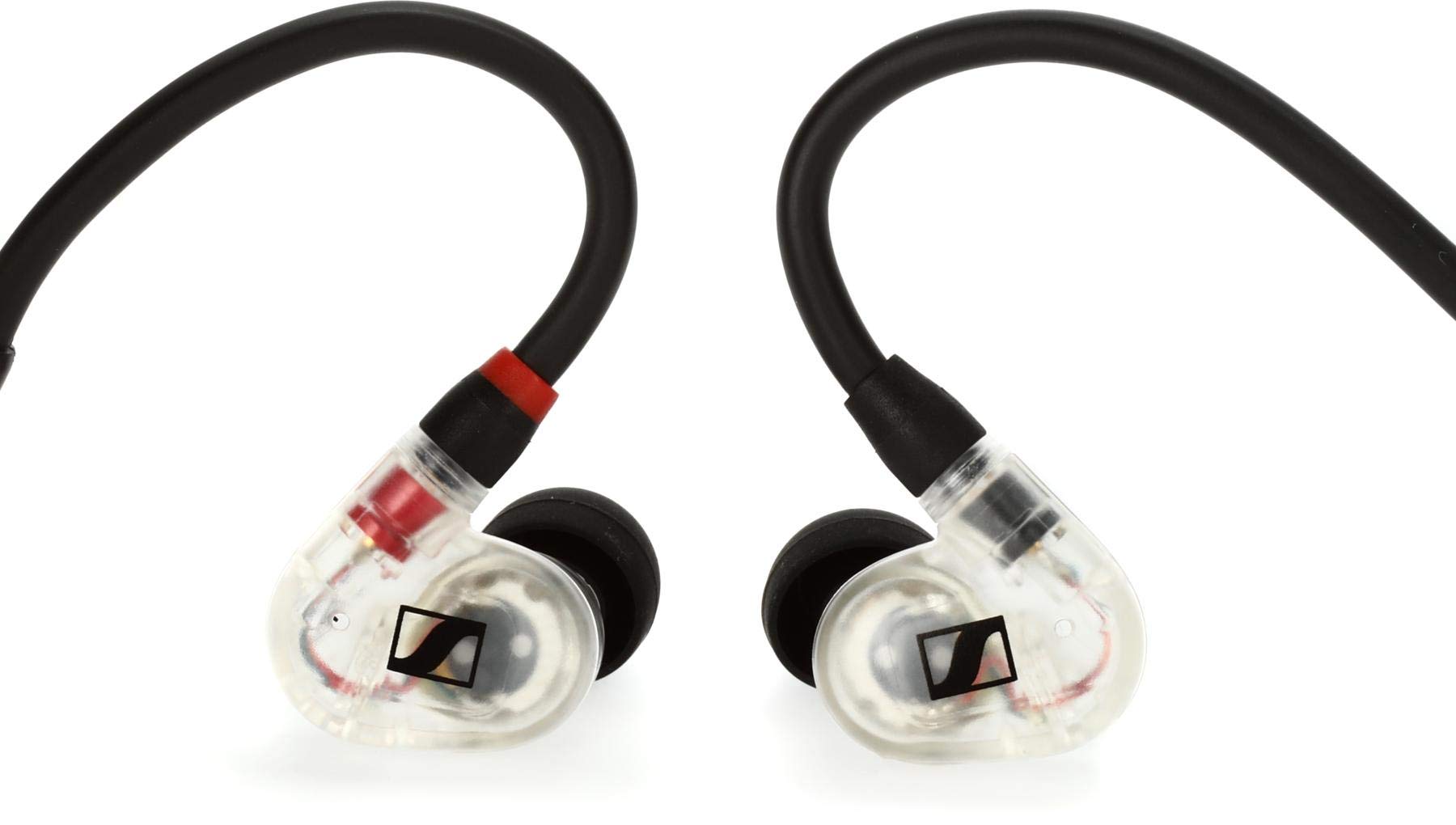
The Sennheiser IE 100 PRO is built for the stage, but its 10mm dynamic broadband transducer delivers a sound that translates beautifully to casual listening. The tuning is bright and analytical, with a treble emphasis that reveals details in cymbal crashes and vocal sibilance that more relaxed earbuds smooth over. This makes it excellent for bass and guitar monitoring, but vocalists may find the upper-mid presence too aggressive. The bass is well-tuned, providing a solid foundation without muddying the mix.
The comfort is exceptional — the slim, ergonomic design fits securely in the ear, and the detachable cable with MMCX connectors allows for easy replacement or upgrade. The included silicone and memory foam tips provide a range of isolation options, and the carrying case is compact enough for daily carry. The passive isolation is good enough to use in moderately noisy environments without needing active electronics.
The cable has a tendency to twist and transmit handling noise, and the plastic housing feels less premium than the IE 200’s metal construction. The treble-forward tuning can cause fatigue during long listening sessions for those sensitive to high frequencies. For listeners who prioritize articulate mids and a clear, detailed soundstage in a wired package, the IE 100 PRO is a capable and comfortable tool that rewards careful source selection.
Why it’s great
- Exceptional comfort with a slim, secure fit for long sessions
- Detachable MMCX cable allows easy replacement or upgrade
- Clear, analytical sound with good instrument separation
Good to know
- Treble-forward tuning can cause sibilance on vocal-heavy tracks
- Cable transmits handling noise; aftermarket option may be needed
7. Sennheiser IE 200

The Sennheiser IE 200 is the entry point to Sennheiser’s audiophile-grade IE series, and it impresses with a neutral, natural sound that lets the recording speak without coloration. The 7mm TrueResponse transducer delivers expressive mids, smooth treble, and controlled bass that never overwhelms. The dual bass-tuning design is a clever addition — by adjusting the ear tip mounting position, you can shift between a tighter, more analytical bass response and a fuller, warmer presentation that adds weight to lower frequencies without losing clarity.
The build is robust, with a braided MMCX cable that reduces handling noise and a compact metal housing that is comfortable for extended wear. The included memory foam tips provide excellent passive isolation, making it suitable for commuting or focused listening. The soundstage is wide for a single-driver IEM, with good instrument separation that reveals the inner detail of complex arrangements. A DAC or quality headphone jack is recommended — the IE 200 scales noticeably with better source equipment.
The stock cable is functional but not premium, and the MMCX connectors can be tight during removal. Some listeners may find the neutral tuning too restrained for genres like EDM or hip-hop. For those building their first wired audiophile setup or seeking a reference-level sound at an accessible price, the IE 200 is a remarkably capable and honest earphone that rewards careful pairing.
Why it’s great
- True neutral tuning with expressive mids and smooth treble
- Dual-position ear tips allow bass tuning without EQ
- Excellent passive isolation with memory foam tips
Good to know
- Neutral tuning may lack excitement for bass-heavy genres
- Stock cable is functional but basic; replacement recommended
FAQ
Why do some earbuds sound better with a DAC or headphone amplifier?
Is LDAC worth it or does AAC sound good enough for most people?
Do more drivers always mean better sound quality?
Final Thoughts: The Verdict
For most users, the audio quality earbuds winner is the Sony WF-1000XM6 because it combines reference-class sound with class-leading ANC, LDAC support, and reliable battery life in a single package. If you prioritize raw detail and hybrid driver clarity, grab the Status Pro X. And for a budget-friendly wired option that reveals the true character of your recordings, nothing beats the Sennheiser IE 200.