
Our readers keep the lights on and the weekend projects moving. As an Amazon Associate, I earn from qualifying purchases.
Choosing a headset solely on brand recognition or flashy marketing often leads to a muddy, indistinct soundstage that masks the very details you are trying to hear. The difference between a mediocre pair and a truly transparent one is the difference between listening to music and experiencing it, between hearing footsteps in a game and knowing exactly where they are coming from.
I’m Rikta — the co-founder and writer behind FitlyFast. I’ve spent countless hours sifting through frequency response graphs, driver specifications, and acoustic measurements to understand what separates a good headset from a truly audiophile-grade instrument. My focus is on the objective specs and user-verified performance data that matter most for critical listening and professional use.
Whether you are a studio engineer or a dedicated gamer, the right pair transforms your audio experience. This guide lays out the top-tier options for anyone seeking the absolute best audio quality headset available today.
How To Choose The Best Audio Quality Headset
Navigating the world of high-fidelity audio requires understanding a few core concepts that directly impact what you hear. Focusing on these will cut through the noise and lead you to a truly rewarding listening experience.
Open-Back vs. Closed-Back Design
This is the first and most critical fork in the road. An open-back design allows air and sound to pass through the ear cups, creating a wide, natural soundstage that mimics listening in a live space. This is ideal for critical listening and mixing but offers little to no noise isolation, allowing sound in and out. Closed-back designs isolate the listener from ambient noise and prevent sound from leaking, making them essential for recording studios and noisy environments, though their soundstage is typically narrower.
Driver Technology and Frequency Response
The driver is the engine of the headset. Larger drivers (40mm to 50mm) can generally move more air, but driver material and tuning are equally important. Look for a driver that is “critically acclaimed” or “studio-grade” rather than just large. A wide frequency response (e.g., 5Hz – 40kHz) indicates the potential to reproduce more audio detail, but the smoothness of this response—the absence of painful peaks in the treble or muddy bumps in the bass—determines true clarity and listening fatigue.
Impedance and Amplification Needs
Impedance, measured in Ohms (Ω), dictates how much power a headset needs to reach its full potential. Lower impedance models (16-32Ω) can be driven easily by a phone or laptop. Higher impedance models (80Ω and above) require a dedicated headphone amplifier to sound their best. An underpowered high-impedance headset will often sound quiet, thin, and lack bass punch. Always check if your source gear can adequately power your chosen headset.
Quick Comparison
On smaller screens, swipe sideways to see the full table.
| Model | Category | Best For | Key Spec | Amazon |
|---|---|---|---|---|
| Philips Fidelio X3 | Open-Back | Critical Listening & Mixing | 50mm Multi-Layer Drivers | Amazon |
| Audio-Technica ATH-M70x | Closed-Back | Studio Mastering & Tracking | 45mm Drivers (5-40kHz) | Amazon |
| Sennheiser HD 660S2 | Open-Back | Audiophile Music & Gaming | 42mm Transducers | Amazon |
| Audio-Technica ATH-M50X | Closed-Back | Monitoring & Personal Listening | 45mm Aperture Drivers | Amazon |
| Corsair HS80 RGB | Closed-Back | Competitive Gaming | 50mm Neodymium Drivers | Amazon |
| Shure SRH440A | Closed-Back | Sensitive Ears & Versatile Use | Dynamic Driver | Amazon |
| Sennheiser IE 100 Pro | In-Ear Monitor | Stage Monitoring & Portable Use | 10mm Broadband Transducer | Amazon |
In‑Depth Reviews
1. Philips Fidelio X3

The Philips Fidelio X3 is a masterclass in open-back design, offering a wide, natural soundstage that places you inside the performance. Its custom 50mm multi-layer polymer diaphragms with dampening gel deliver exquisitely detailed highs, a smooth midrange, and controlled, impactful bass that never overpowers. This is a headset built for critical listening, revealing layers in tracks you thought you knew.
The build quality is equally premium, featuring ethically sourced Muirhead Scottish leather on the headband and acoustically transparent Kvadrat speaker fabric. At 30 Ohms impedance, it is efficient enough to be driven by a quality laptop or phone, though it truly shines with a dedicated DAC/amp. Users consistently report that this headset punches well above its asking price, rivaling models costing significantly more.
One notable detail is the ear pads, which are plush but can get warm during long sessions. A common adjustment is replacing the stock pads with aftermarket suede or leather options to fine-tune the sub-bass response and improve breathability. This minor tweak unlocks even more potential from an already exceptional headset, cementing its position as a top-tier choice for the discerning listener.
Why it’s great
- Exceptional, detailed soundstage with excellent instrument separation.
- Premium build with sustainable Scottish leather and quality materials.
- Versatile 30 Ohm impedance works well with many devices.
Good to know
- Stock ear pads can cause heat buildup over time.
- Non-swiveling earcups may affect fit for some head shapes.
- Open-back design offers zero noise isolation; sound leaks freely.
2. Audio-Technica ATH-M70x
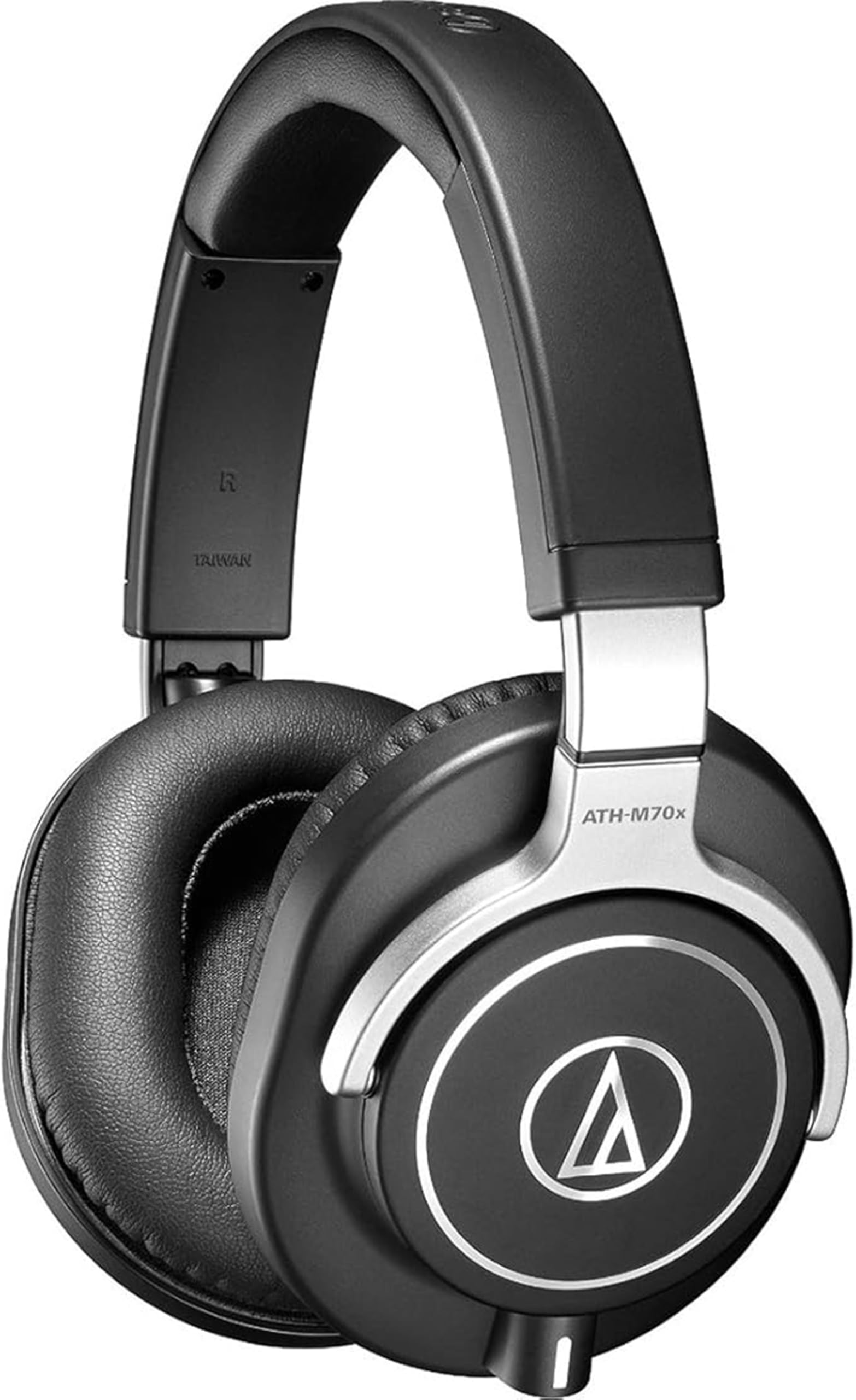
The Audio-Technica ATH-M70x is the serious engineer’s choice, tuned for extremely accurate reproduction. It uses proprietary 45mm large-aperture drivers designed to handle the full frequency spectrum from 5Hz to 40kHz with a flat, neutral balance that is crucial for professional mixing, mastering, and audio forensics. This is not a headset for coloring the sound; it is a tool for revealing the truth of the recording.
Reviews laud the M70x for being the flattest-sounding closed-back headphone many have tested, offering deep, tight bass and fast, detailed treble that is non-fatiguing even after hours of use. The circumaural design provides excellent sound isolation, and the lightweight build, combined with a 90-degree swiveling earcup feature, makes it comfortable for long studio sessions and one-ear monitoring.
It is important to note that the M70x is a pure studio instrument. It lacks the consumer-friendly bass boost of its sibling, the M50X. This makes it less ideal for casual listening where a more exciting sound signature is desired. Some users also report a potential durability issue with the swivel hinge, so careful handling is advised, but for pure, uncolored accuracy, it is a benchmark.
Why it’s great
- Extremely flat and neutral reference sound for accurate mixing.
- Excellent clarity and detail retrieval across all frequencies.
- Very comfortable for long studio sessions.
Good to know
- Not for casual listening; sounds bass-light to many users.
- Swivel hinge design has been reported as a potential weak point.
- May not feel like a significant upgrade from the M50x for some.
3. Sennheiser HD 660S2
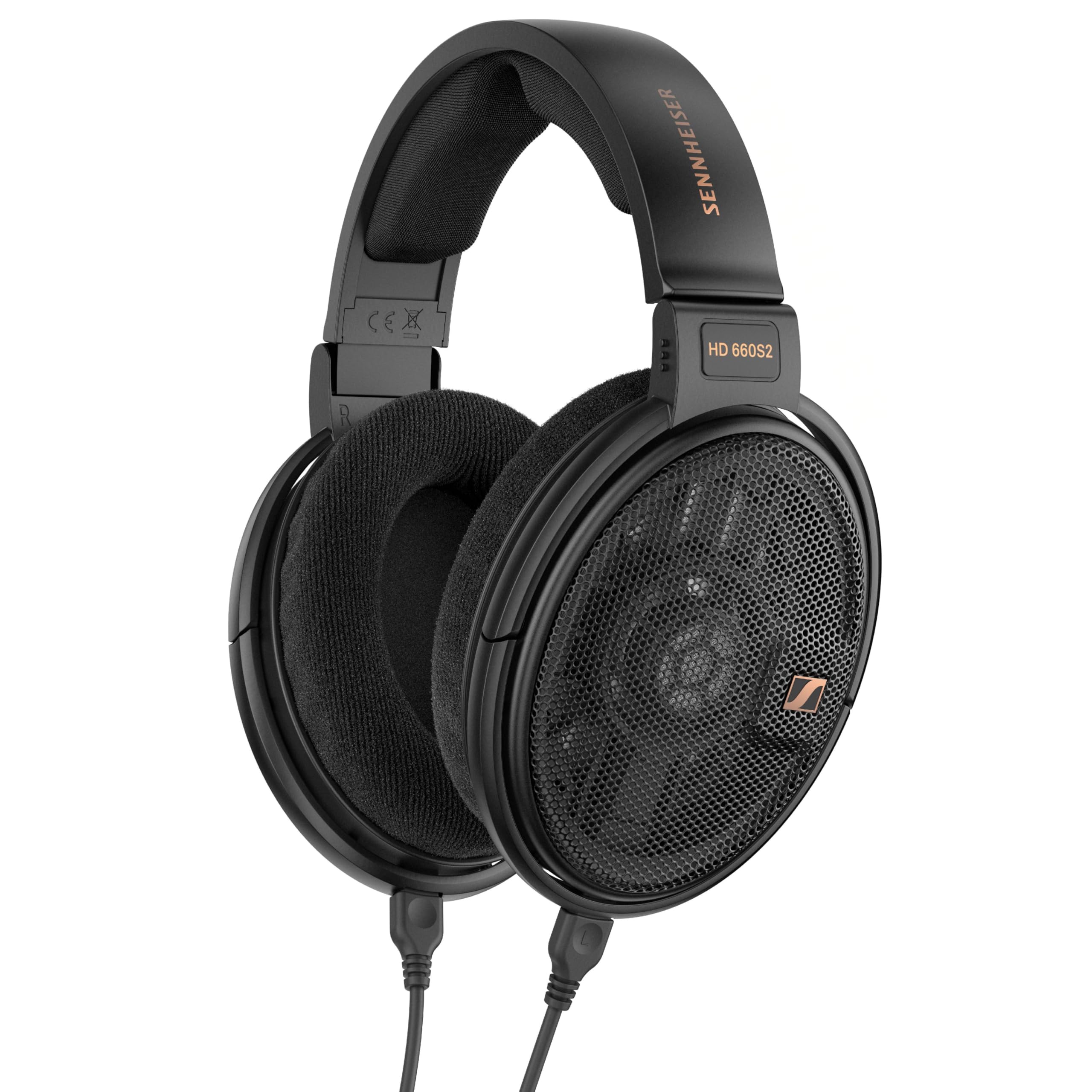
The Sennheiser HD 660S2 refines the legendary HD 600 series legacy, offering an audiophile-grade open-back experience with deep bass extension and a remarkably natural, lifelike sound. Its 42mm transducers with an ultra-light aluminum voice coil deliver detailed highs, rich mids, and controlled sub-bass that allows you to feel the full weight of a bass drum while maintaining perfect clarity on piano notes. It is an intimate, engaging listen.
Built in Germany and Ireland, the HD 660S2 features plush, breathable ear cushions and a lightweight design that allows for fatigue-free listening on even the longest sessions. The open-back design creates an airy and spacious soundstage, perfect for immersive music experiences and providing excellent positional audio for gaming. The detachable cables and included carry pouch add to its practicality for dedicated listeners.
The HD 660S2 is sensitive to its audio chain and will reward a quality amplifier with a more open and powerful presentation. Without amplification, its sound can remain good but not fully realized. Some users note its soundstage is more intimate and less expansive than some competitors, focusing on depth and layering rather than sheer width. It is a masterpiece of natural tonality and vocal reproduction.
Why it’s great
- Supremely natural and lifelike vocal and instrument reproduction.
- Deep, controlled bass extension for an open-back design.
- Excellent long-term wearing comfort from plush pads.
Good to know
- Benefited by a dedicated amplifier, not ideal for weak sources.
- Soundstage is more intimate than expansive.
- Cables can be microphonic (transmit noise) near the earcups.
4. Audio-Technica ATH-M50X

The Audio-Technica ATH-M50X is a legendary entry in the pro audio world, praised by engineers and reviewers alike for its critically acclaimed sonic performance. Its proprietary 45mm large-aperture drivers with rare earth magnets deliver exceptional clarity, deep and accurate bass, and an extended frequency range that makes it a favorite for monitoring, mixing, and personal enjoyment. It strikes a masterful balance between analytical detail and musical fun.
The circumaural design contours around the ears for excellent sound isolation, and the 90-degree swiveling earcups allow for comfortable one-ear monitoring. The build quality is durable with professional-grade earpad material, and three different detachable cables (straight, coiled, short) are included for ultimate flexibility. This headset is renowned for being a “do-it-all” option that works brilliantly from a phone or a professional audio interface.
While the M50X is often described as having a “flat” sound signature, many users note it has a slightly boosted bass and bright treble that makes it more exciting than a purely clinical monitor. This can cause some listening fatigue at high volumes for sensitive ears. Its soundstage is also noticeably smaller than open-back models or the high-end M70x, which is a typical trade-off for its closed-back isolation and punchy presentation.
Why it’s great
- Renowned, versatile sound signature for both work and pleasure.
- Excellent build quality with metal components and three cables.
- Very durable and comfortable for medium to long sessions.
Good to know
- Soundstage is narrow compared to open-back competitors.
- Slightly boosted treble can be fatiguing on some tracks.
- Fully “flat” response is more marketing than reality; has a fun v-shape.
5. Corsair HS80 RGB

The Corsair HS80 RGB bridges the gap between gaming headsets and high-fidelity audio with its custom-tuned 50mm high-density neodymium drivers and support for Dolby Audio 7.1 Surround Sound. This combination delivers exquisite detail with a massive frequency range of 20Hz-40,000Hz, ensuring you catch every faint whisper and resonant blast. The broadcast-grade omni-directional microphone rivals standalone mics in clarity.
Comfort is a major focus with memory foam earpads covered in breathable microfiber cloth and a stress-free adjustable floating headband. The build is robust with a metal frame, and the flip-up mute function with an LED indicator is a well-thought-out convenience. High-fidelity 24bit/96kHz sound over a USB connection ensures a clean, high-resolution audio path from your PC or console to your ears.
While the sound quality is excellent for a gaming headset, it does have a slight high-frequency emphasis that benefits from the included iCUE software EQ for fine-tuning. The microphone, while crisp, is also omnidirectional, meaning it will pick up background room noise like keyboard clacks and fans. It is a comfortable, well-built, and great-sounding headset that brings true audiophile specs to the gaming battlefield.
Why it’s great
- Broadcast-grade microphone with stunning clarity.
- Excellent comfort from memory foam and floating headband.
- High-fidelity 24bit/96kHz audio with Dolby Atmos support.
Good to know
- Omni-directional mic picks up significant background noise.
- Sound can be slightly bright, requiring some EQ tweaking.
- Cloth ear cuffs and tight clamp may not suit all head sizes.
6. Shure SRH440A

The Shure SRH440A is a modern update to a classic studio workhorse, delivering accurate, transparent audio for recording and monitoring. Its balanced, detailed sound signature with an extended frequency response is designed for clarity and precision, ideal for critical listening. It offers a clean, uncolored presentation that lets you focus on the mix without any artificial coloration.
The design emphasizes all-day comfort with a lightweight build, an adjustable headband, and cushioned earcups. The closed-back, over-ear design effectively reduces ambient noise for better focus in a studio environment. Its rugged construction and detachable locking cable ensure long-term reliability, and the 10-foot cable provides plenty of reach for studio rack setups. The earpads are notably durable and are reported to not flake or peel like some rival models.
The SRH440A does not have active noise cancellation, and its sound isolation is passive, so it is best in a moderately quiet environment. Some users find the large ear cups give a somewhat bulky look, but this contributes to the overall comfort. It offers a very natural, non-fatiguing sound that makes it a top-tier choice for vocalists and instrumentalists who need an accurate representation of their performance without ear strain.
Why it’s great
- Accurate, transparent, and non-fatiguing studio sound.
- Very comfortable for long monitoring sessions.
- Durable build with premium earpads that don’t flake.
Good to know
- No active noise cancellation (ANC) for noisy environments.
- Large earcups can look bulky on some heads.
- Lacks the raw detail and bass extension of more expensive models.
7. Sennheiser IE 100 Pro
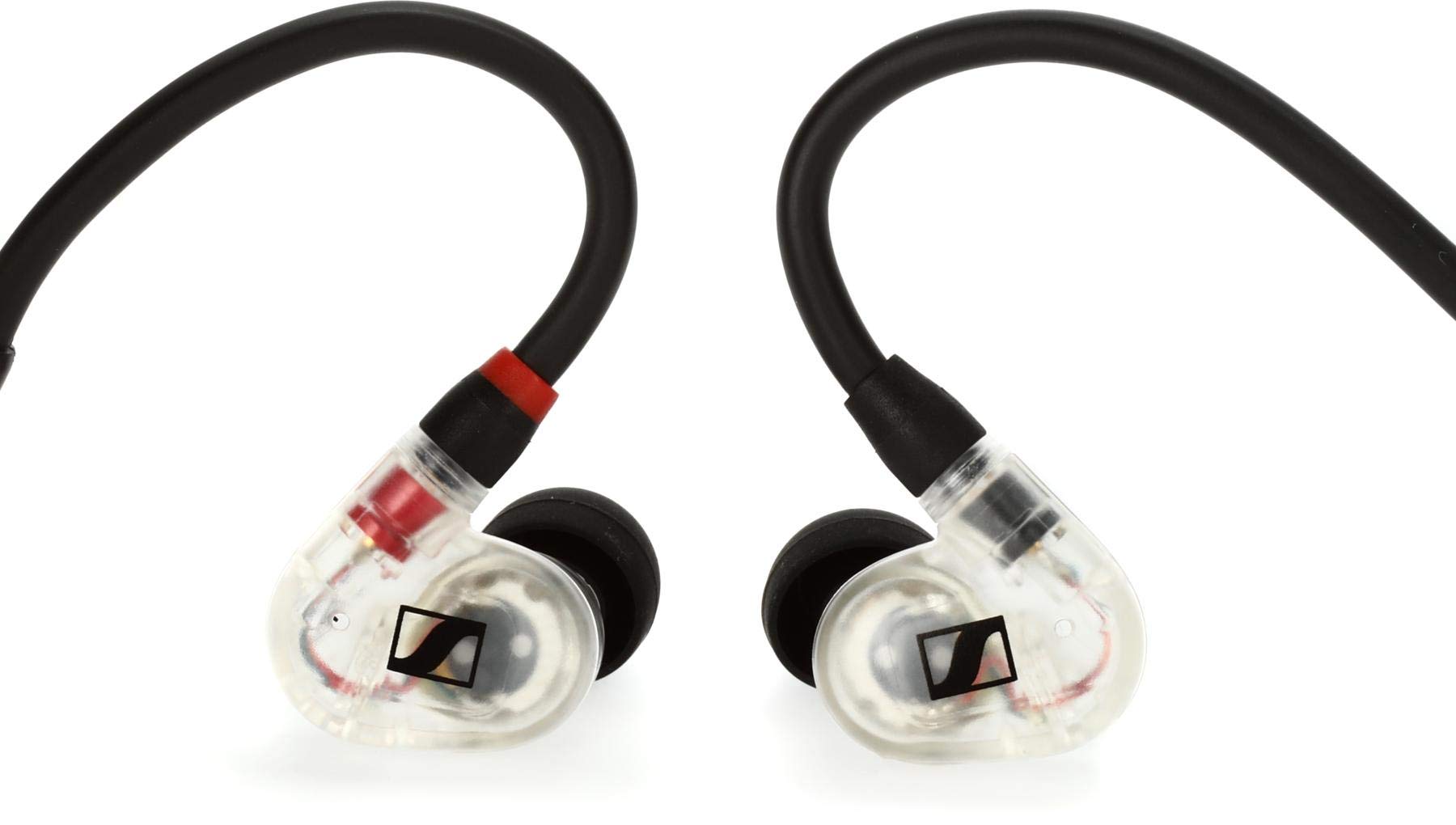
The Sennheiser IE 100 Pro is a professional-grade in-ear monitor that packs exceptional sound quality into a portable, stage-ready package. Its innovative 10mm dynamic broadband transducer delivers powerful, precise monitoring with a clear, balanced sound signature. The single-driver design allows for a slim, ergonomic construction that provides a secure fit and high-wearing comfort, perfect for live performers or casual audiophiles on the go.
Excellent shielding is provided by the optimized earpiece and the included flexible silicone and foam tips, which offer superior passive noise cancellation. The stage-proof cable with an internal cable duct is built for the rigors of live use, and the detachable cable allows for easy replacement. Users praise its clarity, comfort, and the ability to easily distinguish individual instruments in a mix, a clear step up from standard consumer earbuds.
The IE 100 Pro is a transparent monitor, meaning it will reveal the quality of your source and recording, for better or worse. Its sound is slightly treble-forward, which can lead to sibilance on certain “S” and “T” sounds in poorly mastered tracks. It is not a bass-heavy consumer IEM; its bass is well-tuned and present but controlled, prioritizing accuracy and detail over thump. It is an incredible value for anyone seeking pro-grade monitoring accuracy.
Why it’s great
- Excellent clarity and instrument separation for the price.
- Secure, comfortable fit with multiple tip options.
- High-quality build with detachable cable for durability.
Good to know
- Treble-forward sound can be sibilant on some tracks.
- Not a bass-heavy IEM; bass is accurate but controlled.
- Sound quality heavily depends on the source device.
FAQ
What is the difference between an open-back and closed-back headset for audio quality?
Do I need a headphone amplifier for a high-impedance audio headset?
Is a higher frequency response range always better?
Final Thoughts: The Verdict
For most users seeking a top-tier experience, the winner for the audio quality headset category is the Philips Fidelio X3 because of its unparalleled open-back soundstage and premium build that rivals models at twice the price. If you need closed-back isolation for professional studio work, grab the Audio-Technica ATH-M70x for its flat, reference-level accuracy. And for a portable, stage-proven solution with incredible clarity, nothing beats the Sennheiser IE 100 Pro.