
Our readers keep the lights on and the weekend projects moving. As an Amazon Associate, I earn from qualifying purchases.
Upgrading from onboard motherboard audio is the single most effective way to improve your listening and recording experience. Whether you need studio-quality mic preamps for voiceovers, crisp neutral playback for music mixing, or virtual surround sound for competitive shooters, the right interface eliminates noise floor, delivers cleaner headroom, and adds the routing control your PC’s built-in jack simply cannot provide.
I’m Rikta — the founder and writer behind FitlyFast. I’ve spent years analyzing product specification sheets, cross-referencing measured dynamic range and preamp gain figures, and following driver stability reports across dozens of audio interfaces to understand what separates capable hardware from frustrating glitch machines.
The most demanding part of choosing an interface is matching I/O count and preamp quality to your actual workflow. audio sound card buyers must weigh sample rate headroom, phantom power delivery, loopback capability, and headphone output impedance to avoid buying a device that bottleneck their gear or their creative process.
How To Choose The Best Audio Sound Card
Investing in an external interface solves noise from unshielded computer internals, but the wrong choice adds latency, incompatible drivers, or insufficient gain for your specific microphone. Focus on these three factors before browsing.
Preamp Gain and Phantom Power
Dynamic microphones like the Shure SM7B need around 60 dB of clean gain to reach usable levels without hiss. If your interface only delivers 50 dB, you will need a separate inline booster. Condenser mics require 48V phantom power — confirm the interface has a dedicated switch on the desired input channel because some bus-powered units share power across all channels.
I/O Configuration and Loopback
How many sources do you need to record simultaneously? Solo podcasters can manage with a single XLR input, but guitarists running a mic and DI box simultaneously need two. Loopback audio captures computer output (game audio, video calls) alongside your mic signal without extra cables. Streamers and content creators should treat loopback as a mandatory spec.
Driver Stability and Sample Rate
A 192 kHz maximum sample rate looks impressive on paper, but most content is produced at 48 kHz. What matters more is whether the manufacturer provides ASIO drivers with low latency performance on your operating system. Rock-solid drivers on Windows and macOS prevent crackling, dropouts, and system freezes during critical takes.
Quick Comparison
On smaller screens, swipe sideways to see the full table.
| Model | Category | Best For | Key Spec | Amazon |
|---|---|---|---|---|
| Focusrite Vocaster One | USB Interface | Podcasters and solo creators | 70 dB gain, Auto Gain, Enhance presets | Amazon |
| Shure MVX2U Gen 2 | XLR-to-USB Adapter | Mobile recording with dynamic mics | 60 dB gain, Real-Time Denoiser, Auto Level | Amazon |
| UA Volt 2 | USB Interface | Vintage tone for vocalists and guitarists | 192 kHz, Vintage 610 preamp emulation | Amazon |
| EPOS GSX 1000 2nd Ed | External DAC/Amp | Gamers switching between headset and speakers | 7.1 Virtual Surround, Adjustable Sidetone | Amazon |
| SSL 2 MKII | USB Interface | Musicians seeking console-grade preamps | 192 kHz, Legacy 4K analog enhancement, MIDI | Amazon |
| MOTU M4 | USB Interface | Engineers needing transparent I/O and routing | 192 kHz, LCD metering, loopback, 4-in/4-out | Amazon |
| Focusrite Scarlett 4i4 4th Gen | USB Interface | Multi-instrument recording with MIDI gear | 120 dB dynamic range, Auto Gain, Clip Safe | Amazon |
In‑Depth Reviews
1. Focusrite Vocaster One

The Vocaster One was designed from the ground up for solo podcasters and voiceover artists who need a complete recording solution in one box. It delivers over 70 dB of clean gain, which means you can plug in a passive dynamic microphone like the Shure SM7B without needing an external cloudlifter. The single XLR input is joined by a TRRS phone input, letting you capture remote interview calls or bring in music from a smartphone with one cable.
What sets the Vocaster apart from generic budget interfaces is the Enhance button, which applies one of four podcaster-optimized EQ and compression presets. Auto Gain sets input level in seconds by analyzing your voice and adjusting the preamp. The unit also includes stereo loopback, so you can route computer audio directly into your recording or stream without extra cables. Build quality is plastic but rugged, and the front-panel 6.3mm headphone jack provides sufficient output for monitoring even in louder environments.
The microphone input path stays remarkably quiet even at maximum gain, and the included USB-A to USB-C cable simplifies connection to most modern laptops. The main trade-off is the limited 48 kHz maximum sample rate, which is perfectly adequate for speech but below the 192 kHz ceiling that musicians or high-sample-rate recording enthusiasts may want. For podcasters and content creators focused purely on spoken word, the Vocaster One pairs pro-level convenience with a price point that leaves room for a better microphone.
Why it’s great
- Over 70 dB of clean gain handles demanding dynamic mics without extra boosters
- Enhance presets deliver polished vocal tone without DAW processing
- TRRS phone input and stereo loopback simplify multi-source podcast recording
Good to know
- Limited to 48 kHz sample rate – not ideal for high-resolution music recording
- Plastic chassis feels less premium than metal alternatives at higher price points
2. Shure MVX2U Gen 2
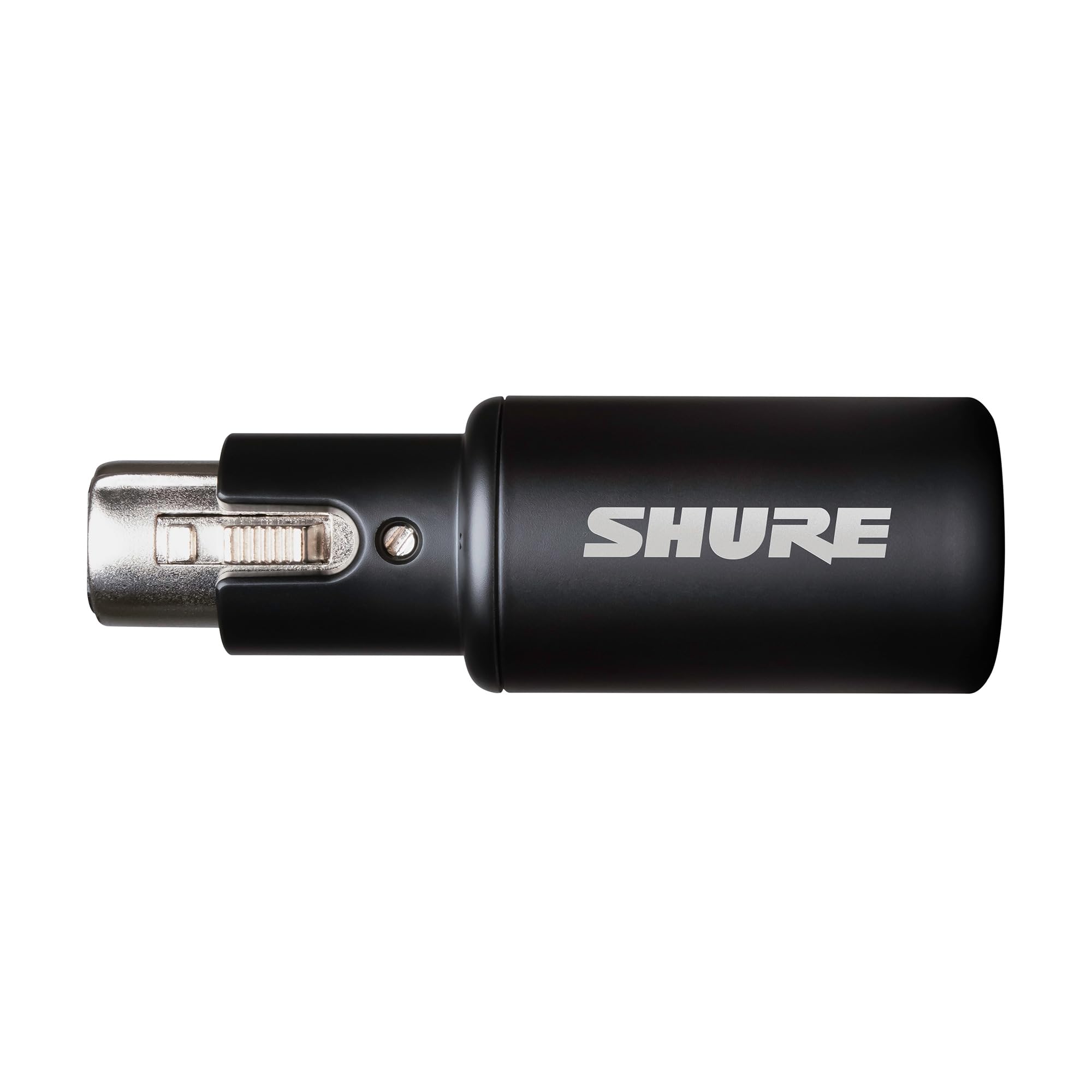
Shure’s MVX2U Gen 2 reimagines the XLR-to-USB adapter by embedding the company’s professional digital audio processing directly into a compact aluminum dongle. It provides up to 60 dB of clean gain and 48V phantom power, enabling any condenser or dynamic microphone to connect to a computer, tablet, or smartphone with a single USB-C cable. Unlike full-sized interfaces, this unit fits in a small pouch and can be powered by the host device.
The onboard DSP is the standout feature. Auto Level Mode adjusts gain in real time to maintain consistent output regardless of how far you move from the mic, making it ideal for dynamic podcasts or livestreams where you cannot adjust levels mid-show. A Real-Time Denoiser suppresses background hum and computer fan noise without introducing artifacts, and the Digital Popper Stopper reduces plosives at the source. The MOTIV Mix app provides access to EQ, compression, and a limiter, preserving your entire chain without hitting a DAW.
Maximum sample rate reaches 192 kHz, which is unusual for a device this small and makes it suitable for high-resolution music capture as well as speech. The main compromise is single-channel operation — you get one XLR input and one headphone output with zero-latency monitoring. For mobile journalists or remote podcasters who need broadcast-quality audio without carrying a desktop interface, the MVX2U Gen 2 delivers unprecedented portability without sacrificing preamplifier quality.
Why it’s great
- Onboard DSP with Auto Level, Denoiser, and Popper Stopper eliminates post-production work
- Portable aluminum body powered entirely via USB-C from any smartphone or laptop
- 192 kHz sample rate supports high-resolution music recording
Good to know
- Only a single XLR input, limiting simultaneous multi-mic recordings
- Occasional device recognition issues reported on some smartphone configurations
3. Universal Audio Volt 2

The UA Volt 2 translates Universal Audio’s heritage of analog hardware into a compact two-channel interface. Its headline feature is the Vintage mode, which engages the same circuit topology as the UA 610 tube preamp used on countless classic records. Engaging this mode adds a subtle harmonic saturation and high-frequency sheen that makes vocals and acoustic guitar sound richer without requiring external outboard gear.
Converters run at 24-bit/192 kHz, and the preamps deliver enough clean gain for most dynamic microphones while staying quiet even at higher settings. The package includes the LUNA DAW, which integrates seamlessly with UA’s UAD plugins for zero-latency tracking through classic compressors and reverbs. Build quality is excellent — the metal chassis, aluminum knobs, and rubberized base feel substantially more robust than competing plastic enclosures.
The Volt 2 is bus-powered via USB-C, but the manual notes that an external power supply is required for stable operation with iPads and certain low-power USB ports. Musicians who record guitar will appreciate the built-in Hi-Z input that accepts instrument-level signals without a separate DI box. While the included software bundle is generous, new users should budget time to install and authorize the plugins. For songwriters who want a single interface that doubles as a tone-shaping tool, the Volt 2 delivers genuine analog character that its price bracket rarely offers.
Why it’s great
- Vintage 610 preamp emulation adds genuine analog warmth and presence to recordings
- 192 kHz converters and crystal-clear preamps deliver studio-grade fidelity
- Includes LUNA DAW and UAD plugins for a complete recording software ecosystem
Good to know
- Requires external power supply for stable iPad and some USB-C laptop connections
- Vintage mode is only available on the first input channel
4. EPOS GSX 1000 2nd Edition

The EPOS GSX 1000 2nd Edition is a dedicated DAC and headphone amplifier tailored for Windows gamers who need clean audio routing and virtual surround sound. It connects via USB-C and provides a binaural 7.1 surround engine that creates accurate directional cues in games like competitive shooters and open-world titles. The unit includes a physical volume wheel with integrated mute and a secondary encoder for chat/game audio mix.
One of its most functional features is the speaker/headset toggle. Pressing the front switch redirects audio between your powered speakers and headphones without unplugging cables. Sidetone lets you hear your own voice through the headset at an adjustable level, preventing the hollow shouting sensation that occurs with closed-back headphones. Four EQ presets (Neutral, Story, Music, and an additional preset) allow quick tonal adjustments depending on whether you are gaming, watching a movie, or editing.
The headphone amplifier is best suited for headsets and headphones with impedance up to 150 ohms. Users of high-impedance audiophile headphones like the Sennheiser HD 650 will find the output underpowered and may need an external headphone amp. The maximum sample rate caps at 48 kHz, which is fine for gaming and streaming but below what music producers look for. For gamers tired of messing with Realtek panel controls, the GSX 1000 delivers clean signal path separation and effortless multi-device switching.
Why it’s great
- One-touch switching between headphones and speakers without cable swapping
- Binaural 7.1 surround delivers accurate directional audio for competitive gaming
- Adjustable sidetone prevents shouting into headsets without USB mic latency
Good to know
- Headphone amplifier lacks power for high-impedance audiophile headphones above 150 ohms
- Maximum sample rate of 48 kHz limits use for high-resolution music production
5. Solid State Logic SSL 2 MKII

The SSL 2 MKII inherits the British console lineage of Solid State Logic and applies it to a 2-in/2-out USB interface. The preamps are exceptionally low-noise, with a 62 dB gain range that handles everything from ribbon microphones to high-output condensers without adding audible floor hiss. The Legacy 4K button engages a high-frequency EQ shelf and subtle harmonic distortion that mirrors the classic SSL 4000 series console channel — a feature that instantly gives recordings a polished, present character.
Converters support 24-bit/192 kHz operation, and the unit includes MIDI I/O on 5-pin DIN jacks, allowing seamless integration with synthesizers and drum machines. The metal chassis and stainless steel construction feel built for years of studio use, and the smooth, weighted knobs provide precise tactile control over input gain and monitor mix. Stereo loopback is built in, enabling streamers to capture desktop audio alongside their microphone on a single track without third-party software.
The high-pass filter per channel effectively tames low-end rumble from air conditioning or handling noise, which voice actors and podcasters will appreciate. The included SSL Production Pack provides a generous bundle of software instruments, effects, and samples. The unit’s size and weight are slightly larger than competing two-channel interfaces, so it may occupy more desk space than expected. For musicians and producers who want SSL console sonics without the five-figure price tag, the MKII delivers a genuine tonal upgrade.
Why it’s great
- Legacy 4K analog enhancement adds console-grade presence and character to any source
- MIDI I/O and high-pass filters provide professional flexibility beyond basic USB interfaces
- Stainless steel chassis and weighted knobs offer lasting durability and precise feel
Good to know
- Larger footprint than comparable two-channel interfaces
- Requires dedicated power for all features; bus power only supports basic operation
6. MOTU M4

The MOTU M4 is a 4-in/4-out USB-C interface that prioritizes transparent signal fidelity and comprehensive routing. Its microphone preamps measure with extremely low noise and distortion, producing a neutral capture that does not color the source — ideal for engineers who prefer to add character in the mix rather than at the recording stage. The ESS Sabre32 DAC provides the same converter chip found in many high-end studio converters, ensuring pristine playback clarity.
The front-panel LCD screen displays real-time input and output levels with precise numerical readouts, making gain staging faster and more accurate than relying solely on LED meters. The unit offers two mic/line/Hi-Z inputs plus two additional line inputs on the back, supporting simultaneous recording of up to four sources. Dedicated loopback channels allow routing computer audio back into your DAW or streaming software without patching cables, and the monitor mix knob enables zero-latency blending of direct and DAW signals.
Windows driver stability receives consistent praise in user reports — the M4 rarely suffers from the crackling or dropouts that plague some competitor interfaces. The headphone output is adequate for most dynamic headphones but may struggle with very high-impedance models when bus-powered. The metallic chassis feels solid without being excessively heavy. For recording engineers who need multiple simultaneous inputs and value measurement-grade converters, the M4 delivers rock-solid fidelity and routing flexibility that justifies its position as a semi-professional staple.
Why it’s great
- ESS Sabre32 DAC and ultra-low noise preamps deliver transparent, uncolored audio
- LCD input meters with numerical readouts speed up accurate gain staging
- Four inputs and dedicated loopback support complex multi-source recording sessions
Good to know
- Headphone amp may feel underpowered with high-impedance audiophile headphones
- Occasional pitch-shift audio issue reported on Windows with fast startup enabled
7. Focusrite Scarlett 4i4 4th Gen
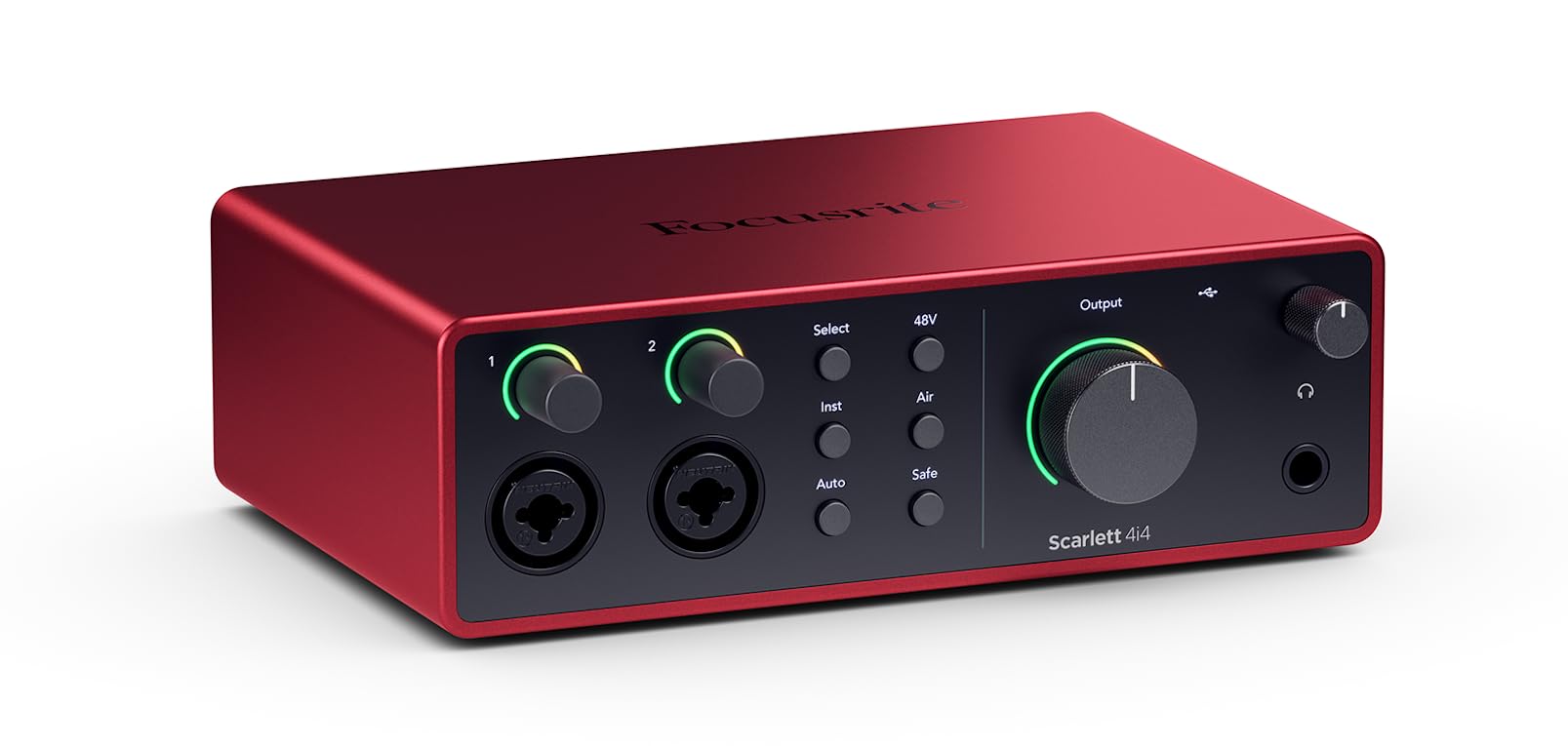
The Scarlett 4i4 4th Gen is Focusrite’s answer to the musician who needs more than two inputs but does not want to jump to an eight-channel interface. It offers two Scarlett 4th Gen mic preamps with 120 dB dynamic range, two Hi-Z instrument inputs for guitars and basses, and four line inputs for synthesizers or external preamps. The addition of MIDI I/O on the rear panel means you can connect a keyboard controller or hardware sequencer without using a separate USB port.
Auto Gain sets optimal recording levels with a single button press, and Clip Safe protection automatically reduces gain if a transient threatens to clip — both features are genuinely useful during live recording when you cannot watch meters constantly. Air mode engages a high-frequency boost that lifts vocals and acoustic instruments forward in the mix. The headphone output benefits from a dedicated DAC path, providing clearer monitoring than the shared outputs found on some competitors.
The unit ships with a USB-C power supply, ensuring stable operation even on underpowered USB hubs. The included software bundle (Ableton Live Lite, Pro Tools Intro, Cubase LE, and the Hitmaker Expansion plugin suite) provides everything needed to start recording immediately. Some users report occasional driver crashes during gaming, but firmware updates have addressed most stability issues. For the musician who records multiple instruments, runs MIDI gear, and values the safety net of Auto Gain and Clip Safe, the Scarlett 4i4 4th Gen is a complete recording hub.
Why it’s great
- Auto Gain and Clip Safe prevent ruined takes by managing unexpected level spikes
- MIDI I/O and four line inputs accommodate keyboard controllers and hardware synths
- Dedicated USB-C power supply ensures consistent performance on any computer
Good to know
- Only two of the four inputs are XLR – additional inputs require balanced TRS cables
- Occasional driver crashes reported in specific games, resolved with firmware updates
FAQ
Do I need an external audio interface if my motherboard has 7.1 audio jacks?
How much gain do I need for a Shure SM7B without a cloudlifter?
What does loopback audio mean for streaming and podcasting?
Final Thoughts: The Verdict
For most users, the audio sound card winner is the Focusrite Vocaster One because its 70 dB preamp, Auto Gain, and Enhance presets give solo podcasters and content creators a complete recording toolkit without forcing them to learn complex DAW setups. If you want a portable XLR-to-USB solution with onboard DSP that eliminates background noise and plosives, grab the Shure MVX2U Gen 2. And for musicians and engineers who need transparent converters, multiple simultaneous inputs, and MIDI connectivity in a desktop form factor, nothing beats the Focusrite Scarlett 4i4 4th Gen.