
Our readers keep the lights on and the weekend projects moving. As an Amazon Associate, I earn from qualifying purchases.
The quest for true-to-life sound reproduction often leads listeners down a rabbit hole of exaggerated highs and boosted lows that mask recording imperfections. Real audiophile earphones prioritize driver coherency, a flat phase response, and minimized harmonic distortion long before any subjective “fun” tuning is considered. This guide cuts through the marketing noise to focus on the measurable acoustics that define high-fidelity listening.
I’m Rikta — the co-founder and writer behind FitlyFast. I’ve spent hundreds of hours analyzing frequency response graphs, impedance curves, and driver topologies to identify the wired earphones that deliver genuinely accurate sound for critical listeners.
After sifting through thousands of customer reviews and specification sheets, I’ve assembled the definitive list of the best audiophile earphones for those who demand precision in every sonic detail.
How To Choose The Best Audiophile Earphones
Selecting a reference-grade earphone requires understanding the physics behind the sound. Beginners often fixate on brand names or frequency ranges, but the real differentiators lie in driver architecture, transducer matching, and the system’s ability to preserve timing coherence across the entire audio band.
Driver Topology: The Core of Sound
Balanced armature (BA) drivers excel in midrange clarity and transient speed, making them ideal for vocal and instrumental detail. Dynamic drivers produce more natural bass slam and a cohesive tone but can introduce distortion at high volumes. Hybrid designs combine both, but require sophisticated crossovers to avoid phase cancellation between the two driver types — a weak crossover ruins the illusion of a single sound source.
Tuning Philosophy: Neutral vs. V-Shaped
A neutral, or “reference,” tuning aims for a flat frequency response from 20 Hz to 20 kHz, allowing you to hear the mix exactly as the engineer intended. V-shaped tunings boost bass and treble to create an energetic, “fun” sound but sacrifice midrange accuracy. For critical listening and mix evaluation, a neutral-leaning-slightly-warm signature is the safest bet because it reveals both the music’s beauty and its flaws.
Impedance and Sensitivity: Amplifier Requirements
Low impedance (under 32 ohms) and high sensitivity (over 105 dB) earphones are designed to run directly from a smartphone or laptop dongle. Higher impedance models (100+ ohms) typically require a dedicated headphone amplifier to deliver sufficient voltage swing, without which the sound can be anemic, thin, and dynamically compressed. Always match source power to the earphone’s impedance curve.
Build, Fit, and Isolation
Audiophile earphones live or die on the quality of the seal. A poor fit not only causes discomfort but destroys bass response and noise isolation by 15-20 dB. Look for medical-grade resin shells, detachable MMCX or 2-pin cables, and a variety of included silicone and foam ear tips. A replaceable nozzle filter is also critical for protecting the internal driver from earwax accumulation, a common failure point for high-end IEMs.
Quick Comparison
On smaller screens, swipe sideways to see the full table.
| Model | Category | Best For | Key Spec | Amazon |
|---|---|---|---|---|
| HiFiGo AFUL Explorer | Hybrid IEM | Long fatigue-free sessions | 1DD+2BA / 26Ω / 108dB | Amazon |
| Sennheiser IE 200 | Dynamic IEM | Balanced mobile listening | 7mm TrueResponse / 18Ω | Amazon |
| Etymotic ER4SR | BA IEM | Studio reference monitoring | Single BA / 45Ω / 122dB max | Amazon |
| Kiwi Ears Orchestra Lite | 8-BA IEM | Natural vocal and instrumental separation | 8 Balanced Armature / 3-way crossover | Amazon |
| Moondrop Blessing 3 | Hybrid IEM | Crisp treble and detail retrieval | 2DD+4BA / 3D-printed acoustic nozzle | Amazon |
| Audio-Technica ATH-R70XA | Open-Back Headphone | Professional mixing & mastering | 45mm Dynamic / 199g / 5-40kHz | Amazon |
| beyerdynamic DT 1990 PRO MKII | Open-Back Headphone | Detailed mixing & editing | TESLA.45 / 30Ω / 20-20kHz | Amazon |
| HIFIMAN HE1000 Stealth | Planar Headphone | Deep sub-bass and wide soundstage | Nanometer diaphragm / Stealth Magnet | Amazon |
| Sennheiser HD 800 S | Open-Back Headphone | Spatial imaging and classical/jazz | 56mm Ring Radiator / 9.8ft cable | Amazon |
In‑Depth Reviews
1. HiFiGo AFUL Explorer

The AFUL Explorer delivers a warm, laid-back treble tuning that eliminates listener fatigue during extended critical listening sessions. Its 1DD+2BA hybrid driver array uses RLC frequency division to cancel resonance peaks, producing electrostatic-like smoothness in the upper registers without sacrificing micro-detail retrieval. The 3D pressure balancing system genuinely reduces ear canal pressure, allowing the dynamic driver to articulate bass with texture instead of boominess.
At 4.43 grams per side, the medical-grade resin shell is among the lightest in this class, and the 26-ohm impedance means it runs cleanly from a smartphone dongle. The included silver-plated copper cable is supple and produces minimal microphonics, though the MMCX connectors feel standard rather than high-end. Six pairs of silicone tips are included, but the smooth nozzle design lacks a retention lip — tip rolling with SpinFit CP100s is almost mandatory for a secure seal.
Bass is controlled and natural rather than punchy, making the Explorer ideal for jazz, acoustic, and vocal-centric genres where timbre accuracy matters more than slam. The warm tilt smooths over poorly recorded tracks, but those seeking airy, extended treble may find the roll-off too early. For a mid-range hybrid, the Explorer punches well above its weight class in coherence and tonal balance.
Why it’s great
- Non-fatiguing treble with genuine electrostatic smoothness
- Ultra-lightweight resin shell for all-day wear
- 3D pressure balance enhances bass texture
Good to know
- No mesh filter on nozzle; earwax buildup is a risk
- Slippery nozzle lacks a retaining lip; aftermarket tips often needed
2. Etymotic ER4SR Studio Reference
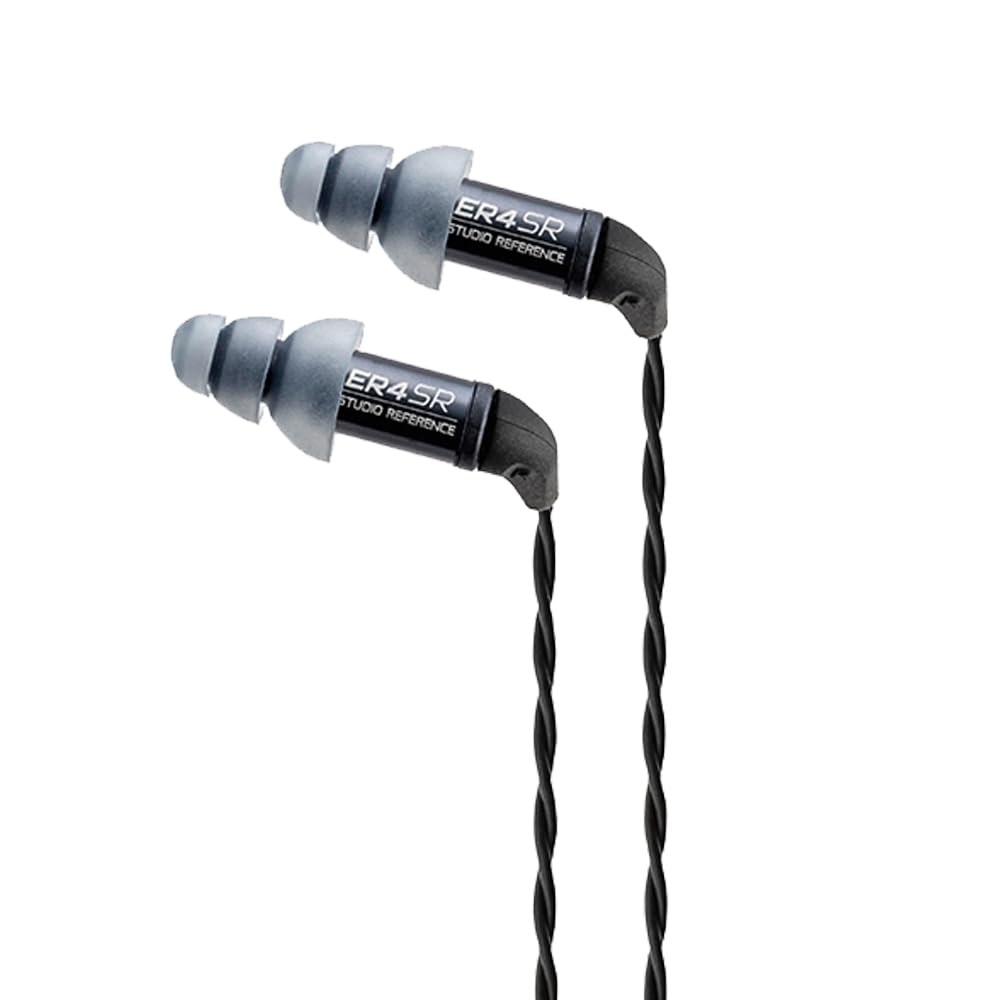
The ER4SR is the touchstone for neutral sound in the IEM world, using a single precision-matched balanced armature driver that rivals the tonal accuracy of full-size Sennheiser HD 600 series headphones. Frequency response deviates by less than 1 dB between left and right channels, giving you a reference-grade center image that is nearly impossible to find at this price tier. Noise isolation measures 35-42 dB thanks to the deep-insertion triple-flange tips, which effectively reduce external noise by the equivalent of an active noise-canceling headphone.
The anodized aluminum body is durable and laser-etched for channel identification, and the braided 5-foot MMCX cable is serviceable but prone to microphonics when brushed against clothing. A shirt clip is included to mitigate cable noise. The sound is supremely clean with excellent instrument separation, though the bass extension is lean and requires a perfect airtight seal — any leak instantly collapses the low end. The triple-flange fit is a dealbreaker for those with smaller ear canals; many users eventually switch to Comply foam tips, which slightly roll off the already lean bass.
The ER4SR is unforgiving of poorly mastered recordings, exposing sibilance, clipping, and compression artifacts that other IEMs gloss over. This is the tool for mix evaluation, not casual enjoyment. The included filter removal tool and replacement filters are a thoughtful addition, though the filters clog with earwax over time and must be replaced. For pure neutrality under , the ER4SR has zero serious competitors.
Why it’s great
- Reference neutral tuning with ±1 dB channel matching
- Exceptional 35-42 dB passive noise isolation
- Durable metal build with replaceable filters
Good to know
- Deep insertion is uncomfortable for many users
- Bass is lean and demands a perfect seal
3. Sennheiser IE 200

Sennheiser’s IE 200 brings their 7mm TrueResponse transducer technology — originally developed for the flagship IE 900 — into a more accessible package. The single dynamic driver delivers a balanced, natural sound with expressive mids and smooth treble that avoids the metallic sharpness of lower-end BA drivers. The dual bass-tuning design is the real standout: by adjusting the ear tip mounting position on the nozzle, you can switch between a tighter, more controlled bass response and a fuller, warmer presentation without any EQ.
The ergonomic housing is compact and comfortable for long wear, and the over-ear memory wire keeps the cable in place during movement. The MMCX connector is gold-plated and allows aftermarket cable upgrades, though the stock braided cable is tangle-prone and picks up handling noise. The lightweight design is a win for portability, but the plastic housing feels considerably less premium than metal-bodied alternatives. Sound quality out of the box is flat and can sound lifeless — the IE 200 rewards users who invest time in EQ correction with Equalizer APO or similar software, unlocking significantly deeper bass and airier treble.
Bass is natural and well-controlled but lacks the sub-bass extension of hybrid or multi-BA designs. Imaging is good for a single dynamic driver, with a wide soundstage that sounds open and spacious. The IE 200 is a strong entry-level option for those who want a tunable, upgradeable platform without committing to the complexity of multi-driver hybrids, but the build quality and stock cable are clear compromises.
Why it’s great
- Dual-position ear tips allow bass tuning without EQ
- TrueResponse transducer offers smooth, natural mids
- Comfortable and lightweight for extended wear
Good to know
- Stock cable is tangle-prone and microphonic
- Flat out-of-box sound needs EQ to shine
4. Kiwi Ears Orchestra Lite

The Orchestra Lite packs eight balanced armature drivers per side in a three-way passive crossover configuration that produces a natural, studio-monitor-like tonal balance. The bass is clean and restricted to sub-bass frequencies with an 8 dB shelf from 20 Hz to 200 Hz, avoiding the mid-bass bloat that colors many multi-BA designs. The midrange is neutral within ±1 dB from 200 Hz to 800 Hz, giving vocals and instruments an accurate, uncolored presence that audio engineers will appreciate.
The resin shell is handcrafted with a clear faceplate that reveals the internal driver layout, and the 4-core 7N oxygen-free copper cable is light and flexible enough for stage use. The angled sound tube and pronounced bump-out on the shell provide exceptional fit stability without torque on the ear canal — a rare comfort feature for a full-BA IEM. However, the unvented design creates a pressure buildup when inserting the IEM, and some users report a painful suction effect that only resolves by briefly pulling the IEM out after insertion to equalize pressure.
Soundstage and imaging are exceptional for a full-BA IEM, rivaling open-back headphones in spatial placement — particularly useful for competitive gaming and critical listening. The treble is tasteful and extended, though treble-heads seeking aggressive sparkle may find it too reserved. The Orchestra Lite is a strong choice for those who prioritize midrange accuracy and imaging over bass slam, but the pressure equalization issue is a genuine ergonomic flaw that requires conscious mitigation.
Why it’s great
- Natural, accurate midrange with 8 BA driver array
- Angled shell provides long-wear comfort without ear torque
- Exceptional soundstage and imaging for gaming
Good to know
- Unvented design causes painful ear suction on insertion
- Sub-bass is clean but light; lacks rumble for bass-heavy genres
5. Moondrop Blessing 3

The Blessing 3 uses a horizontally-opposed dual dynamic driver module (H.O.D.D.D.U.S.) combined with four balanced armature drivers in a triple-frequency division layout, all housed in a 3D-printed high-precision acoustic nozzle. The result is an IEM with surgical treble precision and crisp vocal reproduction that reveals micro-details in the upper harmonics of cymbals, strings, and sibilants. The stainless steel faceplate adds a premium visual weight, but the overall build is heavier than average for an IEM.
The stock cable is serviceable but flimsy, and the included zipper case lacks premium presentation. The cable connector is a standard 0.78mm 2-pin, but the recessed ports on the IEM make aftermarket cable compatibility hit-or-miss — some cables with thicker housings won’t seat fully. The ear tips included are average at best; upgrading to Dunu S&S or SpinFit tips significantly improves bass seal and overall comfort. The Blessing 3 is also sensitive to source quality — a dedicated DAC/amp is strongly recommended to fully resolve its treble extension and soundstage width.
The bass is the weakest aspect, with a lean sub-bass that lacks the authority of other hybrids in this class. The treble, while incredibly detailed, can be fatiguing over long sessions for those sensitive to upper-frequency energy. Imaging is precise, but the soundstage, while wide, lacks the holographic depth of the Orchestra Lite. The Blessing 3 is a specialist tool for detail seekers who prioritize sparkling treble over bass heft, but quality control variability and subpar accessories hold it back from being a universal recommendation.
Why it’s great
- Surgical treble precision with 4BA+2DD hybrid topology
- 3D-printed acoustic nozzle for accurate waveguide tuning
- Eye-catching stainless steel faceplate
Good to know
- Lean bass lacks sub-bass authority
- Stock cable and tips are subpar; aftermarket upgrades advised
6. Audio-Technica ATH-R70XA
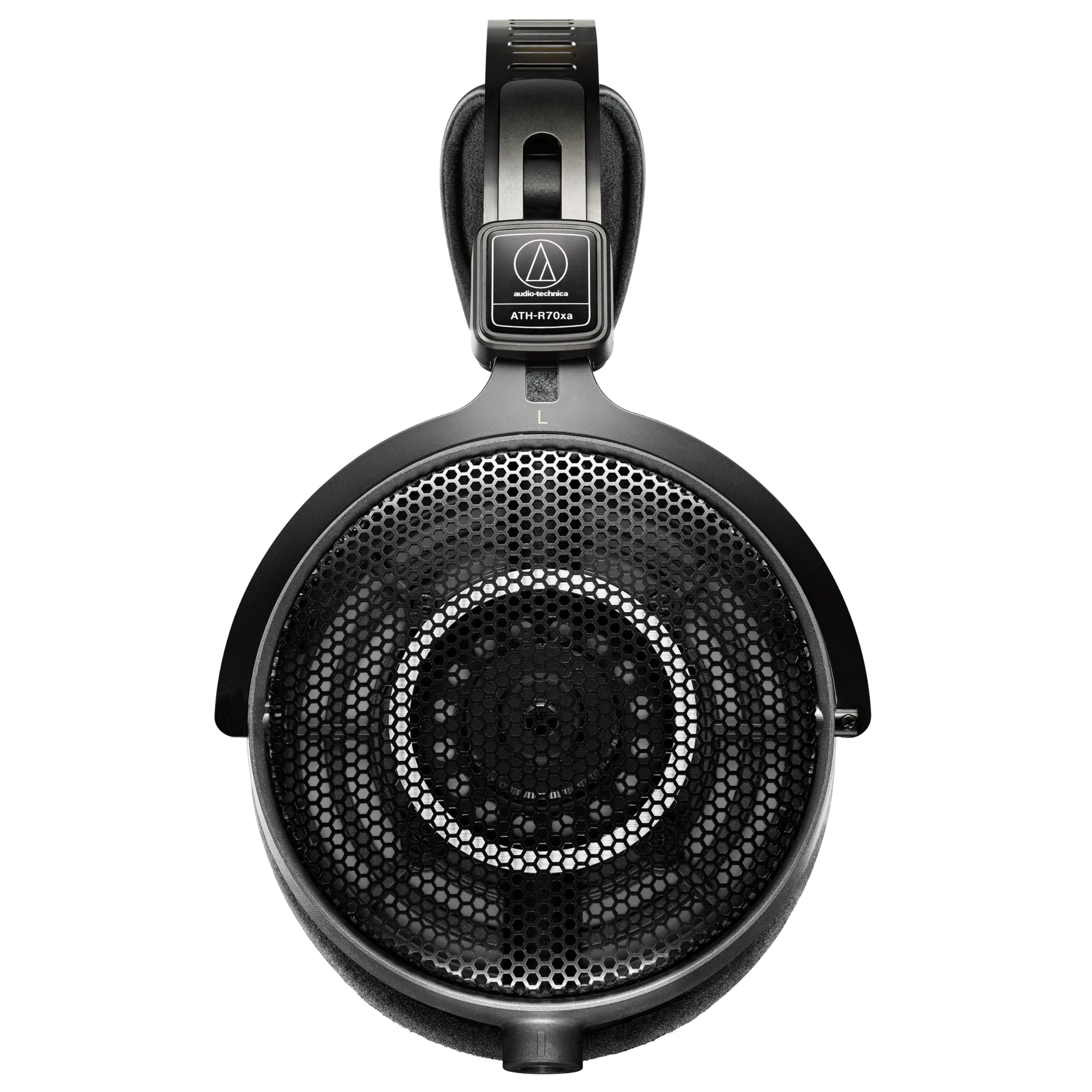
The ATH-R70XA is a professional open-back reference headphone that balances accuracy with an almost absurdly low 199-gram weight, making it the most comfortable critically-acclaimed headphone under . The 45mm dynamic drivers are housed in a carbon composite resin that improves structural rigidity and transient response, delivering a detail retrieval level that rivals headphones twice its price. The fully open-back design eliminates internal resonance, giving percussion and piano transients a fast, snappy decay that closed-back headphones cannot match.
The dual-sided 3-meter detachable locking cable is L/R signal independent to ensure correct stereo orientation, but the proprietary connector limits aftermarket cable options. The velour earpads are replaceable and breathable, and the reimagined headband with metal reinforcement distributes pressure evenly across the top of the head. Bass extension is surprisingly deep for an open-back, responding well to EQ to become a bass cannon without distorting. The treble is smooth and never harsh, even at extended listening sessions — a hallmark of proper tuning.
Imaging is among the best in class, with precise instrument placement in the stereo field that makes mixing and critical listening a joy. The soundstage is wide but not unnaturally wide, preserving the intimate feel of studio recordings. The ATH-R70XA benefits from a dedicated amplifier — even a modest desktop DAC/amp unlocks dynamic contrast that phone outputs compress. Build materials feel durable but not luxurious; the plastic adjustment sliders are a common point of concern for long-term reliability.
Why it’s great
- Extremely lightweight (199g) for all-day comfort
- Accurate reference sound with deep bass extension
- Replaceable velour pads and L/R independent cable
Good to know
- Proprietary cable connector limits upgrade options
- Plastic adjustment sliders feel less premium than competition
7. beyerdynamic DT 1990 PRO MKII

The DT 1990 PRO MKII rewrites the formula of its predecessor by pairing beyerdynamic’s newest TESLA.45 drivers — rated at just 30 ohms — with two interchangeable velour ear pad sets that actually change the frequency response. The balanced pads deliver a fuller bass response, while the analytical pads lean into the midrange and treble detail, making this headphone adaptable for both mixing and critical listening. The open-back design presents an ultra-wide, natural soundstage with precise imaging that enables confident mix translation.
Build quality is a mix of German engineering excellence and cost-saving compromises. The metal yokes and anodized components feel robust, but the plastic slider plates that tension the headband have been reported to crack under repeated adjustment — an unacceptable failure point at this tier. The detachable mini-XLR cables (a 3-meter straight and a 5-meter coiled) are durable and secure, and the premium hard case is genuinely travel-worthy. The memory foam headband and velour pads are comfortable for hours, though the clamp force is slightly higher than the ATH-R70XA.
Sound signature is balanced with a slight emphasis on midrange clarity, making vocals and acoustic instruments sound present without the aggressive treble peak of the original DT 1990. Bass is punchy and well-controlled, but not as deep as planar magnetic competitors. The DT 1990 PRO MKII excels for studio work where detail retrieval and instrument separation are paramount, but the build quality concerns around the plastic sliders prevent it from being a clear buy recommendation over more durable alternatives.
Why it’s great
- Interchangeable ear pads that physically alter frequency response
- Wide, natural soundstage with accurate imaging
- Durable mini-XLR cables with premium hard case
Good to know
- Plastic slider plates can crack over time
- Higher clamp force than some competitors
8. HIFIMAN HE1000 Stealth Magnet

The HE1000 Stealth Magnet is a planar magnetic headphone that uses a diaphragm measured in nanometers — the thinnest in any production headphone — combined with HIFIMAN’s acoustically transparent “Stealth” magnet array that eliminates wave diffraction turbulence. The result is a full-range sound with the tightest, deepest sub-bass extension of any headphone on this list, producing a growl in electronic and rock tracks that dynamic drivers struggle to match. The open-back design delivers a massive, holographic soundstage that places instruments in a three-dimensional space.
The asymmetrical magnetic circuit required seven years of research, and the craftsmanship is evident in the CNC-milled and hand-polished metal structure. However, the stock cable feels cheap for a near-flagship product, and the earpads are rough to the touch and may cause discomfort over long sessions. The package includes ¼-inch and 4-pin XLR plugs, but the headphone demands a high-quality amplifier — preferably a discrete Class A or AB topology — to fully resolve its dynamic range. Integrated amplifiers and THX-based amps tend to make the HE1000 sound congested and narrow.
The midrange is slightly recessed, which can make vocals sound distant compared to the emphasized treble and bass. This tuning is divisive — listeners who prioritize vocal presence may find the HE1000 unsatisfying, while those who want an open, airy sound with thunderous sub-bass will love it. The treble is extended and airy but can border on bright with poorly mastered tracks. Burn-in of 60-70 hours noticeably smooths the treble and opens the midrange, making this a headphone that rewards patience.
Why it’s great
- Deepest sub-bass extension of any open-back planar
- Holographic soundstage with three-dimensional imaging
- Nanometer-thin diaphragm for unmatched transient speed
Good to know
- Recessed midrange pushes vocals backward
- Requires a high-quality Class A/AB amplifier to shine
9. Sennheiser HD 800 S

The HD 800 S is the benchmark for spatial imaging in dynamic headphones, thanks to its 56mm ring radiator transducers — the largest drivers ever used in a dynamic headphone. The angled ear cup design directs sound waves to the ear at a slight angle, creating an impressively natural and wide soundstage that makes classical and jazz recordings feel live and three-dimensional. The innovative absorber technology reduces unwanted frequency response peaks, revealing all the nuances in the recording without the harshness that plagued the original HD 800.
The open-back design makes sound leak in and out, so this is strictly a quiet-room listening tool. Build quality is German precision: lightweight, comfortable for hours, with replaceable velour earpads and a detachable cable system that includes both a single-ended ¼-inch and a balanced 4.4mm cable. The bass is firm and supportive but lean by modern standards — the HD 800 S is not a headphone for bass heads. The midrange is rich and detailed, and the treble is bright yet smooth, though it can still be fatiguing on poorly mastered tracks without EQ correction.
The HD 800 S requires significant amplifier power — at least 200 mW — and benefits massively from a high-quality DAC and lossless audio files. Without proper amplification, the sound is thin, dynamically compressed, and lifeless. The Oratory 1990 EQ profile is widely recommended to flatten the frequency response for a more neutral studio sound. The HD 800 S is the precision instrument for those who want to hear every detail of their recordings, but it demands a significant investment in supporting gear and a willingness to EQ.
Why it’s great
- Industry-leading soundstage with holographic imaging
- 56mm ring radiator provides unmatched driver area for dynamics
- Lightweight and comfortable for marathon listening sessions
Good to know
- Bass is lean; requires EQ for modern pop/rock
- Demands a powerful amplifier and high-quality source
FAQ
What impedance is best for listening without an amplifier?
What is the difference between IEM and over-ear headphones for critical listening?
How important is the ear tip seal for IEM bass response?
Can I use audiophile earphones for gaming effectively?
Final Thoughts: The Verdict
For most users, the audiophile earphones winner is the HiFiGo AFUL Explorer because it delivers a warm, fatigue-free treble response and a lightweight resin build that makes extended critical listening genuinely comfortable without external amplification. If you want a studio-accurate neutral IEM for mix evaluation, grab the Etymotic ER4SR — its precision-matched balanced armature driver is the most accurate transducer under . And for the easiest path to an open-back reference sound that stays below the flagship price ceiling, nothing beats the Audio-Technica ATH-R70XA for its combination of 199-gram weight, accurate imaging, and deep bass extension.