
Our readers keep the lights on and the weekend projects moving. As an Amazon Associate, I earn from qualifying purchases.
That slight rumble you hear between tracks isn’t the music—it’s the motor fighting the platter. A proper audiophile turntable is engineered to deliver the silence between the notes, not just the volume of the groove. Every hinge, bearing, and anti-skate mechanism either serves the signal or contaminates it.
I’m Rikta — the co-founder and writer behind FitlyFast. I’ve spent countless hours dissecting tonearm geometry, motor isolation architectures, and platter mass calculations to separate genuine high-fidelity engineering from marketing that just happens to sit on a wooden plinth.
The only way to know if a turntable is actually revealing your records or just adding its own noise is to track the spec sheet like a map. That’s exactly what this guide to the best audiophile record player does—we measure every deck against the metrics that matter.
How To Choose The Best Audiophile Record Player
An audiophile turntable is a system of interconnected compromises. The motor, the platter, the tonearm, and the cartridge each set a ceiling on what your vinyl can actually sound like. You need to understand which compromises align with your listening habits and which ones introduce distortion that no cartridge upgrade can fix.
Motor Architecture: Direct-Drive vs. Belt-Drive
Direct-drive motors couple the spindle directly to the platter, delivering instant torque and rock-solid speed stability—this is why DJs and the high-end Technics SL series use them. Belt-drive uses an elastic belt to decouple the motor from the platter, which filters out motor vibrations but introduces a tiny speed sag during transient loads. For dead-quiet playback at low volumes, belt-drive wins. For pitch-perfect speed control that never wavers, direct-drive is your foundation.
Tonearm Geometry and Effective Mass
The tonearm must match the compliance of the cartridge. A low-compliance cartridge needs a high-mass tonearm to keep the stylus in the groove; mismatch creates either tracking distortion or a floppy, unsteady cantilever. Effective tonearm mass (usually between 6g and 12g for modern turntables) and the ability to adjust vertical tracking angle (VTA) separate serious decks from entry-level machines. Look for adjustable anti-skate and damped cueing as minimum standards.
Platter Material and Mass
A heavy platter stores rotational energy and resists speed fluctuations (wow and flutter). Acrylic platters add mass and are naturally self-damping—they absorb vibrational energy rather than reflecting it back into the record. Glass platters are equally heavy but can ring if not properly damped. Die-cast aluminum with a rubber mat is the budget compromise. The goal is a platter that spins like a flywheel, not a fan.
The Phono Stage Question
A turntable outputs a very low-level signal with a specific equalization curve (RIAA). Without a phono preamp (either built-in or external), the sound will be thin and quiet. Built-in phono stages are convenient but often the first upgrade point for serious listeners. A turntable that ships without a preamp is a deliberate choice—it assumes you already own a better one or plan to buy one.
Quick Comparison
On smaller screens, swipe sideways to see the full table.
| Model | Category | Best For | Key Spec | Amazon |
|---|---|---|---|---|
| Technics SL-40CBT-K | Premium Direct-Drive | Dead-quiet, rock-solid speed accuracy | Coreless direct-drive motor | Amazon |
| Pro-Ject Debut EVO 2 | Next-Gen Belt-Drive | Balanced-ready, upgraded cartridge clarity | 1.7 kg TPE-damped aluminum platter | Amazon |
| Denon DP-3000NE | Flagship Fully Auto | Heavy, vibration-free automatic playback | 40 lb die-cast aluminum base | Amazon |
| NAD C 588 | Carbon Fiber Belt-Drive | Silent background, premium tonearm | Carbon fiber tonearm w/ magnetic anti-skate | Amazon |
| Marantz TT-15S1 | Reference Belt-Drive | Floating motor, ClearAudio cartridge | Floating motor mount construction | Amazon |
| Pro-Ject Debut Carbon EVO | Belt-Drive Classic | Carbon fiber tonearm, Sumiko Rainier | Effective tonearm mass: 6g | Amazon |
| Yamaha MusicCast Vinyl 500 | Wireless Belt-Drive | Multi-room streaming, built-in phono | MusicCast wireless multi-room | Amazon |
| Pioneer DJ PLX-1000 | Professional Direct-Drive | High-torque DJ/audiophile hybrid | 38 lb, high-torque direct-drive | Amazon |
| Audio-Technica AT-LPW50BT-RW | Wireless Belt-Drive | Bluetooth convenience, warm sound | Integrated Bluetooth wireless tech | Amazon |
| Fluance RT85N | Value Belt-Drive | Nagaoka MP-110 warmth, acrylic platter | W&F: 0.07% | Amazon |
| Fluance RT85 | Value Belt-Drive | Ortofon 2M Blue detail, acrylic platter | W&F: 0.07% | Amazon |
| NAD C 558 | Entry Belt-Drive | Glass platter, quiet DC motor conversion | Heavy glass platter, isolated clock motor | Amazon |
| Audio-Technica AT-LP140XP-BK | Pro Direct-Drive | High-torque, 78 RPM, quartz lock | High-torque direct-drive, quartz lock | Amazon |
In‑Depth Reviews
1. Technics Turntable, Premium Class SL-40CBT-K
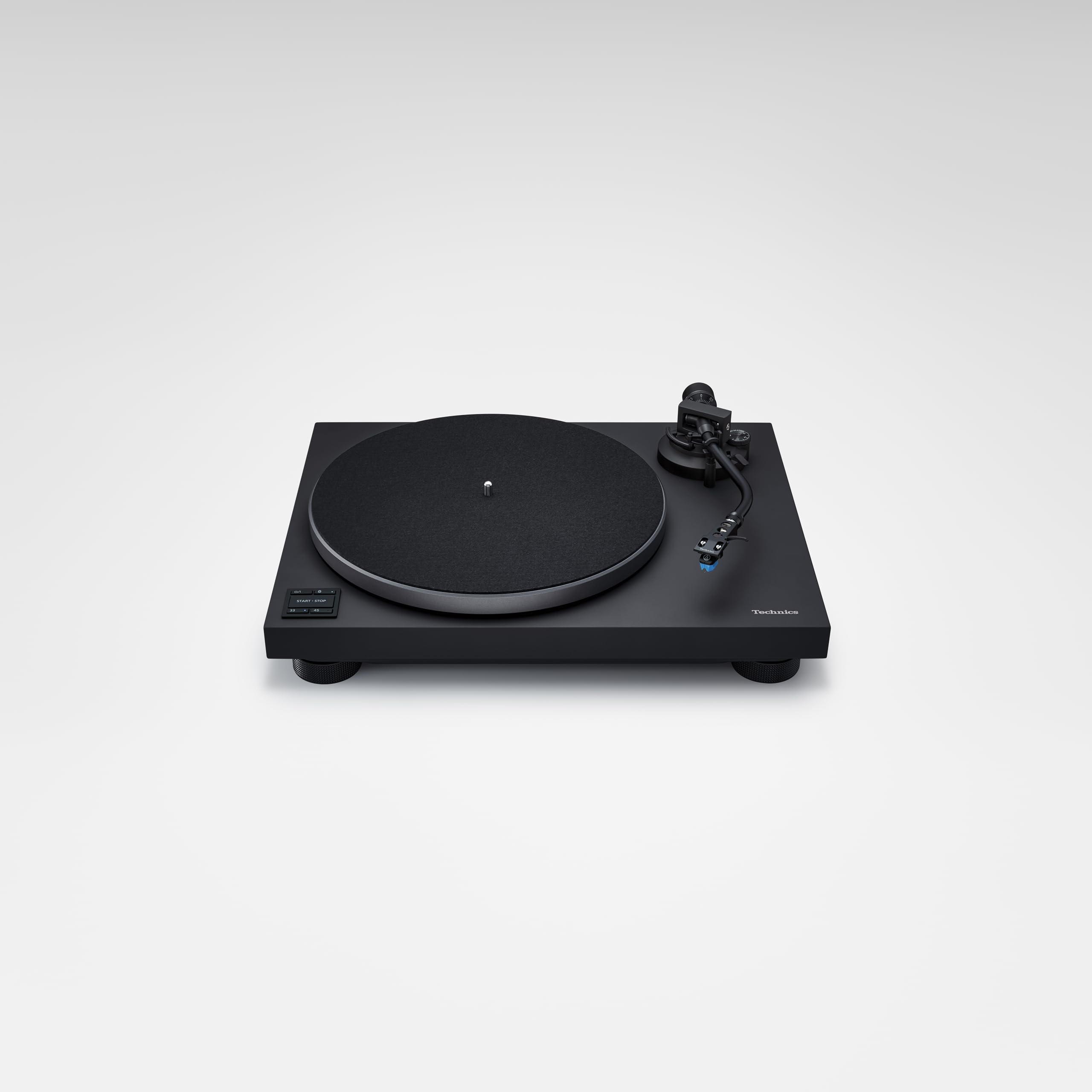
The Technics SL-40CBT-K inherits the coreless direct-drive motor from the SL-1500C, eliminating cogging and delivering a noise floor so low it rivals belt-drive designs. The aluminum S-shaped tonearm rides on a micron-precision bearing base, and the built-in phono EQ is specifically tuned for the included Audio Technica AT-VM95C cartridge—a rare case where the stock cartridge actually works well with the deck’s electronics.
At 75 dB signal-to-noise ratio, this is one of the quietest turntables in its range. The heavy ribbed platter shows zero wobble, and the adjustable damped feet isolate footfall and speaker feedback effectively. Bluetooth is included but wired listening remains clearly superior; the BT is best reserved for casual background playback or pairing with the companion CX700 speaker system.
Upgrade the stylus to the VMN95ML microlinear and you unlock inner-groove tracking that competes with decks costing twice as much. The SL-40CBT is a direct-drive that audiophiles can respect—fast start, zero maintenance, and a signal path clean enough to reveal vinyl’s full dynamic range without adding motor artifacts.
Why it’s great
- Coreless direct-drive motor eliminates cogging and vibration
- 75 dB SNR—exceptionally quiet noise floor
- Heavy ribbed aluminum platter with zero wobble
- Built-in phono EQ properly tuned for included cartridge
Good to know
- Fully manual—no auto-return or auto-start
- Cue lever feel is smooth but a bit light
- Bluetooth is decent but wired is significantly better
2. Denon DP-3000NE Fully Automatic Turntable

The Denon DP-3000NE is a heavy-hitter at 40 pounds, using a rigid die-cast aluminum base and sound-insulating feet to achieve an exceptionally low noise floor. Despite its fully automatic mechanism—push a button and the tonearm lifts, moves, and sets down gently—the direct-drive motor delivers accurate speed at 33 1/3, 45, and even 78 RPM, making it a serious option for vintage collectors.
The S-shaped tonearm accepts standard mount headshells, so cartridge swapping is tool-free and fast. On-the-fly VTA adjustment and included overhang gauge mean you can fine-tune alignment without guesswork. The built-in phono equalizer is competent and opens the signal stage nicely, but pairing it with a high-end external phono stage reveals significantly more depth and air.
No cartridge is included, which is actually a benefit for experienced users—you can select exactly the MM or MC cartridge that matches your system without paying for one you will immediately replace. The automatic mechanism works flawlessly and protects your records from mishandling, but purists should note that the auto-start feature introduces a tiny mechanical whir that is inaudible during music playback.
Why it’s great
- 40 lb die-cast aluminum base with superior vibration isolation
- Fully automatic operation with smooth, gentle tonearm movement
- On-the-fly VTA adjustment and standard headshell mount
- Supports 33, 45, and 78 RPM
Good to know
- No cartridge or stylus included
- Auto-start mechanism produces a faint mechanical noise
- Fully manual in practice—no auto-return function
3. Pro-Ject Debut EVO 2 Turntable
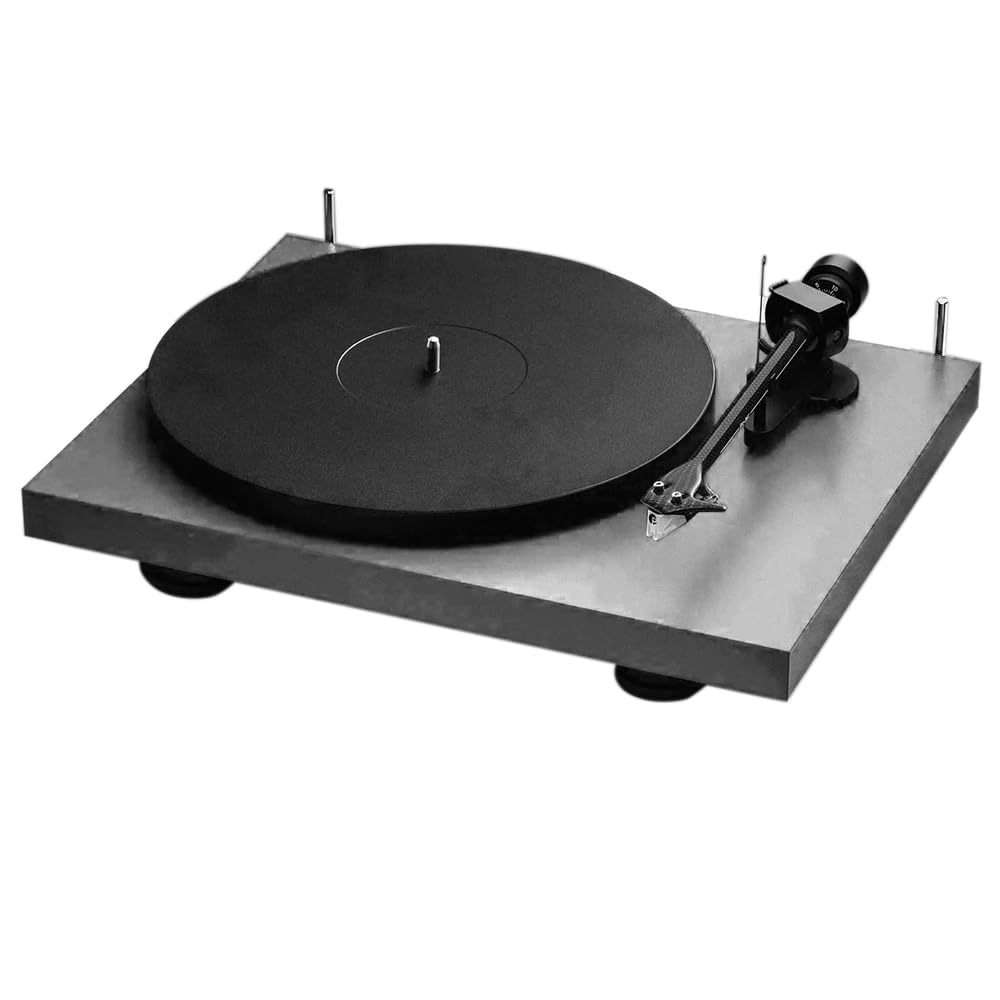
The Pro-Ject Debut EVO 2 is a significant evolution of the classic Debut Carbon EVO. The 1.7 kg anti-magnetic die-cast aluminum platter now includes TPE damping to absorb micro-vibrations, and the deck supports true balanced operation—meaning you can connect it to a balanced phono preamp for ultra-low-noise signal transmission. The included Pick it MM EVO cartridge is a detailed performer with excellent channel separation and dynamic range.
Assembly is straightforward, though tonearm balancing and anti-skate adjustment require patience and an external alignment protractor for best results. The carbon fiber tonearm keeps effective mass low (around 6g), which pairs well with medium-compliance MM cartridges. The satin finish and precision-machined components give the deck a premium feel that justifies its position.
Upgraders moving from the original Debut Carbon EVO report noticeably better instrument separation and a quieter background. This is the best turntable under if you value upgradeability and future-proof balanced connectivity over convenience features like built-in phono or auto-stop.
Why it’s great
- Balanced-ready output for ultra-low-noise signal path
- 1.7 kg TPE-damped aluminum platter absorbs vibrations
- Pick it MM EVO cartridge with excellent clarity and separation
- Low-mass carbon fiber tonearm for precise tracking
Good to know
- Tonearm setup requires patience and an alignment protractor
- Anti-skate weight can detach easily if bumped
- No built-in phono preamp
4. Marantz TT-15S1 Reference Turntable
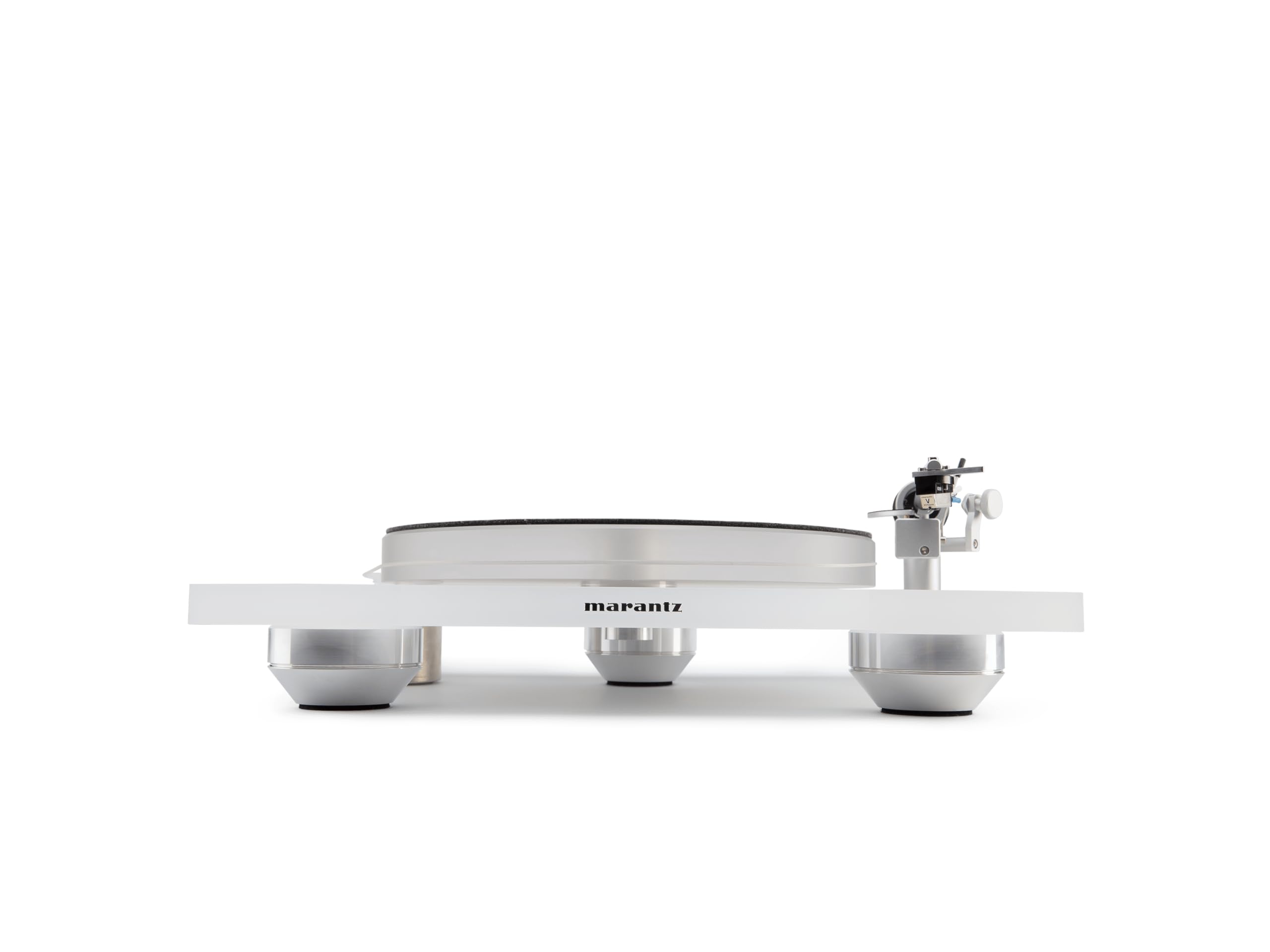
The Marantz TT-15S1 uses a floating motor mount that physically decouples the AC asynchronous motor from the plinth, making it one of the most vibration-resistant belt-drive decks available. The included ClearAudio Virtuoso MM cartridge features an ebony wood body and diamond stylus with an aluminum cantilever—a cartridge that, when properly aligned, delivers a soundstage rivaling systems costing twice as much. The 19.6-pound plinth and heavy platter create a high-inertia system that smooths out speed irregularities.
Assembly takes about 30 minutes, but several owners report that the provided instructions are sparse—YouTube walkthroughs are nearly mandatory. The anti-skate mechanism practically requires a test record to dial in, and the motor pulley may need vertical adjustment to prevent belt slip. These quirks are tolerable for a deck in this price bracket, but beginners should expect a setup curve.
No dust cover is included, which is a notable omission at this price. The sound, however, is exceptional—dead silent background, three-dimensional imaging, and a dynamic range that makes old records sound fresh. The Virtuoso cartridge stylus is fragile and expensive to replace, but the ATN 95E is a cheap temporary substitute that works in a pinch.
Why it’s great
- Floating motor mount construction eliminates motor vibrations
- ClearAudio Virtuoso MM cartridge with ebony body and diamond stylus
- Dead-silent background with exceptional soundstage and dynamics
- 3 height-adjustable aluminum feet for uneven surfaces
Good to know
- No dust cover included
- Anti-skate requires test record calibration
- Spare cartridge stylus is expensive and fragile
5. NAD C 588 Belt-Drive Turntable
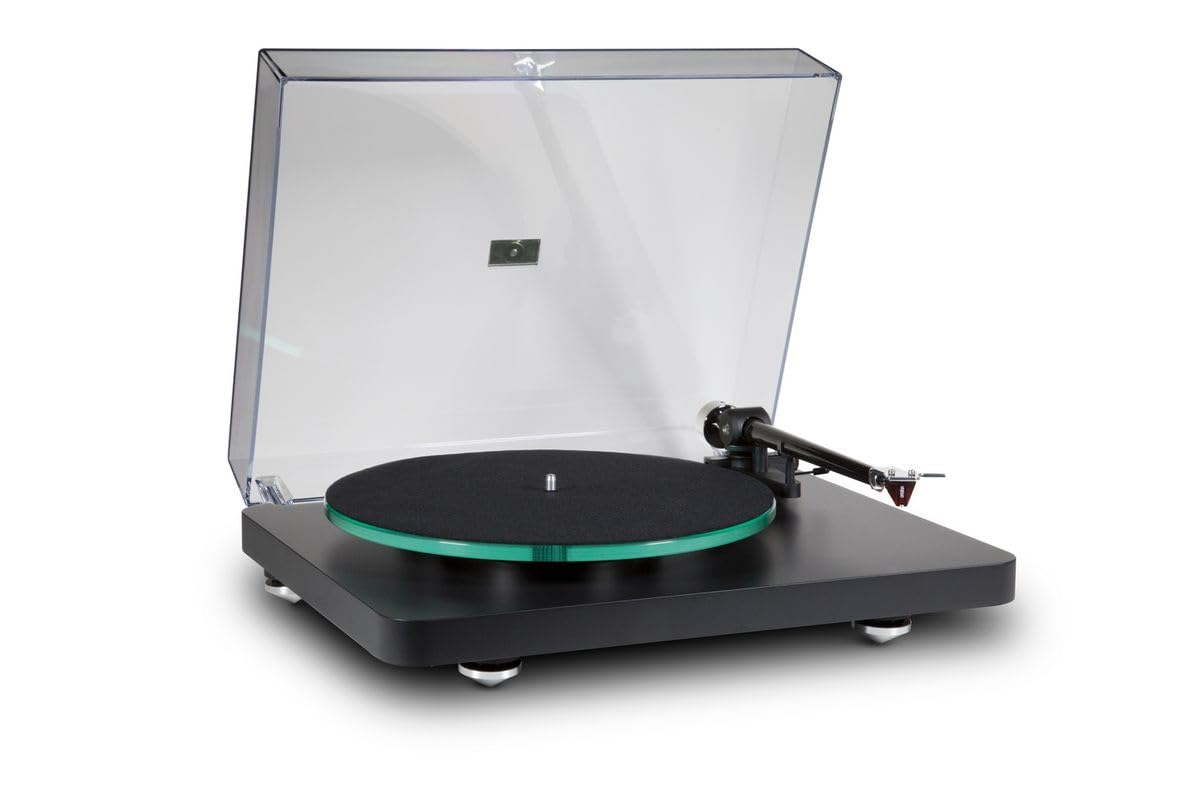
The NAD C 588 uses a specialized synchronous clock motor driven by a high-precision DC power supply—a design that keeps wow and flutter to near-immeasurable levels. The carbon fiber tonearm features a decoupled counterweight and magnetic anti-skate compensation, which is a more consistent and wear-free solution than the traditional weight-on-a-string method. The pre-installed Ortofon 2M Red cartridge is a capable entry-level audiophile pickup with good tracking and a balanced sound signature.
The heavy MDF base with vibration-damping feet and the thick non-resonant Perspex dust cover together create a very quiet platform. Users coming from Audio-Technica decks consistently report that the C 588 reveals detail they never knew was on their records—especially low-level ambient information that was previously masked by motor hum.
The built-in phono preamp is functional but is the first bottleneck to upgrade. Swapping to an external phono stage and upgrading the cartridge to the Ortofon 2M Blue transforms the C 588 into a deck that competes with tables at double its price. Instructions are famously sparse, but the mechanical design is straightforward enough for anyone comfortable with a counterweight.
Why it’s great
- Synchronous clock motor with DC power supply for near-zero wow/flutter
- Carbon fiber tonearm with magnetic anti-skate compensation
- Thick non-resonant dust cover reduces vibration
- Very quiet background reveals low-level ambient detail
Good to know
- Built-in phono preamp is the first upgrade bottleneck
- Instructions are very sparse
- Cartridge upgrade (e.g., 2M Blue) recommended for full performance
6. Pioneer DJ PLX-1000 Turntable

The Pioneer DJ PLX-1000 is a high-torque direct-drive deck built on the legacy of the Technics SL-1200 series—and it delivers the same kind of rock-solid speed stability and instant start-up that made that deck iconic. At 38 pounds, the zinc and aluminum chassis absorbs vibrations that would send lighter decks into feedback. There is no built-in phono preamp and no cartridge included, which tells you exactly who this is for: someone who already owns a serious cartridge and phono stage.
VTA adjustment, removable RCA cables, and a quick-disconnect power cable are welcome features for anyone who wants to fine-tune their setup or move the deck between systems. The S-shaped tonearm with hydraulic damped lift provides smooth cueing. Speed is accurate at both 33 and 45 RPM, but there is no 78 RPM support.
Pair the PLX-1000 with a high-output cartridge like the Ortofon Concorde Music Blue or an Audio Technica AT-VM95ML and you get a sound that is detailed, punchy, and emotionally engaging—a direct-drive that challenges the assumption that belt-drive is always quieter. The trade-off is weight and size: this deck dominates a shelf.
Why it’s great
- High-torque direct-drive with rock-solid speed stability
- 38 lb zinc/aluminum chassis absorbs vibrations effectively
- VTA adjustment and removable RCA cables
- Hydraulic damped lift for smooth cueing
Good to know
- No cartridge or stylus included
- No built-in phono preamp
- No 78 RPM speed support
7. Pro-Ject Debut Carbon EVO Turntable (Walnut)

The Pro-Ject Debut Carbon EVO is the standard-bearer for the -ish belt-drive category. Its one-piece carbon fiber tonearm eliminates the resonance issues of metal arms and keeps effective mass at 6g—a perfect match for the included Sumiko Rainier cartridge, which delivers a warm, detailed, and engaging sound that reveals new depth in familiar records. The AC motor is isolated from the plinth, and the three-leveling feet make setup simple on uneven surfaces.
Signal-to-noise ratio is rated at 68 dB, which is good for the price but not class-leading. The anti-skate setup is slightly quirky—the guide requires a download—but once dialed in, the tracking is precise. The high-gloss finish on the walnut model is eye-catching but shows fingerprints easily.
This is a fully manual deck with no auto-stop and no built-in phono preamp. It is designed for someone who wants a clean, upgradeable path into serious vinyl playback. The Debut Carbon EVO retains strong resale value, and the Sumiko Rainier cartridge is versatile enough to handle a wide range of musical genres without sounding thin or harsh.
Why it’s great
- One-piece carbon fiber tonearm eliminates resonance
- Sumiko Rainier cartridge delivers warm, detailed sound
- Easy 10-15 minute setup with three-leveling feet
- Strong resale value and upgradeable design
Good to know
- No built-in phono preamp or auto-stop
- Anti-skate guide requires a separate downloaded file
- Dust cover hinges can be overly tight
8. Yamaha MusicCast Vinyl 500 Turntable

The Yamaha MusicCast Vinyl 500 is a belt-drive turntable built around Yamaha’s MusicCast wireless ecosystem. It streams vinyl to any MusicCast speaker (including multi-room setups) via Wi-Fi and Bluetooth, and also supports AirPlay 2 and Spotify Connect. The built-in phono preamp lets you connect to any amplifier or receiver—even one without a dedicated phono input—so you can add streaming playback to a legacy hi-fi system without buying extra gear.
The tonearm is smooth, the motor is quiet, and pitch tracking is excellent. The included cartridge is decent but not exceptional—upgrading to a better MM cartridge reveals the turntable’s true capability. Setup is straightforward, though the instructions for the MusicCast network configuration could be clearer. This is not an automatic turntable; you must cue and return the tonearm manually, and the record will spin indefinitely if you forget to lift the arm.
The main limitation is that MusicCast streaming has higher latency than a wired connection, so this is a lifestyle deck for casual listening, not critical monitoring. For someone who wants to hear their vinyl collection through wireless speakers around the house without sacrificing respectable sound quality, this is the most polished option available.
Why it’s great
- MusicCast wireless multi-room and AirPlay 2 support
- Built-in phono preamp works with any receiver
- Excellent pitch tracking and quiet motor
- Expands vinyl listening to whole-home audio
Good to know
- No auto-return; record spins until you lift the tonearm
- MusicCast streaming introduces higher latency than wired
- Does not stream to non-Yamaha Bluetooth speakers
9. Audio-Technica AT-LPW50BT-RW Belt-Drive Turntable

The Audio-Technica AT-LPW50BT-RW is a fully manual belt-drive turntable that features integrated Bluetooth wireless technology, allowing you to stream vinyl to Bluetooth speakers, headphones, or a soundbar without a separate transmitter. The speed-sensor system in the motor maintains accurate platter rotation, and the anti-resonance die-cast aluminum platter with rubber mat keeps vibration in check. The rosewood veneer finish gives it a warm, classic look that fits into a living room aesthetic.
Sound quality is a significant step up from Audio-Technica’s entry-level LP120 series—users report wider soundstage, cleaner clarity, and a warmer tonal balance. The Bluetooth performance is stable and easy to pair, though wired listening reveals more detail and tighter bass. The adjustable dynamic anti-skate control is functional, but the stock cartridge is basic; upgrading to an AT-VM95 series stylus is the best bang-for-buck improvement you can make.
This deck is ideal for someone who wants wireless convenience without sacrificing the upgrade path. The built-in Bluetooth saves you from buying a separate transmitter, and the speed-sensor motor ensures you are not trading accuracy for convenience. The rosewood finish is a real wood veneer, not a vinyl wrap, adding to its premium feel at a mid-range price.
Why it’s great
- Integrated Bluetooth wireless technology for cable-free listening
- Speed-sensor motor maintains accurate platter rotation
- Anti-resonance aluminum platter with rubber mat
- Real rosewood veneer finish looks premium
Good to know
- Stock cartridge is basic; upgrade recommended
- Fully manual with no auto-return
- Wired listening is noticeably superior to Bluetooth
10. Fluance RT85N Reference Turntable (Nagaoka MP-110)

The Fluance RT85N pairs the high-density acrylic platter (which damps unwanted vibrations for improved clarity and tighter bass) with the Nagaoka MP-110 cartridge—a moving-magnet cartridge known for its warm, non-fatiguing sound signature with rich vocals and excellent imaging. Wow and flutter is rated at 0.07%, which is excellent for a belt-drive deck at this price. The high-mass MDF wood plinth with adjustable resonance-damping feet isolates the platter from footfall and speaker feedback effectively.
Users upgrading from entry-level decks consistently report that the RT85N reveals details they previously missed—especially micro-dynamics in acoustic and vocal recordings. The Nagaoka MP-110 stylus replacement is affordable, which offsets the cartridge’s higher initial cost. The RT85N requires an external phono preamp (none is included), and setup is straightforward with the provided bubble level and instructions.
The walnut finish is a real veneer and the overall build quality is solid for the price. Some users report that the cue lever feels less damped than higher-end decks, and the acrylic platter can develop static attraction worth addressing with a silicone mat. For listeners who prefer a warm, natural sound over clinical detail, this is the best value in the category.
Why it’s great
- Nagaoka MP-110 cartridge delivers warm, detailed, non-fatiguing sound
- Acrylic platter improves clarity and tightens bass response
- 0.07% wow/flutter for accurate speed
- Adjustable resonance-damping feet isolate vibration
Good to know
- No built-in phono preamp
- Cue lever could be more damped
- Acrylic platter may need a silicone mat to reduce static
11. Fluance RT85 Reference Turntable (Ortofon 2M Blue)

The Fluance RT85 is the same platform as the RT85N but equipped with the Ortofon 2M Blue cartridge instead of the Nagaoka MP-110. The 2M Blue is brighter, more analytical, and has higher channel separation—it reveals detail and micro-dynamics that the warmer MP-110 smooths over. The choice between these two Fluance decks is fundamentally a choice between sound signatures: detail vs. warmth. The high-density acrylic platter, speed control motor (0.07% wow/flutter), and high-mass MDF wood plinth are identical across both models.
Users upgrading from the AT-LP120 or similar entry-level decks report hearing new layers in familiar recordings—ambient room cues, subtle instrument decays, and improved bass definition. The bamboo plinth option is a real veneer and looks distinctive. The tonearm weight scale is hard to read, and the tracking force can be off by 0.2g without a digital gauge, so a separate stylus force gauge is a worthwhile investment.
This deck requires an external phono preamp and comes with no such stage. For listeners who prioritize resolution and soundstage width over warmth, the RT85 with 2M Blue is arguably the best value proposition below , delivering performance that challenges decks costing twice as much.
Why it’s great
- Ortofon 2M Blue cartridge delivers high resolution and channel separation
- Acrylic platter damps vibration for improved clarity
- 0.07% wow/flutter for accurate speed
- Bamboo plinth is a real wood veneer with a distinctive look
Good to know
- No built-in phono preamp
- Tonearm weight scale hard to read; digital gauge recommended
- Semi-auto stop logic can be complex
12. NAD C 558 Turntable with OM10 Cartridge
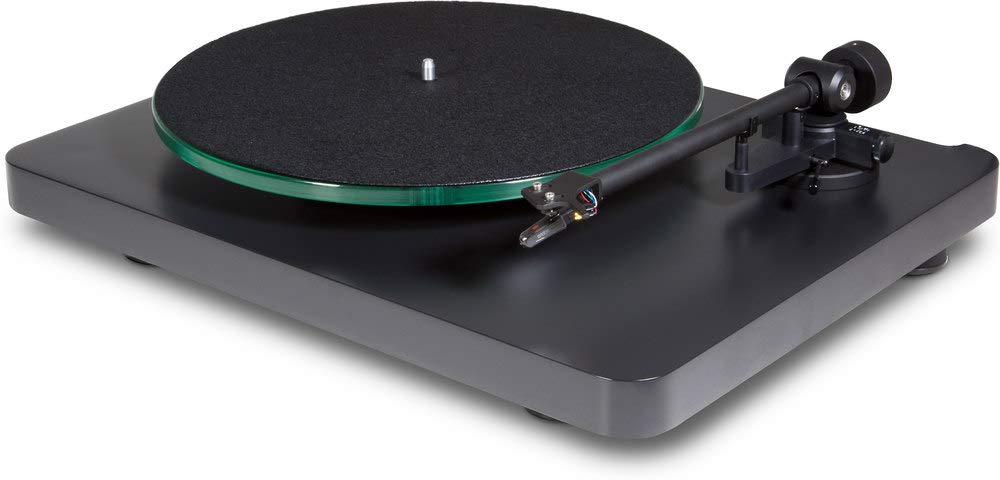
The NAD C 558 focuses its engineering budget on the motor and platter: a sophisticated power supply converts AC to pure DC, driving an isolated clock motor that achieves near-perfect speed stability. The heavy glass platter extracts energy from the vinyl more effectively than typical acrylic or particleboard options, resulting in deeper bass and clearer mids. The CNC-machined MDF plinth with rubber isolation feet provides a solid foundation, and the included Ortofon OM10 cartridge is a competent entry-level moving magnet that tracks well and sounds balanced.
The tonearm is a low-mass, rigid 9-inch design with adjustable vertical tracking force and azimuth. The dust cover is made from non-resonant Perspex with counter-sprung hinges that reduce vibration and allow smooth positioning. Users report that the C 558 is noticeably quieter than similarly-priced decks from Audio-Technica and Fluance, with a lower noise floor that reveals more ambient detail.
The OM10 cartridge is decent but is the first upgrade path—replacing the stylus with the OM20 or OM30 unlocks significantly more detail. The C 558 is not wireless, not automatic, and does not include a phono preamp. It is a straightforward, no-frills deck that prioritizes speed accuracy and low noise above all else, making it a strong entry point for newcomers who want a serious foundation.
Why it’s great
- AC-to-DC isolated clock motor for near-perfect speed stability
- Heavy glass platter extracts more energy for deeper bass
- Non-resonant Perspex dust cover reduces vibration
- Very quiet noise floor reveals ambient detail
Good to know
- No built-in phono preamp
- No wireless or automatic features
- OM10 cartridge is a capable entry point but upgrading the stylus reveals more
13. Audio-Technica AT-LP140XP-BK Direct-Drive Turntable

The Audio-Technica AT-LP140XP-BK is a more refined version of the popular AT-LP120, built around a high-torque direct-drive servo motor with quartz speed lock. It fixes the motor noise and high-frequency roll-off that plagued the LP120, delivering a cleaner signal path with better transient response. The S-shaped tonearm features adjustable dynamic anti-skate control and a hydraulically damped lift, making cueing precise and smooth. The die-cast aluminum platter is mass-damped with a felt mat to reduce resonance.
This deck supports 33, 45, and 78 RPM, making it a strong option for collectors with vintage shellac records. The variable pitch control with reverse playback is useful for DJ-style mixing, but the quartz lock can be engaged for pure listening. The AT-XP3 phono cartridge is pre-installed and sounds decent, but serious listeners should upgrade to an AT-VM95 series stylus—the difference in detail and tracking is dramatic.
The plug-type target light is a practical addition for low-light cueing. The anti-skate mechanism is quirky and may require trial-and-error adjustment, and the blue LED strobe light is bright enough to be slightly distracting in a dark room. For the price, this is the best direct-drive option for someone who wants the flexibility to DJ occasionally but prioritizes accurate listening most of the time.
Why it’s great
- High-torque direct-drive with quartz speed lock for accuracy
- Supports 33, 45, and 78 RPM for vintage vinyl
- Hydraulically damped lift for precise cueing
- Fixes motor noise and high-frequency roll-off from LP120
Good to know
- Anti-skate mechanism requires trial-and-error adjustment
- Blue LED strobe light is bright in dark rooms
- Stock cartridge is decent but upgrading is worthwhile
FAQ
Can I use a direct-drive turntable for critical audiophile listening, or is belt-drive always better?
Do I need to replace the stock cartridge immediately, or can I listen for a while first?
Does a fully automatic deck always compromise sound quality compared to a manual deck?
Final Thoughts: The Verdict
For most users, the best audiophile record player winner is the Technics SL-40CBT-K because it combines direct-drive precision with a noise floor low enough to rival belt-drive decks, plus the flexibility of Bluetooth and a built-in phono EQ that doesn’t need immediate replacement. If you want the warmth and imaging of a Nagaoka MP-110 with an acrylic platter, grab the Fluance RT85N. And for the high-end automatic convenience, nothing beats the Denon DP-3000NE.