
Our readers keep the lights on and the weekend projects moving. As an Amazon Associate, I earn from qualifying purchases.
An audiophile soundbar is a contradiction that works — the goal is to trick your brain into hearing precise, three-dimensional sound from a single, low-profile chassis. The real challenge isn’t just loudness; it’s achieving a wide soundstage, articulate dialogue, and tight, distortion-free bass that honors the source material rather than smearing it.
I’m Rikta — the co-founder and writer behind FitlyFast. I’ve spent hundreds of hours researching driver topology, room-correction algorithms, and amplifier architecture to separate genuine high-fidelity performers from clever marketing.
This guide cuts through the spec sheet noise to help you find the true audiophile soundbar that fits your space, your listening habits, and your sonic expectations.
How To Choose The Best Audiophile Soundbar
Finding a soundbar that satisfies an audiophile’s ear is about prioritizing the right engineering elements over marketing numbers. The number of speaker drivers alone doesn’t determine quality; how they are arranged, amplified, and calibrated to your room defines the experience. Focus on three core pillars: robust room correction software, a dedicated center channel for dialogue, and an amplification system that can drive dynamic peaks without audible distortion.
Room Correction Is Non-Negotiable
A soundbar’s frequency response is meaningless if your room’s reflective surfaces and furniture placement color the sound. Look for systems that use an external microphone (like Dirac Live on the Klipsch Flexus CORE 300 or the Sennheiser AMBEO’s calibration mic) or automated algorithms (like Sonos Trueplay or Sony’s Sound Field Optimization). These tools analyze your specific listening environment and apply precision filters to correct for standing waves and early reflections, delivering a neutral, balanced soundstage regardless of room shape.
Physical vs. Virtual Height Channels
For Dolby Atmos and DTS:X, the way a soundbar creates overhead sound effects varies dramatically. The most convincing approach uses dedicated upward-firing drivers housed in the main bar or in wireless surround speakers. The JBL Bar 1300XMK2 and Nakamichi Shockwafe systems utilize physical height drivers, creating a more tangible sound bubble. Virtualization, like the technology in the Sonos Arc Ultra, relies on psychoacoustic processing to simulate height, which works well in ideal listening positions but can break down if you move off-center.
Amplification and Driver Quality
Audiophile-grade soundbars use discrete amplifier channels for each driver to prevent crosstalk and preserve imaging. Check for systems that specify “Class D” or “Class AB” amplification and list power ratings per channel. Driver material also matters: silk dome tweeters, aluminum cones, and purpose-built woofers (like those in the KEF XIO) offer superior transient response and lower distortion than generic paper cones. A soundbar with a dedicated subwoofer output allows you to bypass internal drivers for deeper, more controlled low-end extension with a high-quality outboard sub.
Quick Comparison
On smaller screens, swipe sideways to see the full table.
| Model | Category | Best For | Key Spec | Amazon |
|---|---|---|---|---|
| Klipsch Flexus CORE 300 | Mid-Range | Room correction purity | Dirac Live Auto Room Correction | Amazon |
| Sony BRAVIA Theater Bar 9 | Mid-Range | 360-degree spatial mapping | 13 speaker units, Sound Field Optimization | Amazon |
| Nakamichi Dragon 11.4.6 | Premium | Cinema-grade immersion | HiFi AMT tweeters, 3000W max output | Amazon |
| Bose Smart Ultra | Mid-Range | Dialogue clarity and simplicity | A.I. Dialogue Mode, 6 transducers | Amazon |
| Sennheiser AMBEO Max | Premium | Deep bass without subwoofer | 30Hz bass from integrated drivers | Amazon |
| JBL Bar 1300XMK2 | Premium | Detachable wireless surround speakers | Battery-powered detachable surrounds | Amazon |
| Sonos Arc Ultra | Premium | Eco-system and AI-enhanced dialogue | Sound Motion, 9.1.4 spatial audio | Amazon |
| Nakamichi Shockwafe 11.2.6 | Premium | Dual 10″ subs and height channels | 6 discrete height channels, 2300W | Amazon |
| Sony BRAVIA Theater Quad | Premium | Wireless, modular surround sound | 16 speaker units, 4 wireless speakers | Amazon |
| KEF XIO | Premium | Music-first, balanced sound | 12 discrete amplifiers, coaxial driver | Amazon |
| Bang & Olufsen Beosound Stage | Luxury | Design integration and music streaming | 11 drivers, oak/aluminum body | Amazon |
| Devialet Phantom Ultimate | Luxury | High-resolution stereo listening | 32-bit/96kHz, zero distortion, 108dB | Amazon |
| KEF LS60 Wireless | Luxury | True high-fidelity floor-standing system | 1400W, Uni-Q driver, 24-bit/384kHz | Amazon |
In‑Depth Reviews
1. Nakamichi Dragon 11.4.6-Ch Surround System
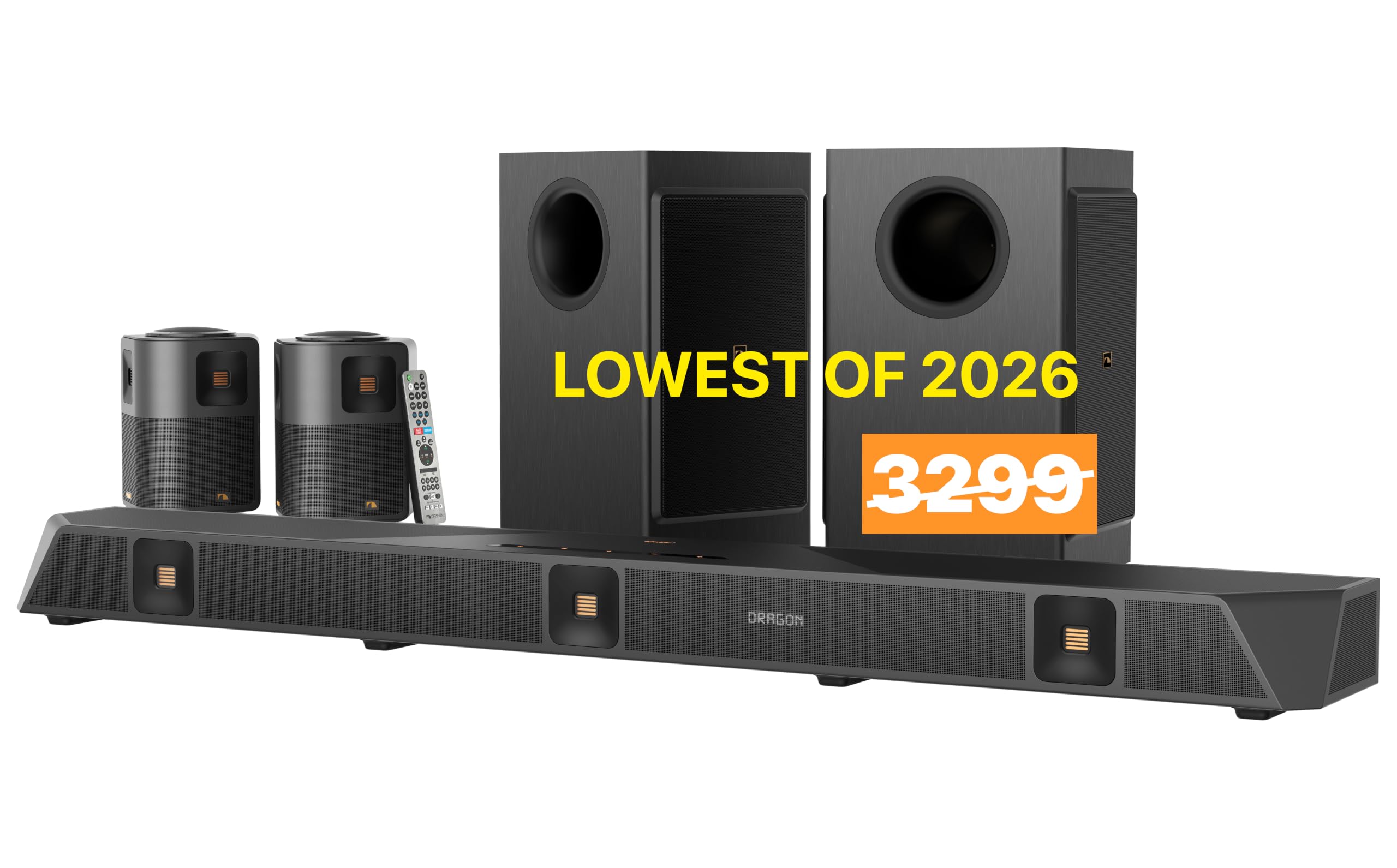
The Nakamichi Dragon is not a soundbar in the traditional sense — it’s a complete, AVR-grade home theater system disguised as one. Its 58-inch chassis houses an 11.4.6-channel architecture with HiFi Air Motion Tweeters that preserve pristine highs without sibilance, even at reference-level volumes. The dual-opposing 8-inch subwoofers produce tactile, room-loading bass that reaches down to 20 Hz, eliminating the need for an external sub in many rooms. The Pro Cinema Engine processes Dolby Atmos up to 24.1.10 and DTS:X Pro up to 30.2, offering scalability that traditional soundbars cannot match.
Setup is surprisingly straightforward for a system of this complexity — wireless pairing of the surround speakers and subs happens in minutes, and the On Screen Display simplifies distance calibration. At the default settings, the Dragon already delivers a massive soundstage, but manual adjustments to the PerfectHeight Mechanism lock overhead effects precisely to the listening sweet spot. Customer reviews consistently highlight the effortless clarity of dialogue and the absence of distortion, even when pushing the system past 50% volume in large rooms.
For buyers who want true cinema immersion without a stack of separates, the Dragon is the gold standard. Its physical footprint is significant, and the price is an investment, but its engineering depth and performance ceiling are unmatched in the soundbar category. It truly turns any space into a theater.
Why it’s great
- Reference-grade spatial audio with physical height channels
- Dual-opposing 8″ subs deliver deep, clean bass without added cabinets
- HiFi AMT tweeters ensure sparkling, distortion-free highs
Good to know
- Large main unit (58″) requires substantial console space
- Manual calibration is recommended for optimal surround imaging
2. Klipsch Flexus CORE 300 5.1.2 Channel Sound Bar
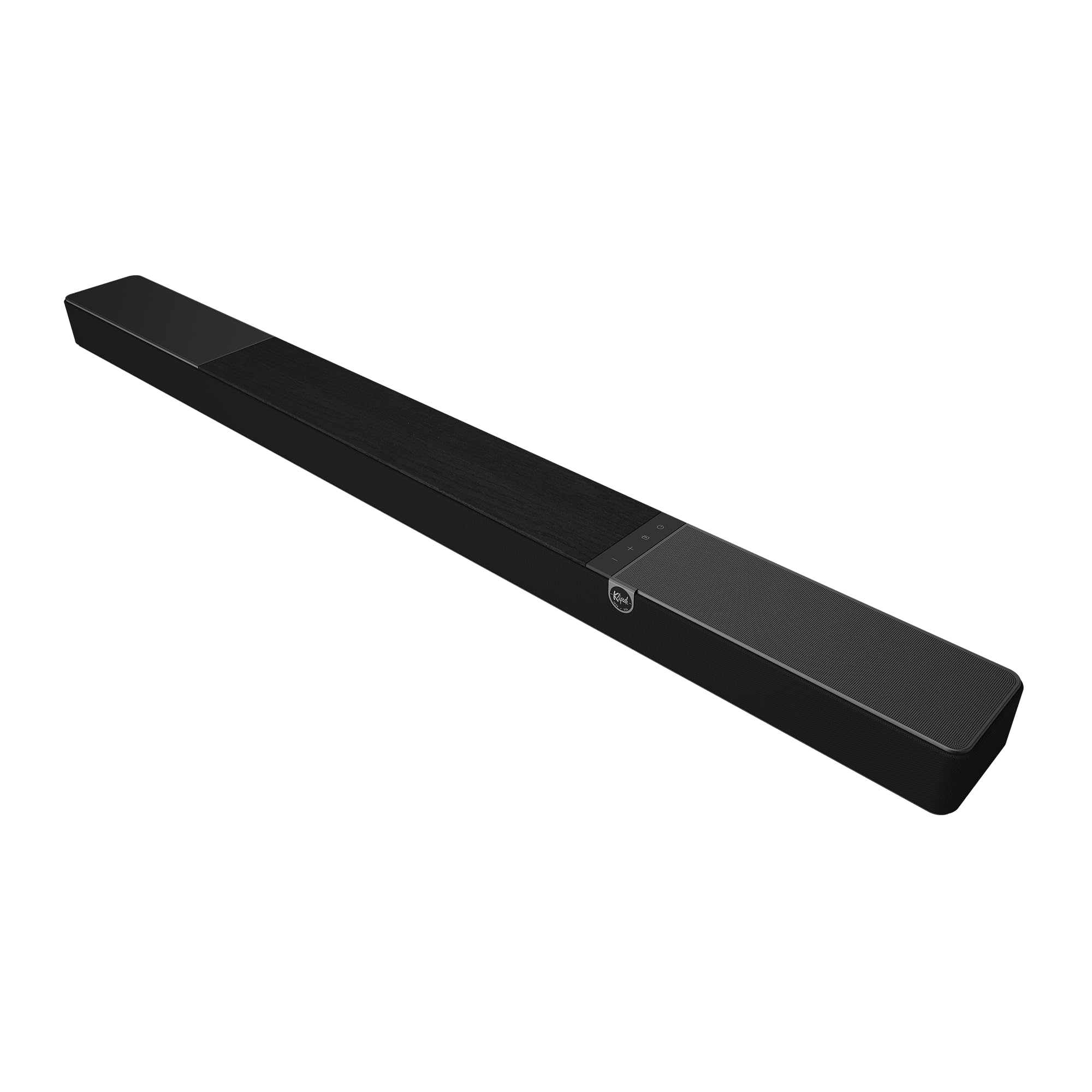
The Klipsch Flexus CORE 300 is the world’s first soundbar to integrate Dirac Live auto-room correction, a technology normally reserved for high-end AVR-based systems. This single feature transforms its performance — after a brief room scan, the system corrects frequency response anomalies, tames standing waves, and delivers a neutral, detailed soundstage regardless of room shape. The partnership with Onkyo brings decades of amplifier engineering, ensuring the 5.1.2-channel array (including two upward-firing elevation drivers) receives clean, controlled power for dynamic range that rivals traditional setups.
Build quality is exceptional, with a metal and wood enclosure that reflects its premium positioning. The CORE 300 projects a wide front soundstage with excellent timbre, and its center-channel performance renders dialogue with pinpoint clarity — a critical check for any audiophile system. The included wired subwoofer output provides flexibility for users who want to integrate an external sub. While customer feedback notes that the companion app is basic, the core acoustic performance, especially after Dirac calibration, is outstanding for both movies and music.
If you prioritize accuracy and room-adaptive sound over sheer driver count, the Flexus CORE 300 is one of the most intelligently engineered soundbars available. Its price is competitive for the technology it packs. It is an excellent choice for listeners who value tonal neutrality and want a system that adapts to their living space rather than overpowering it.
Why it’s great
- Dirac Live room correction is a game-changer for soundbar accuracy
- Clear, natural dialogue with strong center channel imaging
- Solid wood and metal build quality
Good to know
- App interface is basic and can be glitchy
- Excluding a dedicated subwoofer reduces LFE impact for action scenes
3. Sony BRAVIA Theater Bar 9 (HT-A9000)

Sony’s BRAVIA Theater Bar 9 packs 13 individual speaker units into a surprisingly slim chassis, using 360 Spatial Sound Mapping to create virtual phantom speakers that extend the soundstage far beyond the bar’s physical boundaries. Sound Field Optimization auto-calibrates the output to your room’s specific dimensions, correcting for furniture and wall placement. The result is a convincing bubble of sound where overhead effects and rear-channel information feel physically present, even without surround speakers — though adding the optional RS5 rears and SW5 sub dramatically closes the gap with dedicated systems.
Music reproduction is a strong suit, with a clean, detailed presentation that handles complex mixes without compression. The Acoustic Center Sync feature, when paired with a compatible BRAVIA TV, effectively turns the TV panel into a center channel, anchoring dialogue firmly to the screen. HDMI 2.1 support (4K120, VRR, ALLM) makes this a natural partner for PS5 gaming, with low-latency audio that benefits competitive play. Some users report random HDMI handshake issues with non-Sony TVs.
For those embedded in the Sony ecosystem or seeking a soundbar that delivers exceptional spatial processing from a single unit, the Theater Bar 9 leads the category. Its virtual surround is among the best available, but the lack of included subwoofer and rear speakers in the box means unlocking its full cinematic potential requires further investment.
Why it’s great
- Excellent 360 Spatial Sound Mapping creates a wide, immersive soundstage
- HDMI 2.1 with 4K120, VRR, ALLM for gaming
- Acoustic Center Sync with BRAVIA TVs improves anchoring
Good to know
- Bass is weak without the separate SW5 subwoofer
- Some users report HDMI handshake glitches with non-Sony TVs
4. Bose Smart Ultra Dolby Atmos Soundbar

The Bose Smart Ultra Soundbar redefines what “all-in-one” means in the soundbar category, delivering a convincing Dolby Atmos experience with only six transducers — including two custom upward-firing dipole speakers. TrueSpace technology upmixes stereo and 5.1 content into immersive spatial audio, and the A.I. Dialogue Mode uses real-time analysis to balance voices against background effects, ensuring every word remains crystal clear even during complex action sequences. The included ADAPTiQ headset calibrates the sound specifically to your listening position, a level of precision usually found in much more expensive systems.
Setup is genuinely plug-and-play: a single HDMI eARC connection handles everything, and the Bose Music app provides intuitive control over EQ, source switching, and multi-room grouping. The compact design fits easily under most TVs without blocking the screen. Customer reviews consistently praise the “room-filling” character of the sound, with many noting the realism of overhead effects created by the upward-firing drivers. The soundbar supports both Alexa and Google Assistant, and SimpleSync allows private listening via Bose headphones, a feature appreciated by late-night viewers.
Where the Ultra falters is sheer bass impact — it performs admirably for music and dialogue, but action movie enthusiasts will want to pair it with the Bose Bass Module 700 to unlock cinematic low-end dynamics. For its class, the price is fair, but the subwoofer and surround speaker packages push the system into premium territory. It remains an excellent entry point for those seeking audiophile-quality sound in a fuss-free, elegant package.
Why it’s great
- A.I. Dialogue Mode delivers best-in-class vocal clarity at any volume
- ADAPTiQ room calibration tailors sound to your specific listening seat
- Compact, elegant design with universal TV fitment
Good to know
- Bass response is underwhelming for movies without the optional subwoofer
- Setup requires a smartphone, Bose account and internet connection
5. Sennheiser AMBEO Soundbar Max

The Sennheiser AMBEO Soundbar Max is a beast — physically large, sonically immense, and built around a single, confident idea: that a single bar can deliver true 5.1.4-channel immersion with deep 30Hz bass without requiring a separate subwoofer. Thirteen drivers, including dedicated upward-firing units and five tweeters, work with a unique room calibration system developed with Fraunhofer to create a soundstage that convincingly places objects around and above the listener. The AMBEO 3D technology upmixes standard stereo and 5.1 content to fully immersive spatial audio, and the three bespoke AMBEO modes let you dial in the character of the virtualization.
Build quality is characteristic Sennheiser — a substantial aluminum, mesh, and plastic chassis with a premium feel. The included calibration microphone is essential; users who skip this step report hollow, diffuse sound, but after calibration, the spatial imaging locks into place with focused vocals and a wide, cohesive soundscape. The AMBEO Max also includes a wired subwoofer pre-out for those who want even deeper extension, though its integrated bass is already capable of shaking furniture in smaller rooms.
The main drawbacks are its size, requiring dedicated shelf or cabinetry space, and occasional firmware oddities, including HDMI handshake delays and a reported need to unplug the unit to resolve sound-cutout issues. Despite these quirks, the core acoustic performance — the combination of precise imaging, deep bass, and the ability to upmix any content — is peerless among single-bar systems. It is a true audiophile product for those who prioritize sound quality over convenience.
Why it’s great
- Exceptional 30Hz bass from integrated drivers eliminates subwoofer need
- Fraunhofer-developed calibration creates precise spatial audio
- Five dedicated tweeters deliver studio-grade high-frequency detail
Good to know
- Very large chassis requires substantial surface space
- Occasional firmware bugs and HDMI handshake issues reported
6. JBL Bar 1300XMK2 11.1.4 Channel Soundbar
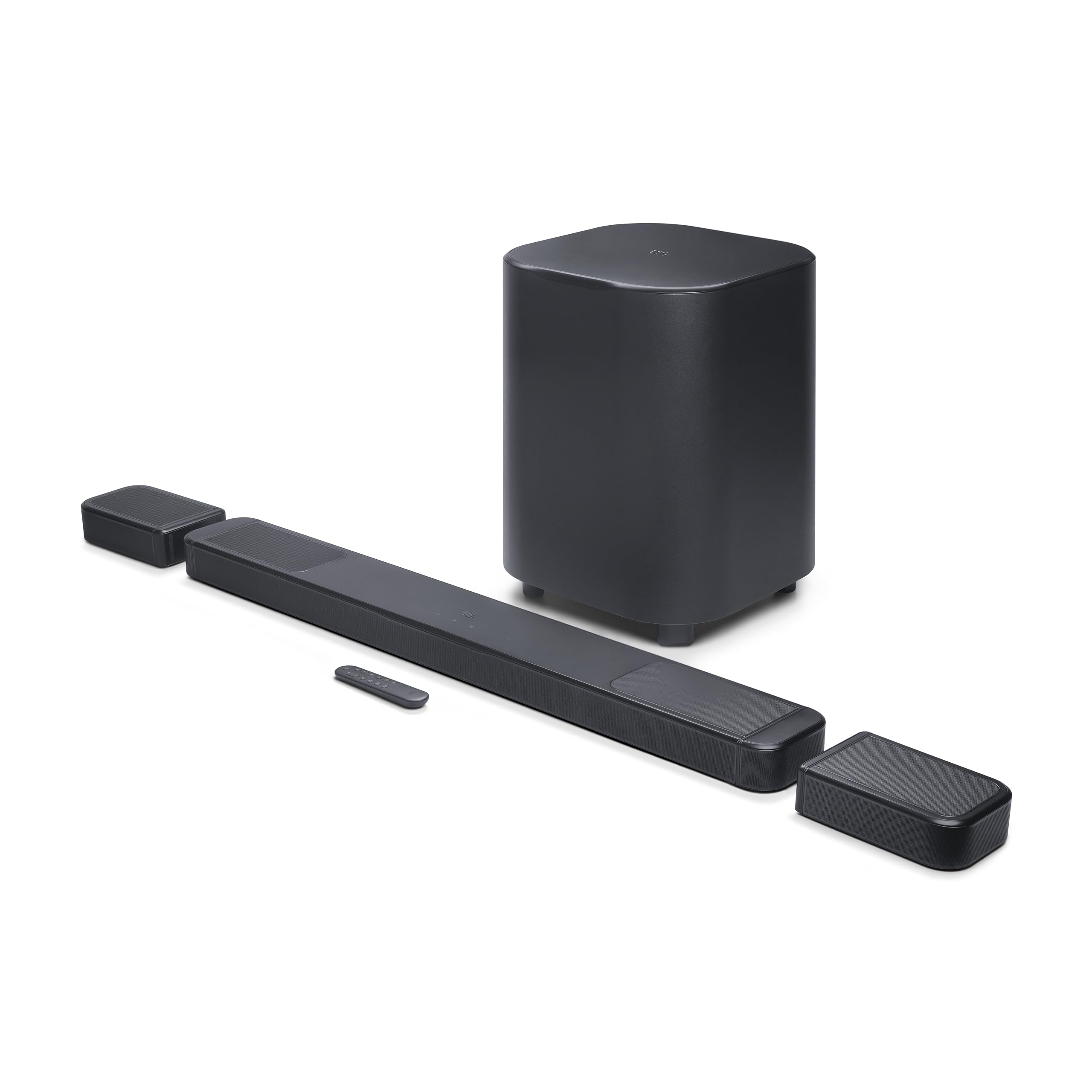
The JBL Bar 1300XMK2 solves one of the biggest pain points of soundbar surround sound — wiring rear speakers — by making the surrounds detachable and battery-powered. Lift each speaker off the main bar and place it behind your seating position for true, wire-free Dolby Atmos and DTS:X 11.1.4 surround. Each detachable speaker houses upward-firing drivers, creating six discrete height channels that physically place overhead effects without virtualization guesswork. The 12-inch wireless subwoofer delivers 1570W of peak power, producing tactile, cinema-rattling bass that fills medium to large rooms with ease.
Sound quality is bold and dynamic, with JBL’s MultiBeam 3.0 technology widening the front soundstage beyond the bar’s physical width. PureVoice 2.0 intelligently boosts dialogue relative to ambient noise, ensuring whispers are audible even during loud action sequences. The companion JBL ONE app offers granular EQ control, and the system supports AirPlay, Google Cast, Spotify Connect, and Tidal Connect for high-res music streaming. The detachable speakers hold a charge for about 4-5 hours, enough for most movie sessions, and recharge when placed back on the bar overnight.
The detachable design is genuinely innovative, but it comes with trade-offs: the speakers are relatively large, and the battery life means they cannot be left functioning as permanent wireless surrounds without frequent recharging. Additionally, the system is expensive, though its performance and features offer clear value versus competitor systems that require separate purchases for rear speakers. For those who want true surround without drilling holes or hiding wires, the JBL is a unique, compelling option.
Why it’s great
- Detachable battery-powered surround speakers eliminate wiring entirely
- 12″ wireless subwoofer delivers powerful, ground-shaking bass
- Physical height channels from surrounds create convincing Atmos effects
Good to know
- Detachable speakers need recharging after 4-5 hours of use
- Large main bar and subwoofer footprint requires significant space
7. Sonos Arc Ultra Soundbar

Sonos re-engineered its flagship soundbar with the Arc Ultra, introducing Sound Motion technology — a new acoustic architecture that uses a single, large woofer driven by multiple amplifiers to produce deeper, cleaner bass than its predecessor without increasing cabinet size. The 9.1.4-channel spatial audio processing, combined with Dolby Atmos, creates a wide, immersive soundstage with subtle but convincing height effects. AI-driven Speech Enhancement analyzes incoming audio in real-time, detecting and clarifying human voices to improve dialogue intelligibility without making the soundtrack sound hollow or unnatural.
Trueplay tuning remains a standout feature, using the microphone on your iPhone or iPad (or an Android device, with the latest update) to automatically adjust the speaker’s EQ to your room’s acoustics. The Sonos ecosystem is the primary draw: the Arc Ultra integrates seamlessly with other Sonos speakers for whole-home audio, supports Apple AirPlay 2, and offers direct streaming from over 100 music services through the Sonos app. Setup is genuinely effortless — a single HDMI eARC connection, app guidance, and the system is operational in minutes.
The Arc Ultra is not the most powerful or bass-heavy soundbar in its price bracket on its own. Its strength is balance and integration. Adding the Sonos Sub and Era 300 rear speakers unlocks the full 9.1.4 potential, but those additions significantly raise the total cost. For those already invested in the Sonos ecosystem or seeking a future-proof, expandable system that prioritizes seamless multi-room streaming and consistent software updates, the Arc Ultra is a refined, premium choice.
Why it’s great
- Trueplay room calibration ensures consistent, balanced sound in any space
- AI Speech Enhancement significantly improves dialogue clarity
- Seamless multi-room integration with Sonos ecosystem
Good to know
- On its own, bass and surround effects are outclassed by similarly priced competitors
- Requires Sonos Sub and Era 300 rears for full cinematic impact
8. Nakamichi Shockwafe Wireless 11.2.6 Ch System
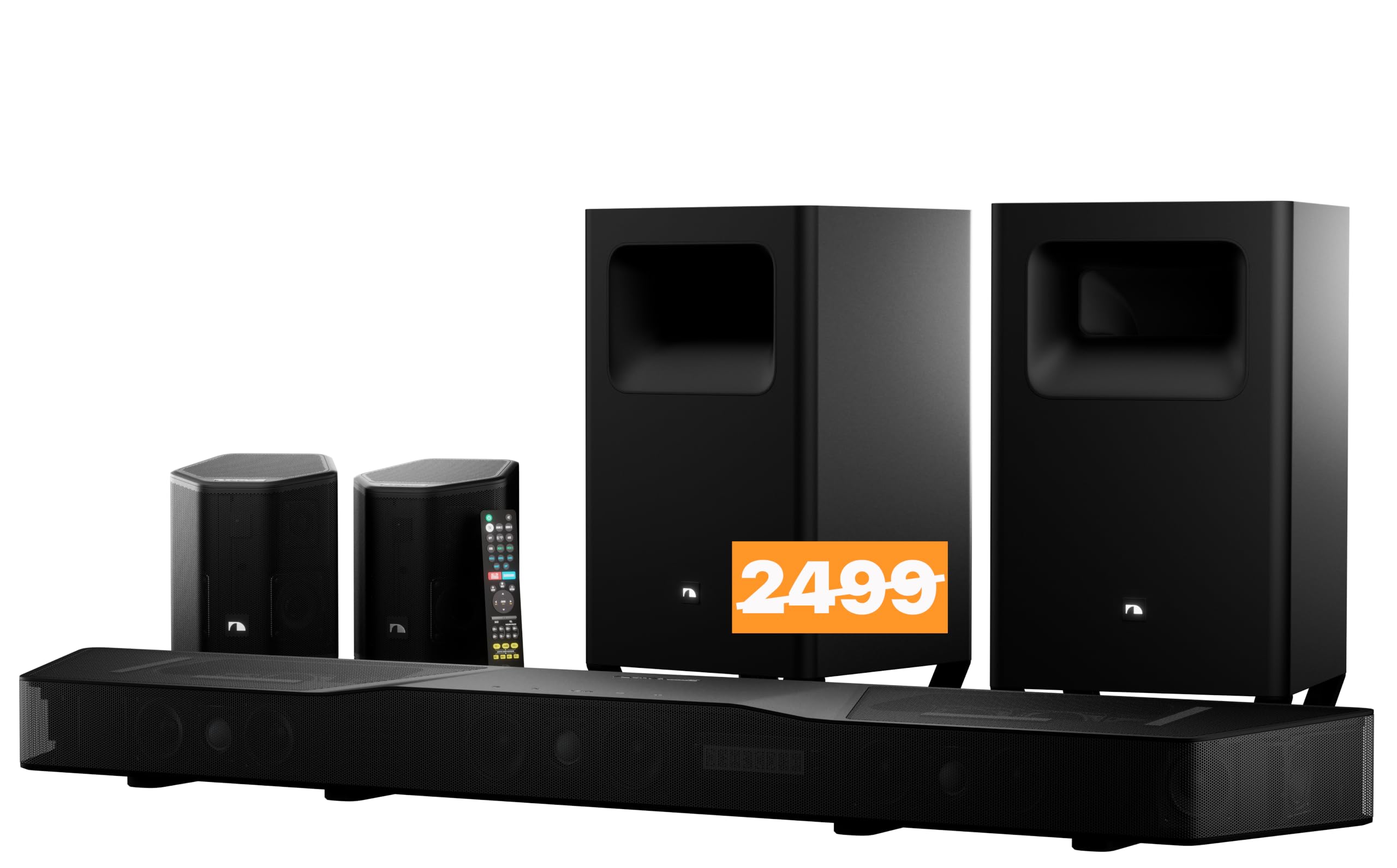
The Nakamichi Shockwafe Wireless 11.2.6 is engineered for those who want theater-scale low-frequency authority. Its dual 10-inch wireless subwoofers, each with a flared port design, move massive amounts of air to deliver deep, palpable bass that is felt as much as heard, yet remains controlled and distortion-free at high volumes. The 54-inch soundbar features two upward-firing drivers, while the bipolar surround speakers project sound from both sides and above, creating the presence of six discrete height channels. The AHD Ultra engine processes the signal to produce a wide, enveloping 3D sound bubble with precise directional cues.
Dialogue clarity is excellent, thanks to the dedicated center channel within the main bar, and the system supports HDMI eARC with 4K120 passthrough. The included backlit remote and app provide comprehensive control, including granular adjustment of subwoofer levels and surround delay. Customer reviews frequently mention the “movie theater” experience — the system creates immersive sound that places you inside the action while maintaining clear vocals. The wireless subwoofers and surrounds pair reliably, making setup simpler than a traditional AVR-based system.
The main unit is very large (54 inches wide, 32.5 lbs), requiring a substantial media console. The out-of-box sound profile is initially flat; a firmware update and calibration via the app are necessary to unlock the system’s full potential. Once calibrated, however, the Shockwafe provides a visceral, high-impact home theater experience that rivals many dedicated speaker setups, making it a strong choice for action movie and gaming enthusiasts who prioritize deep bass and physical impact.
Why it’s great
- Dual 10″ wireless subs produce deep, room-filling bass with high impact
- Bipolar surrounds create convincing overhead effects
- Crystal-clear dialogue even at extremely high volumes
Good to know
- Large soundbar (54″) and subs require significant space
- Firmware update and app calibration needed for optimal sound
9. Sony BRAVIA Theater Quad (HT-A9M2)

Sony’s BRAVIA Theater Quad moves away from the soundbar form factor entirely, delivering a four-speaker wireless system that uses 360 Spatial Sound Mapping to create a seamless, cinema-like sound field without a physical soundbar. Each of the four slim speaker units houses four drivers (16 total), and the system’s box processes all audio, creating up to 12 phantom speakers that materialize around the room. Sound Field Optimization calibrates the system to your room’s exact dimensions in minutes, ensuring the virtual surround and height effects are precise regardless of speaker placement.
The system excels with Dolby Atmos and DTS:X content, producing a convincing bubble of sound where helicopters seem to fly overhead and rain falls from above with startling realism. The phantom center channel is exceptionally well-implemented, anchoring dialogue to the screen even without a dedicated physical center speaker. Music reproduction is immersive and detailed, making the Quad a versatile performer for both movies and two-channel listening. Adding the optional SW5 subwoofer is recommended for low-end extension.
Setup can be temperamental — some users report app connection issues requiring a wired LAN connection to the control box, and the system’s reliance on HDMI CEC can cause the TV to switch to its internal speakers intermittently. The price is high, especially when adding the subwoofer. When everything works, the Quad offers a convincing alternative to in-ceiling speakers, providing a spacious, phantom-rich surround experience in a clean, cable-free package.
Why it’s great
- Wireless four-speaker setup with no soundbar footprint
- Excellent phantom center channel and surround imaging
- HDMI 2.1 support with 4K120 and VRR for gaming
Good to know
- Software and app can be buggy, requiring wired LAN connection for stability
- Lacks low-end punch below 30Hz without dedicated Sony subwoofer
10. KEF XIO Dolby Atmos 5.1.2 Soundbar
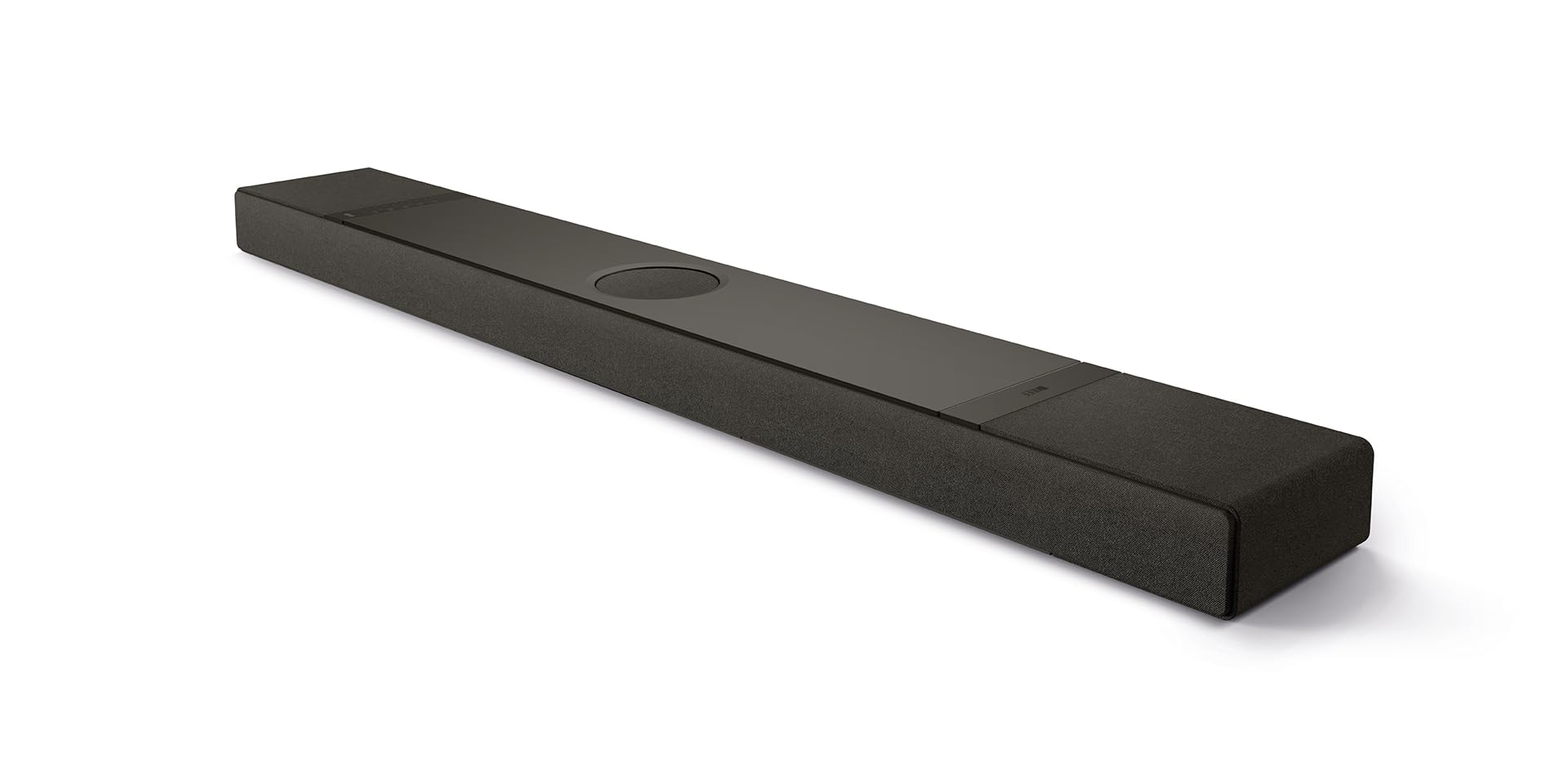
The KEF XIO is the soundbar for music purists. It leverages KEF’s legendary Uni-Q coaxial driver technology to place the tweeter at the acoustic center of the midrange cone, creating a single point source that eliminates phase interference and delivers a natural, coherent soundstage with precise imaging. Twelve discrete amplifiers, one for each driver, ensure clean power delivery and prevent channel crosstalk. The result is a level of detail and musicality that rivals high-end stereo speakers for music listening, with a surprisingly wide soundstage for a bar that is less than 48 inches wide.
The XIO supports Dolby Atmos and DTS:X with upmixing for stereo content, and its 5.1.2 configuration includes two upward-firing drivers for height effects. The bar automatically senses whether it is wall-mounted or on a credenza and adjusts its acoustic output accordingly, a thoughtful engineering touch. The KEF Connect app provides comprehensive control, and streaming is well-supported via AirPlay, Google Cast, Tidal Connect, and Qobuz. A dedicated subwoofer output allows integration with a high-quality outboard sub for deeper LFE.
At this price point, the XIO is expensive for a 5.1.2 system, especially as it lacks a dedicated subwoofer and rear speakers in the box. The surround effects, while coherent, are not as expansive as those of premium multi-speaker systems like the Nakamichi Dragon. For the audiophile who listens to as much music as they watch movies and values timbre and imaging above all else, the KEF XIO is a special, genre-defining product.
Why it’s great
- Uni-Q coaxial driver delivers best-in-class stereo imaging and tonality
- 12 discrete amplifiers prevent crosstalk and preserve detail
- Excellent streaming support with AirPlay, Google Cast, Tidal Connect
Good to know
- High price for a 5.1.2 system without included subwoofer or rears
- Surround effects are less expansive compared to Atmos-focused competitors
11. Bang & Olufsen Beosound Stage

The Bang & Olufsen Beosound Stage prioritizes design and material quality as much as sound. Its chassis is constructed from anodized aluminum or smoked oak, with a fabric grille that is replaceable, allowing it to blend into a room as a piece of furniture rather than a black plastic box. Eleven drivers — including four 4-inch woofers — fill medium to large rooms with a rich, multi-dimensional sound. Dolby Atmos processing creates a convincing sense of space, with voices anchored to the TV and sound effects extending well beyond the bar’s width.
Music performance is where the Stage truly shines. The Beosonic EQ within the Bang & Olufsen app allows for intuitive sound adjustments, and the bar supports AirPlay 2 and Beolink Multiroom for whole-home streaming. The Stage works with any TV via HDMI ARC. However, the user experience is marred by average reliability — some users report persistent HDMI ARC handshake issues and setup difficulties, particularly with LG TVs. The lack of included remote control (it relies on your TV’s remote or the app) may frustrate some users.
At this price point, the Beosound Stage demands a high premium for its aesthetic and brand cachet. Its sound quality is very good, but not class-leading compared to similarly priced systems from Sony or Nakamichi. It is the right choice for design-conscious buyers who want a soundbar that doubles as a stylish piece of furniture and who prioritize seamless integration with the wider Bang & Olufsen ecosystem.
Why it’s great
- Exquisite Scandinavian design with aluminum or oak finish
- Rich, room-filling sound with integrated room compensation
- Seamless integration with Bang & Olufsen multiroom ecosystem
Good to know
- HDMI ARC compatibility can be unreliable with some TV brands
- No physical remote included in the box
12. Devialet Phantom Ultimate 108 dB
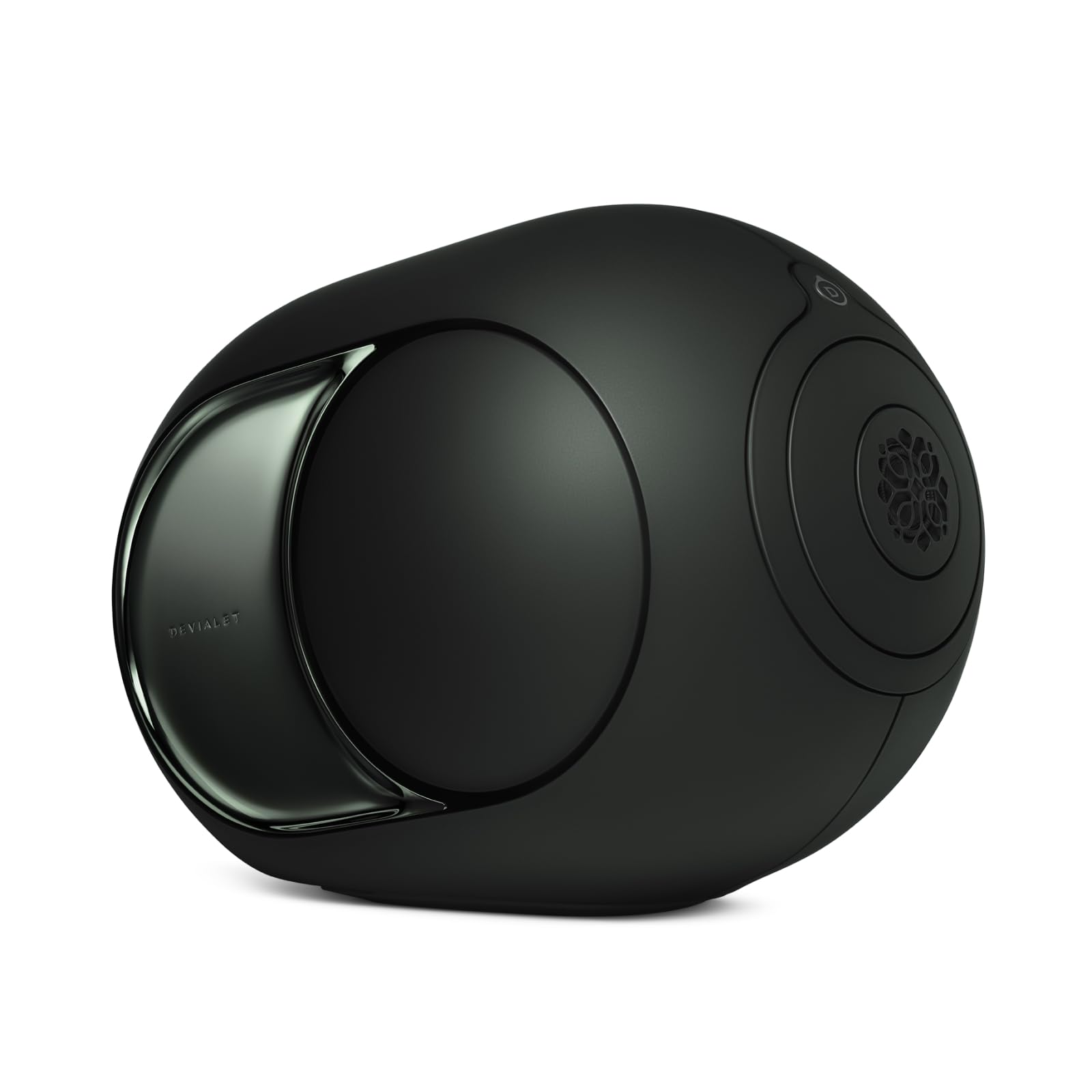
Devialet’s Phantom Ultimate 108 dB is less a soundbar and more a high-resolution stereo speaker system engineered for zero distortion. Its patented ADH (Analog/Digital Hybrid) amplification architecture combines the precision of Class A with the power efficiency of Class D, producing 1100W of clean power that drives the speaker to 108 dB SPL with less than 0.001% total harmonic distortion. The frequency response extends from 14 Hz to 35 kHz, and the Heart Bass Implosion mechanism produces physical, tactile bass that you can feel in your chest without cabinet buzz or port noise.
The spherical design is a functional art piece, developed and manufactured in France, with a tactile interface and a status LED. Streaming support is comprehensive: AirPlay, Google Cast, Spotify Connect, TIDAL Connect, UPnP, and Roon Ready are all supported, and Wi-Fi 6 ensures stable high-resolution playback. The Phantom can be used as a standalone stereo speaker, paired with a TV via an external streaming device for dialogue, but it is not a traditional soundbar and lacks HDMI ARC or built-in center channel processing.
The Phantom Ultimate 108 dB is a luxury product for the dedicated audiophile who values radical engineering and total fidelity. Its sound quality is breathtaking, with a clarity and dynamic slam that few speakers of any form factor can match. However, it is not a practical home theater soundbar — it is a stereo speaker that excels at music and, with careful pairing, can enhance TV audio. The price is very high for a single speaker without a TV-optimized audio processing pipeline.
Why it’s great
- Zero distortion audio up to 108dB SPL with ADH amplification
- Physical bass response with Heart Bass Implosion technology
- Exquisite French engineering and design
Good to know
- Not a traditional soundbar; lacks HDMI eARC and center channel
- Extremely high price for a single speaker system
13. KEF LS60 Wireless System

The KEF LS60 Wireless is a floor-standing active speaker system that redefines what a streaming audio system can be. It integrates KEF’s 14th-generation Uni-Q driver array with a side-mounted 5.25-inch bass driver in each cabinet, delivering a combined 1400W of amplification (Class AB for mids/highs, Class D for lows) that produces a full-range, high-fidelity sound with deep, articulate bass. The system supports full 24-bit/384kHz streaming, MQA decoding, and DSD, making it one of the highest-resolution audio systems available. HDMI eARC connectivity allows it to function as a high-end TV sound system, offering a vast improvement over any external soundbar in terms of soundstage width, imaging, and dynamic range.
Wireless interspeaker connectivity (up to 24-bit/96kHz) eliminates the need for a speaker cable between the two towers, simplifying placement. The KEF Connect app provides control over streaming services (Amazon Music, Qobuz, Deezer, Spotify Connect, TIDAL Connect), EQ settings, and multi-room grouping. The LS60 delivers a performance that rivals passive speaker systems costing significantly more, thanks to its integrated amplification and Uni-Q technology, which produces a coherent and natural sound field with pinpoint imaging.
The LS60 is a floor-standing system that requires dedicated floor space and is not a soundbar in any sense. Its maximum output is limited compared to multi-channel soundbar systems with subs, and the price is high, putting it in the realm of high-end stereo systems. For the purist who wants a single cable-free stereo solution that delivers true audiophile-grade sound for both music and TV, the KEF LS60 Wireless is a masterpiece of category-defining integration.
Why it’s great
- High-fidelity, full-range sound with 1400W of amplification
- Uni-Q driver delivers best-in-class imaging and coherence
- Wireless interspeaker connectivity and high-res streaming support
Good to know
- Floor-standing towers require dedicated space and are not soundbars
- Substantial investment for a two-channel system
FAQ
Is a soundbar capable of true audiophile sound quality?
Does the Sennheiser AMBEO Max truly provide subwoofer-level bass without a sub?
What is the best soundbar for music, not movies?
Final Thoughts: The Verdict
For most users, the audiophile soundbar winner is the Nakamichi Dragon 11.4.6 because it combines a near-reference soundstage with powerful bass and robust room correction, delivering a true home theater experience from a single (large) system. If you want the best value in terms of sound quality per dollar, grab the Klipsch Flexus CORE 300, whose Dirac Live room correction allows it to punch well above its weight in any room. And for a music-first audiophile system that doubles as a TV sound setup, nothing beats the KEF LS60 Wireless.