
Our readers keep the lights on and the weekend projects moving. As an Amazon Associate, I earn from qualifying purchases.
If you have ever tried to sink a fence post into heavy, sticky clay, you already know the feeling. A standard shovel bounces off the surface, a pointed digger barely makes a dent, and by the time you are sweating through your shirt, you have managed a hole barely deep enough for a small plant. Clay soil compacts into a dense, almost concrete-like layer that resists penetration and clings to metal with a vengeance, making it one of the most punishing substrates for any digging tool.
I’m Rikta — the co-founder and writer behind FitlyFast. I have spent countless hours analyzing torque ratings, blade geometries, engine displacements, and handle ergonomics to understand exactly why some augers sail through heavy clay while others just bind up and stall.
This buying guide breaks down the specific design features and power requirements needed to defeat clay, so you can make an informed purchase. Use this analysis to find the best auger for clay soil that matches your project scale and physical comfort level.
How To Choose The Best Auger For Clay Soil
Clay soil presents two distinct challenges that an auger must overcome: its shear strength resists the initial bite, and its cohesion causes the removed soil to stick to the bit, reducing cutting efficiency as you go deeper. Choosing the right auger means evaluating its power source, blade technology, and physical handling characteristics specifically against these two obstacles.
Power Source: Electric vs Gas vs Manual
Electric augers, while quiet and low-maintenance, often lack the sustained torque to push through dense clay without overwhelming the drill motor. Manual augers rely entirely on your arm strength and body weight, making them feasible for a few shallow holes but exhausting for any real fencing project. Gas-powered units with engine displacements of 43cc and above deliver the rotational force needed to maintain cutting speed through sticky clay, but they come with the trade-offs of weight, vibration, and two-stroke engine maintenance.
Bit Design and Blade Material
Look for auger bits with a sharp fishtail or screw point that initiates the cut and pulls the bit into the soil, rather than relying on downward pressure alone. Replaceable or sharpenable blades are a strong advantage because clay wears down cutting edges faster than sandy loam. The helix spacing also matters — tighter flights clear soil more slowly but provide better lift in sticky conditions, while wider flights move material faster but may clog in wet clay.
Handle Ergonomics and Safety
A powerful gas auger that twists violently when it hits a rock can cause serious wrist and arm injuries. Look for anti-vibration foam grips and handlebars that allow two-person operation for deeper holes. A fingertip throttle that returns to idle when released is essential, as is a design that keeps your hands clear of the rotating shaft. Some premium units also include a flex coil or shock absorber between the power head and bit to reduce the jolt of sudden obstructions.
Quick Comparison
On smaller screens, swipe sideways to see the full table.
| Model | Category | Best For | Key Spec | Amazon |
|---|---|---|---|---|
| Earthquake E43 | Gas 43cc | Balanced power & comfort | 43cc, 8″ bit, 36″ deep | Amazon |
| PRIJESSE 85cc | Gas 85cc | Maximum displacement | 85cc, 3 bits (4-12″) | Amazon |
| PROYAMA 54cc | Gas 54cc | Multi-bit versatility | 54cc, 4 bits (4-12″) | Amazon |
| XtremepowerUS 55cc | Gas 55cc | Raw torque per dollar | 55cc, 8″ bit, 2.3 HP | Amazon |
| Prowoo 62cc | Gas 62cc | Mid-power with extras | 62cc, 2 bits + extension | Amazon |
| 72CC Auger | Gas 72cc | High displacement value | 72cc, 2 bits + extension | Amazon |
| GardenTrax 43cc | Gas 43cc | Lightweight gas start | 43cc, 8″ bit, 36″ deep | Amazon |
| Seymour AUA2 | Manual | Budget-friendly manual | Adjustable 4-8″, steel | Amazon |
| MightyPhine 6″ | Electric drill | Small, occasional holes | 6″ x 32″, drill powered | Amazon |
In‑Depth Reviews
1. Earthquake E43 1-Person Earth Auger Powerhead, 43cc 2-Cycle Viper Engine

The Earthquake E43 is the premium choice for clay soil because it balances enough engine displacement to handle dense ground with build quality that reduces fatigue. The Viper engine fires up quickly, and the steel welded handlebars with anti-vibration foam grips make it manageable for one person to operate. Users report drilling 30-inch holes through heavy clay with embedded small rocks, a testament to the sharp fishtail point and durable blade design.
What sets this unit apart is the attention to detail that matters when you are fighting clay. The Flex Coil shock absorber dampens the jarring hit when the bit encounters a buried rock or root, protecting both the machine and your wrists. The industrial-grade air filtration is not just marketing speak — it keeps fine clay dust out of the carburetor, which is a common failure point on cheaper 2-stroke engines.
The trade-off is that the 43cc engine, while reliable, may struggle if you plan to use a 12-inch bit in heavy clay. Some users noted that the plastic throttle lever feels light compared to the rest of the machine’s build. For most fencing and planting projects with 6 to 8-inch bits, however, this is the most livable daily driver for clay soil work.
Why it’s great
- Consistent easy start even after storage
- Shock absorber reduces wrist strain on impacts
- Steel handlebars with quality foam grips
Good to know
- Plastic throttle lever feels fragile
- 12-inch bits may overwhelm the 43cc powerhead in clay
- Auger bit color varies (red or black)
2. PRIJESSE 85cc Post Hole Digger 2-Stroke Gas Powered Earth Digger
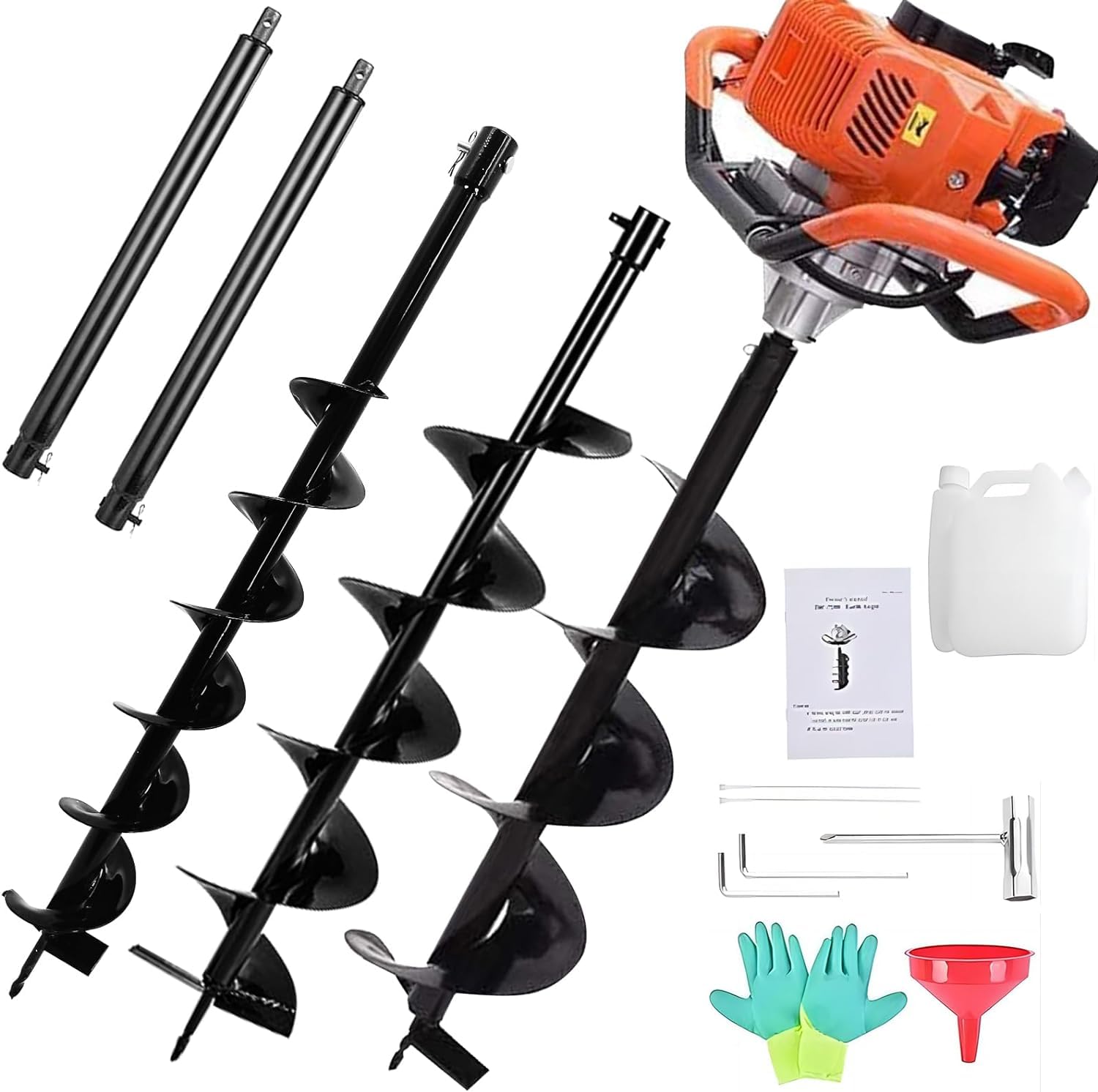
When nothing less than overwhelming power will do against thick clay, the 85cc PRIJESSE is the brute-force answer. This machine delivers the highest displacement in this comparison, and real-world users have drilled over 50 holes in heavy clay with no loss of performance. The 8-inch bit chews through wet, sticky soil quickly, while the available 12-inch bit opens large holes for deck footings or tree planting.
The kit’s value is hard to overstate: three steel auger bits (4, 8, and 12 inches) plus two 24-inch extension bars give you the ability to handle anything from small garden holes to deep fence posts. The ergonomic handles with anti-vibration grips are genuinely comfortable, and the recoil start is reliable when the engine is warm. Users specifically praised its ability to handle wet clay where other machines would bog down.
The catch is that this much power demands respect. The throttle is sensitive, and if the bit catches a root or rock, the machine can jerk violently. One user suffered a hand injury when the unit tore free and the throttle wires disconnected, leaving the engine at full speed. This auger is best operated with two people, and safety should be your top priority. Also, some units arrived with minor damage from shipping, and the included instructions had the wrong gas-oil ratio listed.
Why it’s great
- Massive 85cc displacement for dense clay
- Three bit sizes and two extensions included
- Easy starting when warm with consistent power delivery
Good to know
- Throttle is sensitive and can cause loss of control
- No automatic safety shut-off if wires disconnect
- Instructions contain errors in fuel mixture ratio
3. PROYAMA 54cc Post Hole Digger Gas Powered 2 Cycle Earth Auger
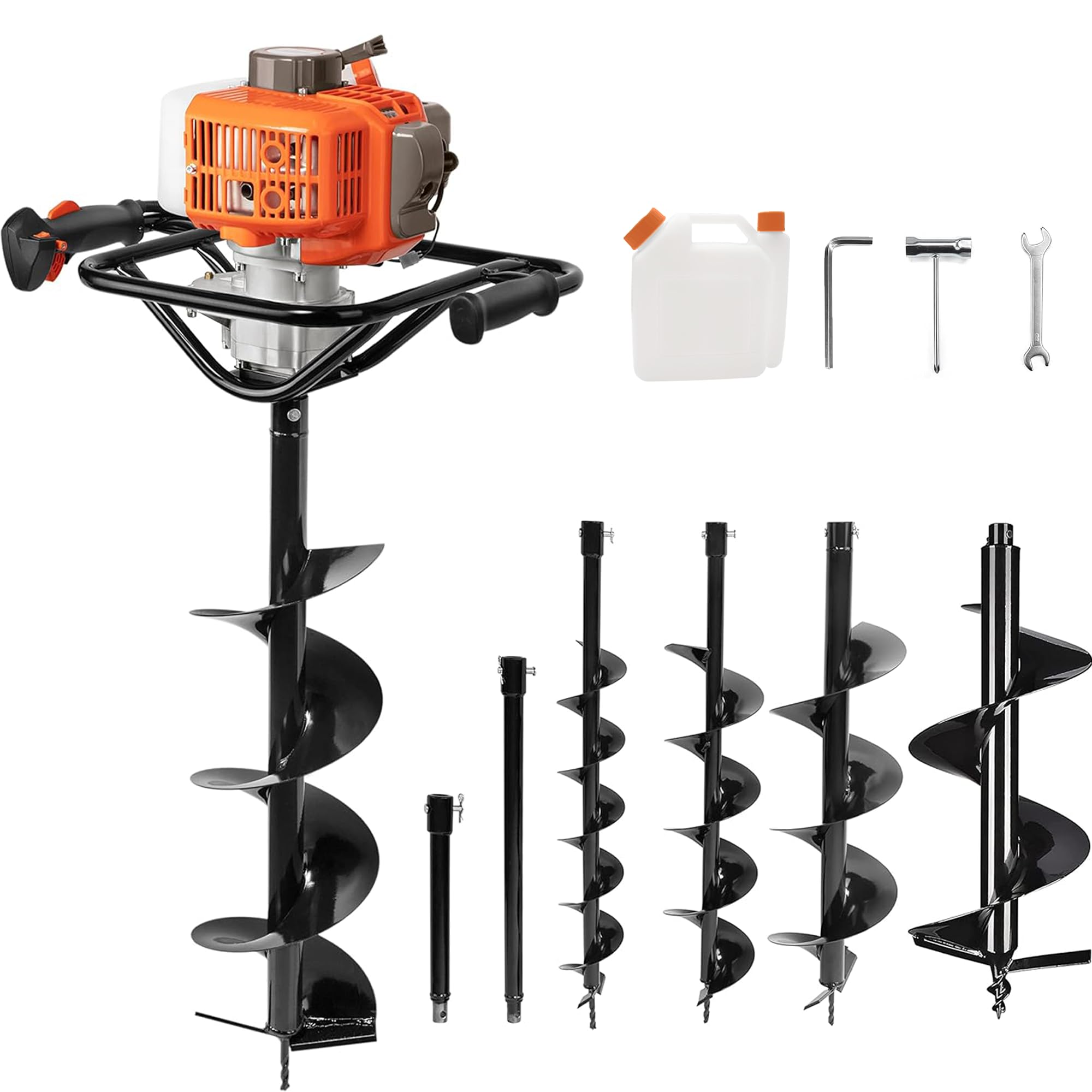
The PROYAMA 54cc is built for versatility. Its 2.4 horsepower engine provides ample torque for clay, but the real draw is what comes in the box: four auger bits sized 4, 6, 8, and 12 inches plus extension rods. This makes it the ideal choice if you need to dig a variety of hole sizes for different projects without buying additional hardware. Users report that it cuts through heavy clay effectively, significantly reducing digging time compared to manual methods.
The unit features an anti-vibration grip handle that does help manage fatigue during extended use, and the 50:1 fuel mix is standard and easy to maintain. The included extensions allow you to reach depths required for frost-line footings. The EPA-certified engine runs clean, and the 5-year warranty on the gearbox suggests the manufacturer stands behind the transmission where it counts.
However, the PROYAMA is not without faults. A concerning number of users report difficulty starting the engine out of the box, even with correct fuel mix and new spark plugs. The included bits are functional but not industrial-grade — the extension rod has been known to bend or break under heavy load in rocky clay. Customer service responsiveness is reportedly inconsistent. This is a solid mid-range choice if you get a good unit, but quality control is a gamble.
Why it’s great
- Four bits from 4 to 12 inches for total flexibility
- 5-year gearbox warranty provides peace of mind
- Comfortable anti-vibration handle design
Good to know
- Some units are hard to start despite proper procedure
- Extension rod can bend in tough soil conditions
- Customer service has mixed reviews
4. XtremepowerUS 2.3HP Post Hole Digger 55cc
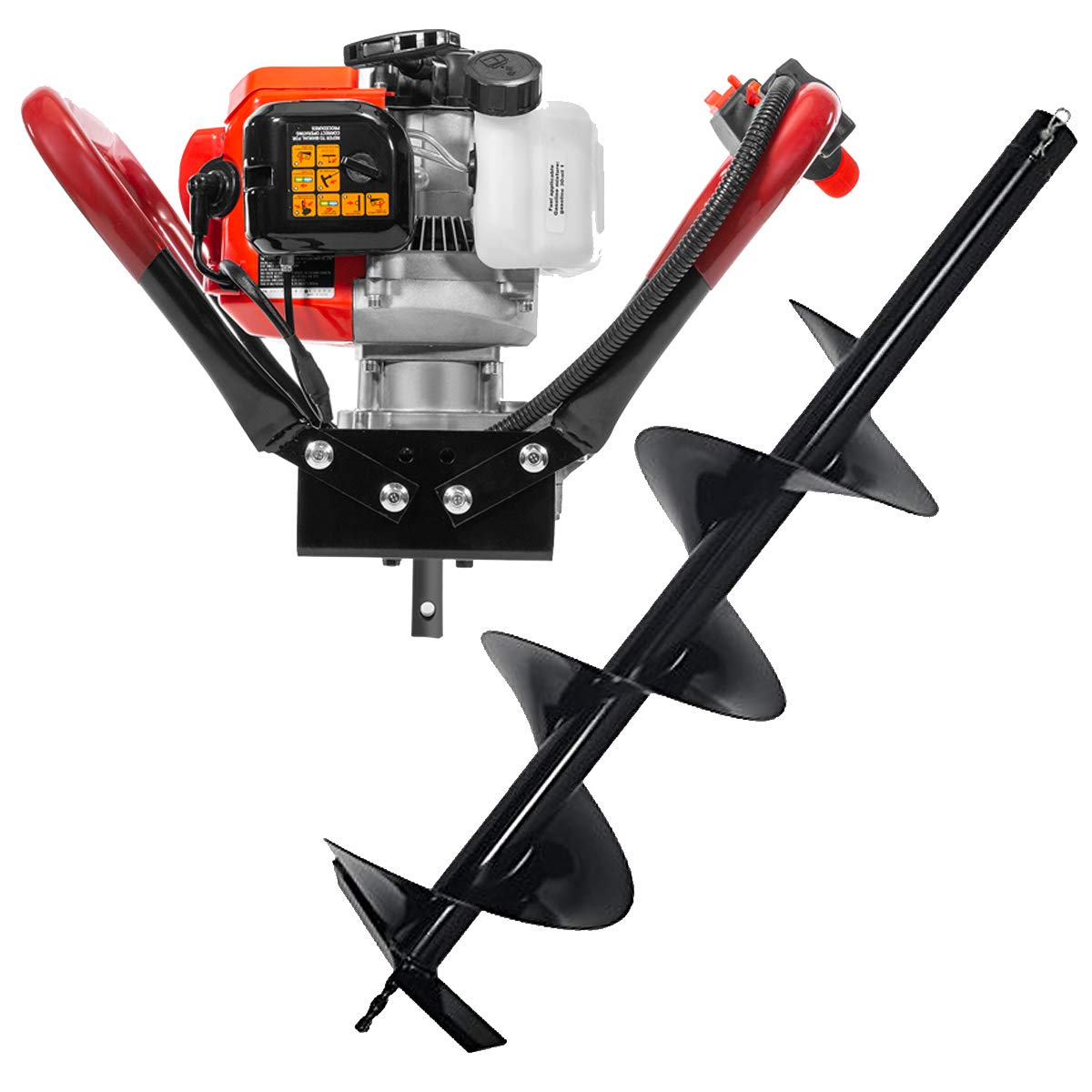
The XtremepowerUS 55cc punches above its price point with raw torque that makes it a strong contender for clay soil. Real-world users consistently describe it as powerful, with the ability to drill 2-foot holes in heavy black clay and roots in just a few minutes. The alloy steel gears and ball-bearing shafts in the gearbox are designed to withstand the stress of continuous digging, and the machine handles sustained use without overheating or stalling.
The ergonomic grips and fingertip throttle give you reasonable control, though the unit is heavy — around 25 pounds without the bit — and that weight can work in your favor by helping the auger self-feed into clay. The 8-inch bit is a good starting point, and the machine has enough torque to handle a 10-inch bit for larger posts. Users mention it starts easily even after sitting for months, which is a strong sign of a reliable ignition system.
The compromises become clear over time. The included bits are functional but not durable, and the plastic throttle housing has been reported to crack. There is no rubber on the handles, which leads to blisters during long sessions, and the vibration at full throttle is significant — this is not a machine you want to use all day without gloves and breaks. The manual is nearly useless, and the starting instructions on the unit itself can be confusing.
Why it’s great
- Exceptional torque for the price point
- Reliable starting even after periods of disuse
- Alloy steel gearbox components
Good to know
- High vibration and hard plastic handles cause fatigue
- Included bits are low quality
- Plastic throttle housing prone to cracking
5. Prowoo 62CC Newly Upgraded Post Hole Digger Gas Powered
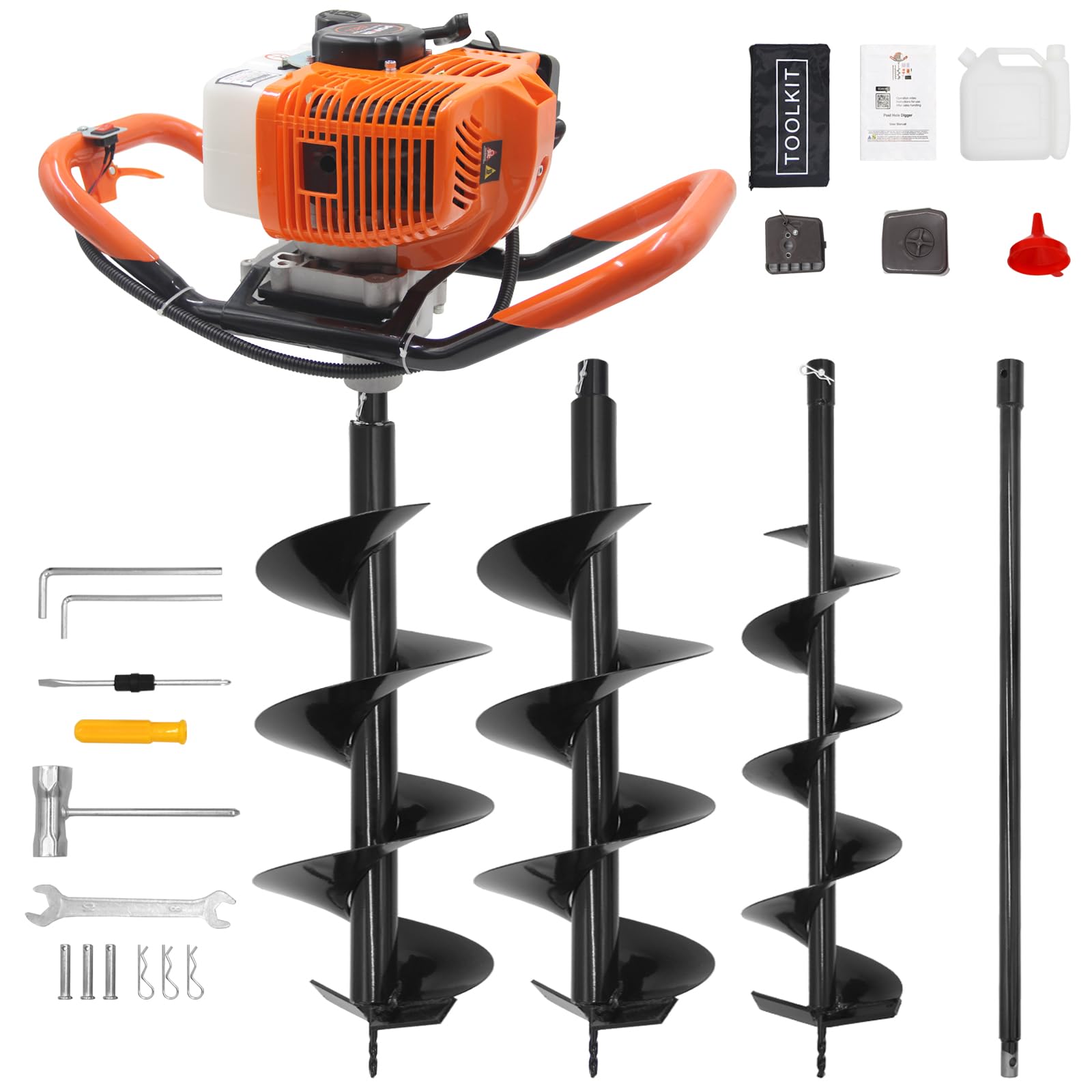
The Prowoo 62cc delivers meaningful power at a mid-range price, and the user reports from heavy clay environments — specifically North Carolina red clay — are glowing. Multiple users confirm the engine has no trouble drilling through tough ground, with one user sinking 40 shrubs and a full fence line without issues. The 62cc displacement provides a noticeable step up from 43cc units without the weight penalty of the 85cc monsters.
The kit includes both 6-inch and 8-inch double-sheet drill bits plus a 60cm extension rod, which covers most residential and light commercial needs. The engine fires on the second pull according to most reviews, and the ergonomic grips with finger throttle give good control. Wetting dry ground before digging is a recommended technique that significantly improves performance in hard clay.
The downsides are the plastic trigger mechanism, which feels delicate and requires careful handling, and the bits themselves are not the strongest — one user bent the largest bit on a rock and had to straighten it with a torch and hammer. Some units arrived with loose fasteners from shipping. Overall, this is a strong performer for the money, but treat the controls and bits with care to avoid early failure.
Why it’s great
- 62cc engine provides strong torque for clay
- Two bits and extension included for varied depths
- Reliable starting, typically fires on second pull
Good to know
- Plastic trigger mechanism feels fragile
- Bits can bend on rocks and require re-shaping
- Shipping may leave fasteners loose
6. 72CC Auger Post Hole Digger 2 Stroke Gas Powered
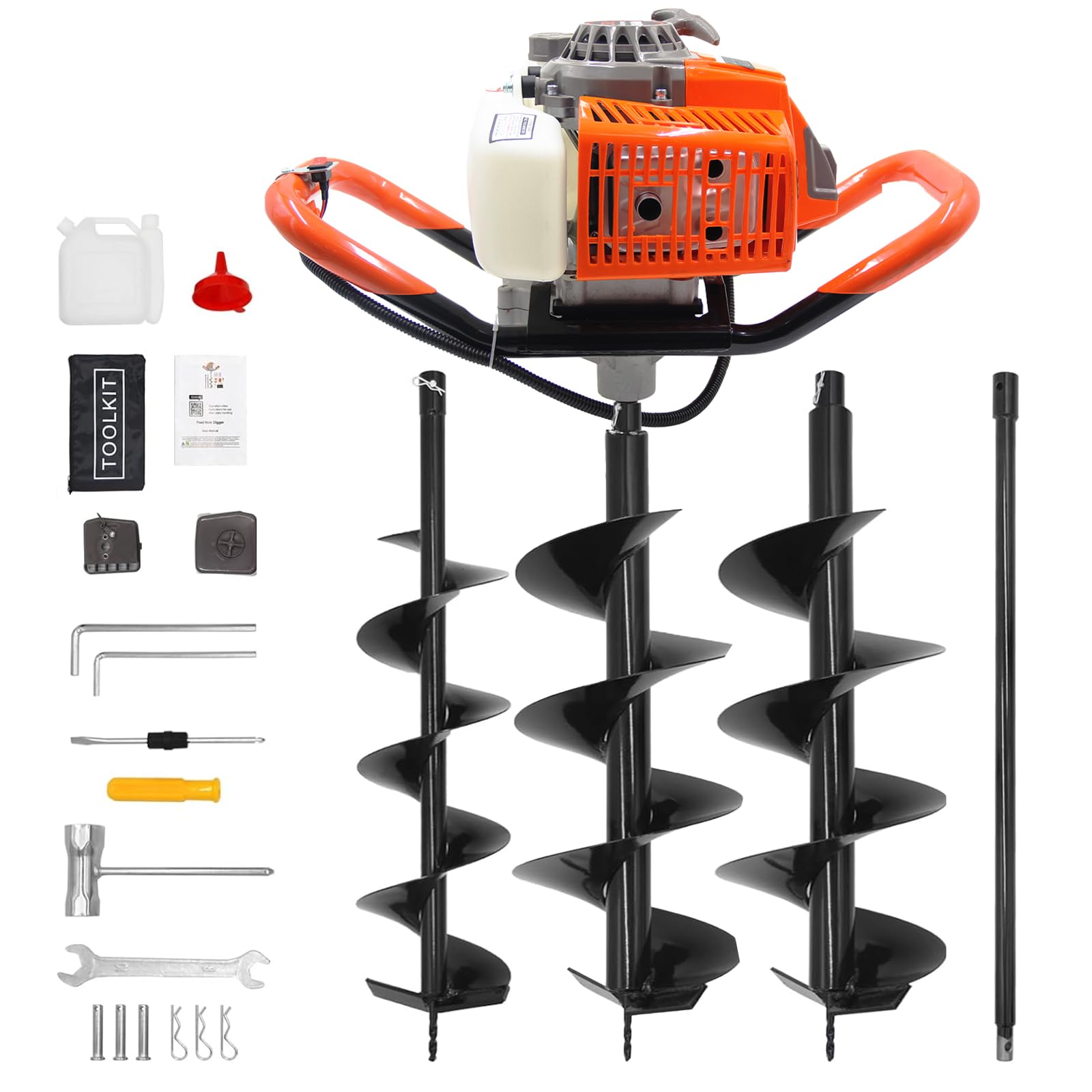
This 72cc unit is a close cousin to the Prowoo 62cc but with a displacement bump that translates to even more authority in clay. A 14-year lineman reported digging 4-foot deep, 12-inch holes for fence posts with no issues, which speaks directly to the engine’s ability to maintain cutting speed under heavy load. The machine starts easily — third pull cold, first pull warm — and the included 6-inch and 8-inch bits plus extension cover a wide range of tasks.
Users who put significant hours on this unit — over 100 holes — note that it digs fast and the power delivery is consistent. The ergonomic handles and finger throttle provide adequate control, and the unit is light enough for one-person operation. The value proposition is strong: 72cc of displacement at this price point is hard to beat when you are facing deep clay.
The durability concerns are real and consistent across multiple reviews. The bottom tines on the bit can bend in heavy soil — one user solved this by cutting off the bent tine and continuing without issue. The throttle cable is prone to sticking, requiring spray lubricant before each use. The engine is a generic Chinese two-stroke that performs well initially but may not have the longevity of a brand-name powerhead like the Earthquake.
Why it’s great
- 72cc displacement delivers serious clay-cutting power
- Easy starting process out of the box
- Excellent value for the engine size
Good to know
- Bit tines bend relatively easily in tough soil
- Throttle cable requires lubrication to prevent sticking
- Long-term durability is unproven
7. GardenTrax Earth Auger Combo 43cc 2-Cycle Powerhead
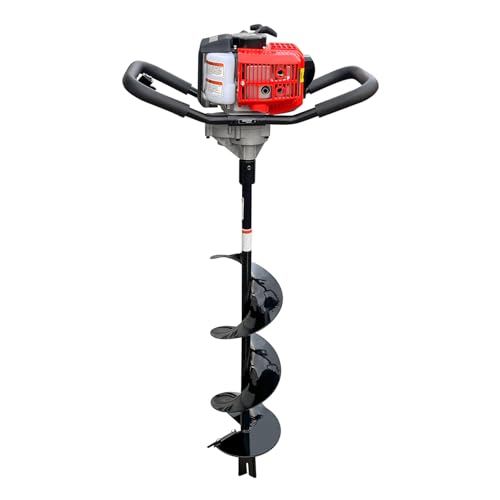
The GardenTrax 43cc is a solid entry-level gas auger that offers a lightweight frame and reliable starting at a budget-friendly price. Users who have put years of use into this machine — one reported sinking 300 fence posts — confirm that it powers through dense red clay effectively when treated with proper maintenance. The full-wrap foam grips with shock absorption genuinely reduce hand fatigue compared to cheaper units.
The 8-inch bit is well-constructed with heavy-duty blades and a replaceable fishtail point that helps the auger self-feed into hard ground. The unit starts in 2-3 pulls cold and fires right up when warm. It is light enough for one person to manage, though the torque can kick the handles if the bit catches a rock. The 50:1 fuel mix is standard and easy to maintain.
The 43cc engine is adequate for clay but not overwhelming. Users with very heavy, rocky clay may find the machine bogging down on deep holes or when using the full 8-inch diameter. The exhaust blows toward the operator, which is unpleasant when digging in a bent-over position. Some users reported that the Allen key bit mount becomes difficult to clean after use in sticky clay, making bit changes cumbersome.
Why it’s great
- Proven long-term reliability in clay for hundreds of holes
- Foam grips reduce vibration fatigue
- Replaceable fishtail point extends bit life
Good to know
- 43cc engine can struggle in very dense clay
- Exhaust blows towards the operator
- Bit mount hard to clean after clay use
8. Seymour AUA2 Adjustable Auger with Wood Handle

The Seymour AUA2 is the tool to reach for when you only need a handful of holes and want to avoid the noise, fuel mixing, and maintenance of a gas engine. This manual auger has been a staple for decades, and its performance in heavy clay is surprisingly strong for a human-powered tool. The adjustable blades open from 4 to 8 inches, and users consistently report pulling clean 6-inch by 8-inch cylinders of clay with each plunge.
The construction is straightforward and durable: steel blades riveted to a malleable iron yoke with a steel shaft and welded tee handle. It is heavy — over 7 pounds — but that weight helps drive the bit into the ground. Unlike a pivoting post hole digger that creates a cone-shaped hole, this auger bores a constant-diameter hole, which is easier for setting posts. Users recommend starting with a trowel or clamshell digger for the first few inches to guide the auger.
The limitations are real. Loose or sandy soil falls back into the hole when you lift the auger, requiring you to wet the ground first. Rocks over 3 inches stop the auger cold, and you will need a digging bar to remove them. Each 4-foot hole takes about 15 minutes in clay, which is fine for a fence line but exhausting for larger projects. The adjustment bolt tends to loosen during use, so replacing it with a nylon-lock bolt is a common user modification.
Why it’s great
- Adjustable width from 4 to 8 inches
- Bores straight, constant-diameter holes in clay
- No fuel, no noise, no engine maintenance
Good to know
- Manual operation is slow for large projects
- Struggles with rocks and tree roots
- Adjustment bolt can loosen during work
9. MightyPhine Earth Auger 6″ Wide x 32″ Deep Electric Post Hole Digger

The MightyPhine drill-powered auger is the most affordable option for occasional, light-duty digging, but it comes with a major caveat for clay soil. The auger itself is decently built from quality metal, and the ergonomic handle attaches to most standard drills with an adjustable strap. In sandy soil, it works beautifully — users with DeWalt 20V drills report digging 32-inch holes quickly.
However, multiple user reviews specifically mention this unit failing in clay soil. One user with a heavy-duty DeWalt hammer drill could not penetrate deeper than 4 to 5 inches in clay, even after trying dry, damp, and wet conditions. The auger simply cannot overcome the shear strength of compacted clay before the drill overheats or the battery drains. If your soil is primarily clay, this is not the tool for the job unless you are digging very shallow holes for small plants.
The auger is well-made for what it is, with a high-speed steel bit and a design that bridges the gap between handheld augers and full gas units. The universal handle works with most major drill brands. But the physics are against it: a cordless drill lacks the sustained torque to drive a 6-inch auger through dense clay. If your soil is loamy or sandy, this is a bargain. If it is clay, save your money for a gas unit.
Why it’s great
- Works very well in sandy and loamy soil
- Quality metal construction with ergonomic handle
- Compatible with most major drill brands
Good to know
- Struggles significantly in clay soil
- Requires a very powerful drill to be effective
- Can overheat the drill motor in dense ground
FAQ
What engine size do I need to dig in heavy clay soil?
Can I use an electric drill-powered auger in clay soil?
Is a manual auger practical for clay soil?
What maintenance does a gas auger need for clay soil?
Should I wet clay soil before using an auger?
Final Thoughts: The Verdict
For most users, the auger for clay soil winner is the Earthquake E43 because it delivers the best balance of reliable power, build quality, and ergonomic comfort for one-person operation. If you need maximum displacement to handle the toughest clay and want the flexibility of multiple bit sizes, grab the PRIJESSE 85cc. And for a handful of shallow holes where you want to avoid engine maintenance, nothing beats the Seymour AUA2 manual auger for simplicity and effectiveness in clay.