
Our readers keep the lights on and the weekend projects moving. As an Amazon Associate, I earn from qualifying purchases.
Augmented reality glasses have moved past the prototype phase. The current generation delivers bright Micro-OLED displays, built-in spatial audio, and head-tracking that pins a massive virtual screen in your field of view — no bulky headset required. Whether you want a private theater on a flight or a secondary monitor for your laptop, the hard part is choosing between raw brightness, field of view, and ecosystem features.
I’m Rikta — the co-founder and writer behind FitlyFast. I’ve spent hundreds of hours analyzing the technical specifications, customer longevity data, and real-world use patterns of the latest wearable displays to separate marketing specs from daily usability.
After reviewing the top contenders, the results are clear for anyone searching for the best augmented reality glasses that balance crisp visuals, comfortable wear, and plug-and-play compatibility.
How To Choose The Best Augmented Reality Glasses
Most AR glasses today are actually personal display glasses. True augmented reality overlays digital objects onto the real world with pass-through cameras, but the top-selling models here are virtual display devices that create a massive floating screen. Knowing which type fits your use case is the first filter.
Brightness and Display Technology
Measured in nits, this determines whether the image looks washed out in a bright room or on a sunny plane. Look for 600 nits or higher at the panel. Micro-OLED panels with 98% DCI-P3 color coverage and 200,000:1 contrast deliver the richest blacks and most vibrant HDR content.
Field of View and Resolution
FOV (measured in degrees) directly controls how large the virtual screen appears at distance. A 46° to 50° FOV translates to a 180- to 215-inch virtual display at 6 meters. Wider FOV is better for immersion, but text clarity at the edges can vary. Per-eye resolution should be at least 1080p to avoid visible pixels.
3DoF vs Fixed Display
Fixed display glasses mirror whatever is on your phone or laptop — the screen moves with your head. 3DoF (three degrees of freedom) tracks head rotation, letting you pin a virtual screen in space so it stays stationary as you look around. Models with a dedicated spatial chip (like the X1 chip) run 3DoF natively without external sensors.
Audio and Fit
Open-ear speakers in the temples provide spatial awareness but leak sound at higher volumes. Models with audio tuned by Bose or Bang & Olufsen offer noticeably better clarity. Weight matters: sub-80g glasses are comfortable for 2-3 hour sessions, while heavier units can cause nose pressure and fatigue quickly.
Quick Comparison
On smaller screens, swipe sideways to see the full table.
| Model | Category | Best For | Key Spec | Amazon |
|---|---|---|---|---|
| RayNeo Air 3s Pro | Mid-Range | Brightest display for daylight | 1200 nits / 120Hz / 46° FOV | Amazon |
| RayNeo Air 4 Pro | Mid-Range | HDR10 movies and gaming | HDR10 / B&O Audio / 46° FOV | Amazon |
| Rokid Max 2 Black | Mid-Range | Wide FOV with myopia dials | 215″ virtual / 50° FOV / 600 nits | Amazon |
| Rokid Max 2 Silver | Mid-Range | Same specs, silver frame | 215″ virtual / 50° FOV / 600 nits | Amazon |
| TOZO VIZO V1 | Mid-Range | Budget entry with myopia dials | 800 nits eye-level / 118″ virtual | Amazon |
| TOZO VIZO Z1 Pro | Mid-Range | Ultra-light 63g portable screen | 47.5° FOV / 120Hz / 160″ virtual | Amazon |
| XREAL 1S | Premium | Best 3DoF native spatial display | 500″ virtual / 52° FOV / X1 Chip | Amazon |
| VITURE Luma | Premium | Best value with electrochromic film | 1200p / 50° FOV / 1000 nits | Amazon |
| XREAL One | Premium | Native 3DoF with Bose audio | 147″ virtual / 50° FOV / X1 Chip | Amazon |
In‑Depth Reviews
1. RayNeo Air 3s Pro AR/XR Glasses
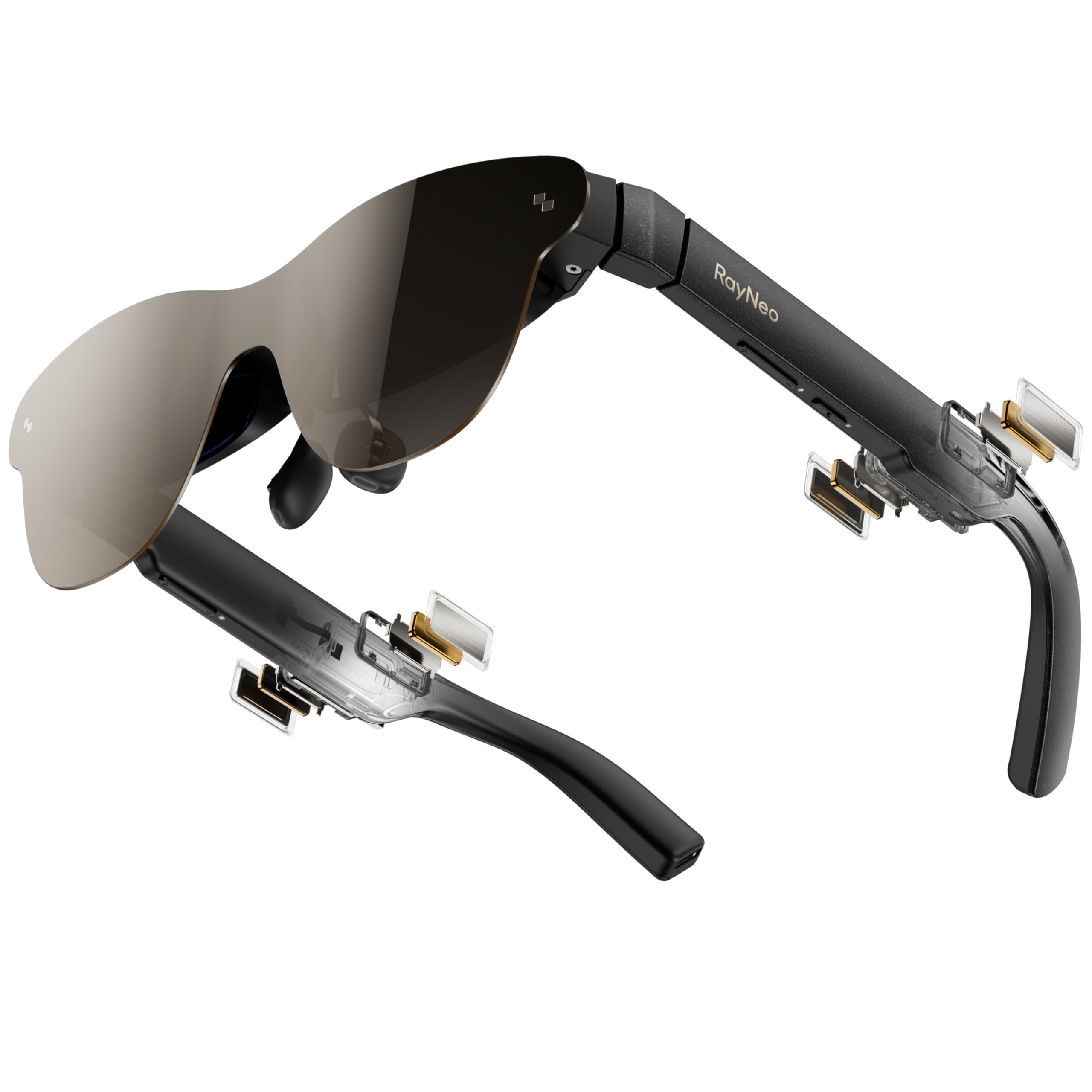
RayNeo Air 3s Pro sets the standard for mid-range AR display glasses with the highest to-eye brightness in the category at 1,200 nits. The 5.5th-gen tandem Micro-OLED panel combined with HueView 2.0 delivers a 200,000:1 contrast ratio and 98% DCI-P3 coverage — visible details in shadows that other glasses lose entirely. The 201-inch virtual display at 6 meters is paired with a 120Hz refresh rate that keeps motion smooth during fast-paced gaming and action movies.
Eye comfort is a standout: TÜV SÜD dual certification for low blue light and flicker-free operation, plus 3,840Hz high-frequency PWM dimming reduces eye strain significantly during marathon sessions. Users consistently report the ability to watch content for 2-3 hours without headaches, a feat most budget AR glasses cannot match. The built-in spatial audio and silicone band material keep the 76g frame comfortable.
The main trade-off is fit sensitivity — multiple customers noted that the glasses require temple adjustment and alternative nose pieces to see the full screen without cutoff corners. The prescription lens setup requires a separate visit to an optician, which adds friction for users who need vision correction beyond simple myopia. Overall, the combination of peak brightness, color accuracy, and low eye fatigue makes this the safest mid-range recommendation.
Why it’s great
- World’s brightest AR display at 1,200 nits for daylight use
- Exceptional color accuracy with 200,000:1 contrast ratio
- TÜV dual certification for extended low-strain viewing
Good to know
- Screen cutoff issues without precise nose pad and temple adjustment
- Prescription lens setup requires external optician visit
- Stiff power cable can pull glasses downward during use
2. RayNeo Air 4 Pro AR/XR Glasses
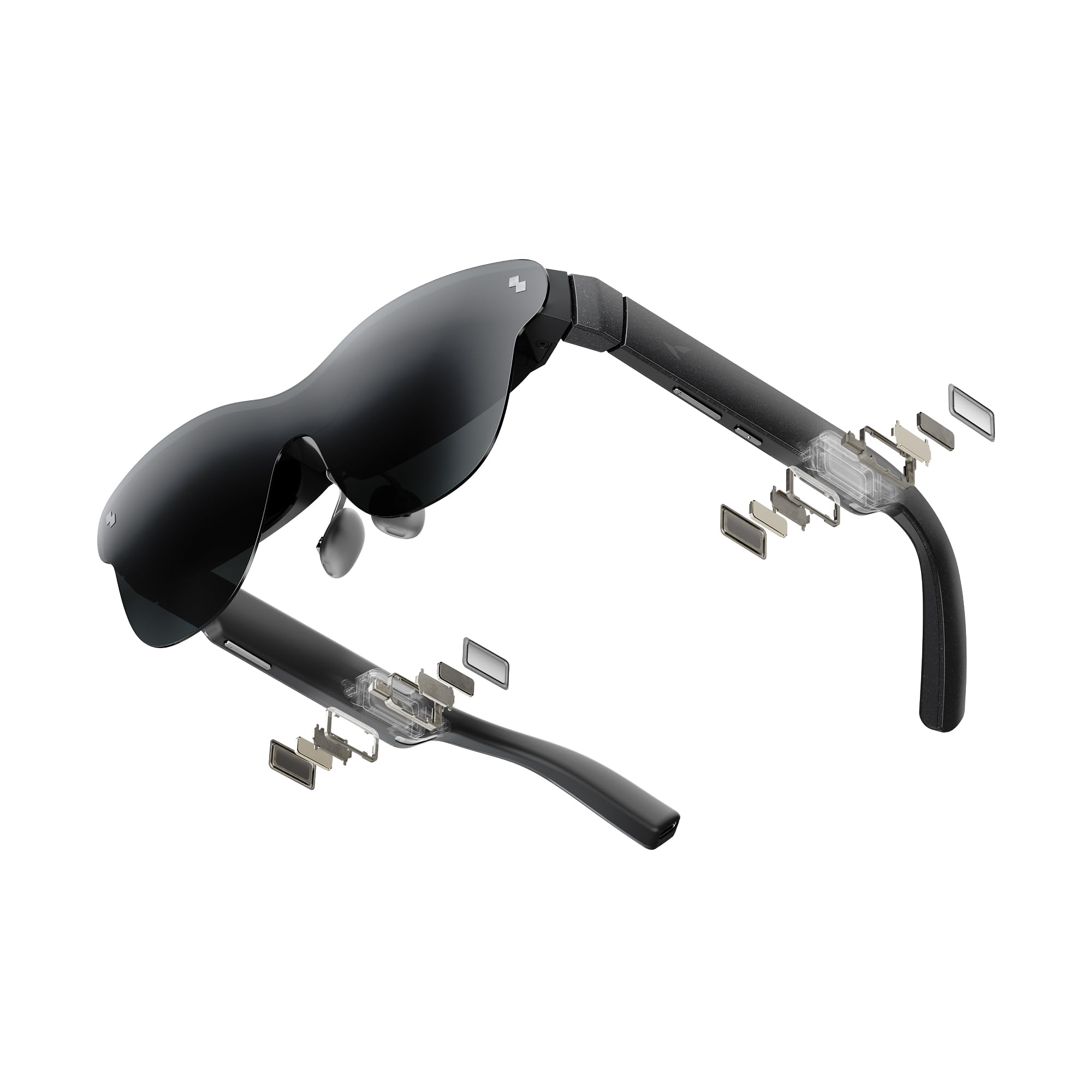
RayNeo Air 4 Pro brings HDR10 to the AR glasses category, a first for wearable displays. The Vision 4000 chip, co-developed with Pixelworks, performs real-time AI SDR-to-HDR upscaling, which noticeably improves color depth and contrast on standard streaming content. The 46° FOV produces a 201-inch virtual screen, and the 2160×2160 per-eye resolution ensures sharp text even at the edges of the display.
The audio system is a genuine upgrade: four precision speakers tuned by Bang & Olufsen deliver 360° spatial sound with significantly better bass response and vocal clarity than typical open-ear designs. The optional Sound Tube accessory directs audio toward the ears for louder, more private listening without disturbing others. At just 2.72 ounces, this is one of the lightest HDR-capable display glasses on the market.
Fit remains the category’s Achilles heel — users with larger head sizes report only 90% screen visibility and uncomfortable nose pads. The 3DoF implementation shows some drift over time, and the sound tubes may not reach ear level for all face shapes. Despite these ergonomic limitations, the HDR video quality and audio tuning make this the best choice for movie enthusiasts who want theatrical color volume.
Why it’s great
- First AR glasses with genuine HDR10 display support
- Bang & Olufsen spatial audio with excellent vocal clarity
- AI upscaling chip improves color depth on standard content
Good to know
- Fit issues for large head sizes limit full screen visibility
- 3DoF anchor mode can drift during extended use
- Compatibility requires adapters for many devices
3. Rokid Max 2 Black AR Glasses
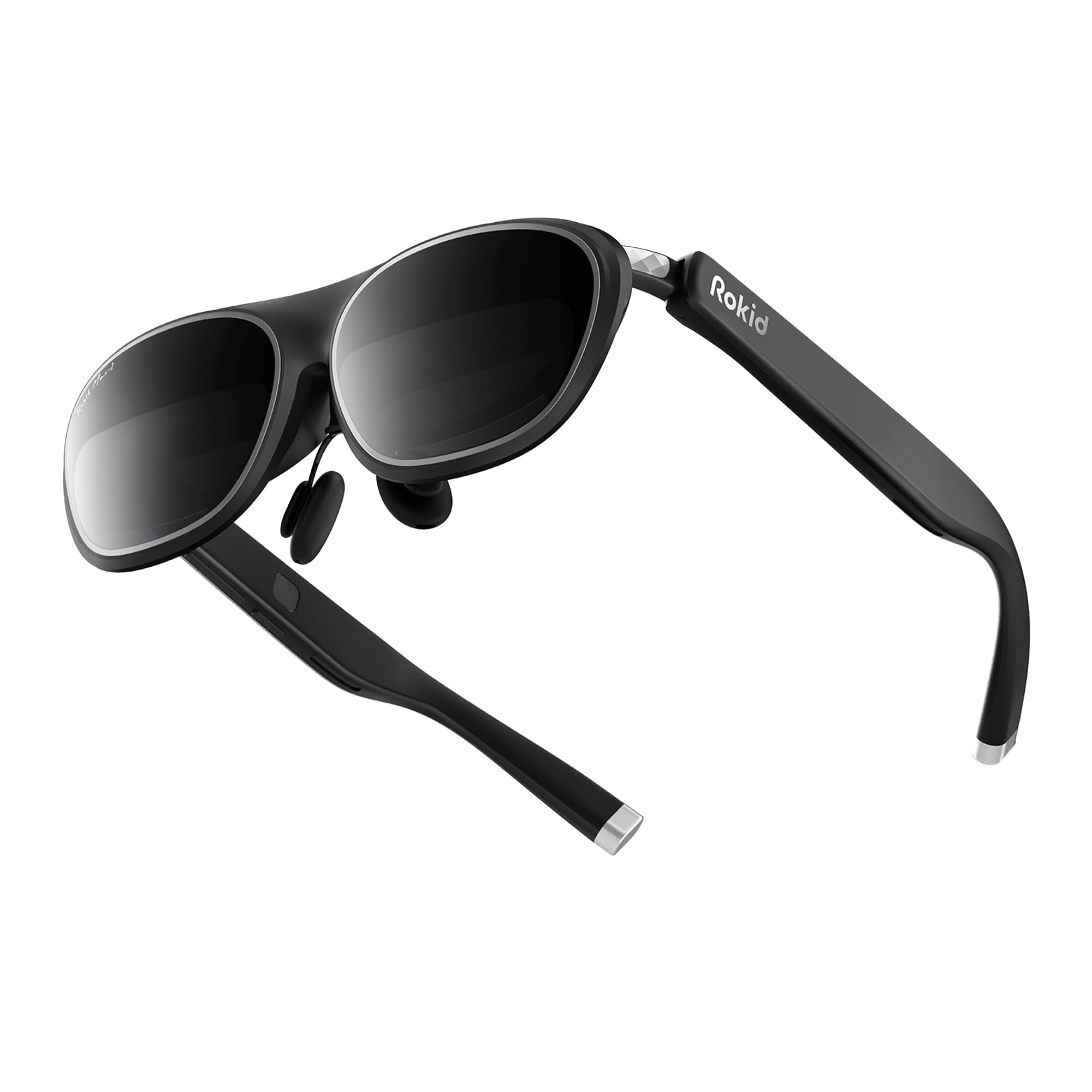
Rokid Max 2 delivers the widest field of view in the mid-range segment at 50°, producing a 215-inch virtual display that feels noticeably more immersive than the 46° competitors. The Micro-OLED panel runs at 120Hz with adjustable 600 nits brightness, and the built-in myopia adjustment dial supports up to 600 degrees of correction — no prescription inserts needed for most nearsighted users. The airy cushioning nose pad design prevents slipping and reduces fatigue during long sessions.
The 75g frame includes a full-rim design that blocks side light bleed better than open-frame models. HDCP support ensures seamless streaming from protected content sources like Netflix and Apple TV+. The glasses are powered directly via USB-C from the connected device, eliminating battery anxiety and keeping the weight low. Users report that the image quality is clear and vibrant, with good contrast for both movies and gaming.
The primary limitation is that the myopia adjustment dial supports only simple myopia — astigmatism and presbyopia require separate prescription lenses. Some users note that the nose pads need to be swapped to find the optimal screen position, and the 600 nits brightness is lower than the RayNeo’s 1,200 nits, making bright-room use less impressive. For buyers who prioritize FOV and built-in vision correction, this is the strongest value option.
Why it’s great
- 50° FOV delivers the most immersive mid-range virtual screen
- Built-in myopia dials up to 600° without inserts
- Airy cushion nose pads reduce slip and pressure
Good to know
- 600 nits brightness is dimmer than category leaders
- Astigmatism and presbyopia correction requires separate lenses
- Blackout lenses reflect internally in bright rooms
4. Rokid Max 2 Silver AR Glasses
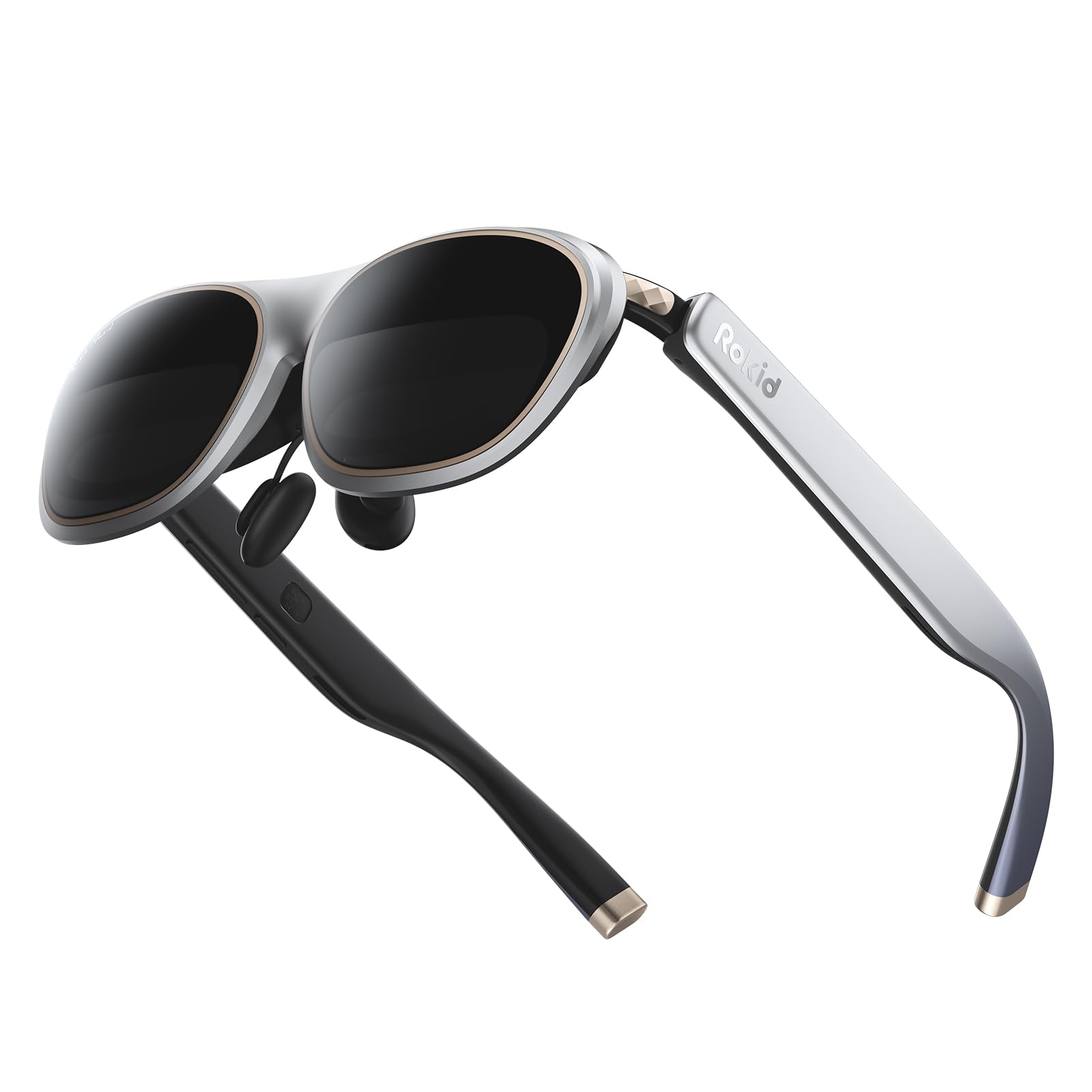
This is the same Rokid Max 2 hardware in a silver frame finish. The 215-inch virtual display, 50° FOV, 120Hz refresh rate, and 600 nits brightness are identical to the black variant. The myopia adjustment dial supports up to 600 degrees, and the airy cushioning nose pad prevents slipping. If the silver aesthetic matches your personal style better, the performance is identical.
The plastic/aluminum frame construction gives a more premium feel than fully plastic competitors. The glasses are powered directly via USB-C from any compatible smartphone, iPad since 2020, Windows laptop, or Mac — no internal battery required. Users report that the visual quality is sharp and that the glasses are comfortable for extended wear, with the wide nose pad distributing weight evenly.
As with the black version, the myopia dial does not correct astigmatism or presbyopia, which requires separate prescription lenses. Some users find that the blackout lenses can create internal reflections in bright environments. Between the two color options, choose based on your aesthetic preference — the technical performance is identical.
Why it’s great
- Same wide FOV and myopia adjustment as the black model
- Premium plastic/aluminum frame construction
- No internal battery eliminates charging anxiety
Good to know
- Same brightness limitation at 600 nits
- Astigmatism correction not supported by built-in dials
- Blackout lenses may cause internal reflections
5. TOZO VIZO V1 AR Glasses
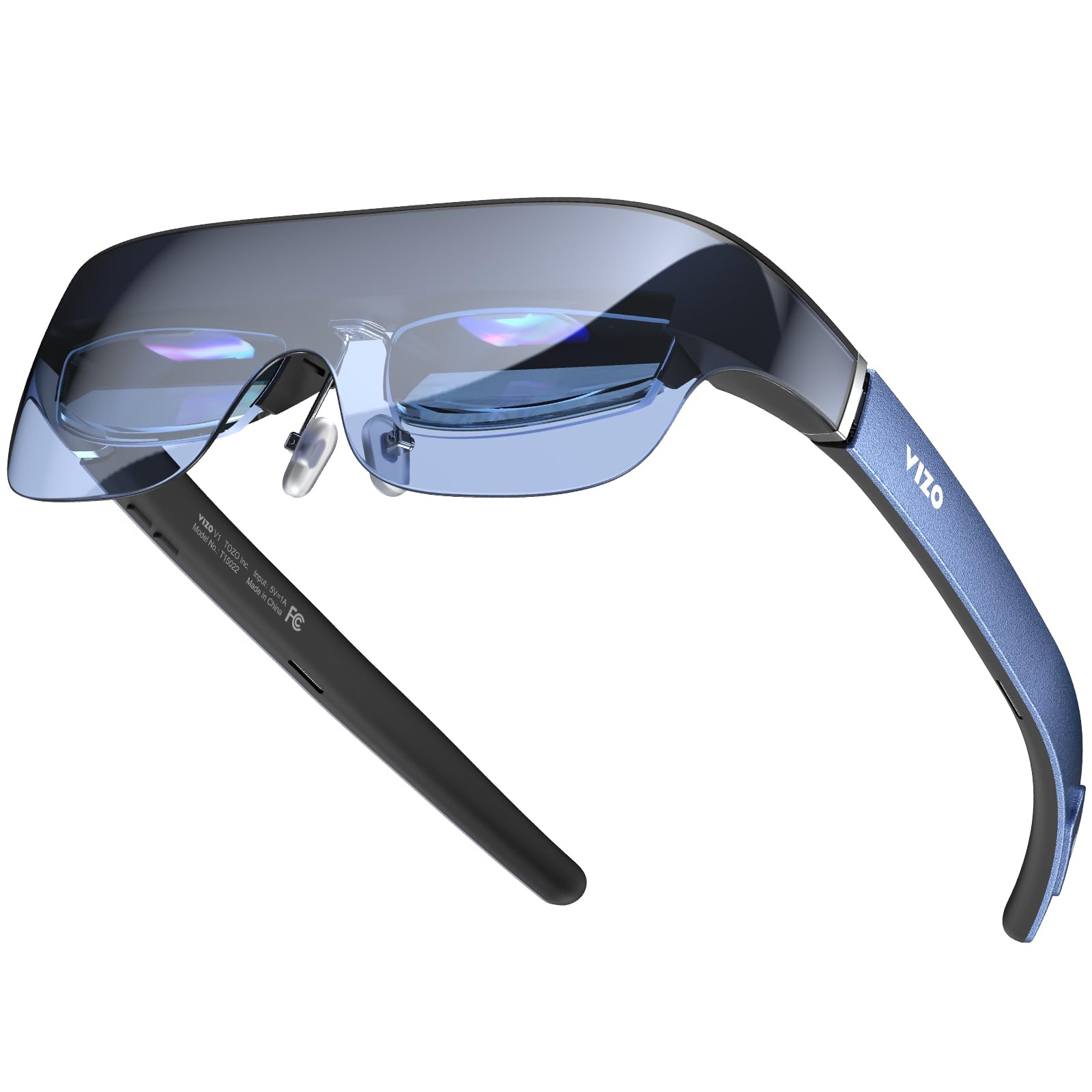
TOZO VIZO V1 brings practical AR display features to a budget-friendly price point. The 1,800-nit panel (800 nits at eye level) provides good visibility in most indoor environments, and the 118-inch virtual screen is sufficient for movies and light productivity. The built-in diopter adjustment from 0 to 500 degrees means no prescription inserts for most nearsighted users. The 2D/3D mode switching adds versatility for content consumption.
The integrated stereo speakers deliver balanced audio with clear dialogue, though audiophiles will notice the lack of deep bass. The lightweight frame keeps the glasses comfortable for sessions up to two hours, and the USB-C plug-and-play connectivity works with iPhone, Mac, and PC. Users highlight the sharp screen clarity and the convenience of the myopia dials as standout features at this price.
The main compromises are the smaller 118-inch virtual screen (compared to 200+ inch competitors) and the absence of true AR spatial tracking — this is a display mirror, not a 3DoF device. Some users report edge blurriness depending on face shape and nose pressure after 90 minutes. For entry-level buyers who want a taste of wearable displays without the premium investment, this is a solid starting point.
Why it’s great
- Affordable entry point with myopia correction built in
- 800 nits at eye level provides decent indoor brightness
- 2D/3D mode switching adds content flexibility
Good to know
- 118-inch screen is smaller than category average
- No 3DoF spatial tracking — fixed screen only
- Edge blurriness and nose pressure after extended wear
6. TOZO VIZO Z1 Pro AR Glasses
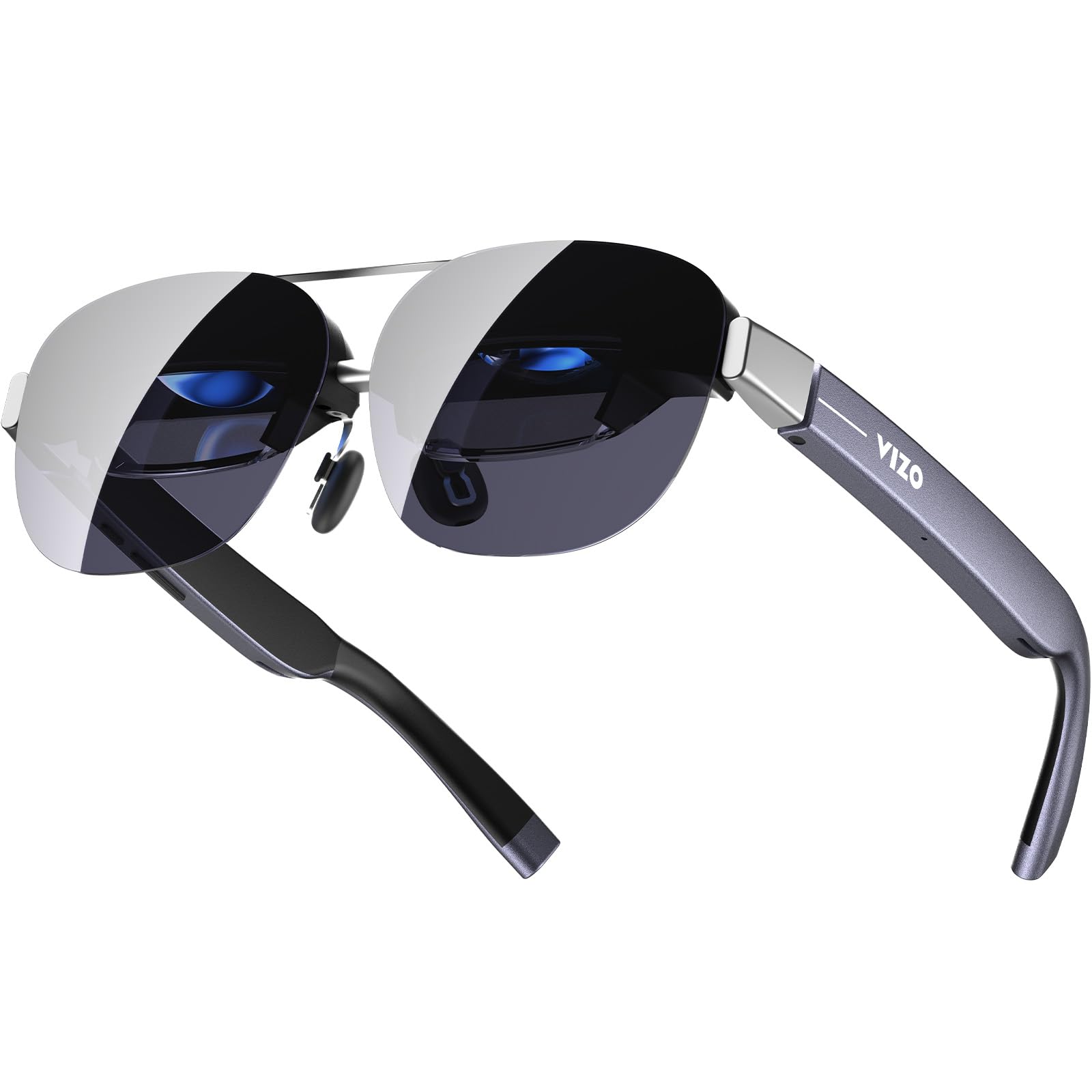
TOZO VIZO Z1 Pro prioritizes portability with the lightest frame in this lineup at just 63 grams. The Micro-OLED display with Full HD per-eye resolution, 98% DCI-P3 color, and 200,000:1 contrast delivers vibrant visuals on a 160-inch virtual screen. The 47.5° FOV sits between the mid-range and premium tier, and the 120Hz refresh rate ensures smooth motion during gaming and fast-paced content.
The detachable frame design allows for easy prescription lens installation, and the foldable sunglasses form factor makes it genuinely packable. Dual stereo speakers with tactile volume controls provide a complete media experience without external headphones. Users consistently praise the bright, sharp screen and the comfort for marathon viewing sessions of up to four hours.
Missing features include DOF adjustment and screen size/distance controls, which some premium models offer. A few users note slight corner blur and the absence of a lens cover for light bleed. The speakers have noticeable audio bleed at higher volumes. For travelers who need the lightest possible AR display that still delivers rich color and 120Hz fluidity, the Z1 Pro is an excellent balance.
Why it’s great
- Ultra-light 63g frame for extended wear without fatigue
- Detachable frame design simplifies prescription lens mounting
- Foldable form factor makes it the most travel-friendly option
Good to know
- No DOF or screen size/distance adjustment controls
- Speakers leak audio at higher volumes
- Slight corner blur reported by some users
7. XREAL 1S AR/XR Glasses
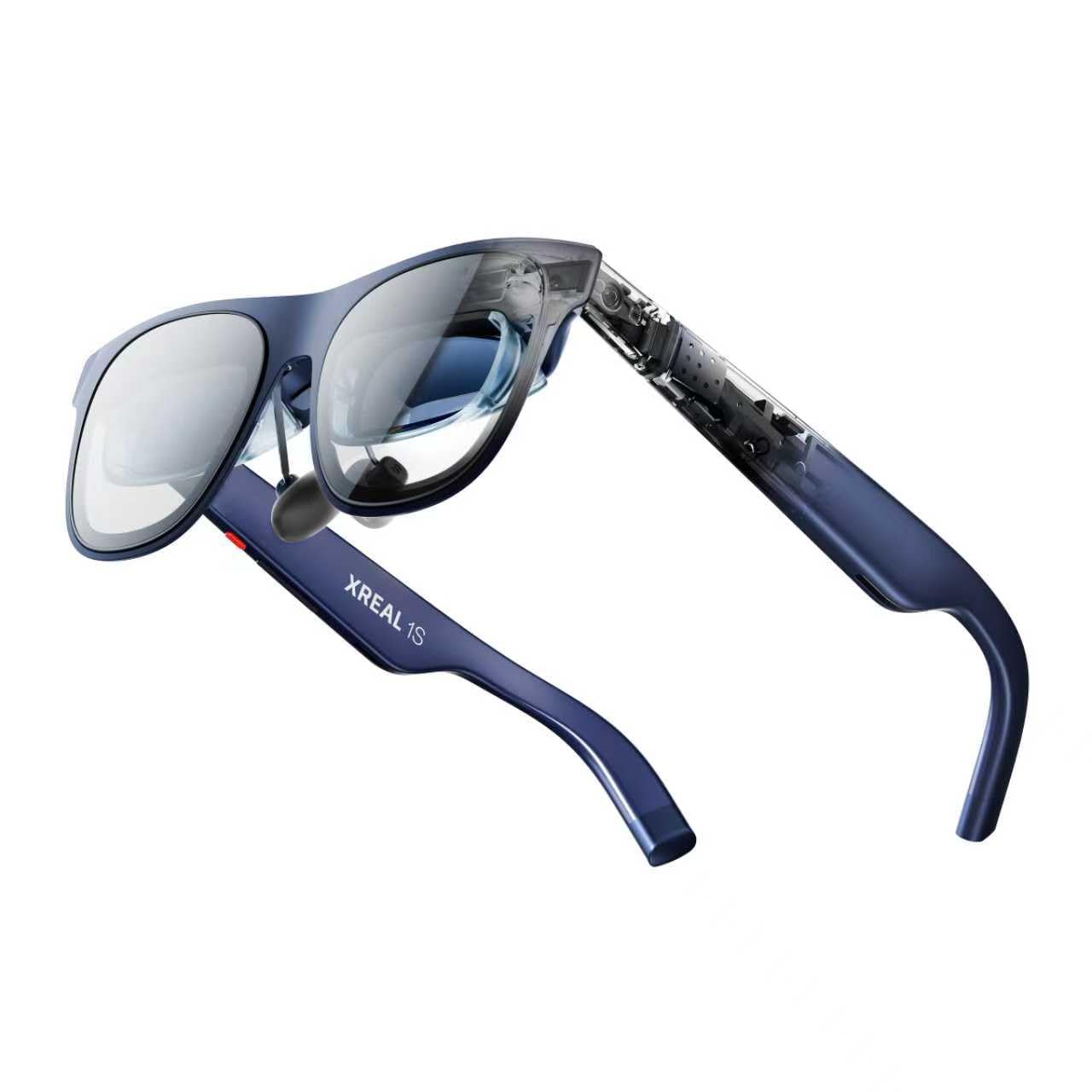
XREAL 1S represents the pinnacle of native spatial computing in wearable displays. The self-developed X1 chip delivers 3ms motion-to-photon latency at 120Hz in 3DoF mode, making head-tracked screen anchoring feel instantaneous and rock-solid. The 52° FOV produces a 500-inch virtual screen, the largest in this lineup, and the individually color-tuned OLED panels with 9% improved clarity from the redesigned optical engine ensure sharp text from center to edge.
The Bose-tuned audio system with custom AR-grade drivers and dedicated acoustic chamber delivers the best open-ear soundstage in the category — spacious with deep lows and crystal-clear vocal clarity. REAL 3D mode transforms any 2D content into spatial depth with a single switch, supported at up to 30fps with 90-100ms latency. The TÜV Rheinland certification covers low blue light, flicker-free viewing, UV protection, and motion-blur-free 3DoF visuals.
The main challenges are the nose pad design, which multiple users describe as uncomfortable, and the lack of a proper out-of-box experience — users must search online for optimal configuration. The wayfarer form factor with electrochromic film has only three tint settings, and the clearest setting is still too dark for normal conversation. Anchor mode can experience drift that requires repositioning, and all settings reset on boot with no profile save. For those who need the best native 3DoF experience and can work around the ergonomic quirks, this is the ultimate choice.
Why it’s great
- Best native 3DoF with 3ms M2P latency for rock-solid anchoring
- Largest 500-inch virtual screen with 52° FOV
- Bose audio system delivers exceptional open-ear soundstage
Good to know
- Nose pad design is uncomfortable for many users
- No setup wizard — requires user research for configuration
- Anchor mode drifts and settings reset on each boot
8. VITURE Luma AR/XR Glasses
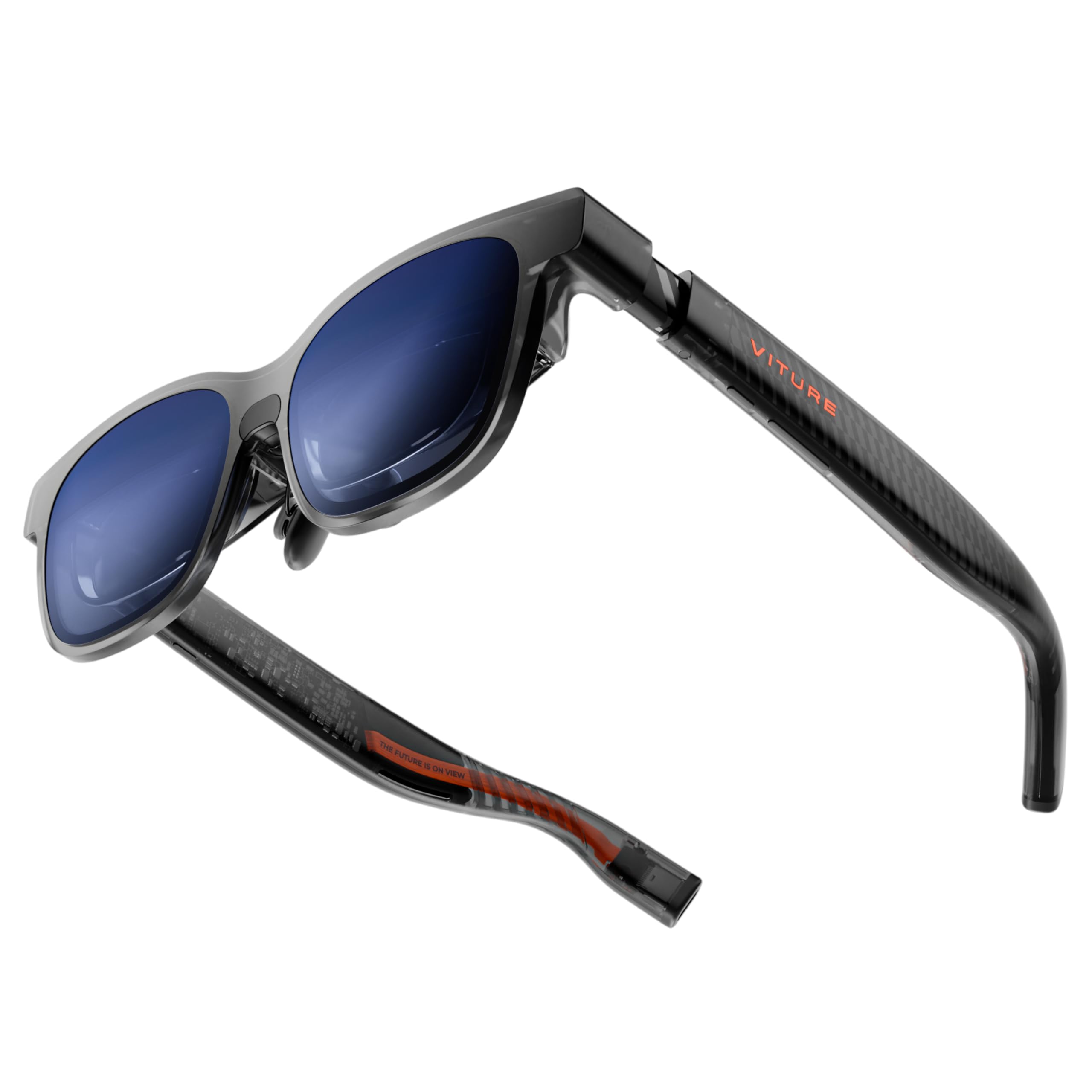
VITURE Luma strikes an exceptional balance between price and feature density. The 1200p resolution per eye on a 146-inch virtual screen with 1000 nits peak brightness and 50° FOV delivers sharp, vibrant visuals that hold up in well-lit rooms. The electrochromic film with a one-tap darkening function provides instant immersion without needing a physical lens cover — a convenience that simplifies the user experience significantly.
Myopia adjustment up to -6.0D is built directly into the glasses, and magnetic prescription lenses are available for higher corrections or astigmatism. The lightweight frame with flexible arms and three swappable nose pads accommodates a wide range of face shapes. The SpaceWalker app enables multi-screen productivity layouts, though the in-glasses 3DoF is handled by the glasses themselves, not the app, keeping navigation responsive.
The 2D-to-3D real-time conversion is a genuine differentiator, transforming streaming video and games into immersive depth with minimal artifacts. Users with larger IPD ranges (56-72mm standard) will find a comfortable fit. Some users note that the nose clip design can cause edge screen cutoff depending on face shape, and the SpaceWalker app lacks some features found in competitor software. For the combination of high brightness, built-in myopia correction, and electrochromic convenience, this is the strongest value proposition in the premium tier.
Why it’s great
- 1200p per-eye resolution with 1000 nits peak brightness
- One-tap electrochromic film for instant immersion
- Real-time 2D-to-3D conversion works well with most content
Good to know
- Nose clip design may cause edge cutoff for some face shapes
- SpaceWalker app lacks some productivity features
- Built-in 3DoF not as robust as XREAL’s X1 chip implementation
9. XREAL One AR Glasses

XREAL One delivers the same X1 spatial chip technology as the 1S model in a more streamlined package. The 147-inch virtual screen at 50° FOV with 120Hz refresh rate is powered by a 0.68-inch Sony Micro-OLED display and a proprietary optics engine. The 3ms motion-to-photon latency in native 3DoF mode ensures screen anchoring that feels physically locked in space, and the improved stabilization algorithms eliminate jitter and flicker during head movement.
Bose-tuned audio with a unique sound chamber design delivers clear, balanced sound with good vocal articulation. The IPD adjustment is handled entirely in software via the X1 chip, ensuring a crisp, blur-free image regardless of the user’s interpupillary distance. The glasses connect via USB-C DP to any compatible device including iPhone 16/15, iPad, Steam Deck, ROG Ally, MacBook, and Windows PCs. Users report comfortable wear for hours with the adjustable nose pads.
The key difference from the 1S is the smaller virtual screen size (147″ vs 500″) and the absence of REAL 3D mode and the full spatial viewing mode suite. Some users noted that the glasses require a Thunderbolt USB-C cable, which is not included, and that the glasses can get warm and leave red marks on the nose after extended use. For buyers who want native 3DoF spatial anchoring at a lower price than the 1S, this is the refined pick.
Why it’s great
- X1 chip delivers native 3DoF with 3ms M2P latency
- Software IPD adjustment ensures clear image for any user
- Bose-tuned audio with excellent vocal clarity
Good to know
- Requires Thunderbolt USB-C cable not included in box
- Glasses can get warm with red marks on nose after use
- No REAL 3D mode or full spatial viewing suite like the 1S
FAQ
Do I need a special phone to use USB-C AR glasses?
Can I use AR glasses for productivity and coding?
Why do some AR glasses have no internal battery?
Is 60Hz or 120Hz important for AR glasses?
Final Thoughts: The Verdict
For most users, the best augmented reality glasses winner is the RayNeo Air 3s Pro because it offers the brightest display on the market at 1,200 nits, excellent color accuracy, and TÜV-certified eye comfort in a 76g package that outperforms every mid-range competitor. If you want native 3DoF spatial anchoring with rock-solid head tracking, grab the XREAL 1S for the best spatial experience. And for the best value with built-in myopia correction and electrochromic convenience, nothing beats the VITURE Luma.