
Our readers keep the lights on and the weekend projects moving. As an Amazon Associate, I earn from qualifying purchases.
A rough idle, hesitating acceleration, or fuel economy that has quietly dropped off your dashboard are signs that carbon deposits are robbing your engine of its designed performance. The right fuel system cleaner reverses that damage by dissolving the gum, varnish, and baked-on carbon that builds up inside injectors, intake valves, and combustion chambers — restoring the precise fuel delivery your engine needs to run efficiently.
I’m Rikta — the co-founder and writer behind FitlyFast. I have spent hundreds of hours cross-referencing chemical formulations, customer reports across high-mileage fleets and performance vehicles, and manufacturer technical data sheets to determine which additives actually deliver measurable cleaning without causing downstream issues to sensors or oil systems.
This guide ranks the top options based on their active chemistry — specifically the concentration of polyether amine (PEA), the only detergent proven to dissolve carbon deep inside GDI engines and conventional port-injection systems alike. Whether you drive a daily commuter or a high-performance turbo, you’ll find the best auto fuel system cleaner tailored to your vehicle’s needs and your maintenance habits.
How To Choose The Best Auto Fuel System Cleaner
Not every bottle on the shelf delivers real cleaning. The difference between a cleaner that works and one that simply passes through the tank comes down to the active detergent chemistry, the concentration level, and whether the formula is designed for your specific engine type. Here’s what matters most.
PEA vs. PIB vs. PIBA — The Chemistry That Matters
Polyether amine (PEA) is the gold standard. It withstands the high heat inside direct-injection combustion chambers and dissolves carbon rather than just suspending varnish. PIB (polyisobutylene) and PIBA (polyisobutylene amine) are cheaper alternatives that may clean injectors but cannot touch the intake valve deposits that plague GDI engines. If you drive a turbo or a modern GDI vehicle, PEA-based cleaners are mandatory — anything else is wasted money.
Concentration: Shock Treatment vs. Maintenance Dosing
A single bottle packed with high PEA concentration can clean a heavily carboned engine in one tank — this is a shock treatment. Lower-concentration formulas are designed to be added at every fill-up or every thousand miles to prevent deposits from forming in the first place. Check the dosage instructions: a cleaner that asks you to use one bottle every 3,000 miles is maintenance-only; a cleaner that treats up to 20 gallons in a single bottle is designed for deeper cleaning.
Engine Compatibility and Sensor Safety
Most modern fuel system cleaners are safe for oxygen sensors and catalytic converters, but not all are tested for turbocharged engines, hybrids, or capless fuel systems. Look for explicit statements that the formula works with GDI, PFI, turbo, and hybrid powertrains. Avoid products that contain metal-based additives (sometimes labeled as “upper cylinder lubricants”) — those can foul spark plugs and oxygen sensors over time.
Quick Comparison
On smaller screens, swipe sideways to see the full table.
| Model | Category | Best For | Key Spec | Amazon |
|---|---|---|---|---|
| Red Line 60103 SI-1 | Premium | Deep PEA cleaning | Highest PEA % per dollar | Amazon |
| Liqui Moly Jectron | Premium | Stubborn deposits | Effective on heavy carbon | Amazon |
| Gumout 510021W-6PK | Mid-Range | Preventative maintenance | Low-temp & high-temp detergents | Amazon |
| Red Line 17006 | Mid-Range | GDI & hybrid engines | 12 oz treats full system | Amazon |
| Molecure CR12 PEA | Mid-Range | Turbo & GDI engines | High-strength PEA formula | Amazon |
| STP Super Concentrated | Budget | Basic injector cleaning | Active ingredients with jet fuel | Amazon |
| Quicksilver Quickleen | Budget | Marine & small engines | 1 oz treats 5 gallons | Amazon |
In‑Depth Reviews
1. Red Line 60103 SI-1 Complete Fuel System Cleaner (2-Pack)
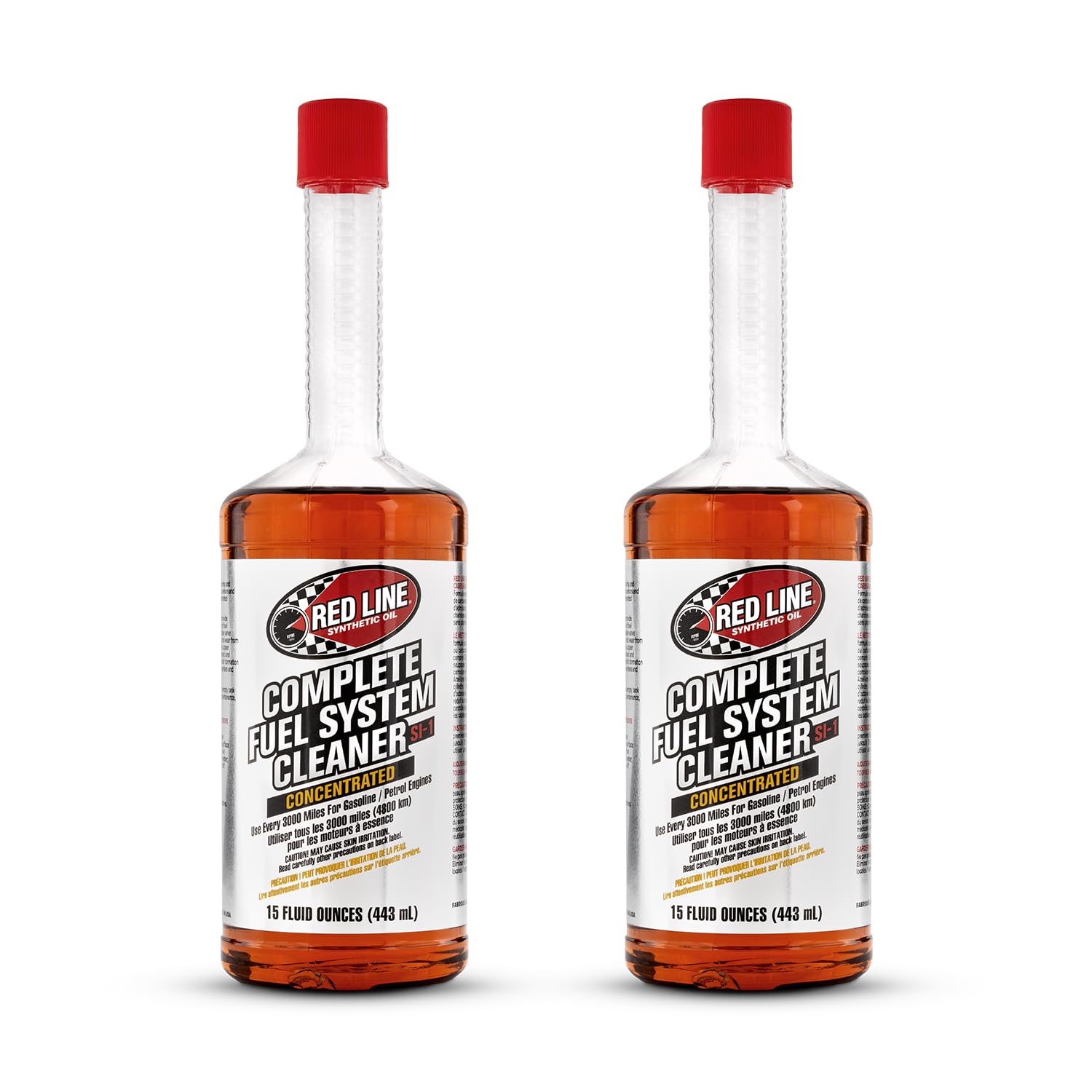
Red Line SI-1 is the benchmark for PEA-based fuel system cleaners. The 2-pack gives you 30 total ounces of concentrated detergent with the highest PEA content per dollar of any additive on the market — lab-tested owners report 30-50% PEA by volume. This concentration allows it to clean everything from fuel injectors and intake valves to combustion chambers in a single treatment, rather than requiring multiple bottles over several tanks.
Owners of high-mileage vehicles — including a Honda S2000 with nearly 100,000 miles — have documented near-spotless intake and throttle body conditions after periodic use, with leak-down tests showing less than 2% variance across all cylinders. The formula uses a dual-action approach with both high-temperature and low-temperature detergents, meaning it works during cold starts and sustained highway driving alike.
The 2-pack treats approximately 20 fill-ups at maintenance dosing (1 ounce per 10-15 gallons) or provides two deep-cleaning shock treatments. Users consistently report measurable improvements in fuel trim accuracy and MPG tracking. The only practical consideration is the bottle size — at 15 ounces per unit, you may need to split doses across multiple tanks if your fuel tank is under 12 gallons.
Why it’s great
- Highest PEA concentration of any major brand — proven to dissolve baked-on carbon
- Cost-effective maintenance dosing at roughly one ounce per tank
- Works on GDI, PFI, turbo, and naturally aspirated engines
- Third-party lab data confirms it cleans intake valves, not just injectors
Good to know
- Deep-cleaning shock treatment requires using the entire 15 oz bottle at once
- Premium price point compared to drugstore brands
2. Liqui Moly Jectron Gasoline Fuel Injection Cleaner (2-Pack)

Liqui Moly Jectron is the go-to choice when other cleaners have failed. Multiple verified buyers report that two bottles from other brands did nothing to resolve rough idle or hesitation, while a single Jectron treatment fixed the issue after 100 miles of driving. This suggests its solvent chemistry is more aggressive — capable of breaking down the hard varnish layers that weaker formulas cannot touch.
The formula is optimized for gasoline direct injection systems, which are prone to carbon buildup on intake valves. It actively lowers fuel consumption by restoring proper spray patterns from clogged injectors, and owners of turbocharged four-cylinder engines report noticeable improvements in lifters and throttle response. The 2-pack provides two full treatments, which is ideal for vehicles that have gone years without any fuel system maintenance.
Note that Jectron is designed as a shock treatment rather than a continuous additive. Use one bottle per full tank of gas, then monitor for improvements over the next 200-300 miles. Some owners of older high-mileage engines with hydraulic lifters report moderate noise reduction, but results vary depending on the extent of existing sludge.
Why it’s great
- Strong solvent action that fixes issues other cleaners cannot resolve
- Reduces fuel consumption and restores smooth idle
- Specifically formulated for GDI and turbo engines
- German-engineered with proven lab testing
Good to know
- Not intended for continuous maintenance use — one bottle per treatment
- Some users report limited effect on lifter noise compared to oil additives
3. Gumout 510021W-6PK Fuel System Cleaner (6-Pack)

The Gumout 6-pack is designed for the owner who wants to run fuel system cleaner every oil change without thinking about reordering. Each bottle is concentrated and safe for oxygen sensors, catalytic converters, and turbocharged or supercharged engines. The formula uses a dual-detergent approach — high-temperature additives for combustion chamber deposits and low-temperature detergents for intake valve and carburetor cleaning.
Real-world feedback from boat owners is particularly strong: the product effectively removes moisture and condensation from fuel systems that sit unused for months, preventing the ethanol-related phase separation that causes hard starts. Car owners report noticeable differences in throttle response and idle smoothness, especially when used on vehicles that have accumulated more than 80,000 miles without prior cleaning.
The multi-pack format means you can stash bottles in your garage, trunk, and boat locker without worrying about running out. Each bottle treats a full tank of gas, and the formula won’t void OEM warranties. The trade-off is that the active ingredient chemistry is not disclosed as PEA, so while it handles varnish and gum effectively, its ability to remove hardened carbon in severe GDI applications may be less than premium PEA-based options.
Why it’s great
- Excellent cost per treatment — six bottles cover six oil changes
- Safe for all engine types including turbo and supercharged
- Moisture-removing properties ideal for boats and seasonal vehicles
- Maintains fuel economy and reduces emissions
Good to know
- Not as aggressive on hardened GDI carbon compared to high-PEA options
- Bottle size is 6 ounces, so larger fuel tanks may need a higher concentration
4. Red Line 17006 Complete Fuel System Cleaner (12 oz)

Red Line 17006 is the more accessible sibling of the SI-1 line, designed for the owner who wants Red Line’s proven detergent chemistry at a lower entry point. The 12-ounce bottle treats a full fuel system — including GDI, MPFI, and hybrid engines — and comes with a limited lifetime warranty if used every 5,000 miles. This warranty is a strong vote of confidence in the product’s ability to prevent long-term deposit buildup.
Customer reports from owners of older, high-mileage vehicles are particularly compelling. A 20-year-old Mazda with rough idle and stalling at stop signs cleared up after a single bottle. Another owner with a Ford 6.8 Triton V10 (a modular engine notoriously sensitive to injector issues) reported that the cleaner saved hours of diagnostic time by eliminating injector-related misfires. The product works rapidly — many users note smoother idle within 15-20 minutes of highway driving.
Unlike some Red Line products that require careful dosing based on tank size, the 17006 is a straightforward pour-and-drive solution. The bottle is labeled for use in all gasoline engines and explicitly covers both direct-injection and port-injection systems. The formula does break down gum and varnish effectively, but it does not disclose the same high PEA concentration as the SI-1 series, so it is better suited for maintenance cleaning than for rescuing a severely carboned engine.
Why it’s great
- Limited lifetime warranty when used every 5,000 miles
- Works rapidly — many owners see improvement in under 30 minutes
- Covers GDI, MPFI, and hybrid engines
- Trusted Red Line detergent chemistry at a competitive price
Good to know
- PEA concentration not disclosed; likely lower than SI-1 series
- Not designed for shock treatment on heavily carboned engines
5. Molecure CR12 Complete Fuel System Cleaner (12 oz)
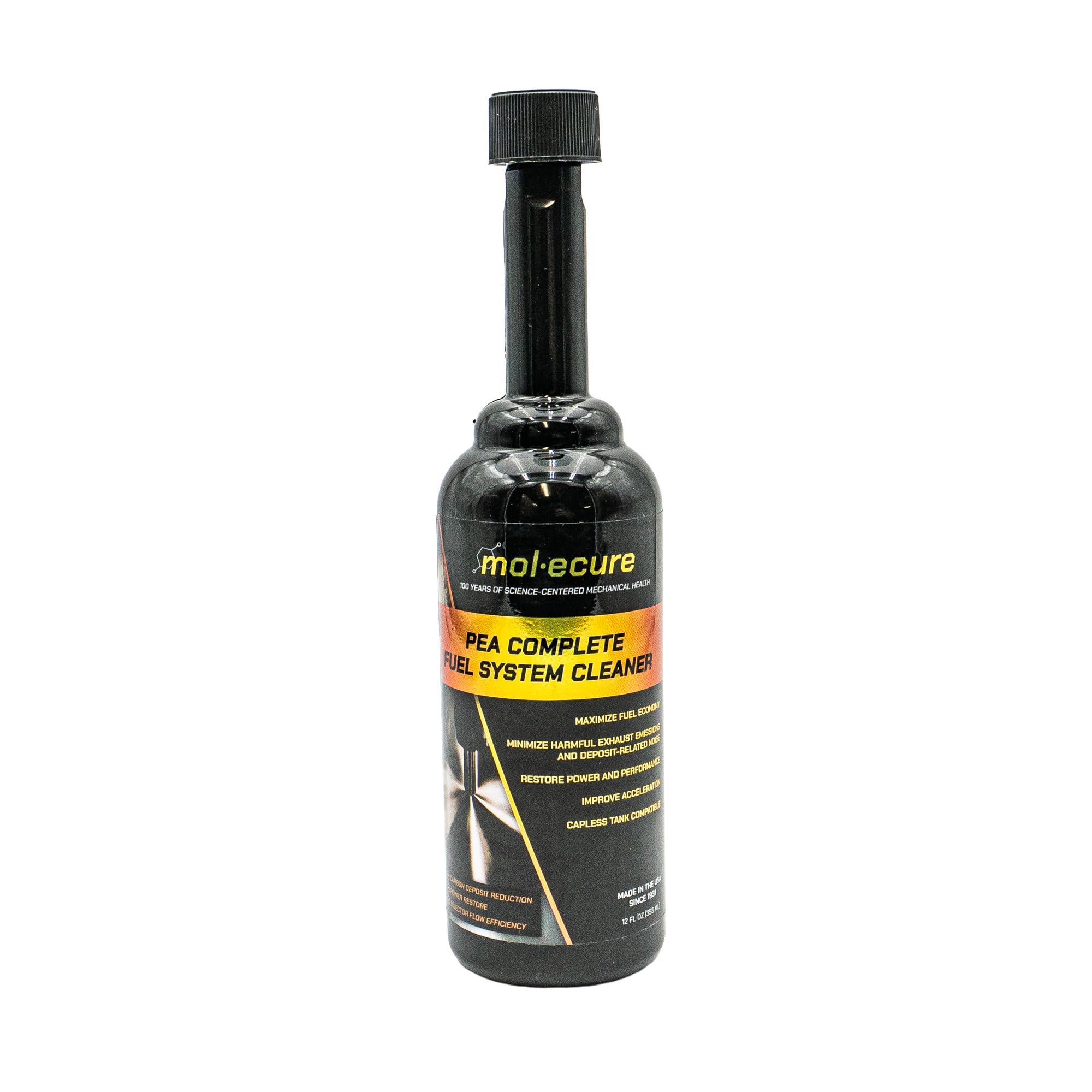
Molecure CR12 enters the market with a clear focus on modern engines: it explicitly calls out PEA as its active chemistry and claims compatibility with GDI, turbocharged, and hybrid powertrains. One 12-ounce bottle treats up to 20 gallons, placing it firmly in the shock-treatment category. The bottle dimensions are tall and narrow — 9 inches high — which means it fits easily into a cupholder and stores cleanly in a trunk organizer.
Early adopter feedback is concentrated on turbocharged platforms. A 2014 Ford Fusion 1.5L EcoBoost with over 100,000 miles showed immediate improvement: rough idle disappeared after a 5-mile drive, and the owner reported steadier gas mileage. A 2016 Toyota Tacoma owner noted the cleaner resolved a general roughness and plans to use it every 1,000 miles — which is more aggressive than the recommended 3,000-mile interval but suggests the user saw additive benefit with each application.
The CR12 formula markets itself as high-strength PEA, though unlike Red Line SI-1 there is no published third-party lab analysis confirming exact percentage. The product is relatively new (September 2025 release), so long-term reliability data is limited. Owners of mixed-use fleets have reported success on both port-injection and direct-injection vehicles, and no adverse effects on oxygen sensors or catalytic converters have been documented in verified reviews.
Why it’s great
- PEA-based chemistry targets GDI intake valve deposits
- Clear turbo and hybrid compatibility listed on bottle
- Single bottle treats up to 20 gallons for deep cleaning
- Owners report immediate improvement in turbo four-cylinders
Good to know
- No independent lab confirmation of PEA concentration
- Newer product with limited long-term review history
6. STP Super Concentrated Fuel Injector Cleaner (12 oz)
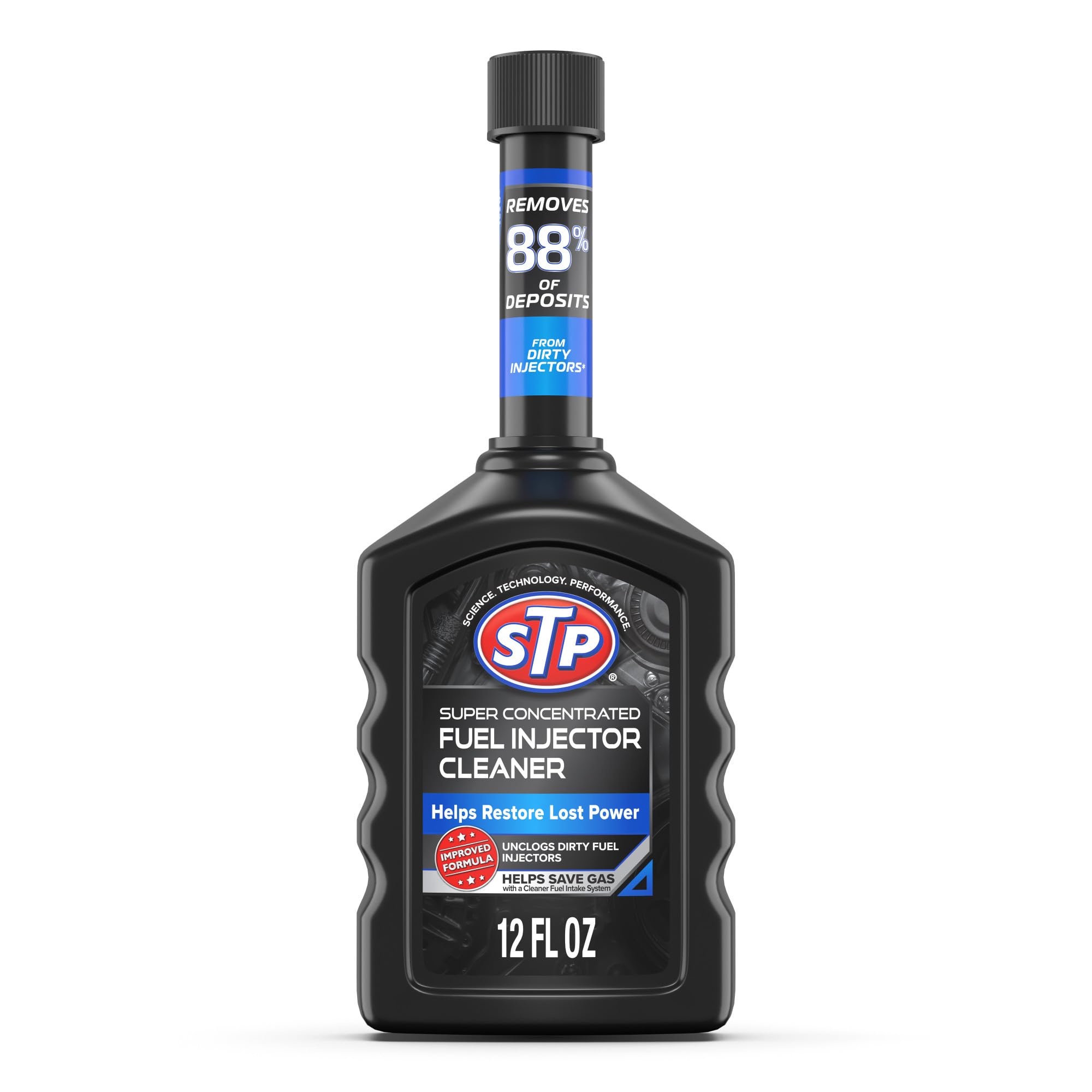
STP Super Concentrated Fuel Injector Cleaner is the entry-level option that has been on store shelves since 2004. Its claim to fame is the use of a “jet fuel” carrier that helps dissolve varnish and gum deposits inside injectors. For a car that has received regular maintenance and simply needs a periodic injector flush, this bottle can restore throttle response and improve fuel economy — several owners with Volkswagen Jetta and other four-cylinder platforms confirmed better acceleration after a single use.
The formula is safe for all gasoline engines and is made in the USA. The 12-ounce bottle is larger than many single-dose competitors, making it suitable for trucks and larger vehicles that have bigger fuel tanks. The active ingredients are not disclosed as PEA, and the product is discontinued from some retailers, but Amazon still stocks it in the Super Concentrated formulation.
The main limitation is that this is an injector cleaner, not a full fuel system cleaner. It does not aggressively clean intake valves or combustion chambers — if your engine is suffering from rough idle or misfire due to carbon buildup in the upper intake, this product likely will not resolve it. It works best as an occasional maintenance additive for vehicles without direct injection.
Why it’s great
- Budget-friendly entry point for basic injector maintenance
- 12 oz bottle treats larger fuel tanks in one dose
- Jet fuel carrier dissolves common gum and varnish deposits
- Made in USA with long brand recognition
Good to know
- Not a PEA-based cleaner — limited effectiveness on GDI carbon
- Discontinued from some retail channels
- Not designed for full fuel system cleaning
7. Quicksilver Quickleen Engine and Fuel System Cleaner (12 oz)

Quicksilver Quickleen is formulated specifically for marine engines but works on any gasoline engine running ethanol-blended fuel. Its primary strength is removing carbon deposits from carburetors, injectors, intake valves, spark plugs, piston crowns, and cylinder heads. A verified owner reported that a 75-horsepower Mercury outboard regained power and smooth idle after a year of disuse using a 3-ounce-per-gallon shock treatment — a dosage much stronger than typical automotive recommendations.
The chemistry is designed to prevent engine knocking and piston seize-up, which are real risks in marine two-strokes and four-strokes that see sustained high-RPM operation. It can be used at every fill-up at a rate of 1 ounce per 5 gallons of gasoline, making it one of the most concentrated maintenance options on the market. Owners of boats, jet skis, and lawn equipment report consistent results, though automotive users with standard cars may find the dosing instructions unconventional.
The product does not contain fuel stabilizer, so it is not a substitute for winterization. Some car owners report no noticeable performance change when used in a 150hp Mercury jet drive in a maintenance role — but the same owner acknowledged the engine was already running well. For marine and small-engine applications, Quickleen is a trusted OEM-branded option from Mercury Marine’s parts division.
Why it’s great
- Proven restoration of marine outboards after long storage
- Concentrated formula — 1 oz treats 5 gallons of gas
- Cleans carburetors, injectors, valves, piston crowns, and cylinders
- OEM-qualified by Mercury Marine
Good to know
- No fuel stabilizer included — separate winterization product needed
- Automotive users may not see benefits in already-healthy engines
- Best suited for marine, small engine, and seasonal vehicle applications
FAQ
How often should I use a PEA-based fuel system cleaner?
Can fuel system cleaner fix a check engine light?
Are fuel system cleaners safe for turbocharged engines?
Will fuel system cleaner improve my gas mileage immediately?
Can I use Quicksilver Quickleen in my car?
Final Thoughts: The Verdict
For most users, the best auto fuel system cleaner winner is the Red Line 60103 SI-1 2-Pack because its proven high PEA concentration delivers measurable cleaning of injectors, intake valves, and combustion chambers in a single dose, backed by third-party lab analysis and years of owner documentation. If you want a premium shock treatment for a severely carboned GDI or turbo engine, grab the Liqui Moly Jectron. And for budget-conscious maintenance with the convenience of a multi-pack, nothing beats the Gumout 6-Pack for keeping your fuel system clean between oil changes.