
Our readers keep the lights on and the weekend projects moving. As an Amazon Associate, I earn from qualifying purchases.
Rust doesn’t sleep. Once oxidation starts on your vehicle’s frame, undercarriage, or suspension components, it spreads relentlessly — turning structural metal into brittle, flaking oxide. The right coating does more than cover the problem; it chemically neutralizes existing corrosion or seals vulnerable metal from moisture, salts, and oxygen for years.
I’m Rikta — the co-founder and writer behind FitlyFast. I’ve spent hundreds of hours analyzing formulations, reading through real-world customer tests on salted roads and coastal environments, and comparing the measurable specs that separate a temporary cover-up from genuine, long-term structural protection.
This breakdown covers converter paints that chemically inert rust, cavity waxes that self-heal, and lanolin-based sprays that creep into seams — every option you need to find the best auto rust protection for your specific driving conditions and budget.
How To Choose The Best Auto Rust Protection
Selecting a rust protection product comes down to three fundamental variables: the current state of your metal (clean, surface-rusted, or flaking), the environment your vehicle faces (road salt, coastal spray, or dry storage), and the areas you need to treat (visible undercarriage versus hidden cavities). Each product type — converter paints, cavity waxes, spray inhibitors — serves a different stage of corrosion control.
Rust Converters vs. Rust Inhibitors vs. Cavity Waxes
A rust converter chemically reacts with iron oxide (rust) to form a stable, inert black layer that serves as both primer and barrier. These water- or solvent-based paints are ideal for visible metal with existing rust. Rust inhibitors, by contrast, do not react with rust — they seal oxygen and moisture away with a film. Spray-on inhibitors like lanolin formulas creep into welds and seams but stay soft, making them excellent for cavity and frame interiors where stone chips are rare. Cavity waxes dry to a non-hardening, self-healing film that reflows into cracks when temperatures rise, making them the gold standard for boxed frame rails and door sills.
Coverage and Film Thickness
Coverage is measured in square feet per can, but the real metric is the dry film thickness you can achieve. A typical aerosol converter covers roughly 40–100 square feet per 14-ounce can, but achieving a 4–6 mil dry film requires two or three thin coats — not one heavy pass. Large-frame trucks and SUVs (like a Ram 1500 or Ford F-250) will consume three to six cans for complete undercoating, while a single can suffices for treating localized rust on a trailer hitch or engine bay bracket. Always estimate high; running out mid-job guarantees a bare patch that rust will find first.
Application Method and Surface Prep Requirements
Brushed-on converters offer thicker build with less overspray but struggle to reach inside closed sections and deep crevices. Aerosol cans with extension wands (like the 360-degree wand included with the Eastwood Internal Frame Coating) allow cavity injection but require patience — the narrow tube makes even application tricky, and many DIYers reinforce it with a coat hanger for control. Regardless of product, every application requires the same prep: remove loose rust with a wire brush or grinder, degrease thoroughly, and apply metal prep (an acid-etch solution) to create a surface the coating can mechanically lock onto. Skipping prep cuts the effective lifespan by 50% or more, regardless of the price of the coating.
Quick Comparison
On smaller screens, swipe sideways to see the full table.
| Model | Category | Best For | Key Spec | Amazon |
|---|---|---|---|---|
| POR-15 Rust Preventive Coating | Converter | Permanent structural coating | Moisture-cured, 3–5 hour recoat | Amazon |
| Eastwood Internal Frame Coating | Converter Spray | Internal frame rail application | 360° spray wand, 50 sq ft coverage | Amazon |
| 3M Cavity Wax Plus | Cavity Wax | Self-healing cavity protection | Non-hardening, 18 oz aerosol | Amazon |
| CRC Heavy Duty Corrosion Inhibitor | Wax Spray | Long-term wax film coating | 4-pack, 10 oz each, waxy film | Amazon |
| Fluid Film Undercoating Protection | Lanolin Spray | Annual undercoating (full frame) | 1 gallon, black, lanolin wax | Amazon |
| SMAPHY 2-in-1 Rust Converter | Converter Paint | Budget-friendly metal refinishing | 100 sq ft coverage, 32 fl oz | Amazon |
| Meuvcol Rust Converter & Metal Primer | Converter Paint | Versatile multi-surface protection | 35 fl oz, water-based, matte | Amazon |
In‑Depth Reviews
1. POR-15 Rust Preventive Coating

POR-15 uses a unique moisture-curing chemistry — it hardens by absorbing humidity from the air, forming a hammer-tough, non-porous barrier that is tougher than traditional paints. The gloss silver finish provides a hard, impermeable shell over rusted metal after the 3-step system (degreaser, metal prep, coating) is followed correctly. Each 16-ounce can covers roughly 40–50 square feet at two thin coats, and the coating is UV-sensitive, so it requires a topcoat for any surface exposed to direct sunlight.
This product is the standard against which all rust converters are measured. Real-world users report it converting surface rust into a stable, paintable layer on classic car frames and off-road rigs alike. The full-cure time is only 3 to 5 hours, meaning you can apply two coats in a single afternoon. The main drawback is the lid: if any paint dries on the rim, the can bonds shut. Many experienced users add self-tapping screws to the rim to prevent sealing, or use ball bearings inside to mix without opening the lid.
For a permanent, industrial-strength repair on structural components — frame rails, suspension arms, tow hitches — POR-15 is the proven leader. Expect to buy the entire 3-step system for best results; the coating alone is only as good as the metal prep beneath it.
Why it’s great
- Moisture-cures into a non-porous, hammer-tough finish that outperforms standard paints
- Chemically bonds to rusted surfaces, preventing further oxide growth
- Fast recoat time (3–5 hours) allows two coats in one day
Good to know
- Requires full 3-step system (degreaser + metal prep) for proper adhesion
- UV-sensitive — needs a topcoat for exterior, sun-exposed surfaces
- Can lid bonds tightly; using self-tapping screws or ball bearings helps access
2. Eastwood Internal Frame Coating Aerosol

The Eastwood Internal Frame Coating is a specialized aerosol that combines a rust converter and a preventive barrier in a single formula. Its standout feature is the 360-degree spray wand — a long, flexible tube with four nozzles at the tip that sends coating in all directions, ensuring complete coverage inside closed frame rails, rocker panels, and box sections where brush-on products cannot reach. Each 14-ounce can covers approximately 50 square feet when applied in two thin coats.
Real-world feedback highlights two strengths: it dries fast enough to accept a second coat within minutes, and the finish is a glossy, waterproof black that resists moisture and road salt. However, the tube is flimsy — users commonly straighten a clothes hanger and tape it to the wand for better directional control. The fumes are extremely potent; a respirator and well-ventilated workspace are mandatory. A single can is enough for a small frame section, but a full-size truck frame may require three or more cans for complete internal coverage.
This is the right choice when you need to treat the inside of your vehicle’s structure — places where rust starts unseen and progresses unnoticed until it’s too late. For cavity injection on a Jeep, truck, or classic car frame, this product is purpose-built and hard to beat.
Why it’s great
- 360° wand coats internal frame cavities, rocker panels, and box sections
- Dual-function formula — both a converter and a moisture-blocking barrier
- Quick-drying finish ready for recoat in minutes
Good to know
- Spray tube is flexible and flimsy; reinforcing with a hanger is recommended
- Extremely strong fumes require a respirator and ventilation
- Coverage is modest — budget multiple cans for a full truck frame
3. 3M Cavity Wax Plus Aerosol Spray
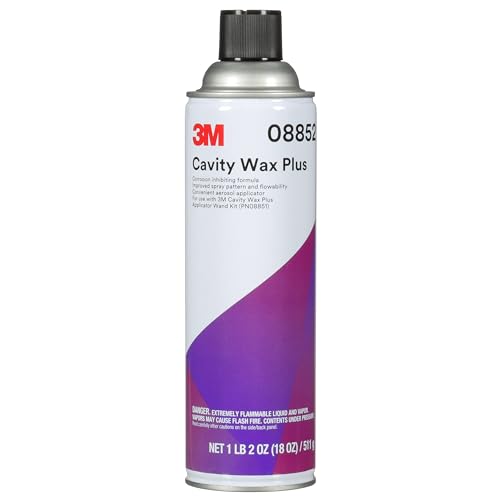
3M Cavity Wax Plus is a non-hardening, translucent wax that remains permanently soft and pliable. Its defining feature is self-healing: when the wax film gets scratched or a stone chip exposes metal, the material reflows into the damaged area at ambient temperature, resealing the surface without additional application. The 18-ounce aerosol can is designed to be used with the 3M Applicator Wand Kit (sold separately), which includes a narrow lance and nozzles for precise injection into door sills, frame rails, and structural enclosures.
Users report that the wax sprays thin enough to seep into tight lap seams and spot welds, then dries to a translucent, non-sticky film that does not trap moisture — a critical advantage over thick, paint-like coatings that can crack and allow water ingress behind them. The main concern is cost: at over a dollar per ounce, this is one of the priciest options per can. A single can is enough for smaller cavities, but a full-size pickup may require 4–6 cans for complete internal coverage, significantly raising the total investment.
For long-term protection of hidden structural cavities where you cannot reapply annually, this wax is second to none. The self-healing property is a genuine practical advantage, reducing the risk of future rust spots developing from minor coating damage.
Why it’s great
- Self-healing wax reflows into scratches and chips, maintaining the barrier
- Non-hardening — will not crack, peel, or trap moisture against metal
- Sprays thin enough to penetrate spot welds and tight seams
Good to know
- Applicator wand kit sold separately — not included with the can
- Expensive per ounce compared to converter paints or lanolin sprays
- Requires 4–6 cans for full-frame cavity protection on larger vehicles
4. CRC 06026 Heavy Duty Corrosion Inhibitor — 4 Pack

CRC’s Heavy Duty Corrosion Inhibitor is a wax-based aerosol (similar to Waxoyl or Cosmoline) that dries to a yellow, semi-transparent film. Unlike converter paints, it does not react with rust — it seals existing corrosion and prevents new oxidation by blocking oxygen and moisture. The 4-pack provides four 10-ounce cans, making it a practical option for treating an entire vehicle underside in one purchase. CRC recommends a 2-year lifespan; real-world users report effective protection up to 3 years in northern winter conditions.
Field reviews from Jeep Wrangler and Ram truck owners mention using two coats (roughly 4–6 cans total) for full undercoating, including frame rails and suspension arms. The aerosol atomizes into a fine mist that can overspray significantly; a Tyvek painter’s suit is strongly recommended. The waxy film is tacky for a day but dries to a non-sticky surface. Some users combine CRC for frame areas and Fluid Film for components exposed to rock chips, since CRC’s wax coating is harder and less prone to washing off than lanolin-based products.
This is a solid mid-range option for DIY undercoating before winter. The 4-pack pricing gives you enough volume to do a full-size SUV or pickup without needing to reorder mid-job. Just be prepared for the fine mist — adequate masking and PPE are non-negotiable.
Why it’s great
- 4-pack provides enough volume for full-vehicle undercoating in one order
- Waxy film dries hard and resists pressure washing better than oil-based sprays
- Proven 2–3 year effective lifespan in heavy salt exposure conditions
Good to know
- Fine mist requires extensive masking; painter’s suit recommended
- Not a rust converter — seals existing rust rather than chemically neutralizing it
- Some cans may leak from the spray nozzle; inspect before use
5. Fluid Film Undercoating Protection (Black)

Fluid Film Black is a lanolin-based, solvent-free coating that stays in a permanently soft gel state. Its claim to fame is creep — the material migrates into tight seams, spot welds, and between layered metal panels, providing corrosion protection in places other coatings cannot reach due to surface tension. The 1-gallon container is designed for bulk application using a spray gun, making it a favorite among DIY owners who reapply annually or biannually. One gallon is sufficient for a full-size pickup truck frame and undercarriage.
The lanolin formula is non-toxic, non-flammable, and non-irritating, though it carries a strong barn-like manure smell that lingers on the vehicle for 1–10 days after application — a notable trade-off. Users driving in salt-belt states (New York, Pennsylvania, Ohio) report applying Fluid Film every other winter with excellent results, noting that the coating remains active on the frame for years even as it washes off wheel wells faster from road spray. Unlike wax-based inhibitors, this product does not harden or crack, meaning it never traps moisture against the metal.
For a reusable, annual undercoating routine that prioritizes penetration and long-term frame protection over a single-season solution, Fluid Film in the gallon size represents excellent value. Pair it with the Fluid Film spray gun (sold separately) for best results.
Why it’s great
- Lanolin creeps into seams and spot welds that paint sprays cannot reach
- Solvent-free, non-toxic, non-flammable — safer than solvent-based inhibitors
- One gallon covers a full-size truck frame and undercarriage
Good to know
- Strong manure-like smell lasts days after application
- Washes off wheel wells faster than wax-based products
- Spray gun sold separately; brush application is slow for large areas
6. Meuvcol Rust Converter & Metal Primer
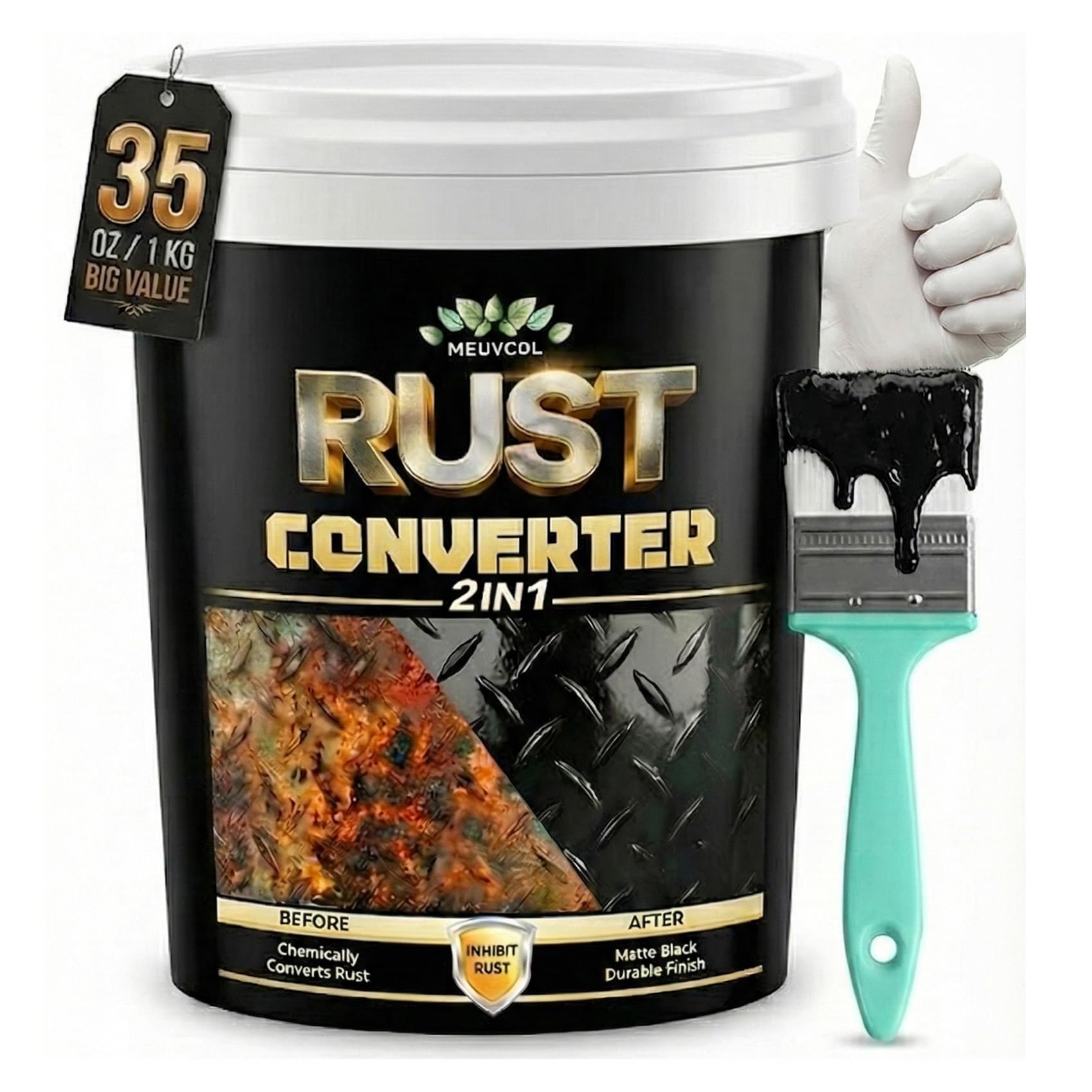
Meuvcol’s 2-in-1 Rust Converter is a water-based, matte black paint that works as both a converter and a primer. The 35-ounce can is one of the larger volumes in its class, covering a generous area without requiring multiple cans for modest jobs. As a water-based formula, cleanup requires only soap and water — no mineral spirits or acetone needed — which is a significant convenience for driveway DIYers.
User feedback emphasizes easy brush-on application and a fast-drying finish that stops rust on treated surfaces. The coating produces a thick, opaque black film on suspension components, trailer frames, and RV underbellies. Some reviewers note that a single thick coat may behave more like a paint than a chemical converter — the long-term chemical reaction vs. mechanical adhesion is debated. The water-based composition also means lower odor, though adequate ventilation is still recommended. For best results, Meuvcol advises two thin coats with 24 hours of drying time between applications.
This is a practical, water-cleanup alternative to solvent-based converters. The large can size and low-odor formulation make it a strong candidate for smaller projects, engine bay refinishing, and indoor shop work where fumes are a concern.
Why it’s great
- Water-based — easy cleanup and lower odor than solvent converters
- Large 35-ounce can provides ample coverage for multiple components
- Combines converter and primer in one step, reducing prep time
Good to know
- Some users report the coating acts more as a thick paint than a chemical converter
- Long-term chemical durability on heavily rusted surfaces is unconfirmed
- Brush application leaves streaks; a sprayer or roller yields a smoother finish
7. SMAPHY 2-in-1 Rust Converter Paint & Metal Primer
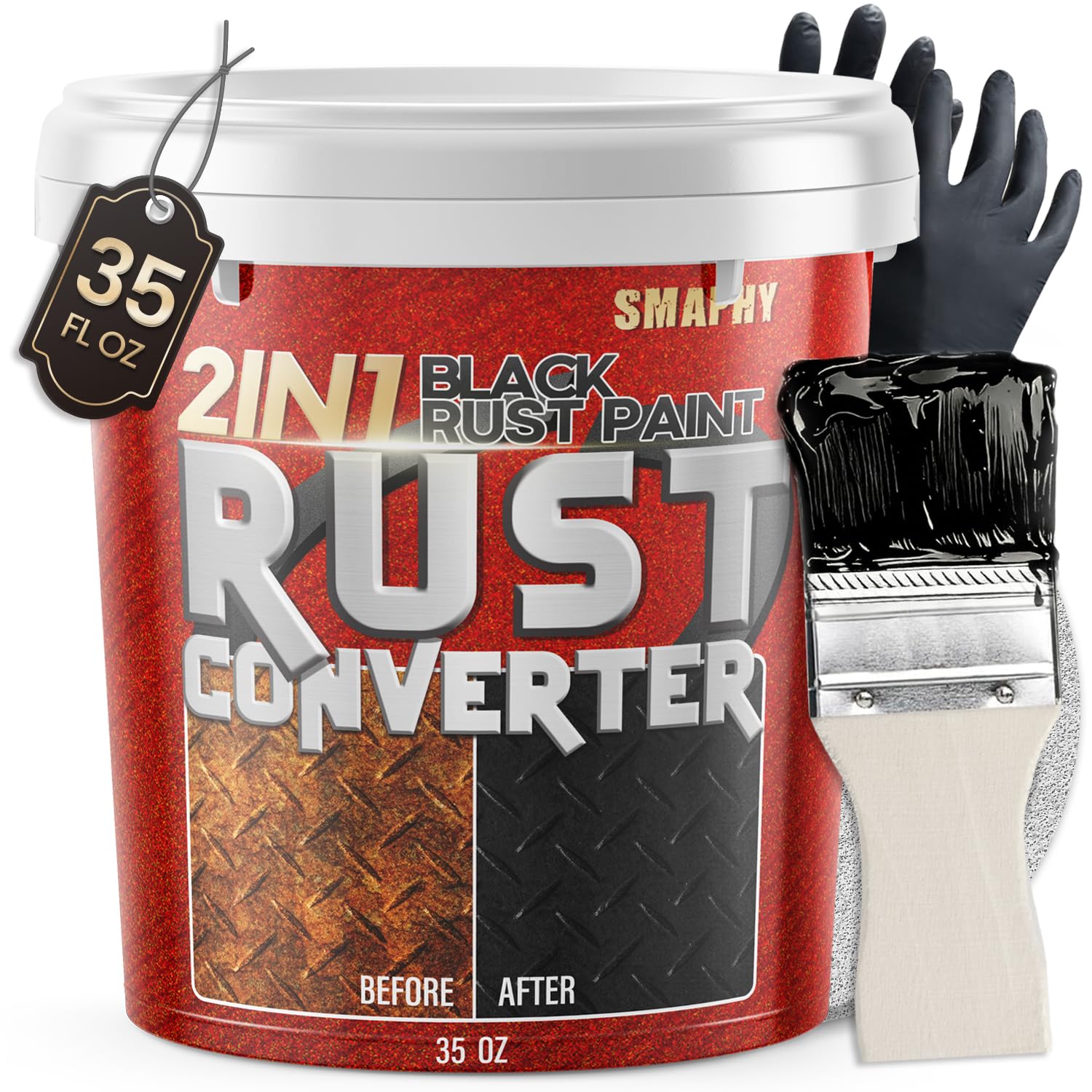
SMAPHY’s 2-in-1 converter is a single-coat solution that promises to convert rust into a stable, inert finish while simultaneously acting as a primer. The 32-ounce container floods a full 100 square feet of surface at a single coat — the highest coverage-per-can ratio of any product in this roundup. The matte flat black finish is heat-stable to 400°F, making it suitable for brake components, exhaust pipes, and engine bay brackets that would burn off standard paint.
Customers consistently praise the product’s coverage: one can is often enough for a full undercarriage treatment on small-to-mid-size sedans, or a complete brake rotor hub and control arm job. Application is brush-on only, which slows down work on large, flat panels but allows precise control on complex components. The product works best when the rust is addressed early — it handles surface rust and light pitting well, but thick, flaky rust must be mechanically removed first. The included brush and gloves are adequate for a single job but won’t survive aggressive use.
For a budget-friendly entry point into rust conversion with broad coverage and heat tolerance, the SMAPHY converter delivers strong value. The large coverage area means you’ll likely have leftover paint for touch-ups, making it an economical choice for multiple light-duty projects.
Why it’s great
- Highest coverage in this roundup — 100 square feet per can
- Heat-stable to 400°F, safe for brake parts and engine bay use
- Budget-friendly entry point with no loss in coverage or conversion ability
Good to know
- Brush application is slow for large panels; sprayer or roller recommended
- Cannot fix thick, flaking rust — mechanical removal is still required
- Includes only one brush and one pair of gloves; extras may be needed for large jobs
FAQ
Can I apply a rust converter over thick, flaky rust?
How long does a wax-based inhibitor like CRC last compared to a lanolin product like Fluid Film?
Do I need to topcoat a rust converter if the surface is exposed to sunlight?
Is a cavity wax necessary if I already coated the frame with a converter paint?
Final Thoughts: The Verdict
For most users, the best auto rust protection winner is the POR-15 Rust Preventive Coating because it chemically neutralizes existing rust and forms a moisture-cured, hammer-tough barrier that no other brush-on paint matches. If you need to protect the inside of frame rails and rocker panels, grab the Eastwood Internal Frame Coating with its 360-degree wand. And for a low-toxicity, high-creep annual undercoating routine, nothing beats the Fluid Film Gallon in its class.