
Our readers keep the lights on and the weekend projects moving. As an Amazon Associate, I earn from qualifying purchases.
A slow or hunting autofocus system turns a decisive moment into a frustrating miss. Whether you are tracking a child’s first steps, a bird in flight, or a fast-moving athlete, the camera’s ability to lock focus instantly defines the difference between a keeper and a throwaway. The market is flooded with cameras, but only a handful deliver autofocus that you can rely on without second-guessing.
I’m Rikta — the founder and writer behind FitlyFast. I have spent years analyzing market trends, autofocus engine architectures, and real-world acquisition data to understand which cameras consistently deliver under pressure.
This guide cuts through the noise to evaluate phase-detection coverage, subject-tracking algorithms, and low-light performance, so you can confidently invest in the best autofocus camera for your specific shooting needs.
How To Choose The Best Autofocus Camera
Not all autofocus systems are created equal. A high-end DSLR and a modern mirrorless camera can both claim “fast autofocus,” but their real-world performance under pressure — tracking a runner, locking on in dim light, or following an eye — varies dramatically. Understanding the core components helps you pick a camera that matches your subject, not just the spec sheet.
AF Point Coverage and Type
The number of autofocus points matters far less than how much of the frame they cover and whether they are phase-detection pixels. On-sensor phase detection (found in nearly all mirrorless cameras) allows the camera to measure focus distance instantly, while contrast detection alone is slower and prone to hunting. Look for systems that offer near-100% frame coverage for the most flexible composition without needing to focus-and-recompose.
Subject Recognition and Tracking
Modern AI-driven autofocus uses deep learning to recognize people, animals, birds, vehicles, and even specific body parts like eyes or heads. A camera with reliable Eye AF lets you shoot portraits wide open at f/1.2 and still hit the eye every time. Animal and bird detection is essential for wildlife photographers, while vehicle tracking helps motorsports shooters keep a sharp car in frame through corners.
Low-Light Sensitivity
Autofocus performance degrades as light drops. The key spec here is the rated AF sensitivity, often listed as a negative EV number (e.g., -4 EV or -6 EV). A camera that can lock focus in starlight or deep shade gives you the confidence to shoot indoors, at dusk, or in rainy conditions without switching to manual focus.
Burst Rate and Buffer Depth
Fast autofocus means nothing if the camera cannot capture the sequence. Mechanical shutters typically top out at 10-15 fps, while electronic shutters can push 20, 30, or even 120 fps. However, burst speed is only useful if the camera can maintain focus throughout the burst and has a deep enough buffer to keep shooting. Pairing a fast body with a UHS-II or CFexpress card ensures the buffer clears quickly between action sequences.
Quick Comparison
On smaller screens, swipe sideways to see the full table.
| Model | Category | Best For | Key Spec | Amazon |
|---|---|---|---|---|
| Sony a7 IV | Mirrorless | Hybrid photo/video | 693 phase-detect points | Amazon |
| Canon EOS R6 Mark II | Mirrorless | Action & wildlife | Dual Pixel CMOS AF II | Amazon |
| Nikon Z 8 | Mirrorless | Professional hybrid | Deep-learning 3D tracking | Amazon |
| Canon EOS R7 | Mirrorless | Sports & action | 30 fps electronic shutter | Amazon |
| Sony a7 III | Mirrorless | All-around full-frame | 693 phase-detect points | Amazon |
| Nikon D850 | DSLR | High-res studio/landscape | 153 AF points | Amazon |
| Panasonic S5II | Mirrorless | Video-focused hybrid | Phase Hybrid AF | Amazon |
| Fujifilm X100VI | Compact | Street & everyday carry | 425 contrast-detect points | Amazon |
| Fujifilm X-T30 III | Mirrorless | Stylish travel companion | AI subject detection | Amazon |
| OM System E-M10 IV | Mirrorless | Entry-level compact | 121 AF points | Amazon |
| Panasonic LUMIX G85 | Mirrorless | Value video/stills | 49 AF points | Amazon |
In‑Depth Reviews
1. Sony a7 IV

The Sony a7 IV is a refined hybrid that marries a 33MP back-illuminated sensor with the faster BIONZ XR processor, delivering autofocus that feels both confident and effortless. The 693 phase-detection points cover 93% of the frame, and Real-time Eye AF for humans, animals, and birds works with near-zero lag, even when the subject is moving erratically across the composition. In low-light conditions down to -4 EV, the system remains sticky, making this a strong choice for event and wedding shooters who need reliability as the sun drops.
Video shooters benefit from 7K oversampled 4K at 30p and 4K 60p with full pixel readout, supported by the S-Cinetone color profile for pleasing skin tones straight out of camera. The Real-time Tracking algorithm holds onto subjects through pans and re-framing without requiring a half-press reset — a workflow advantage for run-and-gun documentary work. The 10-bit 4:2:2 internal recording keeps grading options wide without an external recorder.
The body is weather-sealed, the grip is deeper than the a7 III, and the fully articulating screen is a boon for vloggers and overhead shots. Battery life is robust, pushing well over 2,000 shots per charge with the NP-FZ100. The menu system, while improved, still carries Sony’s characteristic learning curve, but the autofocus performance itself is plug-and-play reliable.
Why it’s great
- Excellent subject tracking with Real-time Eye AF across humans, animals, and birds.
- High-quality 4K video with 10-bit 4:2:2 internal recording and S-Cinetone.
- Strong weather sealing and long battery life for all-day shooting.
Good to know
- Menu complexity still exists despite improvements.
- 4K 60p uses a slight crop, which some users find limiting.
- Single UHS-II SD slot shared with CFexpress Type A.
2. Canon EOS R6 Mark II

The Canon EOS R6 Mark II is a speed-first full-frame camera whose Dual Pixel CMOS AF II system covers virtually 100% of the sensor area. The system can detect and track people, animals, vehicles, horses, trains, and aircraft — switching between subject types automatically without requiring the user to toggle modes mid-shoot. With the electronic shutter capable of 40 fps, this camera lets you spray a burst and still land every frame in focus.
Low-light autofocus is rated down to -6.5 EV, which allows the camera to lock focus in near darkness, a serious advantage for indoor sports and nocturnal wildlife. The 8-stop in-body image stabilization works in concert with the autofocus to keep the subject sharp even when you are handholding a long telephoto lens at 1/60th of a second. The 6K oversampled 4K 60p and Full HD 180p slow motion round out the video package without overheating.
The body is weather-sealed, the vari-angle touchscreen is responsive, and the menu layout is one of the most intuitive on the market. Battery life is strong, and dual SD UHS-II card slots offer redundancy. The autofocus is so dependable that it lets you concentrate on composition rather than focus — a true set-it-and-forget-it experience for demanding action work.
Why it’s great
- 40 fps electronic shutter with continuous AF tracking.
- Excellent subject recognition for animals, vehicles, and trains.
- Intuitive menu system with Dual Pixel AF cover across the full frame.
Good to know
- 24.2MP resolution is conservative for landscape shooters.
- No built-in flash for casual fill.
- Canon RF lens ecosystem is still pricier than some alternatives.
3. Nikon Z 8

The Nikon Z 8 packs the Z9’s stacked 45.7MP sensor and EXPEED 7 engine into a body roughly the size of the D850, making it the most powerful compact hybrid on the market. The autofocus system uses deep learning to identify and track nine subject types — people, dogs, cats, birds, cars, bikes, motorcycles, trains, and planes — with 3D tracking that feels as tenacious as the D6’s optical module. The -9 EV sensitivity means it can lock focus in conditions where your eye struggles to see the subject.
Burst shooting reaches 20 fps in RAW, 30 fps in JPEG, and 120 fps at reduced resolution, all with full AF/AE tracking. The buffer is deep enough to capture extended sequences of fast action, and the dual CFexpress Type B / SD UHS-II slots keep write speeds high. Internal 8K 60p and 4K 120p recording with 12-bit N-RAW and ProRes RAW make this a filmmaker’s tool too, though overheating can limit long takes in hot environments.
The body is weather-sealed to a professional standard, the electronic viewfinder is crisp and lag-free at 120 fps, and the deep grip balances large telephoto lenses well. The menu system is complex and requires dedicated setup time, but the autofocus output — once configured — is the most reliable of any mirrorless camera below the flagship tier. For wildlife, sports, and serious hybrid work, the Z 8 sets a new benchmark.
Why it’s great
- 8K internal recording with ProRes RAW and N-RAW.
- Deep-learning subject detection works in -9 EV light.
- D850-like body with Z9-level autofocus and speed.
Good to know
- Requires expensive CFexpress Type B cards for full performance.
- Complicated menu system may intimidate beginners.
- Overheating can limit 8K recording in direct sun.
4. Canon EOS R7

The Canon EOS R7 is an APS-C body that punches above its price point, pairing a 32.5MP sensor with Dual Pixel CMOS AF II and up to 651 selectable AF zones covering 100% width and height of the sensor. The 15 fps mechanical burst and 30 fps electronic burst with a half-second pre-buffer make it a formidable tool for sports, wildlife, and action photographers who value the extra reach of the crop sensor.
Subject detection is inherited from Canon’s full-frame line, tracking people, animals, and vehicles with equal competence. The Movie Servo AF keeps subjects locked during 4K video recording, and the 5-axis IBIS works with coordinated control IS to deliver shake-free handheld footage. The RF mount gives access to a growing ecosystem of lenses, and via the adapter, the vast EF library remains usable.
The body is compact and lightweight, with a deep grip that feels comfortable even when paired with larger telephoto lenses. Dual UHS-II card slots are a welcome professional touch at this price point. Battery life is better than advertised, and the vari-angle touchscreen works well for low-angle action shots. Some users report focus hesitation with non-Canon adapted lenses, but native RF glass performs flawlessly.
Why it’s great
- 30 fps electronic shutter with pre-buffer captures split-second action.
- AF zone coverage of 100% width and height.
- Compact and lightweight with deep grip for comfortable shooting.
Good to know
- APS-C sensor means lower light performance vs full-frame.
- Advised EF lenses can show focus hesitation.
- No built-in flash for backup fill light.
5. Sony a7 III

The Sony a7 III remains a benchmark for full-frame autofocus value years after its launch. Its 24.2MP back-illuminated sensor and 693 phase-detection AF points covering 93% of the image area still deliver reliable focus in a wide range of conditions. The Real-time Eye AF for humans and animals works fast, and the 10 fps continuous shooting with AE/AF tracking is sufficient for most action scenarios outside of professional sports.
Low-light performance is where the a7 III still shines — the 15-stop dynamic range and usable ISO up to 51,200 allow the autofocus to keep working when light gets scarce. The kit 28-70mm lens is functional but uninspiring; the real value emerges with Sony’s extensive E-mount lens library, which includes fast primes and zooms that make the focusing system sing. The 4K video recording is solid but lacks the oversampled sharpness and 10-bit color of newer bodies.
The build is weather-sealed, the battery life with the NP-FZ100 is excellent, and the dual card slots (one UHS-II, one UHS-I) provide flexibility. The menu system is Sony’s older, cluttered design, but the autofocus performance is so consistent that many users forgive the interface. It remains a top choice for hybrid shooters who want full-frame quality without the premium price of the latest generation.
Why it’s great
- Excellent full-frame image quality with 15-stop dynamic range.
- 693 phase-detect points with reliable Real-time Eye AF.
- Long battery life and dual card slots.
Good to know
- Menu system is outdated and cluttered.
- 4K video is limited to 8-bit and lacks oversampling.
- Kit lens does not do the sensor justice.
6. Nikon D850

The Nikon D850 is a DSLR masterpiece with a 45.7MP BSI sensor that delivers resolution and dynamic range that still rival medium format. The Multi-CAM 20K autofocus module with 153 AF points — 99 of them cross-type — provides fast and accurate phase detection through the optical viewfinder, making it one of the best DSLR autofocus systems ever built. The 9 fps burst speed (with the battery grip) is competitive even today, and the focus system handles erratic subjects in good light with confidence.
Live view autofocus uses contrast detection on the sensor, which is slower and less reliable than mirrorless systems, particularly in low light. However, the D850 excels in traditional DSLR mode — sports, wildlife, and studio work — where the optical viewfinder and dedicated AF processor shine. The tilting touchscreen is useful for live view composition, and the focus-shift mode for macro and landscape stacking is a practical addition.
The body is robustly weather-sealed, the shutter is rated for 200,000 cycles, and the battery life is exceptional. The XQD slot is fast but the cost of cards can be prohibitive, and the single XQD slot (with a second SD slot) is a limitation for backup. The D850 is the best DSLR ever made for stills, but its autofocus in live view and video lags behind modern mirrorless rivals.
Why it’s great
- Extraordinary 45.7MP resolution and dynamic range.
- Excellent OVF autofocus with 153 AF points.
- Focus-shift stacking mode and tilting touchscreen.
Good to know
- Live view autofocus is slow by modern mirrorless standards.
- XQD cards are expensive and less common than SD.
- Heavy and large compared to mirrorless alternatives.
7. Panasonic LUMIX S5II
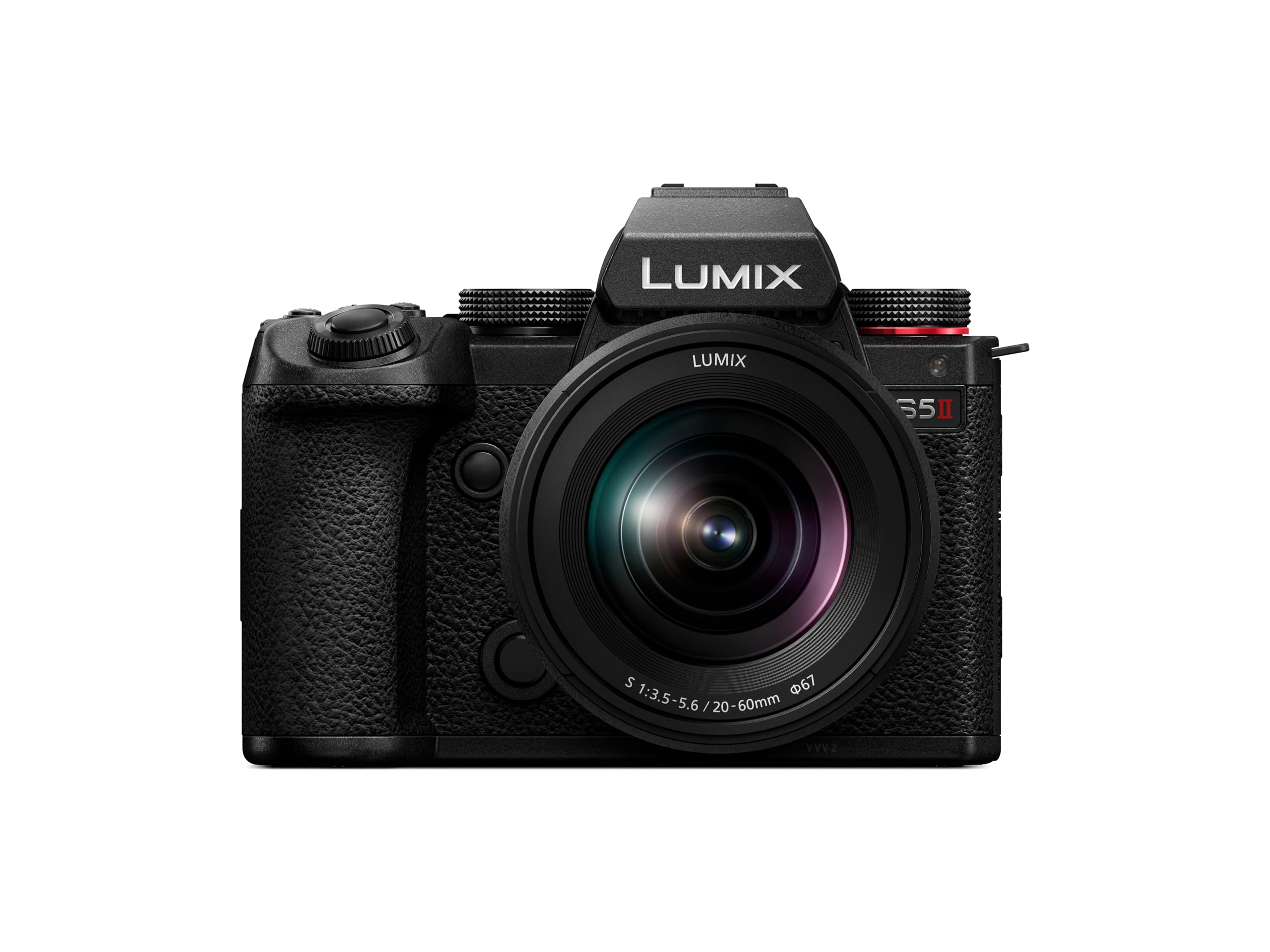
The Panasonic LUMIX S5II marks a critical turning point for the brand: it introduces Phase Hybrid AF, finally moving away from the contrast-detect-only system that held previous LUMIX bodies back in tracking scenarios. The 24.2MP full-frame sensor pairs with a dedicated phase-detection engine that delivers fast and sticky autofocus for both stills and video, making it a serious contender for hybrid shooters who prioritize video workflow.
Active I.S. technology takes image stabilization a step further, smoothing out walking shots for content creators who operate without a gimbal. The unlimited 4:2:2 10-bit recording with V-Log/V-Gamut and Real Time LUT in-camera color grading is a filmmaker’s dream, rivaling much more expensive cinema cameras. The heat-dispersion mechanism — a small fan and efficient heat sink — allows unlimited recording without overheating, a rare feature in this price range.
The L-mount ecosystem is growing steadily with support from Sigma, Leica, and Viltrox, and the kit 20-60mm lens is a versatile, capable performer for its price tier. Battery life is less impressive than some Sony rivals, and the square body design can be prone to scratches. For video-first users who need reliable autofocus, the S5II is a genuine breakthrough for the Panasonic line.
Why it’s great
- First LUMIX with reliable Phase Hybrid AF for video and stills.
- Active I.S. eliminates gimbals for walk-and-shoot video.
- Unlimited 10-bit 4:2:2 recording with V-Log and Real Time LUT.
Good to know
- Battery life is below average for full-frame mirrorless.
- Build scratches easily; frail rubber port covers.
- Setting profiles may reset after power cycles.
8. Fujifilm X100VI

The Fujifilm X100VI is a fixed-lens compact that uses a 40.2MP X-Trans CMOS 5 HR sensor and 5-axis in-body image stabilization — a first for the X100 line. The 23mm f/2 lens is a classic street- and documentary-focal length equivalent to 35mm, and the 425-point contrast-detect autofocus system performs well in good light, with quick acquisition and smooth transitions. The IBIS provides up to 6 stops of compensation, enabling sharp handheld shots down to 1/15th of a second.
The 20 Film Simulation modes, including the new REALA ACE preset, produce exceptional out-of-camera JPEGs that reduce post-processing time drastically. The built-in 4-stop ND filter is invaluable for shooting wide open in bright conditions, and the 1.4x and 2x digital teleconverter adds framing flexibility. The tactile dials — shutter speed, exposure compensation, and aperture ring — encourage a deliberate, manual-approach that many photographers find creatively rewarding.
Autofocus is the X100VI’s weakest area relative to its peers. The contrast-detection system can hunt in low light or low-contrast scenes, and the lens AF motors are not fast enough to match the camera’s burst potential. For studio, street, and slow-paced travel, the autofocus is perfectly adequate. For fast action or dim interiors, it frustrates. Video quality is outperformed by any modern smartphone.
Why it’s great
- Stunning 40MP X-Trans sensor with excellent film simulations.
- Compact, stylish body with tactile analog controls.
- Built-in ND filter and IBIS for versatile handheld shooting.
Good to know
- Contrast-detect AF hunts in low light and low contrast.
- Fixed lens is restrictive; no optical zoom.
- Battery life is short; video performance lags behind smartphones.
9. Fujifilm X-T30 III

The Fujifilm X-T30 III marries a compact, retro-styled body with an AI-powered subject detection autofocus system that tracks faces, eyes, and animals with credible accuracy. The 26.1MP X-Trans CMOS 4 sensor combined with the X-Processor 4 delivers snappy performance, and the hybrid autofocus system — mixing phase and contrast detection — works well in most daylight scenarios. The new Auto mode is genuinely useful for beginners, intelligently selecting the best settings without dumbing down the experience.
The 20 Film Simulation modes are the X-T30 III’s party piece — applying them gives JPEGs a character that many users find eliminates the need for RAW editing. The body is remarkably small, and paired with the compact XC13-33mm kit lens, it becomes a true everyday carry. The electronic viewfinder is clear, and the rear touchscreen tilts for waist-level and overhead shots.
Where the X-T30 III falls short is in sustained burst with tracking — the buffer fills quickly when shooting RAW bursts, and the autofocus can lose lock on fast-moving subjects moving toward the camera. The lack of in-body image stabilization means you are dependent on lens OIS for handheld video. It is a fantastic travel and street camera, but not the right tool for serious action or sports work.
Why it’s great
- Beautiful Film Simulations produce JPEGs that need no post-processing.
- Lightweight, compact body perfect for everyday carry and travel.
- AI-powered subject detection works well in good light.
Good to know
- No in-body image stabilization.
- Buffer fills quickly during RAW bursts.
- Autofocus can lose fast-moving subjects.
10. OM System E-M10 IV

The OM System E-M10 IV is the most approachable interchangeable-lens camera on this list, pairing a 20MP Live MOS sensor with a 121-area contrast-detect autofocus system. While it lacks the phase-detection speed of larger sensors, the autofocus is snappy in good light and the 5-axis in-body stabilization — rated at 4.5 stops — is a standout feature that keeps shots sharp even at slow shutter speeds. The flip-down monitor with dedicated selfie mode makes it unique for content creators and vloggers.
The Micro Four Thirds system offers a huge selection of small, affordable lenses — the kit 14-42mm EZ pancake lens collapses to fit the camera into a jacket pocket. The 16 Art Filters and Instant Film mode inject fun into the shooting process, and the menus are friendly for beginners transitioning from smartphones or point-and-shoots. The camera is not designed for speed; it is designed for ease and portability.
Autofocus tracking for moving subjects is a clear limitation. The contrast-detect system struggles to keep up with running children or active pets, and burst shooting at moderate speeds will produce a significant number of out-of-focus frames. For portraits, landscapes, and casual travel, the autofocus is perfectly usable. For action, look elsewhere. The lack of USB-C charging and a bundled external charger is a minor frustration.
Why it’s great
- Remarkably compact and lightweight with excellent IBIS.
- Easy-to-use menus and dedicated selfie mode.
- Access to a vast library of affordable Micro Four Thirds lenses.
Good to know
- Contrast-detect AF cannot track fast-moving subjects reliably.
- No USB-C charging; external charger not included.
- WiFi transfer app is slow and buggy.
11. Panasonic LUMIX G85

The Panasonic LUMIX G85 is a budget-friendly Micro Four Thirds camera that offers a lot of value for its price tier, especially for video. The 16MP sensor with no low-pass filter yields sharp stills, and the 5-axis in-body dual image stabilization is a class-leading feature that works exceptionally well for handheld 4K video. The 49 contrast-detect AF points are not fast for tracking, but for stationary subjects and slow-paced shooting, the system is reliable.
The 4K Photo and Post Focus features let you pull focus points from a burst after shooting — a clever workaround for the slower autofocus. The kit 12-60mm lens is versatile and sharp, offering a 24-120mm equivalent range that covers wide-angle to short telephoto. The body is weather-sealed and built with a magnesium alloy front plate, giving it a robust feel that is rare at this price point. The tilt-screen and eye-level OLED viewfinder are functional and clear.
Where the G85 struggles is in low-light autofocus — the contrast-detect system can hunt noticeably in dim conditions, especially when shooting 4K video. The 16MP sensor is on the lower side for resolution compared to APS-C competitors. Battery life is below average, and there is no headphone jack for audio monitoring during video. For new videographers or budget-conscious shooters who prioritize stabilization over raw speed, the G85 is a capable entry point.
Why it’s great
- Excellent 5-axis IBIS for stable handheld video.
- Weather-sealed body with magnesium alloy build.
- Versatile 12-60mm kit lens with good clarity.
Good to know
- Autofocus hunts in low light, especially for video.
- 16MP sensor is lower resolution than comparably priced APS-C.
- Poor battery life and no headphone jack.
FAQ
Is phase-detect autofocus always better than contrast-detect?
What does 100% AF frame coverage actually mean for composition?
Does a higher number of autofocus points guarantee better tracking?
Why does my camera hunt for focus in low light?
Can I use adapted DSLR lenses and still get good autofocus on a mirrorless body?
Final Thoughts: The Verdict
For most users, the best autofocus camera winner is the Canon EOS R6 Mark II because its Dual Pixel CMOS AF II system offers the most reliable, set-it-and-forget-it autofocus for both stills and video across a wide range of subjects, from family pets to fast-moving vehicles. If you want a professional-grade hybrid that also delivers 8K video and the most advanced subject detection at any price, grab the Nikon Z 8. And for a compact, stylish daily companion that produces stunning JPEGs straight out of camera, nothing beats the Fujifilm X100VI.