
Our readers keep the lights on and the weekend projects moving. As an Amazon Associate, I earn from qualifying purchases.
Catching a fleeting expression, a bird in flight, or a decisive moment in sports hinges on one thing: autofocus that doesn’t second-guess itself. A mirrorless camera’s focusing system is the engine behind every sharp frame, and choosing the right one means understanding how phase detection, eye tracking, and processor speed translate into fewer missed shots and more keepers.
I’m Rikta — the co-founder and writer behind FitlyFast. I’ve spent hundreds of hours analyzing technical specifications, decoding real-world performance claims in this category, and mapping customer feedback against the measurable specs that matter most to serious shooters.
Whether you prioritize lightning-fast subject tracking for action or reliable eye detection for portraits, this guide breaks down the top contenders to help you find the best autofocus mirrorless camera for your specific needs and budget.
How To Choose The Best Autofocus Mirrorless Camera
Choosing the right autofocus system goes beyond just the number of focus points. You need to consider the type of AF technology, how well it tracks subjects, and its performance in low light. Here are the critical factors to evaluate.
Phase Detection vs. Contrast Detection
Phase detection autofocus (PDAF) is the standard for speed and accuracy in mirrorless cameras. It uses dedicated pixels on the sensor to measure distance instantly, allowing the lens to snap into focus without hunting. Contrast detection, while precise for static subjects, often hunts back and forth, making it unreliable for moving targets. Nearly all modern mirrorless cameras with strong autofocus rely primarily on PDAF, often hybrid systems that use contrast detection for final fine-tuning.
Subject Recognition and Tracking Intelligence
The best autofocus systems now use AI-driven algorithms to recognize and lock onto specific subjects — human eyes and faces, animal eyes and bodies, and even vehicles like cars, trains, and aircraft. This technology drastically reduces the mental load on the shooter, letting the camera handle focus while you concentrate on composition. The sophistication of this tracking, especially how well it maintains lock when the subject turns or is partially obscured, separates entry-level from professional-grade cameras.
Low-Light Autofocus Sensitivity
Autofocus performance in dim conditions is a spec that real-world users consistently report on. A camera might lock on instantly in bright daylight but struggle in a candlelit room or during twilight outdoor shoots. Check the camera’s rated low-light sensitivity (often expressed as EV, or exposure value). A lower negative EV rating, such as -4 EV or -6 EV, indicates the camera can focus in darker scenes. In-body image stabilization also contributes indirectly, as a steadier view helps the AF system maintain lock.
Quick Comparison
On smaller screens, swipe sideways to see the full table.
| Model | Category | Best For | Key Spec | Amazon |
|---|---|---|---|---|
| Canon EOS R5 | Full-Frame Pro | High-res stills & 8K video | 1,053 AF points | Amazon |
| Canon EOS R6 Mark II | Full-Frame Hybrid | Sports & action | 40 fps e-shutter | Amazon |
| Sony Alpha 7 IV | Full-Frame All-Rounder | Hybrid stills/video | 33 MP BSI CMOS | Amazon |
| Sony a7 III | Full-Frame Value | Reliable all-around AF | 693 phase-det. points | Amazon |
| Panasonic LUMIX S5II | Video Hybrid | Unlimited 4:2:2 10-bit | Phase Hybrid AF | Amazon |
| Panasonic LUMIX S9 | Compact Full-Frame | Travel & social media | Ultra-fast Wi-Fi | Amazon |
| Nikon Z 6II | Full-Frame Versatile | Low-light stills & video | 24.5 MP BSI CMOS | Amazon |
| FUJIFILM X-T30 III | APS-C Compact | Film simulation looks | AI subject detection | Amazon |
| OM SYSTEM OM-5 Mark II | Micro 4/3 Travel | All-weather outdoor use | 121 AF points | Amazon |
| OM SYSTEM E-M10 Mark IV | Micro 4/3 Entry | Beginner & selfie mode | 5-axis IBIS 4.5 stops | Amazon |
| Nikon Z 30 | APS-C Vlogger | Compact 4K vlogging | 209 AF points | Amazon |
In‑Depth Reviews
1. Canon EOS R5

The EOS R5 is Canon’s flagship hybrid mirrorless, offering a 45-megapixel full-frame sensor with blistering autofocus. Its Dual Pixel CMOS AF II system covers approximately 100% of the frame with 1,053 AF points, and the unique Eye Control AF lets you move the focus point simply by looking through the viewfinder. This is a serious tool for pros who need resolution and AF accuracy in one body.
Autofocus performance is exceptional, even at 20 fps silent shooting. Deep-learning subject detection tracks people, animals, and vehicles with remarkable tenacity, making it ideal for wildlife and event photography. The 8K video capture capability is a bonus for videographers, though it demands fast memory cards and a beefy workflow.
Battery life is noticeably shorter than Canon’s DSLR heritage, and the 8K video mode has been known to generate heat in prolonged sessions, though firmware updates have mitigated this. For stills shooters who prioritize resolution, AF versatility, and top-tier build quality, the R5 remains a reference point in the mirrorless market.
Why it’s great
- Extremely dense 1,053-point AF system with 100% coverage
- Eye Control AF for intuitive focus point selection
- 45 MP resolution with 8K internal recording
Good to know
- Shorter battery life compared to pro DSLR bodies
- 8K video can cause thermal buildup over long takes
2. Canon EOS R6 Mark II

The R6 Mark II is purpose-built for speed. Its 24.2-megapixel sensor pairs with the DIGIC X processor to deliver up to 40 fps continuous shooting with electronic shutter, all while maintaining full autofocus and subject tracking. Dual Pixel CMOS AF II provides fast, reliable face, eye, and head detection, plus new vehicle recognition for trains and aircraft.
In real-world use, the AF system is sticky and confident, making it one of the best choices for sports, wildlife, and any scenario where split-second timing matters. The 6K oversampled 4K 60p video is sharp and the body is well-weather-sealed. In-body image stabilization (IBIS) rated at up to 8 stops further helps when shooting handheld in low light.
Some users note that the 24.2 MP resolution is lower than rivals, which limits cropping flexibility for wildlife. The kit lens is decent but upgrading to L-series glass unlocks the system’s true potential. For action shooters who need a reliable, fast-focusing tool, the R6 Mark II is a top-tier choice.
Why it’s great
- 40 fps burst with continuous AF tracking
- Advanced subject detection for people, animals, vehicles
- Excellent 8-stop IBIS for handheld shooting
Good to know
- 24.2 MP limits cropping ability
- Kit lens does not fully utilize AF potential
3. Sony Alpha 7 IV

The Alpha 7 IV features a 33-megapixel Exmor R back-illuminated sensor paired with the BIONZ XR processor. Its 693-point phase detection autofocus array covers 93% of the frame, and Sony’s Real-time Eye AF for humans and animals is among the best in industry. The autofocus is fast, responsive, and works exceptionally in low-light conditions down to -4 EV.
It excels as a hybrid body, delivering oversampled 4K 30p video from a 7K readout with 10-bit 4:2:2 color depth. The articulating touchscreen and redesigned menu system make navigation smoother than previous models. Dual card slots (one CFexpress Type A and one UHS-II SD) provide flexibility for professional workflows.
The crop factor at 4K 60p is a known limitation for some videographers, and the menu system, while improved, still takes time to learn. Battery life is solid, often lasting over 1,500 shots per charge. For users who need a versatile, high-resolution full-frame body with class-leading AF, the A7 IV is a powerful investment.
Why it’s great
- Excellent Real-time Eye AF for people and animals
- 33 MP sensor with BIONZ XR processing engine
- 7K oversampled 4K 30p video for high detail
Good to know
- 4K 60p video applies a crop factor
- Menu system still complex despite improvements
4. Sony a7 III

The a7 III remains a benchmark for what a full-frame mirrorless camera can deliver at its price point. Its 24.2-megapixel back-illuminated sensor and 693 phase-detection AF points cover 93% of the frame, providing fast, reliable autofocus. The camera offers 15 stops of dynamic range and a native ISO range up to 204,800 for low-light shooting.
Real-world performance confirms that the a7 III’s AF is quick and accurate for portraits, events, and general action. The Eye AF for people works seamlessly, and the mechanical shutter can fire at 10 fps with continuous tracking. Battery life is exceptional, rated at up to 710 shots per charge, often exceeding that in normal use.
Its 4K video, while still very good, is limited to 8-bit internal and lacks the 10-bit color depth of newer competitors. The menu system and LCD resolution also feel dated compared to the A7 IV. For budget-conscious buyers seeking a proven, reliable AF performer, it remains a strong contender.
Why it’s great
- Excellent 693-point phase detection AF with 93% coverage
- Outstanding battery life (710+ shots per charge)
- 15-stop dynamic range for flexible editing
Good to know
- Internal video limited to 8-bit color depth
- Menu system and rear LCD are showing their age
5. Panasonic LUMIX S5II
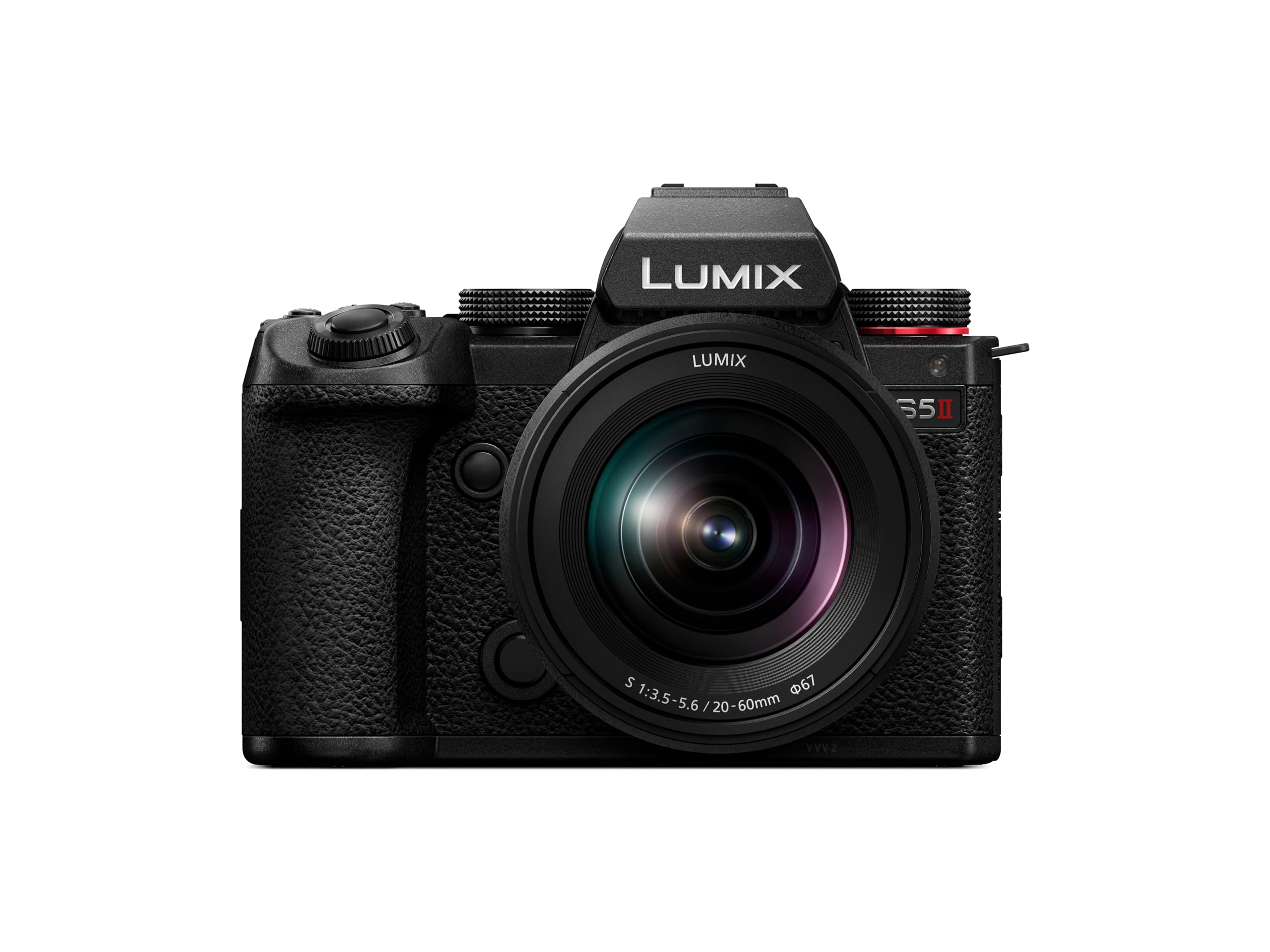
The S5II marks Panasonic’s full entry into phase detection autofocus, solving the criticism of previous LUMIX bodies. Its Phase Hybrid AF system uses a 24.2-megapixel full-frame sensor and new processing engine to deliver confident subject detection and tracking. The camera also boasts Active I.S. technology for gimbal-like stabilization during walking shots.
Video is a major strength here: unlimited 6K 30p Open Gate recording and 4:2:2 10-bit internal capture with V-Log/V-Gamut provide high dynamic range. The body includes a built-in fan for heat management, allowing unlimited recording without thermal shutdown. The S5II is a solid choice for content creators who need both reliable AF and flexible video tools.
Battery life is average, and some users report that settings may occasionally need resetting. The L-mount lens ecosystem, supported by Sigma, Leica, and others, is growing but not as dense as Sony or Canon. For videographers and hybrid shooters who prioritize AF and stabilization, the S5II delivers excellent value.
Why it’s great
- New phase detection AF system for reliable tracking
- Unlimited 6K Open Gate and 4:2:2 10-bit recording
- Active I.S. for smooth handheld video
Good to know
- Average battery life compared to rivals
- L-mount lens selection still maturing
6. Panasonic LUMIX S9

The LUMIX S9 is designed for portability without sacrificing full-frame image quality. It uses the same sensor and AF engine as the S5II in a much smaller body, making it perfect for travel and daily carry. The Phase Hybrid AF with Depth From Defocus technology provides reliable focusing for stills and video in most conditions.
Its dedicated LUMIX Lab app and ultra-fast Wi-Fi make transferring images to a smartphone effortless, ideal for social media creators who need quick sharing. The S9 supports Open Gate 6K recording and flexible aspect ratio framing, allowing for versatile content creation. The compact 18-40mm kit lens is a standout for its size.
The S9 lacks a hotshoe and a built-in flash, which limits accessory use for some shooters. The small body also makes larger lenses feel unbalanced without a grip accessory. For users who prioritize a compact full-frame body with solid AF and excellent connectivity, it’s a unique option.
Why it’s great
- Full-frame autofocus in an ultra-compact form factor
- Seamless smartphone integration with LUMIX Lab app
- Open Gate 6K recording for flexible framing
Good to know
- No hotshoe limits flash and accessory use
- Small body requires grip for larger lenses
7. Nikon Z 6II

The Nikon Z 6II offers a 24.5-megapixel BSI CMOS sensor with dual EXPEED 6 processors for improved autofocus performance. Its 273-point hybrid AF system covers 90% of the frame vertically and horizontally, providing solid detection for people and animals. The Z 6II excels in low-light, with an ISO range up to 51,200 and sensitive focusing down to -4.5 EV.
Dual card slots (CFexpress/XQD plus UHS-II SD) give professionals peace of mind for event work. The body is weather-sealed, comfortable to hold, and features a high-resolution electronic viewfinder. 4K UHD video up to 60p with full pixel readout is clean and sharp, and in-body stabilization is effective.
Some users note that subject tracking can occasionally lose fast-moving subjects, and the Z-mount lens ecosystem, while excellent, is not as extensive as Sony or Canon. The battery life is decent but may require a spare for full-day shoots. For photographers who value low-light performance and a robust build, the Z 6II is a strong mid-range option.
Why it’s great
- Excellent low-light AF sensitivity (-4.5 EV)
- Dual card slots for reliable professional backup
- High-quality 4K 60p video with full pixel readout
Good to know
- Subject tracking can occasionally lose fast action
- Z-mount lens selection still expanding
8. FUJIFILM X-T30 III
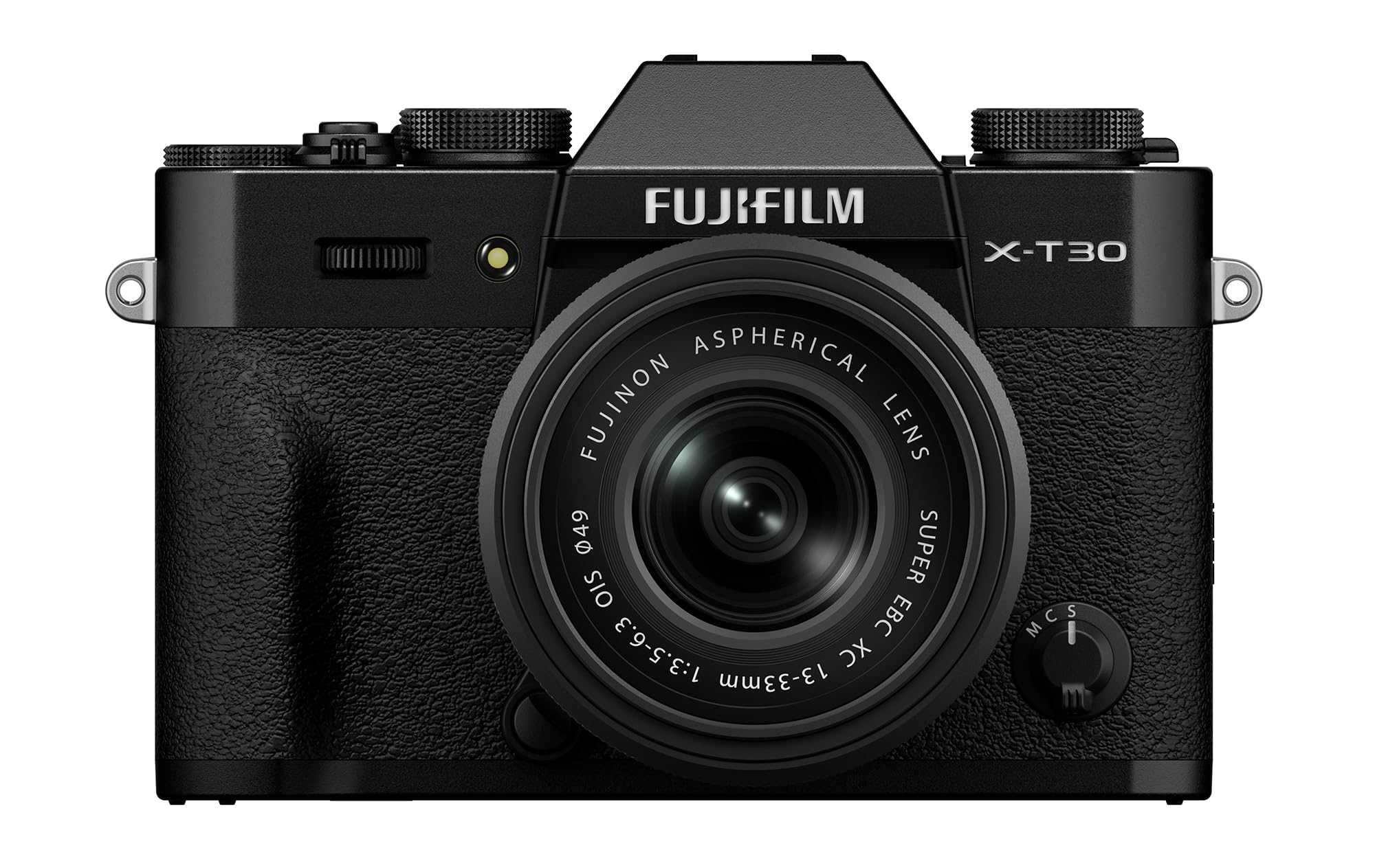
The X-T30 III pairs a 26.1-megapixel APS-C X-Trans sensor with Fujifilm’s latest AI-powered subject detection autofocus. With 425 phase detection points covering nearly the entire frame, the AF system is fast and accurate for people, animals, and birds. Its compact body and tactile dials make it a joy to use for street and travel photography.
The 20 built-in Film Simulations, including the popular Astia and Classic Chrome, deliver stunning JPEGs straight out of camera, reducing the need for post-processing. The kit lens is sharp for its class, and the X-T30 III offers 4K 30p video with F-Log for color grading. It’s a capable all-rounder that prioritizes image character and handling.
The camera lacks in-body image stabilization, so users must rely on lens-based stabilization or a tripod for steady shots. Battery life is modest, and no charger is included. For photographers who prioritize color science, a compact APS-C system, and reliable AF, the X-T30 III is a compelling choice.
Why it’s great
- AI-based subject detection AF for people and animals
- 20 Film Simulations deliver unique JPEGs
- Compact, stylish body with tactile controls
Good to know
- No in-body image stabilization
- Battery life is limited; charger not included
9. OM SYSTEM OM-5 Mark II
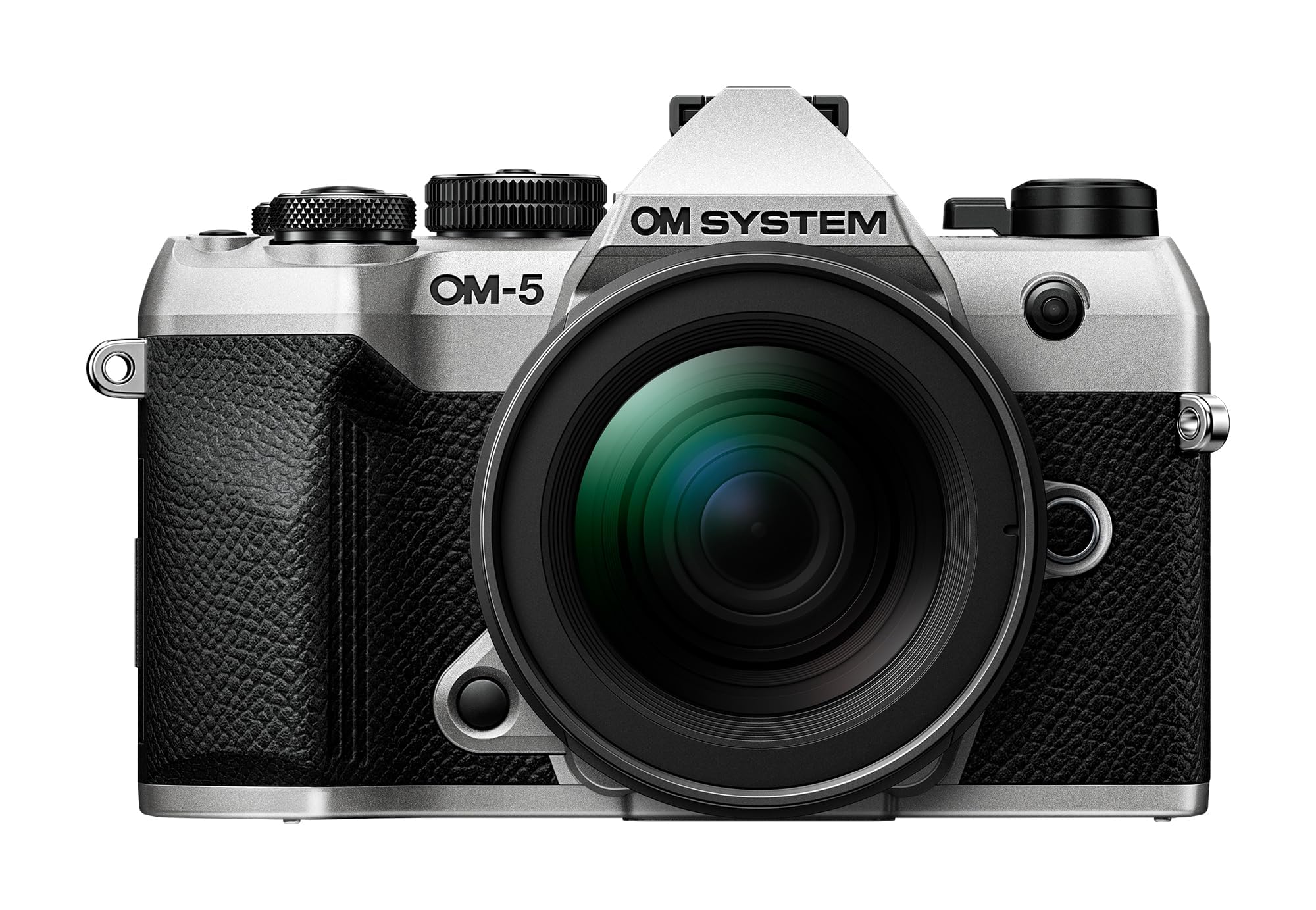
The OM-5 Mark II is a lightweight, weather-sealed Micro Four Thirds body designed for outdoor adventures. Its 20-megapixel Live MOS sensor with 121 phase detection AF points provides reliable focus, and the 5-axis in-body image stabilization offers up to 7.5 stops of compensation. It features a dedicated computational photography button for advanced features like high-res mode and focus stacking.
The IP53-rated weather sealing allows it to handle rain, dust, and freezing conditions better than most cameras in its class. The 12-45mm f/4.0 PRO kit lens is optically excellent and also weather sealed. 4K video recording is unlimited, and the compact lens ecosystem makes it a perfect travel companion.
The smaller Micro Four Thirds sensor has a crop factor of 2x, which reduces background blur compared to full-frame. The grip is also quite small, which may be less comfortable for longer sessions. For hikers, climbers, and adventure photographers who need rugged reliability and fast AF, the OM-5 Mark II is a top pick.
Why it’s great
- IP53 weather sealing for harsh environments
- 7.5-stop 5-axis IBIS for rock-steady shots
- Compact, lightweight body with PRO kit lens
Good to know
- Micro 4/3 sensor limits shallow depth of field
- Small grip may be uncomfortable for larger hands
10. OM SYSTEM E-M10 Mark IV

The E-M10 Mark IV is a budget-friendly Micro Four Thirds camera aimed at beginners and casual users. It features a 20-megapixel Live MOS sensor with 121 contrast AF points, which is adequate for static subjects and portraits. The flip-down monitor and dedicated selfie mode make it a unique option for family and travel photography.
The 5-axis in-body stabilization is excellent, providing up to 4.5 stops of compensation for sharp handheld shots. The camera is lightweight, well-built, and offers a range of art filters for creative effects. 4K video recording is available, and the menu system is straightforward for new users.
The contrast detection AF can struggle with fast-moving subjects, making it less ideal for sports or wildlife. The app connection is slow, and wireless transfers can be cumbersome. For beginners or hobbyists seeking a compact, stable, and fun-to-use camera with good entry-level features, the E-M10 Mark IV is a solid value choice.
Why it’s great
- Excellent 5-axis IBIS for sharp handheld shots
- Dedicated selfie mode with flip-down screen
- Lightweight, compact, and beginner-friendly
Good to know
- Contrast AF struggles with fast-moving subjects
- Wi-Fi and app connectivity is slow and clunky
11. Nikon Z 30

The Nikon Z 30 is a compact, dedicated creator camera designed for vloggers and streamers. It uses a 20.9-megapixel DX-format CMOS sensor with 209 hybrid AF points. The autofocus includes reliable eye detection for people and pets, making it easy to stay in focus while moving. The flip-out touchscreen and red REC light simplify self-recording.
It offers 4K UHD video at 30p with oversampling and rock-steady electronic VR stabilization. The built-in stereo microphone with adjustable sensitivity ensures good audio capture. Plug-and-play webcam operation over USB-C and unlimited 4K recording make it a versatile tool for streaming and YouTube content. The 16-50mm kit lens provides a useful focal range for daily use.
The Z 30 lacks a viewfinder, which can be problematic in bright sunlight, and its small body may feel less balanced with larger Z-mount lenses. Battery life is modest, so a spare is recommended for longer shoots. For vloggers and creators who want a lightweight, user-friendly camera with strong autofocus and video features, the Z 30 is a top entry-level pick.
Why it’s great
- Eye AF for people and pets with reliable tracking
- Compact body with flip-out screen for vlogging
- Unlimited 4K recording and USB-C streaming
Good to know
- No viewfinder, challenging in bright light
- Small body can feel unbalanced with large lenses
FAQ
How many autofocus points do I need for action photography?
Is Eye AF more important for people or animals?
Final Thoughts: The Verdict
For most users, the best autofocus mirrorless camera winner is the Canon EOS R6 Mark II because its 40 fps burst, 1,053-point AF system, and intelligent subject tracking deliver incredible versatility for both stills and video. If you want the highest resolution and a professional-grade tool, grab the Canon EOS R5. And for a compact, budget-friendly input with reliable AF, nothing beats the Nikon Z 30.