
Our readers keep the lights on and the weekend projects moving. As an Amazon Associate, I earn from qualifying purchases.
When a sudden cardiac arrest strikes, every second without a shock reduces survival by about 10 percent. An Automated External Defibrillator (AED) sitting on the wall or inside a carry case turns bystanders into lifesavers, but picking the wrong unit means trusting unreliable pads, an expired battery, or confusing voice prompts at the worst possible moment. The difference between a device that saves and one that stalls often comes down to self-test frequency, pad shelf life, and CPR feedback quality.
I’m Rikta — the co-founder and writer behind FitlyFast. I’ve spent countless hours comparing AED battery chemistries, pad cartridge expiration dates, and the real-world usability of pre-connected versus snap-in electrode systems across training and emergency-grade units.
This guide breaks down what separates a defibrillator you can bet your life on from one that belongs in a training closet, with honest reviews of the current candidates for best automated external defibrillator on the market.
How To Choose The Best Automated External Defibrillator
Selecting an AED means balancing readiness features, ease of use for untrained responders, and the total cost of ownership over several years. The device you choose should match the environment where it will live — a home, office, gym, or mobile training kit each demands a different set of specifications.
Battery Technology and Pad Cartridge Life
Most consumer-grade AEDs use a sealed lithium battery that powers the device for four to five years of standby. Pad cartridges also carry an expiration date, typically two to four years from manufacture. A device that performs weekly self-tests will alert you when either component nears end of life, so you avoid finding a dead battery during an actual emergency. Always check the replaceable battery type and pad cartridge compatibility — proprietary systems simplify one-handed replacement but lock you into a specific supply chain.
Voice Prompts and Ease of Use
The best AEDs for public or home use rely on clear, step-by-step voice instructions that guide a complete novice through pad placement, chest compression timing, and shock delivery. Some units include visual diagrams on the pad packaging or an integrated screen. Look for real-time CPR feedback that measures compression depth and rate — this feature alone can double the effectiveness of bystander CPR during the critical minutes before EMS arrives.
Self-Testing and Maintenance Burden
A reliable AED should perform daily, weekly, and monthly self-checks automatically without requiring the owner to press buttons or open the case. Units that fail a self-test should provide an audible or visual alert, such as a flashing red light or a chirping tone. Lower-maintenance designs reduce the chance that a device stored in a closet or vehicle goes unnoticed until it is too late.
Training Compatibility
If you are purchasing an AED for a workplace or community center, consider whether the same platform offers compatible training pads or a trainer mode that can be used without deploying real shocks. Organizations that run annual CPR drills benefit from having a dedicated AED trainer unit that mimics the emergency device’s operation without expending actual battery charge or pad cartridge life.
Quick Comparison
On smaller screens, swipe sideways to see the full table.
| Model | Category | Best For | Key Spec | Amazon |
|---|---|---|---|---|
| Philips HeartStart OnSite M5066A-C02 | Emergency AED | Home & office readiness | SMART Analysis with 8-sec shock | Amazon |
| Philips HeartStart OnSite M5066A-C01 | Emergency AED | Spare battery storage | Standard case with spare slot | Amazon |
| Philips HeartStart OnSite M5066A-R01 | Emergency AED | Extended readiness pack | Ready-Pack with spare pads | Amazon |
| Prestan Take2 CPR Manikin Trainer Kit PP-FM-600M-MS | Training System | CPR class instruction | 2 Adult + 2 Infant manikins | Amazon |
| MCR Medical Prestan Kit K202M-MS | Training System | Instructor mobile kit | Includes kneeling mats & vests | Amazon |
| MCR Medical Prestan Adult Diversity Kit K400M-CA | Training System | Diverse skin tones | 4 Adult manikins, 2 tones | Amazon |
| Prestan / MCR Medical 8-Pack Kit K404M-MSDS | Training System | Large class setup | 4 Adult + 4 Infant manikins | Amazon |
In‑Depth Reviews
1. Philips HeartStart OnSite AED M5066A-C02
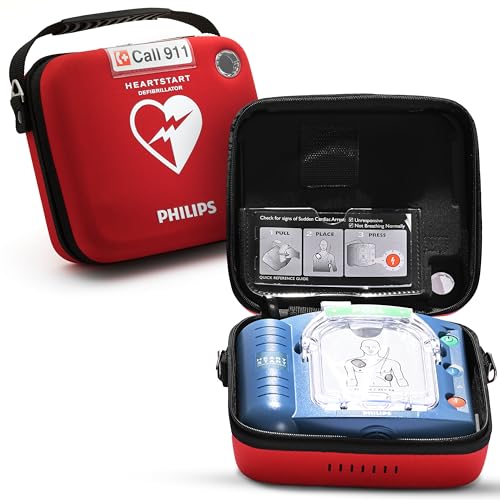
The Philips HeartStart OnSite remains the most recommended AED for home and small office use because it eliminates guesswork under pressure. The pre-installed SMART Pads Cartridge stays sealed and connected, so you simply pull the cartridge, peel the backing, and place the pads — no plugging wires while a patient is down. The device runs a daily, weekly, and monthly self-test cycle automatically, and a blinking green light on the handle confirms it is ready without ever opening the case.
SMART Analysis evaluates the heart rhythm in real time and only advises a shock if one is needed. If the rhythm is non-shockable, the unit suppresses the shock and guides the rescuer through CPR with voice prompts that include timing for compressions. The Quick Shock feature delivers energy within eight seconds of analysis, which is among the fastest in the consumer AED category. The slim carry case keeps the unit at 5.34 pounds, making it easy to mount on a wall or store under a car seat.
The eight-year warranty on the AED itself and four-year battery warranty reduce long-term ownership anxiety. Pads are warrantied until their printed expiration date. Multiple verified buyers mention purchasing this unit after a family member suffered a cardiac event, specifically citing the device’s simplicity for untrained users as the deciding factor. The only recurring note is that voice prompts are English-only, which matters in multilingual environments.
Why it’s great
- Automatic self-tests eliminate manual checklists
- Pre-connected pads save critical seconds during application
- SMART Analysis prevents unnecessary shocks on non-shockable rhythms
- Eight-year AED warranty covers long ownership periods
Good to know
- Voice prompts are English-only — no multilingual option onboard
- Pad cartridge proprietary to Philips; no third-party refills
- Battery and pad expiration require tracking for timely replacement
2. Philips HeartStart OnSite AED M5066A-C01
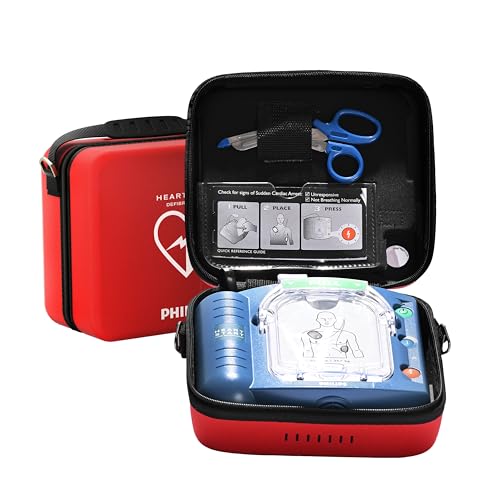
The M5066A-C01 is functionally identical to the C02 variant, meaning it uses the same SMART Biphasic waveform, the same pre-connected pad cartridge design, and the same automated self-test schedule. The difference lives in the included carry case: the standard case offers extra storage space for a spare battery and a spare pads cartridge, which is useful for organizations that want a backup without buying a second device. The overall package weight increases slightly to 5.6 pounds, but the form factor remains compact enough for wall mounting or a vehicle trunk.
Like every Philips HeartStart OnSite, this unit requires no manual calibration. The self-test checks internal electronics, battery capacity, and pad cartridge integrity. If the device detects an issue, it emits a series of chirps and shows a red status indicator. For facilities that already run regular AED inspections, the spare storage reduces the frequency of restocking trips. The included quick reference guide and owner’s manual are clear enough for a first-time owner to set up in under fifteen minutes.
One buyer noted that after purchasing this unit, they took a formal CPR course to pair with the device, which is solid advice for any AED owner. The device is designed for untrained use, but pairing it with hands-on practice increases confidence during a real event. The main trade-off versus the C02 is that you pay a small premium for the larger case and spare capacity, which only makes sense if you actually intend to stock a second set of pads and battery.
Why it’s great
- Same proven SMART Analysis and Quick Shock as C02
- Standard case holds a spare battery and pad cartridge
- Automatic self-tests with audible failure alerts
- Setup requires no training and minimal time
Good to know
- Spare storage only useful if you buy extra supplies separately
- Slightly heavier than the slim case C02 variant
- Buyers report checking pad and battery expiration dates upon delivery
3. Philips HeartStart OnSite AED M5066A-R01 Ready-Pack
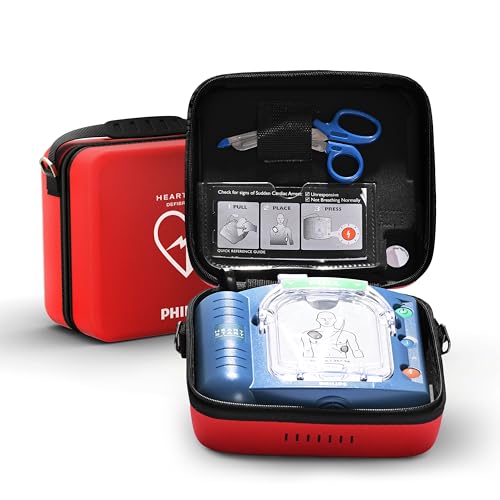
The Ready-Pack M5066A-R01 is the most complete turnkey option in the Philips HeartStart lineup. It ships with the standard carry case that already contains a pre-installed spare Adult SMART Pads Cartridge, so you have a second set of pads at the ready before the first cartridge expires. The device itself mirrors the same biphasic defibrillator engine found in the C02 and C01 models, meaning you get the same SMART Analysis algorithm, quick shock capability, and voice-prompted CPR guidance.
One significant benefit of the R01 package is that it arrives with both the installed cartridge and the spare cartridge pre-placed in the case. This eliminates the step of ordering a separate spare kit after purchase, which is convenient for buyers who want complete drop-in emergency coverage. The unit performs daily status checks and the status indicator light provides immediate visual confirmation of readiness. Multiple verified buyers mention purchasing this version for home, travel, and even boat storage due to the included spare set.
The few critical reviews highlight two concerns: the instruction insert mentions a prior lawsuit regarding device functionality, which caused hesitation for one buyer, and another noted the lack of a test mode or simulation mode for user familiarization. On balance, the Philips platform’s track record in public access defibrillation programs and the high ratio of five-star reviews suggest these concerns are outliers. The spare pads make this version the best choice for anyone who wants multi-year readiness without a second buying trip.
Why it’s great
- Spare pads cartridge pre-installed in the carry case
- Identical SMART Biphasic defibrillator as other OnSite models
- Includes daily, weekly, monthly self-testing
- Compact enough for wall mount, home, or vehicle storage
Good to know
- Premium tier — ready-pack convenience comes at a higher price point
- No built-in simulation mode for practicing between drills
- Pads and battery still have printed expiration dates you must track
4. Prestan Take2 CPR Manikin Trainer Kit PP-FM-600M-MS

Prestan’s Take2 Kit bundles two adult manikins, two infant manikins, and two AED UltraTrainers into a single carry bag, making it the ideal starter package for CPR instructors who need to simulate both adult and pediatric emergencies. The manikins provide physical feedback on compression depth and rate through indicator lights, which helps students correct their technique in real time. The kit is fully compliant with current AHA guidelines, and the UltraTrainers are pre-programmed with five English/Spanish scenarios that can be updated if standards change.
The AED UltraTrainers included here are not emergency devices — they are dedicated training tools that mimic the look and sound of a real defibrillator without delivering shocks. This distinction matters because it means the trainers can be used repeatedly without consuming battery charge at a meaningful rate or wasting pad cartridges. The kit also comes with face shields and lung bags sufficient for twenty adult sessions and twenty infant sessions, along with a large carry bag for transport. Several reviewers note the bag lacks wheels, which is a consideration if you haul it across a large facility regularly.
The three-year warranty on the manikins and trainers provides solid coverage for a training environment that sees weekly use. Manikin durability is consistently praised, with one instructor mentioning they upgraded from a competitor specifically because Prestan’s feedback system and airway design held up better over time. The main downside for some users is that the kit only includes two of each component, limiting hands-on practice time for classes larger than four students unless you purchase additional units.
Why it’s great
- Includes both adult and infant manikins for comprehensive training
- AED UltraTrainers simulate real defibrillator operation safely
- Compression feedback lights help students self-correct
- AHA-compliant and upgradable scenario software
Good to know
- Carry bag lacks wheels — heavy to pull across long distances
- Two of each component limits class size to four students
- Batteries for trainers not included
5. MCR Medical Prestan Kit K202M-MS
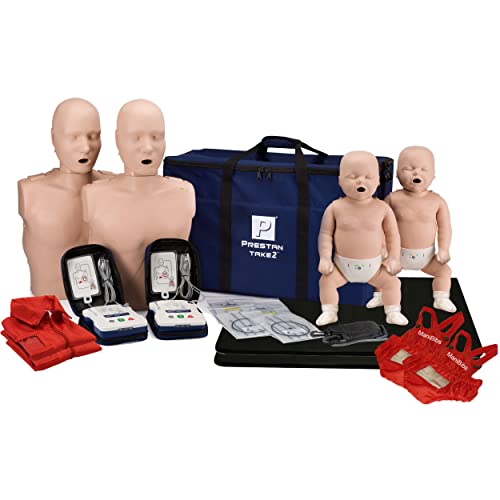
The MCR Medical K202M-MS takes the same core Prestan manikins and AED UltraTrainers found in the standalone kit and adds practical accessories that make mobile instruction easier. Alongside the two adult manikins, two infant manikins, and two UltraTrainers, this bundle includes kneeling mats, ManiVests, and ManiBibs — items that save instructors from buying separately. The foam-based construction of the manikins provides a realistic feel during compressions, and the feedback system lights up to indicate proper depth and rate.
One standout characteristic reported by buyers is the durability of the foam manikins after repeated use in training courses. The UltraTrainers are noted to feel more realistic than competing trainer units, particularly in their pad placement prompts and voice timing. The kit is compatible with Red Cross and AHA training materials, making it a flexible choice for instructors who teach multiple certification programs. The included carry bag organizes components neatly, and the three-year warranty backs the manikins and trainers against manufacturing defects.
While the accessories add genuine value, the kneeling mats take up space inside the bag and increase the total weight compared to the base Prestan kit. Instructors who already own kneeling mats may prefer the simpler Take2 bundle. One buyer mentioned receiving the kit with two missing pieces — a QC issue that appears isolated based on the broader review pattern, but worth noting. Overall, this kit is best for new instructors building their mobile teaching setup from scratch.
Why it’s great
- Includes kneeling mats, vests, and bibs for class setup
- Durable foam manikins with compression feedback indicators
- AED UltraTrainers feel realistic during pad placement drills
- Three-year warranty covers the whole training system
Good to know
- Heavier carry load than the base Prestan Take2 kit
- Isolated reports of missing components on delivery
- Batteries for the UltraTrainers required but not included
6. MCR Medical Prestan Adult Diversity Kit K400M-CA
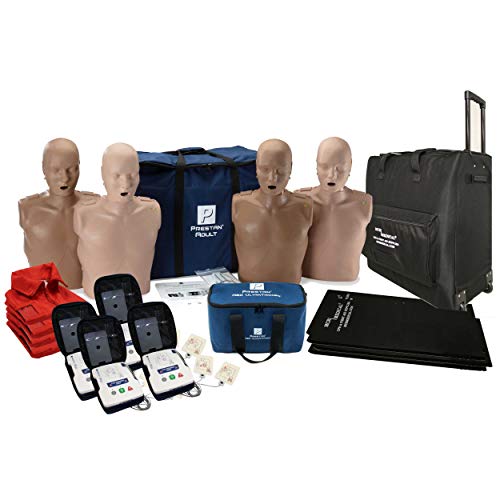
The K400M-CA focuses on representation in CPR training by providing four adult manikins in two different skin tones — two medium and two dark — so students train on equipment that reflects the diversity of real patients. This is the first detail experienced instructors notice, as it helps normalize chest anatomy visualization across skin pigmentation during compression practice. The manikins include the same compression feedback system found in other Prestan models, with indicator lights for depth and rate compliance.
Each of the four manikins pairs with one of the four included AED UltraTrainers, allowing a full class of four students to cycle through defibrillator simulation simultaneously without sharing equipment. The carry bag accommodates all components, though at 39.3 pounds it is noticeably heavier than the two-person kits. The case includes wheels on this model, which addresses the portability complaint sometimes leveled at the smaller Prestan bag. Accessories such as face shields, lung bags, kneeling mats, and ManiVests are included to support a complete training session.
One buyer initially reported missing face masks but later corrected the review after realizing the mask and lung bag are integrated into a single component — a design quirk that may confuse first-time users. No significant durability complaints appear in the feedback, and the three-year warranty provides coverage for the manikins and trainers. This kit is best suited for organizations that value inclusive training aids and typically run classes of four or fewer adult students per instructor.
Why it’s great
- Manikins available in medium and dark skin tones for inclusive training
- Four manikins and four trainers support simultaneous group practice
- Wheeled carry bag improves portability at higher weight
- Compression feedback lights guide proper technique
Good to know
- Adult-only kit — no infant manikins for pediatric training
- 39.3-pound weight requires the wheeled bag for easy transport
- Integrated mask-lung design may cause initial setup confusion
7. Prestan / MCR Medical 8-Pack Kit K404M-MSDS
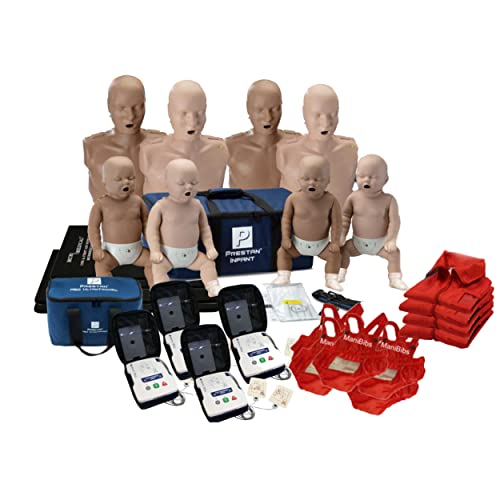
The K404M-MSDS is the largest Prestan-based training bundle in this lineup, combining four adult manikins and four infant manikins with four AED UltraTrainers and a full set of MCR Medical accessories. The adult manikins come in two medium and two dark tones, while the four infant manikins provide pediatric rescue practice. For organizations that run large CPR certification classes, having eight manikins means every student gets hands-on time without long waits, and the four UltraTrainers allow parallel defibrillator drills.
The included accessories match the K202M-MS bundle: kneeling mats, ManiVests, ManiBibs, face shields, and lung bags. The kit is designed as a turnkey solution for instructors who want a single purchase to cover an entire classroom. The three-year warranty applies across the board, and all manikins feature the same compression feedback system with indicator lights that light up green when the student reaches the correct depth and rate. Most buyer reviews praise the value of getting eight manikins in a single case.
Quality control appears less consistent at this scale. One buyer reported an infant manikin leg arriving broken, and another noted that two adult manikins developed a shoulder-pin issue during rescue breaths, causing the airway to open unexpectedly. The same reviewer found the AED trainer pad cables to be lower quality than expected. These complaints are not universal — the majority of reviews are positive — but they suggest that inspecting every component upon delivery is advisable. For instructors who accept occasional QC variance in exchange for the largest training capacity, this kit represents the most comprehensive classroom package available.
Why it’s great
- Eight manikins support large classes without rotation delays
- Infant and adult manikins cover pediatric and adult scenarios
- Includes four AED UltraTrainers for simultaneous defib practice
- Accessories (mats, vests, bibs) included for full class setup
Good to know
- Occasional QC issues — inspect manikins and cables on arrival
- Infant manikin legs reported as fragile by some buyers
- Weight and size of the case require two-person carry or a dolly
FAQ
Can an untrained bystander use an AED effectively?
How long do AED pads and batteries last before they expire?
What is the difference between an AED trainer and a real defibrillator?
Final Thoughts: The Verdict
For most users, the best automated external defibrillator winner is the Philips HeartStart OnSite M5066A-C02 because it combines automatic self-tests, pre-connected pads, and SMART Analysis in a compact package that an untrained bystander can operate under stress. If you want spare pad capacity built into the carry case from day one, grab the Philips HeartStart OnSite Ready-Pack M5066A-R01. And for CPR instructors building a mobile training kit, the MCR Medical Prestan Kit K202M-MS delivers durable manikins and realistic AED trainers with the accessories needed to run a complete class.