
Our readers keep the lights on and the weekend projects moving. As an Amazon Associate, I earn from qualifying purchases.
Forget the days of manually rotating eggs three times a day or obsessively misting a makeshift incubator. A modern automatic incubator manages temperature, humidity, and egg turning for you, turning the delicate process of embryo development into a reliable, hands-off operation. The single variable that separates a successful hatch from a heartbreak is not luck—it’s the machine’s ability to maintain the narrow band of heat and moisture required for 21 days of development.
I’m Rikta — the founder and writer behind FitlyFast. I’ve spent years analyzing the build quality, sensor accuracy, and real-world hatch rates of dozens of incubation systems to separate marketing claims from functional reliability.
Whether you are setting up a classroom project, a backyard breeding station, or a small farm hatchery, finding the best automatic incubator involves comparing capacity, humidity management, and temperature stability side by side.
How To Choose The Best Automatic Incubator
Every incubator is built around a few core systems: heating, turning, and humidifying. A weak link in any of these three will crater your hatch rate. Focus on the following specifications to ensure the unit you choose can maintain a stable internal environment regardless of your ambient room conditions.
Temperature Stability & Airflow
Look for an incubator with a powerful circulation fan. A forced-air system creates temperature uniformity within 0.5°F across all eggs, whereas a still-air unit can vary by 2°F or more between the top and bottom shelves. The advertised temperature accuracy should be within ±0.5°F to avoid killing embryos on the hot spots or slowing development on the cold ones. Most precise units use a digital thermostat with a PID-like control loop that prevents overshooting.
Humidity Control Method
The best automatic incubators manage humidity without requiring you to open the lid. External water refill bottles or pull-out trays allow you to add water without disrupting the internal climate. Some models use a mechanical wick or sponge system, while higher-end units feature an auto-pump that reads a hygrometer and adds water when levels drop. A printed humidity range of 40-60% for the first 18 days and 65-75% during lockdown is the standard to aim for.
Egg Turning Mechanism & Automation
An automatic egg turner should rotate eggs at least once every two hours—every 60 minutes is ideal. The best units offer a programmable interval so you can adjust for different egg sizes. Look for a model that automatically stops turning three days before the hatch date (lockdown) to prevent the chicks from being disoriented inside the shell. The egg tray should accommodate various egg sizes without forcing eggs to jam against the turner mechanism.
Visibility & Built-in Candling
A clear lid (preferably 360-degree) allows you to observe the hatch without opening the cover, which prevents sudden humidity and temperature drops. An integrated LED egg candler is a major convenience—it lets you check embryo viability on days 7 and 14 without buying a separate device. The candler should be bright enough to illuminate the air cell and veins in brown or dark-shelled eggs.
Quick Comparison
On smaller screens, swipe sideways to see the full table.
| Model | Category | Best For | Key Spec | Amazon |
|---|---|---|---|---|
| Chickcozy 25 | Premium | High Hatch Rates | 25 eggs; dual water zones | Amazon |
| WONEGG 56 | Premium | Large Capacity & Presets | 56 eggs; auto-pump humidity | Amazon |
| APODESS 56 | Premium | Set & Forget Climate | 56 eggs; external auto water refill | Amazon |
| Sailnovo 56 | Mid-Range | High Capacity Value | 56 eggs; auto-humidification | Amazon |
| MATICOOPX 20 | Mid-Range | Hobby Farms | 20 eggs; external water refill | Amazon |
| MQUPIN 18 | Mid-Range | Dual-Size Eggs | 18 chicken/8 goose; dual trays | Amazon |
| SENXINGYAN 36 | Entry-Level | Beginners | 36 eggs; sink-type water tray | Amazon |
In‑Depth Reviews
1. Chickcozy 25 Egg Incubator

The Chickcozy 25 is a premium small-batch incubator engineered for maximum hatch rates. Its dual watering zones (C & D) allow you to boost humidity during lockdown without opening the lid, a feature that directly addresses the common failure point of humidity crashes. Users consistently report 100% hatch rates from standard batches, attributing success to the stable temperature control and the protective 2-inch wall that prevents chicks from escaping the brooder area right after hatching.
The 360-degree clear dome and built-in LED candler make observation effortless, and the pull-out water tray means you never have to lift the lid to refill. The auto-turner rotates eggs every 60 minutes and stops automatically at lockdown. The anti-slip mat prevents leg injuries in newly hatched chicks, a detail often overlooked by other manufacturers. The lid handle is ergonomically designed for one-handed operation, which helps when you need to remove the top quickly for cleaning.
Some users note that the turner cable is attached to the bottom, which can hinder thorough cleaning, and the C/D water reservoirs could be taller to prevent climbing chicks. The LCD is functional but not backlit as brightly as some competitors. For those who prioritize hatch success over maximum egg capacity, the Chickcozy 25 is the most reliable mid-sized unit on the market.
Why it’s great
- Consistent 100% hatch rates reported by multiple users
- External water trays prevent humidity drops during lockdown
- 2-inch protective wall and anti-slip mat for chick safety
Good to know
- Turner cable attached to bottom makes deep cleaning awkward
- LCD could be brighter for daytime viewing
- Limited to 25 chicken eggs maximum
2. WONEGG 56 Egg Incubator
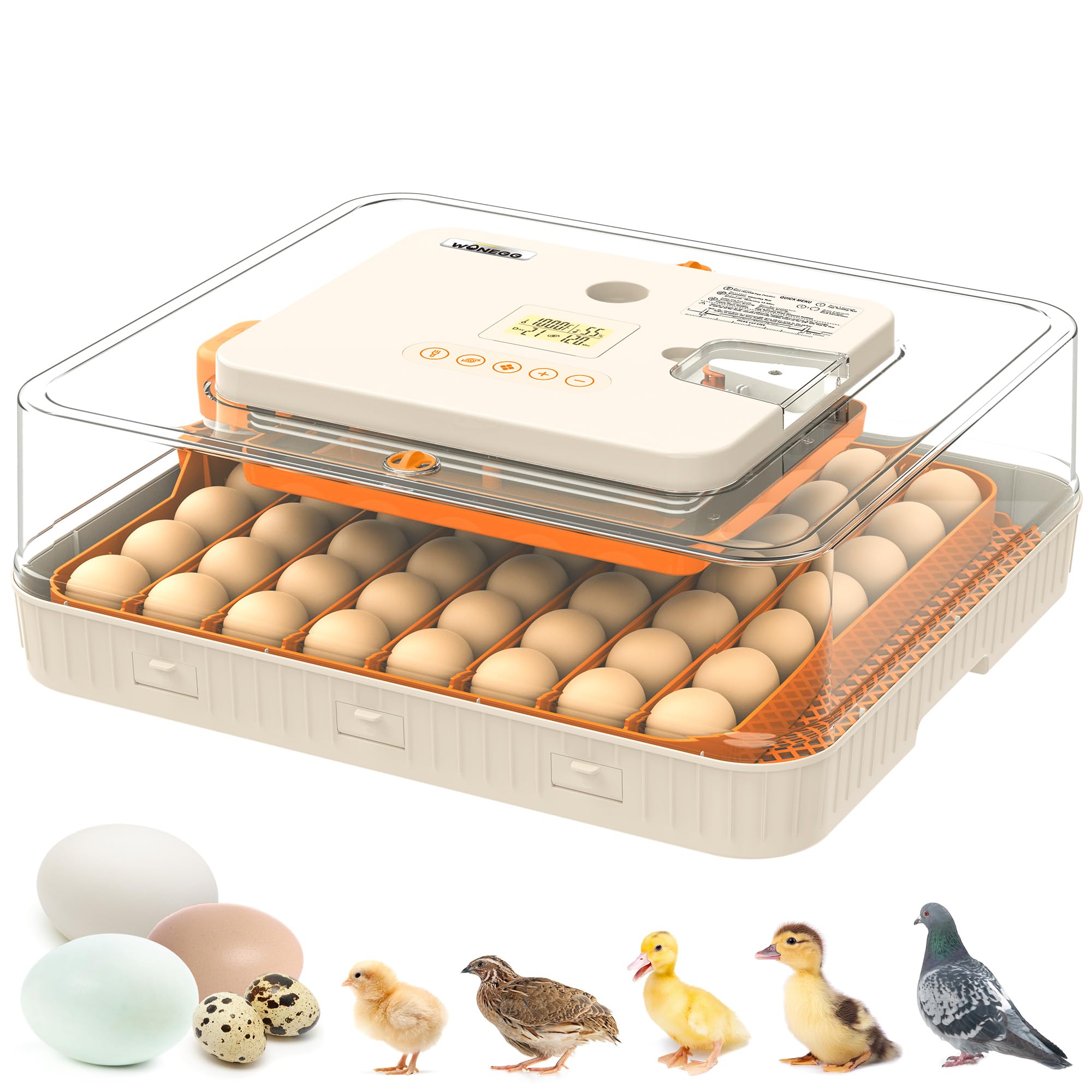
The WONEGG 56 is a heavy-duty machine built for high-volume hatchers who want preset programs for different species. One of its standout features is the automatic water pump that maintains a set humidity level without manual intervention—a major upgrade over passive sponge systems. Multiple reviewers report a 90% hatch rate from 63 jumbo quail eggs, with temperature fluctuating less than 1°F over the full cycle.
The gentle horizontal egg tray system rotates eggs smoothly without the jostling that can damage delicate embryos. Preset programs for chicken, duck, goose, quail, and parrot eggs eliminate guesswork, though you can still fine-tune temperature and humidity manually. The 360-degree lid and built-in cold-light LED candler allow for safe embryo monitoring without heat damage.
On the downside, the fan and humidity pump produce enough noise to make bedroom placement less appealing. The egg divider pegs are optimized for smaller eggs, so goose eggs may shift and bunch during turning, requiring weekly repositioning. The rubber water tubes are wear items that may need eventual replacement, but the unit includes spares.
Why it’s great
- Automatic water pump maintains steady humidity with no manual effort
- Preset programs for multiple poultry species
- Temperature stable within ±1°F across full load
Good to know
- Fan and pump generate noticeable noise
- Egg dividers best suited for quail to medium chicken eggs
- Rubber water tubes need periodic replacement
3. APODESS 56 Egg Incubator
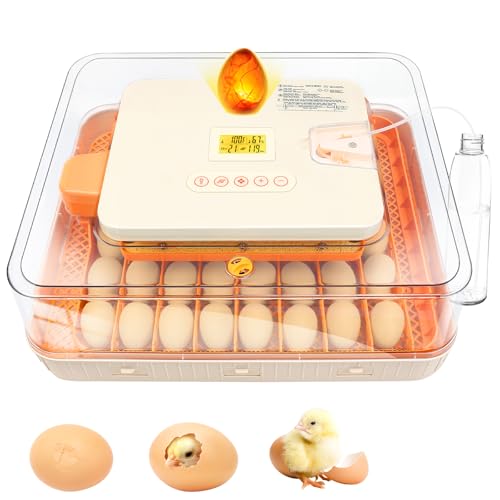
The APODESS 56 is designed for the “set and forget” philosophy, with a 360° air circulation system, dual adjustable vents, and an external auto water refill that complements its three-zone ABC water system. The silent fan maintains temperature uniformity without the hum of larger units, making it suitable for a home environment. Users describe it as the best incubator they have used for humidity management, with the auto-refill bottle effectively maintaining lock-down humidity levels with warm water.
The egg clips adjust to accommodate chicken, duck, goose, and quail eggs, and the detachable top makes cleaning straightforward—the bottom lid is even washable under a faucet. The digital display shows temperature, humidity, incubation days, turning countdown, and total hatching time on one screen. The alarm triggers if temperature deviates by ±2°F or humidity by ±10%, giving you actionable warning without false triggers.
Some units shipped with a lid that does not seat perfectly, leading to humidity swings (70% falling to 44%) that ruined expensive eggs. The flat plug connecting the top lid is a weak point and can fall out if jarred. For the price, the build quality inconsistency is a notable risk—inspect the lid seal immediately upon arrival and return if it rocks.
Why it’s great
- Exceptional humidity maintenance with external auto-water refill
- Full 360° clear lid for unobstructed observation
- Quiet operation; bottom is faucet-washable
Good to know
- Lid seal quality varies between units
- Flat-plug connection in lid can fall out
- Some reports of temperature drift after several uses
4. Sailnovo 56 Egg Incubator
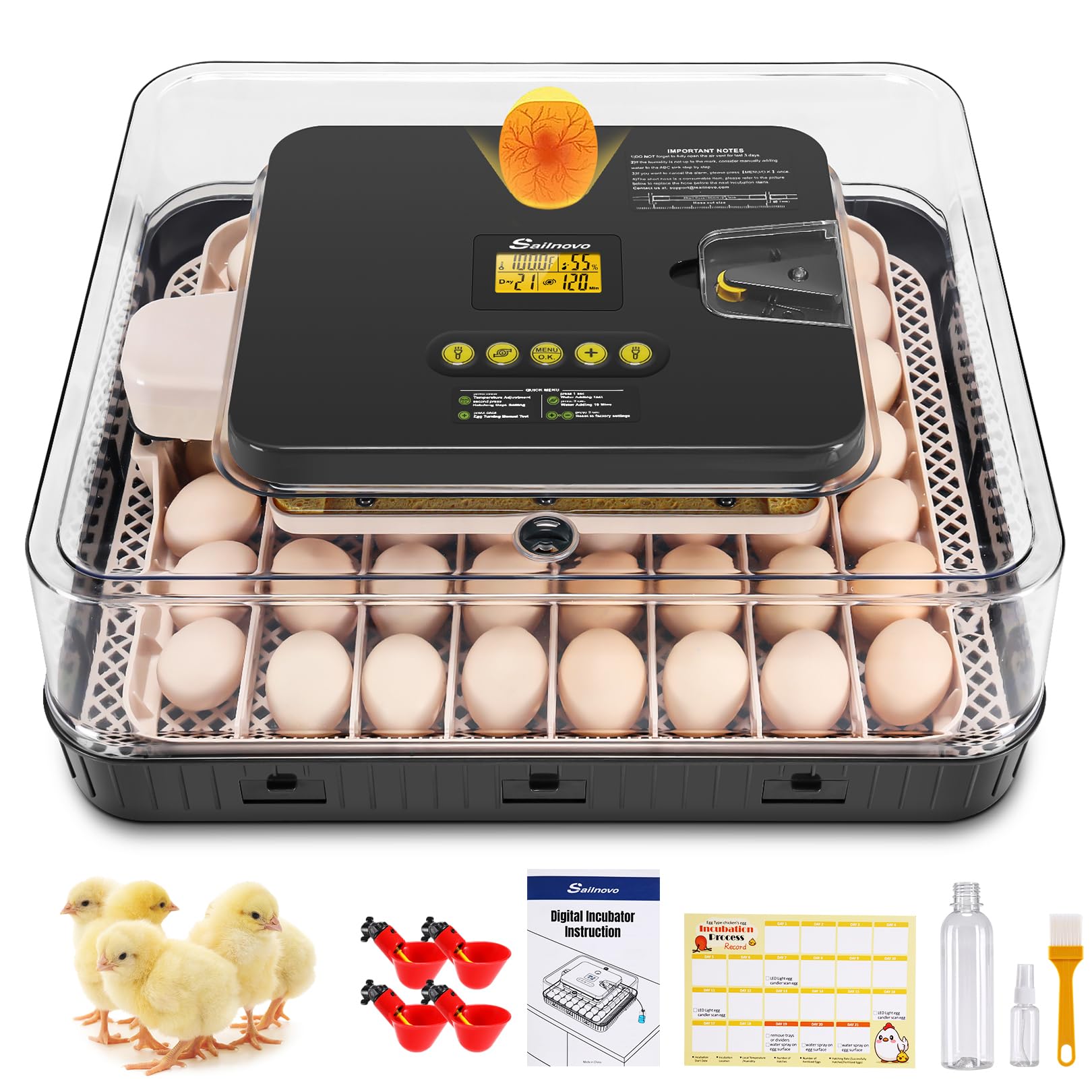
The Sailnovo 56 is the most cost-effective large-capacity automatic incubator we tested, holding 56 chicken eggs while incorporating automatic humidification and a motor-driven fan for temperature stability. With an 80-85% actual hatch rate (higher than the claimed 65%), it offers the best return on investment for someone starting a serious backyard flock. The built-in LED candler works well even on dark eggs, and the auto-turner rotates eggs every two hours, stopping three days before hatch day.
Experienced users recommend dry hatch method for this unit because the auto-fill bottle tends to overshoot humidity early on. The temperature stays locked at 100.3°F at sensor level (99.5°F at egg level), and the alarm can be silenced for 30 minutes or turned off entirely for dry incubation. The package includes poultry feeders, a cleaning brush, and a tracking calendar, adding real value for first-time users.
The side-rolling turner design is not ideal for shipped eggs with detached air cells, as eggs remain in the same spot and are vulnerable to temperature discrepancies from the edges. Users strongly caution against using hatch bags inside this unit because a bag caught in the fan dropped the temperature to the high 80s for 12 hours, killing chicks. The door on the bottom bay can leak humidity after repeated openings—tape it shut during lockdown.
Why it’s great
- High 80-85% actual hatch rate on a 56-egg budget platform
- Auto-humidification with external water fill avoids lid openings
- Comprehensive starter kit including feeders, brush, and tracking guide
Good to know
- Side-roller design not ideal for shipped or fragile eggs
- Lid seal needs careful seating to prevent humidity loss
- Hatch bags can catch in fan and cause catastrophic temp drop
5. MATICOOPX 20 Egg Incubator

The MATICOOPX 20 has been a workhorse for hobby farmers, with one user reporting 13 successful hatches and buying a second unit. Its side-to-side egg turning (every 60 minutes) keeps eggs upright—much better for shipped eggs than rolling designs—and the external water refill prevents the classic humidity crash from opening the lid. The unit supports chicken, duck, and even large quail batches (38 coturnix eggs fit comfortably).
The large display shows temperature, humidity, and incubation days simultaneously, and the built-in candler is bright enough for standard eggs. Assembly is straightforward, and the clear window provides a full view without opening. Users in humid climates report managing moisture with clever adjustments, such as using a playing card to slightly open a vent.
The auto-turn mechanism is sensitive to water damage—users recommend cleaning it with a tiny sponge or q-tip rather than running water over it. Some buyers needed to purchase third-party risers and gear covers to optimize for quail eggs, which adds cost. The manufacturer offers a solid one-year warranty, and customer service is responsive for troubleshooting.
Why it’s great
- Excellent for shipped eggs with upright orientation during turning
- Proven reliability across multiple hatches and species
- Adjustable vents for fine-tuning humidity in different climates
Good to know
- Auto-turn mechanism must be kept dry during cleaning
- Quail setups may require additional third-party parts
- Lower 20-egg capacity limits use to small-scale hatches
6. MQUPIN 18 Egg Incubator
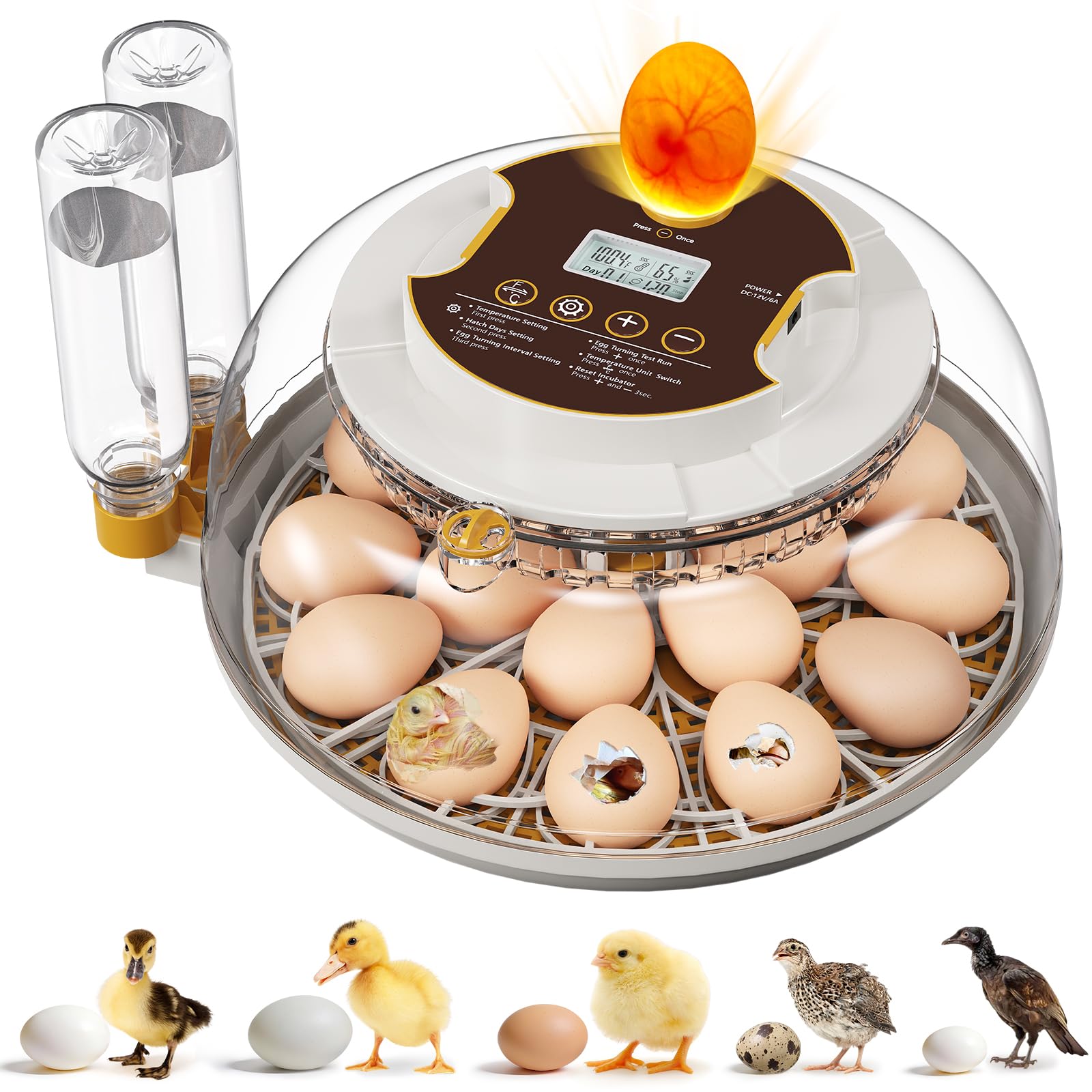
The MQUPIN 18 is built for flexibility, shipping with two removable trays: one holds 18 chicken eggs, the other fits 8 goose or duck eggs. The 360° clear dome gives a full view of the hatching process, and the built-in LED candler helps with early embryo viability checks. The auto-turner offers adjustable intervals (60, 120, or 180 minutes) to match different egg types, and it automatically stops three days before hatch day.
The climate control system automatically maintains a temperature range of 68–104°F and humidity from 40-80%, with a digital display showing real-time readings. An instant alarm notifies you of any deviation. The included foam shell provides extra insulation for cooler rooms, and the clear guidance on running the unit empty for 24 hours before first use is a thoughtful touch that first-time users often overlook.
With a first-hatch success rate of 77% reported by one user, this unit delivers reliable results but not the exceptional rates of the Chickcozy or WONEGG. The ABS plastic body feels durable, but the lid does not have a positive lock—it sits on the base, which can be dislodged if bumped. The small capacity means it will not support production-level hatcheries, but it is ideal for classroom projects or small homestead applications.
Why it’s great
- Dual trays accommodate chicken, duck, goose, and quail eggs
- Adjustable turn intervals (60/120/180 min) per species
- Includes foam shell for cold room insulation
Good to know
- Lid has no positive lock; can be dislodged by bumps
- Low 18-egg capacity limits production-level use
- First-hatch rate around 77%, lower than premium units
7. SENXINGYAN 36 Egg Incubator
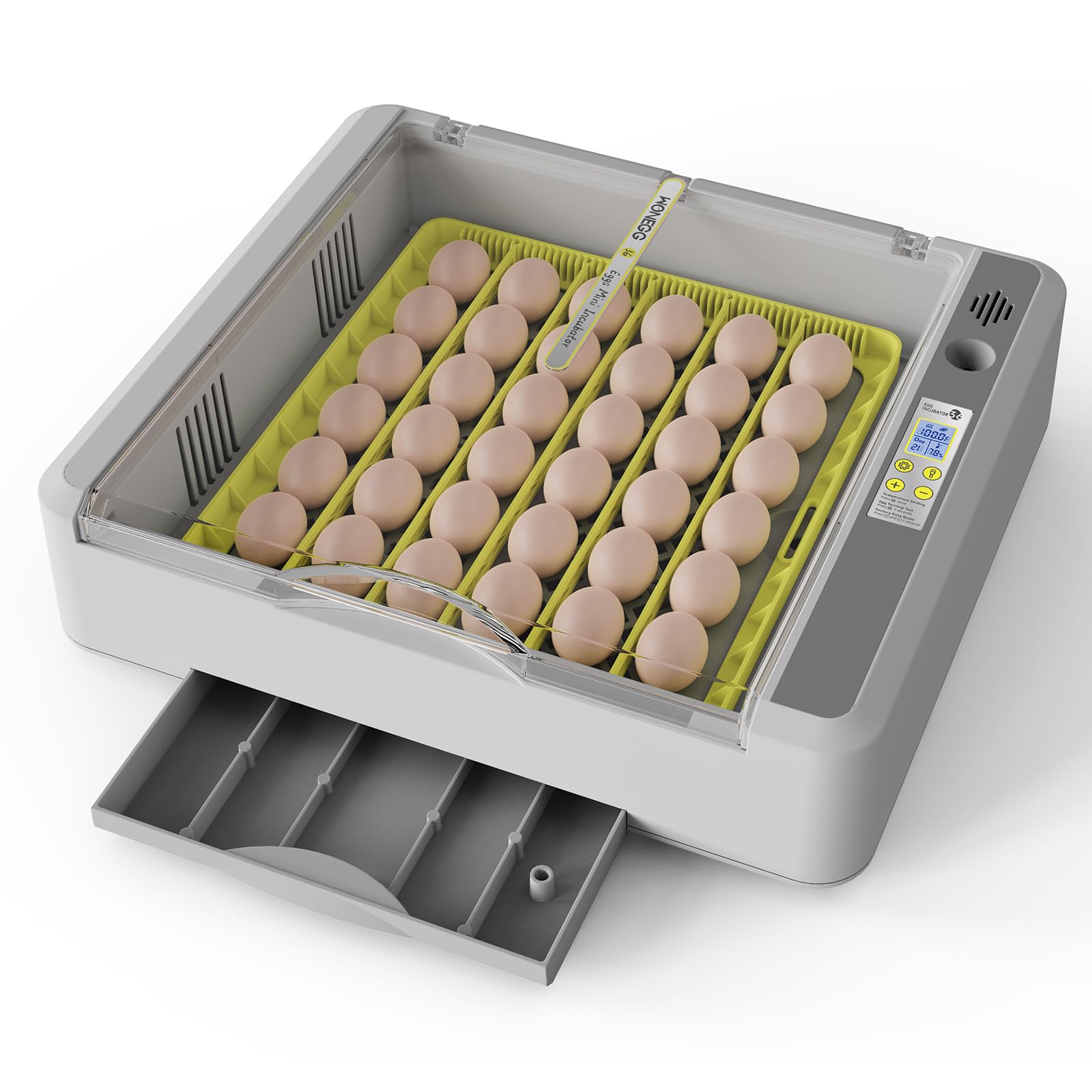
The SENXINGYAN 36 is the most affordable fully automatic incubator on this list, offering a sink-type water tray design that allows you to add water without opening the lid. The digital display monitors temperature, humidity, and incubation days in real time, and the auto-turner rotates eggs every two hours. It even includes a built-in LED egg candler and a 360° circulating airflow system for even heat distribution.
It is a genuine entry point for beginners: users report hatching 7 out of 8 eggs on the first run with no prior experience. The unit is compact (10 x 10 x 7.5 inches) yet holds 36 chicken eggs, making it a space-efficient choice for small apartments or classroom desks. The manufacturer provides a full 24-month warranty and 90-day returns, which is generous for this price tier.
The major risk is heat and humidity calibration drift. One user documented a unit that reported 100°F but measured 86% humidity and incorrect internal temperature, making it impossible to reliably hatch. The water bottle that came with the unit can push humidity above 80%, requiring manual management with a cup of water instead. Beginners should run the unit empty for 24 hours with a calibrated thermometer before trusting its built-in sensors.
Why it’s great
- Lowest-cost fully automatic incubator with decent features
- Sink-type water tray avoids lid opening for refills
- 24-month warranty and 90-day returns provide peace of mind
Good to know
- Sensor calibration can drift on some units
- Water bottle can overshoot humidity above 80%
- Requires separate calibrated thermometer for trust
FAQ
What does automatic egg turning actually do for hatch rates?
Why does my incubator show 100°F but the eggs are colder?
Should I open the lid during the last three days of incubation?
What is the difference between forced-air and still-air incubators?
Final Thoughts: The Verdict
For most users, the best automatic incubator winner is the Chickcozy 25 because it strikes the perfect balance between hatch reliability, ease of use, and chick safety features. If you need maximum capacity and preset programs for multiple species, grab the WONEGG 56. And for hobby farmers on a budget who want large capacity without sacrificing auto features, the Sailnovo 56 delivers the best bang for your buck.