
Our readers keep the lights on and the weekend projects moving. As an Amazon Associate, I earn from qualifying purchases.
A robotic inground pool vacuum that actually learns your pool’s shape instead of bumping along at random is the single biggest leap you can make in weekly maintenance. The market has moved fast: cordless models with sonar mapping, dual filtration, and multi-hour runtimes are now the standard, not the exception. Sorting the ones that deliver on their navigation claims from those that just look good on paper takes a sharp eye on the specs that matter.
I’m Rikta — the founder and writer behind FitlyFast. I’ve spent years tracking the hardware shifts in pool automation, from motor efficiency and filter micron ratings to battery chemistry and path-planning algorithms.
Whether your pool is concrete, vinyl, or fiberglass, choosing the right automatic inground pool vacuum means weighing suction power against runtime and navigation intelligence against filter capacity, which is exactly what this guide breaks down.
How To Choose The Best Automatic Inground Pool Vacuum
Cordless robotic cleaners have overtaken the inground pool market, but the specs that separate a smart buy from a regretful one are specific. You need to look past the glossy product pages and focus on four pillars: navigation intelligence, motor and suction architecture, filtration depth, and battery endurance that matches your pool’s size.
Navigation Intelligence: Sonar, Gyroscope, or Random
The cheapest cleaners still use random-bounce algorithms, which means they might miss large sections of your pool or spend too long re-covering the same spot. Models with sonar mapping or gyroscopic sensors plan an S-shaped or grid-based path, covering the floor, walls, and waterline systematically. For an inground pool with curves, steps, or a tanning ledge, smart navigation is non-negotiable — it directly determines whether the robot finishes the job or leaves patches of debris.
Motor Efficiency and Suction Power
Not all brushless motors are equal. Look for independent dual motors (one for drive, one for suction) and a wattage rating that indicates real pulling force — 180W per motor is a solid baseline. Flow rate measured in gallons per hour (GPH) gives a more practical idea of how well the cleaner will handle heavy leaves versus fine sand. Higher GPH numbers mean faster debris pickup and less time per cleaning cycle.
Filtration Micron Rating and Basket Capacity
Standard filters catch down to 180 microns, which handles leaves, twigs, and coarse sand. A finer 10μm or 3μm secondary filter traps silt, algae particles, and pollen — this is what makes the water truly clear rather than just visually clean. Basket capacity matters too: a 4-liter or 5-liter canister means fewer trips to the filter for emptying, especially in leaf-heavy seasons.
Battery Runtime and Charging Architecture
Run a simple calculation: your pool’s surface area divided by the robot’s coverage per charge. A model with 180 minutes of runtime can handle most residential inground pools up to 2,150 square feet. Look for lithium-ion packs with at least 100 watt-hours — anything below that may leave you with half a cleaned pool. Also check whether the charger is a traditional plug or a wireless dock, as the latter eliminates corrosion risks on charging ports.
Quick Comparison
On smaller screens, swipe sideways to see the full table.
| Model | Category | Best For | Key Spec | Amazon |
|---|---|---|---|---|
| Beatbot AquaSense 2 | Premium | Large, complex pools & automatic retrieval | 4-hr runtime, wireless charging, 4-core CPU | Amazon |
| Polaris 9450 Sport | Premium | Heavy-duty, corded reliability | 5L canister, 60ft swivel cable | Amazon |
| Gosvor LiteVac G1 | Premium | Ultra-fine 3μm dual filtration | 15.2 lbs, 200-min eco mode | Amazon |
| iGarden KN Series | Mid-Range | Inverter energy-saving tech | 210-min runtime, 3 motors | Amazon |
| AIPER Scuba S1 Pro | Premium | Horizontal waterline scrubbing | 3μm + 180μm dual filter | Amazon |
| WYBOT C2 | Mid-Range | Dual filtration & app scheduling | 10μm + 180μm filter layers | Amazon |
| BOTLUXE PC20 | Mid-Range | App-controlled preset cycles | 5,000 GPH suction, 4L basket | Amazon |
| Nepturox SAT25 | Mid-Range | Dual 180W motors, cordless | 150-min runtime, 14.5 lbs | Amazon |
| ABNEMEN SAT30 | Mid-Range | Sonar-guided path planning | 180-min runtime, 2.5L basket | Amazon |
| LODOBA SAT30 | Mid-Range | Sonar mapping & 180W motor | 180-min runtime, 7800mAh battery | Amazon |
| AIPER Scuba S1 | Entry-Level | Budget-friendly cordless entry | 240-min eco mode, 4 modes | Amazon |
In‑Depth Reviews
1. Beatbot AquaSense 2
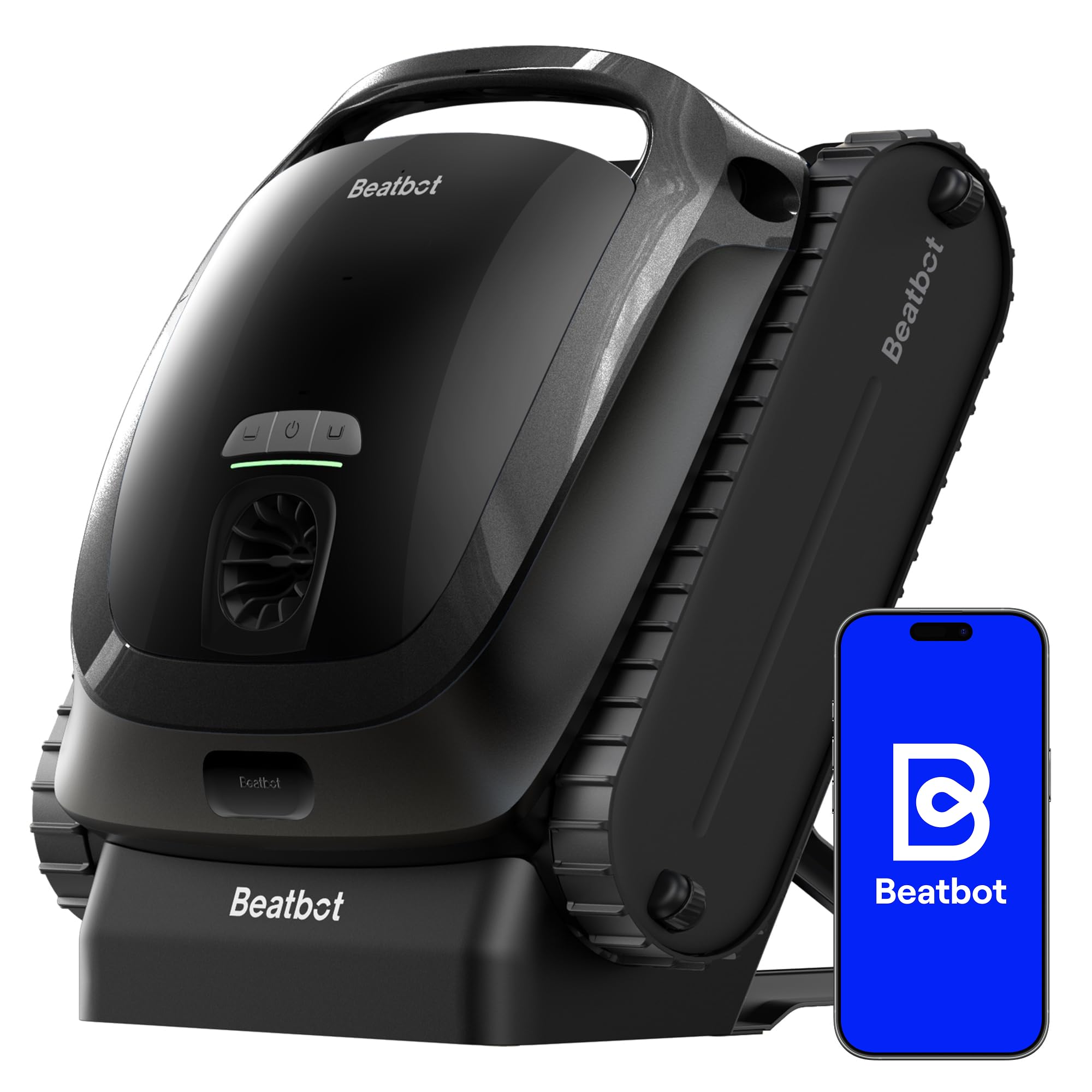
The Beatbot AquaSense 2 sits at the top of the inground pool cleaning hierarchy thanks to its 4-core CPU and 16-sensor array that includes two ultrasonic sensors. This isn’t a random-bounce cleaner — it uses a systematic S-path for floors and an N-path for walls, which means coverage is repeatable and complete. The double-pass waterline scrubbing is a genuine differentiator for pools with tile or plaster that develop scum lines quickly.
Battery endurance is class-leading: four hours on floor-only mode and 3.5 hours on wall/waterline, enough for pools up to 3,230 square feet. The wireless charging and storage dock eliminates the corrosion risk of exposed charging ports, a real pain point for cordless pool robots. The self-parking feature that surfaces the robot when the cycle ends or the battery runs low is a convenience that saves bending and fishing with a hook.
Automotive-grade IMR coating protects the shell from UV degradation, which matters for a device that lives poolside. The fine filter basket catches particles down to sand-sized debris, though larger leaf loads may require pre-skimming. The app offers scheduling and real-time status, though some users note the connection drops when the robot is fully submerged.
Why it’s great
- Industry-first 3-year full machine replacement warranty
- Wireless charging dock eliminates port corrosion
- Surface parking for effortless retrieval
- Systematic S-path and N-path navigation
Good to know
- App connectivity is lost when the robot is submerged
- Requires pump to be off during cleaning to avoid flipping
- High initial investment compared to mid-range models
2. Polaris 9450 Sport

The Polaris 9450 Sport is a corded exception in a cordless world, and deliberately so. The 60-foot swivel cable eliminates battery anxiety entirely — the robot runs as long as the pool needs it, typically finishing a full cycle in 90 minutes. The Vortex Vacuum Technology keeps debris suspended in the water column rather than settling it back on the floor, which means even stirred-up particles get captured.
The 5-liter debris canister is the largest in this lineup, drastically reducing emptying frequency during heavy leaf season. Four-wheel drive and a pleated scrubbing brush tackle tile and concrete surfaces aggressively. The included storage caddy keeps the unit organized when not in use, a thoughtful addition for seasonal storage.
The trade-off is the cord itself — pool layout determines how well the cable floats and whether it tangles around ladders or handrails. Replacement parts for the floating cable and control panel can be expensive, and some users report motor corrosion after extended use in saltwater pools. For pools without complex obstacles, the 9450 remains a bombproof choice.
Why it’s great
- Unlimited runtime via corded power
- 5-liter canister requires fewer emptying stops
- Proven Polaris durability track record
- Complete cleaning in 1.5 hours
Good to know
- Cable can tangle on ladders and steps
- Replacement parts can exceed 50% of unit cost
- Not ideal for very fine silt or sand pickup
3. Gosvor LiteVac G1
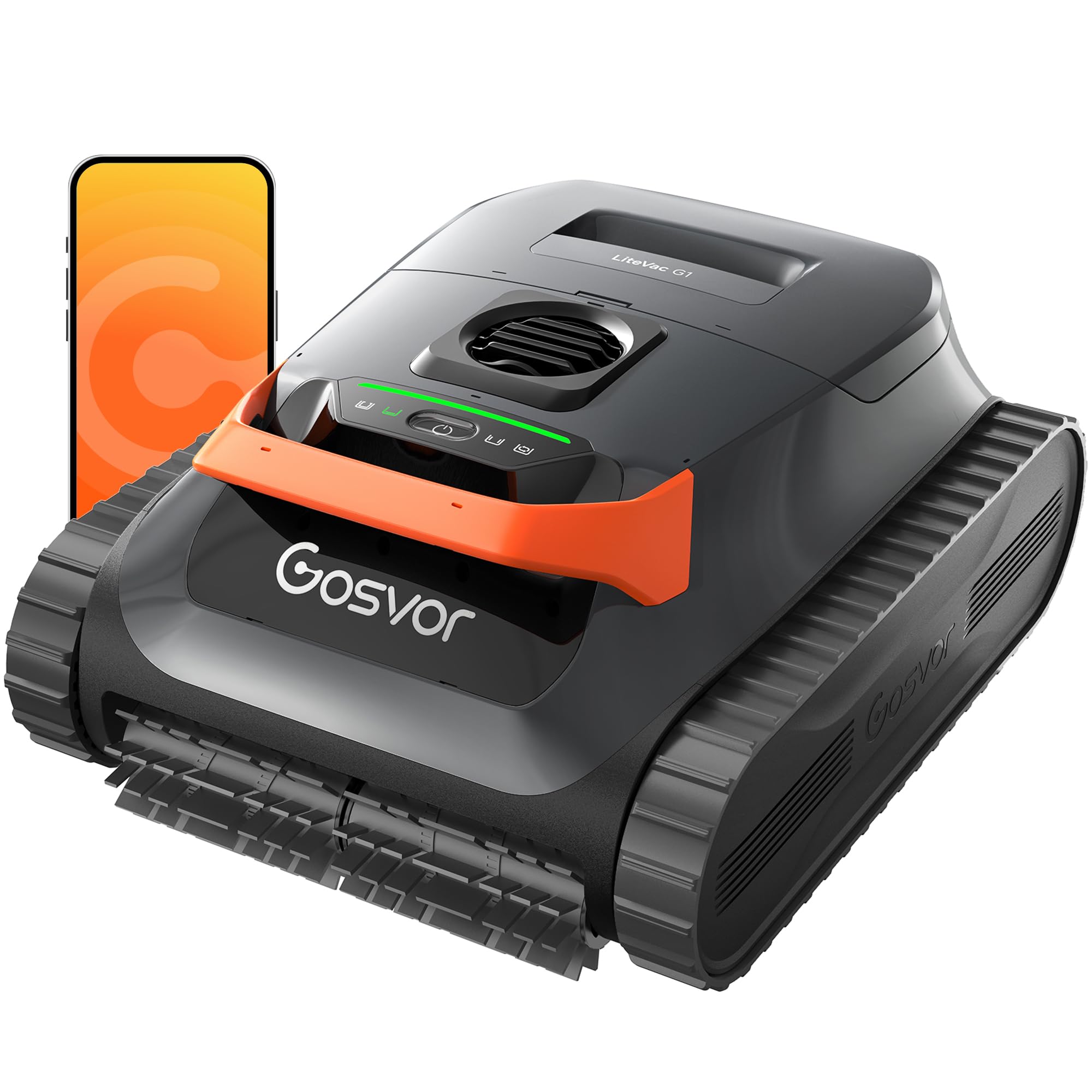
What sets the Gosvor LiteVac G1 apart is its dual-layer filtration system — a standard 180μm basket paired with an ultra-fine 3μm secondary filter. That second filter is the reason your pool water turns from “visibly clean” to “crystal clear,” trapping silt, algae spores, and pollen that most pool vacuums recirculate. This is the strongest argument for the premium price bracket.
At 15.2 pounds, it’s the lightest premium cordless model in this guide, which directly affects ease of deployment and retrieval. The 3,960 GPH suction handles everything from fine sand to large leaves, and the caterpillar tread system provides solid grip on slippery vinyl or fiberglass surfaces. The Gosvor app offers five cleaning modes, step/platform settings, and OTA updates — though the app is only required for custom schedules, not basic operation.
Runtime hits up to 200 minutes in Eco mode, sufficient for pools up to 2,153 square feet. The auto-park feature keeps the unit at the pool edge when the cycle ends. The dual basket system requires more frequent cleaning on very dirty pools — the fine filter clogs faster than a single coarse basket — but the overall water clarity payoff is worth the extra rinse.
Why it’s great
- 3-micron fine filter delivers exceptional water clarity
- Lightweight design for easy handling
- Two-year warranty and app scheduling
- Strong suction handles mixed debris sizes
Good to know
- Fine filter clogs faster in heavy debris pools
- Basket capacity slightly smaller than premium peers
- App setup requires 2.4GHz Wi-Fi only
4. iGarden KN Series
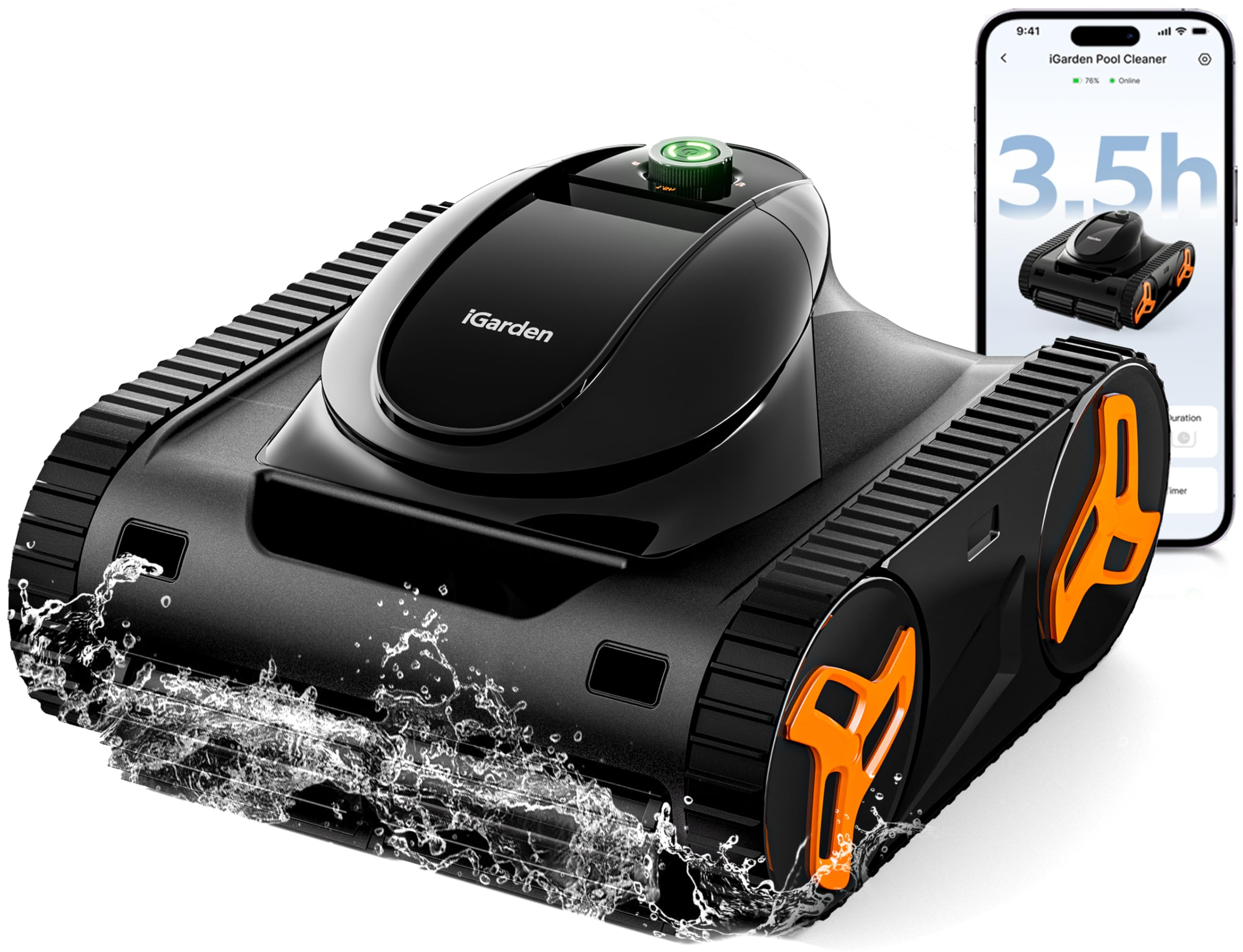
The iGarden KN Series introduces a full-inverter system that dynamically adjusts motor power from 20% to 100% based on cleaning needs. This isn’t a gimmick — it translates directly to longer runtime (up to 210 minutes) and more efficient energy use. Three brushless motors deliver up to 17,000 LPH of flow, enough to lift heavy debris from concrete and tile floors without taxing the battery.
Smart 3D navigation uses multiple sensors to plan an S-shaped cleaning path, and the LED indicator system lets you select floor-only, full coverage, or wall-first modes without needing the app. The 3.2-liter filter basket with 180μm mesh handles medium debris loads well, and the auto-park function keeps the robot accessible at the pool wall when finished.
The app connects via 2.4GHz Wi-Fi and Bluetooth, though initial connectivity can be finicky on some network setups. Build quality is solid with ABS+PC construction, and the unit weighs 17.9 pounds — manageable but not as light as the Gosvor. The inverter tech makes this a smart pick for pool owners who run multiple cleaning cycles per week and want to minimize battery wear over time.
Why it’s great
- Inverter motor adjusts power for maximum runtime
- 210-minute max runtime covers large pools
- Three cleaning modes with LED indicators
- 2-year full replacement warranty
Good to know
- App connectivity can be inconsistent
- Basket capacity smaller than 4L+ competitors
- No ultra-fine secondary filter
5. AIPER Scuba S1 Pro
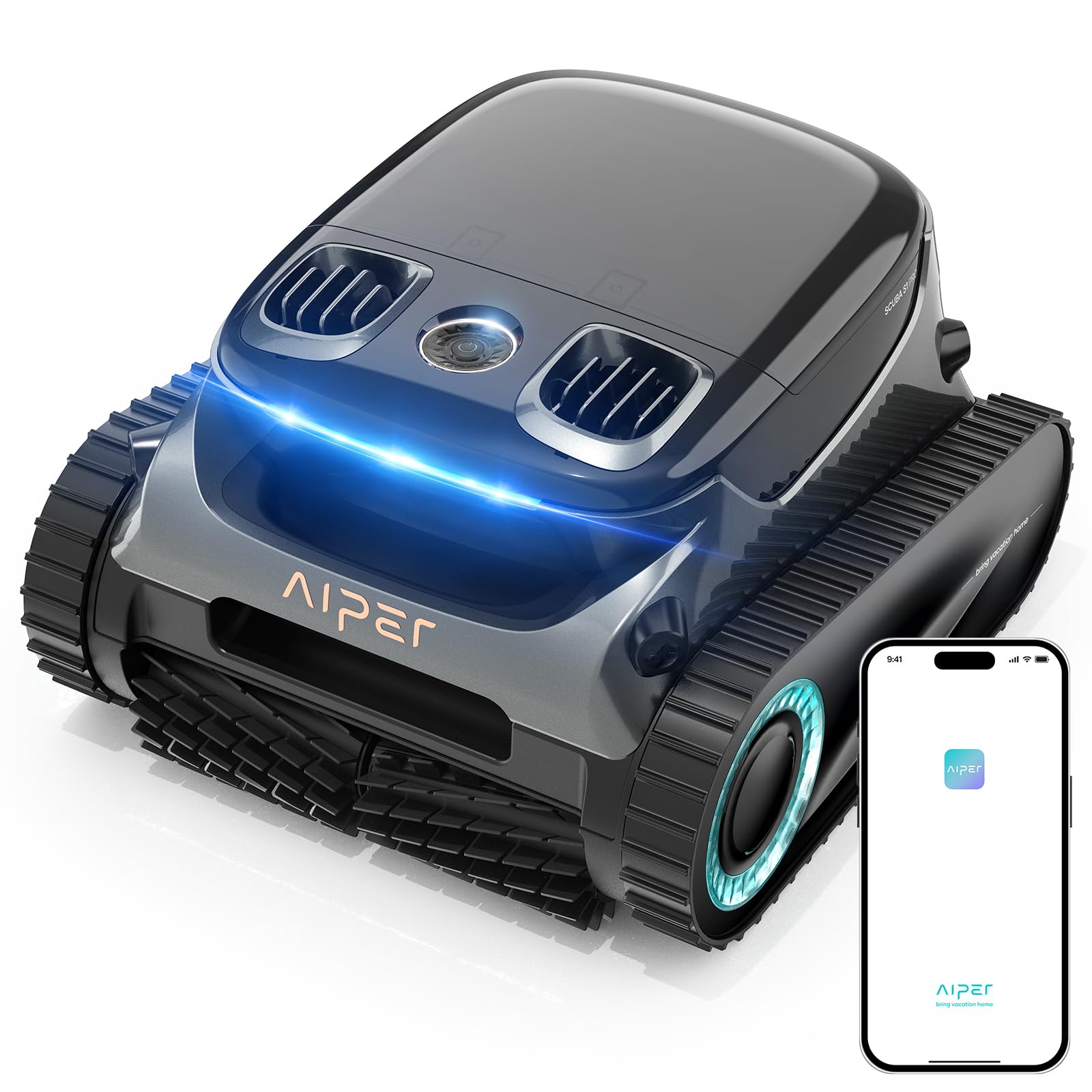
The AIPER Scuba S1 Pro distinguishes itself with dedicated horizontal waterline scrubbing — a feature that targets the algae and oil film that collects at the pool’s surface line. While most robots brush the waterline incidentally, the S1 Pro has a specific mode that scrubs it horizontally, delivering noticeably better tile cleanliness at the water’s edge.
WavePath Navigation 2.0 provides systematic coverage, and the dual filtration system combines a standard 180μm basket with a 3μm ultra-fine filter, matching the Gosvor’s category-leading filtration. Runtime at 180 minutes is adequate for pools up to 2,150 square feet, and the app supports OTA updates for ongoing performance improvements.
The unit is heavy at 17.4 inches tall and requires a firm pull to retrieve despite the included hook. The 3μm filter clogs faster in high-debris environments, and the waterline mode may struggle with very shallow steps depending on your pool’s depth configuration. Overall, a strong performer for pools where waterline buildup is the primary annoyance.
Why it’s great
- Dedicated horizontal waterline scrubbing mode
- 3μm ultra-fine filter for crystal clarity
- WavePath 2.0 navigation for efficient coverage
- 2-year warranty included
Good to know
- Heavy unit requires careful retrieval
- 3μm filter needs frequent cleaning in dirty pools
- App connectivity options may vary
6. WYBOT C2
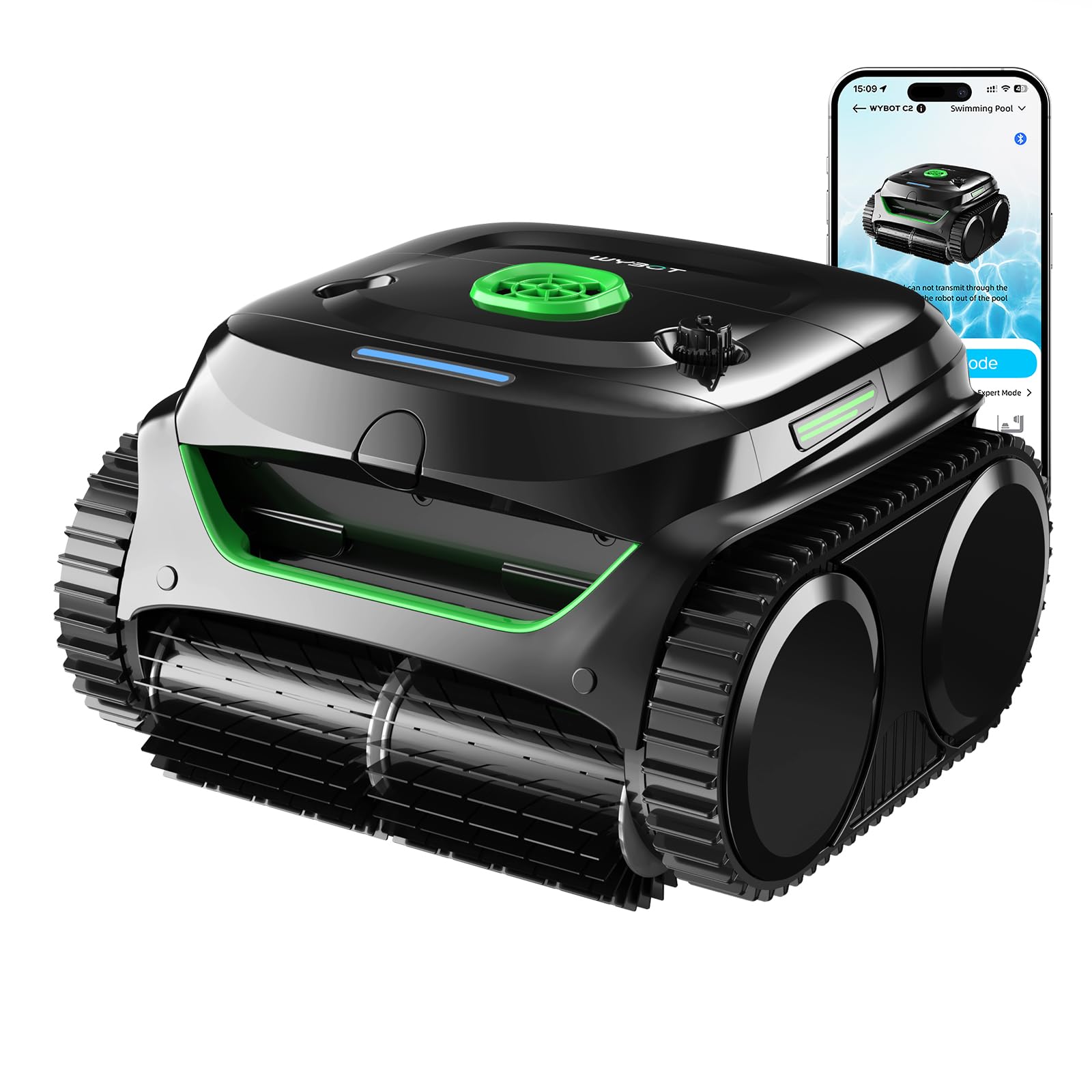
The WYBOT C2 uses a dual-layer filtration system with 180μm and 10μm layers, hitting a useful middle ground between standard baskets and the ultra-fine 3μm filters. The 10μm secondary mesh captures fine sand and silt without clogging as aggressively as a 3μm filter, making it a practical all-rounder for pools that see mixed debris types.
The gyroscopic navigation provides intelligent path planning rather than random movement, and the 82.1% efficient motor delivers 3,593 GPH suction through dual PVC rolling brushes. The app supports scheduling, OTA firmware updates, and three-cycle timer presets — you set the schedule while the robot is on the charging dock, then deploy it. Runtime in Echo mode reaches 180 minutes.
The fluorescent green and black design is polarizing but functional for visibility in the water. Self-parking behavior is more “stops at the nearest wall” rather than a specific retrieval point, and the app interface can be laggy on some Android phones. For buyers who want dual filtration without paying for a premium badge, the C2 delivers solid value.
Why it’s great
- 10μm dual filter balances clarity and clog resistance
- Gyroscopic smart navigation avoids random paths
- OTA firmware updates keep performance current
- Four cycling timer presets via app
Good to know
- Self-parking is approximate, not precise
- App scrolling issues on some devices
- No ultra-fine 3μm filter option
7. BOTLUXE PC20
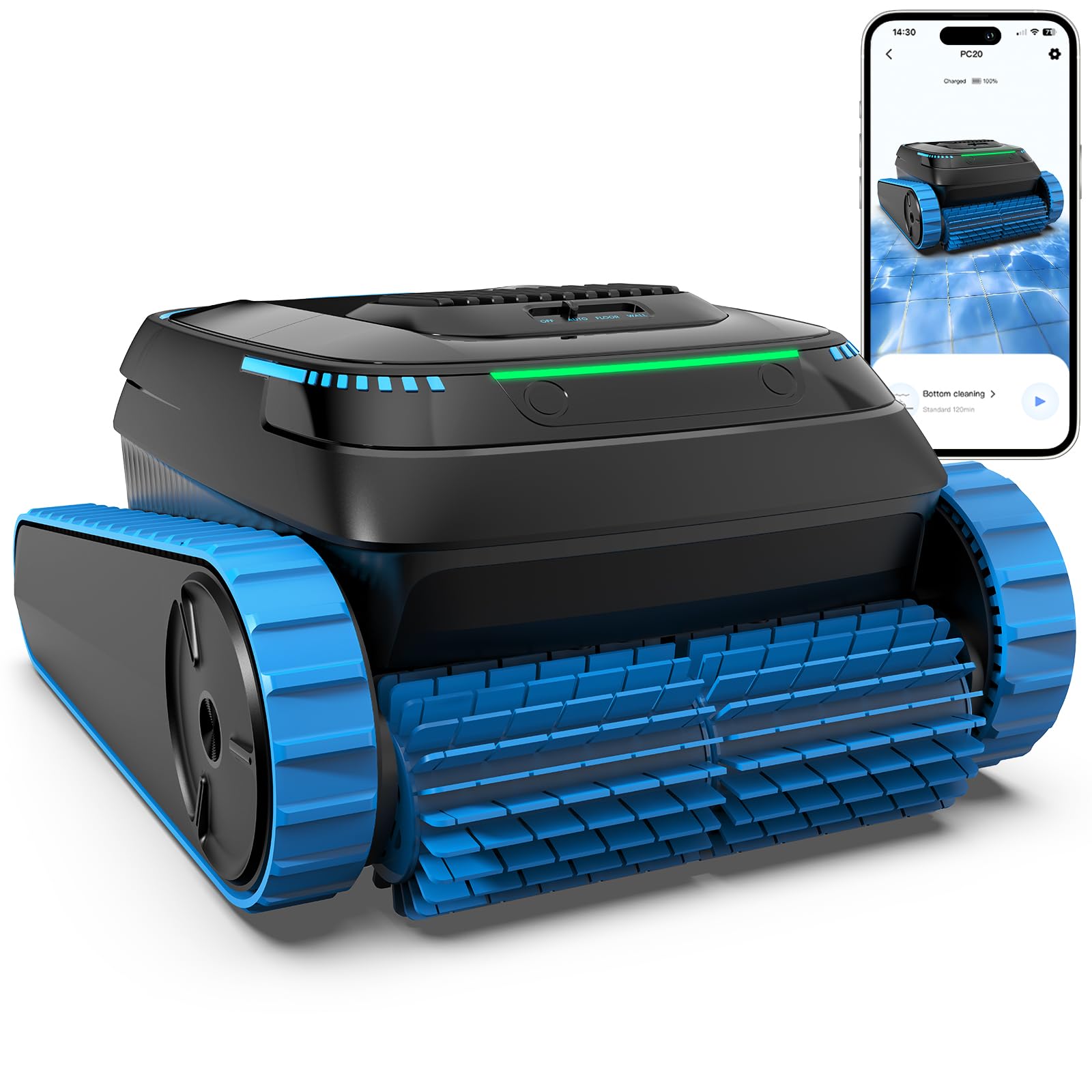
The BOTLUXE PC20’s headline feature is 5,000 GPH water flow — the highest in this mid-range group — which translates to aggressive debris pickup even on heavy debris days. The 4-liter fine filter basket (150μm) is generously sized, meaning fewer interruptions to empty it during the cleaning cycle. The unit weighs only 7.5 pounds, making it the lightest cordless model in this entire lineup.
Smart zigzag navigation reduces missed spots, though it’s not as sophisticated as the sonar-based systems on higher-priced models. The app allows you to preset cleaning mode, suction level, and runtime while on land before deployment — once underwater, the robot runs the selected cycle autonomously. The durable tracks can handle slopes up to 30 degrees, and auto-parking near the pool edge simplifies retrieval.
Battery capacity is 5,200mAh, which yields ample runtime for most residential pools. The fine 150μm filter is good for general debris but won’t catch the ultra-fine particles that a 10μm or 3μm filter would. The app integration is basic — don’t expect live tracking or scheduling beyond the initial preset.
Why it’s great
- 5,000 GPH suction for heavy debris
- 4-liter basket reduces emptying frequency
- Ultra-light at 7.5 pounds
- App presets for cleaning mode and suction
Good to know
- 150μm filter misses very fine particles
- Navigation is zigzag, not full sonar mapping
- App only works for pre-set programming
8. Nepturox SAT25
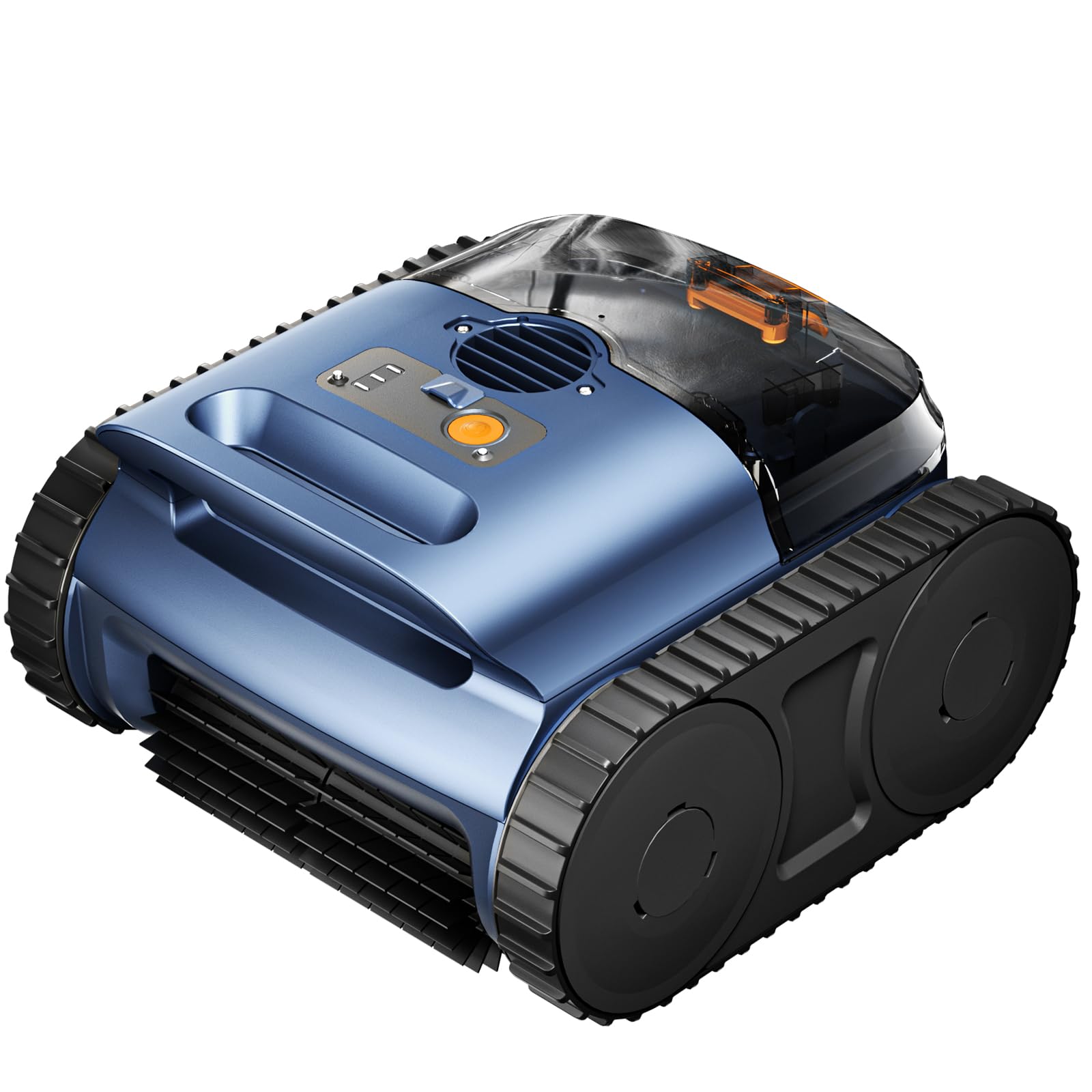
The Nepturox SAT25 packs two independently controlled 180W brushless motors, a configuration that directly mirrors premium-class suction setups at a lower price point. The dual motors drive strong, consistent suction that handles fine silt, sand, and leaves without bogging down. The upgraded navigation system uses zigzag routes rather than random bouncing, and users report it avoids getting stuck on drains and steps better than older Polaris hose-based units.
The 150-minute runtime is suitable for smaller to mid-sized inground pools up to 2,150 square feet. The three-mode cleaning system (floor-only, wall-only, full coverage) gives flexibility depending on the current debris load. The unit is relatively lightweight at 14.5 pounds, and the IP68-rated motors deliver quiet operation during the cycle.
Charging takes 2.5 hours, and the lithium-ion battery carries 144.3 watt-hours of capacity. The filter basket is mid-sized, so leaf-heavy pools may require a mid-cycle empty. The touch control method is straightforward — drop, press, and walk away — though there’s no app support for scheduling or remote monitoring.
Why it’s great
- Dual 180W brushless motors for strong suction
- Zigzag navigation avoids misses and stuck points
- Lightweight and easy to handle
- Three-mode cleaning for targeted cycles
Good to know
- No app connectivity or scheduling
- Filter basket smaller than 4L competitors
- 150-minute runtime is average for its class
9. ABNEMEN SAT30
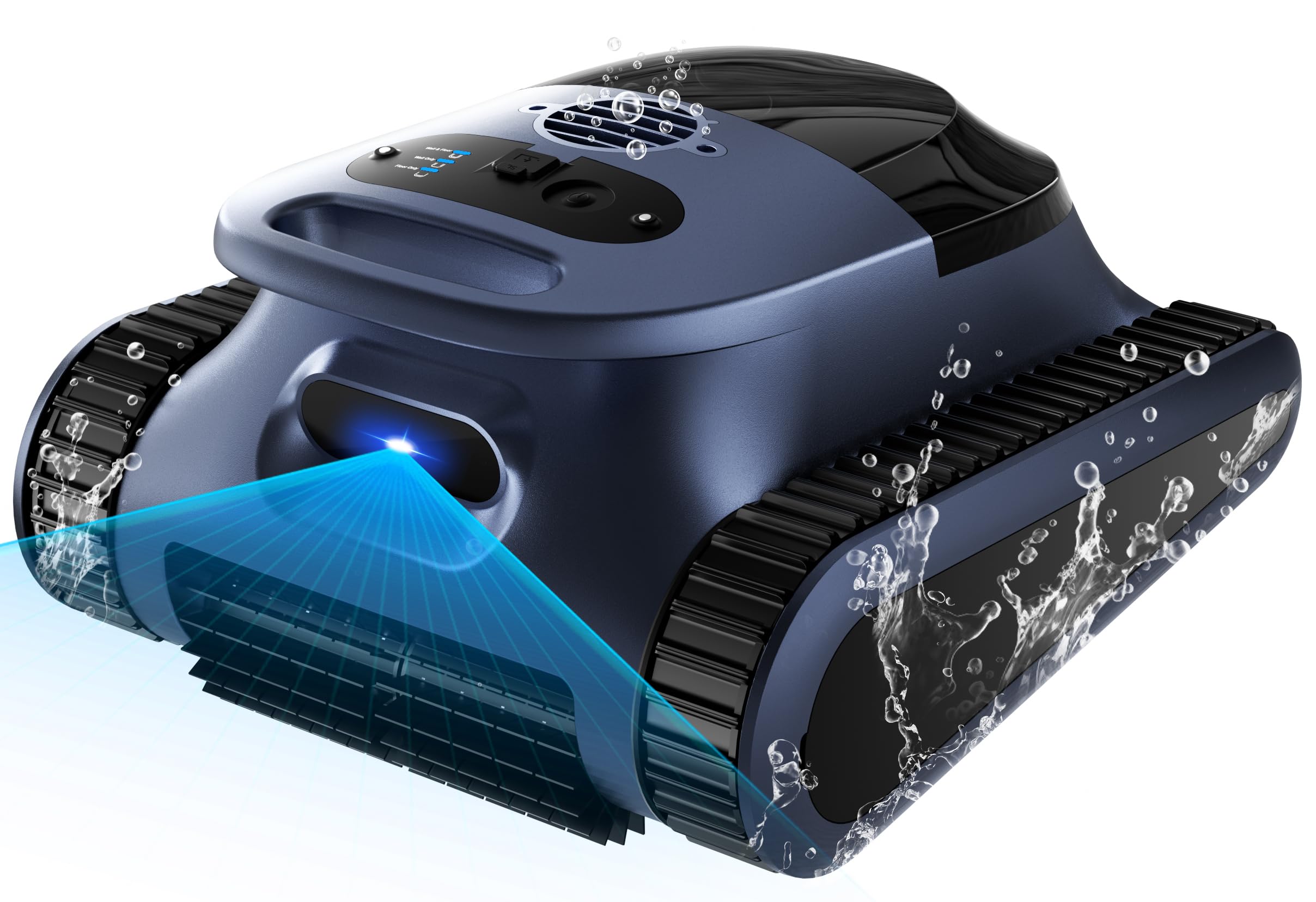
The ABNEMEN SAT30 brings sonar navigation — typically reserved for premium models — into the mid-range price tier. The sonar system maps the pool layout and plans efficient cleaning routes rather than bouncing blindly, which directly improves coverage and reduces cleaning time. The track drive system handles obstacles like main drains and slopes without getting hung up.
Runtime extends to 180 minutes, and the 2.5-liter filter basket with 300μm mesh is on the coarser side — great for leaves and twigs, but not as effective at capturing fine sand or silt. The robot supports floor, wall, and automatic cleaning modes, with voice reminders and LED indicators for status. When the battery runs low, it self-parks near the pool edge for easy retrieval.
The ABS+PC shell is impact-resistant and built for durability. Some users report that the sonar navigation occasionally skips corners or takes longer than expected on complex-shaped pools. The coarse 300μm filter means you’ll get visibly clean water but not crystal-clear results without additional filtration from your pump system.
Why it’s great
- Sonar navigation at a mid-range price point
- 180-minute runtime covers larger pools
- Track drive handles obstacles smoothly
- Voice and LED status reminders
Good to know
- 300μm filter is too coarse for fine particles
- Sonar may miss corners on complex shapes
- No app connectivity for scheduling
10. LODOBA SAT30
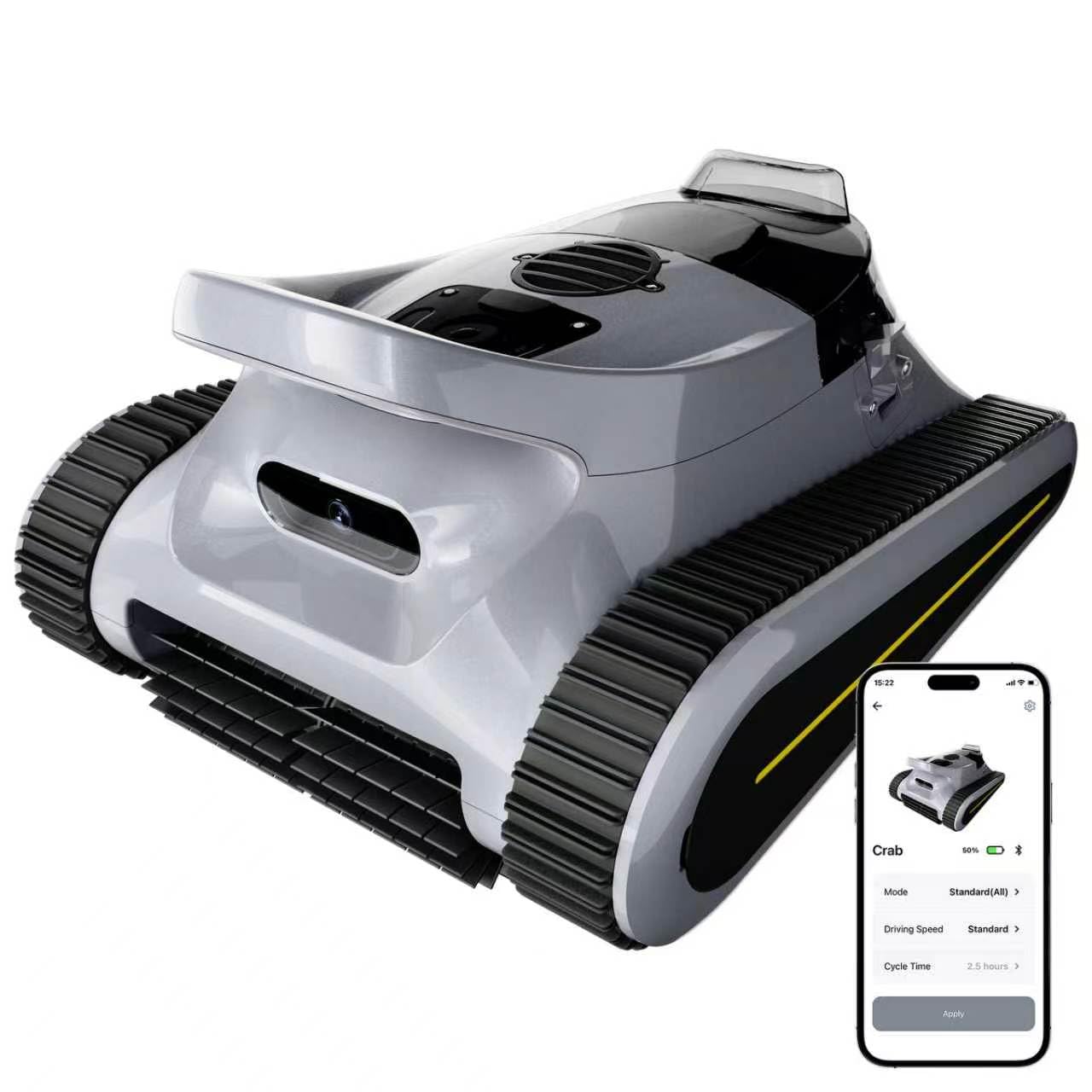
The LODOBA SAT30 combines sonar mapping with a 180W brushless motor and a 7,800mAh battery, delivering up to 180 minutes of runtime. The sonar system scans the pool floor to create a coverage map, minimizing overlap and missed areas — users report it thoroughly cleans 25,000-gallon pools overnight without getting stuck on drains. The 180μm filter basket captures fine sand and silt while still handling larger leaves.
The triple-mode cleaning system (floor, wall, all-coverage) lets you tailor the cycle to current conditions. The unit self-parks when the battery is low or the cycle ends, and the filter basket is easy to remove and rinse. The IP68-rated build ensures the motor and electronics stay sealed through continuous submersion.
At 16.7 inches tall, it’s not the most compact unit, and retrieval requires a pool hook. The Bluetooth mode selection must be done before submersion — there’s no live app control while the robot is underwater. Some users note that the zigzag cleaning path occasionally misses corners, but overall coverage is reliable for its price tier.
Why it’s great
- Sonar mapping for systematic route planning
- 180-minute runtime with a 7,800mAh battery
- 180μm filter balances fine and coarse pickup
- IP68-rated sealed motor assembly
Good to know
- Bluetooth mode must be set before deployment
- May miss corner areas in irregular pools
- Pool hook required for retrieval
11. AIPER Scuba S1

The AIPER Scuba S1 is the entry-level token in this lineup, designed as a straightforward cordless robot with four cleaning modes (Auto, Eco, Floor Only, Wall Only) and a WavePath Navigation system that provides systematic coverage. Eco mode stretches runtime to 240-270 minutes, making it viable for larger pools if you’re willing to accept reduced suction power during that extended cycle.
At its price point, the Scuba S1 delivers reliable floor and wall cleaning without the bells and whistles of app scheduling or dual filtration. The standard filter mesh catches the most common debris types, and the basket is easy to clean. The burly treads provide good grip on concrete and vinyl surfaces, and the auto-park feature returns the unit to the pool edge when complete.
The trade-offs are clear: no ultra-fine filter, no app scheduling, and a single roller brush design that doesn’t scrub as aggressively as dual-brush systems. The standard 180-minute auto mode runtime is adequate for pools up to 1,600 square feet. For budget-conscious buyers who want cordless convenience without feature overload, this is the practical starting point.
Why it’s great
- Eco mode delivers 240+ minutes of runtime
- Simple operation with four onboard modes
- WavePath navigation for systematic coverage
- Budget-friendly cordless entry point
Good to know
- No ultra-fine filter option
- No app scheduling or remote control
- Single roller brush less aggressive than dual-brush models
FAQ
How often should I run an automatic inground pool vacuum?
Do I need to run the pool pump while the robot cleans?
Will a cordless pool vacuum clean the waterline effectively?
Final Thoughts: The Verdict
For most users, the automatic inground pool vacuum winner is the Beatbot AquaSense 2 because it combines the longest runtime with wireless charging, systematic navigation, and a 3-year full-machine warranty. If you want ultra-fine 3-micron filtration for crystal-clear water, grab the Gosvor LiteVac G1. And for pool owners who prefer unlimited corded reliability and a massive 5-liter canister, nothing beats the Polaris 9450 Sport.