
Our readers keep the lights on and the weekend projects moving. As an Amazon Associate, I earn from qualifying purchases.
That film of grime on the kitchen tile after a quick swiffer pass, the dried-on coffee spill that requires a full kneel-down scrub, the pet paw prints that reappear minutes after you finish—these are the daily frustrations that a proper automatic mop is designed to erase. Unlike a standard robot vacuum that just flings a wet cloth around, the modern automatic mop applies controlled water flow, calculated scrubbing pressure, and in many cases, self-cleaning docks that handle the mess so you don’t have to.
I’m Rikta — the founder and writer behind FitlyFast. I’ve spent weeks analyzing motorized scrub cycles, water tank filtration systems, and self-cleaning station mechanics across the current market to separate the real floor-cleaners from the ones that just smear dirt around.
Whether you need a dedicated wet-dry stick that vacuums and mops in one pass or a self-sufficient robot that maps your entire home, this guide breaks down the nine most compelling automatic mop options. You will learn exactly which features translate to genuinely cleaner floors and which are marketing fluff. At the end, you will know precisely which best automatic mop matches your home’s layout, flooring, and your tolerance for maintenance.
How To Choose The Best Automatic Mop
An automatic mop is a long-term home equipment purchase, not a disposable gadget. Picking the wrong one means wet carpets, missed corners, or a machine that smells musty because you never cleaned its dirty tank. Focus on these three criteria to narrow the field fast.
Active Scrubbing vs. Passive Drag Mopping
A passive drag mop—where the robot simply pulls a damp cloth across the floor—handles surface dust but fails on dried-on stains and sticky residue. Active scrubbing, delivered by oscillating or spinning pads that apply downward pressure, lifts actual debris. Look for a model that explicitly mentions a scrubbing mechanism or pad rotation speed if you cook often or have kids who drop food.
Self-Maintenance: The Dirty Truth
The most under-discussed spec is what happens after the mop finishes. Does the dock wash the pads with clean water and dry them with hot air? If not, you will need to remove and manually clean the pads after every use or two, or they will harbor bacteria and smell. Self-emptying dust bins and auto-refilling water tanks further reduce hands-on time. A machine that requires daily attention defeats the purpose of automation.
Mapping, Edge Coverage, and Mop Lifting
Random-bouncing robots miss large sections. LiDAR or camera-based mapping creates a floor plan the robot follows in efficient rows, covering every square foot. Edge-sensing technology that extends the mop pad to the wall perimeter prevents the dreaded boundary strip of uncleaned floor along baseboards. Finally, a mop-lifting mechanism (lifting the pad 7–12 mm off the ground) is essential when the robot crosses area rugs—otherwise you drag a wet mop across carpet fibers, leaving damp patches and dirty streaks.
Quick Comparison
On smaller screens, swipe sideways to see the full table.
| Model | Category | Best For | Key Spec | Amazon |
|---|---|---|---|---|
| DREAME X40 Ultra | Robot | Deep scrubbing & large homes | 12,000 Pa suction / 158°F hot water wash | Amazon |
| ECOVACS DEEBOT T80 Omni | Robot | Premium edge-to-edge mopping | 18,000 Pa suction / 220 RPM roller mop | Amazon |
| NARWAL Freo X10 Pro | Robot | Tangle-free pet hair management | 11,000 Pa suction / DualFlow system | Amazon |
| eufy X10 Pro Omni | Robot | All-in-one hands-off cleaning | 8,000 Pa suction / 45°C heated pad drying | Amazon |
| DREAME L10s Pro Ultra Heat | Robot | Hot water mop self-cleaning | 7,000 Pa suction / 136°F hot water wash | Amazon |
| Tikom L8000 Plus | Robot | Value self-emptying robot | 6,000 Pa suction / 3L self-empty base | Amazon |
| Airzeen Q10 Pro | Robot | Quiet pet hair pickup | 6,000 Pa suction / laser navigation | Amazon |
| Ultenic AC1 Elite | Stick | Portable wet-dry stick cleaning | 50-min runtime / self-cleaning rollers | Amazon |
| ROPVACNIC S1 | Robot | Budget-friendly starter mop | 5,200 Pa suction / 120-min runtime | Amazon |
In‑Depth Reviews
1. DREAME X40 Ultra

This is the closest you get to a fully automated mopping experience without stepping into four-figure territory. The X40 Ultra physically removes its mop pads and leaves them at the dock before crossing carpet, then reattaches them when it returns to hard floors—no wet pad ever touches your rug. The 12,000 Pa suction is more than adequate for everyday debris, but the real star is the 158°F hot water wash that keeps the mop pads and the internal washboard free of bacterial buildup and odors.
Its extendable side brush tackles wall corners and furniture legs that most circular robots cannot reach, and the 6,400 mAh battery handles large homes on a single charge. The 3D structured light obstacle avoidance detects cables, shoes, and pet bowls even in low light, so the robot rarely gets stuck mid-cycle. Users report that after a full vacuum-and-mop run, their secondary Dyson picks up almost nothing—a strong indicator of thorough first-pass cleaning.
Owners note that the base station auto-empties the dust bin, but a few units have experienced the self-empty function failing intermittently, requiring a manual bin check every few cycles. The app interface has minor translation quirks, though core functions like room scheduling and mopping-level adjustment work reliably.
Why it’s great
- Mop pads physically detach for carpet protection—no wet rug streaks
- 158°F hot water self-cleaning keeps pads sanitary
- Extendable side brush reaches deep into corners
- Large battery covers entire floor without recharging
Good to know
- Self-empty function can be inconsistent on some units
- App interface has minor translation awkwardness
2. ECOVACS DEEBOT T80 Omni

ECOVACS re-engineered the mopping mechanism with this model, swapping a flat pad for a 220 RPM roller mop that continuously washes itself as it cleans. The roller removes dirty water in real time—the mop never drags a soiled cloth across clean floor. With 18,000 Pa of suction, this is one of the most powerful vacuum-mop combos available, lifting embedded carpet dirt and fine dust in a single pass.
The TruEdge system dynamically extends the roller mop to hug baseboards and furniture legs, eliminating the 2-inch uncleaned strip that plagues round robot mops. The 10-in-1 Omni station auto-empties dust for up to 90 days, washes mops with hot water, dries them with hot air, and refills the robot’s water tank automatically. Users with large homes report that 1,600 square feet of vacuum-and-mop uses about 30% of battery, suggesting strong efficiency.
A small number of users have reported the obstacle avoidance system failing on specific low-profile objects, which can damage the side brush. The app interface is feature-rich but feels cluttered compared to simpler systems. The station footprint is larger than many competitors, so you will need dedicated floor space for the dock.
Why it’s great
- Self-washing roller mop avoids cross-contamination on floors
- 18,000 Pa suction is class-leading for deep carpet cleaning
- TruEdge roller extends to clean right against walls
- 90-day self-empty station reduces maintenance to near-zero
Good to know
- Obstacle avoidance can occasionally miss low objects
- Dock is large and needs permanent floor space
3. NARWAL Freo X10 Pro
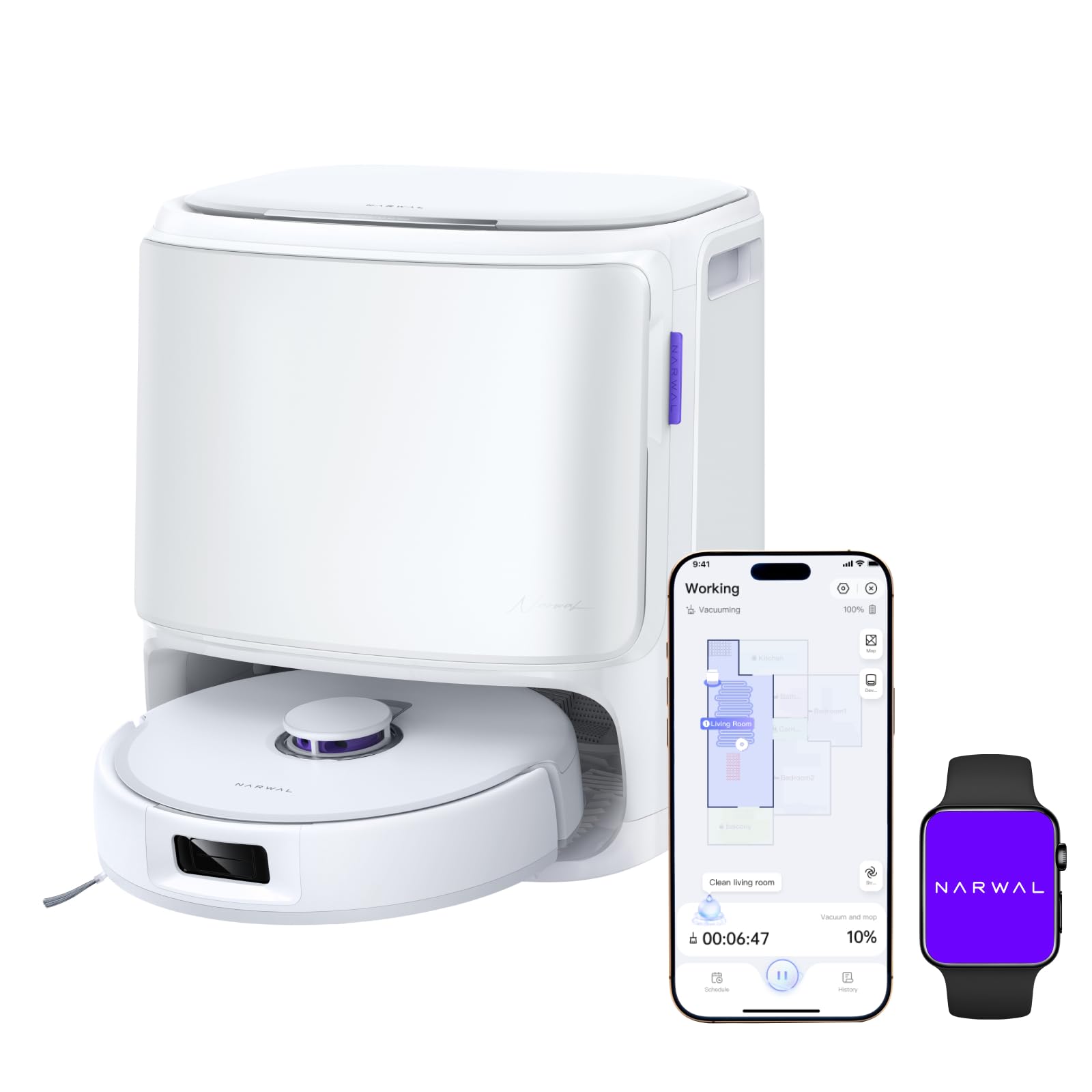
The NARWAL Freo X10 Pro solves the single biggest complaint from pet and long-hair households: brush tangling. The DualFlow Tangle-Free System uses a dynamic side brush combined with a roller brush that funnels hair directly into the dustbin rather than winding it around the axle. After months of use, owners of multiple shedding Australian Shepherds report zero hair wrap on the main brush—a rare claim in this category.
The dual spinning mop pads apply 8N of downward pressure and use a patented Reuleaux triangular shape to maximize coverage area. The MopExtend feature pushes the mop outward to reach edges, and the robot auto-lifts the mop pads 12 mm when transitioning to carpet to keep rugs completely dry. The base station washes the mops with clean water and dries them with warm air, storing up to 120 days of debris in the extra-large dust bag.
Several long-term owners report durability concerns after 4–5 months, with the robot beginning to spin in place and not complete its cleaning route. The machine can be loud in high-suction mode, and the corner cleaning still leaves a narrow strip along some baseboards. Tech support responsiveness has been inconsistent according to user feedback.
Why it’s great
- DualFlow system effectively eliminates hair wrap
- Spinning mop pads apply real scrubbing pressure
- 12 mm mop lift keeps carpets completely dry
- 120-day debris storage in base station
Good to know
- Durability concerns reported after several months
- Corner cleaning still misses narrow strips along walls
4. eufy X10 Pro Omni
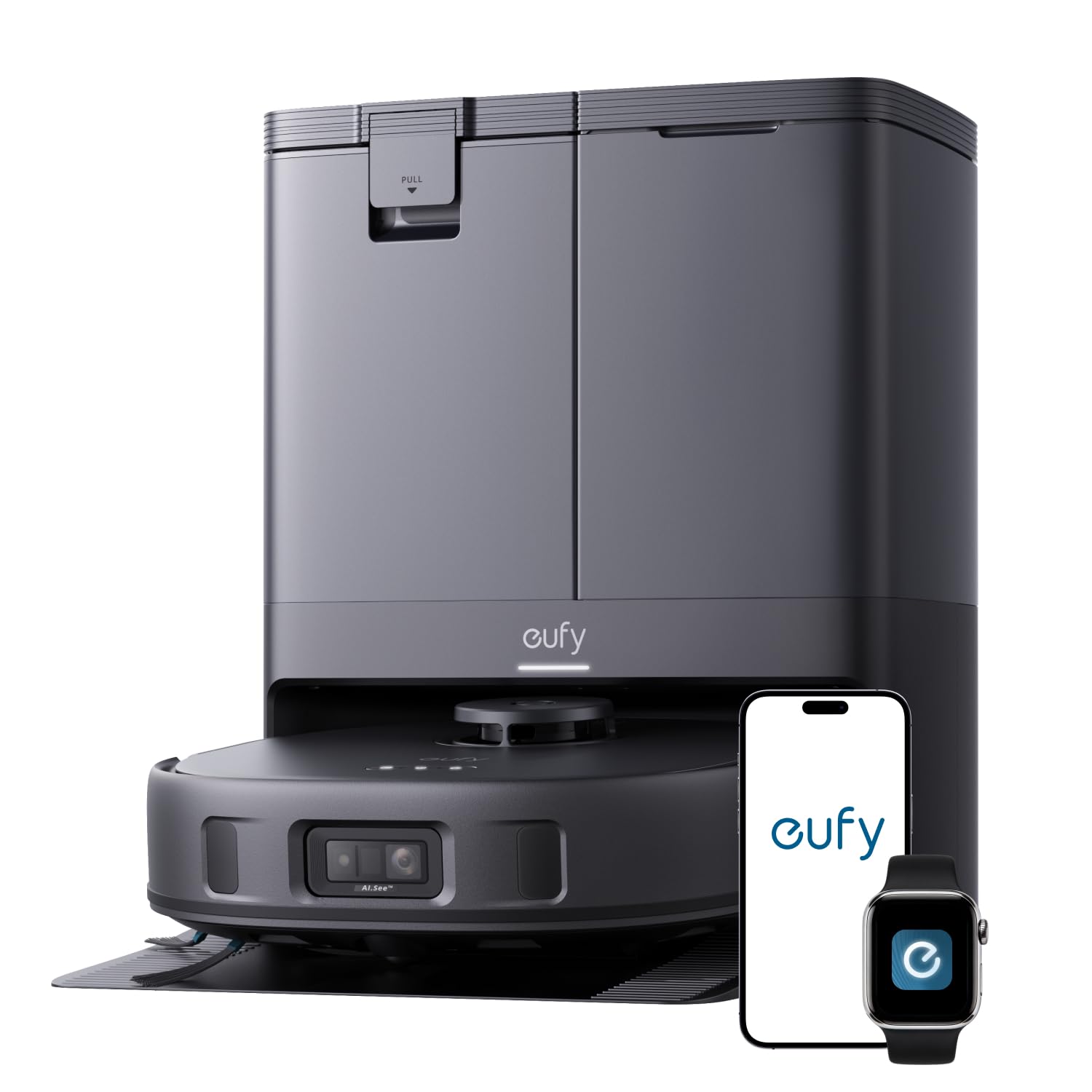
The eufy X10 Pro Omni is an excellent middle-ground robot for homes that want the full self-maintenance ecosystem without paying flagship prices. The Omni station uses fresh water to wash the mop pads, then dries them with 45°C heated air—a cycle that keeps the pads fresh for the next run without manual intervention. The 2.5L dust bag lasts roughly 2 months, and the 3L clean water tank supports multiple full-home mop cycles before a refill is needed.
The AI.See obstacle detection system identifies over 100 types of objects, including wires and pet toys, and navigates around them day or night using a camera and LED light. The self-cleaning roller brush is designed to resist hair tangling, which reduces maintenance frequency for pet owners. The iPath laser navigation ensures the robot follows an efficient row-by-row pattern rather than bouncing randomly, and multi-floor mapping allows the robot to remember up to five different floor plans.
The rubber brush roller still traps some hair at the ends and requires periodic manual cleaning. The dock’s water tanks are not sealed, so if you have hard water, mineral buildup inside the tanks can become an issue over time. The app interface has a steeper learning curve than simpler competitors, particularly when setting up no-mop zones for area rugs.
Why it’s great
- Heated air drying prevents mop pad odor
- AI.See detects objects even in low light
- Multi-floor mapping for homes with levels
- Large 3L clean water tank for extended mopping
Good to know
- Brush roller ends still need periodic hair removal
- Hard water can cause mineral buildup in tanks
5. DREAME L10s Pro Ultra Heat

The DREAME L10s Pro Ultra Heat is the gateway to hot-water self-cleaning without the flagship price tag. Its base station heats water to 136°F to wash the mop pads after every cleaning cycle, reducing the greasy buildup that cold-water washing leaves behind. The station then dries the pads with hot air, so you never pull a damp, musty pad off the dock.
One of its standout features is the MopExtend technology, which pushes the mop pad out to reach baseboard edges and furniture legs. The dirt detection system identifies particularly soiled areas and triggers a rewash-and-remopping cycle—the robot goes back over those spots with fresh water until the sensor reads clean. The 7,000 Pa suction adjusts automatically on carpet, and the 3D structured light obstacle avoidance recognizes over 55 object types including cables and shoes.
The water tank on the dock is small relative to the competition, requiring more frequent refills in larger homes. Some units have experienced leaking from the base station, and multiple users recommend placing a rubber mat underneath. The battery life in standard mode is solid at 220 minutes, but using the max vacuum and hot water wash simultaneously can drain it faster than expected for large floor plans.
Why it’s great
- Hot water mop wash at 136°F breaks down grease
- Dirt detection triggers automatic re-mopping
- MopExtend reaches edges for full perimeter coverage
- 220-minute battery handles most home floor plans
Good to know
- Base station water tank needs frequent refilling in large homes
- Leaking reports suggest placing a protective mat underneath
6. Tikom L8000 Plus
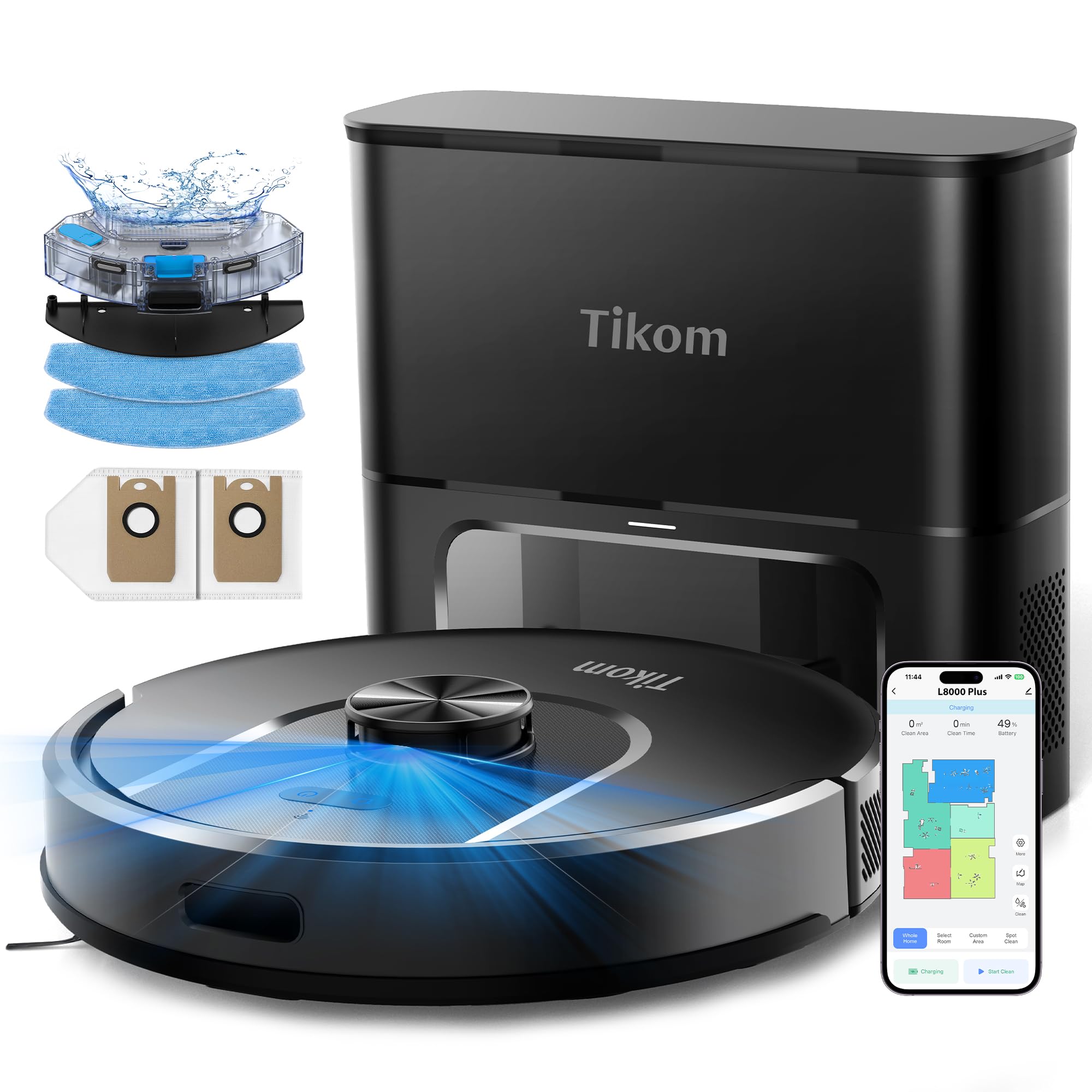
The Tikom L8000 Plus proves that a self-emptying robot vacuum and mop combo does not have to cost a premium. The 3L self-emptying base holds up to 90 days of debris, which is the same capacity as some models costing twice as much. The 6000 Pa suction is competitive at this price, and it increases automatically on carpets for deeper cleaning.
LiDAR-based navigation creates accurate home maps with support for up to five floor plans. You can set no-go zones and no-mop zones through the app, schedule cleaning for specific rooms, and adjust suction and water flow levels. The 150-minute runtime is sufficient for homes up to about 2,000 square feet, and the auto-charge-and-resume feature means it completes the full job even if it needs a break in the middle.
The mopping function uses a drag pad rather than an active scrubbing mechanism, so it handles surface dust and light marks well but struggles with dried stains. Users note that the mopping is essentially a damp cloth pass—effective for maintenance but not for deep cleaning. The self-emptying base is also fairly loud when it activates, which can be startling if you are home during the cycle.
Why it’s great
- Self-emptying base at a mid-range price point
- LiDAR navigation maps accurately across multiple floors
- 150-minute runtime covers most homes
- Auto-carpet suction boost improves deep cleaning
Good to know
- Mopping is a passive drag pad, not active scrubbing
- Self-emptying base is noticeably loud when cycling
7. Airzeen Q10 Pro

The Airzeen Q10 Pro brings strong suction and LiDAR mapping to the sub-premium tier. Its 360° laser navigation creates precise home maps and follows an efficient matrix cleaning pattern rather than wandering randomly. Smart carpet detection boosts suction by 15% when the robot transitions from hard floors to rugs, ensuring embedded dirt is lifted without user intervention.
The 3.3L self-emptying station collects debris for up to 60 days of hands-free operation. The mopping function includes three water flow settings calibrated for different floor types, and the 150-minute runtime covers homes up to 2,000 square feet. The Q10 Pro is notably quiet—users consistently mention it runs without disturbing daily life or pets.
A significant issue has emerged with US app compatibility. Multiple users report that the app listed in the instructions is not supported in the US, requiring a third-party download with a subscription fee. This is a dealbreaker for anyone expecting out-of-box functionality in North America. The obstacle avoidance, while generally competent, can occasionally miss smaller items like charging cables.
Why it’s great
- Strong LiDAR navigation for precise room mapping
- Self-emptying base with 3.3L capacity
- Very quiet operation during cleaning cycles
- Carpet detection automatically increases suction
Good to know
- US app compatibility requires third-party download with a subscription fee
- Obstacle avoidance occasionally misses small cables
8. Ultenic AC1 Elite
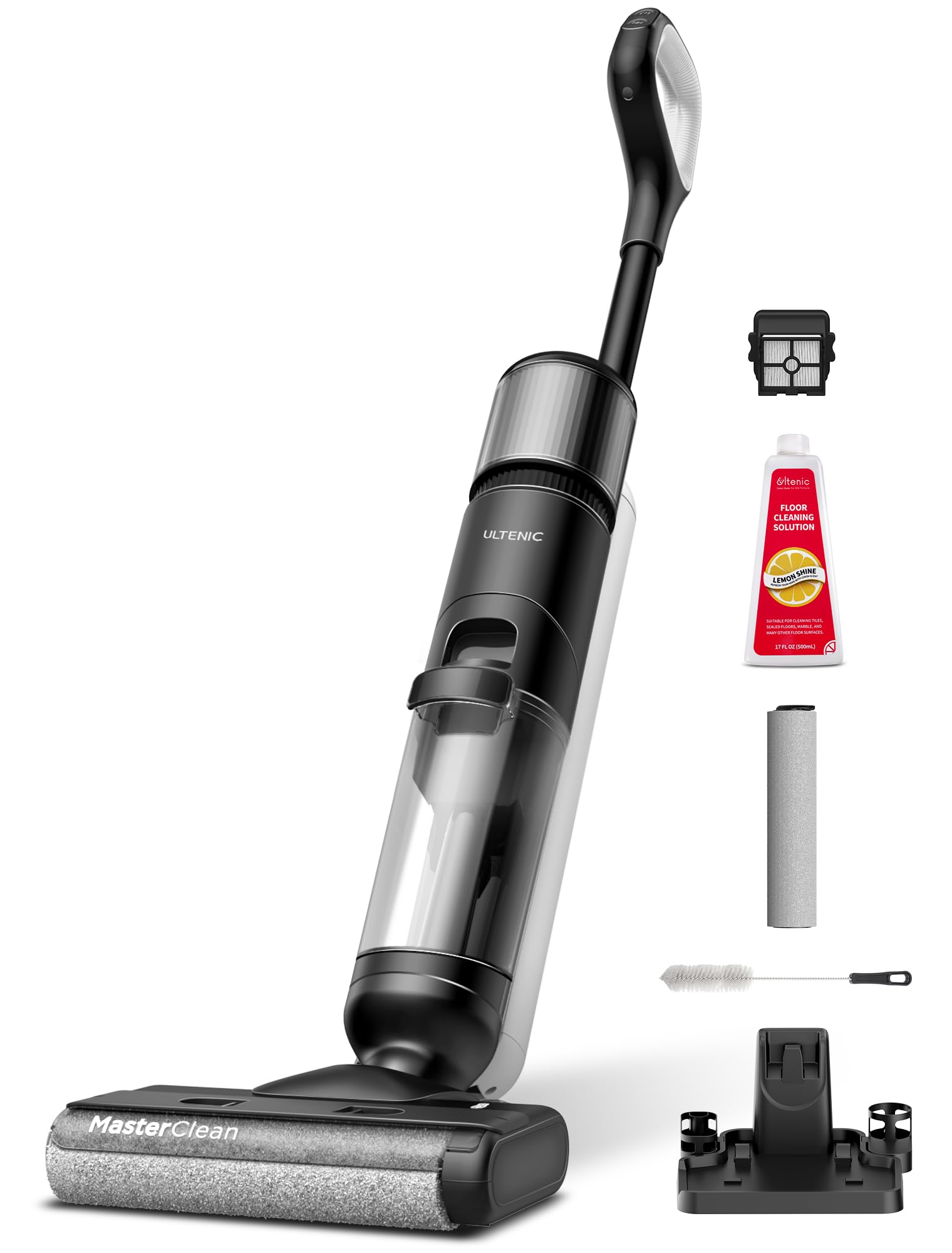
The Ultenic AC1 Elite is the only non-robot on this list, and it earns its place because it solves a different problem: spot-cleaning wet messes and doing a full-home mop without the mapping overhead. It is a cordless stick vacuum mop that vacuums, washes, and mops simultaneously, meaning you do not need to first dry-vacuum and then separately mop. The self-cleaning cycle activates at the press of a button, rinsing the brush roller with clean water so you never touch a dirty roller.
The smart mess detection system automatically increases suction when it senses a wet spill or sticky patch, and the vacuum mode dries floors in seconds with no water streaks. The dual-tank system keeps clean and dirty water separate, ensuring you are always mopping with fresh water. At under 9.5 pounds with a self-propelled brush roller, the AC1 Elite glides forward with minimal effort, making it easy to push through an entire floor in one session. The 50-minute runtime handles most apartments and small homes on a single charge.
The suction power is noticeably lower than a dedicated stick vacuum—users report needing to pre-vacuum high-pile carpets because the AC1 Elite struggles with deep carpet debris. The unit must be stored on its charging dock, which takes up more floor space than a standard stick vacuum. Users who have used foam-based cleaning solutions other than the Ultenic brand have reported foaming issues that caused the machine to malfunction.
Why it’s great
- Self-propelled brush roller glides forward effortlessly
- Self-cleaning roller eliminates manual pad handling
- Dual water tanks ensure fresh water for every pass
- Smart detection auto-boosts suction for wet messes
Good to know
- Suction is weak for deep carpet cleaning without pre-vacuuming
- Charging dock requires permanent floor space
- Only compatible with non-foaming Ultenic cleaning solution
9. ROPVACNIC S1
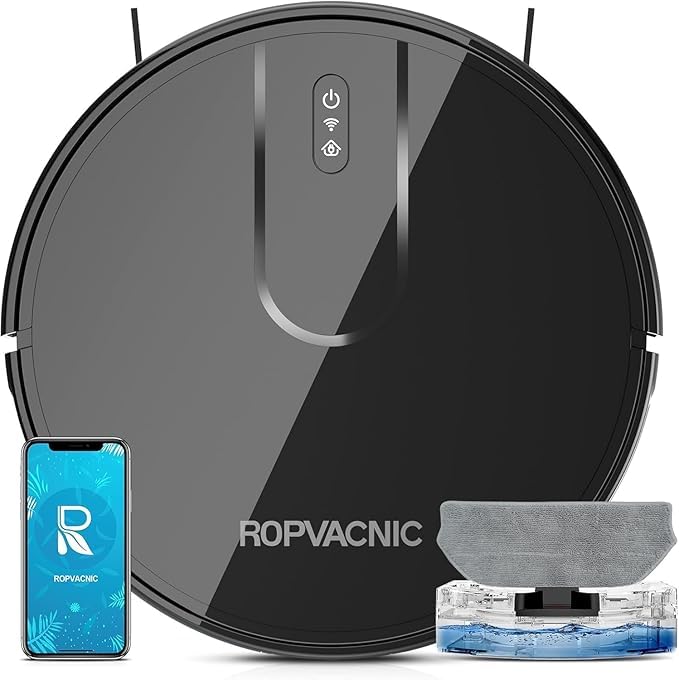
The ROPVACNIC S1 is the most budget-friendly entry into automatic mopping, and it punches above its weight for basic floor maintenance. The electronically controlled water tank provides four stages of water flow adjustment, letting you dial in a light damp mop for daily maintenance or a heavier wet pass for sticky kitchen floors. The 5,200 Pa suction handles common household debris—crumbs, dust, pet hair—on hard floors and low-pile carpets without much complaint.
The no-entanglement side brush design is a genuine time-saver for pet owners: the dual rotating side brushes flick hair into the suction path rather than wrapping it around the brush axle. The robot uses a high-coverage sensing system with multiple algorithmic data points to detect obstacles, navigate furniture legs, and avoid stairs. The 120-minute battery is enough for most apartments and smaller homes, and the auto-return-to-charge feature ensures the robot finishes its route even after a break.
The mopping function is a passive drag pad—it cannot scrub dried stains or sticky residue. Users who need deep cleaning will need to manually pre-treat spots or use a separate spray mop. The S1 lacks any self-emptying or self-cleaning feature, so you must manually rinse the mop pad after each use and empty the dustbin. It does not map rooms, so its cleaning pattern is semi-random, which can result in missed spots in larger, open layouts.
Why it’s great
- Four-stage water flow adjustment tailors mopping to your floor type
- No-entanglement side brushes reduce pet hair maintenance
- 120-minute battery covers most apartment layouts
- Strong value proposition for first-time robot mop buyers
Good to know
- Passive drag mop cannot scrub dried or sticky stains
- No self-emptying or self-cleaning—requires manual pad and bin maintenance
- Semi-random navigation can miss spots in open floor plans
FAQ
Can an automatic mop replace a traditional mop and bucket completely?
Why does my robot mop leave wet streaks on the floor?
Do I need a separate vacuum if I buy a robot vacuum and mop combo?
How often do I need to replace the mop pads on a self-washing robot?
What floor types are safe for an automatic mop?
Final Thoughts: The Verdict
For most users, the best automatic mop winner is the DREAME X40 Ultra because it combines industry-leading 12,000 Pa suction with a removable mop pad system that physically detaches before crossing carpets, preventing wet rug streaks. If you want the most powerful self-cleaning station and edge-to-edge mopping, grab the ECOVACS DEEBOT T80 Omni. And for pet owners who struggle with hair wrap, nothing beats the NARWAL Freo X10 Pro.