
Our readers keep the lights on and the weekend projects moving. As an Amazon Associate, I earn from qualifying purchases.
A pool that’s low on water stresses the pump, exposes the skimmer to air, and turns a relaxing backyard into a constant chore. Dragging a garden hose out every few days to refill from evaporation and splash-out is a routine that gets old fast. An automatic pool filler steps in to handle that task silently and precisely, keeping your water level exactly where it needs to be without you lifting a finger.
I’m Rikta — the founder and writer behind FitlyFast. I evaluate pool fillers by analyzing float valve materials, brass versus plastic construction, flow rate consistency, and the real-world failure points that emerge after months of direct sun and chlorinated water exposure.
This guide cuts through the noise to present the only options worth your time for the best automatic pool filler on the market, using hard specs and verified owner experiences to separate dependable units from frustrating ones.
How To Choose The Best Automatic Pool Filler
An automatic pool filler is a simple device — a float valve connected to your water supply that opens when the water level drops and closes when it reaches the set height. The simplicity ends when you consider materials, pressure compatibility, and mounting style. Each variable determines whether your filler works silently for years or causes a flood.
Valve Material: Brass vs. Plastic
Brass is the standard for durability in pool environments. It resists corrosion from chlorine, salt, and harsh sunlight far better than plastic or chrome-plated alternatives. Plastic valves degrade faster, become brittle, and are more likely to fail in the open position, which leads to continuous overflow. A brass body with a stainless steel hinge pin is the configuration you want for a long-term install.
Flow Rate and Operating Pressure
Most in-ground auto-fill canisters operate with standard residential water pressure, typically between 40 and 60 PSI. If your supply exceeds 60 PSI, you need a pressure-reducing valve to prevent damage to the float mechanism and to avoid water hammer. Flow rate matters less for fillers than for irrigation — you want a slow, controlled trickle, not a high-speed blast, to prevent sudden pressure drops in your home plumbing.
Mounting Configuration
There are two main setups: an in-canister valve that installs inside the dedicated auto-fill housing (usually a 6-inch PVC canister buried near the pool) and a deck-mounted water leveler that sits on the pool edge. In-canister valves are more permanent and hidden from view. Deck-mounted units are easier to install without excavation and can be moved or removed seasonally.
Quick Comparison
On smaller screens, swipe sideways to see the full table.
| Model | Category | Best For | Key Spec | Amazon |
|---|---|---|---|---|
| Pentair T26 Float Valve | Premium Valve | In-ground canister replacement | All-brass construction | Amazon |
| Airlie Pool Water Leveler | Premium Deck-Mount | Above-ground and sloped edges | Stainless steel hose & brass connector | Amazon |
| Staypoollizer 2.0 Premium | Premium Deck-Mount | High-pressure and vacation homes | NXGEN nozzle 1-200 PSI | Amazon |
| Upgrade Automatic Pool Filler | Mid-Range Deck-Mount | Universal pool types with filter | Rotary adjustable water level | Amazon |
| UueeGo Auto Pool Leveler | Mid-Range Deck-Mount | Above-ground pools and hot tubs | Fillable base with non-slip pads | Amazon |
| Float Tec Letro T26 Brass Valve | Value Brass Valve | Budget-friendly canister refit | 2.25 GPM at 125 PSI | Amazon |
| A&A Quik Water Leveler | Budget Valve | Direct replacement for worn valves | Includes restrictor seal | Amazon |
In‑Depth Reviews
1. Pentair T26 Float Valve

The Pentair T26 is the reference standard for in-ground auto-fill valves. Pool service professionals have been installing these brass units for decades because they simply work. The float ball geometry is optimized for a smooth, no-stick action that prevents the valve from binding in the open or closed position — a failure mode common in cheaper knockoffs that either starve the skimmer of water or flood the pool.
Machined from solid brass with a threaded 1.5-inch outlet, the T26 fits snugly into a standard 6-inch autofill canister. The wing nut adjustment allows you to set the water level without tools, and the brass construction shrugs off chlorinated water and constant UV exposure year after year. Owners report installing one of these and not touching it again for half a decade or more.
Yes, the Pentair T26 costs more than generic alternatives, but the premium buys you a part that doesn’t crack, doesn’t stick, and doesn’t leak. For a permanent in-ground installation where a flood means expensive damage, this is the only choice that makes sense.
Why it’s great
- Machined brass body resists corrosion indefinitely in pool water
- Wing nut adjustment for tool-free water level setting
- Proven track record from decades of residential and commercial use
Good to know
- Requires a 6-inch canister housing — not for deck mounting
- Premium price compared to plastic or composite valves
2. Airlie Pool Water Leveler

The Airlie deck-mounted leveler is the best option for above-ground pools or in-ground pools where you don’t want to excavate for a canister. It comes with a stainless steel braided hose extension and a solid brass 90-degree connector — accessories that most competitors make you buy separately. The float valve adjusts from 2 to 9 inches in height, giving you fine control over the final water level.
What really sets Airlie apart is its adjustable feet on the base. Pool edges are rarely perfectly level, and this design lets you compensate for sloped coping without propping the unit up with rocks or shims. The base can also be filled with water or sand for extra ballast, keeping the leveler planted even in windy conditions or when kids are splashing nearby.
Owner reports consistently praise the lifetime warranty and responsive customer service. Units that have been in direct Florida sun for four years still function perfectly, and when a rare defect appears, the company replaces the unit immediately. The brass connector and stainless components ensure no rust develops at the hose attachment point.
Why it’s great
- Includes stainless steel hose and brass 90° fitting — no extra purchases
- Adjustable base feet adapt to uneven or sloped pool edges
- Lifetime warranty with proven responsive support
Good to know
- Rubber valve seal may need periodic inspection after heavy use
- Requires pressure under 60 PSI or a separate reducer
3. Staypoollizer 2.0 Premium
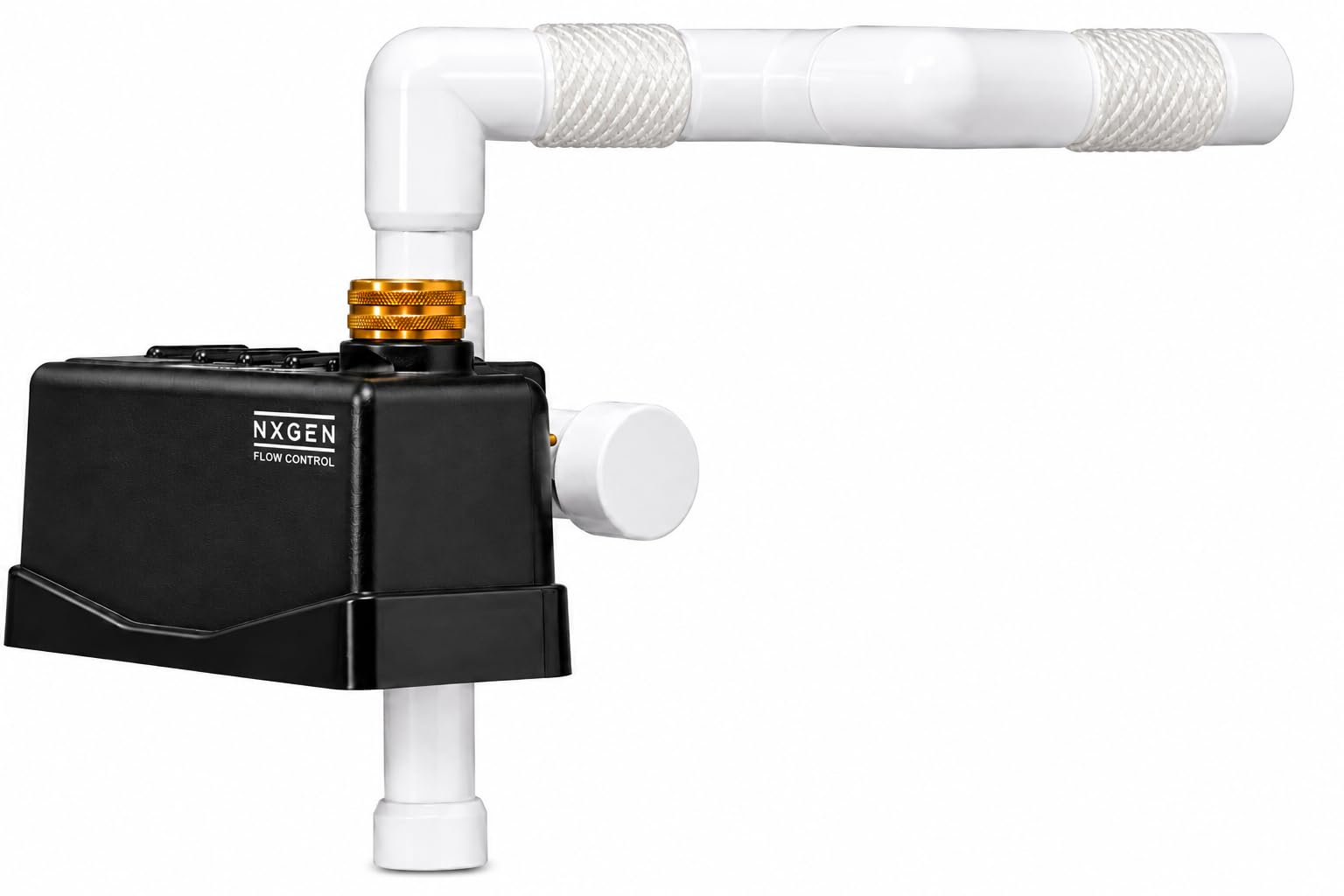
The Staypoollizer 2.0 solves a specific problem that other deck-mount fillers ignore: high water pressure. Its NXGEN stainless steel nozzle operates reliably from 1 PSI all the way up to 200 PSI, which means it works with well pumps and variable-pressure household systems without needing an additional pressure regulator. That wide performance window makes it the most resilient option for homes on well water or with unregulated pressure.
Setup requires no wiring, plumbing, or permanent modification — the unit sits at the pool edge and connects to a standard garden hose. The adjustable feet level it on uneven surfaces, and the swivel hose connector keeps the supply line flat and unobtrusive. Owners of seasonal homes and rental properties particularly appreciate being able to set it up in minutes before leaving for a trip and coming back to a perfectly filled pool.
The main trade-off is noise. Some users report a noticeable running sound when the valve is open, which is the NXGEN nozzle design at work. It’s not a problem during the day or while away, but it may be audible from inside the house if the pool is close to the living area.
Why it’s great
- NXGEN nozzle handles 1 to 200 PSI — works with well pumps without a reducer
- No excavation or plumbing modification required for setup
- Adjustable feet and swivel hose for uneven surfaces and tight spaces
Good to know
- Audible water flow noise when valve is actively filling
- Height adjustment range is more limited than some competitors
4. Upgrade Automatic Pool Filler

This mid-range deck-mount filler from Xmnbl includes a thoughtful feature that most units at this price omit: a water inlet filter. That small mesh screen catches sediment and debris from your hose before it can clog the float valve mechanism, which is the most common cause of failure in unfiltered pool levelers. The rotary adjustable height control is simple to set without tools.
The unit is made from UV-resistant ABS plastic, which holds up better than standard polypropylene under direct sunlight. Owners in Florida have reported it maintains the pool level reliably through the hot summer months when evaporation peaks. The 5-year warranty provides extra reassurance for a product at this price tier.
Quality control appears inconsistent based on owner reports. A small number of units have self-adjusted their water level downward after installation, leading to continuous filling and overflow. While the seller’s customer service has been responsive in replacing defective units, the inconsistency means you should test the seal and shut-off function thoroughly during the first week.
Why it’s great
- Integrated water inlet filter prevents debris from clogging the valve
- Rotary adjustable water level control is tool-free and intuitive
- 5-year warranty for peace of mind
Good to know
- Some units have exhibited self-adjustment float issues causing overflow
- UV-resistant ABS is durable, but brass alternatives last longer
5. UueeGo Auto Pool Water Leveler

The UueeGo leveler uses a fillable base platform to solve the stability problem that plagues lightweight pool fillers. You pour water or sand into the base, making it heavy enough that it won’t shift or tip, even if a strong wind catches it or someone brushes against it. Five non-slip rubber pads and two non-slip legs anchor it further — this unit stays put.
The stainless steel frame supports the float valve assembly and adjusts from 2 to 9 inches, covering the typical range for above-ground pools. The top surface includes a trench for routing the stainless steel braided hose, reducing tripping hazards around the pool deck. Owners of above-ground pools and hot tubs consistently report that this unit keeps the water level perfect without any ongoing effort.
A pressure note: if your household water pressure exceeds 60 PSI, you must install a pressure regulator before using this unit. The 1-year warranty is shorter than some competitors, but the build quality and stability engineering justify the mid-range price for those who want a simple deck-mount solution that doesn’t slide around.
Why it’s great
- Fillable base with sand or water for exceptional stability on decks
- Five non-slip rubber pads and two non-slip legs prevent movement
- Stainless steel frame resists rust in humid pool environments
Good to know
- Requires a pressure regulator if your water exceeds 60 PSI
- 1-year warranty is shorter than the market average
6. Float Tec Letro T26 Brass Valve
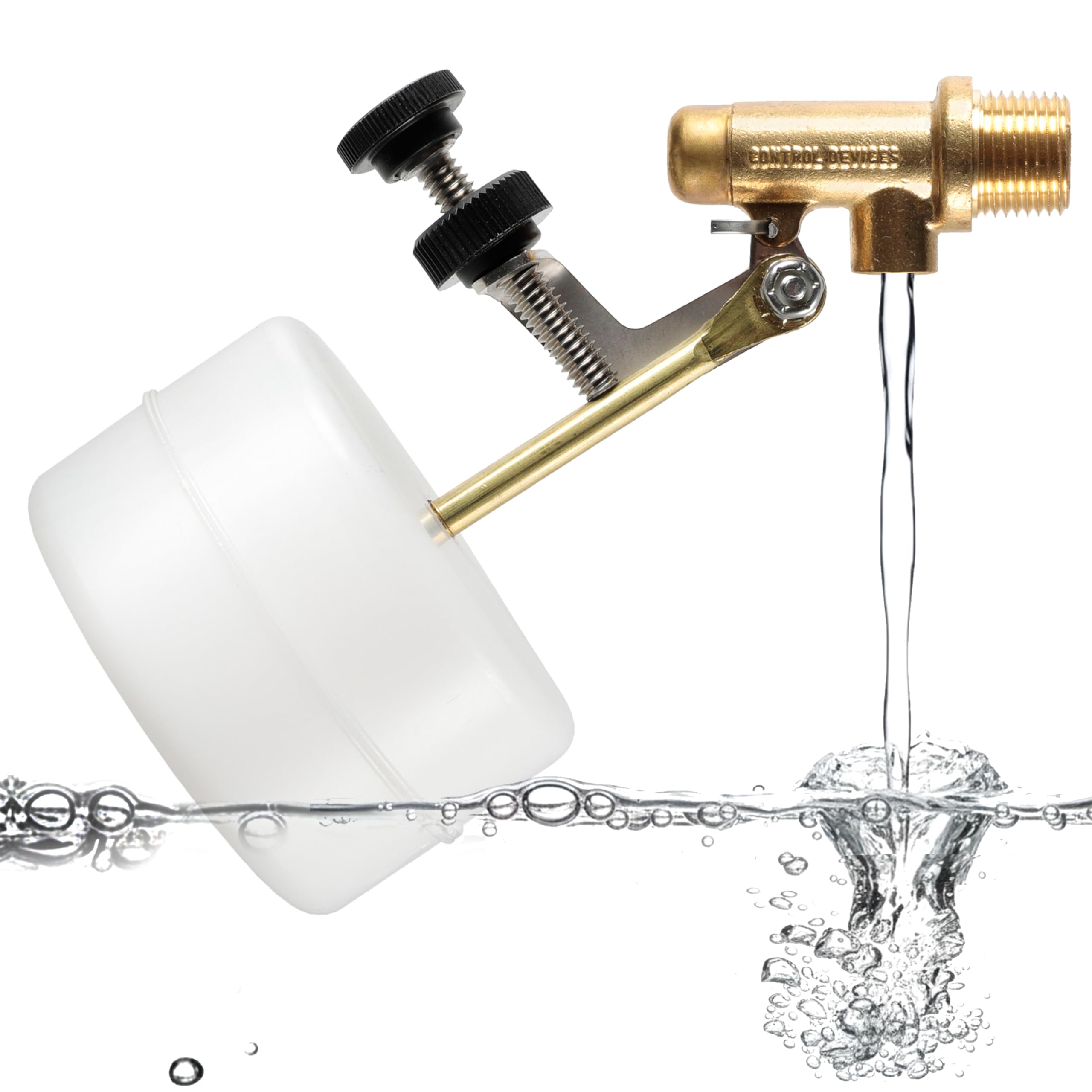
The Float Tec Letro T26 is a direct competitor to the Pentair T26 at a lower price point, and for many pool owners it delivers 90% of the performance for significantly less. The valve body is brass, the float is stainless steel, and the adjustment screw lets you dial in the water level precisely. It supports a 2.25 GPM flow rate at up to 125 PSI, which is more than sufficient for any residential auto-fill canister.
Owners consistently note that the adjustment mechanism is easier to use than the original Pentair part. The threads are clean, the float arm moves smoothly, and the brass construction eliminates the corrosion issues that plague plastic float valves. Reviewers who replaced failing plastic valves with this brass unit reported immediate improvement in reliability and water bill savings from eliminating constant leaks.
The primary compromise is in the wrench flats. The base of the valve lacks a hexagonal surface for a tool to grip during installation, which makes tightening it into the canister a bit awkward. It’s not a deal-breaker — hand-tightening with a firm grip works — but it’s a detail that the Pentair handles better.
Why it’s great
- Brass and stainless steel construction for corrosion-free performance
- Fine adjustment screw sets water level more precisely than original parts
- 2.25 GPM flow rate handles any residential auto-fill canister
Good to know
- No wrench flat on the base, making tightening slightly more difficult
- Brass threads are softer than steel — avoid overtightening
7. A&A Manufacturing Quik Water Leveler

If you need a direct replacement for a worn-out pool water leveler valve and you want to spend as little as possible, the A&A Quik Water Leveler is the budget option that actually works. It comes with a restrictor seal that helps control water flow and prevent the hammering or chattering that can happen when a cheap valve snaps shut. Installation takes about five minutes with basic tools.
This is a manual power source unit — no batteries, no electronics, just a straightforward mechanical float valve. Owners report that it fixes the two most common pool water leveler problems: a constantly running valve that wastes water, and an overfilling valve that floods the deck. Several reviewers noted that their original unit lasted eight years before needing replacement, which speaks to the durability of this simple design.
The catch is that this is a plastic-bodied valve, not brass. It will not resist UV and chemical exposure as well as a brass unit over the long term, and the 5-pound weight suggests substantial plastic content. For a temporary fix or a low-use pool, it’s fine. For a permanent in-ground installation you want to forget about for a decade, save for the brass Pentair or Float Tec.
Why it’s great
- Budget-friendly price with reliable performance from a known brand
- Restrictor seal prevents water hammer and chattering on shut-off
- Straightforward 5-minute installation with basic hand tools
Good to know
- Plastic body is less durable than brass in direct sun and chlorinated water
- Heavier than expected at 5 pounds — check canister clearance
FAQ
Can I install an automatic pool filler myself or do I need a professional?
How do I know if my water pressure is too high for a pool filler?
Will an automatic pool filler work with a saltwater pool?
What happens if the pool filler fails in the open position?
Final Thoughts: The Verdict
For most users, the best automatic pool filler winner is the Pentair T26 Float Valve because it delivers decades-proven reliability with an all-brass body that shrugs off pool chemicals and UV exposure. If you want a deck-mounted unit that works with sloped edges and comes with a lifetime warranty, grab the Airlie Pool Water Leveler. And for high-pressure well systems and vacation homes where you need wide PSI tolerance, nothing beats the Staypoollizer 2.0 Premium.