
Our readers keep the lights on and the weekend projects moving. As an Amazon Associate, I earn from qualifying purchases.
An automatic telescope does the heavy lifting for you. Instead of spending hours learning star charts and polar alignment, you power it on, select a target on your phone, and watch the mount slew to the right spot. The technology has advanced rapidly, giving beginners and seasoned observers access to deep-sky objects that were once the domain of expensive, complex setups.
I’m Rikta — the founder and writer behind FitlyFast. I’ve spent months analyzing mount payload capacities, sensor sensitivity, and GoTo accuracy across the latest smart telescopes to cut through the marketing noise.
After evaluating over a dozen models, I’ve narrowed the field to nine of the best. Whether you want to capture the Orion Nebula from your backyard or take a portable rig to a dark-sky site, this guide to the best automatic telescope will help you find your perfect match.
How To Choose The Best Automatic Telescope
Not all automatic telescopes are built the same. Some rely on smartphone-based sky recognition, while others use a dedicated hand controller or app with a built-in star database. Your choice depends on where you observe, what you want to see, and how much setup time you’re willing to invest.
Mount Type: Alt-Az vs. Equatorial (EQ)
Alt-Az mounts are simpler and more intuitive — they move left, right, up, and down, aligning naturally with how you look at the sky. They’re ideal for visual observing and short-exposure snapshots. EQ mounts tilt to match Earth’s axis, allowing for longer exposures without star trailing. If astrophotography is your goal, an EQ mount or an Alt-Az mount with an EQ mode (like the DWARFLAB and Sky-Watcher models) is non-negotiable.
GoTo Accuracy and Tracking Precision
The core promise of an automatic telescope is that it finds and tracks objects for you. A good GoTo system should land your target within the field of view of a low-power eyepiece — roughly 1 degree of accuracy. Models like the Celestron LCM use a hand controller database, while the StarSense Explorer uses your phone’s camera to analyze star patterns. All-in-one smart scopes like the ZWO Seestar and Unistellar Odyssey rely on built-in star catalogs and automated alignment routines that take under two minutes.
Sensor and Optics for Astrophotography
If you want to capture images, the camera sensor is more important than the aperture. Look for Sony IMX-series sensors (IMX462, IMX585, IMX676) with large pixel sizes (2.9µm or above) for low-light sensitivity. The DWARF Mini uses an IMX662 with 2.9µm pixels, while the Vaonis Vespera Pro uses the IMX676 Starvis 2 sensor for extreme sensitivity. Focal length determines magnification: 120mm to 160mm gives wide-field views suitable for nebulae and Milky Way, while longer focal lengths (650mm or more) are better for planets.
Quick Comparison
On smaller screens, swipe sideways to see the full table.
| Model | Category | Best For | Key Spec | Amazon |
|---|---|---|---|---|
| DWARFLAB Dwarf 3 | Smart Scope | Versatile imaging and portability | Dual lens: telephoto + wide-angle, 4K auto-tracking | Amazon |
| ZWO Seestar S30 Pro | Smart Scope | One-tap astrophotography | 4-element APO lens, 4K dual camera, 8K mosaic | Amazon |
| DWARFLAB Dwarf Mini | Smart Scope | Ultra-portable deep-sky imaging | 1.85 lb, 90-sec EQ exposures, Sony IMX662 sensor | Amazon |
| Celestron StarSense Explorer 150AZ | App-Enabled Dobsonian | Visual observing with phone guidance | 150mm parabolic reflector, StarSense app alignment | Amazon |
| Sky-Watcher AZ-GTi Mount | Modular Mount | Building a custom automatic setup | WiFi app control, 11 lb payload, dual encoders | Amazon |
| Sky-Watcher Star Adventurer GTi | EQ Mount Kit | Portable tracked astrophotography | Full GoTo EQ mount, illuminated polar scope, WiFi | Amazon |
| Celestron 114LCM | Beginner GoTo | Entry-level computerized viewing | 114mm Newtonian, 4,000-object GoTo database | Amazon |
| Unistellar Odyssey | Premium Smart Scope | City observing and citizen science | 85mm f/3.9, 5h battery, NASA/SETI campaigns | Amazon |
| Vaonis Vespera Pro | Pro Observation Station | High-end single-solution imaging | IMX676 Starvis 2 sensor, CovalENS panoramas, 225GB | Amazon |
In‑Depth Reviews
1. DWARFLAB Dwarf 3 Smart Telescope
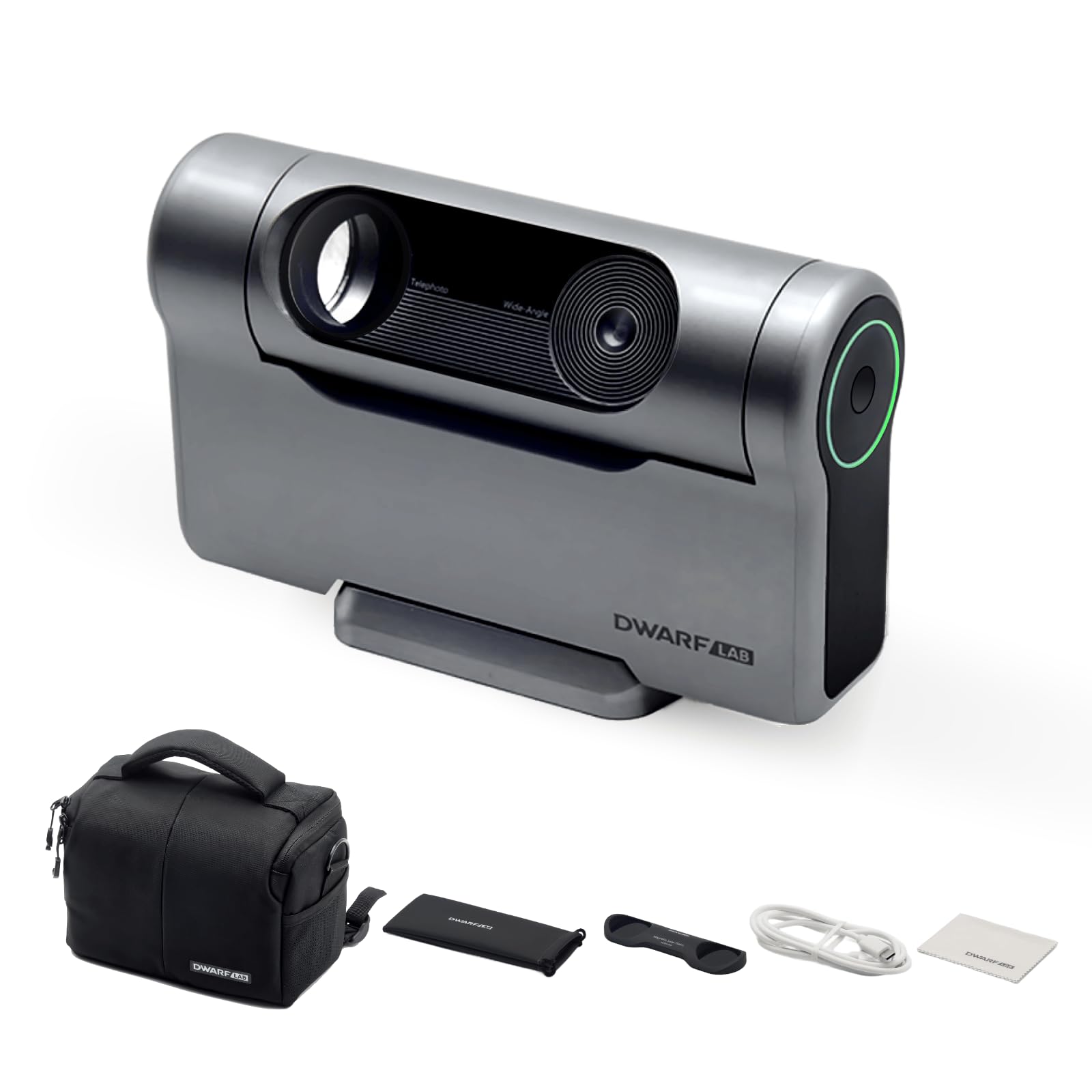
The DWARFLAB Dwarf 3 earns the top spot because it strikes an exceptional balance between portability, image quality, and ease of use. Weighing just 3 lbs, it fits into a backpack alongside your camping gear, yet its dual lens system delivers sharp deep-sky images and wide-field Milky Way shots. The telephoto lens captures nebulae and galaxies, while the wide-angle handles star trails and landscapes.
Setup takes around two minutes — power on, connect via the DWARFLAB App, and select your target. The auto-tracking keeps objects centered, and the cloud-based processing produces clean stacked images without needing a desktop computer. The built-in EQ mode allows for longer exposures, and the magnetic filters thread on effortlessly to cut light pollution.
Experienced users will appreciate the FITS format export and advanced histogram controls, while absolute beginners can simply tap the screen and get results. The carrying bag included in the box adds to its go-anywhere appeal. If you want one device for both visual observing and astrophotography that travels well, this is it.
Why it’s great
- Dual lens system covers deep-sky and wide-field imaging in one unit
- Built-in cloud processing eliminates the need for a laptop
- Ultra-light 3 lb design with included carrying bag
Good to know
- App can occasionally drop WiFi connection during long sessions
- No eyepiece — viewing is entirely through your smartphone
2. ZWO Seestar S30 Pro Smart Telescope
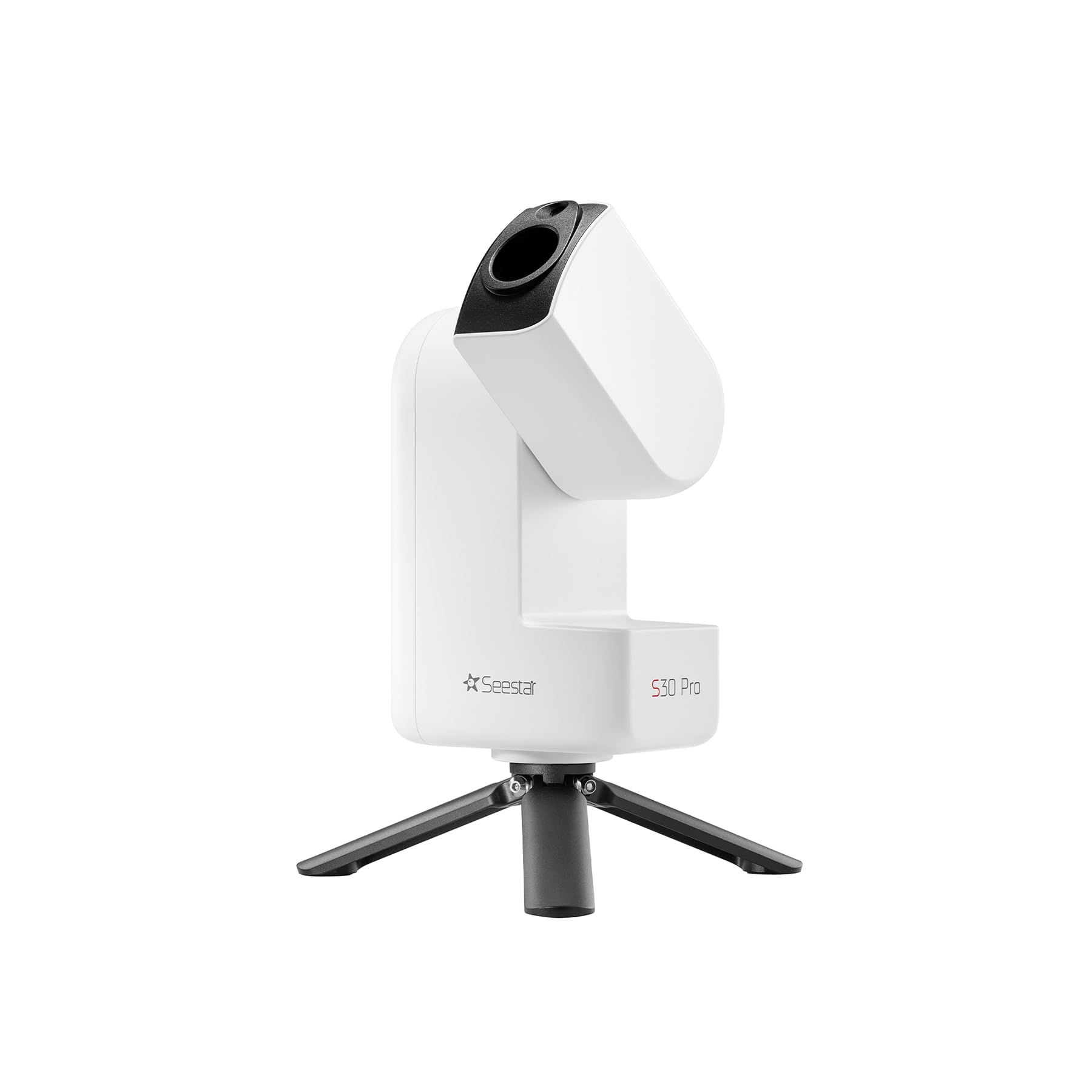
The ZWO Seestar S30 Pro is built for one-tap astrophotography. It uses a 4-element apochromatic lens to minimize chromatic aberration, producing crisp stars with deep contrast. The dual-camera setup features a Sony IMX585 telephoto sensor and an IMX586 wide-angle sensor, letting you switch between detailed planetary views and sweeping Milky Way panoramas with a single tap.
Smart imaging modes handle everything automatically. The Milky Way mode combines multiple frames into a seamless 8K mosaic, while the star trails mode builds composites effortlessly. Built-in filters cut light pollution and block IR, making this scope usable even from suburban backyards. The Plan Mode lets you schedule imaging runs, so the scope can capture data while you sleep.
Daytime use as a long-range camera for birding or landscapes adds versatility. The included tripod is sturdy, and the 128GB of onboard storage holds dozens of imaging sessions. For users who want the simplest possible path from unboxing to a finished astro photo, the S30 Pro delivers without compromise.
Why it’s great
- APO lens eliminates color fringing for sharp, contrasty images
- One-tap 8K mosaic and star trails modes require zero manual work
- Loads of onboard storage and scheduled imaging for unattended sessions
Good to know
- Scenery mode is weaker than dedicated cameras for terrestrial use
- Full moon washout requires avoiding its direction during imaging
3. DWARFLAB Dwarf Mini Smart Telescope
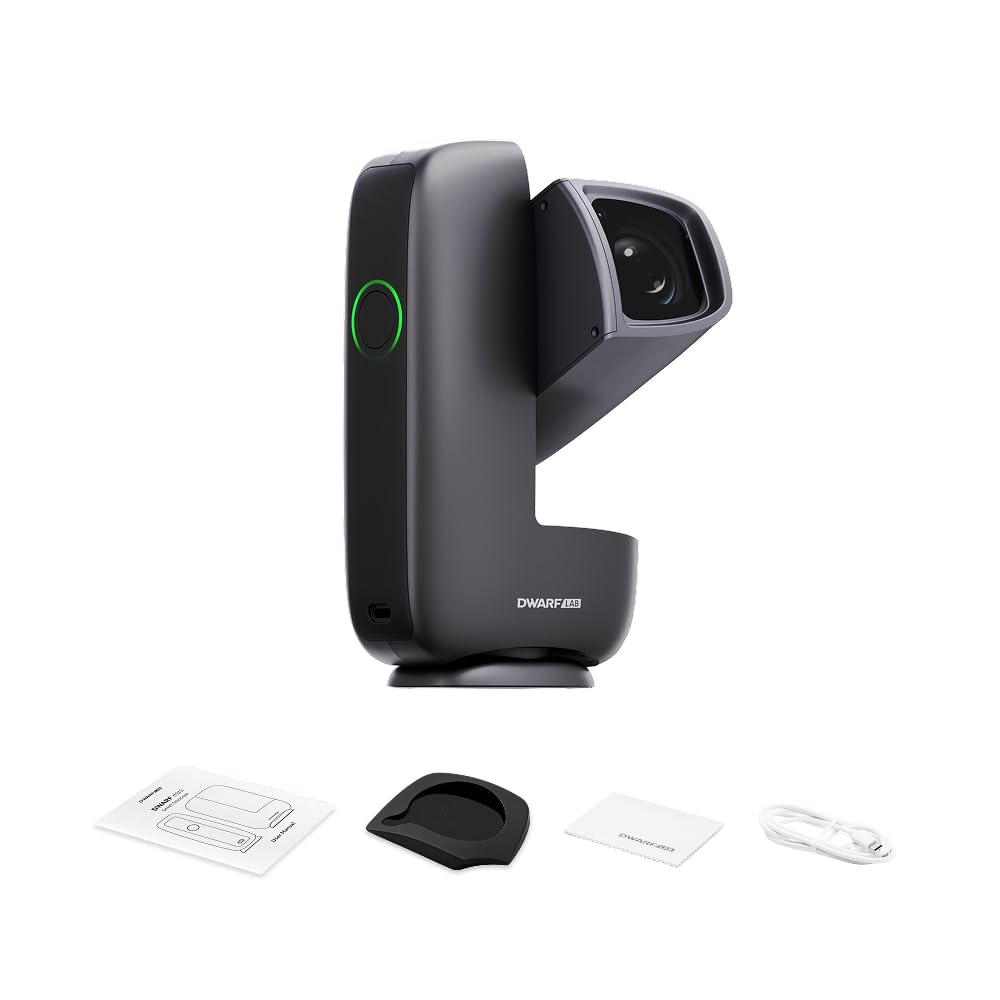
The Dwarf Mini is the lightest fully automatic astrophotography scope on this list at just 1.85 lbs. It slips into a large jacket pocket or daypack, making it the ultimate companion for hiking to dark-sky locations. Despite its size, the Sony IMX662 sensor (2.9µm pixels) captures low-noise images of nebulae and star clusters with surprising detail.
EQ mode supports single-frame exposures up to 90 seconds, which is enough to bring out faint structures in objects like the Pinwheel Galaxy. The built-in light pollution filter helps reduce city glow, and the cloud processing handles stacking and enhancement automatically. The app includes a sky atlas — just tap a target and the mount slews there.
Setup time is about three minutes from power-on. The 360-degree pivot gives full sky coverage, and the Alt-Az mode works well for quick lunar or solar imaging. This scope is not ideal for planetary detail (the wide field of view limits magnification), but for deep-sky targets, it punches well above its weight class.
Why it’s great
- Unmatched portability for a fully automatic scope with EQ mode
- 90-second exposures in EQ mode reveal faint nebulae and galaxies
- Built-in light pollution filter improves results from suburban skies
Good to know
- Small sensor caps effective resolution around 1080p
- Limited magnification makes planetary detail difficult
4. Celestron StarSense Explorer 150AZ
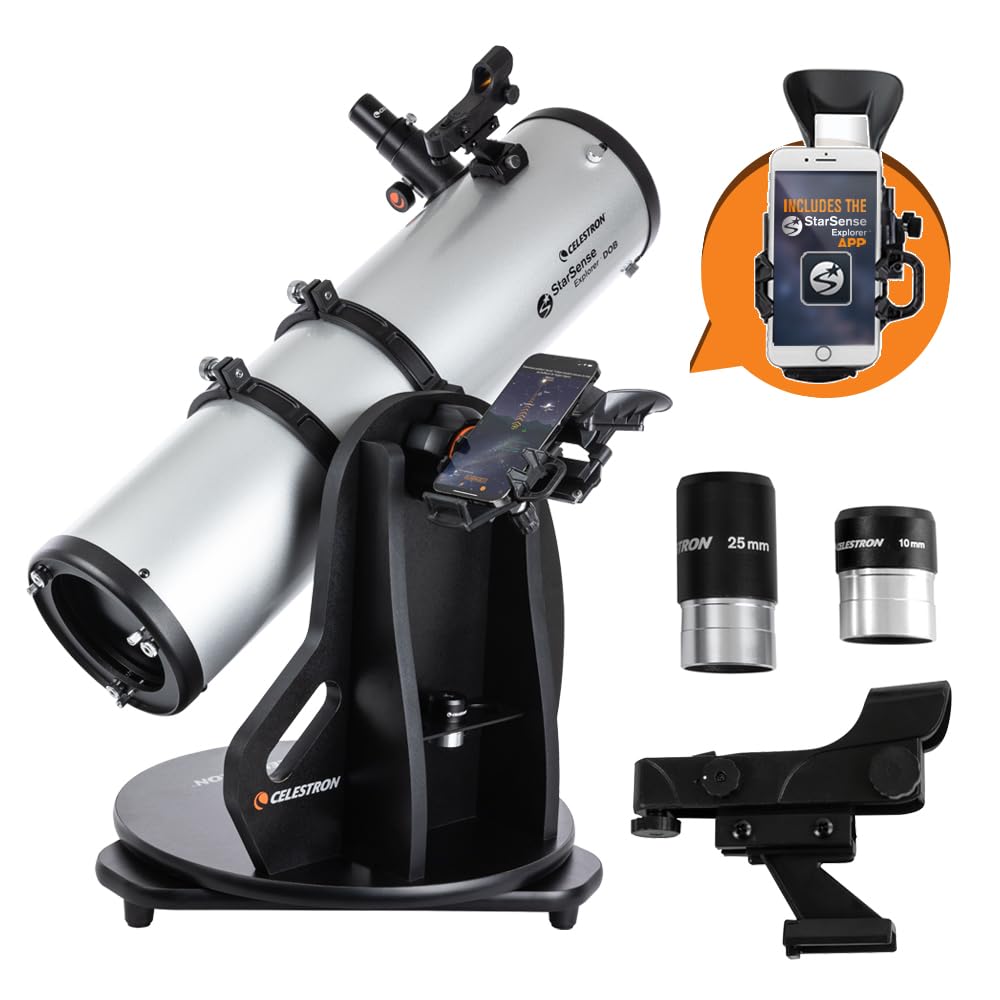
The StarSense Explorer 150AZ is a tabletop Dobsonian that uses your smartphone’s camera to turn any evening into a guided sky tour. Patented sky recognition technology analyzes star patterns to determine exactly where the telescope is pointed, then shows you on-screen arrows to nudge the tube to any target. When the bullseye turns green, the object is centered in the eyepiece.
The 150mm parabolic mirror with aluminum and SiO2 coatings delivers bright, sharp views of the Moon, Jupiter’s bands, Saturn’s rings, and deep-sky favorites like the Orion Nebula. The tabletop base is stable and smooth. Two Kellner eyepieces (25mm and 10mm) get you started, and the StarPointer red-dot finder aids daytime alignment.
This is a visual scope — there’s no motorized tracking, so you nudge it manually. The StarSense app, however, makes finding objects trivial for beginners and fun for experienced observers. The focuser is a basic 1.25-inch unit with thumbscrews, and the tripod for the AZ version is sold separately. For pure visual observing with smartphone-guided navigation, it’s a fantastic choice.
Why it’s great
- StarSense app makes finding celestial objects easy and educational
- 150mm parabolic mirror delivers excellent light-gathering for visual use
- Stable tabletop base with smooth manual altazimuth motion
Good to know
- No motorized tracking or GoTo — fully manual slewing
- Focuser is basic 1.25-inch without compression ring
5. Sky-Watcher AZ-GTi Mount
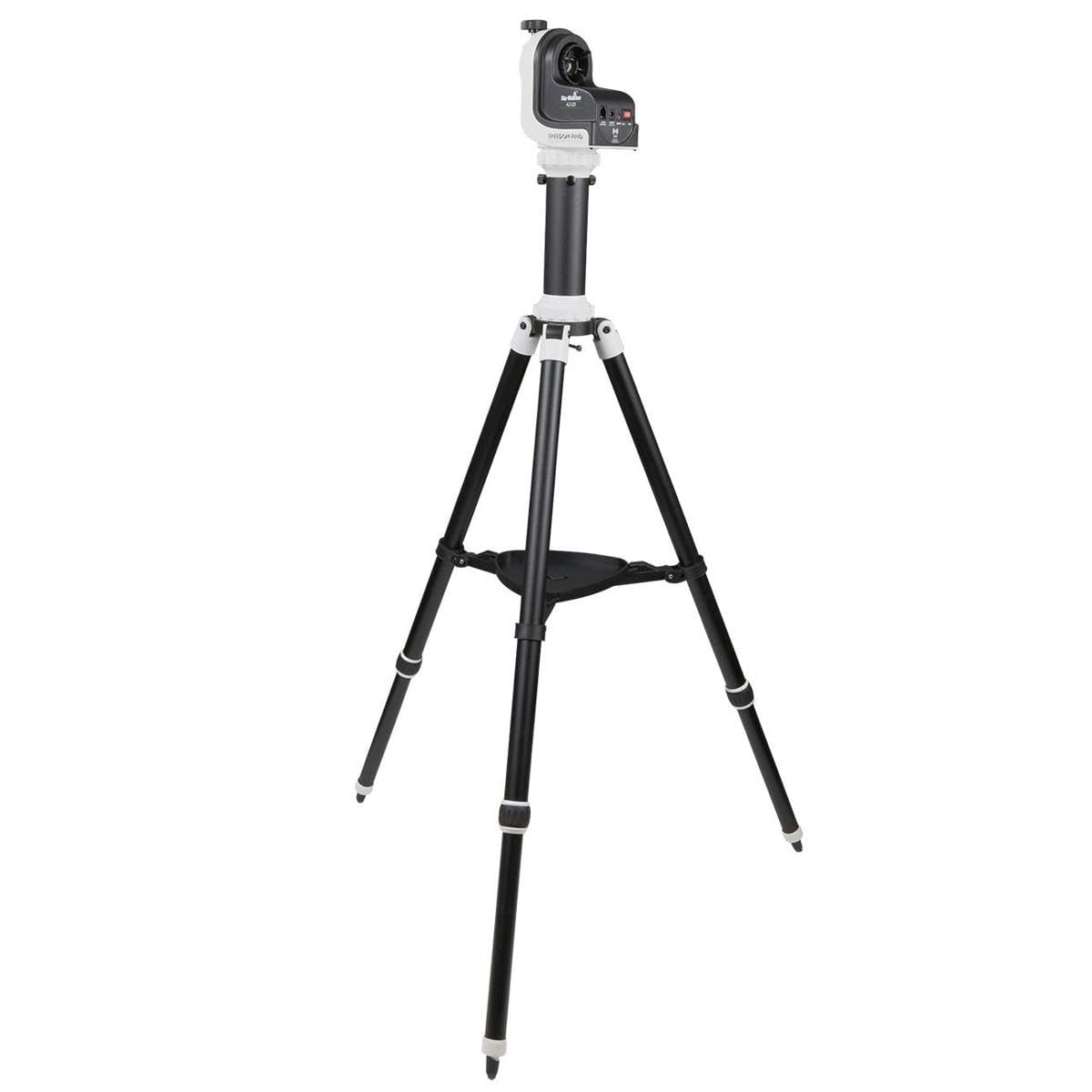
The Sky-Watcher AZ-GTi is a modular approach to automation. Rather than buying a complete telescope, you attach your own optical tube or DSLR to this WiFi-enabled GoTo mount. Its 11-pound payload capacity supports most 70-90mm refractors and 100-127mm Maksutovs, and the dual-encoder Freedom Find technology lets you move the scope manually without losing alignment.
The SynScan Pro app controls the mount from your phone or tablet. It generates its own WiFi signal, so no internet connection is needed in the field. The mount can produce time-lapse videos and panoramas using the built-in photography mode. Firmware updates have added EQ mode, which unlocks longer exposures for deep-sky imaging.
Build quality is solid with brass and aluminum gears for smooth tracking. The included adjustable tripod with pier extension reaches from 28 to 53 inches. A 12V input lets you use an external power bank. For users who already own a quality telescope tube or want to upgrade over time, the AZ-GTi is a versatile and cost-effective automation core.
Why it’s great
- Modular design lets you use your own optics or DSLR
- Freedom Find dual encoders allow manual slewing without losing alignment
- Firmware-upgradeable to EQ mode for long-exposure astrophotography
Good to know
- Some users report clicking noises from gearing during tracking
- iOS app can have alignment reset quirks that require updating
6. Sky-Watcher Star Adventurer GTi Mount Kit

The Star Adventurer GTi is a full GoTo equatorial mount kit designed for portable astrophotography. It comes with the mount head, a pier extension, an adjustable aluminum tripod, a counterweight bar, and a 5 lb counterweight. The built-in illuminated polar scope makes polar alignment straightforward, and the WiFi connectivity lets you control everything from the SynScan app.
With an 11 lb payload, this mount works well with small refractors like the RedCat 51 and DSLR cameras. Users report consistent unguided tracking up to 3 minutes and guided exposures beyond 5 minutes. The GoTo functionality is accurate enough to land targets near the center of the frame, though some users note that the 1-star alignment process can be limiting if horizons are obstructed.
The kit is heavier than the AZ-GTi at 26 lbs, but still manageable for travel. The tripod legs are stable, though some users upgrade them for heavier payloads. The battery compartment requires a screwdriver to access, so plan ahead. For dedicated astrophotographers who want a compact EQ rig with GoTo, this kit delivers solid performance at a reasonable weight.
Why it’s great
- Full GoTo EQ mount with illuminated polar scope for accurate alignment
- Excellent unguided tracking performance for short-exposure imaging
- Complete kit includes tripod, pier extension, and counterweight
Good to know
- SynScan app can be buggy, especially the Android version
- 1-star alignment only — limited if surroundings block parts of the sky
7. Celestron 114LCM Computerized Newtonian
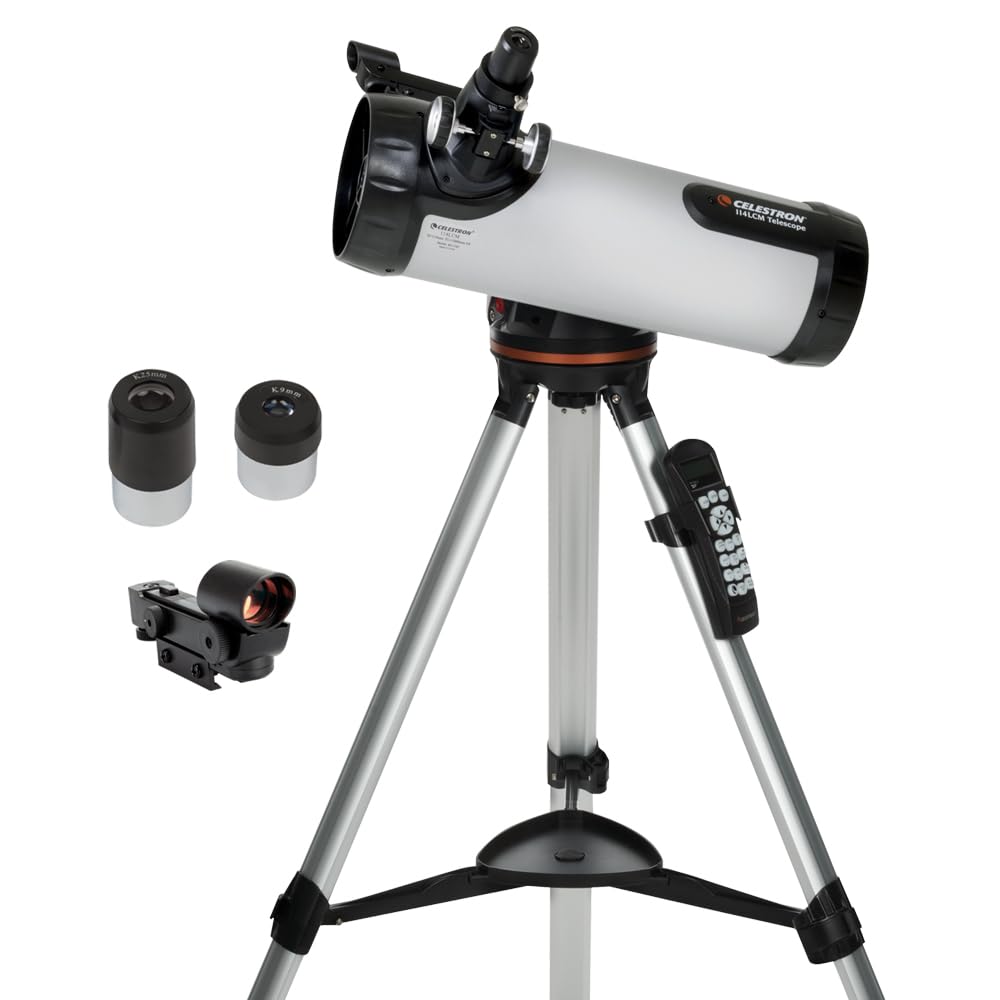
The Celestron 114LCM is a classic entry-level GoTo telescope. It couples a 114mm Newtonian reflector with a motorized altazimuth mount that stores a database of 4,000 celestial objects. Press “Sky Tour” and the mount generates a list of the best objects currently visible in your sky, then slews to each one automatically.
The 25mm and 9mm eyepieces provide low and medium magnification views of the Moon, Jupiter’s moons, and Saturn’s rings. The StarPointer red-dot finder helps with alignment. Setup takes about five minutes, and the computerized hand controller is intuitive even for first-time users. The full-height tripod is sturdy enough for the 13.2 lb setup.
One trade-off is the Bird-Jones optical design, which uses a built-in Barlow lens to achieve a longer focal length in a short tube. This makes collimation harder and limits eyepiece compatibility. The mount runs on 8 AA batteries, which drain quickly — a rechargeable pack is a smart addition. For someone wanting an automated scope under a tight budget, the 114LCM is a functional starting point.
Why it’s great
- Computerized GoTo with Sky Tour feature makes observing easy for beginners
- Full-height tripod and two eyepieces included for immediate use
- Trusted Celestron brand with 2-year warranty and US support
Good to know
- Bird-Jones optical design complicates collimation and limits upgrades
- AA batteries drain rapidly; a rechargeable pack is recommended
8. Unistellar Odyssey Smart Telescope

The Unistellar Odyssey is a premium all-in-one smart telescope designed for rapid setup and scientific contribution. It goes from power-on to observing in under two minutes — automatic alignment, motorized Alt-Az mount, precise GoTo, and auto-focus handle the entire workflow. There is no eyepiece; viewing and control happen exclusively through the smartphone or tablet app.
The 85mm f/3.9 optics and Sony sensor achieve a limiting magnitude of 17.2, capturing faint deep-sky objects even from light-polluted city balconies. The internal database contains over 5,000 objects and 37 million stars. Advanced users can export RAW and FITS data for professional processing. Unistellar actively runs citizen-science campaigns with NASA and SETI — users have contributed to asteroid occultation measurements and exoplanet transit observations.
The integrated battery lasts up to 5 hours, and the 64GB storage holds plenty of imaging sessions. The included tripod is premium quality. The main drawbacks are the price point and the occasional WiFi connection hiccup that some users report. For someone who wants a no-compromise, grab-and-go system that can also contribute to real science, the Odyssey is a compelling option.
Why it’s great
- Under 2-minute setup from unboxing to observing
- RAW/FITS export and participation in NASA & SETI citizen science
- Strong performance from city locations with light pollution
Good to know
- WiFi connection can be inconsistent, causing app frustration
- No eyepiece — viewing is entirely through a phone or tablet
9. Vaonis Vespera Pro Observation Station
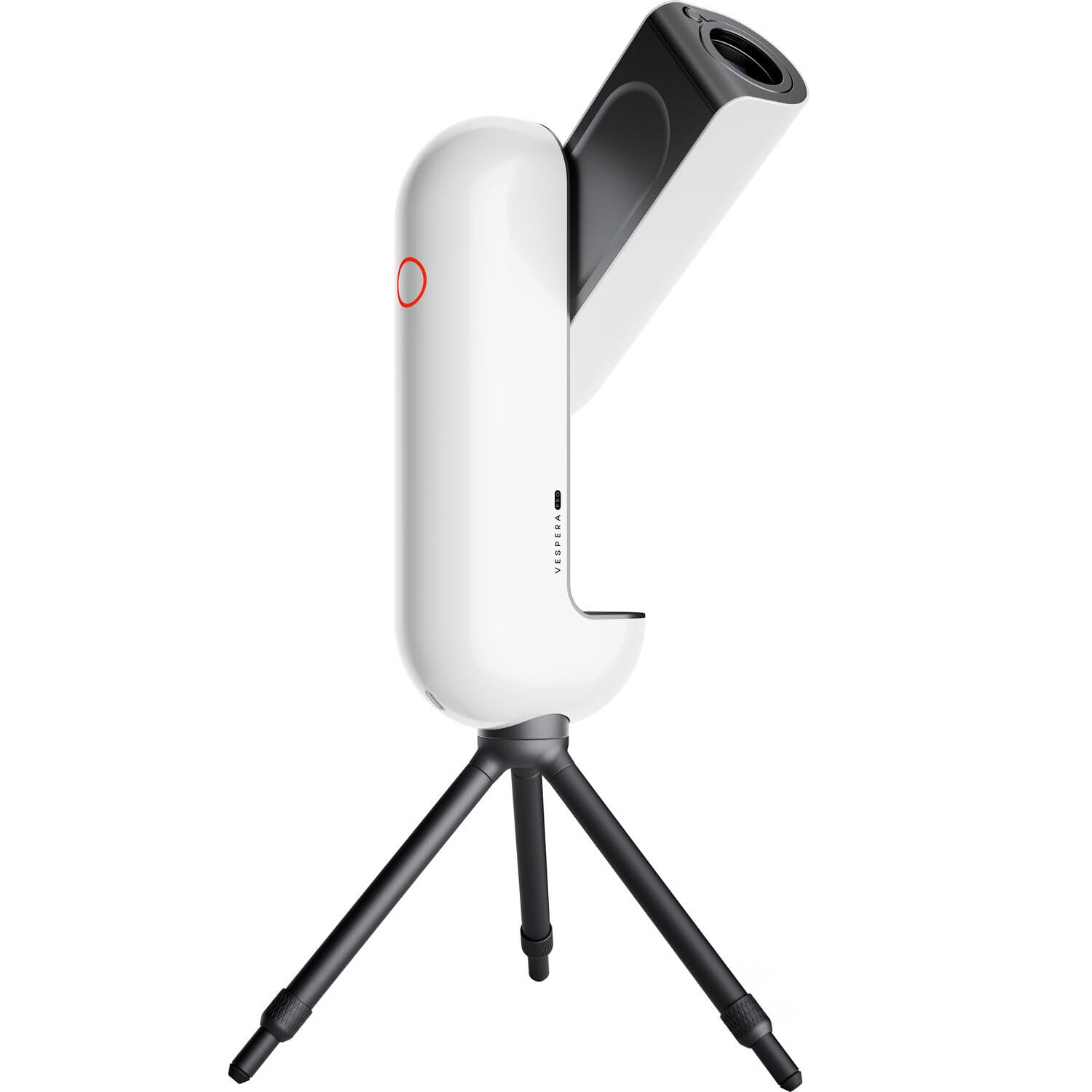
The Vaonis Vespera Pro is the most advanced consumer smart telescope available. It integrates a SONY IMX676 Starvis 2 sensor — the same class of sensor used in professional astronomy cameras — with Vaonis’s proprietary CovalENS technology for live panorama capture. The resulting images are exceptionally clean, with deep dynamic range and minimal noise.
The automatic dark calibration subtracts calibration frames on the fly, saving you post-processing time. The Expert Mode within the Singularity app gives control over gain, exposure, and filter selection. The 225GB of onboard storage and 9-10 hour battery life allow for all-night imaging marathons. The included hard case and premium tripod complete the package.
Image quality from this unit rivals setups costing significantly more, but the system has quirks. It creates its own WiFi network, so you cannot browse the internet while controlling it. File transfer is via slow FTP rather than USB. It also requires a direct connection, which can be limiting. For the buyer who wants the best single-box imaging solution and is willing to pay for it, the Vespera Pro delivers stunning results.
Why it’s great
- IMX676 Starvis 2 sensor delivers exceptional low-light sensitivity
- Automatic dark calibration and panoramic capture built in
- Long battery life and huge storage for uninterrupted sessions
Good to know
- Requires direct WiFi connection — no internet access while observing
- File transfer limited to slow FTP; no USB data transfer option
FAQ
Can an automatic telescope work from a city balcony with light pollution?
How long does it take to align an automatic telescope for a session?
What is the difference between Alt-Az and EQ mode on a smart telescope?
Do I need a separate computer to process images from a smart telescope?
Can I use an automatic telescope for daytime birdwatching or landscape photography?
Final Thoughts: The Verdict
For most users, the best automatic telescope winner is the DWARFLAB Dwarf 3 because it combines a dual-lens imaging system, cloud-based processing, and a portable 3 lb form factor at a mid-range price that delivers professional-looking results. If you want the simplest one-tap astrophotography experience, grab the ZWO Seestar S30 Pro. And for the ultimate single-box solution with citizen-science capabilities, nothing beats the Unistellar Odyssey.